This page contains affiliate links. I may earn a commission at no extra cost to you.
“Sugar ants” is not a real ant species. It’s a common name for small ants attracted to sweet foods, including species like Pharaoh ant, Ghost ant, and Argentine ant. The most effective way to get rid of them is to use slow-acting bait and eliminate outdoor food sources like honeydew-producing insects.
If you’re dealing with “sugar ants,” you’re not dealing with a single species; you’re dealing with a behavior.
“Sugar ants” is a catch-all term for small ants that invade homes in search of sweets and moisture. The exact species varies, but the treatment strategy is almost always the same: bait the colony and remove the outdoor food source that keeps them alive.
TL;DR: How To Treat And Control Sugar Ants
- Treat plants producing honeydew
- Bait active sugar ant trails with Advion Ant Bait Gel
- Bait outdoors to intercept the colony
Treat infested plants with BioAdvanced Shrub Care Granules or Dominion 2L + surfactant to remove the honeydew source that keeps drawing ants to your home.
In professional pest control, slow-acting baiting is the standard method used to eliminate sugar-feeding ant colonies.
What Is the Fastest Way to Get Rid of Sugar Ants?
The fastest way to get rid of sugar ants is to place slow-acting bait directly on active trails and eliminate outdoor honeydew sources like aphids and scale insects. Avoid spraying, as it kills workers before they can carry bait back to the colony.
Quick Answer: How to Get Rid of Sugar Ants
- Place bait on active trails
- Bait outdoors first to intercept colonies
- Treat plants with aphids or scale
- Remove competing food sources
- Avoid spraying near bait
What Are Sugar Ants? (And Why They’re Not One Species)
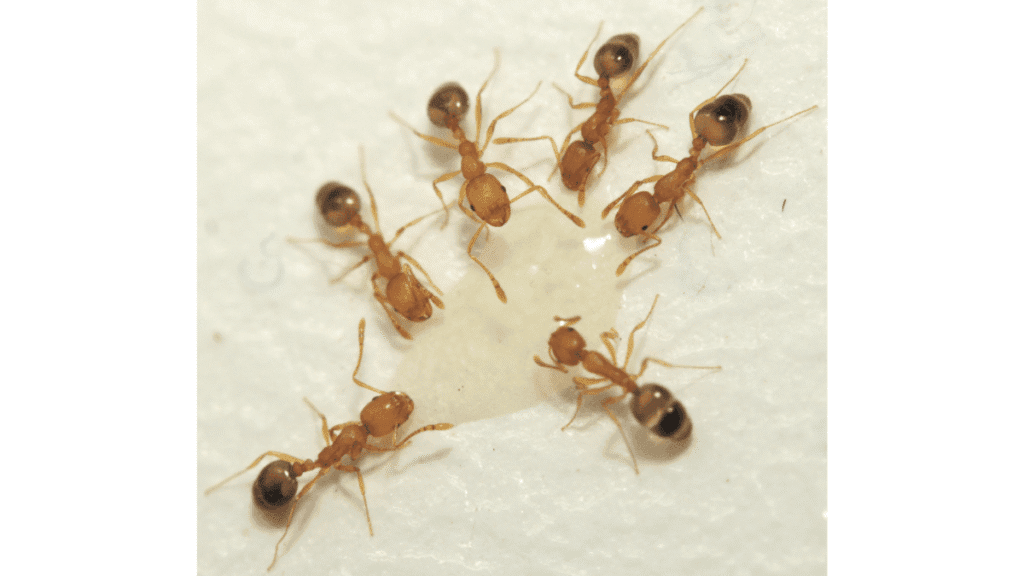
“Sugar ant” is not a scientific species. It’s a general term homeowners use for tiny ants that are attracted to sweets.
Depending on where you live, “sugar ants” might actually be:
- ghost ants (tiny, translucent, very common)
- odorous house ants (smells when crushed)
- Argentine ants (massive outdoor colonies)
- little black ants (tiny, omnivorous)
- acrobat ants (arboreal tree ants)
- pharaoh ants (indoors, hardest to eliminate, bait rotation needed)
- white-footed ants (Massive supercolonies)
Each species behaves a little differently, but they all share the same basic pattern: they follow scent trails from outdoor colonies into homes to find sugary food.
That’s why the treatment approach is usually the same across species.
Why Sugar Ant Bait Doesn’t Work (And How to Fix It)
- spraying kills foragers, not colony → kills workers only
- Competing honeydew → honeydew beats bait
- bait placed wrong → too big / off-trail placement
- Wrong bait type → protein vs sugar/wrong food phase
- bait contamination from sprays → repellent residue present
- Bait too old → dried, unattractive bait
- Colony too large / multi-nest → multi‑nest network
Common Traits of Sugar Ant Infestations
Most homeowners describe sugar ants as:
- tiny ants
- fast-moving
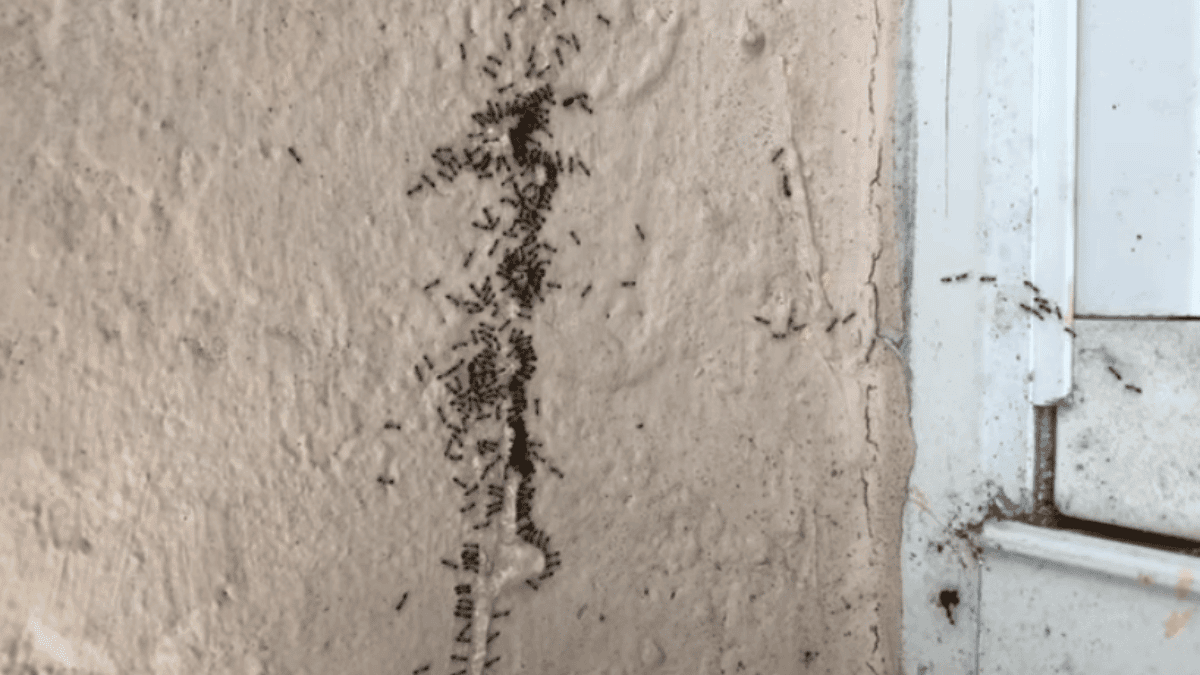
- forming long trails
- appearing around sinks or counters
- attracted to sweet foods
They often show up around:
- sinks
- kitchen counters
- pet bowls
- bathroom areas
These locations usually provide moisture or sugar, which is exactly what these ants are looking for.
Indoor vs Outdoor Sugar Ant Control
Indoors:
- Bait trails only
- No spraying
- Focus on entry points
Outdoors:
- Bait stations first
- Treat plants
- Eliminate honeydew
Where Sugar Ants Occur Worldwide
The exact species varies by region.
For example:
Florida:
ghost ants, Argentine ants, White-Footed Ants, Pharoah Ants, Odorous House Ants
Southeast:
odorous house ants, acrobat ants
West Coast:
Argentine ants, odorous house ants
Northern regions:
little black ants, pavement ants
Everywhere:
pharaoh ants (indoors), odorous house ants
In almost every part of the world – except Antarctica – there’s some small sweet-feeding ant that people refer to as a “sugar ant.”
Fortunately, the control method remains nearly identical.
Why Sugar Ants Enter Your Home
Sugar ants don’t appear randomly. They follow scent trails from outdoor colonies searching for food and moisture.
Three common conditions usually trigger the problem.
1. Dry Weather Drives Ants Toward Moisture
When outdoor conditions dry out, ants expand their search for water and may move indoors.
That’s why they’re often found around:
- sinks
- faucets
- dishwashers
- pet water bowls
- bathroom counters
In these cases, the ants are often following moisture sources, not just food.
2. Sugary Food Sources Indoors
Even very small amounts of sugar can start a trail.
Common attractants include:
- spilled soda
- syrup drips
- cereal dust
- fruit residue
- pet food crumbs
Once a worker ant finds food, it leaves a scent trail for the rest of the colony to follow.
3. Honeydew From Plant Pests (Often the Real Cause)
This is one of the most overlooked causes of sugar ant problems.
Plant pests like scale, aphids, and mealybugs produce a sugary liquid called honeydew, which ants love.
If your plants have these pests, ants will keep returning to your home no matter how much bait you use until the honeydew source is removed.
Step-by-Step: How to Get Rid of Sugar Ants
Successful control focuses on two things:
- the trails you can see, and
- the outdoor food source feeding the colony.
Step 1 – Treat the Plants That Produce Honeydew
Most sugar-feeding ants rely on honeydew from plant pests.
Check plants for signs such as:
- sticky leaves
- shiny residue
- black sooty mold
- tiny bumps (scale)
- small green or white insects (aphids or mealybugs)
If these pests are present, the ants will continue returning until the plant problem is solved.
Option A — BioAdvanced Shrub Care Granules (Easiest Method)
Apply around the base of the plant and water it in.
This works well for:
- shrubs
- small trees
- houseplants (use smaller amounts)
Application Rates
Houseplants
2 teaspoons per gallon of pot size
Sprinkle evenly over the soil surface and water in.
Shrubs
¾ cup per foot of shrub height
Spread the granules in a ring starting about 1 foot away from the base and work inward.
Water thoroughly.
Trees
¼ cup per inch of trunk diameter
Spread the granules around the dripline (outer edge of the canopy) and work inward.
Avoid placing granules directly against the trunk since feeder roots begin farther out.
BioAdvanced Shrub Care Granules Label – BioAdvanced Shrub Care Granules Msds
Option B — Dominion 2L + Surfactant (Stronger Option)
Use this option for:
- large plants
- heavy infestations
- palms
- ornamentals
- shrubs with visible honeydew or sooty mold
Dominion 2L application rate:
0.6 oz per gallon of water
How to Apply
Spray:
- leaves
- stems
- trunks
- undersides of leaves
Apply until the surfaces are lightly wet so the product sticks and moves through the plant.
Dominion 2L Label – Dominion 2L MSDS
Step 2 – Bait the Trails You See
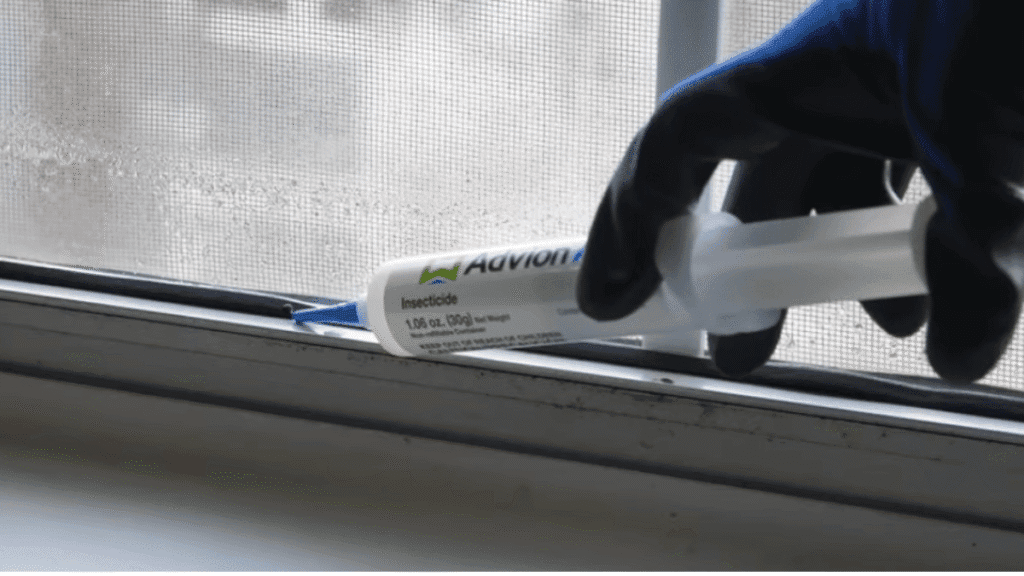
Sugar ants follow scent trails from outdoor colonies into your home.
You can bait them anywhere you see activity, including:
- kitchens
- bathrooms
- around sinks or faucets
- near dishwashers
- around pet water bowls
- along baseboards
- windowsills
Place rice-to-pea sized dots of Advion Ant Bait Gel directly on the trail.
Let the ants feed and carry the bait back to the colony.
Do not kill the ants on the trail.
The goal is for them to bring the bait back to the nest.
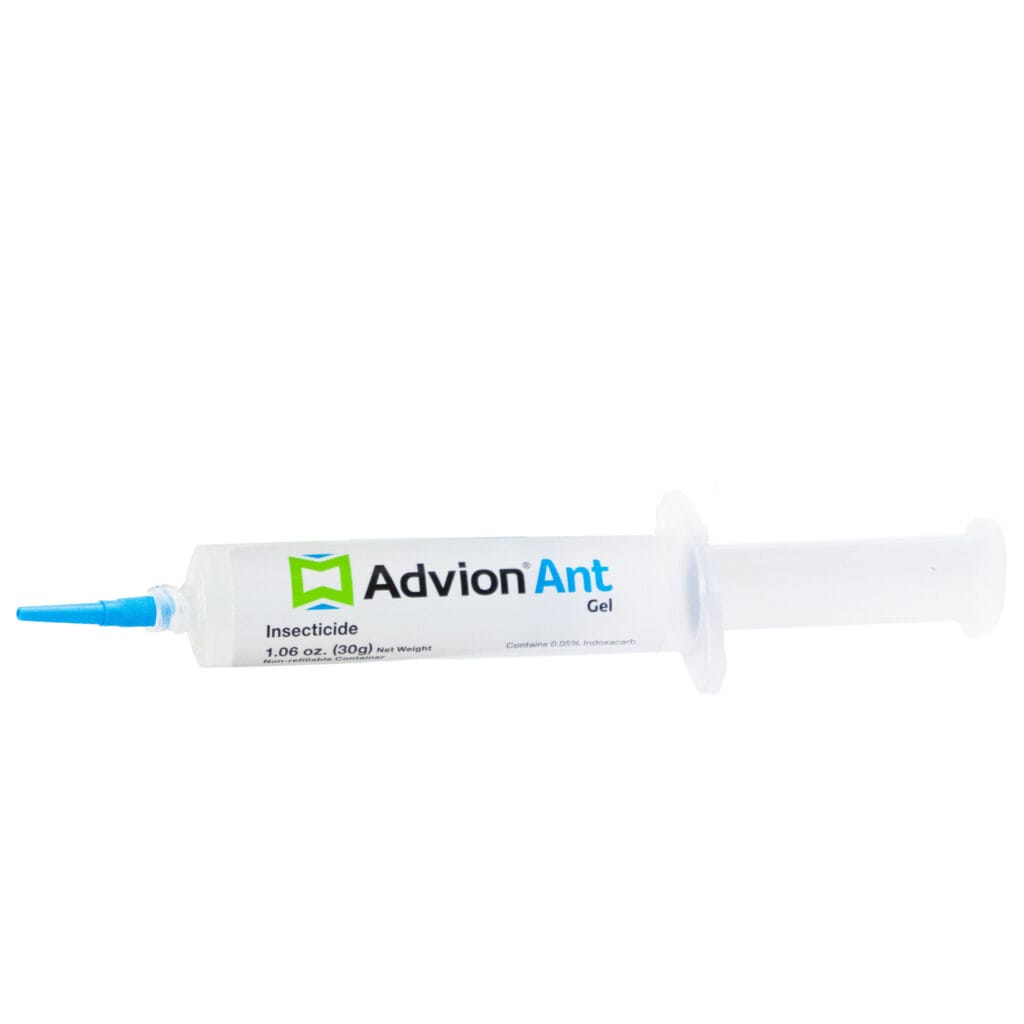
Advion Ant Bait Gel
Advion Ant Bait Gel is highly attractive to sweet‑feeding ants and uses indoxacarb, a powerful non‑repellent active ingredient. Its delayed‑kill action lets ants feed, return to the nest, and share the bait, leading to full colony elimination. Expect noticeable reduction within just a few days of application.
- Designed to be irresistible to sweet‑feeding ants
- The translucent, no odor, non-staining formulation maintains its integrity for extended periods
- Ants consume Advion Ant gel bait over an extended period, resulting in thorough control
- Works indoors and outdoors
- Doesn’t run or drip

Available on Amazon!
Advion Ant Gel Label – Advion Ant Gel MSDS
Step 3 – Bait Outside to Intercept the Colony
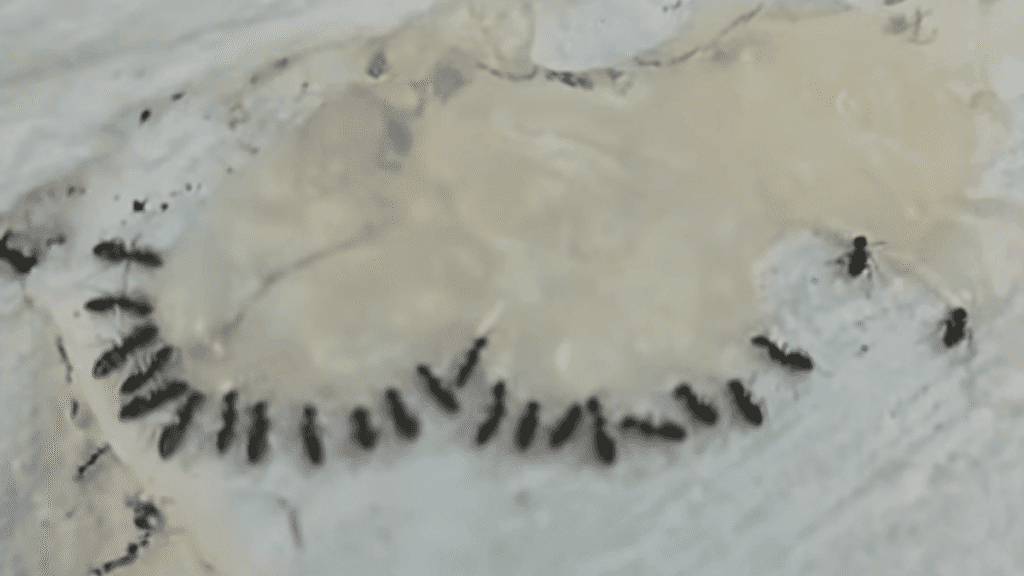
For many sugar ant species, baiting inside can sometimes draw additional ants indoors.
A simpler approach is to start baiting outside first.
Place four Advion Ant Gel Stations around the exterior of the home — one at each corner.
You can also place stations:
- along the foundation
- in mulch beds
- near AC lines
- anywhere you see outdoor trails
This intercepts the ants before they enter the home and allows them to carry the bait back to the colony without increasing indoor activity.
Advion Ant Bait Gel Station Label – Advion Ant Bait Gel Station MSDS
Step 4 – Keep Surfaces Clean So Ants Choose the Bait
Sugar ants only need a tiny amount of sugar to start a trail.
During baiting, it helps to remove competing food sources so ants focus on the bait.
Pay attention to areas such as:
- kitchen counters
- pet bowls
- sink edges
- backsplash areas
A quick cleanup removes crumbs and sticky residue so ants follow the bait instead of the food.
Step 5 – Don’t Overlook Potted Plants
Potted plants — indoors or outdoors — are one of the most common hidden sources of sugar ant problems.
Watch for signs like:
- sticky soil
- tiny bugs on stems
- ants circling the pot
Treat the plant just like any other infestation.
BioAdvanced granules or a light Dominion spray works well.
Once the Honeydew Source Is Gone, Sugar Ants Stop Returning
When you combine these steps, the problem usually resolves quickly:
- Bait the trails
- Bait outside first
- Treat plants producing honeydew
- Keep surfaces clean
Once the honeydew source is eliminated, sugar ants typically stop coming back, even if the problem has been recurring for years.
Frequently Asked Questions about Sugar Ants
Understanding Sugar Ants
What are sugar ants?
“Sugar ants” is a nickname for any tiny ant that shows up for sweets. Depending on your region, they might actually be ghost ants, odorous house ants, Argentine ants, little black ants, or several other species. If it’s small and loves sugar, homeowners call it a sugar ant.
Why are sugar ants in my house?
Getting Rid of Sugar Ants
How do I get rid of sugar ants fast?
Use Advion Ant Bait Gel on indoor trails or place Advion Gel Stations outside around the foundation. Treat nearby plants for scale or aphids with BioAdvanced Shrub Care Granules or Dominion 2L + surfactant. Keep surfaces clean so ants follow the bait, not crumbs.
Should I bait sugar ants inside or outside?
You can bait indoors, but some species increase activity if you start inside. The easiest, cleanest method is to bait outside first using Advion Gel Stations — one at each corner of the home or wherever you see trails. This intercepts ants before they enter.
What bait works best for sugar ants?
Advion Ant Bait Gel is the most reliable bait for all sweet‑feeding ant species.
For outdoor use, Advion Gel Stations are the simplest and most trouble‑free option.
Why They Keep Coming Back
Why do sugar ants keep coming back even after baiting?
If your plants have scale, aphids, or mealybugs, they produce honeydew — a sugary liquid ants love. As long as honeydew is available, sugar ants will keep returning. Treating the plants stops the food source and prevents new trails from forming.
Do I need to treat my potted plants?
Yes. Potted plants are one of the most common hidden sources of sugar ant problems. If you see sticky leaves, shiny residue, or ants circling the pot, treat the plant with BioAdvanced granules or a light Dominion 2L spray (0.6 oz per gallon + 1 tsp surfactant).
Safety & Expectations
Are sugar ants dangerous?
They don’t bite or sting, but they contaminate food and spread bacteria as they forage. The bigger issue is that they often signal a plant‑pest problem that needs to be treated.
How long does it take to get rid of sugar ants?
Most homeowners see activity drop within 24–48 hours after placing Advion bait. Full elimination usually takes 3–7 days, depending on how many satellite colonies are feeding and whether the plants have been treated.
Other Small Sugar‑Feeding Ants Commonly Found in homes
Many tiny trail‑building ants look similar, especially when they’re feeding on sweets or honeydew from plants, so these guides help you compare the most common species.
- Ghost Ants
- Odorous House Ants
- Little Black Ants
- Argentine ants
- acrobat ants
- pharaoh ants
- white-footed ants