
This page contains affiliate links. I may earn a commission at no extra cost to you.
The best way to get rid of carpenter ants is to broadcast Advance Carpenter Ant Bait around the foundation, tree bases, and wood piles within 30 feet of the house on completely dry soil. Most infestations clear up in about a week because the foragers carry the bait back to the colony wherever it is located.
TL;DR: How To Treat And Control Carpenter Ants
- Don’t spray visible ants first. That ruins the bait you’re about to put down.
- Wait for completely dry conditions: evening (best) or early morning after the dew has fully burned off.
- Broadcast Advance Carpenter Ant Bait around the foundation, base of every tree, around stumps, palm bases, and wood piles within 30 feet of the house.
- If you think the nest is INSIDE your house, switch to Maxforce Carpenter Ant Bait Gel applied indoors where you’ve seen them foraging.
- Inspect for the food source: scale insects and aphids on landscape plants. Treat with BioAdvanced 12-Month Tree & Shrub granules around any affected tree or shrub.
- If activity continues after 2 weeks, perimeter-spray with imidacloprid on the foundation, tree bases, mulch, firewood, and rotten spots.
- If you locate the actual nest, hit it directly with Raid or whatever contact spray you have. Direct nest treatment is the one situation where contact spray works on this species.
- Fix any moisture problems driving the infestation.
Keep reading for the full breakdown. ↓
What You Need
The lead product handles the vast majority of carpenter ant problems.
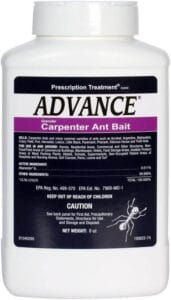
ADVANCE Carpenter Ant Bait
Advance Carpenter Ant Bait uses a protein‑based formula and slow‑acting abamectin to eliminate carpenter ant colonies through full worker‑to‑queen transfer.
- Targets carpenter ants with a protein‑rich, highly attractive granular bait.
- Slow‑acting abamectin allows full colony transfer before ants die.
- Easy outdoor application around foundations, trails, trees, and stumps.
- Apply it by placing tiny amounts along active ant trails so workers pick it up and carry it home.


Available on Amazon!
Competitive pricing + Fast Free shipping on all orders!
Advance Granular Carpenter Ant Bait Label – Advance Granular Carpenter Ant Bait MSDS
Advance Carpenter Ant Bait uses abamectin in a granular bait matrix specifically formulated for large-bodied ants. The granule size, protein content, and attractant blend are designed for carpenter ant foragers, not repurposed from a general ant bait. Workers pick up the granules and carry them back to both satellite colonies and the main nest, distributing the active ingredient through the colony network. The queen dies. The colony collapses.
This matters because carpenter ant colonies are rarely where you’d expect them. The main nest, which holds the queen and brood, is almost always outdoors — in a tree, a stump, a fence post, a palm crown, or somewhere genuinely strange. Satellite colonies, which contain only workers and brood (no queen), are what you usually see foraging inside the house. The whole point of bait is that you don’t need to locate the nest. The foragers do the work for you.
After 25 years of treating carpenter ants, this is the bait I reach for first. When timing and conditions are right, the granular bait gets picked up fast and the colony starts collapsing inside a week.
The Dry Soil Rule
This is the step homeowners get wrong most often, and it’s the silent reason most DIY carpenter ant treatments fail.
Granular bait is oil-based. Moisture ruins it. Dew alone is enough to wash the oil off the granule and make the bait unpalatable. The ants will walk right past wet bait and find their own food.
Apply only when:
- The soil surface is bone dry to the touch
- No rain is forecast for at least 24 hours
- No irrigation is scheduled for at least 24 hours after application
The two best windows:
- Evening, after the heat of the day, when the sun is down and dew hasn’t started forming yet. This is the single best time for carpenter ants because they’re primarily nocturnal foragers.
- Early morning AFTER the dew has fully burned off the grass. Usually mid-morning in most climates.
Skip humid mornings with visible dew. Skip days with rain in the forecast. Wet bait isn’t a partial treatment, it’s no treatment, and you’ll waste a bag of Advance.
Signs You Have Carpenter Ants
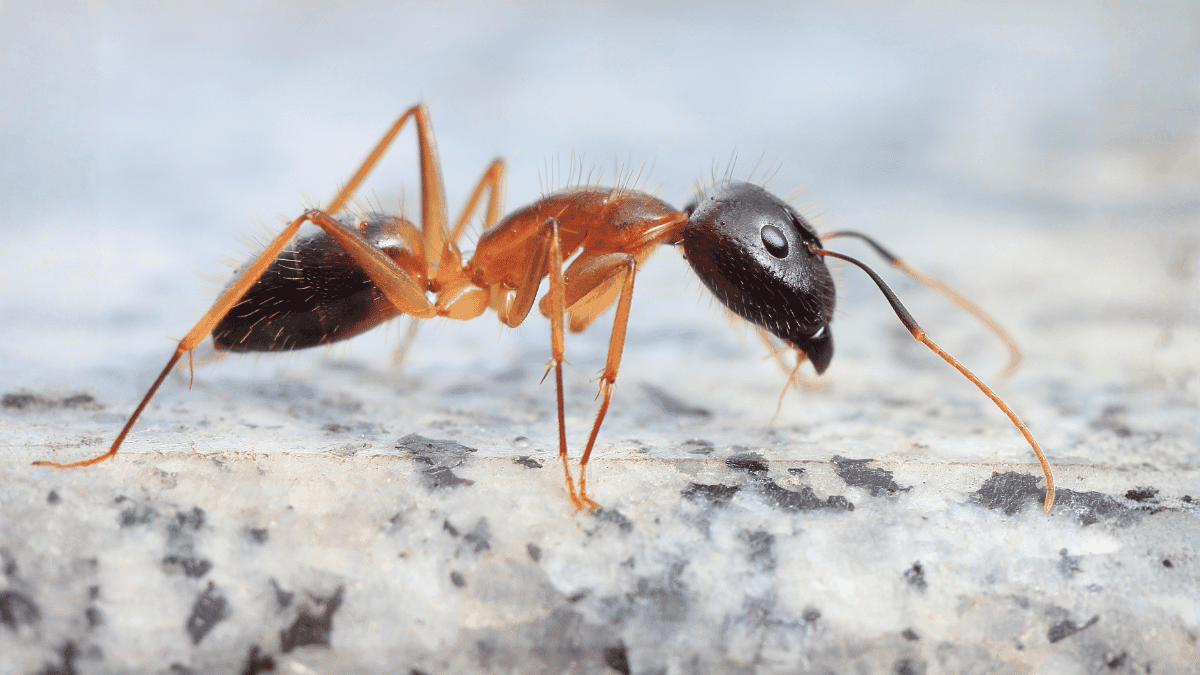
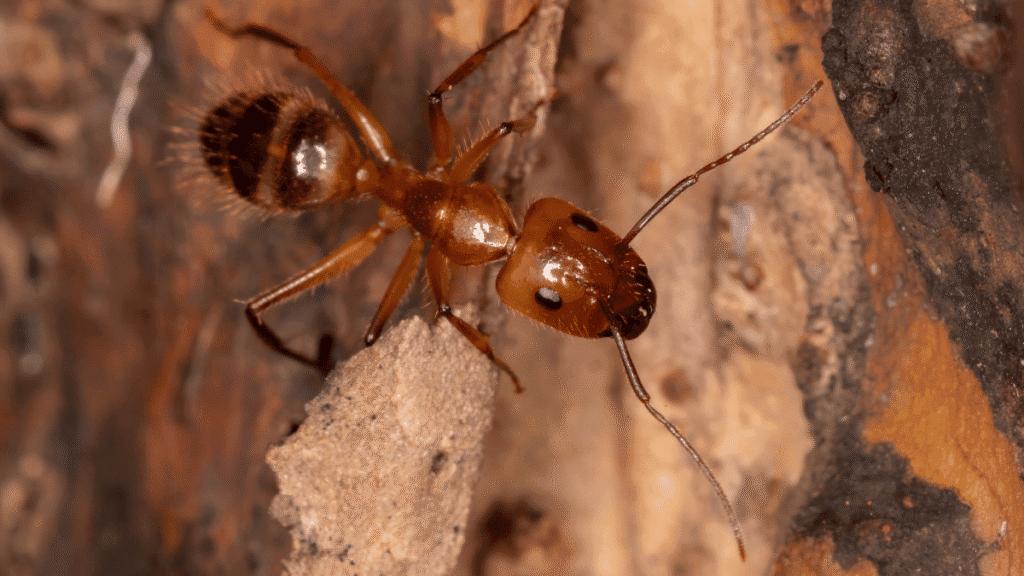
- Large size. 6 to 12 mm, the biggest ant most homeowners ever see indoors. Black or reddish-black. Major workers (sometimes called “bull ants”) look enormous when one walks across the kitchen counter at night.
- Frass piles in small accumulations. Fine, gritty, sawdust-like material mixed with sand, tan to light brown, often with insect parts (legs, antennae, tiny black specks) visible if you look closely. Found below trim, in attics, in window sills, or anywhere the colony is excavating.
- Activity that’s mild in the day and intense at night. If you can barely find them at 2pm but they’re running heavy trails at 10pm, you have carpenter ants. They are primarily nocturnal.
- Soft, hollow-sounding wood. Tap suspect wood with a screwdriver handle. Solid wood thuds. Wood with excavated galleries sounds drum-like.
- Winged swarmers in spring or early summer. Reproductive carpenter ants have a pinched waist, elbowed antennae, and two pairs of wings of unequal size (front pair larger than back). Termite swarmers have a thick uniform waist, straight antennae, and two pairs of equal-sized wings.
Carpenter Ants vs Termites vs Acrobat Ants
These three get confused constantly. The stakes are very different.
| Feature | Carpenter Ants | Subterranean Termites | Acrobat Ants |
|---|---|---|---|
| Size | 6 to 12 mm | 3 to 6 mm | 2.5 to 4 mm |
| Color | Black or reddish-black | Pale, creamy white workers | Brown to black, sometimes bicolored |
| Waist | Pinched | Thick, uniform | Pinched |
| Antennae | Elbowed | Straight | Elbowed |
| Eats wood? | No, excavates galleries only | Yes, eats cellulose | No, just nests in damaged wood |
| Frass | Sawdust with insect parts | None visible; produces mud tubes | None typical |
| Mud tubes | No | Yes, solid mud, sealed | No |
| Defensive behavior | None | None | Raises abdomen over head |
| Heart-shaped abdomen | No | No | Yes |
The fastest field test on a foundation tube: scratch a section open. If creamy-white soft-bodied insects appear and large-headed soldiers respond within 20 seconds, that’s a termite tube and you need a termite inspector, not an ant treatment. If ants run out, it’s an ant problem.
The fastest field test on a frass pile: look for insect parts. Carpenter ant frass has legs, antennae, and tiny black specks mixed in. Drywood termite frass is uniform six-sided pellets with no insect parts.
Why They’re In Your Yard
Carpenter ants don’t randomly pick a property. They show up because the conditions are right.
- Moisture-damaged wood. Carpenter ants do not eat wood. They hollow out galleries in wood that’s already softened by chronic moisture exposure. A roof leak, a plumbing leak inside a wall, failed caulking around a window, condensation in the attic, rotted fascia, soft palm crown material, a stump that’s been in the yard for years – these are the nesting sites. If carpenter ants are inside your house, there is wet wood somewhere.
- Trees, stumps, and palm crowns. This is where most carpenter ant colonies actually live. The trail you see inside is usually coming from a hollow tree, a rotted stump, the burlap material at the base of palm fronds, or the soft pocket where a tree branch broke off years ago. After 25 years of doing this, when I walk a property with carpenter ant activity I start with a stick, walking up to anything that looks remotely suspicious and giving it a poke. Soft spots in trees, rotted fence posts, the base of palms, old stumps. Half the time the ants come pouring out and I’ve found the nest in 10 minutes. The other half the time the nest is somewhere I’d never have guessed.
- Honeydew from scale insects and aphids. Carpenter ants harvest honeydew from sap-sucking plant pests. Landscape trees and shrubs with active scale or aphid issues are feeding the colony year-round. This is one of the most overlooked drivers of recurring carpenter ant problems, and it’s why the BioAdvanced step in this guide matters more than most homeowners realize.
- Weird places. Carpenter ants will nest anywhere that’s slightly moist, slightly protected, and undisturbed. Over the years I’ve found colonies in irrigation control boxes, power meter housings, water meter pits, mailboxes, the door panel of a Ford Ranger that was parked outside for a summer, inside garage side jambs sitting slightly off the concrete, and once – memorably – underneath a toilet scrubber brush holder in a very expensive bathroom. The homeowner was not amused. The ants seemed fine. The point is: if you can’t find the nest in the obvious spots, start looking in the weird spots.
How to Get Rid of Carpenter Ants – Step by Step
Step 1: Don’t Spray Anything First
This is the rule that separates a fast win from months of frustration.
Spraying visible carpenter ant trails or workers with a contact insecticide (Raid, Ortho Home Defense, any pyrethroid aerosol) does three bad things. It kills the foragers you can see while leaving the colony fully alive. It scatters the rest of the trail into hiding, often into wall voids and other places you don’t want them. And it contaminates the area where you need to place bait, so the surviving workers avoid the treated zone and never carry bait back.
Bait goes down first. Spraying is reserved for direct nest treatment (if you can find it) and for perimeter follow-up if activity continues. Get the order right and you’ll be done in 2 to 3 weeks. Get it wrong and you’ll be chasing them for months.
Step 2: Bait – Outside or Inside?
The right bait placement depends on whether the carpenter ants are foraging only at night with no signs of an indoor nest, or whether they’re clearly inside the house.
If They’re Outside (Most Cases)
If you only see carpenter ants at night, you don’t hear them inside the walls, and there are no frass piles indoors, the colony is almost certainly outside. Broadcast Advance Carpenter Ant Bait outdoors and let the foragers carry it home.
Where to apply:
- A 3-foot band around the full foundation perimeter
- Around the base of every tree on the property, especially within 30 feet of the house
- Around stumps, fence posts, and palm bases
- On firewood piles and any wood-to-soil contact points
- Mulch beds adjacent to the foundation
- Anywhere you’ve seen a trail
Apply at the label rate. Don’t pile bait – light, even broadcast is what works.
If They’re Inside the House
If you’re seeing carpenter ants foraging indoors during daytime, finding frass piles, hearing rustling in walls at night, or seeing winged swarmers indoors in spring — the nest (or a satellite colony) is inside the structure. Switch to a gel bait that you can place precisely indoors.
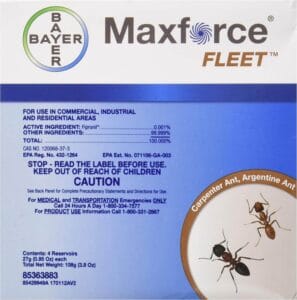
Maxforce Fleet (Fipronil Ant Bait)
Professional ant bait for carpenter ants, Argentine ants, and other household species. Slow‑acting fipronil allows ants to carry the bait back to the colony for full elimination.
- Targets carpenter ants & Argentine ants — Designed specifically for the two hardest‑to‑treat species.
- Slow‑acting fipronil — Foragers feed, return to the colony, and spread the active ingredient.
- Ready‑to‑use reservoirs — No mixing, no mess, precise placement.
- Indoor & outdoor use — Place along trails, entry points, and areas where ants are actively foraging.
- Pairs perfectly with non‑repellent sprays — Use bait first, then apply Dominion or Taurus around the perimeter.
- Ideal for multi‑queen species — Works well on Argentine ants and other colony‑splitting species.
Available on Amazon!
Competitive pricing + Fast Free shipping on all orders!
Maxforce Carpenter Ant Bait Gel uses fipronil in a protein-and-carbohydrate matrix that carpenter ants accept aggressively. Apply small dabs (about the size of a pea) along trails, near entry points, around plumbing penetrations, under appliances where activity is visible, and inside cabinet voids where you’ve seen them.
Pro tip: the straw trick. When I can’t find the actual nest indoors but I know they’re foraging in a specific area, I cut a plastic straw into 1-inch pieces, squeeze a small dab of Maxforce gel inside each piece, and set the bait-loaded straws along the foraging path. The straw protects the gel from drying out, hides it from pets and kids, and gives the ants a clean tunnel-like entry to feed. Place 4 to 6 of these in any area with active indoor foraging. Within a day or two the gel inside the straws will be visibly worked over and the ants will be carrying the active ingredient back to wherever they came from.
Step 3: If You Find the Actual Nest, Crush It
This is the one situation where contact spray on carpenter ants makes sense.
If you locate the actual nesting site – a hollow tree, a soft stump, a palm crown full of ants, a wall void with frass piling out; you can hit it directly with Raid, Ortho Home Defense, or any contact aerosol you have on hand. You’re not just killing foragers at this point. You’re killing the queen, the brood, and the bulk of the colony in one shot. That’s a job that contact spray can actually do, because you’re treating the nest itself.
Spray directly into the nest opening. Soak it. Wait 24 hours and check for residual activity. If you see foragers still leaving the area, hit it again, or follow up with the perimeter spray in step 5.
Step 4: Treat the Honeydew Source
Carpenter ants feed heavily on honeydew from scale insects and aphids on landscape plants. If you have active scale or aphid issues on trees and shrubs, the colony has a year-round food source that competes with bait and keeps the population large.
The easiest fix for a homeowner is BioAdvanced 12-Month Tree & Shrub Protect & Feed Granules. Scatter the granules around the base of affected trees and shrubs and water them in. The plant takes up the imidacloprid systemically along with the fertilizer in the product (and the fertilizer matters — it triggers the plant to actively pull the insecticide upward through its vascular tissue). Within several days, the scale and aphids feeding on the plant die from the inside out, and the honeydew supply dries up.
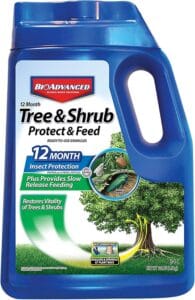
BioAdvanced 12 Month Tree and Shrub Protect and Feed
A granular, no‑spray systemic treatment that feeds your trees and shrubs while protecting them from borers, beetles, aphids, and other destructive insects for up to 12 months.
- Kills borers, beetles, aphids, adelgids, leafminers, and other common tree/shrub pests
- Protects for up to 12 months with one application
- Built‑in fertilizer helps plants absorb the systemic insecticide more effectively
- No spraying or mixing — measure, sprinkle at the base, and water in
- Ideal for trees, shrubs, and container plants needing long‑term protection
Available on Amazon!
Competitive pricing + Fast Free shipping on all orders!
This product is for ornamental plants, trees, and shrubs only. Not labeled for vegetable gardens or fruit trees.
Step 5: Perimeter Spray With Imidacloprid (Only If Activity Continues)
In most cases, the bait plus the BioAdvanced granules clear the problem. If you’re still seeing trails after 2 weeks, or if the property has multiple potential nest sites you can’t reach, perimeter spraying with an imidacloprid concentrate covers the bases the other steps can’t.
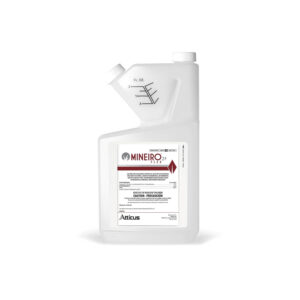
Mineiro 2F Flex (Imidacloprid 21.4%)
Non‑repellent concentrate for ants, perimeter control, termites, and systemic treatment of scale and other plant pests.
- Perimeter ant treatment — Mix 0.6 fl oz per gallon of water. Apply around the base of the home, entry points, and along foundation edges.
- Ant trails on vegetation — Mix 0.6 fl oz per gallon and spray shrubs, branches, and plant trails leading to the home.
- Scale, aphids, mealybugs on ornamentals — Mix 0.6 fl oz per gallon and spray foliage, undersides of leaves, and stems.
- Systemic root drench for scale — Mix 0.2–0.4 fl oz per gallon and apply to soil at the base of affected plants.
- Non‑repellent mode of action — Ants don’t detect it, so they continue foraging and transfer it through the colony.
- Great for honeydew‑dependent ants — Ideal for Argentine, White‑Footed, and Acrobat ants that follow plant trails.
Available on Amazon!
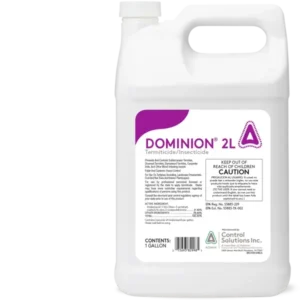
Dominion 2L (Imidacloprid 21.4%)
Professional non‑repellent concentrate for ants, termites, and plant pests like scale, aphids, and mealybugs.
- Perimeter ant treatment — Mix 0.6 fl oz per gallon. Spray around the foundation, entry points, and along edges where ants trail.
- Ant trails on vegetation — Mix 0.6 fl oz per gallon and spray shrubs, branches, and plant trails leading to the home.
- Scale, aphids, mealybugs on ornamentals — Mix 0.6 fl oz per gallon and spray foliage, undersides of leaves, stems, and trunks.
- Systemic soil drench for scale — Mix 0.2–0.4 fl oz per gallon and pour at the base of affected plants.
- Termite trenching — Mix 0.8 fl oz per gallon and apply 4 gallons per 10 linear feet of trench.
- Non‑repellent mode of action — Ants don’t detect it, so they continue foraging and transfer it through the colony.
- Ideal for honeydew‑dependent ants — Excellent for Argentine, White‑Footed, and Acrobat ants.
Competitive pricing + Fast Free shipping on all orders!
These two products are the same active ingredient at the same concentration. Pick whichever is cheaper or in stock. Mix at the label rate (usually around 0.6 fl oz per gallon for general ant control, but read your label) in a pump or battery-powered sprayer.
Where to spray:
- A 3-foot band along the foundation perimeter, 3 feet up the exterior wall
- The base of every tree on the property
- As high into tree trunks as your sprayer can reach
- Any tree branches actually touching the house
- Palm bases and the burlap material at the base of fronds
- Stumps, fence posts, and rotten wood pockets
- Firewood piles
- Mulch beds against the foundation
- Around AC pads, utility boxes, and irrigation equipment
Imidacloprid is non-repellent. The ants don’t detect it, so they walk through it, pick up the active ingredient, and transfer it through the colony like bait does. It’s the right tool for the “they keep showing up no matter what I do” situation.
What Doesn’t Work
A few things that come up over and over online that waste time or make carpenter ant problems worse.
- Spraying the visible trail before baiting. Single biggest mistake. Kills the foragers you can see, scatters the rest deeper into the structure, contaminates the area where bait needs to go, and leaves the colony fully alive. The trail comes back in days, often in a different location. Always bait first. Save contact spray for the actual nest if you find it.
- Treating only the house when the colony is outside. Most carpenter ant main nests are in trees, stumps, palm crowns, or other outdoor sites 20 to 60 feet from the structure. Foundation-only treatment chases the commuters without ever touching the city they live in. Broadcast around tree bases and outdoor harborage zones.
- Not fixing the moisture problem. Carpenter ants nest in moisture-damaged wood. If the roof leak, plumbing leak, or chronic condensation issue stays unaddressed, the damaged wood stays put, and the next colony that finds it moves right in. Treatment without moisture correction is temporary.
- Assuming the nest is somewhere obvious. Carpenter ants nest in genuinely weird places. If you’ve checked the obvious wet spots and can’t find the nest, that’s normal. The bait works whether you find the nest or not.
How to Find the Nest (If You Want To)
You don’t need to find the main nest for the bait to work. But if you want to, here’s how I do it.
- Night flashlight inspection. Walk the property at night when foraging activity peaks. Follow the busiest trails back to where they originate. Trails that disappear into a tree, a stump, or a garage door frame tell you where to focus.
- Morning return tracking. Foragers returning from overnight feeding move toward the colony. Watch an active trail in the early morning hours and follow workers backward to the source. This is the most reliable tracking method for carpenter ants – the direction of travel is unambiguous.
- The hollow wood test. Tap suspect wood with a screwdriver handle. Solid wood thuds. Excavated wood sounds drum-like.
- The stick poke. Walk the property with a stick and poke any soft, suspicious spot – rotted stump, palm crown, fence post that gives slightly when pushed, soft pocket in a tree where a branch broke off. Ants pour out of the ones that matter.
- Check the weird places too. Irrigation boxes, utility meter housings, garage side jambs, mailboxes, and any enclosed, slightly moist, undisturbed space. Carpenter ants have a way of nesting where you’d never think to look.
How to Keep Carpenter Ants From Coming Back
Ranked by impact.
- Fix moisture problems. Repair roof leaks, plumbing leaks, failed caulking around windows, rotted fascia, attic ventilation issues. Replace softened wood after the colony is gone. This is the single biggest long-term lever.
- Remove dead stumps and wood-to-soil contact. Stumps are prime carpenter ant real estate. Grind them out or treat them with imidacloprid spray every season. Don’t stack firewood directly against the house.
- Trim branches away from the structure. No branch should touch the roof, siding, or gutters. Carpenter ant trails come down branches and onto the house.
- Treat scale and aphids on landscape plants in spring. BioAdvanced granules around ornamental trees and shrubs annually keeps the honeydew supply suppressed. Carpenter ants without a food source don’t stick around.
- Pull mulch back from the foundation. Keep mulch under 3 inches deep and a 12-inch dry zone between mulch and the structure.
- Reapply the perimeter spray seasonally in areas with high pressure. Once a year imidacloprid treatment on the foundation, tree bases, and stumps holds the line.
Edge Cases Where DIY Hits a Wall
For carpenter ants themselves, DIY handles every case I’ve seen in 25 years when the bait-first method is followed correctly. The bait works whether you find the nest or not, and the rest of the kit covers the situations where the bait alone needs backup.
Where DIY genuinely struggles:
- Major structural moisture damage. If the carpenter ants are coming from rotted framing inside a wall, a soaked attic from a long-term roof leak, or major fascia rot, the moisture problem is bigger than a tube of caulk can fix. A roofer, plumber, or handyman is going to be part of the long-term solution. The pest part is straightforward. The construction part may not be.
- Carpenter ants found alongside subterranean termites. Both species are drawn to the same moisture-damaged wood, and finding them together is more common than people realize. If you find termite mud tubes or you do the breach test on a tube and get creamy-white soft-bodied insects, stop the ant treatment and call a termite inspector. The termites are the bigger structural threat, and termite treatment has different chemistry, different licensing, and different stakes. Handle the termites first, then come back to the carpenter ants.
- Colonies in fully inaccessible structural voids. A nest deep inside a structural beam or in a soffit space you can’t open up may need professional dust application through drilled access points. Most homeowners aren’t going to want to drill into their own framing.
That’s the list. Everything else on a residential carpenter ant job is handled by the bait + treatment method and a little patience.
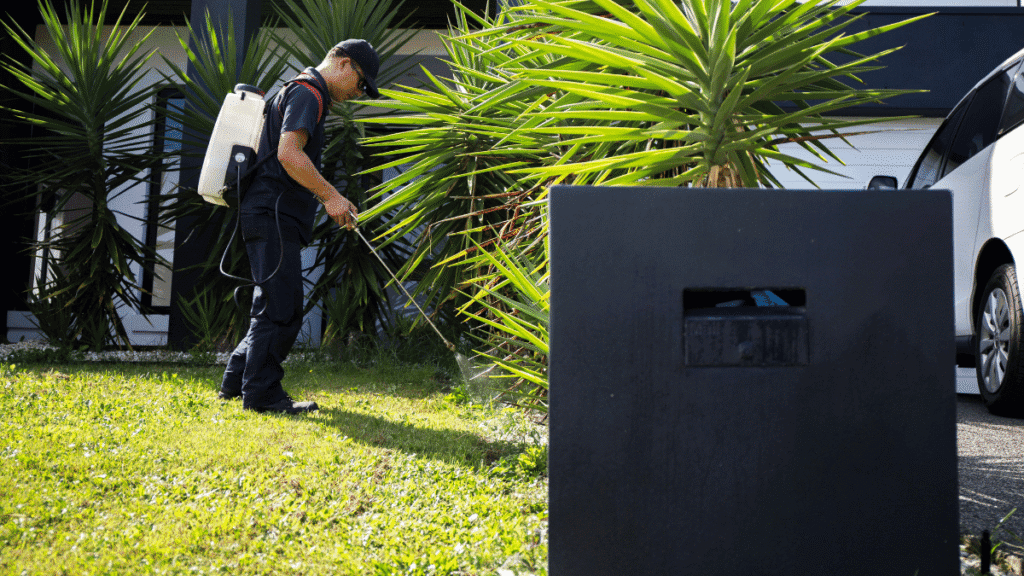
Carpenter Ants vs Fire Ants vs Bigheaded Ants: Comparison Table
| Feature | Carpenter Ants | Fire Ants | Bigheaded Ants |
|---|---|---|---|
| Scientific name | Camponotus spp. | Solenopsis invicta | Pheidole megacephala |
| Size | 6 to 12 mm — largest common household ant | 2 to 6 mm, variable | 2 to 4 mm, two distinct castes |
| Color | Black or reddish-black | Reddish-brown to dark brown | Reddish-brown |
| Nesting location | Moisture-damaged wood, trees, stumps, voids | Soil mounds in turf | Underground supercolony networks |
| Stinger | No | Yes — painful burning sting | No |
| Wood damage | Excavates galleries — does not eat wood | None | None |
| Key identifier | Large size, frass with insect parts, night activity | Aggressive stinging, dome mounds | Two distinct worker sizes, oversized soldier heads |
| Mud tubes on foundation | No | No | Yes — frequently confused with termites |
| Primary food | Insects, honeydew, protein | Insects, seeds, honeydew | Scavenged insects, honeydew, organic material |
| Primary treatment | Advance Bait plus non-repellent Fipronil Plus C spray | Advion fire ant bait plus mound treatment | Invict Blitz Granular Bait plus imidacloprid barrier |
| Difficulty to control | Moderate to high — satellite colony structure | Moderate | High — supercolony network |
If you’re not sure what you’re dealing with, compare carpenter ants to fire ants or bigheaded ants – both require completely different treatment strategies.
FAQ’s How Do I Get Rid Of Carpenter Ants?
IDENTIFICATION AND BASICS
What are carpenter ants in your house?
Carpenter ants are large wood-nesting ants in the genus Camponotus. Workers range from approximately 6 to 12 mm — roughly the size of a raisin to a sunflower seed — and are typically black or reddish-black. They excavate galleries in moisture-damaged wood for nesting. They do not eat wood. Their presence almost always indicates a moisture problem somewhere in or near the structure.
How do I tell carpenter ants from termites?
Carpenter ants have a pinched waist, elbowed antennae, and leave frass that contains wood shavings mixed with insect parts — legs, antennae, and organic debris. Termites have a thick uniform waist, straight antennae, and either build mud tubes or leave six-sided uniform pellets. Seeing large black ants and frass with insect parts confirms carpenter ants. Mud tubes anywhere in the structure require a termite inspection.
Where do carpenter ants usually nest?
Carpenter ants prefer:
- moisture‑damaged or rotting wood
- tree bases and rotten crotches
- palm crowns and under bark
- wall voids, attics, stairwells, and window frames
They can also nest in odd places like mailboxes, vehicles, and under household items. They’re not picky—as long as there’s shelter and some moisture, they can move in.
How big are carpenter ants?
Carpenter ants are the largest ant most homeowners will ever encounter.
A good size reference is a raisin, coffee bean, or sunflower seed. If you see an ant that size — usually black or reddish-black — there’s a strong chance you’re looking at a carpenter ant.
That size alone sets them apart from most other common household ants.
Where do I look for carpenter ant frass?
Frass can show up almost anywhere since carpenter ants nest in such a wide variety of locations.
Look for small piles of what looks like sawdust mixed with insect parts — it’s coarser and more textured than termite frass. Check along baseboards, below window frames, near door frames, and anywhere you’ve seen ant activity.
The pile is usually small and easy to miss, but finding one tells you a nest is close by.
Do carpenter ants actually destroy wood like termites?
No — and this is an important distinction. Carpenter ants don’t eat wood. They excavate it to build nesting galleries, and they strongly prefer wood that is already moisture-damaged, rotting, or soft.
Sound, dry wood is far less appealing to them.
This is also why they’re commonly found alongside subterranean termite infestations — termites damage the wood first and carpenter ants move into the softened areas. If you have both, addressing the moisture problem and the structural damage is just as important as treating the insects.
What does carpenter ant frass look like?
Fine and gritty, tan to light brown, dry and crumbly — similar to pencil sharpener shavings mixed with coarse sand and tiny wood fibers. The distinguishing feature is the insect parts mixed in — legs, antennae, and tiny black specks from colony waste material that the ants push out of their galleries. It is typically found in small piles below exit holes in trim, siding, baseboards, or ceiling seams.
How big are carpenter ants?
The major workers — often called bull ants — are the largest ant most homeowners will ever find indoors. A reliable size reference is a raisin, coffee bean, or sunflower seed. That size alone separates carpenter ants from virtually every other common household ant species.
TREATMENT AND PRODUCTS
What is the best way to get rid of carpenter ants?
The most reliable approach is a layered plan:
- Bait first with Advance Carpenter Ant Bait at 0.3 oz per 100 linear feet around the home and nearby trees or plants on dry ground.
- Spray second with a non‑repellent like Fipronil Plus C around the foundation and tree bases.
- Dust only when needed with Delta Dust in wall voids, attics, or other inaccessible nests.
This combination works even if you never find the main nest.
How do I use Advance Carpenter Ant Bait correctly?
Apply 0.3 oz per 100 linear feet around the exterior of the home.
Treat around trees, shrubs, and plants close to the structure.
Add a bit more bait where you see active carpenter ant trails.
Only bait when it’s dry—moisture will ruin the bait and make it ineffective.
Why should I use a non‑repellent spray like Fipronil Plus C?
Non‑repellent sprays are crucial for carpenter ant control because ants can’t detect them. They walk through the treated areas, pick up the active ingredient, and transfer it to other ants in the colony. Spraying a band around the home and up the bases of trees can:
- prevent new colonies from moving in
- kill hidden nests accidentally
- shut down foraging trails
When should I use Dust for carpenter ants?
Use Dust when the nest is in a place you can’t reach with sprays or bait, such as:
- wall voids
- stairwells
- attics
- tight structural cavities
Apply a light coating with a duster into the voids. Dust is long‑lasting and excellent for hidden carpenter ant nests.
What is the best treatment for carpenter ants?
Advance Carpenter Ant Bait applied correctly on dry ground is the most reliable starting point because it reaches hidden colonies through worker transfer. Follow with Fipronil Plus C non-repellent spray only if activity continues after several days of baiting. Use Delta Dust in confirmed void nests only. Fix the underlying moisture problem or the treatment is temporary.
Why should I bait before spraying?
Repellent sprays applied near bait disrupt foraging behavior and cause workers to avoid the treatment area — which means they also avoid the bait. Spraying first produces bait that no ant picks up. The sequence is not a preference; it is what determines whether the bait has any chance of reaching the colony.
Does baiting work if I cannot find the nest?
Yes — this is the primary advantage of baiting for carpenter ants. Workers carry the active ingredient back to both satellite colonies and the main nest regardless of whether you know where those locations are. A well-placed bait application on dry ground reaches colonies you would never find through inspection alone.
When should I use Dust?
Only when the nest is confirmed inside an inaccessible void — wall cavity, attic framing, hollow beam, or structural cavity you cannot treat with spray or bait. Delta Dust applied lightly into confirmed void entry points provides long-lasting control in protected spaces where liquid products cannot reach. It is the last tool in the sequence, not the first.
NESTING AND BEHAVIOR
Do I have to find the carpenter ant nest to get rid of them?
Not always. Bait plus a non‑repellent spray often works even if you never locate the nest. However, finding and treating the nest directly can speed up control, especially in heavy infestations or when ants keep returning.
How can I find a carpenter ant nest?
Look for:
- piles of frass (sawdust‑like debris)
- rustling or faint chewing sounds in walls
- ants trailing along tree trunks, fences, or wires
- moisture‑damaged wood around windows, doors, and roofs
The best time to track them is early morning or evening, following foraging ants back toward their source. Sometimes you’ll discover the nest is in a neighbor’s rotten stump or tree, not on your own property.
Can carpenter ants and termites be found together?
Yes. Carpenter ants and termites are often found in the same areas because both are attracted to moisture‑damaged wood. Termites create the damage, and carpenter ants later move into the softened wood to nest. If you see both, it’s important to address moisture issues and structural damage, not just the insects.
Can carpenter ants have more than one nest on my property?
Yes. Carpenter ants often have a main colony plus one or more satellite colonies spread across the same property.
The main nest is typically outdoors in a tree base, stump, or rotten wood, while satellite colonies can be located inside wall voids, attics, or other sheltered spots.
That’s one reason they can be frustrating to eliminate — treating one nest doesn’t always get them all, which is why baiting first is so effective at reaching the whole network.
Why are palm trees a common carpenter ant nesting site?
Palm crowns collect rainwater and hold moisture, which creates exactly the kind of damp environment carpenter ants prefer.
It’s a commonly overlooked nesting spot — homeowners focus on the foundation and stumps but don’t think to look up.
If you have palms on your property and can’t locate the nest anywhere else, the crown is worth checking.
Can carpenter ants really nest in vehicles and mailboxes?
Yes — these are real scenarios, not just theoretical ones. Carpenter ants will nest in almost any sheltered spot that offers some moisture and protection.
Mailboxes, vehicle door frames, outdoor furniture, and even toilet brush holders are places they’ve actually been found.
If you’re seeing carpenter ants inside your home and can’t find an obvious source, think outside the box — sometimes literally.
What’s the best time of day to track carpenter ants back to their nest?
Early morning is ideal.
Carpenter ants are most active at night, so by following them as they return to the nest in the early morning hours you can often trace them back to their colony.
Activity can be heavy overnight and then seem to disappear by day — that’s normal behavior, not a sign the treatment is working.
If you want to find the nest, get up early and watch where they go. They’ll lead you right to their nest.
Where do carpenter ants usually nest?
Outdoors in moisture-damaged wood — dead trees, stumps, rotting limbs, fence posts, palm crowns, and root flares. Indoors in wall voids, attic framing, window frames, and structural wood adjacent to moisture sources. Also in locations that make no intuitive sense including irrigation boxes, power meter housings, water meter boxes, mailboxes, vehicle door panels, and in one documented case, under a toilet scrubber brush holder. Carpenter ants are not constrained by your expectations of where ants should be.
Why are carpenter ants only visible at night?
Carpenter ants are primarily nocturnal foragers. Activity that looks moderate during daytime is often dramatically higher after dark — sometimes three times the visible activity. Tracking them is considerably easier at night with a flashlight or in the early morning as foragers return to the colony.
What is the difference between a main colony and a satellite colony?
The main colony contains the queen, brood, and primary population — typically located in a large piece of outdoor wood. Satellite colonies are queen-less worker groups that establish in separate locations closer to food sources. Most indoor carpenter ant activity originates from satellite colonies, not the main nest. The main nest can be 20 to 60 feet away from where you are seeing activity.
Do Carpenter Ants Nest in Cars?
Yes, ants in cars have warm voids, moisture pockets, and protected spaces that mimic the same conditions carpenter ants look for in wall voids or damp structural wood. I’ve personally found carpenter ant colonies inside vehicles, including one job where I opened the gap between the door and the body of a Ford Ranger and found a tight ball of carpenter ants packed into that seam. If someone is searching for how to get rid of carpenter ants in my car, this is exactly the kind of hidden nesting spot they’re dealing with, and it’s why I built a full guide on ants in cars.
Common nest spots include:
- Inside fuse-box cavities
- Door-frame voids
- Behind interior panels
- Inside the side‑mirror housing
- Under carpet underlayment
- In the fuel-door recess
Why Do Carpenter Ants Nest Under the Side Jamb in Garages?
Carpenter ants use the side jamb void because it stays dry, dark, insulated, and protected. The gap sits beside the garage door, and ants can slip past garage door seals easily. When heavy rain floods their underground satellite nests, they move into this void as an emergency dry space. Over my career I’ve found colonies here over a dozen times, so check this spot first if you see frass or stray workers in the garage.
PREVENTION
How do I keep carpenter ants from coming back?
Fix every moisture problem you can find. Replace damaged wood after treatment. Remove dead stumps. Trim tree branches away from the roofline. Keep mulch thin near the foundation. Treat tree trunks and palm crowns seasonally as part of a perimeter program. Carpenter ants return when the conditions that attracted them remain unchanged.
Why do carpenter ants keep coming back every year?
Almost always because the moisture source driving the infestation was never corrected, a tree or stump on or near the property continues to harbor the main colony, or both. A carpenter ant problem that resolves with treatment and then returns the following season is telling you something structural or environmental is still attracting them. The treatment was correct. The root cause was not addressed.
SAFETY, TIMING, & EXPECTATIONS
Is it safe to treat carpenter ants myself?
Yes, as long as you follow the product labels and keep baits, sprays, and dusts away from children and pets. Use bait outdoors or in protected areas, apply sprays only where directed, and use dust in enclosed voids. Always read and follow label directions—it’s the law and the safest way to treat.
How long does it take to get rid of carpenter ants?
With a good bait and non‑repellent spray program, you can often see a major reduction in activity within 1 week, but full elimination may take longer depending on:
- nest size
- number of satellite colonies
- moisture conditions
- whether the nest is on your property or a neighbor’s
Dusting a known nest can speed things up significantly.
Will carpenter ants come back after treatment?
They can, especially if:
- moisture problems remain
- rotting wood isn’t repaired
- trees and stumps near the home are left untreated
Maintaining a non‑repellent perimeter, fixing leaks, and addressing damaged wood greatly reduces the chance of carpenter ants returning.