
TL;DR: The Fix Depends on the Ant
Every ant species in your car needs a different bait; and using the wrong one (or cleaning first, or spraying Raid) can make the infestation explode.
Scroll to the ant that matches what you’re seeing; each species section links directly to the exact bait that kills thatant in a vehicle, plus the correct placement spots inside and outside your car for full colony elimination.
Finding ants in your car is one of those discoveries that makes you question every life decision that led to this moment — and it’s usually the moment you start Googling how to get rid of ants in your car before you lose your mind. Whether it’s a trail of tiny workers marching across your dashboard or — and we say this with genuine sympathy — a carpenter ant the size of a small helicopter crawling up your steering wheel, the experience is universally unpleasant.
Here’s the thing: ants in vehicles are extremely common, and they’re almost never solved by the products people reach for first. A can of Raid, a deep interior clean, a prayer to whatever deity oversees automotive pest control — none of these work. In fact, two of those three options can make the situation significantly worse.
This guide walks you through the correct approach — species by species, product by product — so you can eliminate the colony rather than just relocate it.
Why Ants Enter Cars in the First Place
Ants enter vehicles for two primary reasons: food and displacement.
Food is self-explanatory. If there are crumbs under your seat, a forgotten french fry in the seat track, or a receipt from a drive-through tucked in the center console, ants will find it. They have been finding food in inconvenient places since before humans invented inconvenient places.
Displacement happens when flooding, lawn treatment, or environmental pressure forces a colony to relocate. Your car, warm and full of nooks and crannies, looks like a perfectly reasonable new home. Ants will crawl up the tires to reach it — and if you’re parked near grass blades, branches, or anything else touching the vehicle, they’ll use those as entry ramps too. The weatherstripping seam that runs around every door is a particular favorite — ants treat it as a highway straight into the interior.
The most important thing to understand: your car is often just a food stop, not the nest site. Before you treat anything inside the vehicle, walk around and inspect the parking spot. Check the mulch, the lawn edges, the sidewalk cracks, and any trees or plants near where you park. In many cases the nest is out there and the ants are simply commuting.
The Two Rules That Determine Whether Your Treatment Works
Rule 1 — Do Not Deep Clean Before Baiting
This one runs counter to every instinct and we understand that. Your car has ants in it. You want to clean it. Resist.
Ants navigate using pheromone trails — invisible chemical pathways that guide the entire colony from the nest to the food source and back again. These trails are what will lead every worker in the colony straight to your bait placement. Wipe them away with cleaning products and you’ve essentially deleted the colony’s GPS. The bait sits there. Nobody finds it. You wonder why nothing is working.
Clean the car after the colony is eliminated. Not before.
Rule 2 — Never Use Repellent Sprays
Raid and similar store-bought contact sprays are repellent-based, meaning ants can detect them and actively avoid the treated area. For many ant species this doesn’t just scatter the workers — it causes budding, where a single threatened colony splits into multiple new colonies that relocate to different areas of the vehicle or the surrounding environment.
The following species are known budding risks when treated with repellent sprays: Pharaoh ants, Argentine ants, odorous house ants, ghost ants, crazy ants, white-footed ants, and acrobat ants. If you have any of these species and you spray them with Raid, you may turn one problem into five. The correct approach for all of these species is non-repellent bait — applied correctly and left alone to work.
General Baiting Technique
Regardless of species, the baiting approach in a vehicle follows the same principles.
Use Micro-placements
A bait placement the size of a grain of rice is enough. You are not trying to feed the colony — you are trying to get them to carry the active ingredient back to the nest. Small placements are picked up and carried. Large globs sit there, dry out, and get ignored.
Protect your car’s interior
Avoid getting bait directly on fabric, leather, or plastic surfaces. Two easy solutions: tear off a small piece of the product’s cardboard packaging and place the bait on that, or save small bottle caps — a water bottle cap is ideal — and use those as bait stations throughout the interior. Both approaches keep the bait contained, make cleanup easy, and look significantly more intentional than random dots of gel on your center console.
For gel and liquid baits in hot weather:
Heat degrades bait quickly. In a vehicle that sits in the sun, bait can break down and lose its attractiveness within hours. Check placements daily and replenish as needed. A fresh micro-placement is always more effective than a dried-out one.
Where to place bait inside the vehicle:
- Seat tracks along the floor — prime foraging corridors
- Door seams and along the weatherstripping highway
- Center console edges and interior
- Under floor mats In the seat-belt retractor cavity — food from the seat belt makes this a surprising ant hotspot
- Around the fuse box and any area with slight warmth from electrical discharge
- The fuel door recess — colonies have been found nesting here
- Under the carpet — ants sometimes nest in the felt under-layment beneath the carpet itself
- Side mirror housing — yes, really. Carpenter ant colonies have been found living in side view mirrors
For granular baits:
Granular baits are applied outside the vehicle only — never inside.
Apply in the morning or evening on completely dry ground. Moisture from rain or dew will ruin granular bait.
Pro Tip – Granular Bait and Driveway Staining
Granular baits have an oily quality that can leave small stains on concrete, pavers, and light-colored driveways — think tiny oil spots. They’re usually not permanent but they can be visible.
To avoid this, apply granular bait in landscaping areas, along lawn edges, and in mulch beds rather than directly on paved surfaces. If you do apply on pavement, blowing it off afterward prevents staining.
Only apply in dry conditions only — wet granules are ruined granules.
Identify Your Ant
The species determines the bait. Using the wrong product is the most common reason ant treatments fail. Take a close look at what you’re dealing with before you buy anything.
Each section below covers one ant species — what makes them distinct, where their colony is likely located relative to your vehicle, and exactly what product to use. Links to the full species profile pages are included for detailed identification help.
Acrobat Ants
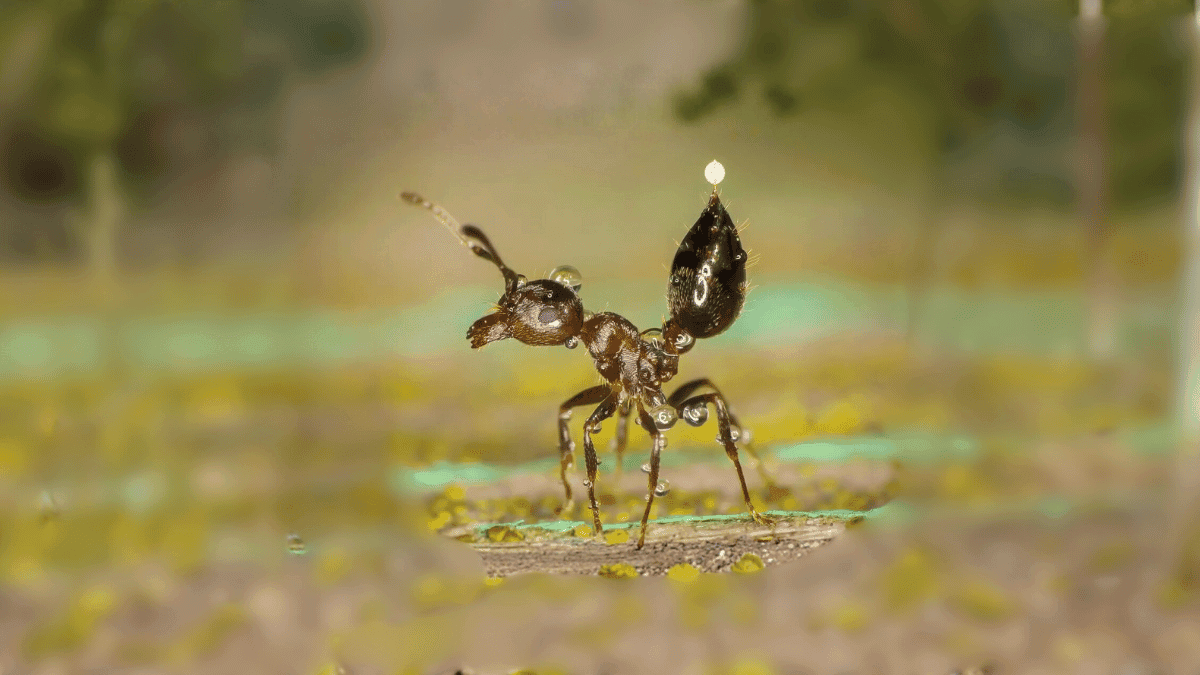
Quick ID: Acrobat ants raise their abdomen straight up over their body when disturbed — like a tiny circus performer. Heart-shaped abdomen. Usually found near moisture-damaged wood or leaf litter.
Where the nest is: Almost always outside the vehicle. Check the surrounding brush, leaf litter, and any mulch near the parking spot. They’re coming in to forage, not to move in.
Product: Advion Ant Gel
How to treat: Apply micro-placements of Advion Gel along active trails on and around the surrounding vegetation and mulch near where you park. Focus outside the vehicle first. Place a few micro-placements inside along the weatherstripping seam and in door seams if you’re seeing interior activity. Do not clean first, do not spray.
Budding risk: Yes. Acrobat ants will splinter if treated with repellent products. Bait only.
Have a widespread problem? See the full Acrobat Ant Treatment Guide for step‑by‑step instructions and more photos
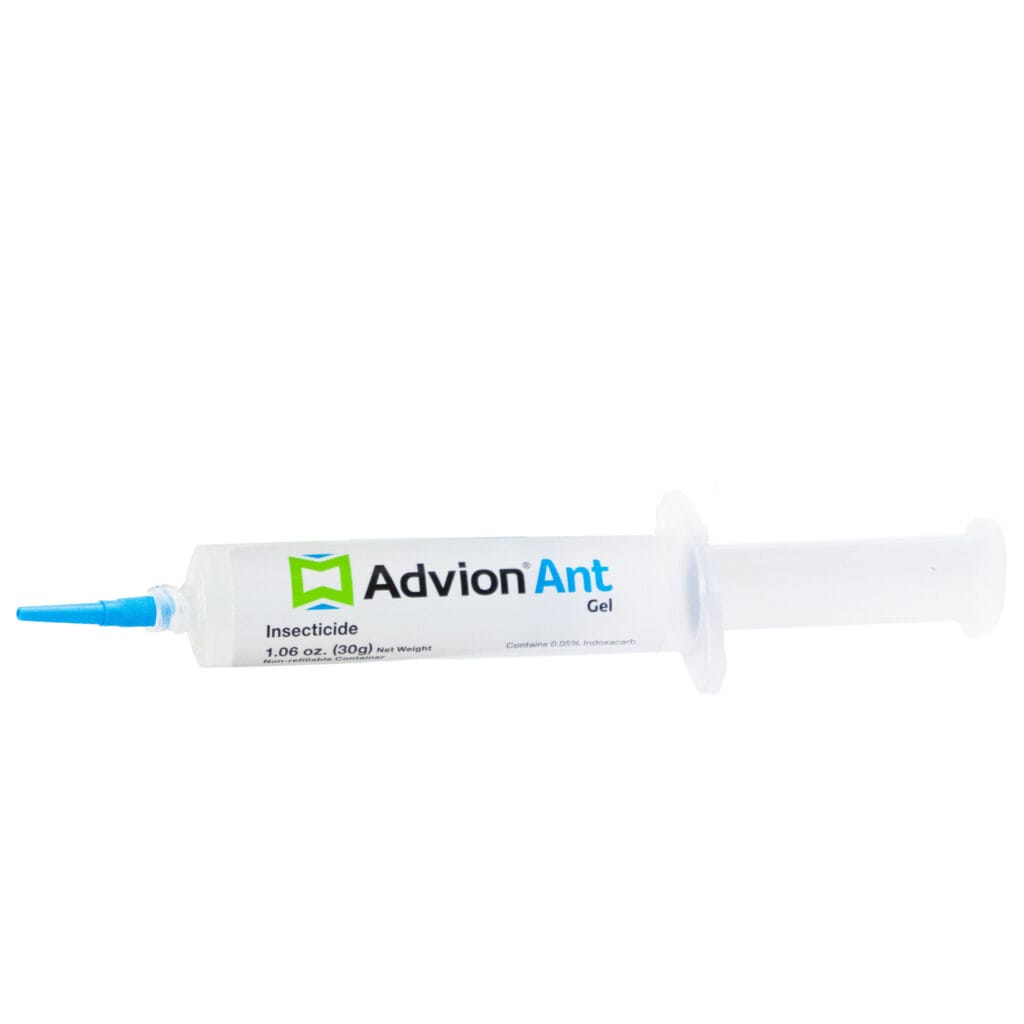
Advion Ant Bait Gel
Advion Ant Bait Gel is highly attractive to sweet‑feeding ants and uses indoxacarb, a powerful non‑repellent active ingredient. Its delayed‑kill action lets ants feed, return to the nest, and share the bait, leading to full colony elimination. Expect noticeable reduction within just a few days of application.
- Designed to be irresistible to sweet‑feeding ants
- The translucent, no odor, non-staining formulation maintains its integrity for extended periods
- Ants consume Advion Ant gel bait over an extended period, resulting in thorough control
- Works indoors and outdoors
- Doesn’t run or drip

Available on Amazon!
Argentine Ants
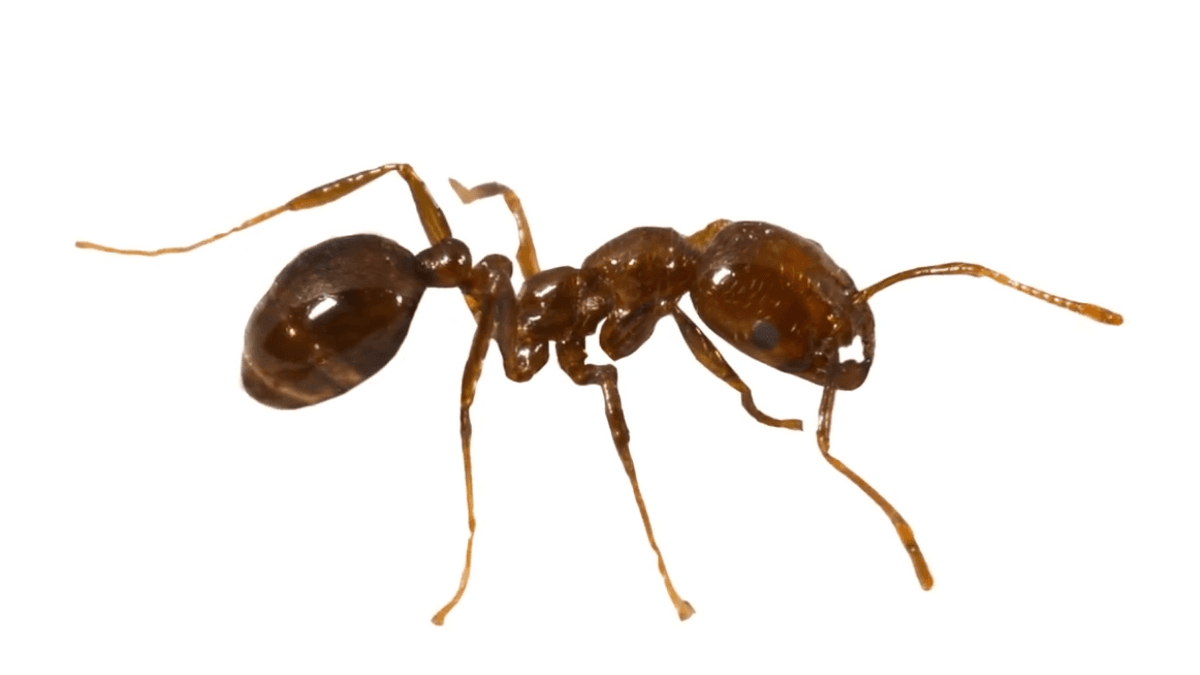
Quick ID: Small, uniform brown ants moving in smooth, organized trails. No stinger. Give off a musty or greasy odor when crushed.
Where the nest is: The trees and plants near your vehicle. Argentine ants form massive supercolonies that can stretch across entire neighborhoods. Your car is a food stop on a very long commute.
Product: Advion Ant Gel
How to treat: Focus bait heavily in the trees and plants near where you park — along branches, at the base of trunks, and in any mulch beds. Apply micro-placements inside the vehicle along active trails and in the usual interior hot spots. The outdoor treatment is the real fix.
Budding risk: Yes. One of the classic budding species. Repellent sprays will scatter this colony across a wider area. Bait only.
Have a widespread problem? See the full Bigheaded Ant Treatment Guide for step‑by‑step instructions and more photos
Advion Ant Bait Gel
Advion Ant Bait Gel is highly attractive to sweet‑feeding ants and uses indoxacarb, a powerful non‑repellent active ingredient. Its delayed‑kill action lets ants feed, return to the nest, and share the bait, leading to full colony elimination. Expect noticeable reduction within just a few days of application.
- Designed to be irresistible to sweet‑feeding ants
- The translucent, no odor, non-staining formulation maintains its integrity for extended periods
- Ants consume Advion Ant gel bait over an extended period, resulting in thorough control
- Works indoors and outdoors
- Doesn’t run or drip
Available on Amazon!
Bigheaded Ants
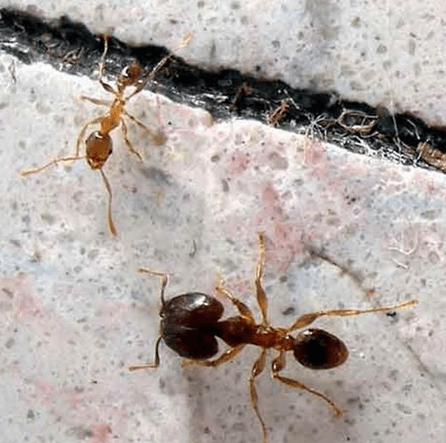
Quick ID: Two distinct worker sizes — tiny minor workers and larger soldiers with disproportionately large, blocky heads. Often confused with fire ants but don’t sting. Leave small sandy soil piles and mud tubes along foundations and pavement edges.
Where the nest is: In the ground near the vehicle. Often in the lawn, mulch, or soil within a few feet of where you park.
Product: InVict Blitz Granules
How to treat: Apply InVict Blitz Granules in the soil and lawn area near the parking spot on dry ground in the morning or evening. Broadcast lightly — do not pile. Give it 48 hours to circulate through the colony before expecting to see results. Place Advion Ant Gel micro-placements inside the vehicle along active trails while the granular bait works on the nest.
Note: Bigheaded ants form supercolonies with multiple satellites. One treatment may not reach every nest. Be prepared to reapply.
Have a widespread problem? See the full Bigheaded Ant Treatment Guide for step‑by‑step instructions and more photos
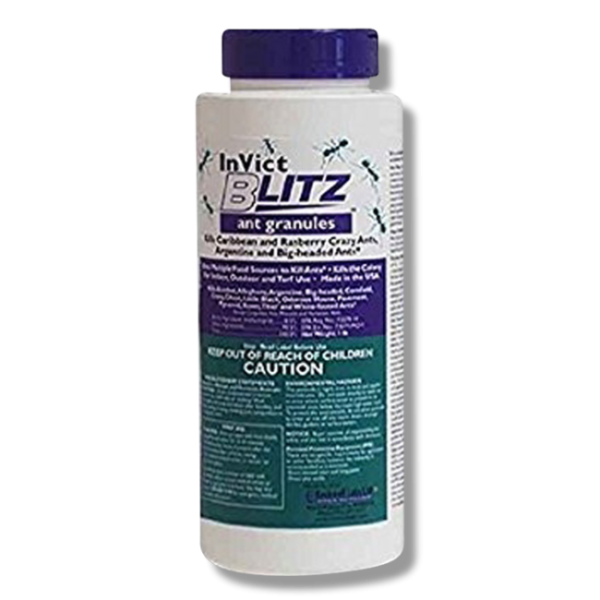
InVict Blitz Ant Granules
Bait Matrix Specifically Designed and Proven Highly Attractive to Persistent Ant Species such as Tawny/Caribbean/ Raspberry Crazy, Argentine and Big-Headed Ants
- Broadcast or mound treatment
- Extremely attractive bait
- Kills the entire colony
- Delayed kill formula
- Low odor
- Trusted by pest control professionals
Available on Amazon!
InVict Blitz Ant Bait Label – InVict Ant Bait MSDS
Carpenter Ants
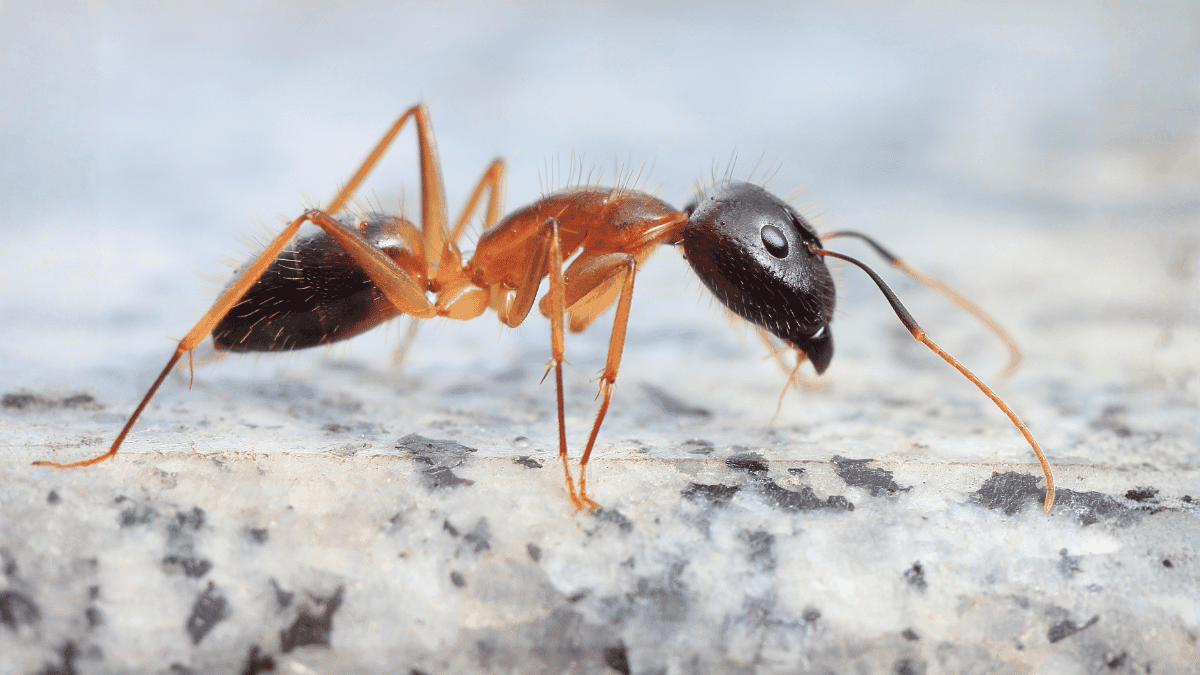
Quick ID: The largest ant most people will ever encounter in a vehicle. Black or reddish-black. About the size of a raisin or coffee bean. If you see a large ant in your car and your first instinct is to question your life choices, it’s probably a carpenter ant.
Important note: Carpenter ants can sting. They usually won’t unless provoked, but finding one in your lap at highway speed counts as provoking. You have been warned.
Where the nest is: Anywhere. Carpenter ants in vehicles have been found in side view mirrors, inside door panels, inside center consoles, and in any void that holds a little moisture. They’ve also been found in nearby trees, fence posts, and rotten wood near the parking area. When the nest is in a tree or exterior structure, the car is just a food source. When the nest is in the car itself — which happens more than you’d expect — you have a more interesting afternoon ahead of you.
Product: Maxforce Fleet Carpenter Ant Bait
How to treat: Place Maxforce bait along active trails both inside and outside the vehicle. Apply near any tree bases, stumps, or wooden structures near the parking spot. Inside the vehicle, target the weatherstripping seam, seat tracks, door panels, and any area where you’ve seen activity. If the nest is inside the car, bait placed near the colony site will be taken directly.
Have a widespread problem? See the full Carpenter Ant Treatment Guide for step‑by‑step instructions and more photos
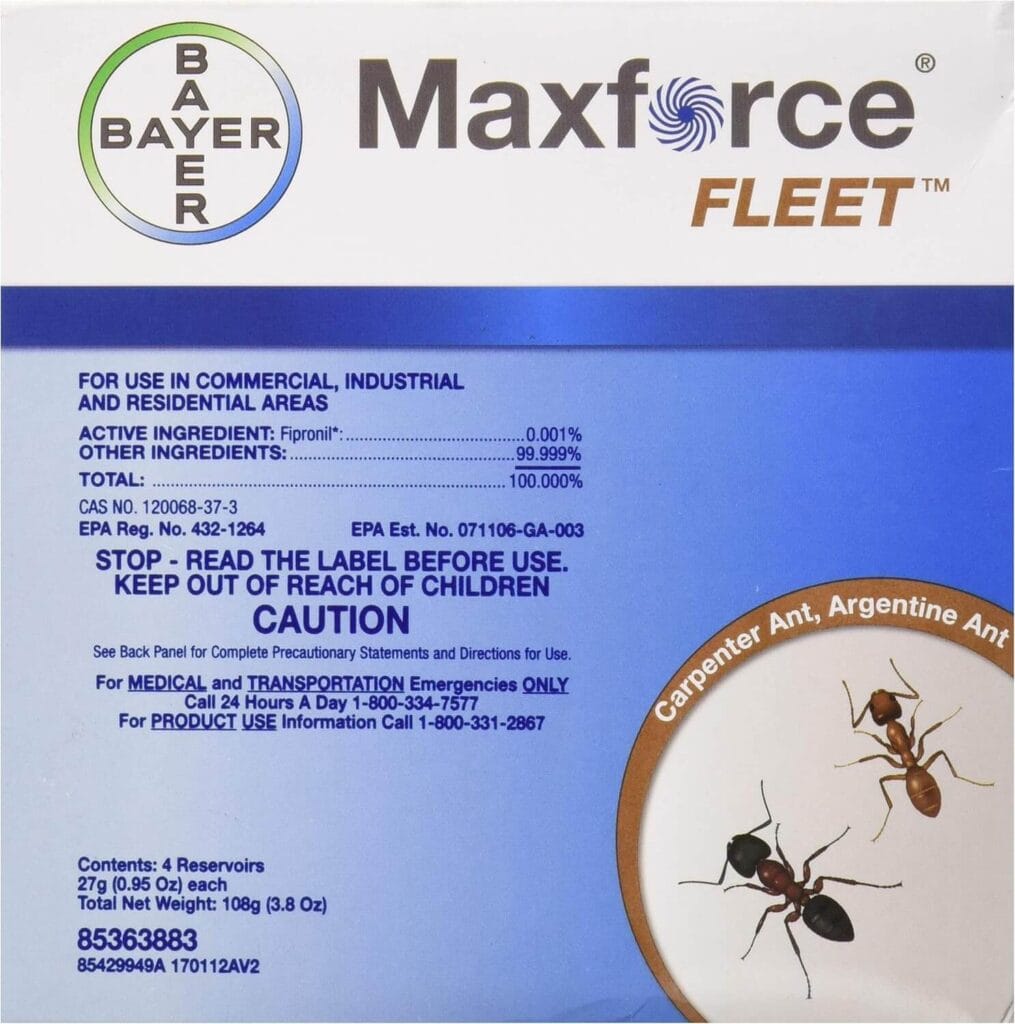
Max Force Fleet Ant Gel
Maxforce Fleet delivers fast, deep colony kill with a thick fipronil gel that carpenter ants and other major species eagerly feed on and carry back to the nest.
- Professional fipronil formula designed for carpenter ants, Argentine ants, pharaoh ants, odorous house ants, and more
- Fast colony elimination in as little as 3–5 days
- Thick, non‑runny gel sticks to vertical surfaces and stays where you place it
- Slow‑acting transfer effect lets foragers feed the queen and brood before dying
- “Domino effect” kill spreads through grooming and contact for full colony collapse
- Ready‑to‑use reservoirs make precise indoor placement simple and clean
Available on Amazon!
Fire Ants
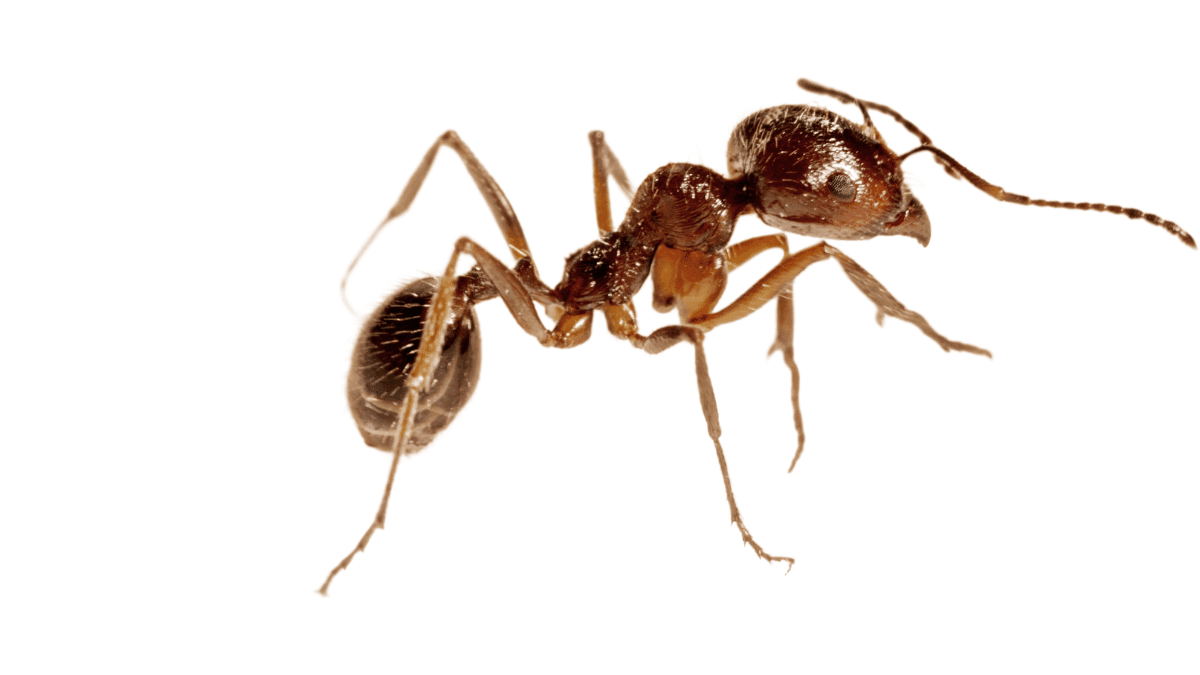
Quick ID: Reddish-brown, aggressive, and they will absolutely sting you. Multiple times. Enthusiastically. If you disturb what you suspect is a fire ant situation in your vehicle, do so carefully.
Where the nest is: Always in the ground near the vehicle. Fire ants do not nest inside cars — they’re coming up from a mound in the surrounding soil or lawn.
Product: Advion Fire Ant Bait — works for both native and imported red fire ants
How to treat: Broadcast Advion Fire Ant Bait around the mound and surrounding lawn area on completely dry ground. Do not apply directly on the mound. Apply in the morning or evening when ants are actively foraging. Place micro-placements of Advion Ant Gel inside the vehicle along active trails. Once the outdoor colony collapses, indoor activity stops.
Dry ground rule: Fire ant bait is oil-based. Wet bait is ruined bait. Check the forecast before applying.
Have a widespread problem? See the full Fire Ant Treatment Guide for step‑by‑step instructions and more photos
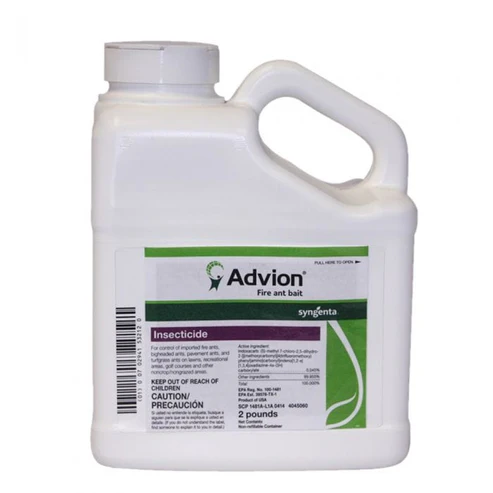
Advion Fire Ant Bait – Syngenta – 2lb
Advion fire ant bait effective and fast acting. Combined with an alluring formulation, Advion ensures control of ants in 24-72 hours for fast colony control.
- Broadcast or mound treatment
- Extremely attractive bait
- Kills the entire colony
- Delayed kill formula
- Low odor
- Trusted by pest control professionals
Available on Amazon!
Advion Fire Ant Bait Label – Advion Fire Ant Bait MSDS
Ghost Ants
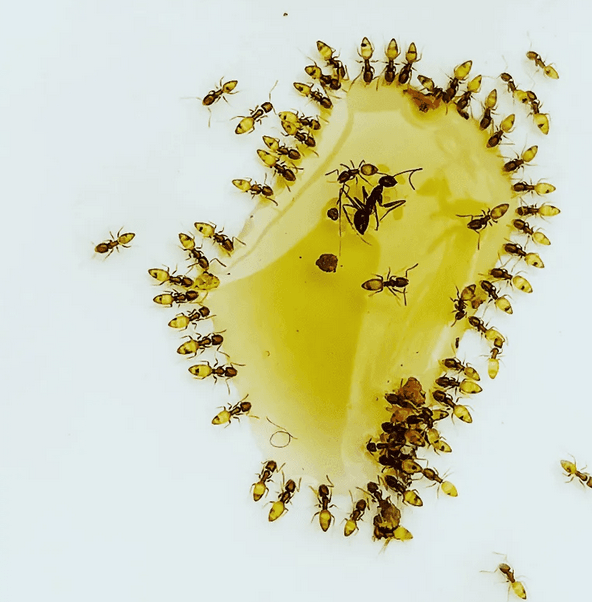
Quick ID: Tiny ants with a dark head and thorax and a pale, almost translucent abdomen and legs. They seem to partially disappear against light surfaces, which is unsettling in a way that’s difficult to fully articulate.
Where the nest is: Possibly inside the vehicle itself. Ghost ants are one of the few species that will genuinely move into a car. They’ve been found nesting in door frames — between the door and the door panel, inside the fuse box area, in the felt underlayment under carpet, and in other warm, protected interior voids. One colony was found living between a driver’s door and the door frame. It was as surprising to discover as it sounds.
Product: Advion Ant Gel — micro-dot placements
How to treat: Apply the smallest possible placements — truly micro-dot sized — along active trails throughout the interior. Focus on the weatherstripping seam, around electrical components, inside door seams, and anywhere you’ve seen activity. Ghost ants respond extremely well to Advion. Do not use repellent products — ghost ants are a textbook budding species and will fragment across the vehicle interior if disturbed with spray.
Budding risk: High. Bait only. Very small placements. Patience.
Have a widespread problem? See the full Ghost Ant Treatment Guide for step‑by‑step instructions and more photos
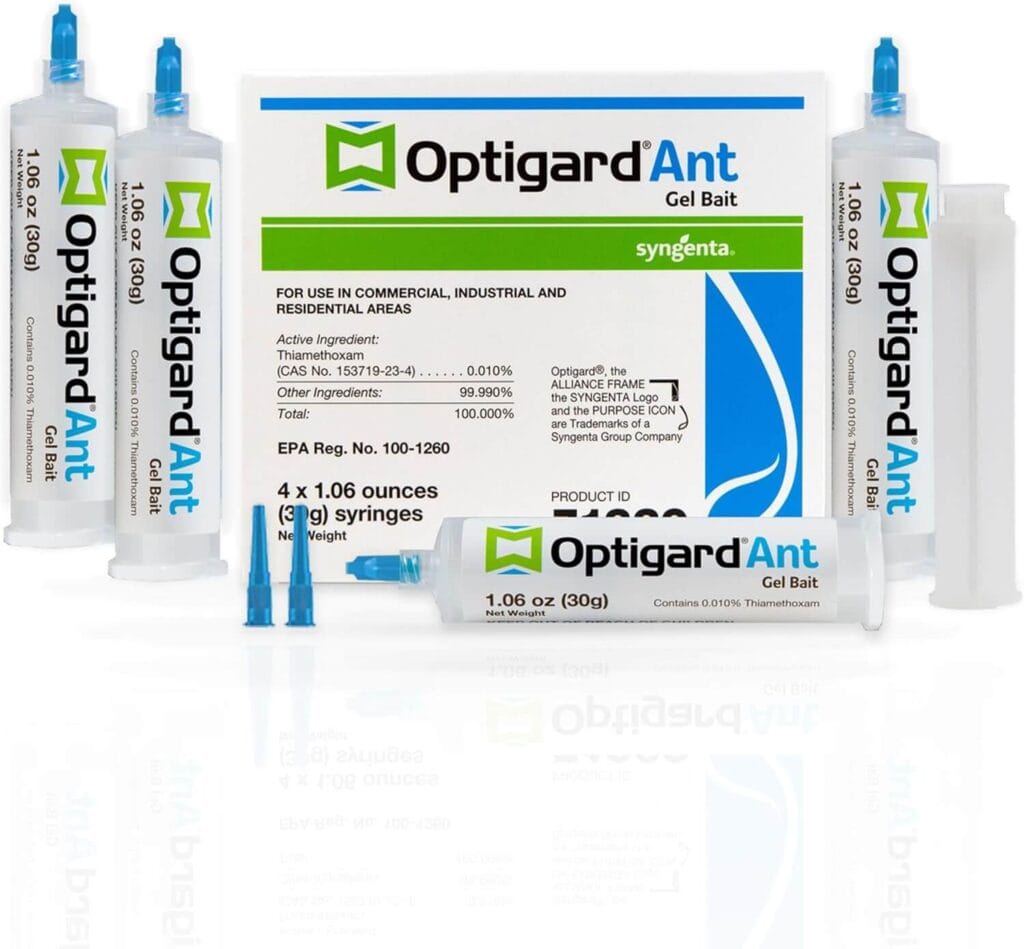
Syngenta – Optigard Ant Bait Gel Box – 4 Tubes w/ Plunger
Optigard Ant Gel Bait delivers fast, reliable colony kill with a clean, sugar‑based gel that ants aggressively feed on and carry back to the nest.
- Professional‑grade formula with 0.01% thiamethoxam for deep colony elimination
- Highly attractive sugar‑gel matrix that pulls in all major ant species
- Perfect consistency — not runny, so ants can easily carry it back to the nest
- Odorless, stainless, and easy to apply in cracks, crevices, and tight spaces
- 4 ready‑to‑use 30g tubes with plunger for precise indoor or outdoor placement
- Ideal for widespread or persistent infestations where sprays alone fail
Available on Amazon!
Harvester Ants
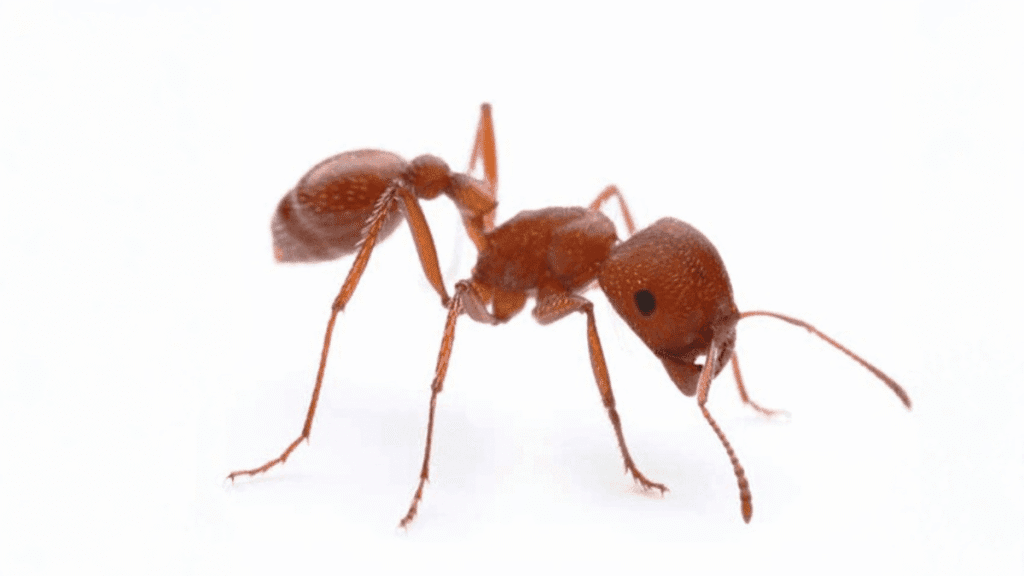
Quick ID: Large, robust ants — reddish-brown to dark red — with a distinctive square-shaped head. Often seen near bare soil clearings they create around their nest entrance. More common in drier, western regions.
Where the nest is: In the ground near the vehicle. Harvester ants are ground nesters and are coming up to the car to forage. They are not nesting inside.
Product: Extinguish Plus Fire Ant Bait
How to treat: Apply Extinguish Plus around the nest entrance and in a broadcast pattern across the surrounding area on dry ground. Harvester ants forage over a wide area so treat generously around the parking zone. Place micro-placements of gel bait inside the vehicle along active entry points and trails.
Have a widespread problem? See the full Harvester Ant Treatment Guide for step‑by‑step instructions and more photos
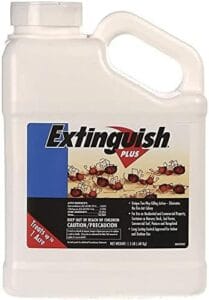
Extinguish Plus Fire Ant Killer Bait
Extinguish Fire Ant Bait delivers powerful, long‑lasting fire ant control by combining fast‑acting hydramethylnon with methoprene to wipe out workers and stop the queen from producing new ants.
- Dual‑action formula with hydramethylnon (kills workers) + methoprene (sterilizes the queen!)
- Ideal for large, widespread infestations across lawns, pastures, rangeland, and commercial turf
- Highly attractive granules that fire ants quickly pick up and carry deep into the mound
- Perfect for broadcast treatments — covers up to 1.5 acres per container
- Also works on harvester ants, big‑headed ants, and Argentine ants
- Easy application: spread lightly around mounds or broadcast across the yard on dry ground
Available on Amazon!
Pharaoh Ants
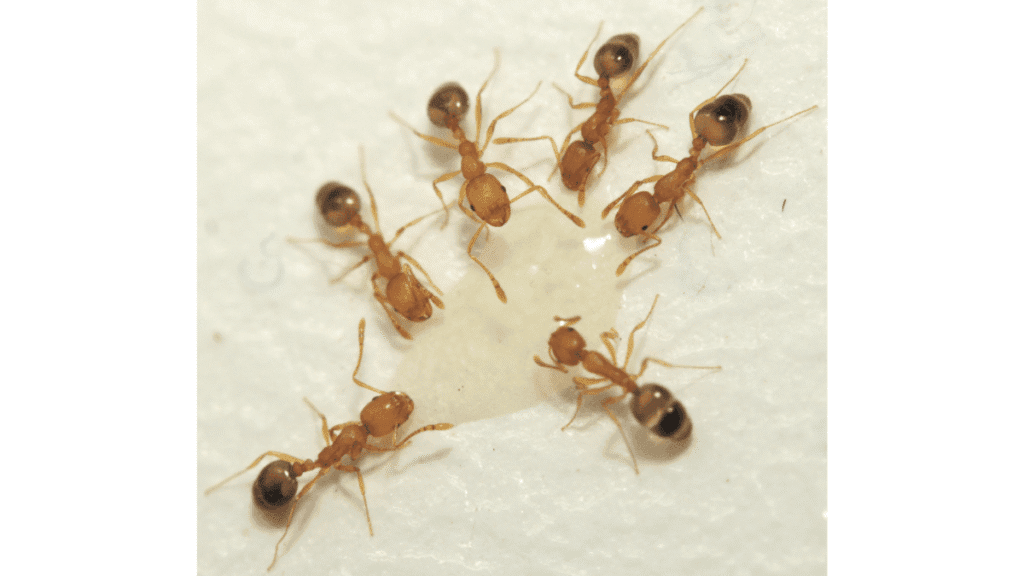
Quick ID: Very small, pale yellow to light brown ants. Often mistaken for baby ants of other species. Usually found in long, well-organized trails.
Where the nest is: Likely inside the vehicle. Pharaoh ants are one of the most committed indoor nesters in the ant world and they will absolutely establish colonies inside a car. They’re attracted to warmth from electrical components, fuse boxes, and any protected interior void. This is one of the more alarming species to find in a vehicle — not because they sting (they don’t) but because their colony can be deeply embedded in the car’s interior infrastructure.
Product: Optigard Ant Gel
How to treat: Apply Optigard in micro-placements along every active trail you can identify. Focus on the fuse box area, weatherstripping, door seams, seat tracks, under floor mats, and the felt underlayment under carpet. Place bait and leave it completely undisturbed. Do not clean. Do not spray anything.
Budding risk: Extreme. Pharaoh ants are the gold standard budding species. Repellent sprays with Pharaoh ants can turn one manageable colony into dozens of satellite colonies scattered throughout the vehicle. Optigard bait only. No exceptions.
Have a widespread problem? See the full Pharaoh Ant Treatment Guide for step‑by‑step instructions and more photos
Syngenta – Optigard Ant Bait Gel Box – 4 Tubes w/ Plunger
Optigard Ant Gel Bait delivers fast, reliable colony kill with a clean, sugar‑based gel that ants aggressively feed on and carry back to the nest.
- Professional‑grade formula with 0.01% thiamethoxam for deep colony elimination
- Highly attractive sugar‑gel matrix that pulls in all major ant species
- Perfect consistency — not runny, so ants can easily carry it back to the nest
- Odorless, stainless, and easy to apply in cracks, crevices, and tight spaces
- 4 ready‑to‑use 30g tubes with plunger for precise indoor or outdoor placement
- Ideal for widespread or persistent infestations where sprays alone fail
Available on Amazon!
Sugar Ants (Generic Small Sweet Feeding Ants)
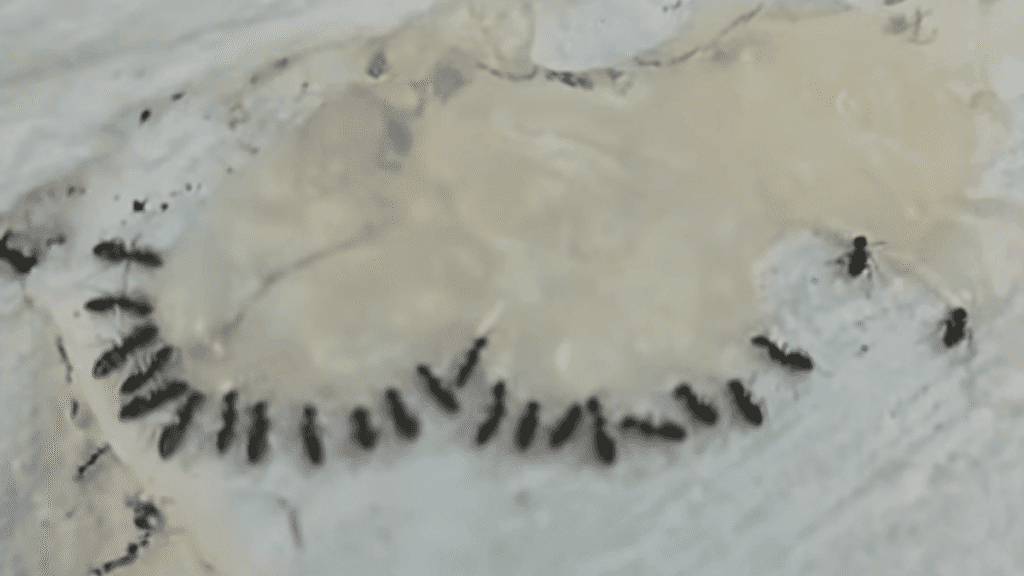
Quick ID: “Sugar ant” is a catch-all name for various small ant species that show up around sweet foods. If you have small ants in your car and can’t confidently identify the specific species, treat them as sugar ants while you work on identification.
Where the nest is: Either inside or outside the vehicle — often in nearby trees or vegetation. Sugar ants commonly trail from tree branches that touch or overhang the car.
Product: Advion Ant Gel
How to treat: Apply micro-placements inside along active trails and in the usual interior hot spots. Treat any nearby trees or vegetation with additional placements along branches and at the base of trunks. Trim any branches touching the vehicle to eliminate the entry ramp.
Have a widespread problem? See the full Sugar Ant Treatment Guide for step‑by‑step instructions and more photos
Advion Ant Bait Gel
Advion Ant Bait Gel is highly attractive to sweet‑feeding ants and uses indoxacarb, a powerful non‑repellent active ingredient. Its delayed‑kill action lets ants feed, return to the nest, and share the bait, leading to full colony elimination. Expect noticeable reduction within just a few days of application.
- Designed to be irresistible to sweet‑feeding ants
- The translucent, no odor, non-staining formulation maintains its integrity for extended periods
- Ants consume Advion Ant gel bait over an extended period, resulting in thorough control
- Works indoors and outdoors
- Doesn’t run or drip
Available on Amazon!
Tawny Crazy Ants
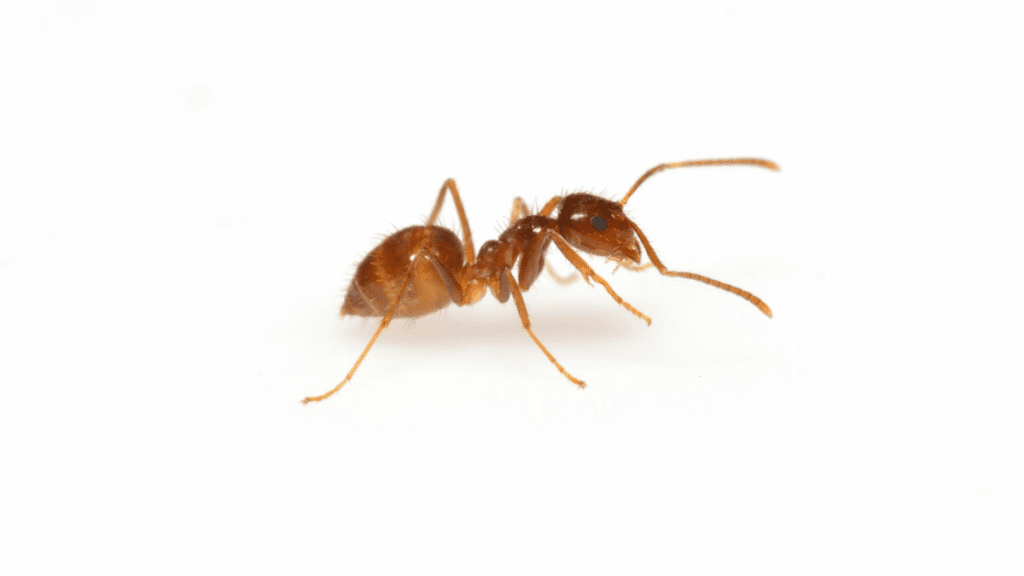
Quick ID: Small reddish-brown ants that move in a fast, erratic, scattered pattern rather than organized trails. The movement alone identifies them — no other common ant moves quite like this. About the size of a sesame seed.
Where the nest is: In the ground near the vehicle. Tawny crazy ants are notorious for nesting in almost any outdoor harborage — soil, mulch, leaf litter, under debris, around A/C pads — and sending foragers in all directions simultaneously.
Product: Advion Ant Gel inside the vehicle; Advion Ant Gel Stations for outside placement
How to treat: Inside the vehicle, apply micro-placements of Advion Gel along any trails you can identify — though with crazy ants, “trail” is used loosely. Outside, bait stations placed around the parking area are more practical than trying to follow their scattered movement. Crazy ants respond poorly to most common baits — Advion is one of the few that works reliably.
Budding risk: Yes. Repellent treatments with crazy ants scatter the population further. Bait only.
Have a widespread problem? See the full Crazy Ant Treatment Guide for step‑by‑step instructions and more photos
Advion Ant Bait Gel
Advion Ant Bait Gel is highly attractive to sweet‑feeding ants and uses indoxacarb, a powerful non‑repellent active ingredient. Its delayed‑kill action lets ants feed, return to the nest, and share the bait, leading to full colony elimination. Expect noticeable reduction within just a few days of application.
- Designed to be irresistible to sweet‑feeding ants
- The translucent, no odor, non-staining formulation maintains its integrity for extended periods
- Ants consume Advion Ant gel bait over an extended period, resulting in thorough control
- Works indoors and outdoors
- Doesn’t run or drip
Available on Amazon!
White-Footed Ants
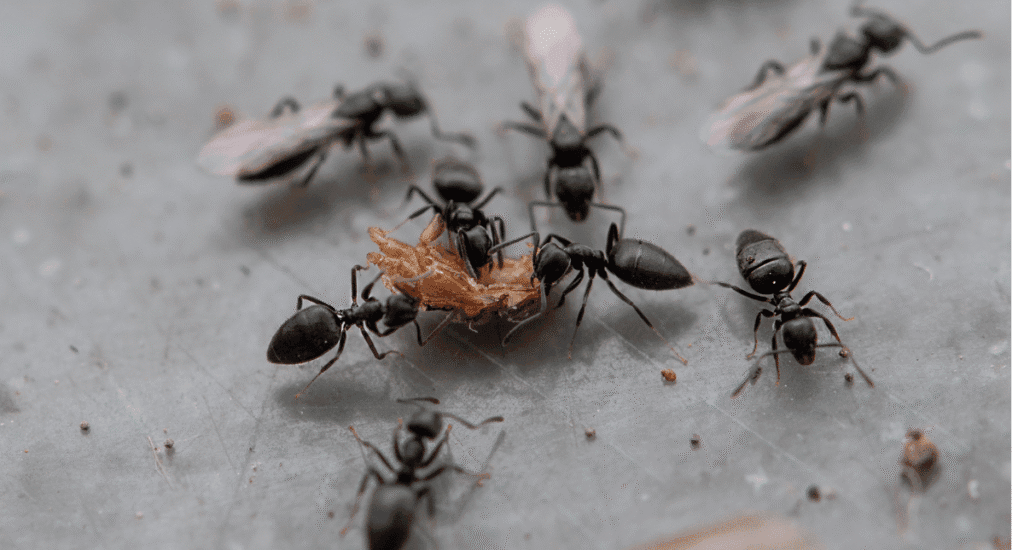
Quick ID: Small to medium black ants with distinctive pale — almost white — feet and lower legs. Usually found in very large numbers trailing along surfaces. Often mistaken for Argentine ants or small carpenter ants.
Where the nest is: In surrounding trees and vegetation. White-footed ants are classic tree nesters and they trail in massive numbers from vegetation down to food sources. Your car, parked under or near a tree, is a frequent destination.
Product: Optigard Ant Gel
How to treat: Place Optigard micro-placements along trails inside the vehicle and heavily in the trees and vegetation near the parking spot. White-footed ants trail in such large numbers that bait consumption can be rapid — check placements daily and replenish as needed. Treat the outdoor source aggressively.
Budding risk: Yes. White-footed ants will fragment colonies when hit with repellent products. Optigard bait only.
Have a widespread problem? See the full White-Footed Ant Treatment Guide for step‑by‑step instructions and more photos
Syngenta – Optigard Ant Bait Gel Box – 4 Tubes w/ Plunger
Optigard Ant Gel Bait delivers fast, reliable colony kill with a clean, sugar‑based gel that ants aggressively feed on and carry back to the nest.
- Professional‑grade formula with 0.01% thiamethoxam for deep colony elimination
- Highly attractive sugar‑gel matrix that pulls in all major ant species
- Perfect consistency — not runny, so ants can easily carry it back to the nest
- Odorless, stainless, and easy to apply in cracks, crevices, and tight spaces
- 4 ready‑to‑use 30g tubes with plunger for precise indoor or outdoor placement
- Ideal for widespread or persistent infestations where sprays alone fail
Available on Amazon!
Final Reminders Before You Start Your Ant Treatment
Inspect the parking spot first
Walk around the vehicle and check the surrounding area before opening any product. The nest is often out there, not in the car. Treating the exterior source is frequently the entire solution.
Identify before you buy
The species table above is a starting point. Each ant on this list has a full species profile page with detailed identification photos, behavior notes, and complete treatment protocols for home and yard infestations. If you’re not certain what you’re looking at, check the species page before purchasing a product — the wrong bait is worse than no bait.
Bait placement cleanup
When the treatment is complete and the colony is eliminated, gel bait residue wipes off painted surfaces easily with a damp cloth and will not damage the finish. Avoid getting gel on fabric, leather, or plastic during treatment — use cardboard packaging pieces or bottle caps as bait platforms to keep placements contained and cleanup simple.
The treatment will take time
Bait works because it travels back to the colony. That process takes days, not hours. Apply correctly, leave it alone, and resist the urge to clean or spray anything while the bait is working. Patience is the active ingredient.
Frequently Asked Questions: How Do I Get Rid of Ants in My Car, Truck, or SUV?
Causes & Entry Points
Why do I have ants in my car if it’s clean?
Ants don’t need visible crumbs – even tiny food oils, residue in seat tracks, or organic debris under floor mats can attract foragers. Cars also pick up displaced ants when colonies are flooded, treated, or disturbed outdoors.
How do ants get into a car?
Most ants climb up the tires, but they also use grass blades, branches, or anything touching the vehicle. Once on the car, they follow the weather‑stripping seam around the doors like a protected highway straight into the cabin.
Can ants get into a car even if I don’t eat in it?
Yes. Ants follow scent trails, moisture, and warmth — not just food. Cars parked near colonies, under trees, or in high‑activity areas can pick up ants even without food present.
Do certain weather conditions make ants enter cars more often?
Heavy rain, drought, lawn treatments, and extreme heat all push colonies to relocate. A car’s warm wiring, dark voids, and insulation make it an attractive emergency shelter.
Why do I have ants in my car if it’s clean?
Ants enter vehicles for two reasons — food and displacement. Even a very clean car can have enough residual food odor, crumbs in seat tracks, or organic debris under floor mats to attract foraging ants. Flooding or lawn treatment can also displace a colony that decides your car looks like suitable new real estate. Cleanliness helps but doesn’t guarantee protection.
Nesting Behavior & Species
Can ants actually nest inside a car?
Yes. Ghost ants, Pharaoh ants, Argentine ants, and odorous house ants commonly establish full colonies inside vehicles. They prefer warm, protected voids like door frames, fuse boxes, mirror housings, seat‑belt retractors, and the felt underlayment under the carpet.
Which ant species are prone to budding inside cars?
Pharaoh ants, Argentine ants, ghost ants, odorous house ants, white‑footed ants, bigheaded ants, rover ants, acrobat ants, and thief ants all bud when stressed — meaning spraying can cause multiple new colonies to form.
Why do ants choose cars as nesting sites?
Cars offer warmth, moisture, vibration‑free voids, and insulation. The wiring harness behind the dashboard and the seat‑belt retractor cavity are especially attractive because they stay warm and undisturbed.
How can I tell if ants are nesting in my car vs. just passing through?
Signs include: ants emerging from vents, consistent activity in the same area, ants carrying larvae, or ants appearing after the car has been parked away from vegetation. Nesting ants also appear at night when the car is still warm.
Treatment, Baiting & What NOT to Do
Will Raid or ant spray get rid of ants in my car?
Sometimes – but only in very specific situations.
If the colony is on the exterior bodywork, inside the fuel door, or in another spot where you can clearly see the nest and safely spray it, a quick hit with a contact insecticide can wipe out that small, exposed colony. But inside the cabin, Raid and similar sprays are repellent‑based, which means ants detect them, avoid them, and—if they’re a budding species—may split into multiple new colonies.
They also contain petroleum solvents that can stain fabrics, damage finishes, and leave the car smelling like bug spray.
For almost all interior infestations, non‑repellent bait is the correct and safest approach, and spraying should only be used when the nest is visible and the surface can be cleaned afterward.
Why shouldn’t I clean before placing bait in my car?
Cleaning removes pheromone trails — the chemical “GPS lines” ants use to find the bait. If you wipe them away, ants scatter and the treatment slows down.
How long does ant bait take to work in a car?
Expect visible reduction in 2–3 days and full elimination in 1–2 weeks. Hot weather speeds up bait acceptance; cold weather slows it down.
Can I use ant traps or gel bait in a hot car?
Yes, but place them in shaded areas. Extreme heat can dry out gel bait faster, so micro‑placements every 1–2 days keep it fresh and attractive.
Can I vacuum during treatment?
Not until activity stops. Vacuuming removes pheromone trails and bait residue — both are working in your favor.
Is it safe to drive while bait is in the car?
Yes. Ant baits are enclosed or placed in micro‑dots. Just avoid placing bait where it can smear onto hands, pets, or fabrics.
Why won’t Raid get rid of ants in my car?
Raid and similar contact sprays are repellent-based — ants detect them and avoid the treated area rather than picking up a lethal dose. For many species this triggers budding, where the threatened colony splits into multiple new colonies in different locations. You’ll kill a few visible ants and potentially multiply your problem. Professional-grade non-repellent bait is the correct approach.
Can I clean my car after treatment?
After the colony is eliminated, yes. During treatment, no. Cleaning removes pheromone trails and bait residue — both of which are working in your favor. Wait until ant activity has completely stopped before cleaning the interior.
Prevention, Aftercare & Long‑Term Control
When can I clean my car after treatment?
Wait until ant activity has fully stopped. Then you can vacuum, wipe surfaces, and remove any remaining bait placements.
How do I prevent ants from coming back?
Keep the car free of food residue, avoid parking under trees with heavy ant activity, and trim vegetation touching the vehicle. A quick monthly vacuum helps prevent new trails from forming.
Do I need to treat the outside of the car too?
If ants are climbing up the tires daily, treating the ground contact points or moving the parking location can help. You don’t treat the car exterior — you treat the access routes.
Can ants damage my car?
Yes. Some species chew insulation, nest in wiring channels, or short electrical components. Odorous house ants and Argentine ants are especially known for nesting in electrical voids.