

How Do I Get Rid Of Spiders In My Car?
TL;DR: Spiders in Cars
- Most spiders in cars aren’t dangerous. Only four types commonly show up: yellow sac, jumping, wolf, and widow spiders.
- They’re usually there for insects, shelter, or weather, not because your car is “infested.”
- Inside the car: A light, careful crack‑and‑crevice treatment with PT 221L is enough if needed.
- Outside / under the car: Use PT 221L or Devito CS (microencapsulated and effective for spiders).
- Prevention: Keep the car clean, drive it regularly, park in sun, and check mirrors/undercarriage occasionally.
Let’s start with the good news: the vast majority of spiders you’ll encounter in or around your vehicle are not going to hurt you in any meaningful way. Now the less good news: some of them are genuinely venomous, most of them are going to startle you at an inconvenient moment, and at least one species once triggered a massive automotive recall because it kept building webs in fuel vent lines and causing fires.
This guide covers the four spiders most commonly found in and around vehicles, why they’re there, what they’re actually doing, and how to deal with each one correctly.
Why Cars Attract Spiders
Most spiders end up in vehicles for one of three reasons:
1. They followed the insects. Cars accumulate insects — flies, gnats, and roaches in the cabin, die under the seats, and provide a reliable food source for hunting spiders. Yellow sac spiders and jumping spiders are in your car because your car is essentially a small, dark hunting ground with reliable prey.
2. They got displaced by weather. Wolf spiders are ground hunters that get pushed out of their outdoor habitat by heavy rain and flooding. Your car’s undercarriage, wheel wells, and body gaps are dry and protected. From a wolf spider’s perspective, the bottom of your SUV is a reasonable substitute for the rock pile it was living under yesterday.
3. The underside of your car is perfect spider habitat. Widow spiders live in dry, protected voids in the wild — under bark, in woodpiles, inside hollow structures. The underside of a vehicle, with its frame rails, subframe voids, wheel wells, and protected recesses, is essentially a purpose-built widow spider habitat. They’re not there by accident. They’re there because it’s ideal.
Why Spiders Start Moving When You Start the Car
Spiders rely heavily on vibration cues to detect prey and threats. When a car engine starts, the sudden, intense vibration overwhelms them. Their instinctive response is to move quickly to a more stable surface — which is why they suddenly appear on dashboards and steering wheels.
Spiders and Vehicles: Not a New Problem
Spiders take advantage of the small gaps and passages inside vehicles.
Automakers have dealt with spider‑related issues before.
Mazda recalled over 107,000 vehicles because yellow sac spiders built webs in fuel‑tank vent lines. Toyota recalled more than 800,000 vehicles after spiders clogged A/C drain tubes and caused water to back up onto airbag control modules. Suzuki recalled over 19,000 vehicles for the same vent‑line issue Mazda experienced.
How Car Cleanliness and Use Affect Spider Infestations
Cars that are driven often, kept clean, and parked in direct sunlight rarely develop spider issues.
Spiders prefer vehicles that sit untouched for long periods — stored cars, seasonal vehicles, and work trucks parked over the weekend with old trash still inside. Those conditions create stable, quiet hiding spots with occasional insects to hunt.
All Spiders Are Venemous (and Why They’re Not Stings)
Spider bites are envenomations, not stings. Spiders don’t have stingers like bees or ants; they inject venom with their fangs, which are part of their mouth. That means every spider bite is delivered the same way: with the mouthparts, not the rear end.
And yes, all spiders are venomous to some degree because venom is how they eat. But whether a spider can envenomate you depends on two things:
- Fang size: Many species have fangs so small they can’t even get through human skin. Those spiders are physically incapable of delivering venom to you, even if they try.
- Venom potency: Among the species that can pierce skin, venom toxicity varies widely. Some cause nothing more than a mild, bee‑sting‑level welt. Others — like widows — have venom potent enough to cause medically significant symptoms.
The important part isn’t whether a spider has venom (they all do). It’s whether they can deliver it and whether the venom is strong enough to matter.
The Four Spiders Most Commonly Found in Cars
1. Yellow Sac Spiders — The Most Common Spider Inside Your Car
If you’ve ever been bitten by something in your car and couldn’t figure out what it was, there’s a reasonable chance it was a yellow sac spider. They are the number one spider found inside vehicle passenger compartments, and they are responsible for a disproportionate share of unexplained “spider bites” reported by drivers and passengers.
What They Look Like
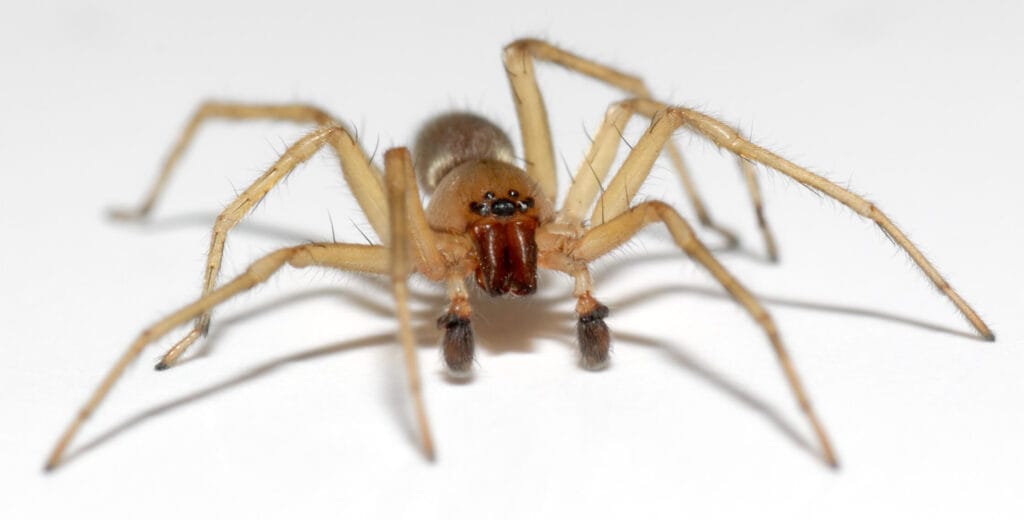
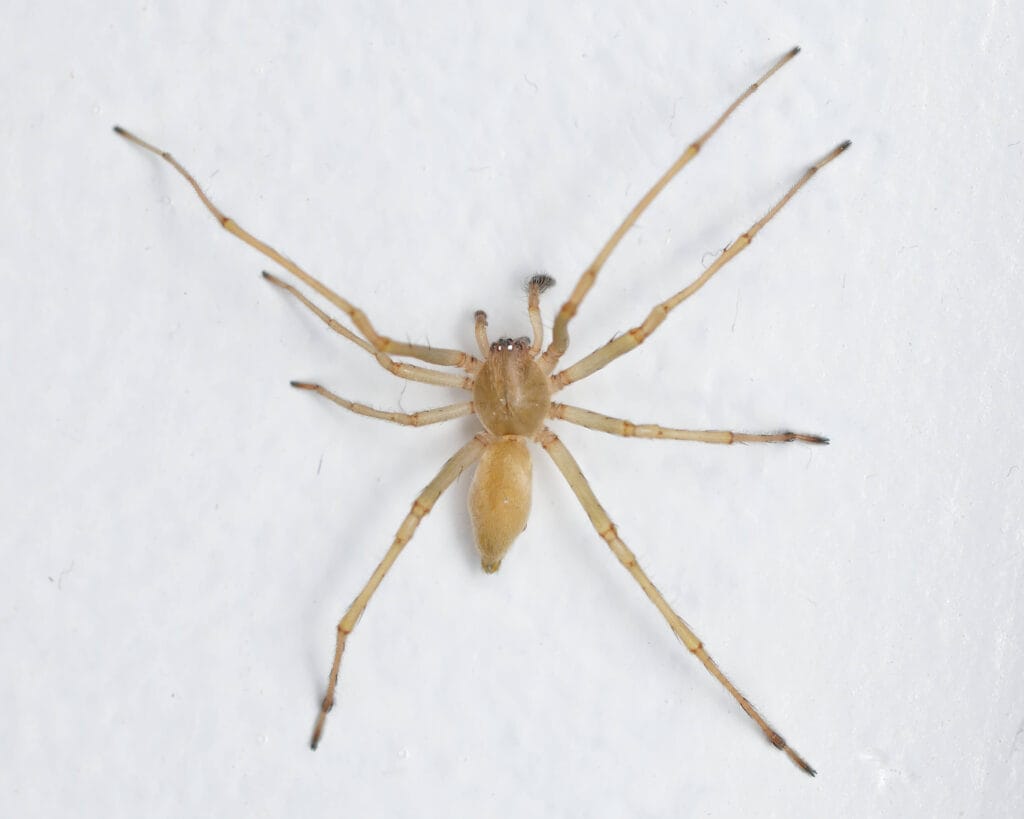
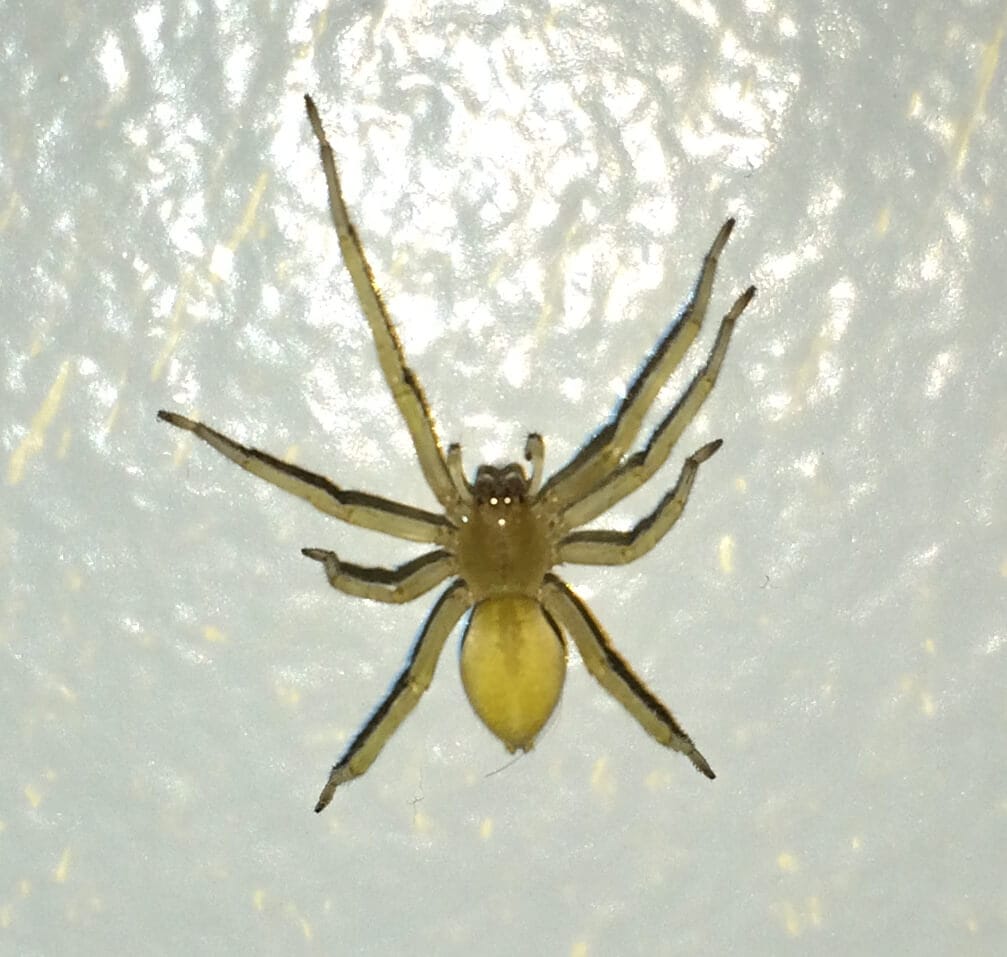
Yellow sac spiders are small — about a quarter to half inch in body length — and pale yellow to cream colored with a slightly darker stripe running along the top of the abdomen. They have a slightly flattened body profile that makes them very good at disappearing into thin gaps. They look like a small, pale, completely unremarkable spider, which is part of what makes them so easy to overlook until you’re sitting on one.
 Yellow sac spider showing its pale body and reddish chelicerae.
- Yellow sac spider with its typical long-legged stance.
- Yellow sac spider highlighting its subtle yellow coloration.
Why They’re in Your Car
Yellow sac spiders are active hunters. They don’t build prey-catching webs — they roam at night, actively pursuing and killing small insects. They do build small silken tubes or sacs — hence the name — where they rest during the day. These retreats get tucked into any tight, protected gap.
Your car, from a yellow sac spider’s perspective, is an exceptional environment. It’s dark. It’s undisturbed for hours at a time. It’s full of crevices and protected spaces. And if there are any insects in the cabin — even a few dead ones — there’s food. They don’t need much to establish themselves.
The Bite
The yellow sac spider’s venom is mildly cytotoxic, meaning it affects tissue at the bite site.
In practice: it feels like a bee sting. There may be some redness and local irritation. It typically resolves within a day or two without treatment.
If you are allergic to insect venom or have a known sensitivity, any envenomation warrants medical attention. Otherwise, clean the bite, apply ice if there’s swelling, and move on with your day.
They bite defensively — when pressed against skin, trapped in clothing, or startled by sudden contact. They are not aggressive. They are not hunting you. They are a small spider that got cornered.
How to Treat Yellow Sac Spiders in a Car
Step 1 — Remove clutter. Yellow sac spiders exploit any available hiding spot. Floor mats left folded, clothing left on seats, bags and paper accumulated in the back — all of these provide harborage. Clear them out before treating.
Step 2 — Apply PT 221L. PT 221L is the correct product for spider treatment inside a vehicle interior. Apply a light, even treatment to carpets, under seats, along the bases of door panels, and into any crack or crevice where spiders are likely resting during the day. This is not a broadcast spray — apply it lightly and precisely.
What to avoid: Do not overspray onto electronics, plastics, or window tint. Apply carefully and deliberately. A light application is more effective than a heavy one and causes significantly less potential for interior damage.
Step 3 — Let it dry completely before using the car. Treat with windows down when possible and allow full drying time before occupying the vehicle.
2. Jumping Spiders — Curious, Harmless, and Honestly Kind of Endearing
Jumping spiders are the exception to the general rule that spiders in your car are a problem requiring immediate chemical intervention. They are small, active, visually oriented hunters with disproportionately large front eyes that give them an alert, almost curious expression. They are the least alarming spider you are likely to encounter in a vehicle.
What They Look Like
Jumping spiders are compact and robust — typically half an inch or less — with a dense, often patterned body. The front two eyes are noticeably large relative to their face, giving them a distinctive appearance that many people find more charming than threatening. They move in short, deliberate bursts rather than a continuous run, stopping frequently to orient toward whatever has caught their attention.
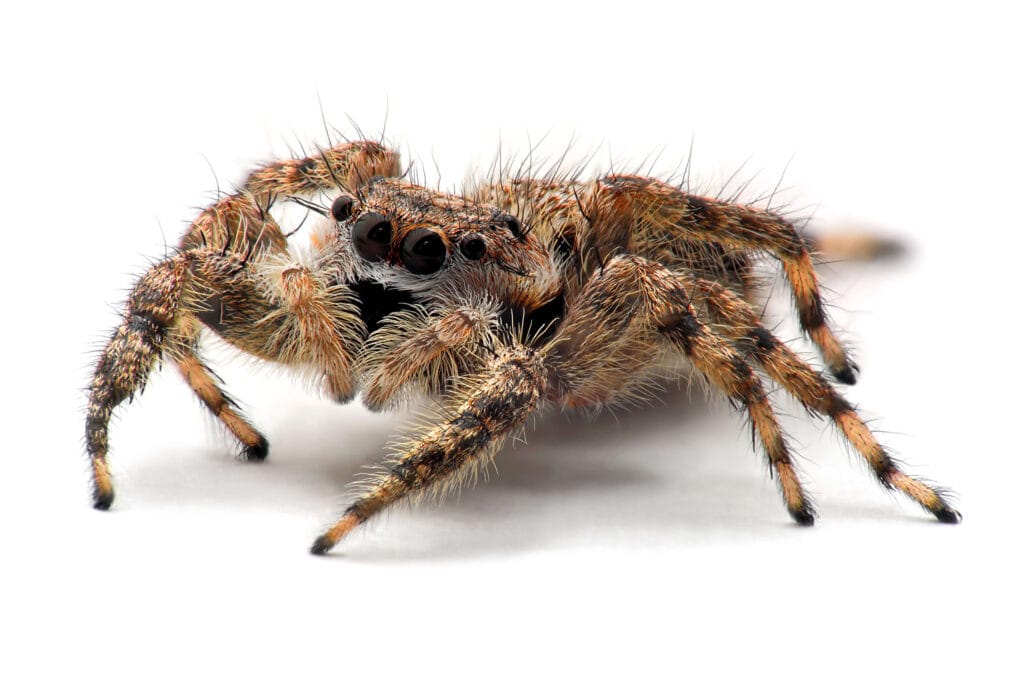 Jumping spider showing its classic big‑eyed look.
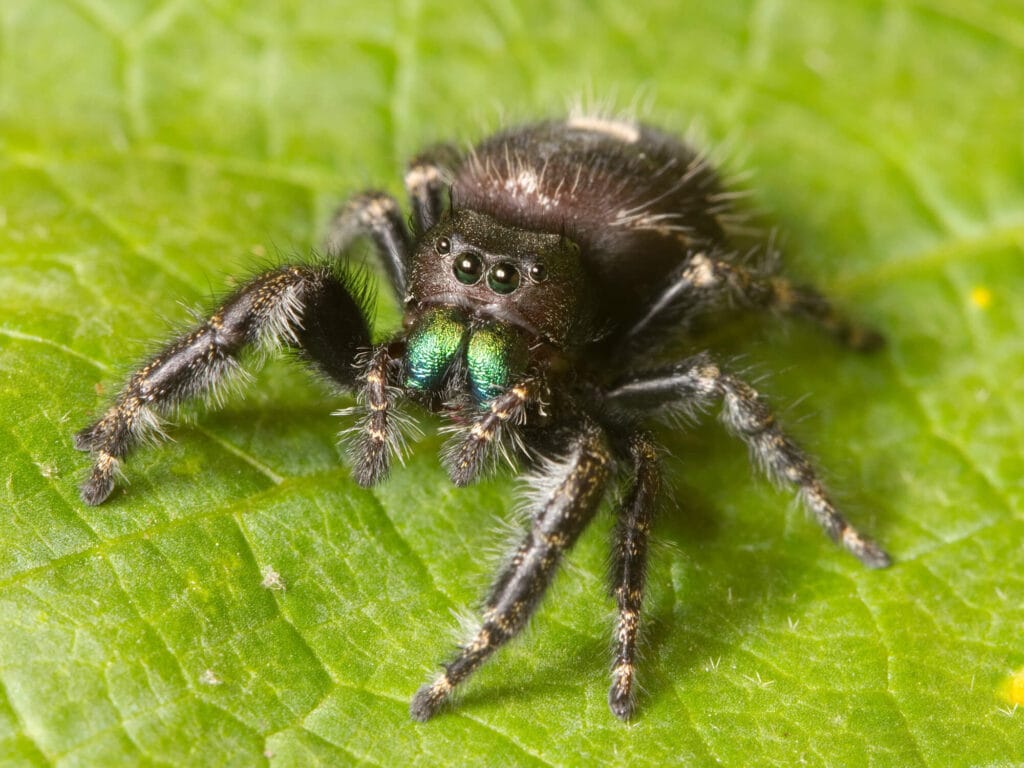 Jumping spider displaying its metallic green chelicerae.
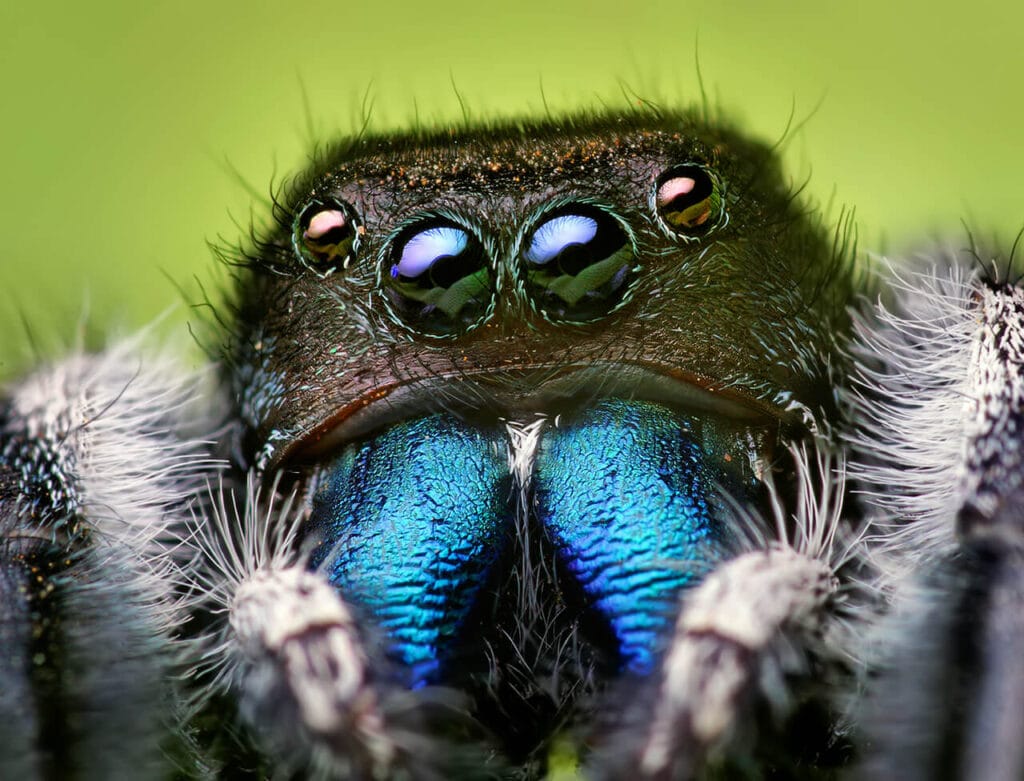 Macro view of a jumping spider’s eyes and chelicerae.
Why They’re in Your Car
Jumping spiders are active daytime hunters that pursue prey visually rather than by web. They don’t build traditional capture webs but they do construct small silk retreats — tight silken chambers tucked into corners and crevices — where they shelter overnight or rest between hunts. If there are small insects in your car, a jumping spider is a reasonable occupant to expect.
The Bite
Jumping spiders can technically bite but almost never do under normal circumstances. Their jaws are small and they have no particular interest in biting something they can’t eat. If one lands on you, the appropriate response is to let it walk onto a piece of paper and carry it outside. That’s genuinely the correct pest control response here.
How to Deal With a Jumping Spider in Your Car
Catch and relocate. Offer your hand or a piece of paper, let it step on, carry it outside, and set it free. There is no compelling reason to treat a vehicle for a jumping spider. They eat other insects. They are not building colonies. They are not a health concern. If you find one appealing enough, you could name it and let it stay — it would probably earn its keep.
If chemical treatment feels necessary for some reason, PT 221L applied as described in the yellow sac spider section is appropriate. But honestly, this one doesn’t need it.
3. Wolf Spiders — Big, Fast, and Much Less Dangerous Than They Look
Wolf spiders have a size-to-danger ratio that is wildly misleading. They are large — some species reach two inches including leg span — fast moving, and startling when encountered unexpectedly. They are also not particularly dangerous and not particularly interested in biting you unless you give them a compelling reason.
What They Look Like
Wolf spiders are robust, ground-dwelling spiders with a hairy body, strong legs, and a pattern of brown, gray, and tan that provides good camouflage on natural surfaces. They have eight eyes arranged in three rows — two large eyes in the middle row that reflect light at night, which is how you sometimes spot them in a flashlight beam. They don’t build prey-catching webs. Many species dig silk-lined burrows. All of them hunt actively on the ground.
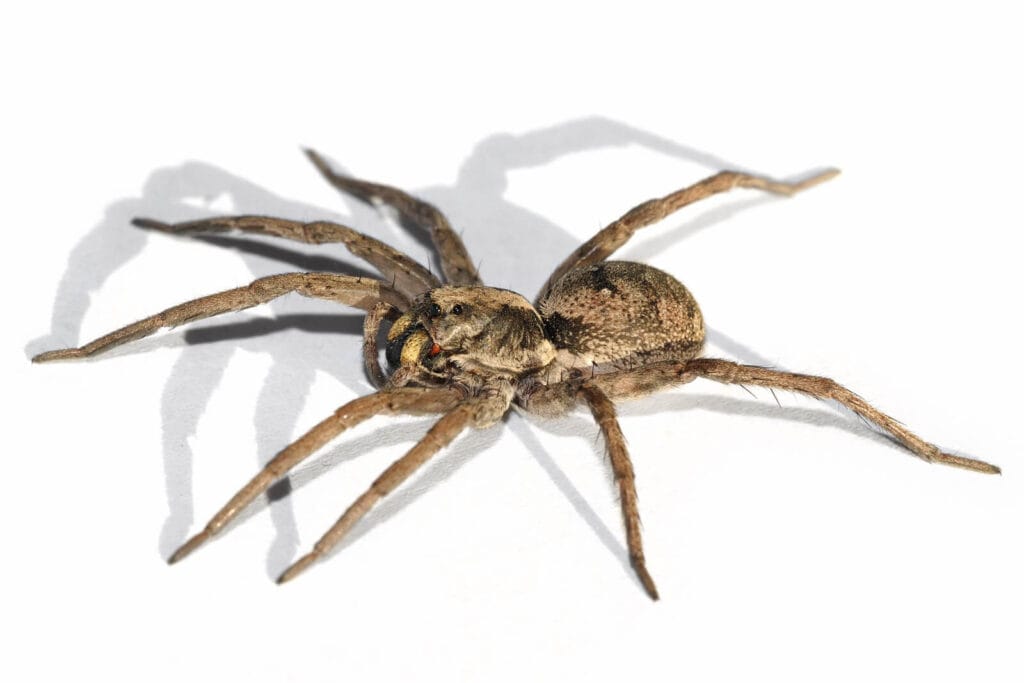 Wolf spider showing its body structure and markings.
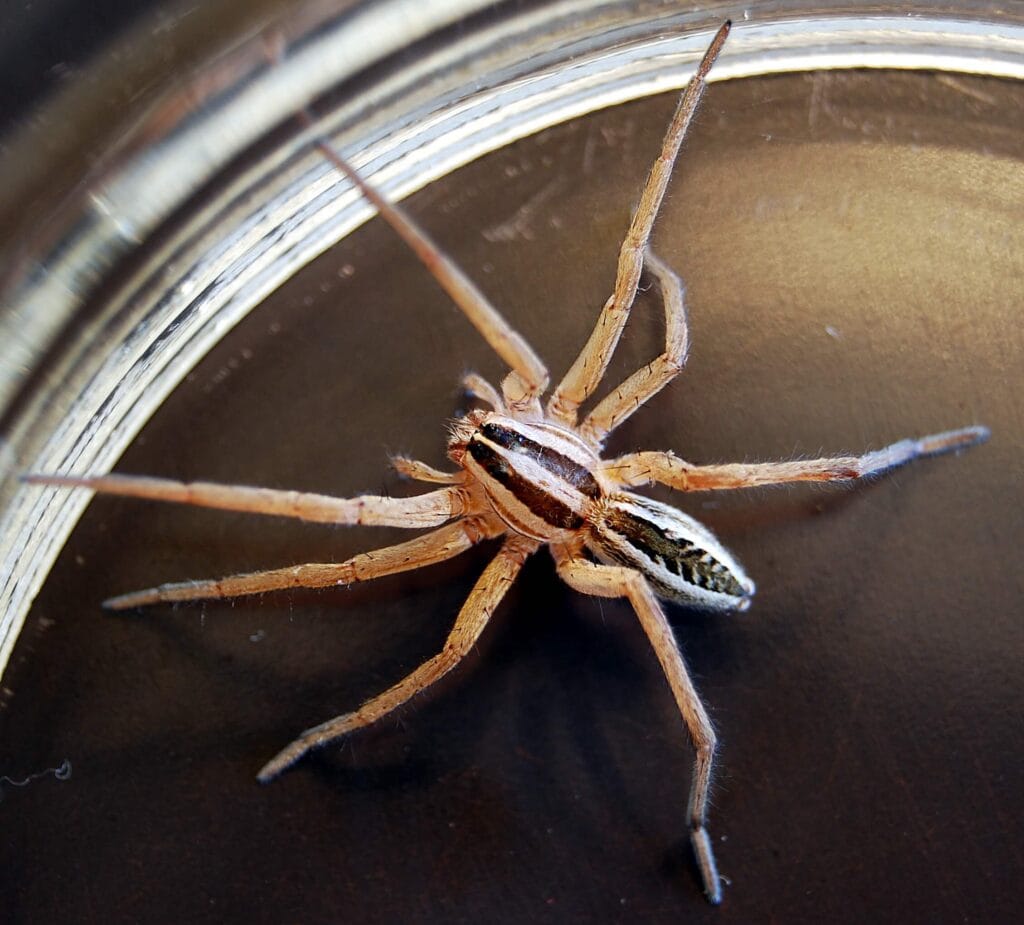 Striped wolf spider showing its classic racing‑stripe pattern.
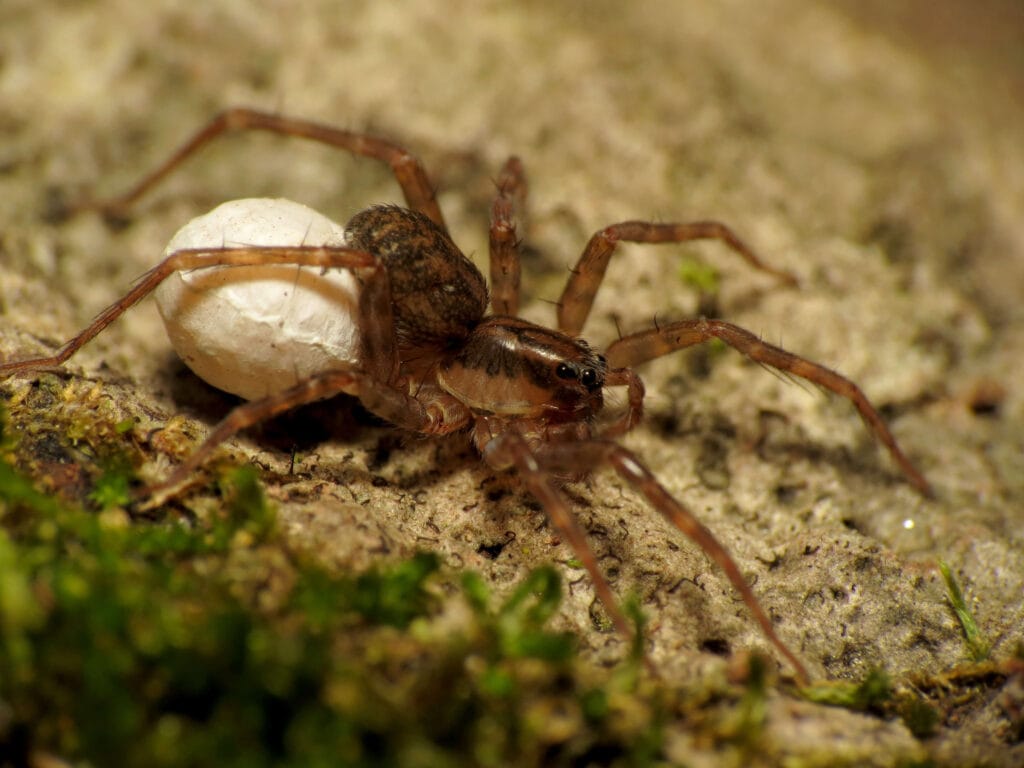 Female wolf spider carrying her egg sac.
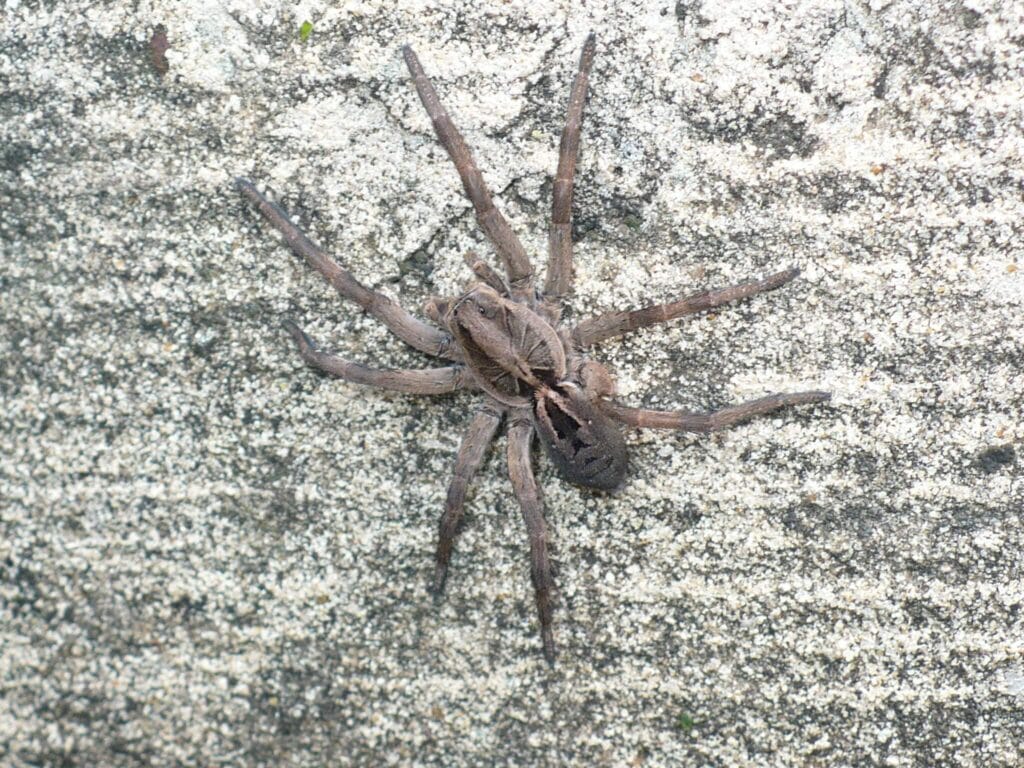 Wolf spider blending into a concrete surface.
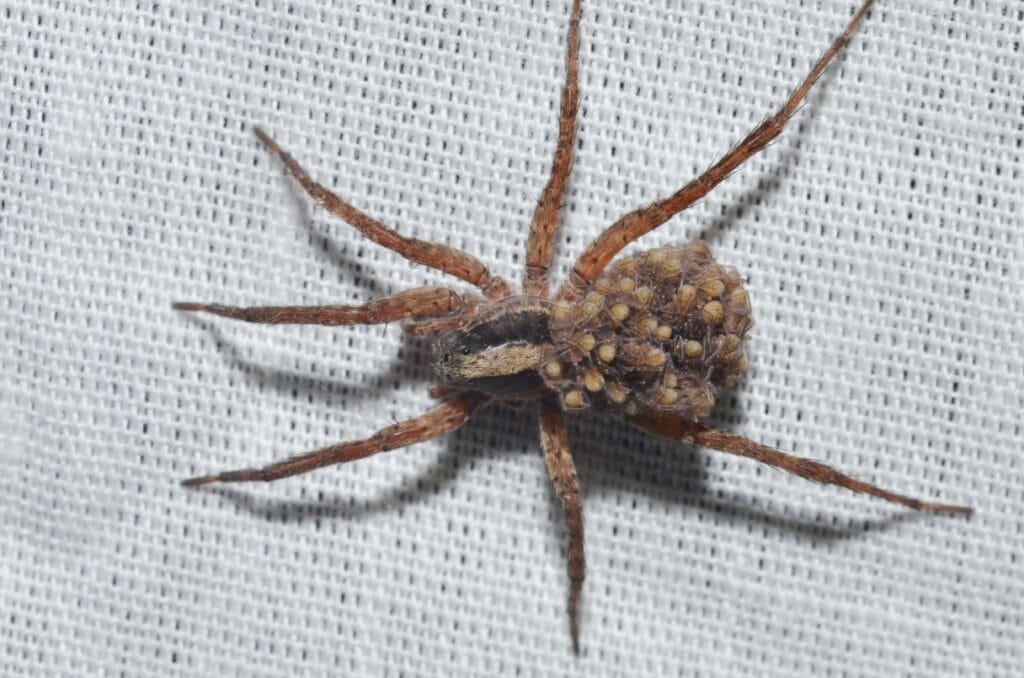 Female wolf spider carrying her newly hatched spiderlings.
Why They’re in Your Car
Wolf spiders end up in vehicles primarily as displaced individuals — heavy rain, flooding, or landscape disturbance pushes them out of their normal ground habitat and into whatever shelter is available. The undercarriage, wheel wells, and body gaps of a vehicle are dry and protected. Side-view mirrors are a particularly common hiding spot — the housing is warm, enclosed, and just large enough for a wolf spider to fit comfortably inside.
They are not there because your car is infested. They are there because it rained last night and their previous home is now underwater.
The Bite
A wolf spider bite feels like a bee sting and is not medically significant for most people. They bite defensively when pressed or handled — not aggressively. If you find one on the exterior of your car, you can simply brush it away or let it leave on its own. If one has taken up residence in a side-view mirror, it will usually move on once the car is driven.
How to Treat Wolf Spiders in or Around Your Car
Wolf spiders on the exterior of the vehicle — on the windshield, under the mirror housing, on the body panels — can be addressed with a direct application of a contact insecticide like Raid if you want to eliminate rather than relocate. Rinse the treated area afterward to protect the paint finish.
For wolf spiders inside the passenger compartment, Raid, or PT 221L applied as described for yellow sac spiders is appropriate. Wolf spiders inside the cabin are less common than on the exterior and usually indicate the spider entered accidentally through an open door or window rather than establishing itself inside.
4. Widow Spiders — Rarely Inside the Cabin, Commonly Under the Car
Widow spiders are the species most people are most concerned about, and their actual behavior in relation to vehicles is slightly different from what most people expect. They are rarely found inside the passenger compartment. They are commonly found on the underside of vehicles — in frame rails, subframe voids, wheel wells, and protected recesses under the body.
What They Look Like
There are more than 30 widow spider species, and not all of them are black. Not all of them have a red hourglass marking. Brown widows — increasingly common in many parts of the southern United States — are tan to brown with a less vivid hourglass that is often orange rather than red. The defining characteristics across the genus are the rounded, globe-shaped abdomen and the irregular, tangled cobweb-style web they build in protected, low-traffic areas.
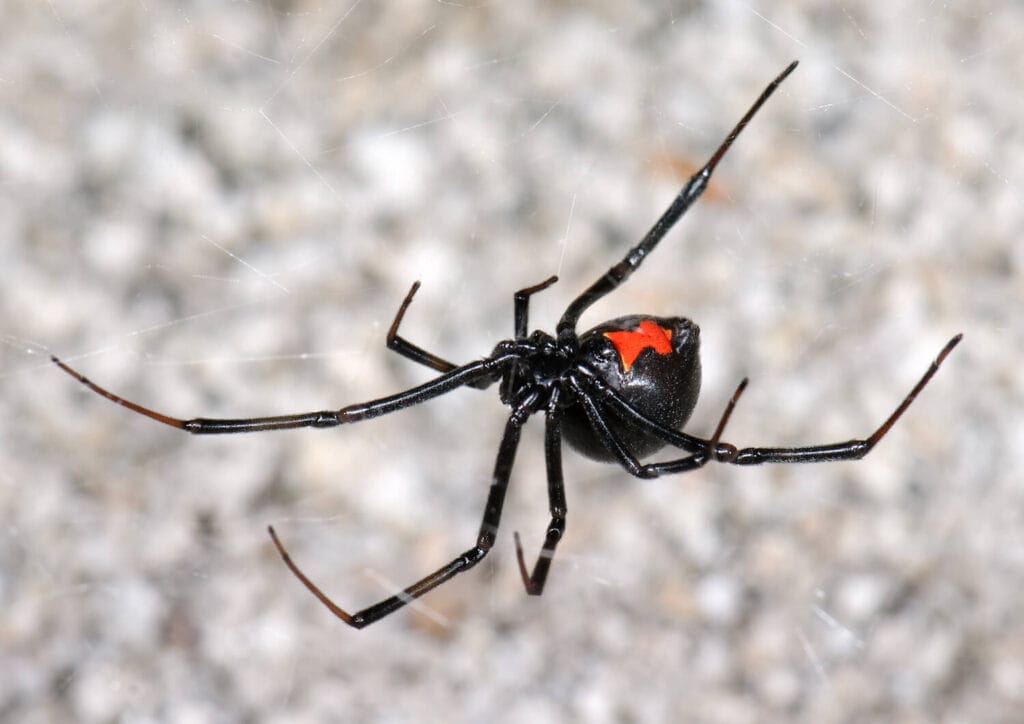 Black widow suspended in its web.
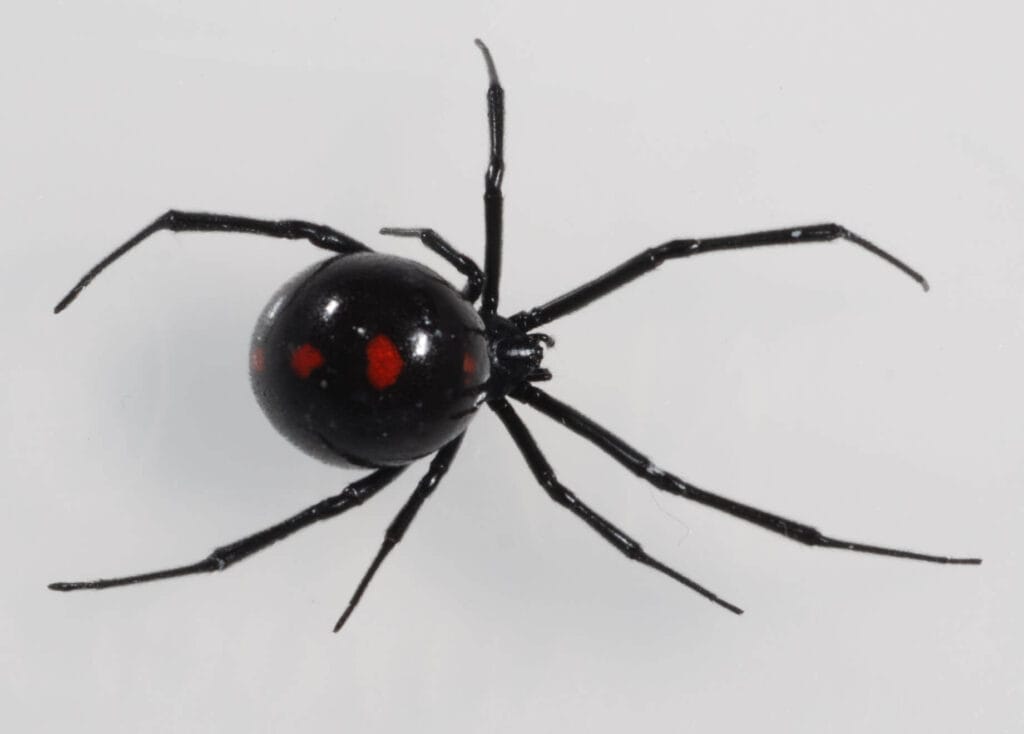 Black widow with red abdominal spotting.
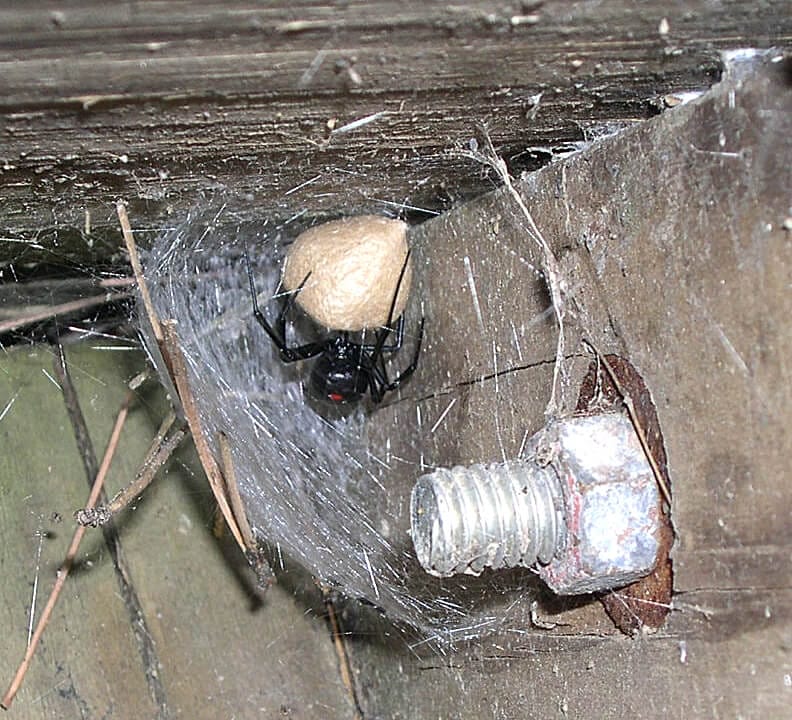 Black widow guarding an egg sac beneath wood.
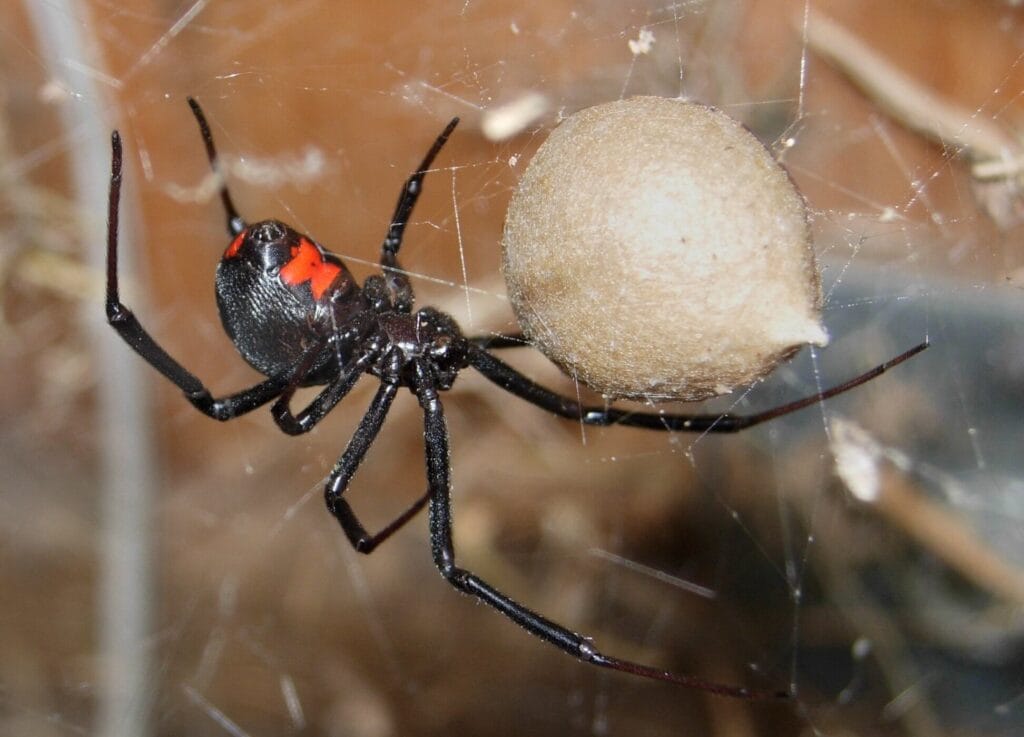 Black widow protecting its egg sac.
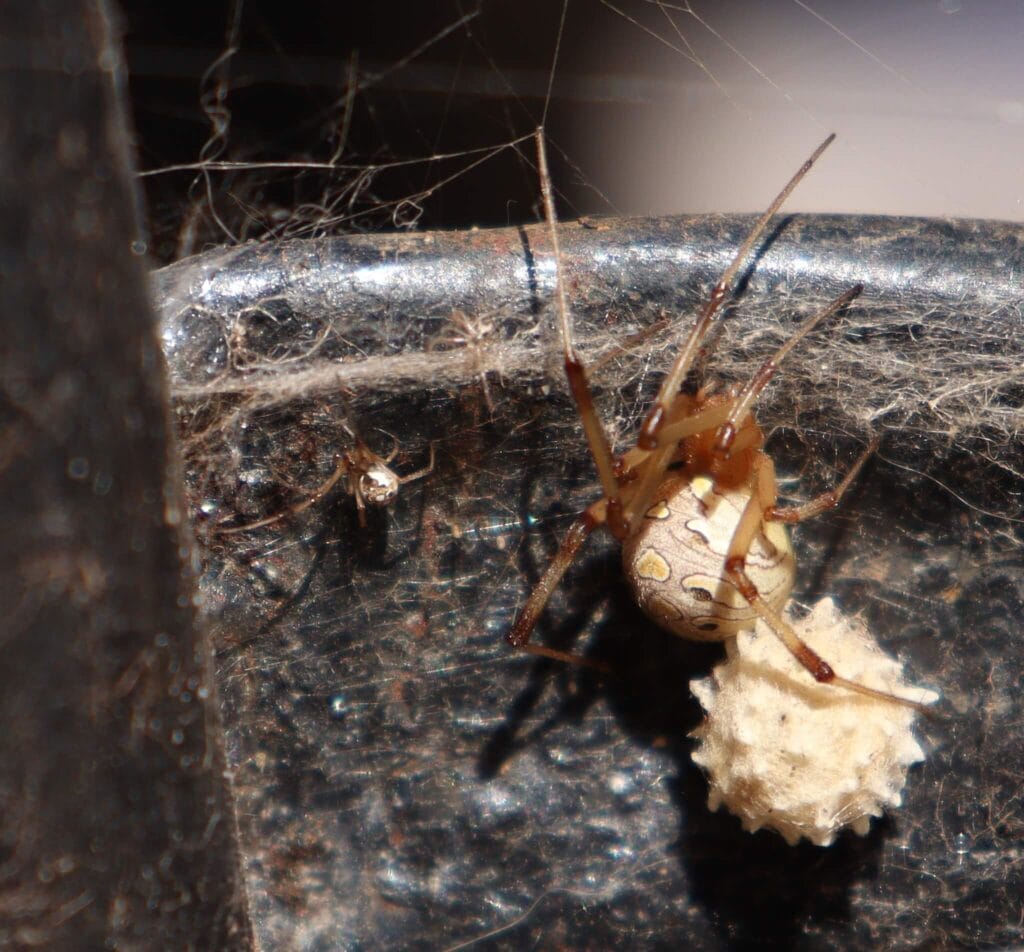 Brown widow with its distinctive spiky egg sac.
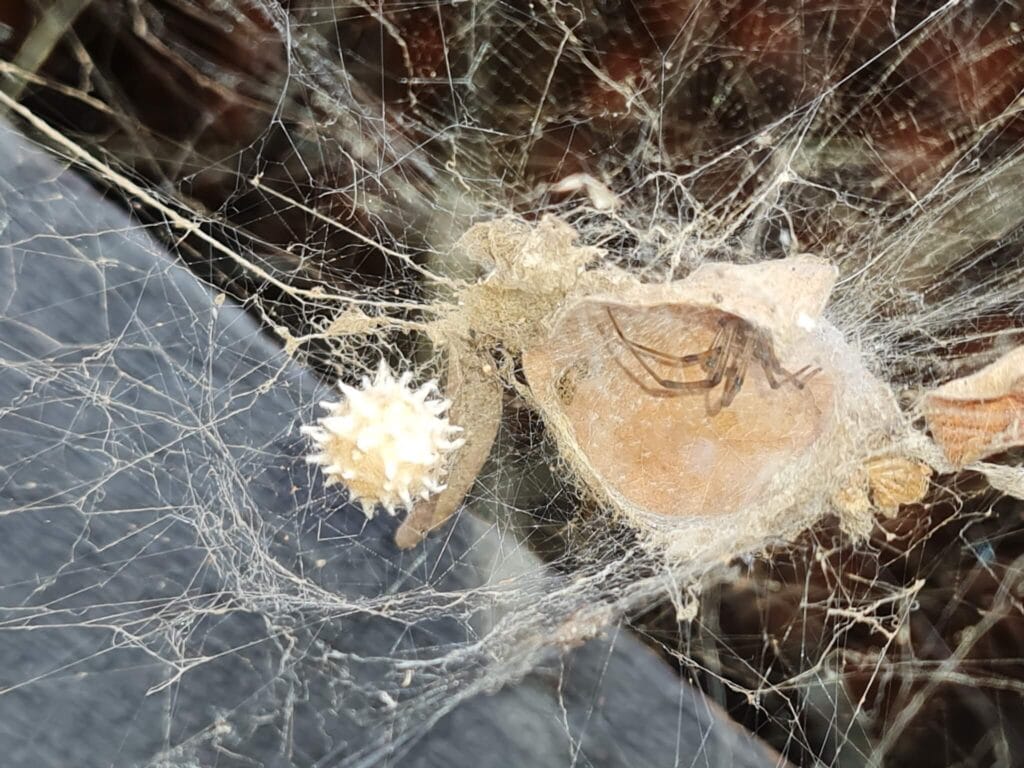 Brown widow tucked into its web with a spiky egg sac.
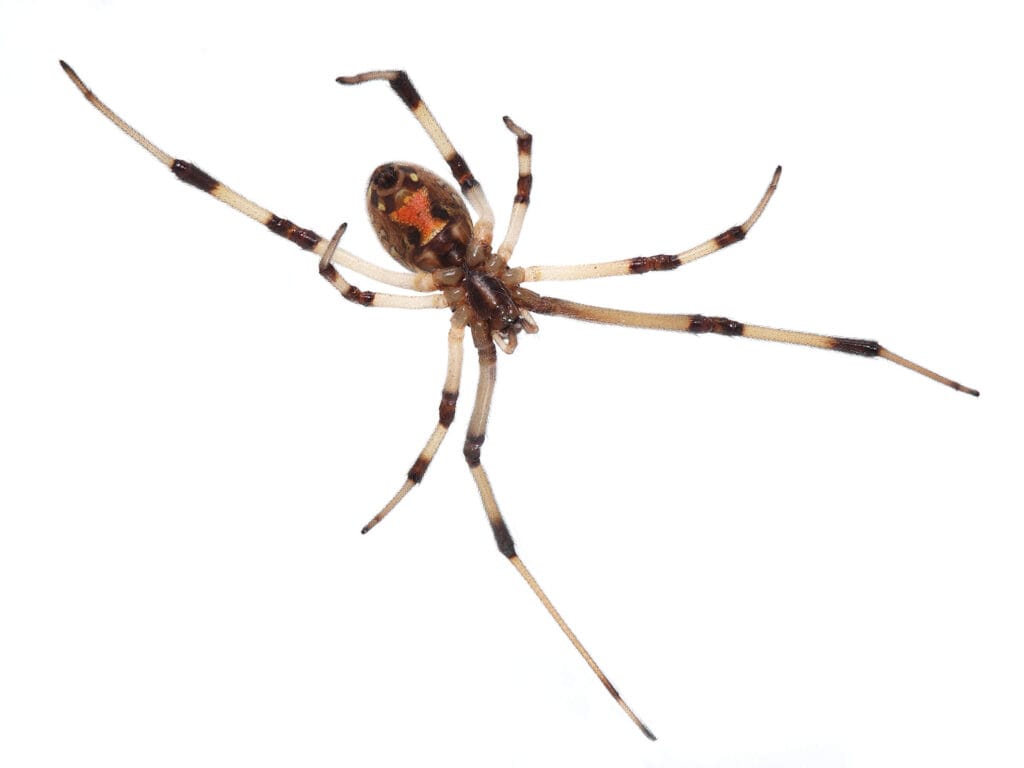 Brown widow displaying its orange dorsal marking.
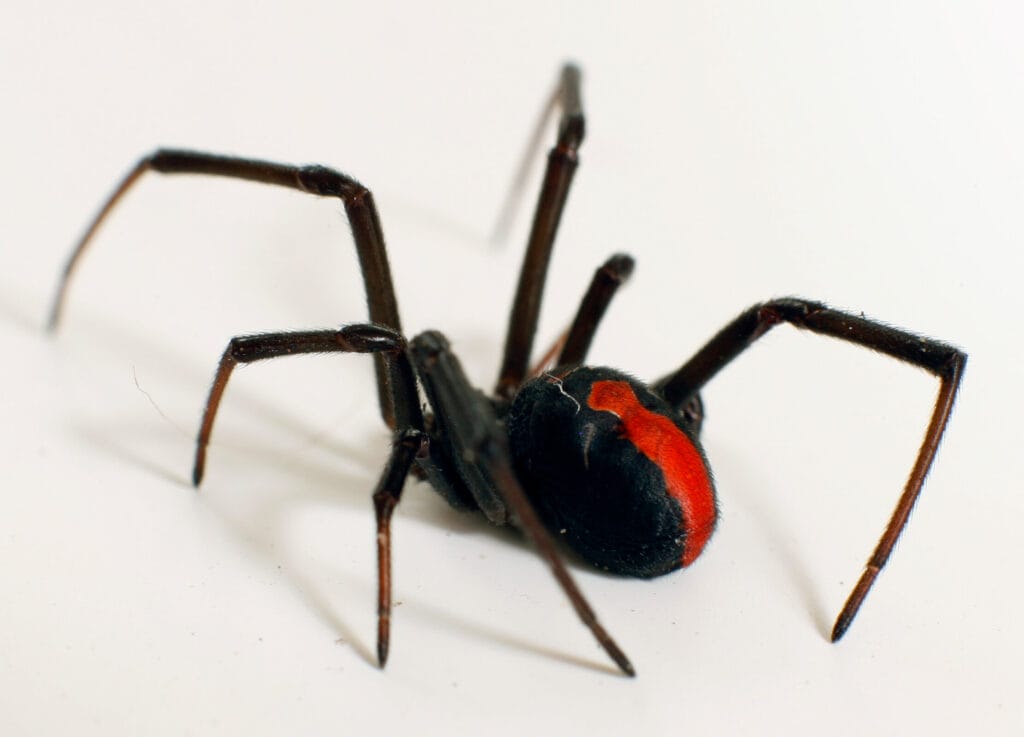 Australian redback widow with its signature red stripe.
Why They’re Under Your Car
The underside of a vehicle is, from a widow spider’s perspective, an ideal habitat. It’s dry. It’s protected from weather and predators. It has multiple voids and recesses. It stays relatively undisturbed for hours at a time. This is essentially the same reason widow spiders live in woodpiles, under bark, and inside hollow structures in the wild. The frame of your car or truck is just a particularly convenient version of the same thing.
When you look under a vehicle that’s been parked in one spot for an extended period — particularly if it’s parked near vegetation or in a low-traffic area — finding widow webs with egg sacs is not unusual. Finding a dozen egg sacs is genuinely jarring the first time you see it. Each egg sac can contain several hundred eggs. The math is unsettling and the visual is worse.
The Bite
Widow venom is a neurotoxin — specifically it affects the nerve-muscle junction and can cause systemic symptoms including muscle cramps, sweating, and in severe cases more serious effects. Black widow bites are medically significant and warrant evaluation. Brown widow bites are less severe — the venom is considered less potent — but any confirmed widow bite should be taken seriously, particularly in children, elderly people, or anyone with health conditions.
The good news: widow spiders bite defensively and only when directly threatened or accidentally contacted. They do not pursue people. They are not aggressive. The risk comes from accidentally pressing your hand against a web or into a void where a widow is resting — which is why looking before you reach under a vehicle is a reasonable habit.
How to Treat Widow Spiders Under Your Car
For a general treatment: PT 221L applied directly to webs, egg sacs, and visible hiding spots under the vehicle is effective. Spray directly onto the web and the spider if visible. Widow webs are three-dimensional and sticky — the spider tends to stay in them rather than fleeing immediately, which makes direct contact treatment practical.
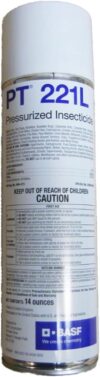
BASF PT 221L Pressurized Insecticide Spray
A professional aerosol insecticide with long‑lasting residual control for ants, roaches, bed bugs, spiders, and other listed pests.
- Fast knockdown + residual for ants, roaches, bed bugs, termites, spiders, and more.
- Indoor & outdoor use in homes, hospitals, restaurants, schools, and food‑handling areas.
- Crack‑and‑crevice treatment for cockroaches and spiders; spot treat storage areas and entry points.
- Kills common house spiders and other listed species with fast knockdown and residual control.
- Ideal for spider hotspots like corners, ceiling lines, baseboards, garages, and storage areas.
- Crack‑and‑crevice treatment for spider hiding spots: under sinks, behind appliances, wall voids, and utility penetrations.
- Perimeter spider control by treating weep holes, siding gaps, door frames, and window frames.

Available on Amazon!
For mechanics dealing with repeated widow infestations on customer vehicles: Atticus Devito CS at 0.8 oz per gallon is the professional recommendation. Apply it the day before the vehicle is serviced, treating the undercarriage and any void areas where widows are commonly found.
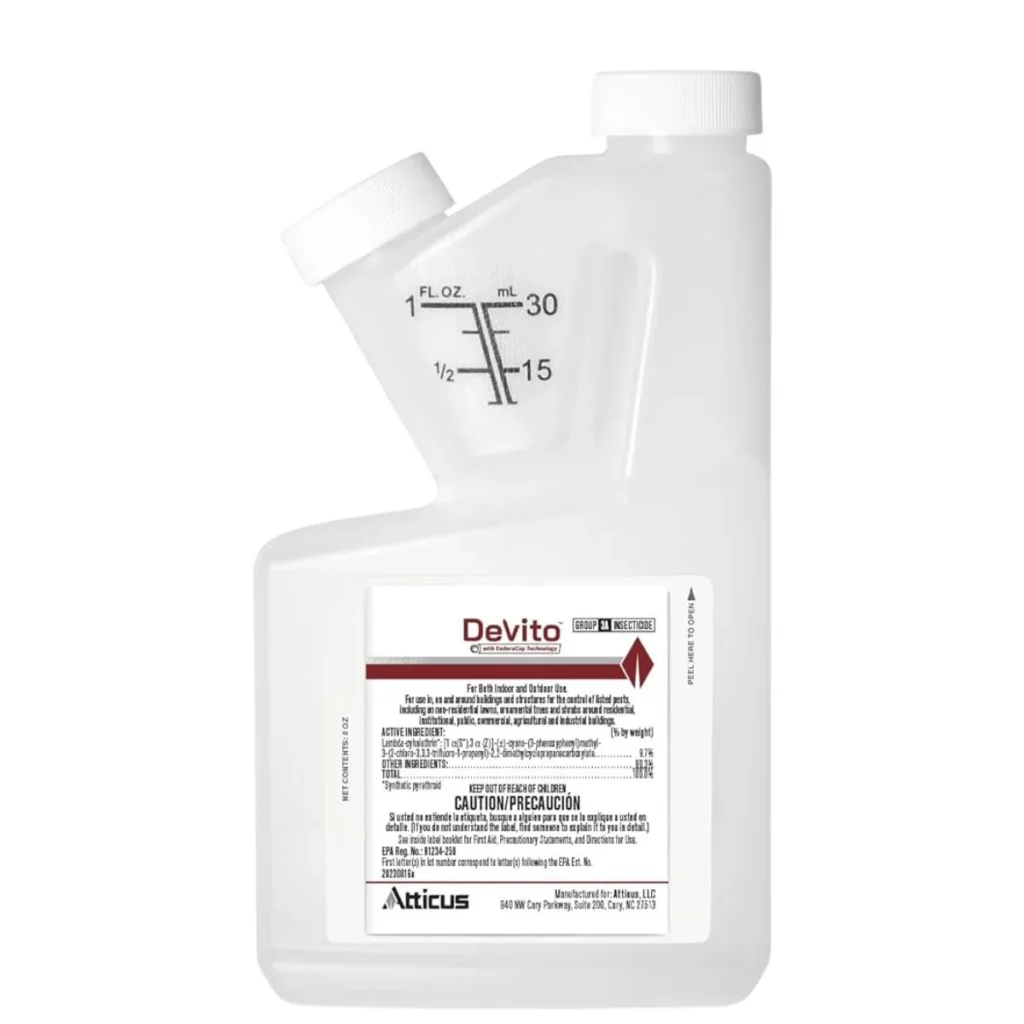
Atticus Devito CS Insecticide
Devito™ CS uses advanced EnduraCap Technology, which wraps the insecticide in tiny protective capsules so it sticks to insects better and lasts longer on surfaces. It works with lambda‑cyhalothrin, a trusted ingredient that stops insects by targeting their nervous system. The result is dependable, long‑lasting, broad‑spectrum control for many common indoor and outdoor pests.
- Formulated for fast + lasting insect control
- Long-lasting residual control
- EnduraCap Technology is a professional microencapsulated insecticide
- Ideal for perimeter defense
- Rapid-release for effective knockdown
- Use indoors or outdoors
Available on Amazon!
Devito CS is a microencapsulated product — the active ingredient is contained in microscopic polymer capsules that adhere to surfaces, including spider legs and body. When the spider walks through a treated area, the capsules stick to it and are absorbed through the cuticle over time. This is particularly effective for spiders because they don’t groom themselves the way insects do, so the capsules stay on them. Microencapsulation also provides significantly longer residual activity than wettable powder or emulsifiable concentrate formulations.
How to Get Rid of Spiders in Your Car — Summary
| Spider | Location | Product | Method |
|---|---|---|---|
| Yellow Sac Spider | Inside cabin | PT 221L | Light crack and crevice spray, let dry |
| Jumping Spider | Inside cabin | None needed | Relocate by hand or paper |
| Wolf Spider | Exterior, mirrors, undercarriage | Raid or equivalent | Direct contact spray, rinse paint after |
| Widow Spider | Under vehicle, frame, wheel wells | PT 221L or Atticus Devito CS | Direct web treatment or microencapsulated barrier |
Prevention Tips
Keep the car clean. Insects accumulate in vehicles — crumbs, food residue, and organic debris attract small insects, and small insects attract the spiders that eat them. A clean car is a less interesting car from a spider’s perspective.
Drive it regularly. Vehicles that sit for extended periods develop spider populations. Regular driving creates vibration, disrupts webs, and generally makes the car less hospitable. A car you drive every day is rarely a spider problem. A car you drove last Tuesday is a different story.
Park in the sun when possible. Spiders prefer cool, dark, protected environments. A car that sits in direct sunlight gets hot enough to discourage most spider activity inside the cabin.
Shake out floor mats. Floor mats are a common yellow sac spider harborage spot. Shaking them out periodically disrupts any spiders or egg sacs hiding in the folds.
Check side-view mirrors occasionally. If you’re in an area with significant wolf spider activity, the mirror housing is worth a periodic look — particularly after heavy rain or if you’ve noticed large spiders on the exterior of the vehicle.
Seal what you can. Spiders enter through the same gaps that mice and insects use — gaps around door seals, window seals, and body panel openings. A well-maintained vehicle with intact weatherstripping has fewer entry points.
For the underside: If you park in the same spot for extended periods and the area has widow spider pressure, a periodic treatment of the undercarriage with PT 221L or a professional residual product is reasonable maintenance. This is particularly relevant for mechanics who service vehicles regularly — a widow under a customer’s car is an occupational hazard worth addressing proactively.
Frequently Asked Questions
GENERAL SPIDER IN CAR QUESTIONS
Are spider bites in cars as common as people say?
Not really. Spider bites are far less common than people report to one another. Most “spider bites” people talk about—especially the ones that leave a big scar—are actually skin infections, most often Staph or MRSA, which are far more common than most people realize.
Spiders do bite, but not nearly as often as the stories suggest. In cars, the species that actually bite (mainly yellow sac spiders) usually cause a small, bee‑sting‑type welt, not the dramatic wounds people describe. When someone ends up with a large, painful lesion, it’s usually easier to say “spider bite” than “skin infection,” which is why the myth persists.
How long can a spider survive in a car?
Longer than you’d hope. In a vehicle that’s regularly driven and has no food source, a spider that entered accidentally may survive only a few days — the environment is dry and prey-free. In a vehicle that sits regularly, has insects present, and offers good hiding spots, a spider can survive for months and potentially complete its entire life cycle. Yellow sac spiders are particularly capable of establishing themselves long-term in a vehicle that provides adequate conditions. This is why “just leaving it” is not a reliable strategy if you’ve confirmed a spider presence.
Can spiders get into a car through the air vents?
Yes. The fresh air intake for most vehicles is located in the cowl area at the base of the windshield — the same opening that rodents use to access the cabin filter housing. Spiders can enter through these intake openings and travel through the HVAC ducting. This is less common than entry through open doors and windows but it does happen, and it’s why you occasionally find spiders appearing from the dashboard vents without any obvious explanation. Copper mesh stuffed into the cowl intake opening — as described in the rodent exclusion sections — also prevents spider entry through this route.
Do car air fresheners or dryer sheets repel spiders?
No evidence supports dryer sheets as a spider repellent despite widespread claims online. Some car air fresheners with strong scents may provide minimal deterrent effect similar to essential oils — temporary and unreliable. Neither is a meaningful treatment strategy. They are the pest control equivalent of hoping really hard.
IDENTIFICATION
How do I know what kind of spider is in my car?
Size, color, and behavior are your primary clues. Small, pale yellow spider moving at night = yellow sac spider. Small, compact spider that stops and looks at you with apparent curiosity = jumping spider. Large, fast, brown patterned spider on the exterior = wolf spider. Rounded globe abdomen with a messy web under the vehicle = widow. If you’re not sure and the spider is under the vehicle in a dark void, treat it as a widow until confirmed otherwise.
Are all spiders in cars venomous?
Technically yes — all spiders produce venom because it’s how they subdue prey. The relevant question is whether the venom is dangerous to humans and whether the spider can actually bite through human skin. For the species commonly found in vehicles, only widow spiders present a meaningful medical concern. Yellow sac spider bites are mildly irritating. Wolf spider bites are comparable to a bee sting. Jumping spiders essentially never bite.
I got bitten in my car but didn’t see what bit me. Was it a spider?
Possibly, but not certainly. Many “mystery bites” in vehicles are attributed to spiders but are actually caused by other insects — fleas, roaches, or other arthropods. If the bite produced a bee-sting sensation and some local redness that resolved in a day or two, a yellow sac spider is a reasonable suspect.
If the bite caused more significant symptoms — muscle cramps, sweating, spreading pain — seek medical attention and mention the possibility of a widow spider bite.
TREATMENT
Can I use a bug bomb to get rid of spiders in my car?
No. Foggers are ineffective for spiders for the same reason they’re ineffective for cockroaches — the insecticide disperses into open air and doesn’t penetrate the cracks and retreats where spiders actually rest. Yellow sac spiders in particular spend most of their time inside small silken sacs tucked into tight spaces. A fogger won’t reach them. PT 221L applied as a targeted crack and crevice treatment is the correct approach.
Is PT 221L safe to use inside my car?
When applied correctly — lightly, to non-food surfaces, with adequate drying time — yes. Avoid applying to surfaces that come into direct prolonged contact with skin, electronics, window tint, and plastics where staining could occur. Treat with windows open when possible and allow the interior to dry fully before occupying the vehicle.
How do I get a jumping spider out of my car without killing it?
Hold a piece of paper near it and let it step on. Jumping spiders are visually oriented and will often step onto a new surface willingly. Carry it outside and set it on a plant or fence. It will be fine. It was probably fine to begin with.
WIDOW SPIDERS SPECIFICALLY
How do I know if there are widow spiders under my car?
Look. Use a flashlight and crouch down to inspect the undercarriage, particularly in the frame rails, subframe voids, and around the wheel wells. Widow webs are distinctive — irregular, three-dimensional, and noticeably strong and sticky compared to other spider webs. Egg sacs are round, papery, and cream to tan colored. Finding multiple egg sacs under a vehicle that’s been parked in one spot for a while is not unusual in widow-pressure areas.
Are brown widows as dangerous as black widows?
Brown widow venom is considered less potent than black widow venom, but a brown widow bite is still medically significant and should be evaluated, particularly in vulnerable individuals. The more important distinction is that brown widows are significantly less aggressive than black widows — they are more likely to flee than bite when disturbed. Neither species should be handled, and any confirmed bite from either warrants medical attention.
What should I do if I find widow egg sacs under my car?
Treat the area with PT 221L or Atticus Devito CS, applied directly to the webs and egg sacs. Wear gloves. Do not reach into any void without first inspecting it with a flashlight. If the infestation is extensive — multiple egg sacs across multiple areas of the undercarriage — a professional treatment is a reasonable option, particularly if the vehicle is serviced regularly by a mechanic who will be working under it.
DRIVING SAFETY
What should I do if I see a spider while driving?
Don’t panic and don’t swat at it while moving. A spider causing a crash is significantly worse than a spider existing in your car. Keep your hands on the wheel, maintain focus on the road, and pull over safely before dealing with it. A startled spider is going to hide — it’s not going to attack you. Find a safe spot, stop the car, and handle it from a stationary position. Distracted driving from a spider encounter causes real accidents. The spider is not worth it.
Can a spider in my car cause a car accident?
Indirectly, yes — and it has happened. The danger isn’t the spider biting you while you drive. It’s the startle response. A large wolf spider appearing suddenly on the dashboard or a yellow sac spider dropping from the visor can cause a driver to swerve, brake suddenly, or lose focus at a critical moment. If you’re arachnophobic, the risk is higher. Pull over safely before reacting. The spider will wait.
ESSENTIAL OILS AND HOME REMEDIES
Do essential oils actually keep spiders out of a car?
They have some limited repellent effect but they are not a reliable or lasting solution. Peppermint oil, citrus, and cedar are commonly cited as spider deterrents — spiders do have chemical sensory receptors on their legs and some strong scents are aversive to them. The problem in a vehicle is that the scent dissipates quickly, especially in a hot car, and needs constant refreshing to maintain any effect. Essential oils are fine as a supplementary measure but they are not a treatment for an active infestation and they don’t address the underlying reason the spiders are there — which is usually insects inside the car or ideal habitat on the exterior.
Does diatomaceous earth work for spiders in cars?
It works in principle — diatomaceous earth’s microscopic sharp edges damage the spider’s exoskeleton and cause dehydration — but it has practical limitations in a vehicle. It needs to stay dry to be effective, which is difficult in a car that experiences humidity changes. It also needs direct contact with the spider, which means it’s most useful in areas you can’t otherwise reach. If you use it, apply it lightly in areas where you’ve seen activity and vacuum it up after a few days. It’s a reasonable supplementary tool but not a primary treatment.
SPIDER EGGS AND REPRODUCTION
Can spiders lay eggs in my car?
Yes, and this is worth taking seriously. Yellow sac spiders in particular lay eggs inside their silken sac retreats — the same small chambers they hide in during the day. If a female is established in your car, she can lay an egg sac containing dozens of eggs in a crack, behind a sun visor, or inside a door fold. When those eggs hatch, you go from one spider to many very quickly. This is one of the reasons treating promptly matters — an established female changes the math significantly.
How do I know if spiders have laid eggs in my car?
Look for small, round, papery sacs tucked into tight spaces. Yellow sac spider egg sacs are small and silken — often tucked inside the spider’s characteristic silken tube. Widow egg sacs under the vehicle are larger, round, and papery with a slightly rough surface. If you find egg sacs, remove them carefully and treat the area with PT 221L. Under the vehicle, use the Atticus Devito CS approach for widow egg sacs as described in the widow section.
SEASONAL QUESTIONS
Are spiders in cars worse at certain times of year?
Yes. Fall is the peak season for spiders entering structures — including vehicles. As temperatures drop, spiders seek shelter and their activity increases as they search for overwintering sites. You’re more likely to find spiders in your car in September through November than in summer. Spring can also see increased activity as overwintered spiders become active. Wolf spider encounters after heavy rain are not seasonal — they happen whenever significant flooding or landscape disturbance occurs.
BROWN RECLUSE
Can I find a brown recluse in my car?
Theoretically yes, though it’s uncommon compared to yellow sac spiders and widows. Brown recluses are found primarily in the central and southern United States and prefer dry, undisturbed environments — which a parked car can provide. They are more typically found in stored items, boxes, and clothing than in actively used vehicles. If you’re in brown recluse territory and your car sits unused for extended periods, it’s worth being cautious. Brown recluse bites are medically significant — necrotic tissue damage is possible — and warrant prompt medical attention.
How likely is it to have a brown recluse infestation in a car?
Very unlikely. Recluse spiders don’t “infest” vehicles the way yellow sac spiders or widows can. They prefer stable indoor environments with consistent shelter — basements, closets, storage boxes — not cars that move, vibrate, and heat up.
Where would a brown recluse hide if it did get into a car?
If one ends up in a vehicle, it would choose dry, undisturbed spots: under seats, inside stored items, behind trim panels, or in floor‑mat folds. They don’t build messy webs, so you won’t see obvious signs.
Do brown recluses build webs in cars?
No. They build small, irregular retreats, not prey‑catching webs. You won’t see the classic widow‑style webbing. Their presence is usually silent and hidden.
Can a brown recluse survive long‑term in a car?
Not easily. Cars get too hot, too cold, and too disturbed. A recluse can end up in a car temporarily, but vehicles are not ideal long‑term habitat.
What increases the chances of a brown recluse getting into a car?
- Storing the car for long periods
- Leaving clothing, boxes, or bags inside
- Parking in garages or sheds where recluses are already established
- Bringing items from a recluse‑active home into the vehicle
How can I reduce the chance of a brown recluse getting into my car?
Keep the cabin clean, remove stored items, shake out mats, and avoid leaving clothing or boxes inside. Regular driving and sunlight exposure make the car less appealing.
If I think I saw a brown recluse in my car, what should I do?
Clean out clutter, inspect stored items, and treat cracks/crevices lightly with PT 221L. If you’re unsure of the species, assume caution and treat it like a recluse until confirmed.
Are brown recluse bites in cars common?
No. Confirmed recluse bites are rare in general, and even rarer in vehicles. Most “recluse bites” reported in cars turn out to be yellow sac spiders or unrelated arthropods.
Conclusion
Most spiders in your car are not a crisis. A yellow sac spider in the cabin is a nuisance and a potential bite risk — address it with PT 221L and keep the car cleaner. A jumping spider is essentially a guest — relocate it and move on. A wolf spider on your windshield is a weather refugee — it’ll leave when conditions improve. A widow spider under your vehicle is worth taking seriously and treating properly, but it’s also not going to climb in through the window looking for you.
The spiders that end up in your car are there because your car provides something they need — hunting ground, shelter from weather, or ideal nesting habitat. Understanding why they’re there makes treating them straightforward.
Drive the car regularly, keep it clean, check the undercarriage occasionally, and use the right product for the right spider. That covers the vast majority of vehicle spider situations, including the ones involving a dozen egg sacs under a parked truck at seven in the morning.
That last scenario is less fun than it sounds. Treat accordingly.