

Finding a cockroach in your car is one of those moments that makes you want to pull over and walk home. When people search “roaches in my car,” it’s usually because they just saw one dart across the dashboard, crawl out of a vent, or skitter across the back seat — and now they can’t stop imagining where the rest are hiding. One thing is certain: this is not a problem that fixes itself, and anything from the pesticide aisle at a big box store isn’t going to solve it.
Roaches in cars are more common than most people realize. They hide exceptionally well in the tight spaces behind dashboards, inside door panels, and under seats. A car can have a significant roach problem and look completely clean to the naked eye. I once bought a truck that came with German cockroaches — the dealer had no idea. That’s how good these insects are at staying out of sight until they’re comfortable.
The good news is that this is absolutely solvable, and you don’t need a professional exterminator — which is fortunate, because finding one willing to treat a vehicle is harder than the treatment itself.
TL;DR: How To Treat and Control Roaches in Your Vehicle
- Step 1: Vacuum everything so the products work.
- Step 2: Decide if it’s light or heavy activity.
- Step 3: Heavy = dust first. Light = skip to spray.
- Step 4: Use Gentrol Complete in every crack and seam.
- Step 5: Let it dry, then place the sticky traps.
How Roaches Get Into Cars
Before we get into treatment, it helps to understand how they got there in the first place. Roaches reach cars through more routes than most people expect:
- Moving — boxes and belongings from an infested home transfer roaches directly into your vehicle
- Groceries and bags — roaches and their eggs hide in paper bags, cardboard boxes, and grocery packaging
- A home infestation — if your home has roaches, your car is at risk every time you load it up
- Rideshare driving — passengers can unknowingly bring roaches in purses, bags, and on their clothing
- Friends or family — roaches travel on personal belongings the same way bedbugs do
- Parking under lights — roaches are attracted to light at night and can simply crawl into a vehicle parked in the wrong spot
- Used vehicles — a car, truck, or van bought from a private seller or even a dealership can already have an infestation the previous owner — or the dealer — never knew about
German cockroaches make up the vast majority of car infestations. American cockroaches show up occasionally but are far less common in vehicles. If you have roaches in your car, there is about a 99% chance they are German roaches.
What You Need
For a light to moderate infestation:
- Riddy Car Roach Kit — includes 16oz Gentrol Complete Aerosol, nitrile gloves, and 3 cockroach sticky traps
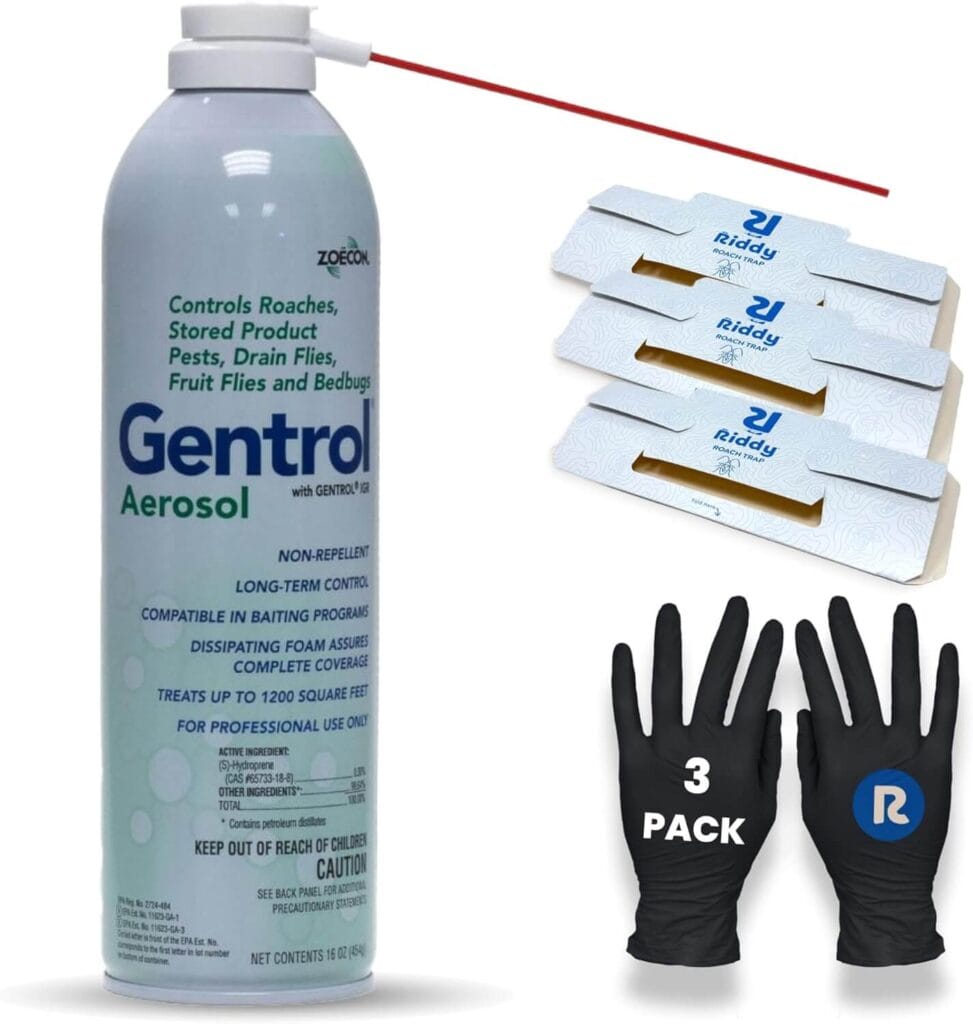
Gentrol Complete w/ Insect Growth Regulator
Take control of your roach problem fast with this simple, beginner‑friendly kit. Gentrol Complete’s Aerosol w/ crack‑and‑crevice straw make it easy to treat hidden spots, while the sticky traps show you exactly where roaches are coming from.
- Easy to Use: Shake, attach the straw, and treat cracks and seams — beginner‑friendly.
- Handy Straw: Built‑in straw reaches tight hiding spots with precision.
- Comprehensive Control: Gentrol IGR + sticky traps give layered roach control.
- Powerful Protection: IGR stops roach growth for up to 120 days; traps show activity.
- Versatile Application: Spray cracks and crevices; place traps under appliances or cabinets.
- Home & Business Safe: Approved for food and non‑food areas.
- Easy Handling: Includes gloves for clean, simple application.

Available on Amazon!
For a heavy infestation (roaches coming out of vents, visible during the day, widespread activity):
Everything above plus:
- D‑Fense Dust 1 lb Insecticide + 5″ Clear Puffer Duster Kit — perfect for getting dust deep into cracks, wall voids, and dry areas where sprays can’t reach.
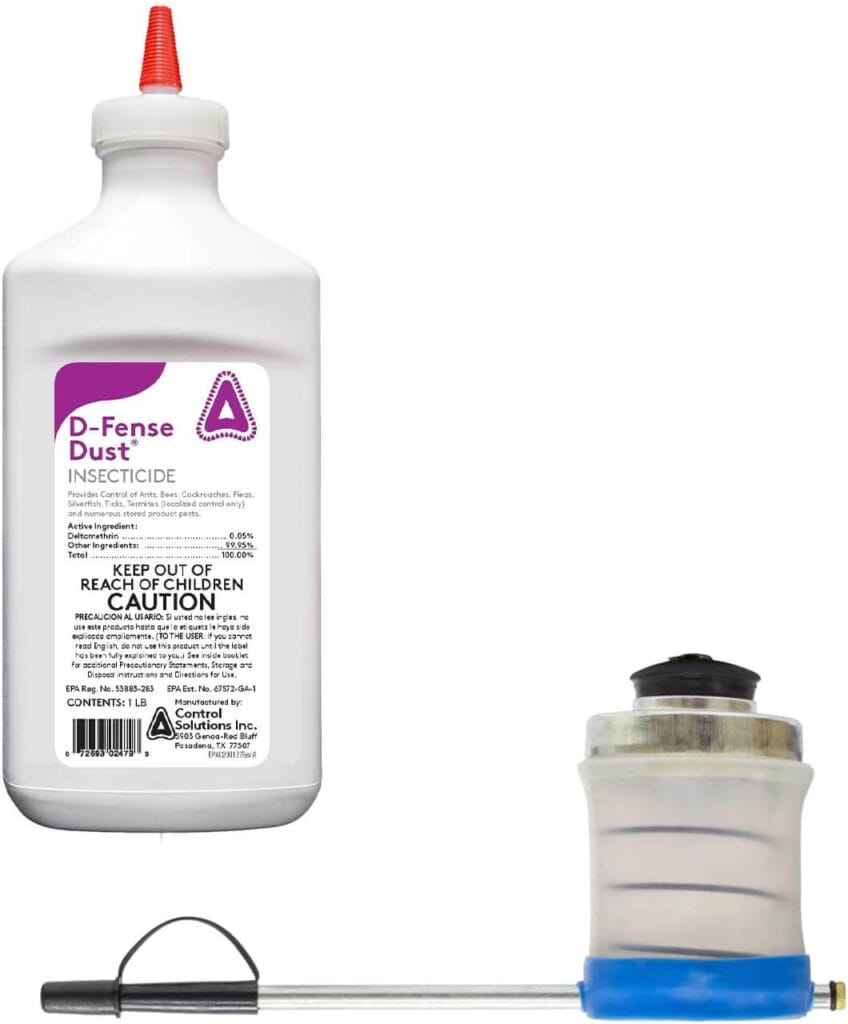
D‑Fense Dust 1 lb + 5″ Clear Puffer Duster Kit
A ready‑to‑use dusting kit that reaches deep cracks, seams, and dry areas where sprays can’t go. Long‑lasting, waterproof dust with a precision puffer for easy application.
- Reaches Where Sprays Can’t: Dust easily gets into deep cracks, voids, and dry areas that shouldn’t get wet.
- Ready to Use: No mixing or prep — just fill the puffer and apply.
- Long‑Lasting Control: Kills crawling insects for up to 8 months when left undisturbed.
- Waterproof Formula: Dust won’t clump or break down in moisture.
- Precision Application: Includes a 5‑inch clear puffer duster for controlled, even dusting.
Available on Amazon!
Step 1 — Vacuum Thoroughly
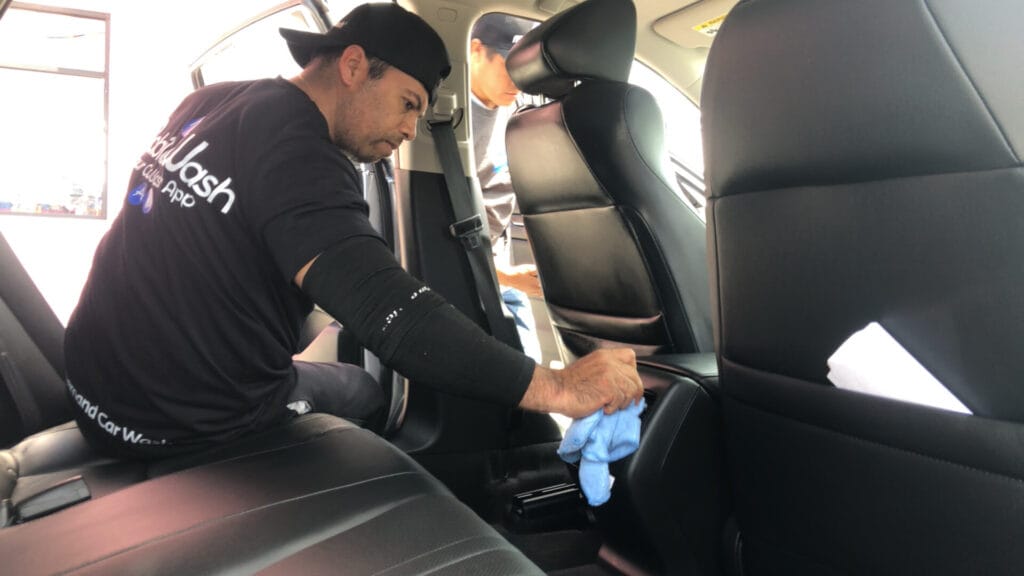
Before any product goes into the car, vacuum every surface you can reach. Don’t rush this step.
- Remove floor mats and vacuum them separately
- Vacuum all seat surfaces including the sides and backs
- Get into seat tracks along the floor
- Vacuum the trunk completely
- Get into every crevice and gap you can reach along the center console, door panels, and under the seats
Vacuuming removes roach eggs, shed skins, droppings, and food debris that would otherwise compete with your treatment products. The cleaner the car, the more effective everything that follows will be.
*Note* Empty vaccume bag outside. Do not introduce roaches or their eggs into your home.
Step 2 — Assess Your Infestation Level
This determines whether you go straight to the aerosol or add the dust treatment first.
Light to moderate infestation: You’ve seen one or a few roaches, activity is limited, you haven’t seen them coming from the vents or dash. Go straight to Step 4 — the aerosol spray.
Heavy infestation: Roaches are coming out of the vents, appearing during the day, visible in multiple areas of the vehicle simultaneously, or you know the infestation has been going on for a while. Do the dust treatment in Step 3 first, then the spray.
Step 3 — Dust Treatment for Heavy Infestations (Skip if Light)
If you have a serious roach problem in your car, the dust goes in before the spray — and there’s an important reason for that order. The dust will adhere to wet surfaces and make a mess.. If you dust first, then spray you won’t leave a powdery mess everywhere.
There’s another practical reason to do the dust first: applying dust in tight spaces like under the dashboard often requires getting down close to the work. You do not want to be lying in freshly applied pesticide. Dust first, let it settle, then spray.
What to use: D-Fense Dust with an inexpensive hand duster.
Application technique: This is critical. You want a light, even coating — not blobs of dust, not visible piles. A gentle cloud of dust at each puff should be your goal. Before each puff, give the duster a little shake so the dust is evenly distributed inside the chamber. Then apply with a controlled, gentle squeeze. You should see a light haze, not a dense fog.
Where to apply dust:
Dashboard and instrument area: Get the duster tip into any gap or crack along the top and bottom of the dash. Work methodically across the full width of the dashboard. Roaches love the warmth behind the instrument cluster.
Center console: There are almost always gaps and cracks along the edges of the center console. Work the duster tip into every opening you can find.
Under the seats — especially power seats: Power seat motors and track mechanisms are electronic and you do not want to spray liquid anywhere near them. Dust is the right tool here. Get under both front seats thoroughly and under the rear seats as well.
Door drain holes: This is a tip most people would never think of. At the bottom of each door there are drain holes designed to let water out. Those same holes let you treat the inside of the door panel itself. Push the duster tip into one of the drain holes at the bottom of each door and give it a light puff. You’ve now treated the inside of every door — an area you could never reach any other way.
Rear fenders and trunk area: Work dust into any gaps around the rear fender wells and around the spare tire area if your vehicle has an accessible spare. These hidden spaces are perfect roach harborage.
Step 4 — Spray With Gentrol Complete Aerosol
The Gentrol Complete Aerosol is the centerpiece of this treatment and genuinely one of the best products available for this situation. Here’s what makes it different from anything you’ll find at a hardware store.
What’s in it: Gentrol Complete contains both an adulticide — which kills existing adult roaches — and an insect growth regulator, or IGR. Most store bought products only have the adulticide. That’s why they fail.
Why the IGR matters so much:
An insect growth regulator works by attacking the roach life cycle at a biological level rather than simply killing the adults you can see. Roaches depend on specific hormones to develop from egg to nymph to adult. The IGR in Gentrol disrupts those hormones completely.
Here’s what happens to the roaches:
- Nymphs attempt to molt and fail, become deformed, or die mid-molt
- Some that do reach adulthood are sterile and cannot reproduce
- Females produce egg cases that don’t hatch
- The population doesn’t just slow down — it collapses
And here’s the part that matters for your peace of mind: IGRs cannot harm you, your children, your dog, or your cat. The biological pathways that IGRs target — juvenile hormone systems and chitin production — simply do not exist in mammals. We don’t molt. We don’t have exoskeletons. The chemistry that devastates a roach population is completely inert to your family. This is why pest control professionals rely on IGRs as a core part of any serious roach treatment.
The aerosol comes with a straw applicator — use it. The straw lets you direct product precisely into cracks, crevices, and hidden spaces where roaches actually live. Without it you’re just misting open surfaces. With it you’re treating the actual problem.
Application technique: Think of how you’d lightly starch a dress shirt — you want a light, even mist, definitely not to the point of any runoff or drips. A slight sheen of moisture is exactly right. Heavy application wastes product and can cause issues on sensitive surfaces.
Where to spray:
Interior cabin: Work systematically through the entire interior. Spray along all baseboards and carpet edges, under the dashboard using the straw to get product into gaps, along the edges of the center console, under and behind the seats, in the trunk, and around any interior storage areas.
Under the hood: Gentrol Complete is formulated to not damage plastic or painted surfaces, which makes it suitable for treating the entire firewall and engine bay interior. Getting product under the hood gives you complete protection — roaches that are living in the engine bay will be treated along with the cabin.
A couple of important notes about under the hood treatment:
- Modern vehicles are designed to handle driving at highway speeds through heavy rain — a light mist from an aerosol is not going to damage anything under the hood in normal circumstances
- That said, avoid direct spray on any touchscreens, the gauge cluster, or visible electronic modules as a precaution
- The decision of what to spray is ultimately yours — treat conservatively if you’re uncertain about any specific component
What to avoid spraying directly:
- Window tint — the product can cause staining or discoloration
- Leather seats — same concern, staining and discoloration
- Touchscreens and gauge cluster plastics — avoid as a precaution
- Any component you’re uncertain about
Step 5 — Let It Dry and Air Out
Once treatment is complete, leave the car doors open in a ventilated area until everything is fully dry. Treating outside with all doors open wide is ideal — it gives you better access during treatment and speeds up drying afterward.
Gentrol Complete has very little odor, which is one of its practical advantages in a vehicle setting. Once dry the car is ready to use.
One thing to expect: As the car dries and you start driving with the windows down, air movement through the cabin can dislodge dead roaches from their hiding spots — particularly from under the dash — and you may find dead bodies appearing over the next few days. This is not a sign the treatment failed. It’s a sign it worked. Dead roaches falling from their positions is the treatment doing exactly what it’s supposed to do.
Step 6 — Place the Monitoring Sticky Traps
The three cockroach sticky traps included in the kit are your confirmation system. Place them:
- Under the driver’s seat
- Under the passenger’s seat
- In the trunk or rear cargo area
Check them every few days. If traps stay empty after the first week, the treatment worked. If you’re still catching roaches after ten days, a second application may be needed.
Bonus — This Kit Works in Your Home Too
Here’s something worth knowing: the Gentrol Complete aerosol and the D-Fense Dust aren’t limited to vehicle use. If you also have roaches in your kitchen, apartment, or any other area of your home, these same products handle that situation as well. The aerosol is labeled for indoor crack and crevice treatment throughout the home. Getting this kit to solve your car problem also gives you a professional grade solution ready to go if roaches ever show up anywhere else.
Getting a car treated professionally for roaches is expensive when you can find someone willing to do it at all — most pest control companies don’t offer vehicle treatment. This kit gives you a professional result at a fraction of the cost, with product left over.
Frequently Asked Questions
IDENTIFICATION & HOW THEY GOT THERE
How did roaches get into my car?
More ways than most people expect. Moving boxes and belongings from an infested home are the most common source. Groceries, bags, and cardboard packaging can carry roach eggs without any visible sign. If your home has roaches, your car is at risk every time you load it. Rideshare drivers are particularly vulnerable — passengers can unknowingly bring roaches in purses and bags. Roaches travel on personal belongings the same way bedbugs do. Vehicles can also pick them up when parked under street lights at night, since roaches are attracted to light sources. And used vehicles — even from dealerships — can already have an infestation the seller never knew about.
What kind of roaches are usually found in cars?
German cockroaches make up the overwhelming majority of vehicle infestations. American cockroaches show up occasionally but are far less common. If you have roaches in your car, German roaches are almost certainly what you’re dealing with.
Can a car really have roaches without the owner knowing?
Absolutely. German cockroaches are expert hiders and strongly nocturnal. A vehicle can have a significant infestation living behind the dashboard, inside door panels, and under seats without a single roach being visible during normal use. They come out at night when the car is parked and dark. Many people only discover the problem when the population grows large enough that roaches start appearing during the day or in unexpected places.
TREATMENT QUESTIONS
Why won’t store bought roach spray work in my car?
Store bought roach sprays are almost entirely repellent-based, which means roaches detect the chemical and avoid it rather than picking up a lethal dose. They scatter the population into deeper hiding spots and do nothing about developing eggs and nymphs. The Gentrol Complete aerosol uses non-repellent chemistry combined with an insect growth regulator — a fundamentally different approach that targets the entire roach life cycle, not just the adults you can see.
Do I need the dust or just the spray?
For a light to moderate infestation, the aerosol alone is sufficient. If you have a heavy infestation — roaches coming from vents, visible during the day, or widespread activity throughout the vehicle — add the D-Fense Dust and a hand duster before the aerosol treatment. The dust reaches areas the spray can’t and is the right tool for electronic components and hard to access voids.
Why does the dust go in before the spray?
Two reasons. Dust doesn’t adhere to wet surfaces, so spraying first would reduce the effectiveness of the dust treatment. And applying dust in tight spaces like under the dashboard often means getting your face close to the work area — you don’t want to be doing that in freshly applied liquid pesticide. Dust first, let it settle, then spray.
Is it safe to spray inside my car?
When used as directed, yes. Gentrol Complete is formulated for indoor use and has very low odor. Let everything dry completely before using the vehicle normally. The IGR component cannot harm people or pets — it targets biological pathways that only exist in insects.
Will the spray damage my car’s interior?
Gentrol Complete is formulated to not damage plastic or painted surfaces. Apply as a light mist — think lightly starching a shirt, not soaking a surface. Avoid spraying directly on window tint and leather seats as these can stain or discolor. Avoid direct spray on touchscreens and gauge cluster plastics as a precaution.
How long do I need to wait before driving the car?
Allow the interior to dry completely before using the vehicle normally. Treating with doors fully open speeds up drying significantly. Gentrol Complete has very little odor so there’s no strong smell to wait out.
Why am I still finding dead roaches after treatment?
Dead roaches dislodging from their hiding spots under the dash and in other areas is completely normal and is actually confirmation the treatment worked. Air movement through the cabin as you drive can cause dead roaches to fall from their positions or move around. Finding dead roaches is a good sign, not a bad one.
HEAVY INFESTATIONS
How do I know if my infestation is bad enough to need the dust?
If roaches are coming out of vents, appearing during the day, or visible in multiple areas of the vehicle simultaneously, treat it as a heavy infestation. If you’ve only spotted one or two and activity seems limited, the aerosol kit alone should handle it.
What if the treatment doesn’t fully work after one application?
Wait at least seven to ten days after the first treatment before retreating. The IGR continues working after the initial application and the full effect takes time. If you’re still catching roaches on the monitoring traps after ten days, a second application of the aerosol is appropriate.
PREVENTION
How do I keep roaches from coming back after treatment?
The IGR in Gentrol Complete provides ongoing protection after the initial treatment. To prevent reintroduction, be cautious about what goes into the car — inspect bags, boxes, and grocery items before loading them. If your home has a roach problem, address that simultaneously or roaches will keep finding their way into the vehicle. Rideshare drivers should be aware that roaches can travel on passenger belongings and may want to do periodic preventative treatments.
Can I use this kit to treat my home too?
Yes. The Gentrol Complete aerosol and D-Fense Dust are both labeled for indoor home use. If you have roaches in your kitchen or anywhere else in your home, the same products handle that situation. Getting this kit to solve your car problem also gives you a professional grade solution ready for any roach issue that comes up in your home.