
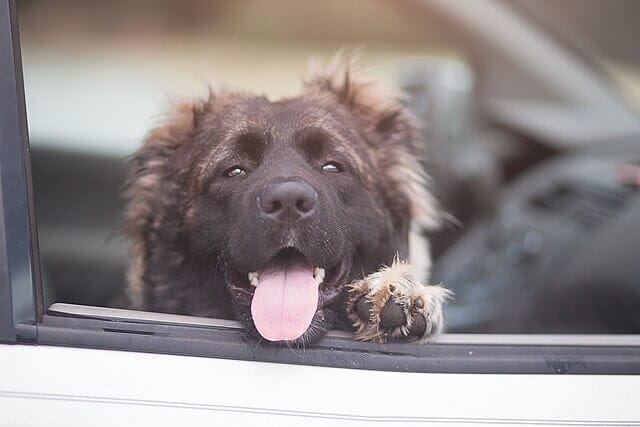
TL;DR — How To Control and Eliminate Fleas in Your Vehicle
- Vacuum aggressively using the crevice tool along all edges, under seats, in the trunk, and around the spare tire — this removes up to 90% of fleas, eggs, larvae, and flea dirt before any product goes down
- Spray the carpet and upholstered surfaces with PT Alpine Flea & Bed Bug Killer using light sweeping passes from arm’s length until just damp — not wet
- Crack the windows slightly and let the car dwell for at least two hours
- Treat your pet simultaneously with a veterinarian-recommended flea product
If you’ve solved a flea problem at home and treated your pet but you’re still getting bitten every time you get in the car, you’re not imagining things. The car is its own flea environment — and it needs its own treatment.
This is more common than most people realize. I had fleas in my car as a teenager. My cat had fleas, and without knowing it, the infestation had spread to my truck. Treating the cat solved the house problem. The truck was a different story.
Fleas in a car aren’t just an inconvenience. A warm, carpeted vehicle interior is essentially a perfect flea incubator — humid, protected from the elements, and full of the organic debris that flea larvae feed on. Left untreated, a car flea problem doesn’t resolve on its own. It gets worse.
The good news is that this is very fixable, and it doesn’t take long.
Understanding Why Fleas in Cars, Trucks, & SUVs Are So Persistent
Most people think of fleas as jumping insects that bite. What they don’t realize is that the adult fleas doing the biting represent less than 5% of a flea infestation. The other 95% — eggs, larvae, and pupae — are hiding in your carpet, developing quietly until they’re ready to emerge as adults.
Here’s what’s actually happening in an untreated car:
- Flea eggs are laid on your pet and fall off into the carpet and seat fabric
- Larvae hatch from those eggs and feed on flea dirt — digested blood that adult fleas excrete — which collects along carpet edges and under seats
- Pupae develop inside a sticky cocoon that is nearly impervious to insecticides, which is exactly why an insect growth regulator is so critical
- Adults emerge from pupae and immediately seek a host — which is you, every time you get in the car
Flea eggs and larvae concentrate heavily along the edges of the carpet, under seats, and in any area where organic debris accumulates. These are your primary target zones.
How Fleas Get Into Cars
Fleas reach vehicles in more ways than most people expect:
- Pets riding in the car — the most common source by far
- Flea eggs tracked in on shoes — eggs fall from infested carpet at home and hitch a ride on your footwear
- Clothing from an infested home — the same way fleas spread between human environments
- Rideshare passengers — a driver may never connect a flea problem to a specific passenger, but it happens
- Used vehicles — a car purchased from a private seller or dealership can already have a developing flea population in the carpet
Do You Actually Have Fleas in Your Car? The White Sock Test
Fleas are small, fast, and easy to miss — especially in a dark interior or when you’re busy driving. If you’re not sure whether your car actually has fleas, here’s a simple and definitive way to find out.
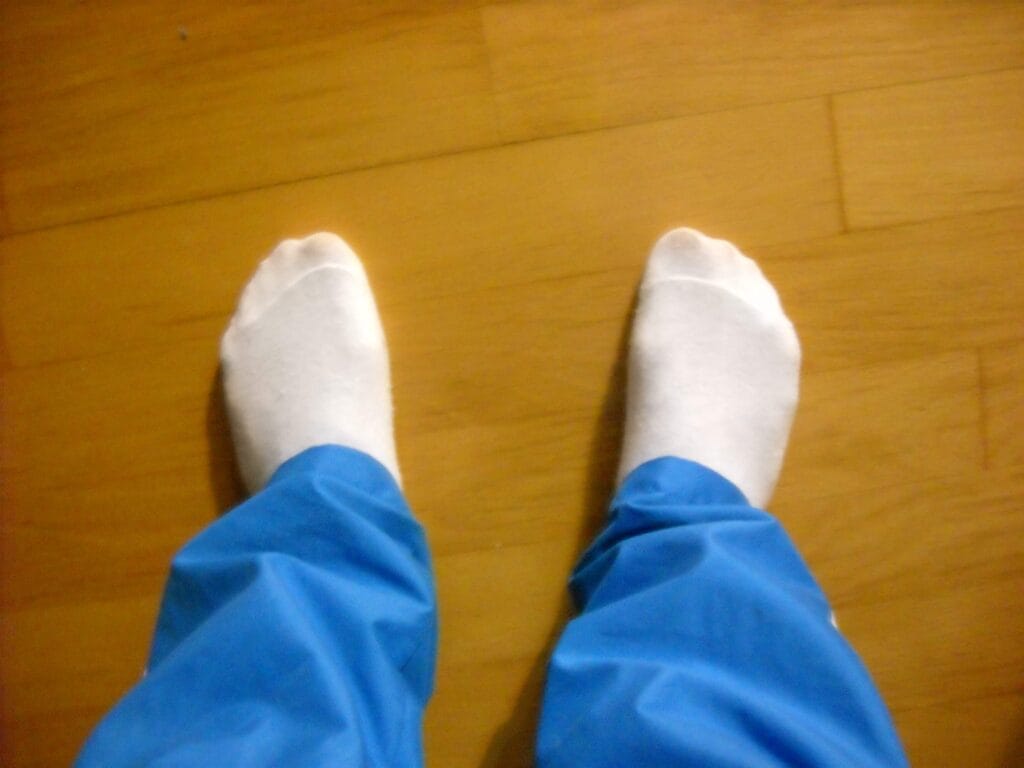
Put on a pair of tall white socks. Sit in the car. Move your feet around slowly across the carpet and along the edges of the seats. Wait a few minutes.
If fleas are present, they will jump toward the heat and carbon dioxide your body produces and land on the white fabric where they’re easy to spot. A clear white surface makes even the tiniest flea impossible to miss.
If nothing shows up after a few minutes of sitting still, you’re probably fine. If you see small dark specks jumping or moving on your socks, you have your answer.
What You Need
- PT Alpine Flea & Bed Bug Killer by BASF
- A vacuum cleaner with a crevice tool
- That’s it for most situations
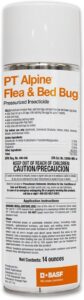
BASF PT Alpine Flea & Bed Bug Killer
PT Alpine Flea & Bed Bug is a professional, fabric‑safe aerosol that gives fast knockdown of fleas in vehicles while also stopping eggs and larvae with a built‑in insect growth regulator (IGR).
- Fast Knockdown: Quickly reduces active fleas in seats and carpets.
- Long‑Lasting: Residual keeps working for weeks and stops new eggs from hatching.
- Built‑In IGR: Targets eggs and larvae to prevent reinfestations.
- Fabric‑Safe: Dries fast, non‑staining, and won’t soak upholstery.
- Pro Ingredients: Dinotefuran, prallethrin, and pyriproxyfen for full‑stage I.G.R. control.
- Ready to Use: No mixing — ideal for seats, carpets, and crevices.
- Low Odor: Suitable for enclosed spaces like vehicle interiors.
- Best With Vacuuming: Works strongest after a thorough vacuum.

Available on Amazon!
BASF PT Alpine Flea & Bed Bug Killer Label — BASF PT Alpine Flea & Bed Bug Killer MSDS
Why PT Alpine Is the Right Product for This Job
Not all flea sprays are created equal, and this distinction matters enormously in a vehicle where you’re dealing with enclosed surfaces, plastics, electronics, and upholstery.
PT Alpine Flea & Bed Bug Killer is a water-based, dry-residue formulation — not an oil or petroleum-based product. This is critical for car treatment for several reasons:
- It will only damage surfaces that would be damaged by water — which in a properly maintained vehicle interior means essentially nothing
- No greasy residue on seats, carpets, or plastic trim
- Very low odor — no lingering chemical smell that would make the car unpleasant to drive
- Dries quickly — you’re looking at a two hour dwell time, not an all-day event
Three active ingredients working simultaneously:
Dinotefuran is the primary adulticide and carries EPA reduced-risk status — one of the cleaner insecticide chemistries available in a professional product. It kills adult and immature fleas fast.
Prallethrin provides quick knockdown of adult fleas on contact.
Pyriproxyfen is the insect growth regulator — and this is where the real long-term power comes from. More on this below.
One can covers up to 2,625 square feet — far more than any vehicle interior. A single can handles the car treatment with significant product remaining for use in the home on carpets, pet bedding, and upholstered furniture your pet frequents.
Why the IGR Is What Actually Solves the Problem
Killing adult fleas is the easy part. The hard part — the part that determines whether the problem comes back in two weeks — is what happens to the eggs, larvae, and pupae already developing in your carpet.
Pyriproxyfen, the insect growth regulator in PT Alpine, works by disrupting the biological development process that insects depend on to mature. It mimics and interferes with juvenile hormones that fleas need to develop from one life stage to the next.
What happens:
- Larvae cannot develop properly and die before reaching adulthood
- Eggs fail to hatch
- The flea life cycle is broken at the source
And here is something important: the IGR component cannot harm humans, children, dogs, or cats. The biological pathways it targets — insect juvenile hormone systems — do not exist in mammals. Your family and your pets have no juvenile hormone system to disrupt. This is one of the primary reasons pest control professionals rely on IGRs. They are highly targeted, long-lasting, and safe for use in living and driving spaces.
PT Alpine kills hatching flea eggs for up to 7 months after a single application. That’s not a typo. One treatment protects the car for the better part of a year.
Step-by-Step Treatment
Step 1 — Vacuum Aggressively
A thorough vacuuming before any product goes down can remove up to 90% of the fleas, larvae, eggs, and flea dirt present in the vehicle. This step is not optional and should not be rushed.
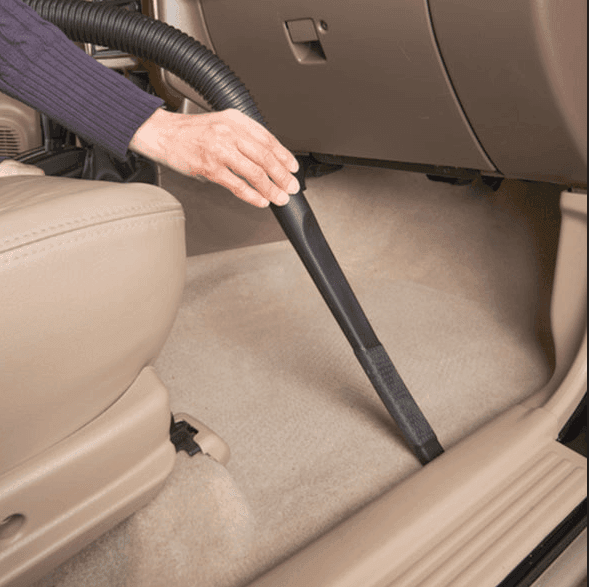
Use the crevice tool for everything:
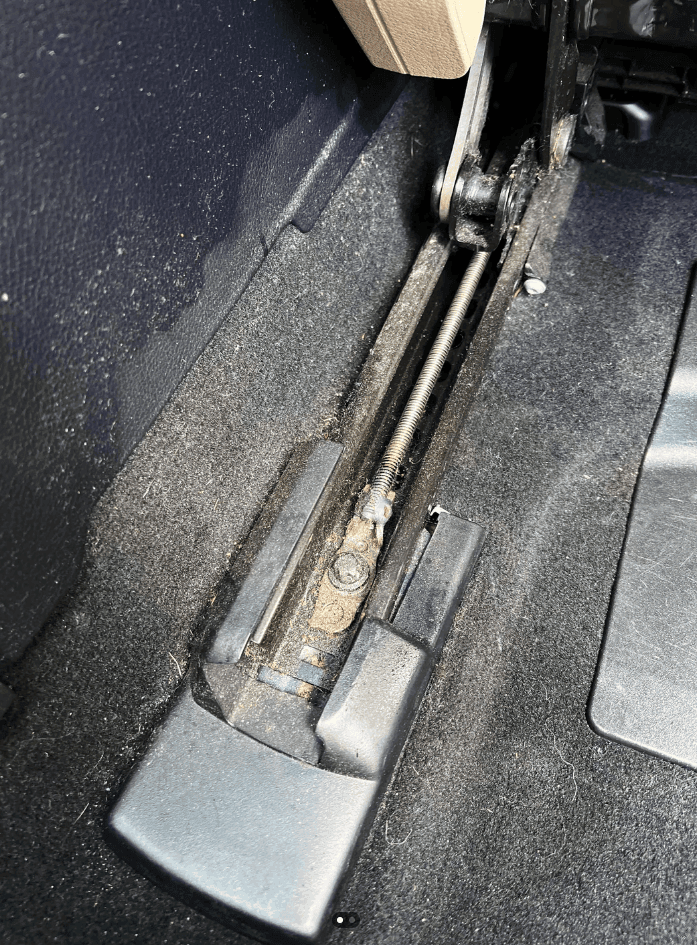
- Run it aggressively along every carpet edge — along the door sills, along the center console base, along the seat tracks, and along the base of the rear seats
- These edge areas are where flea larvae concentrate and where the majority of eggs are laid — they are your most important target zones
- Get under both front seats completely — under-seat areas are hot zones for flea development
- Vacuum all seat surfaces including the sides and backs
- Vacuum the trunk thoroughly including around the spare tire — pets often ride back there and flea eggs can fall through gaps in the floor
- Don’t forget the headliner and any fabric-covered surfaces if your pet has been on the seats
After vacuuming: Remove the vacuum bag immediately and dispose of it outside in an outdoor trash receptacle. Do not carry a bag full of flea eggs and larvae back into your home. If your vacuum is bagless, empty the canister directly into an outdoor trash can and wipe the canister out before bringing it back inside.
Step 2 — Remove the Floor Mats
Pull all floor mats out of the vehicle and set them aside. You will treat them separately after treating the interior.
Step 3 — Apply PT Alpine to the Interior
Shake the can well before use.
Hold the can at arm’s length — approximately 36 inches from the surface — and apply using light, smooth sweeping passes. You are aiming to lightly dampen the fabric, not soak it. Think of how you’d apply a light misting of water to a shirt you’re about to iron. If the fabric looks visibly wet or you can see any dripping, you’ve applied too much.
Where to treat:
- All carpet surfaces throughout the cabin
- Under the seats
- Upholstered seat surfaces — sides, backs, and seams where fleas hide
- The trunk carpet and spare tire area
- Any fabric-covered surface your pet has had contact with
- Room edges and along the base of all seating
Apply in a sweeping motion at approximately one foot per second. For heavier flea activity, slow your pass slightly to deposit more product. For light infestations or preventative treatment, a standard sweep is sufficient.
One can covers up to 2,625 square feet — you will have product remaining after the car treatment. Save it.
Step 4 — Treat the Floor Mats
Lay the floor mats on a clean outdoor surface and apply PT Alpine the same way — light sweeping passes from arm’s length until just damp. Allow them to begin drying while the car interior dwells.
Step 5 — Replace Mats and Let the Car Dwell
Replace the floor mats, crack the windows slightly for ventilation, and close the car. Leave it to dwell for a minimum of two hours. The product dries quickly and the active ingredients continue working throughout the dwell period.
Two hours is sufficient. You can leave it longer without any issue if it’s more convenient.
Step 6 — Return to a Flea-Free Car
After the dwell period the car is ready to use. The IGR will continue working for up to seven months — protecting against any new eggs that enter the vehicle during that time.
Do not shampoo or wet-clean the carpets after treatment. Cleaning the carpets before treatment is fine and even encouraged. Cleaning after treatment removes the active residue and dramatically reduces both the killing effectiveness and the duration of the IGR protection. Once it’s treated, leave the carpet alone.
Treating the Rest of Your Environment
A perfect car treatment will fail to solve your problem long-term if the source of the fleas isn’t addressed simultaneously.
Your pet must be treated at the same time. This is non-negotiable. If your pet continues to bring fleas into the car, the treatment will be overwhelmed by reinfestation. Here is something critical that most people don’t know: the flea products available at big box stores are not effective. The formulations that actually work are kept behind a veterinary paywall — they require a prescription or a vet visit. The cheap over-the-counter options at best provide minimal protection and at worst can be dangerous to your pet. Take your pet to the vet and ask specifically for a veterinarian-recommended flea treatment. It’s the only version that works.
Your home may also need treatment. If your pet has been spending time in the home, flea eggs have almost certainly fallen off in carpet, pet bedding, and on upholstered furniture. PT Alpine can be used on all of these surfaces the same way it was used in the car — light sweeping passes from arm’s length, targeting carpet edges, pet resting areas, and upholstered furniture your pet frequents. One can goes a long way.
Treating the car without treating the pet and home is like bailing a leaking boat without fixing the hole.
What Never to Use — The Fogger Warning
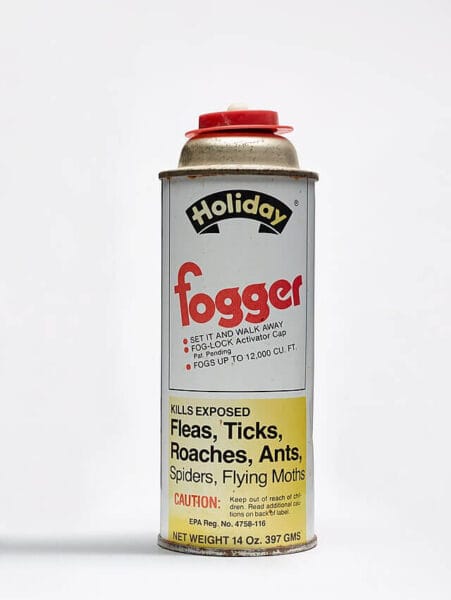
Never use a fogger — also called a bug bomb — to treat fleas in a car. Never.
This deserves emphasis because foggers are commonly suggested and they are completely ineffective for flea treatment in a vehicle. Here’s why:
Foggers don’t reach where fleas live. Flea eggs and larvae are buried in carpet fibers and concentrated along edges and under seats. The insecticide from a fogger disperses into the air and settles on open surfaces. It never penetrates carpet pile where the developing flea population actually is.
Pupae are nearly impervious to contact insecticides. The sticky cocoon that a flea pupa develops inside protects it from almost any spray-based treatment. Only an IGR — by preventing development rather than trying to kill through the cocoon — addresses the pupal stage effectively.
Foggers have zero effect on flea eggs. Eggs are not killed by contact insecticides. The IGR in PT Alpine prevents eggs from developing. A fogger has no mechanism to address eggs at all.
In a car, foggers also cause interior damage. Most fogger formulations use heavy petroleum solvents as carriers. In an enclosed vehicle interior that gets hot in the sun, those solvents can stain upholstery, dull plastic trim, and leave a residue on surfaces that’s difficult to remove. The smell can linger for days.
A professional pest control technician would never recommend a fogger for any flea situation — car or otherwise. Don’t use one.
Frequently Asked Questions
IDENTIFICATION & HOW THEY GOT THERE
How do I know if I have fleas in my car?
The white sock test is the most reliable method. Put on tall white socks, sit in the car, and move your feet slowly along the carpet and seat edges. If fleas are present they will jump toward the heat and carbon dioxide your body generates and land on the white fabric where they’re immediately visible. If you see small dark specks jumping or moving on your socks after a few minutes, you have your answer.
How did fleas get into my car if I don’t have pets?
Fleas reach cars through more routes than most people expect. Flea eggs can be tracked in on shoes from an infested home. They can travel on the clothing of anyone who has a flea problem at home. Rideshare drivers are particularly vulnerable — a passenger can unknowingly introduce fleas from their own environment and the driver may never connect the problem to a specific ride. Used vehicles can also already have a developing flea population in the carpet when purchased.
Why do I keep getting bitten in my car even after treating my pet and home?
Because the car is its own separate flea environment that requires its own treatment. Treating the pet solves the source. Treating the home addresses the indoor infestation. But if flea eggs fell into the car carpet before those treatments happened, the car is still incubating a developing flea population independently. All three environments — pet, home, and car — need to be addressed to fully break the cycle.
ABOUT THE PRODUCT
Is PT Alpine safe to use in an enclosed car interior?
Yes. PT Alpine is a water-based, dry-residue formulation — not petroleum or oil-based. It will only damage surfaces that would be damaged by water, which in a vehicle interior means essentially nothing. It has very low odor, no lingering chemical smell, and dries quickly. The IGR component cannot harm humans or pets — it targets biological pathways that exist only in insects.
Will this product stain my car seats or carpet?
PT Alpine is non-staining on most surfaces. It’s a water-based formulation, so any concern about staining is essentially the same as concern about water damage to that surface. On standard automotive carpet and upholstered seating it leaves no stain or residue. Always test an inconspicuous area first if you have any concern about a specific surface type.
Can I use leftover product in my home?
Yes — and this is one of the practical advantages of this product. PT Alpine is labeled for use on carpets, pet bedding, upholstered furniture, and other areas where fleas develop in the home. Apply it the same way — light sweeping passes from arm’s length, targeting carpet edges, pet resting areas, and fabric furniture your pet frequents. One can covers up to 2,625 square feet, so there will almost certainly be product remaining after the car treatment.
TREATMENT QUESTIONS
Why is vacuuming so important before treating?
A thorough vacuuming removes up to 90% of the fleas, eggs, larvae, and flea dirt present in the vehicle before any product is applied. Flea dirt — digested blood that adult fleas excrete — is what larvae feed on. Removing it starves developing larvae and dramatically reduces the population the product has to work against. The more thorough the vacuuming, the more effective everything that follows will be.
Why do I need to use the crevice tool along the edges?
Because that’s where flea eggs and larvae concentrate. Flea eggs are laid on the pet and fall off as the animal moves. They roll and settle along carpet edges, under seats, and into corners — anywhere organic debris accumulates. These areas contain the majority of the developing flea population and are your most important treatment targets. A crevice tool gets into these zones in a way a standard vacuum head cannot.
Why shouldn’t I shampoo the carpet after treatment?
Shampooing after treatment removes the active residue — both the adulticide and the IGR — from the carpet fibers. This reduces killing effectiveness and dramatically shortens the protective period. PT Alpine can protect against hatching flea eggs for up to seven months after a single application. Shampooing after treatment throws away most of that protection. Clean the carpet before treatment if you want to, but not after.
Why are foggers so ineffective for car flea treatment?
Foggers disperse insecticide into open air where it settles on exposed surfaces. It never penetrates carpet pile where flea eggs and larvae actually live. Flea pupae are nearly impervious to contact insecticides regardless of how they’re applied. And fogger formulations have no mechanism to address flea eggs at all. Beyond being ineffective, the petroleum-based solvents in most foggers can damage vehicle interiors. A pest control professional would never recommend a fogger for flea control in any situation.
PET TREATMENT
What flea treatment should I use on my pet?
Only veterinarian-recommended flea products work reliably. The flea treatments sold at big box stores and pet stores are not effective against modern flea populations — the formulations that actually eliminate fleas are kept behind a veterinary paywall for good reason. Some cheap over-the-counter options can also be harmful to pets. Take your pet to the vet and ask specifically for a current flea treatment recommendation. Treating the car without treating the pet guarantees reinfestation.
Do I need to treat my pet and car at the same time?
Yes. Treating the car without simultaneously treating the pet means a treated pet can reintroduce fleas to the car before the population is fully eliminated. Treating the pet without treating the car means the car continues to produce adult fleas that bite you and potentially reinfest the pet. Both need to happen together for the treatment to be fully effective.