TL;DR: How To Treat And Control Crazy Ants
Crazy ants don’t respond to most ant baits. If you treat them like other ants, you’ll stay frustrated.
Here’s the sequence that works:
Step 1: Apply InVict Blitz Granular Bait at 2–4 tablespoons per 100 sq ft along trails, mulch, tree bases, A/C pads, and access points. Apply on dry ground in the morning or evening.
Step 2: After 1–2 days, spray a non-repellent like Taurus SC (0.8 fl oz per gallon) in a 3-foot band around the foundation, landscape beds, A/C units, irrigation boxes, and several feet up tree trunks.
Bait first. Spray second.
That combination consistently knocks down tawny crazy ant infestations — even large ones.
What Are Crazy Ants?
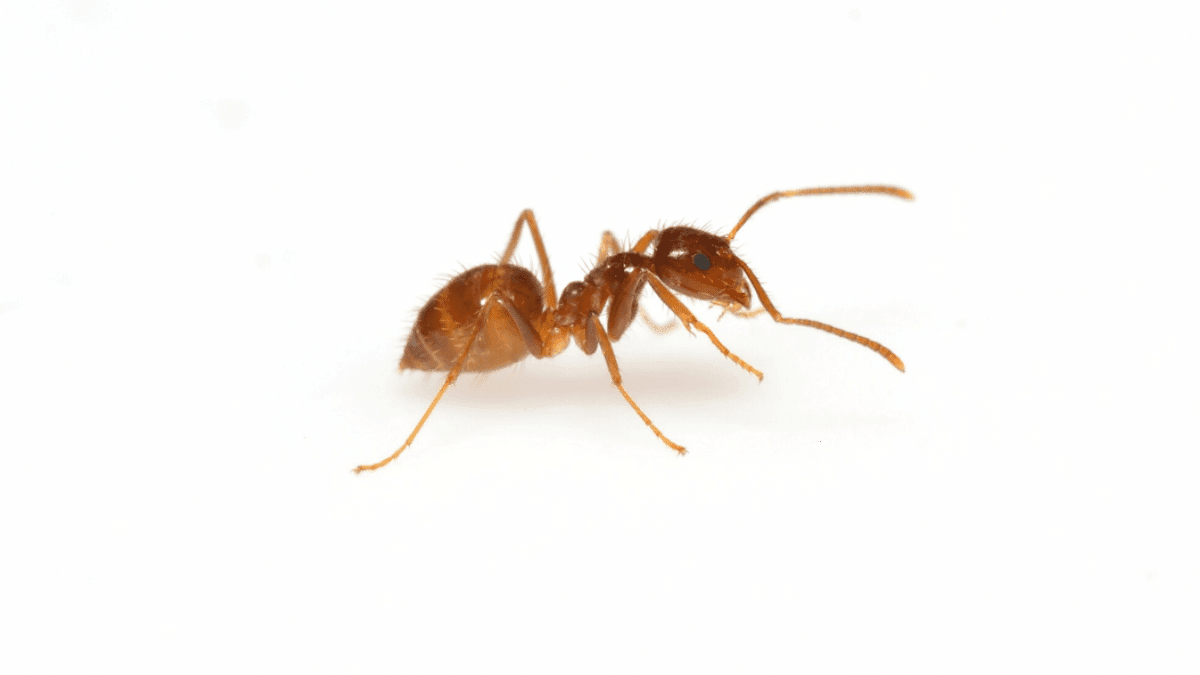
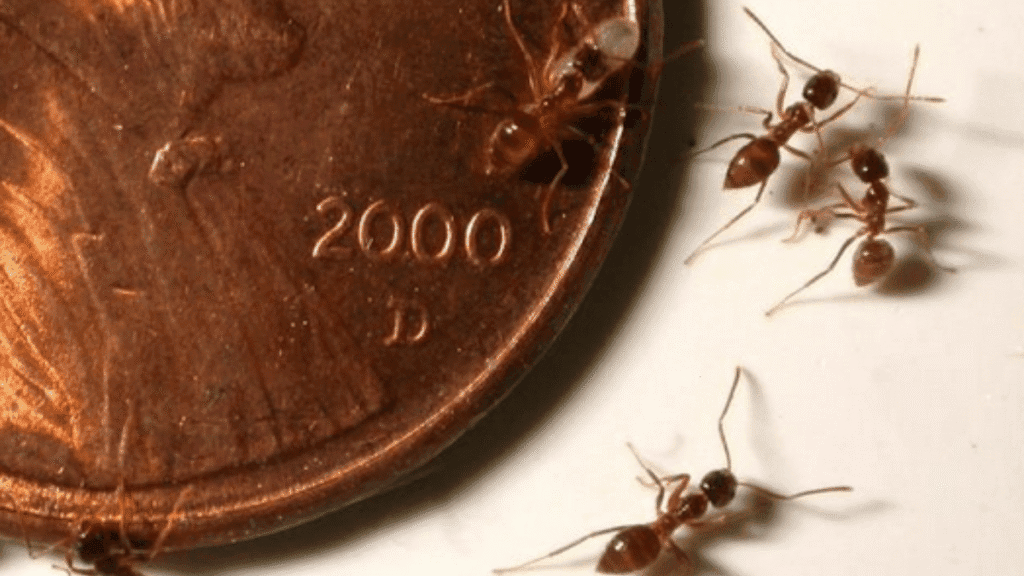
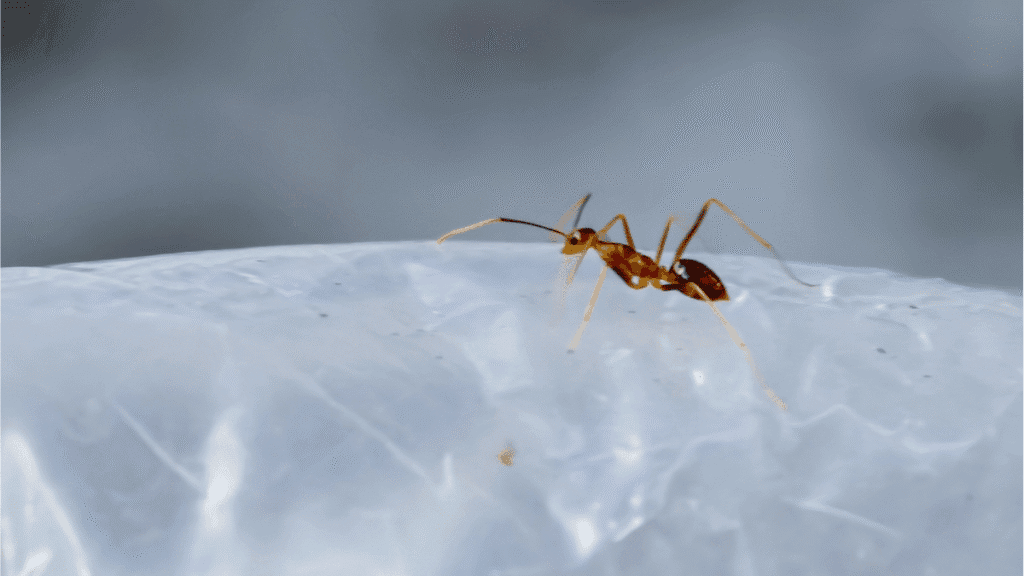
Tawny crazy ants (Nylanderia fulva) are tiny, reddish-brown ants about 2–3 mm long. They move fast and erratically — that jittery, scattered movement is what gave them the name “crazy ants.”
They’re common across the Southern U.S., especially in warm, humid regions with dense vegetation and moisture.
If you’ve seen thousands moving at once around your home, you’re probably dealing with them.
Why Crazy Ants Are So Hard to Control
Crazy Crazy ants aren’t difficult because they sting. They don’t.
They’re difficult because of how they operate.
They:
- Form massive colonies with multiple queens
- Spread through mulch, soil, debris, and landscape clutter
- Nest around A/C pads, irrigation boxes, and logs
- Invade electrical equipment
- Scatter instead of following tight trails
- Ignore most common ant baits
Spray one area and they pop up somewhere else.
That’s why you need a method that reaches the hidden colony network underground.
Why Most Ant Baits Fail
Homeowners often try sweet gels or liquid baits.
Crazy ants may nibble at them — but they don’t recruit heavily, and they rarely move enough back to collapse the colony.
There’s one granular bait that consistently works better than the rest:
InVict Blitz Granules
It performs better because:
- The granules are small enough for them to carry
- The attractant matches their feeding behavior
- The active ingredient works slowly enough for transfer
- It reaches the underground pockets you can’t see
That’s why bait comes first.
Step 1 — Apply InVict Blitz Granular Bait
This is the foundation of control.
Application Rate
Use 2–4 tablespoons per 100 square feet (½–1 oz per 100 sq ft).
Where to Apply
Lightly sprinkle around:
- Active foraging areas
- Small soil mounds
- Mulch beds
- Tree bases and stumps
- A/C pads
- Irrigation boxes
- Fence lines
- Vegetation touching the home
- Entry points along the structure
Apply evenly — don’t pile it up.
Timing Matters
- Apply in early morning or late evening
- Only apply on dry ground
- Do not apply before rain
- Avoid irrigation for at least 24 hours
If the bait gets wet, it’s done.
Give the ants a day or two to circulate the bait through the colony.
You may see heavier feeding activity at first. That’s normal.
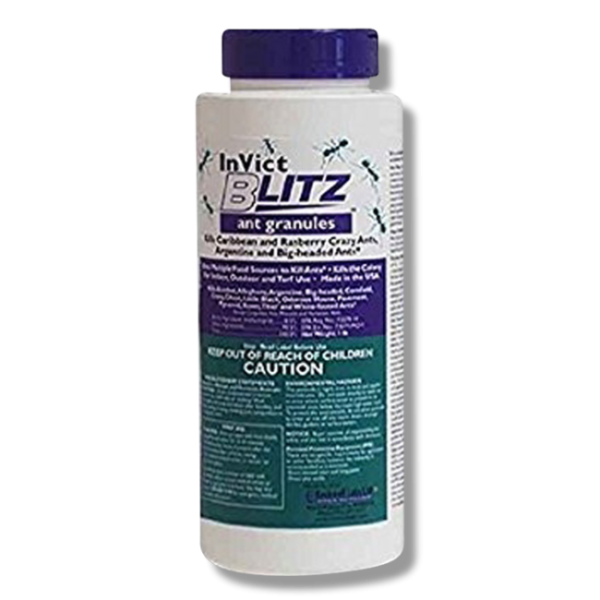
InVict Blitz Ant Granules
Bait Matrix Specifically Designed and Proven Highly Attractive to Persistent Ant Species such as Tawny/Caribbean/ Raspberry Crazy, Argentine and Big-Headed Ants
- Broadcast or mound treatment
- Extremely attractive bait
- Kills the entire colony
- Delayed kill formula
- Low odor
- Trusted by pest control professionals

Available on Amazon!
InVict Blitz Granular Bait Label – InVict Blitz Granular Bait
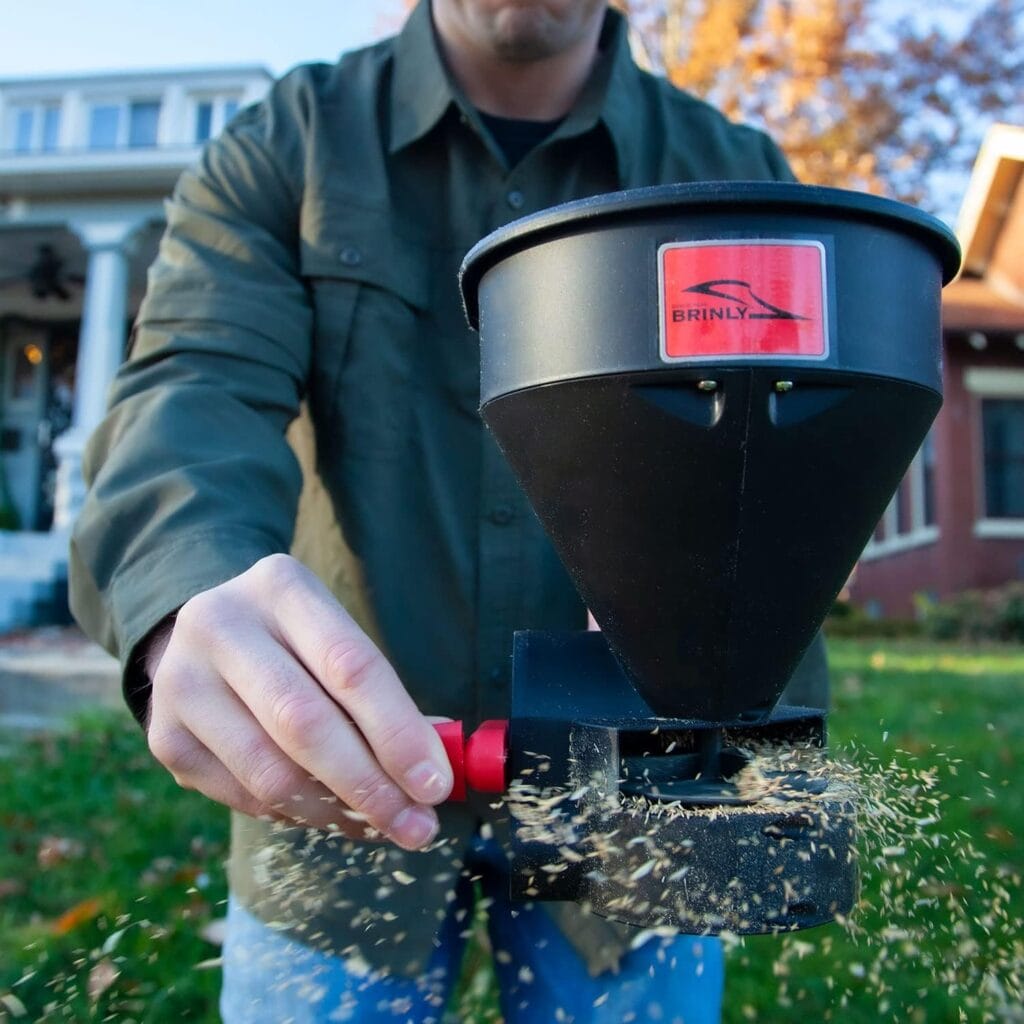
Brinly 5lb. All-Season Handheld Spreader
The Brinly 5 lb. All‑Season Handheld Spreader is a durable, easy‑fill crank spreader built for quick, even application of seed, fertilizer, ice melt, and granular pest control products in small or hard‑to‑reach areas.
- 5 lb Capacity: Holds 0.5 gal / 2 L for small, tight areas.
- Easy Scoop-and-Spread: Contoured lip fills easily; spreads up to 5 ft.
- Adjustable Flow Gate: Simple knob controls output precisely.
- Smooth Crank Action: Long crank and ergonomic handle for easy spreading.
- Professional‑Quality Spread: Throws granules in a clean, controlled pattern.
- Built Tough: Heavy‑duty poly hopper with enclosed gears and steel hardware.
Available on Amazon!
Step 2 — Follow With Taurus SC
Once bait has had time to move through the colony, come back with a non-repellent spray.
Taurus SC at 0.8 fl oz per gallon is commonly used.
Why non-repellents matter:
- Ants don’t detect them
- They walk through treated areas
- They transfer the active ingredient to others
- Colonies weaken gradually
Crazy ants can’t avoid what they can’t sense.
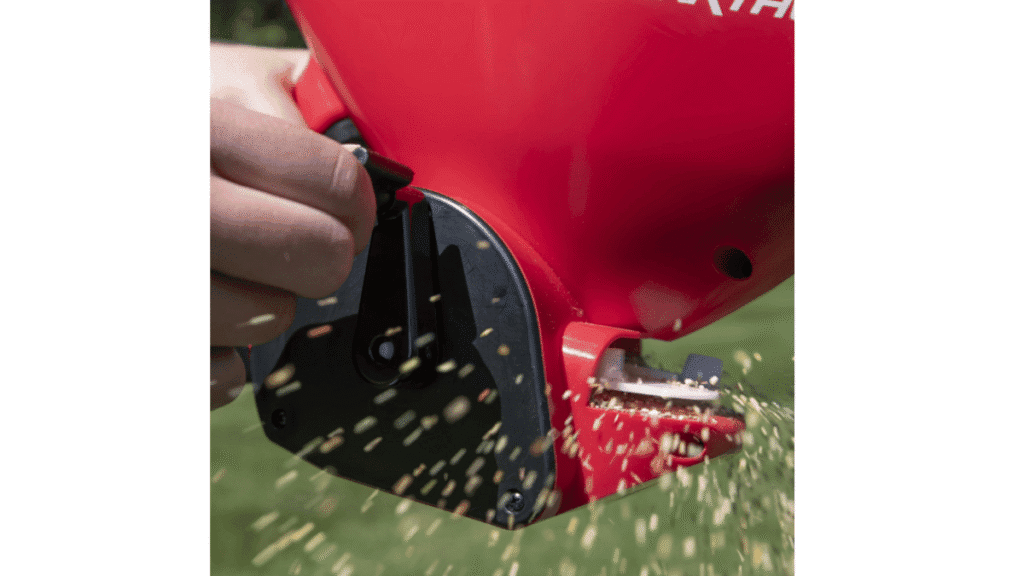
Where to Spray
Apply a 3-foot band around:
- The foundation
- Door and window frames
- Mulch beds
- Landscape borders
- A/C units
- Irrigation boxes
- Fence lines
- Tree bases and stumps
- Any vegetation touching the structure
This creates a treated zone that reduces reinvasion.
Taurus SC Label – Taurus SD MSDS
Why Bait + Spray Works Better Than Spray Alone
You can knock down numbers with spray alone.
But baiting first:
- Hits underground nesting pockets
- Reduces satellite colonies
- Shrinks the population before perimeter treatment
- Makes the spray more effective
Spray without bait often turns into a chasing game.
Bait first. Then lock it down.
Indoor Treatment (Usually Not Needed)
Crazy ants that show up indoors almost always originate outside.
InVict Blitz is labeled for indoor use, but if you apply it indoors:
- Keep it inaccessible to children and pets
- Use tamper-resistant bait stations
Most of the time, proper outdoor treatment eliminates indoor activity.
Extra Steps That Improve ResultsCrazy ants thrive in clutter and moisture.
Improve conditions by:
- Trimming vegetation away from the home
- Reducing mulch thickness
- Removing leaf litter and debris
- Sealing electrical boxes
- Fixing irrigation leaks
- Storing firewood away from the house
Environmental cleanup makes chemical treatment far more effective.
What to Expect After Treatment
You may see a temporary increase in movement as ants recruit to bait.
Within several days:
- Feeding activity slows
- Trails thin out
- Population pressure drops
Large infestations may require repeat baiting months later, especially in heavily wooded or humid areas.
But the two-step method dramatically reduces pressure when applied correctly.
Summary — Crazy Ant Control
Tawny crazy ants (Nylanderia fulva) form massive colonies and ignore most common ant baits.
The most reliable DIY approach is:
- Apply InVict Blitz Granules first on dry ground.
- Follow with Taurus SC at 0.8 fl oz per gallon to create a treated perimeter.
Bait first. Spray second.
That sequence reaches hidden colonies, reduces the population, and prevents reinvasion — even when crazy ants seem out of control.
FAQ’s Crazy Ants
IDENTIFICATION & BEHAVIOR
What are crazy ants?
Crazy ants (also called tawny crazy ants) are tiny reddish‑brown ants about 2–3 mm long. They’re known for their extremely fast, erratic movement — the behavior that gives them their name. They form huge colonies with multiple queens and spread quickly across yards and structures.
Why do crazy ants move so fast and “act crazy”?
Their rapid, zig‑zag movement is a natural defense behavior. It helps them avoid predators and makes them harder to kill with contact sprays. Homeowners often identify them by movement alone.
Do crazy ants bite or sting?
They don’t sting, but they can bite and spray formic acid, which may cause mild irritation. They’re considered a nuisance pest, not a medically dangerous one.
Where do crazy ants usually nest?
They commonly nest in:
- mulch and soil
- landscape debris
- logs, stumps, and leaf litter
- AC pads and irrigation boxes
- wall voids and cracks
- shaded, moist areas
They’re especially common across the Southern U.S..
How do I tell crazy ants apart from other small ants?
The erratic, fast movement is the biggest giveaway — no other common ant moves quite like that.
Size-wise, think of a sesame seed. Outdoors they’re often mistaken for fire ants or Argentine ants, but fire ants move in tighter organized trails and crazy ants don’t sting. Indoors, people sometimes confuse them with ghost ants, but ghost ants are much paler and have a distinctive whitish abdomen.
If you have small reddish-brown ants moving in a scattered, jittery pattern, crazy ants are a strong possibility.
Can crazy ants damage electrical equipment?
They can. Crazy ants are strongly attracted to electrical equipment and have been found nesting in and around AC units, pool equipment, and breaker boxes.
While damage around homes tends to be less severe than in industrial settings, a heavy infestation around electrical equipment is something to take seriously.
If you’re finding crazy ants around your AC pad, pool pump, or breaker box, treating those areas specifically is important.
How fast can a crazy ant infestation grow?
Faster than most people expect. Crazy ants are invasive and can go from no presence at all to a serious neighborhood-wide problem in just a few seasons.
Once they establish in an area they spread quickly through yards, mulch, and landscaping.
If your neighbors start seeing them, it’s worth being proactive rather than waiting for them to show up at your door.
Are crazy ants spreading to new areas?
Yes. Tawny crazy ants are an invasive species currently established across Florida, Georgia, and much of the Gulf Coast.
They thrive anywhere it’s hot and humid with mild winters. They don’t do well where it freezes hard, but in warm climates their range continues to expand.
If you’re in a warm, humid region and haven’t seen them yet, that could change.
Can crazy ants really get out of hand?
Yes — they absolutely can.
While some infestations are manageable, crazy ants can build up into massive populations that seem to cover everything at once.
Because they form huge colonies with multiple queens and ignore most common ant baits, an untreated infestation can grow far beyond what most homeowners are prepared for.
Treating early and treating correctly is much easier than trying to knock back a heavy established infestation.
Is my crazy ant problem connected to my neighbor’s yard?
Very likely yes.
Like Argentine ants and bigheaded ants, crazy ant supercolonies don’t respect property lines.
If neighboring properties have untreated infestations, pressure on your yard will continue even after treatment.
Maintaining a treated perimeter with Taurus SC helps create a barrier, but in heavily infested neighborhoods it becomes an ongoing management situation rather than a one-time fix.
INDOOR ACTIVITY
Why are crazy ants coming into my house?
They enter homes when outdoor colonies grow too large or when they’re searching for food, moisture, or new nesting sites. They often come in through cracks in slabs, gaps around pipes, or vegetation touching the home.
Should I treat crazy ants inside my home?
Most of the time, no. Crazy ants entering the home are usually coming from outdoor colonies. Once the outside is treated, indoor activity typically disappears. Indoor baiting is only needed if ants are entering through hidden voids.
Can I use regular ant bait indoors for crazy ants?
Most baits don’t work well on crazy ants. They may nibble on them, but they rarely recruit enough workers to make a difference. InVict Blitz is the only bait they reliably take and share.
TREATMENT & PRODUCTS
What is the best bait for crazy ants?
InVict Blitz Granular Bait is the only bait crazy ants consistently recruit to and carry back to the colony. Apply 2–4 tablespoons per 100 sq ft around active trails, mounds, and access points.
When should I apply InVict Blitz?
Bait in the morning or evening when ants are actively foraging. Do not apply bait when the ground is wet or rain is coming — moisture ruins the bait.
How do I apply InVict Blitz correctly?
Lightly sprinkle the bait around:
- trails
- small mounds
- trees and stumps
- AC pads and irrigation boxes
- landscape debris
Use 2–4 tablespoons per 100 sq ft. Do not pile the bait.
What spray works best for crazy ants?
Use Taurus SC, a non‑repellent insecticide that ants can’t detect. Mix 0.8 fl oz per gallon of water and spray a 3‑foot band around the foundation, mulch beds, trees, and moisture areas.
Should I bait first or spray first?
For the best results:
- Bait first with InVict Blitz
- Spray after with Taurus SC
Bait reaches hidden colonies underground. Taurus SC creates a long‑lasting barrier that stops new ants from moving in.
Can I skip the bait and just spray Taurus SC?
Yes — if you’re extremely thorough, Taurus SC alone can work.
But baiting first is more reliable because it hits the colonies you can’t see.
PREVENTION & LONG‑TERM CONTROL
How do I keep crazy ants from coming back?
Maintain a Taurus SC perimeter
- Trim vegetation touching the home
- Reduce mulch thickness
- Remove leaf litter and debris
- Fix moisture issues
- Seal cracks and gaps around pipes and doors
Crazy ants thrive in shaded, moist, cluttered areas.
Do crazy ants come back every year?
They can, especially in warm, humid regions. Quarterly perimeter treatments and regular yard maintenance help prevent reinfestation.
Can landscaping bring crazy ants onto my property?
Yes. They often spread through mulch, potted plants, and landscape debris. Inspect new plants and avoid piling mulch against the foundation.