
This page contains affiliate links. I may earn a commission at no extra cost to you.
The best way to get rid of crazy ants is to broadcast InVict Blitz Granular Bait on completely dry soil where they are actively foraging, then refresh the bait every 24 hours until activity stops. Most infestations resolve in about 3 days when the bait is applied correctly.
TL;DR: How To Treat And Control Crazy Ants
- Don’t spray anything first. Contact spray on crazy ants causes the colony to split into multiple satellite colonies and the infestation explodes
- Wait for completely dry conditions: late afternoon/early evening (best) or early morning after the dew has fully burned off.
- Broadcast InVict Blitz Granular Bait around the foundation, mulch beds, tree bases, AC pads, irrigation boxes, and any visible trails.
- Refresh the bait every 24 hours. Crazy ants empty placements faster than other species and trails shift overnight.
- If they’re inside the house, place a small dab of Advion Ant Bait Gel outside the wall closest to the indoor trail.
- Clean up anything inside that’s attracting them.
- Most infestations are gone within 3 days when the bait is fresh and conditions stay dry.
- If activity persists after a week, perimeter-spray with imidacloprid around the foundation, tree bases, and electrical equipment.
Keep reading for the full breakdown. ↓
What You Need
One bait handles the vast majority of crazy ant problems when it’s applied correctly and refreshed daily.
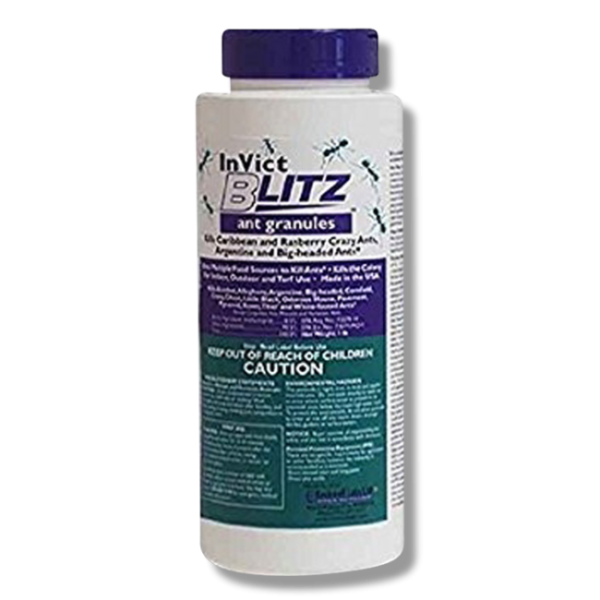
InVict Blitz Ant Granules
Bait Matrix Specifically Designed and Proven Highly Attractive to Persistent Ant Species such as Tawny/Caribbean/ Raspberry Crazy, Argentine and Big-Headed Ants
- Broadcast or mound treatment
- Extremely attractive bait
- Kills the entire colony
- Delayed kill formula
- Low odor
- Trusted by pest control professionals

Available on Amazon!
Competitive pricing + Fast Free shipping on all orders!
InVict Blitz Granular Bait Label – InVict Blitz Granular Bait
InVict Blitz uses imidacloprid in a granular bait matrix specifically formulated for the way crazy ants eat. The granule size is small enough for crazy ant workers to handle, and the bait matrix is engineered for supercolony species that cycle through sugar, protein, and oil preferences. Most ant baits ignore this nutritional cycling and end up working for a few days, then getting ignored when the colony’s preference shifts. InVict Blitz is built around it.
The imidacloprid is slow-kill and transfers through the colony network via trophallaxis (mouth-to-mouth food sharing). Workers carry it back to the multiple satellite nests and feed the queens. Crazy ant colonies have many queens distributed across many nests, so the slow-kill timing matters — the active ingredient has to keep moving through the network for days before the workers carrying it die.
After 25 years of treating crazy ants, this is the only bait I trust for this species. Advion Fire Ant Bait, Amdro, and most grocery-store products either have granules that are too big for crazy ant workers, the wrong nutritional matrix, or both. They get sampled and ignored.
Why Spraying Makes Crazy Ants Worse (The Budding Problem)
This is the most important thing to understand about this species, and it’s the reason most DIY treatments fail spectacularly.
Crazy ant colonies are polygynous, meaning they have many queens, and polydomous, meaning they have many connected satellite nests. There’s no central mound to find and treat. The queens are distributed across multiple shallow nests under debris, mulch, potted plants, and inside ground-level electrical boxes.
When you spray crazy ants with a contact insecticide — Raid, Ortho Home Defense, any pyrethroid — the workers that contact the chemical release alarm pheromones as they die. Those pheromones tell the colony there’s a threat. The colony responds the way it evolved to respond: multiple queens evacuate with workers, larvae, and pupae, and establish brand new satellite colonies in new locations across the property. This is called budding, and it’s a documented biological response.
The homeowner sees more ants after spraying because there are genuinely more colonies after spraying. The chemical didn’t fail. It triggered the worst possible response from a species that’s evolved to survive exactly this kind of attack.
This is why every crazy ant page worth reading says the same thing: bait first. Spraying is reserved for after the bait is established and the colony is collapsing. Get the order wrong and you turn a manageable infestation into a property-wide problem.
Signs You Have Crazy Ants
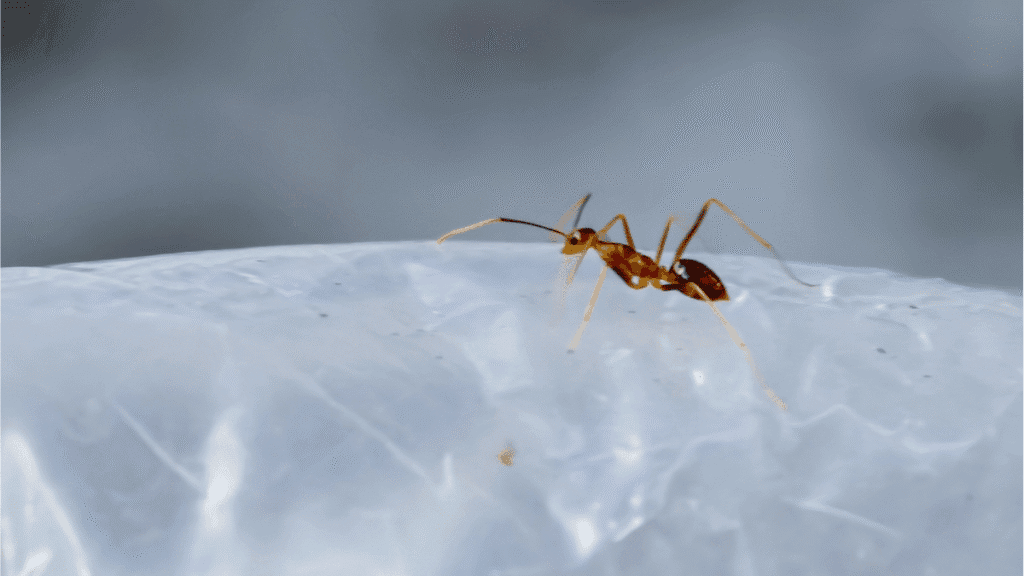
- Erratic, scattered movement with no organized trails. This is the single fastest visual ID. Every other common ant — fire ants, Argentine ants, ghost ants, big-headed ants — forms a structured pheromone trail. Crazy ants run in all directions simultaneously and look like the trail is panicking when nothing has touched it.
- Massive numbers. You don’t find a few dozen crazy ants. You find thousands. The scale is disproportionate to what a normal ant infestation should produce.
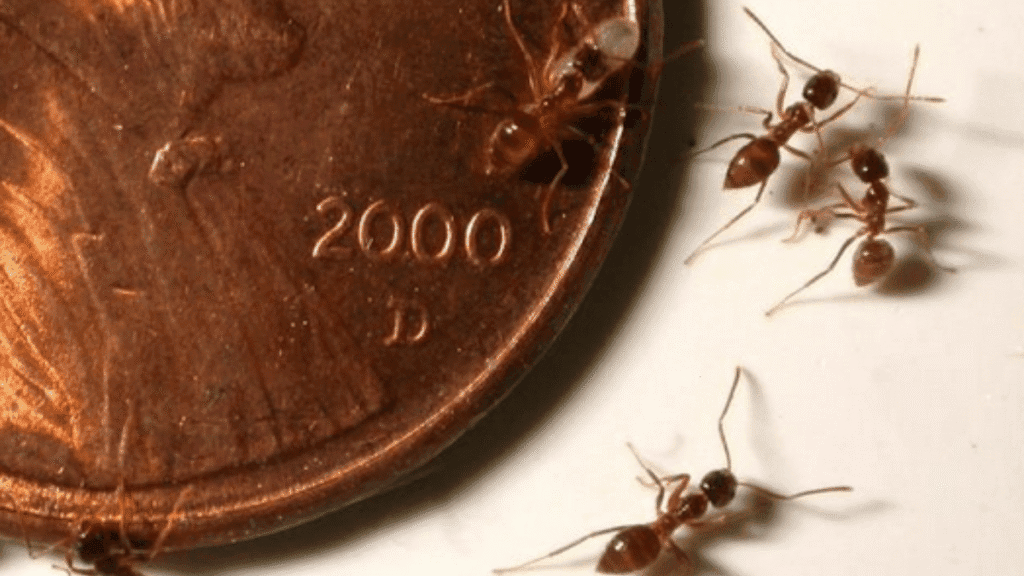
- Reddish-brown color with a coppery sheen in good light.
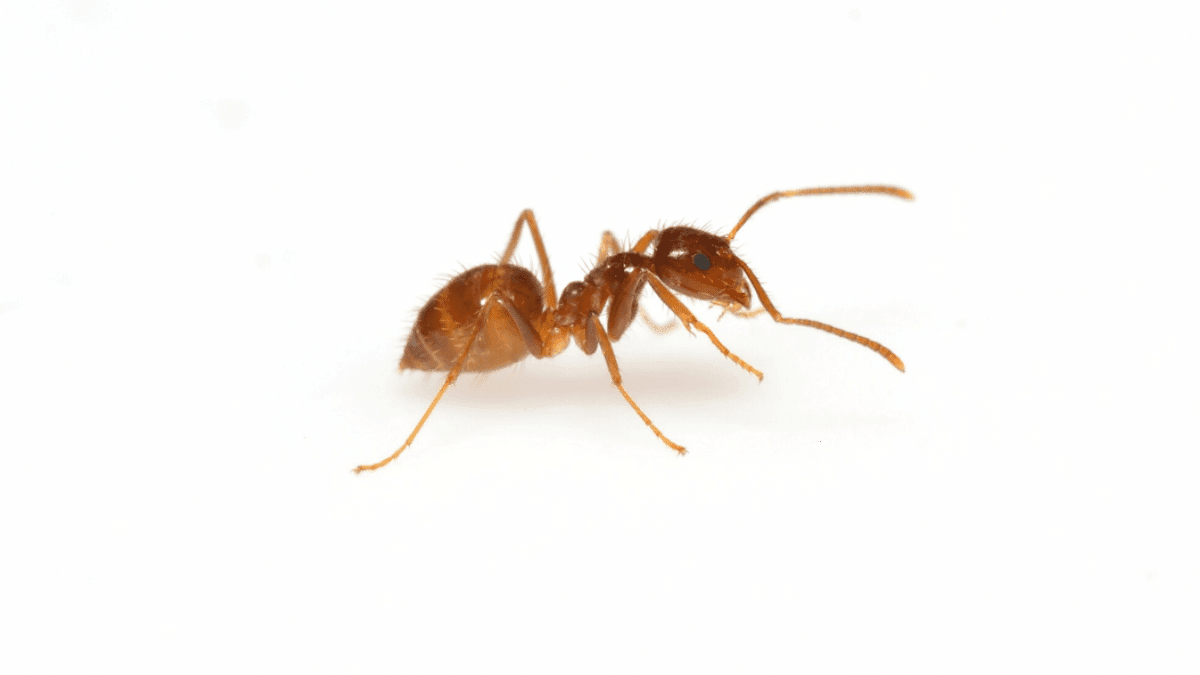
- Small size and long legs. 2 to 3 mm long, uniform in size, with legs long relative to body that give them a fast, lanky appearance.
- No stinger. They don’t sting and they barely bite.
- Activity around electrical equipment. AC compressors, irrigation controllers, pool pumps, ground-level utility boxes. If you’re seeing scattered ants pouring out of an electrical enclosure, you’re almost certainly looking at crazy ants.
Crazy Ants vs Other Lookalike Ants
Three species get confused with crazy ants. The treatment for each is different, so the ID matters.
| Feature | Crazy Ants | Fire Ants | Argentine Ants | Ghost Ants |
|---|---|---|---|---|
| Size | 2 to 3 mm | 2 to 6 mm, variable | 2.2 to 2.8 mm | 1.3 to 1.5 mm |
| Color | Reddish-brown, coppery | Reddish-brown to dark | Uniform light brown | Dark head, pale translucent abdomen |
| Trail behavior | Erratic, scattered, chaotic | Organized to mounds | Tight organized highways | Small, narrow trails |
| Stinger | No | Yes, painful burning sting | No | No |
| Mounds | No | Yes, tall dome mounds | No | No |
| Smell when crushed | None | None | None | Faint coconut odor |
| Budding when sprayed | Yes — colony splits | Limited | Reorganizes | Yes — colony splits |
| Electrical equipment attraction | Strong | None | None | None |
| Primary bait | InVict Blitz Granular | Advion Fire Ant Bait | Advion Ant Bait Gel | Advion Ant Bait Gel |
Crazy ants get mistaken for fire ants most often because both are reddish-brown and both show up in the same southern climates. The fastest way to tell them apart: disturb the activity. Fire ants pour out and sting within seconds. Crazy ants scatter without stinging.
Why They’re In Your Yard
Crazy ants don’t pick a property randomly. They show up because the conditions work.
- Mulch beds, debris, and ground clutter. Crazy ant satellite nests establish under anything that creates a slightly moist, dark, undisturbed space at ground level. Deep mulch against the foundation, piles of yard debris, stacked firewood, accumulated leaf litter — all of it is satellite nest habitat.
- Ground-level electrical equipment. Crazy ants are strongly attracted to the warmth and protected void space inside AC compressor enclosures, irrigation controllers, pool pump electrical boxes, and ground-level utility access boxes. This isn’t incidental — it’s one of the most reliable indicators that crazy ants are the species you’re dealing with. After 25 years of this work, when a homeowner tells me their AC unit suddenly stopped working and they’ve got a swarm of small reddish ants pouring out of the control box, I know exactly what species they have before I even arrive.
- Moisture. Not as moisture-dependent as carpenter ants, but they still need water. Irrigation leaks, AC condensate drips, overwatered turf, and chronically shaded soil that stays damp all sustain crazy ant populations.
- Adjacent untreated properties. Crazy ant supercolonies can span multiple properties. If a neighbor has an active infestation that’s not being treated, the pressure on your yard never fully goes away.
- Transported materials. Crazy ants spread between properties through nursery stock, mulch deliveries, hay, potted plants, and shipping containers. If your problem started right after a landscaping delivery, that’s almost certainly how it arrived.
How to Get Rid of Crazy Ants – Step by Step
Step 1: Don’t Spray Anything First
Read the section above on budding if you haven’t. The single most important rule with crazy ants is bait first, then evaluate, then spray only if bait alone hasn’t resolved it after a week. Spraying first scatters the queens and produces more colonies.
The one exception: if crazy ants are physically inside the house right now and you need to stop the indoor emergency, kill the visible ants with whatever ant spray you have on hand or wipe them up with cleaner. That’s not “treating the colony.” That’s “stopping the kitchen problem in the next 10 minutes.” The real treatment goes outside.
Step 2: Wait for Bone-Dry Conditions
This is the step homeowners get wrong most often. Moisture ruins granular bait immediately.
Apply only when:
- The soil surface is bone dry to the touch
- No rain is forecast for at least 24 to 48 hours
- No irrigation is scheduled for 24 hours before or after
- Dew has fully burned off (morning) or hasn’t started forming yet (late afternoon/evening)
The two best windows for crazy ants:
- Late afternoon to early evening, when the heat of the day has passed and dew hasn’t started forming. This is the single best time for this species. Crazy ants are heavy evening foragers.
- Mid-morning after the dew has completely burned off the grass.
Skip humid mornings with visible dew. Skip days with rain in the forecast. Wet bait isn’t a partial treatment — it’s no treatment, and the ants will walk right past wet granules.
Step 3: Broadcast InVict Blitz
Apply at the label rate (roughly 2 to 4 tablespoons per 100 square feet). Spread lightly and evenly. Don’t pile bait in one spot.
Where to apply:
- A 3-foot band along the foundation perimeter
- Around the base of every tree and palm on the property
- Around stumps, root flares, and fence posts
- On and around AC compressor pads
- Around irrigation control boxes and pool pump areas
- Around any ground-level electrical or utility enclosure
- Mulch beds, especially those touching the foundation
- Along hardscape edges (driveway, sidewalks, patios)
- Along any visible foraging trail
Place bait at trail edges, not directly in the center of heavy traffic. Workers at the edges pause and investigate; workers in the middle of a busy trail tend to run past placements.
Step 4: Refresh the Bait Every 24 Hours
This is the step that separates a 3-day win from a 3-week struggle.
Crazy ants empty bait placements faster than other species, and they shift foraging zones overnight. Check every placement every 24 hours. When a placement is consumed, refresh it. When a trail has moved to a new location, place fresh bait where the new activity is.
Most crazy ant infestations show major resolution within 3 days when the bait stays fresh and conditions stay dry. If you only apply once and walk away, you’ll see initial reduction and then a return as the trails shift to spots without active bait.
Keep refreshing daily for 4 to 7 days, then back off as activity drops.
Step 5: If They’re Inside the House, Use Advion Gel Outside
If you’re seeing crazy ants coming through a wall, between two slab joints, around a window frame, or anywhere inside the house, don’t bait indoors. Indoor bait recruits more workers in and the trail gets worse before it gets better.
Instead:
- Clean anything inside that’s attracting them. Wipe up sugar spills, sticky drink rings, pet food residue, fruit on the counter. Take out the trash.
- Place a small dab of Advion Ant Bait Gel outside the wall closest to where the indoor trail is coming through. Crazy ants in a sugar-preference phase will pick up the gel where they ignored the granular. The workers carry it back to the network from the exterior placement and the indoor trail clears in days.
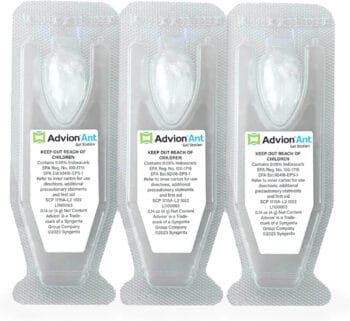
Advion Ant Gel Stations
Ready‑to‑use ant bait stations with indoxacarb for fast, full‑colony elimination indoors or outdoors.
- Targets 10+ ant species including ghost, Argentine, little black, pavement, and more
- Horizontal transfer wipes out the entire colony — queen included
- MetaActive formula activates only inside target pests
- No‑mess design — squeeze the capsule, bait stays contained
- Use anywhere ants trail: kitchens, patios, apartments, restaurants, commercial sites
Available on Amazon!
Competitive pricing + Fast Free shipping on all orders!
Use the gel as a complement to the granular, not a replacement. The granular handles the broad outdoor population. The gel intercepts the specific trail that’s leaking into the house.
Step 6: Perimeter Spray With Imidacloprid (Only If Activity Persists After a Week)
In most cases, the bait alone clears crazy ants in about 3 days. If you’re still seeing real activity after a week of daily bait refreshes — and conditions have stayed dry the whole time — perimeter spraying with an imidacloprid concentrate finishes the job.
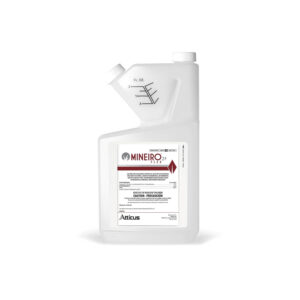
Mineiro 2F Flex (Imidacloprid 21.4%)
Non‑repellent concentrate for ants, perimeter control, termites, and systemic treatment of scale and other plant pests.
- Perimeter ant treatment — Mix 0.6 fl oz per gallon of water. Apply around the base of the home, entry points, and along foundation edges.
- Ant trails on vegetation — Mix 0.6 fl oz per gallon and spray shrubs, branches, and plant trails leading to the home.
- Scale, aphids, mealybugs on ornamentals — Mix 0.6 fl oz per gallon and spray foliage, undersides of leaves, and stems.
- Systemic root drench for scale — Mix 0.2–0.4 fl oz per gallon and apply to soil at the base of affected plants.
- Non‑repellent mode of action — Ants don’t detect it, so they continue foraging and transfer it through the colony.
- Great for honeydew‑dependent ants — Ideal for Argentine, White‑Footed, and Acrobat ants that follow plant trails.
Available on Amazon!
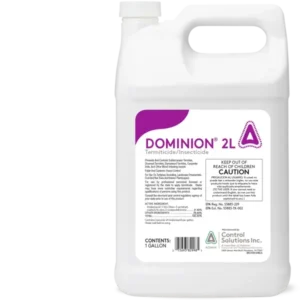
Dominion 2L (Imidacloprid 21.4%)
Professional non‑repellent concentrate for ants, termites, and plant pests like scale, aphids, and mealybugs.
- Perimeter ant treatment — Mix 0.6 fl oz per gallon. Spray around the foundation, entry points, and along edges where ants trail.
- Ant trails on vegetation — Mix 0.6 fl oz per gallon and spray shrubs, branches, and plant trails leading to the home.
- Scale, aphids, mealybugs on ornamentals — Mix 0.6 fl oz per gallon and spray foliage, undersides of leaves, stems, and trunks.
- Systemic soil drench for scale — Mix 0.2–0.4 fl oz per gallon and pour at the base of affected plants.
- Termite trenching — Mix 0.8 fl oz per gallon and apply 4 gallons per 10 linear feet of trench.
- Non‑repellent mode of action — Ants don’t detect it, so they continue foraging and transfer it through the colony.
- Ideal for honeydew‑dependent ants — Excellent for Argentine, White‑Footed, and Acrobat ants.
Competitive pricing + Fast Free shipping on all orders!
These two products are the same active ingredient at the same concentration. Pick whichever is cheaper or in stock. Mix at the label rate (usually around 0.6 fl oz per gallon for general ant control, but read your label) in a pump or battery-powered sprayer.
Where to spray:
- A 3-foot band along the foundation perimeter, 1 foot up the exterior wall
- Around AC compressor pads and base of irrigation control boxes
- Tree bases and as high up trunks as your sprayer reaches
- Mulch beds against the foundation
- Around any ground-level electrical enclosure where ants have been entering
Why imidacloprid works here when most sprays don’t: imidacloprid is non-repellent. The ants don’t detect it, so they walk through it, pick it up, and transfer it back to the network without triggering the alarm pheromone budding response that pyrethroid sprays cause. It’s the same active as the bait, applied as a contact and residual layer. The combination of bait and non-repellent spray hits the colony from two directions without scattering it.
Repellent sprays (Raid, store-bought perimeter products) still trigger budding even after the bait is established. Stick with non-repellent imidacloprid.
When Bait Acceptance Drops – Rotate to Advion Ant Gel
Crazy ants cycle between sugar, protein, and oil nutritional phases. If you’re refreshing InVict Blitz daily and acceptance drops noticeably; workers ignoring placements they were hitting hard two days ago – the colony has shifted to a sugar-preference phase. Add Advion Ant Bait Gel as a rotation option alongside the granular. Place small dots of gel near the same trails. When granular feeding picks back up, you can scale the gel back. The rotation keeps bait acceptance high through the colony’s preference shifts.
What Doesn’t Work
- Spraying contact insecticide first. Triggers budding, splits the colony, makes the infestation dramatically worse. This is the #1 mistake with crazy ants and the reason most DIY treatments fail catastrophically.
- Indoor baiting. Recruits thousands of workers into the house from the outdoor supercolony. Bait outside near the entry point, not on the kitchen counter.
- Advion Fire Ant Bait, Amdro, and most grocery-store products on crazy ants. Granules are too big for crazy ant workers. The nutritional matrix doesn’t match what crazy ants are looking for. Workers sample and ignore. Use InVict Blitz instead — it’s built for this species.
- Foggers and bug bombs. Don’t reach where crazy ants nest (under mulch, inside electrical boxes, under debris). They DO scatter the foragers you can see, which can trigger budding. Bad tool for this job.
- One-shot bait applications. Putting bait down once and walking away. Crazy ants empty placements fast and shift trails. The refresh schedule is what makes the bait work.
Crazy Ants and Electrical Equipment
This is one of the most genuinely damaging aspects of a crazy ant infestation, and it’s specific to this species.
Crazy ants are strongly attracted to the warmth and protected void space inside electrical enclosures. They invade, build satellite nests inside, and die in large numbers within the enclosures. The mass of dead ants causes short circuits, corrosion of contacts, and equipment failure. This problem is concentrated at or near ground level, because that’s where most residential electrical equipment lives.
Equipment most commonly affected:
- AC compressor units and their control boxes
- Irrigation and sprinkler system controllers
- Pool pump and filter electrical controls
- Ground-level utility access boxes
- Outdoor junction boxes
- GFI outlets near the foundation
The treatment response: These locations are high-priority bait placement zones. Place InVict Blitz around the base of every piece of ground-level electrical equipment on the property. If ants are actively inside an enclosure, do the imidacloprid perimeter spray (after the bait is established) around the base of the equipment to stop new entry while the bait works. Seal gaps in enclosure covers and utility penetrations with weatherproof sealant or copper mesh to reduce nesting opportunities.
If the equipment has already failed because of crazy ant damage, you’ll need an electrician or HVAC tech to repair it. That part is beyond DIY. The pest control part you can handle.
Why Crazy Ants Cycle Bait Preferences
Crazy ants are unusual among ants because their nutritional preferences shift through cycles — sometimes wanting carbohydrates and sugar, sometimes protein, sometimes oils. No single bait matrix is universally accepted across all three phases.
This is why bait acceptance can be excellent one week and weak the next. Nothing’s wrong with the bait. The colony’s nutritional state has shifted.
The practical answer is the rotation strategy: InVict Blitz is the primary because its matrix is the broadest fit across the cycles, but keeping Advion Gel ready for the sugar-preference phases means you don’t lose ground when the colony’s preference moves.
This cycling is also one of the main reasons crazy ant infestations seem to “stop responding” to treatments that initially worked. The colony didn’t develop resistance. It just got hungry for something else.
How to Keep Crazy Ants From Coming Back
Ranked by impact.
- Maintain bait pressure for 4 weeks after activity drops. Crazy ants are persistent. Keep InVict Blitz placements active for a full month after you see major resolution to make sure the last satellite nests are reached.
- Remove debris, leaf litter, and ground clutter. Crazy ants nest under any ground-level cover. Clean up debris piles, stacked materials, leaf accumulation, and yard clutter within 20 feet of the foundation.
- Reduce mulch depth. Keep mulch under 2 to 3 inches and pull it back at least 12 inches from the foundation. Deep mulch is satellite nest habitat.
- Trim vegetation away from the structure. Branches touching the house, vines on walls, shrubs against siding — all of it is a travel route. Cut it back.
- Fix moisture problems. Irrigation leaks, AC condensate drips dumping onto soil, overwatered turf. Chronically wet soil sustains nests.
- Seal ground-level electrical enclosures. Weatherproof gaskets on AC control boxes, irrigation controllers, and utility enclosures. Copper mesh into any gap a crazy ant could fit through.
- Reapply InVict Blitz seasonally in high-pressure areas. If you live in a known crazy ant zone (Gulf Coast, Texas, Florida, Louisiana), a proactive broadcast in spring before populations explode is cheaper than fighting a full infestation in July.
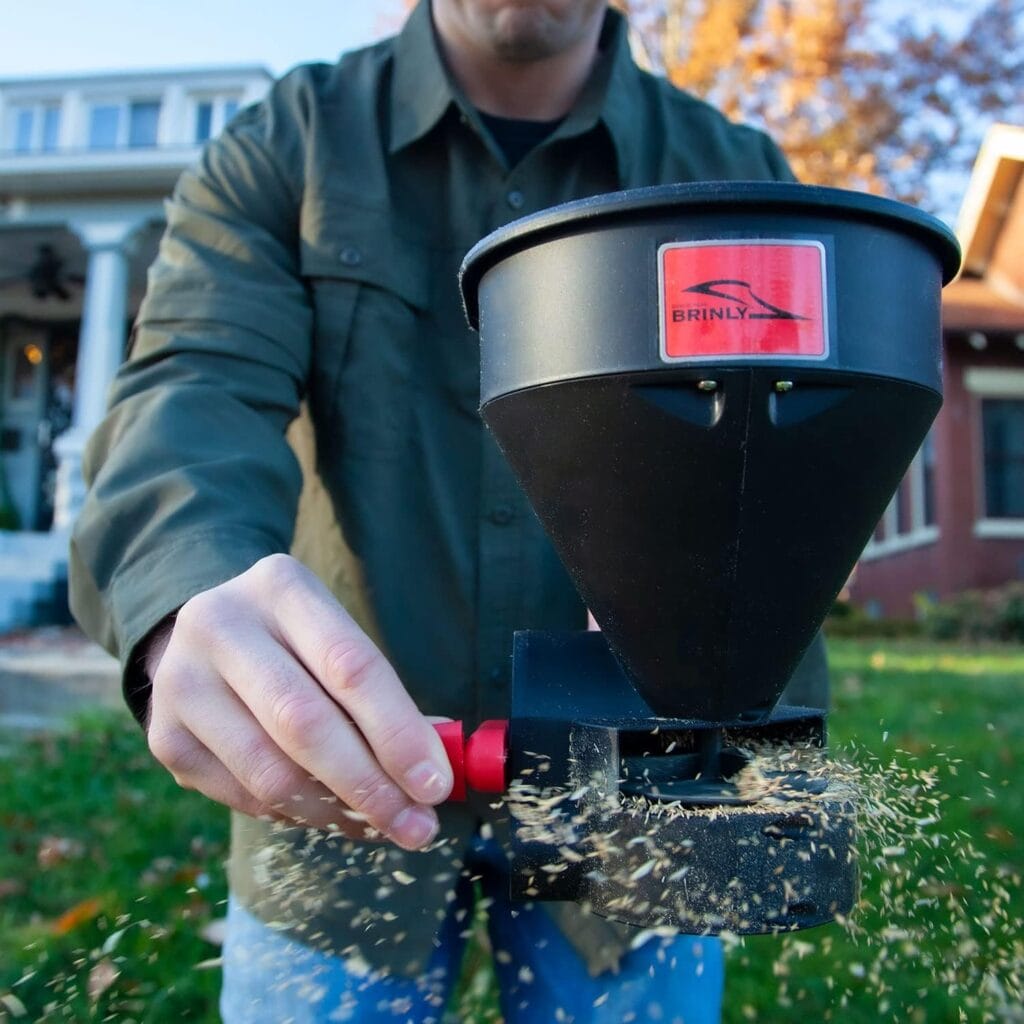
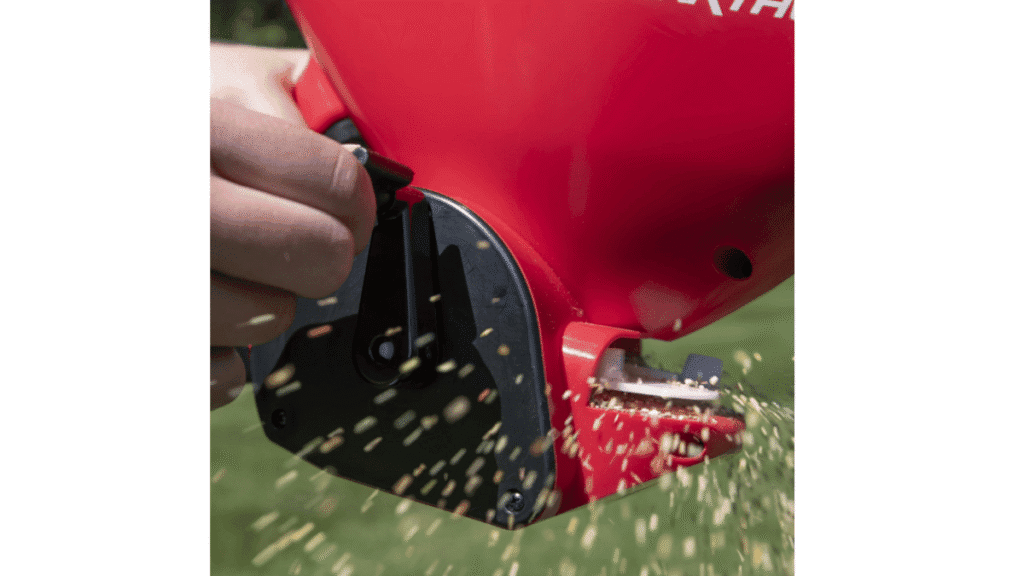
Brinly 5lb. All-Season Handheld Spreader
The Brinly 5 lb. All‑Season Handheld Spreader is a durable, easy‑fill crank spreader built for quick, even application of seed, fertilizer, ice melt, and granular pest control products in small or hard‑to‑reach areas.
- 5 lb Capacity: Holds 0.5 gal / 2 L for small, tight areas.
- Easy Scoop-and-Spread: Contoured lip fills easily; spreads up to 5 ft.
- Adjustable Flow Gate: Simple knob controls output precisely.
- Smooth Crank Action: Long crank and ergonomic handle for easy spreading.
- Professional‑Quality Spread: Throws granules in a clean, controlled pattern.
- Built Tough: Heavy‑duty poly hopper with enclosed gears and steel hardware.

Available on Amazon!
Edge Cases Where DIY Hits a Wall
For crazy ants themselves, DIY handles every case I’ve seen in 25 years when the bait-first method and the 24-hour refresh schedule are followed correctly. The bait works, the imidacloprid backup works, and the colony collapses.
Where DIY genuinely struggles:
- Misidentification – you think it’s crazy ants and it’s actually fire ants. Crazy ants and fire ants both show up in the same climates, both are reddish-brown, and both can be aggressive in numbers. The fast test: disturb the activity. Fire ants sting within seconds. Crazy ants don’t. If you’re getting stung, you have fire ants and you should be on the fire ant page, not this one – the bait and method are different.
- Adjacent untreated properties feeding constant reinfestation. In neighborhoods with active supercolonies, one property’s treatment helps but pressure rebuilds from the neighbors. This is ongoing seasonal maintenance, not a one-time fix.
- Electrical equipment that’s already failed. If a crazy ant nest has already shorted out your AC compressor, pool pump, or irrigation controller, that’s an electrician or HVAC repair, not a pest control job. Treat the ants first so the repair doesn’t get reinfested, then call the trade.
That’s the list. The pest part is reliably DIY-fixable. The repair side, if there’s already damage, is a separate problem.
Frequently Asked Questions: Crazy Ants
COMMON QUESTIONS ABOUT CRAZY ANTS
Do crazy ants go away on their own?
No — colonies grow and spread without treatment.
What kills crazy ants instantly?
Contact sprays kill workers, but do not eliminate the colony.
What is the best bait for crazy ants?
InVict Blitz is the most effective granular bait for large infestations.
Why do crazy ants keep coming back?
Because of multiple queens and satellite nests.
IDENTIFICATION & BEHAVIOR
What are crazy ants?
Tawny crazy ants (Nylanderia fulva) are small, reddish-brown, fast-moving ants measuring approximately 2 to 3 mm. They move in erratic, scattered patterns rather than organized trails. They form massive supercolonies with multiple queens and multiple satellite nests. They are one of the most difficult ant species to control because they reject most common baits, bud when sprayed incorrectly, and operate across colony networks that can span entire properties.
Why do crazy ants move so fast and “act crazy”?
Their rapid, zig‑zag movement is a natural defense behavior. It helps them avoid predators and makes them harder to kill with contact sprays. Homeowners often identify them by movement alone.
Do crazy ants sting or bite?
No stinger. They can technically bite but virtually never do under normal encounter conditions. They are a structural and equipment pest, not a medical concern.
Where do crazy ants usually nest?
They commonly nest in:
- mulch and soil
- landscape debris
- logs, stumps, and leaf litter
- AC pads and irrigation boxes
- wall voids and cracks
- shaded, moist areas
They’re especially common across the Southern U.S..
How do I tell crazy ants apart from other small ants?
Movement is the fastest identifier. Every other common trail-forming species forms organized lines of workers. Crazy ants do not. Workers scatter in all directions simultaneously with no trail discipline. The reddish-brown coloring, long legs relative to body size, and the sheer number of individuals visible at once are secondary identifiers.
Can crazy ants damage electrical equipment?
They can. Crazy ants are strongly attracted to electrical equipment and have been found nesting in and around AC units, pool equipment, and breaker boxes.
While damage around homes tends to be less severe than in industrial settings, a heavy infestation around electrical equipment is something to take seriously.
If you’re finding crazy ants around your AC pad, pool pump, or breaker box, treating those areas specifically is important.
How fast can a crazy ant infestation grow?
Faster than most people expect. Crazy ants are invasive and can go from no presence at all to a serious neighborhood-wide problem in just a few seasons.
Once they establish in an area they spread quickly through yards, mulch, and landscaping.
If your neighbors start seeing them, it’s worth being proactive rather than waiting for them to show up at your door.
Are crazy ants spreading to new areas?
Yes. Tawny crazy ants are an invasive species currently established across Florida, Georgia, and much of the Gulf Coast.
They thrive anywhere it’s hot and humid with mild winters. They don’t do well where it freezes hard, but in warm climates their range continues to expand.
If you’re in a warm, humid region and haven’t seen them yet, that could change.
Can crazy ants really get out of hand?
Yes — they absolutely can.
While some infestations are manageable, crazy ants can build up into massive populations that seem to cover everything at once.
Because they form huge colonies with multiple queens and ignore most common ant baits, an untreated infestation can grow far beyond what most homeowners are prepared for.
Treating early and treating correctly is much easier than trying to knock back a heavy established infestation.
Is my crazy ant problem connected to my neighbor’s yard?
Very likely yes.
Like Argentine ants and bigheaded ants, crazy ant supercolonies don’t respect property lines.
If neighboring properties have untreated infestations, pressure on your yard will continue even after treatment.
Maintaining a treated perimeter with Taurus SC helps create a barrier, but in heavily infested neighborhoods it becomes an ongoing management situation rather than a one-time fix.
Why do crazy ants invade electrical equipment?
They are attracted to the warmth and protected enclosure of electrical boxes. They nest inside, die in large quantities from electrical contact, and the accumulating mass of dead ants causes short circuits and equipment failure. This problem occurs primarily at or near ground level — AC units, irrigation controllers, pool pump controls, and ground-level utility enclosures are the most common victims around residential properties.
What ants get confused with crazy ants?
Crazy ants are tiny, fast, and chaotic, so homeowners often mistake them for Argentine ants, Bigheaded ants, and even Fire ants when they’re trailing heavily. All three species can form large, active colonies and show up in the same moisture‑rich areas, which makes them easy to mix up at a glance.
INDOOR ACTIVITY
Why are crazy ants coming into my house?
They enter homes when outdoor colonies grow too large or when they’re searching for food, moisture, or new nesting sites. They often come in through cracks in slabs, gaps around pipes, or vegetation touching the home.
Should I treat crazy ants inside my home?
Most of the time, no. Crazy ants entering the home are usually coming from outdoor colonies. Once the outside is treated, indoor activity typically disappears. Indoor baiting is only needed if ants are entering through hidden voids.
Can I use regular ant bait indoors for crazy ants?
Most baits don’t work well on crazy ants. They may nibble on them, but they rarely recruit enough workers to make a difference. InVict Blitz is the only bait they reliably take and share.
TREATMENT & PRODUCTS
What is the best product for crazy ants?
InVict Blitz Granular Bait is the correct starting point and is sufficient for most infestations on its own. It uses imidacloprid in a granule size and bait matrix specifically engineered for mega-colony ant species. If acceptance drops, rotate Advion Ant Gel in as a secondary option. Use Fipronil Plus C only if you need to stop entry into a specific structure or piece of equipment.
When should I apply InVict Blitz?
Bait in the morning or evening when ants are actively foraging. Do not apply bait when the ground is wet or rain is coming — moisture ruins the bait.
How do I apply InVict Blitz correctly?
Lightly sprinkle the bait around:
- trails
- small mounds
- trees and stumps
- AC pads and irrigation boxes
- landscape debris
Use 2–4 tablespoons per 100 sq ft. Do not pile the bait.
What spray works best for crazy ants?
Use Fipronil Plus-C, a non‑repellent insecticide that ants can’t detect. Mix 1.0 fl oz per gallon of water and spray a 3‑foot band around the foundation, mulch beds, trees, and moisture areas.
Should I bait first or spray first?
For the best results:
- Bait first with InVict Blitz
- Spray after with Fipronil Plus-C
Bait reaches hidden colonies underground. Fipronil Plus-C creates a long‑lasting barrier that stops new ants from moving in.
Can I skip the bait and just spray Fipronil Plus-C?
Yes — if you’re extremely thorough, Fipronil Plus-C alone can work.
But baiting first is more reliable because it hits the colonies you can’t see.
Why does bait need to be applied before anything else?
Crazy ants bud when they encounter chemical threats. Any spray applied before bait has been established and accepted triggers alarm pheromones in dying workers, which causes queens to evacuate and establish new satellite colonies in new locations. Bait placed first reaches the colony through worker transfer without triggering this response. The sequence protects the effectiveness of the bait program.
Why should I never put bait indoors?
Indoor bait placements actively direct foraging networks into your living space. Crazy ants relocate rapidly to exploit new food sources, and indoor bait tells them your home is worth foraging. Place all bait outdoors where the colony is operating. Effective outdoor treatment eliminates the source of indoor activity.
When do I need Fipronil Plus C?
Only when you need to stop crazy ants from actively entering a specific location — the home, an electrical enclosure, a piece of equipment. It is not a standard part of the treatment for most situations. Apply at least 1 foot up and 1 foot out from the foundation, up to 10 feet out for heavier pressure. Always bait first and give it 1 to 2 days of active feeding before applying Fipronil Plus C.
What do I do if InVict Blitz stops working?
The colony has likely shifted nutritional preferences. Rotate in Advion Ant Gel as a secondary bait alongside the InVict Blitz. Crazy ants cycle between sugar, protein, and oil phases. Maintaining two options simultaneously covers more of the cycle and keeps acceptance high when one matrix falls out of favor.
PREVENTION & LONG‑TERM CONTROL
Why do crazy ants keep coming back?
Usually because satellite nests on the property or on adjacent properties were not fully addressed, moisture conditions sustaining the colony were not corrected, or bait was not maintained long enough for the full colony network to be reached. On high-pressure properties adjacent to untreated landscapes, some reinvasion pressure is an ongoing management reality.
How do I keep crazy ants from coming back?
Maintain a Taurus SC perimeter
- Trim vegetation touching the home
- Reduce mulch thickness
- Remove leaf litter and debris
- Fix moisture issues
- Seal cracks and gaps around pipes and doors
Crazy ants thrive in shaded, moist, cluttered areas.
Do crazy ants come back every year?
They can, especially in warm, humid regions. Quarterly perimeter treatments and regular yard maintenance help prevent reinfestation.
Can landscaping bring crazy ants onto my property?
Yes. They often spread through mulch, potted plants, and landscape debris. Inspect new plants and avoid piling mulch against the foundation.
How do I protect my electrical equipment from crazy ants?
Keep InVict Blitz bait active around all ground-level electrical enclosures during crazy ant season. Seal gaps in enclosure covers. Apply Fipronil Plus C around the base of equipment if ants are actively entering it. Consistent treatment pressure around ground-level electrical equipment is the most practical available protection.