
This page contains affiliate links. I only recommend products I trust and have compared, and I include multiple store options so you can choose the best deal from the retailer you prefer.
TL;DR: Perfect Lawn, Two Rules
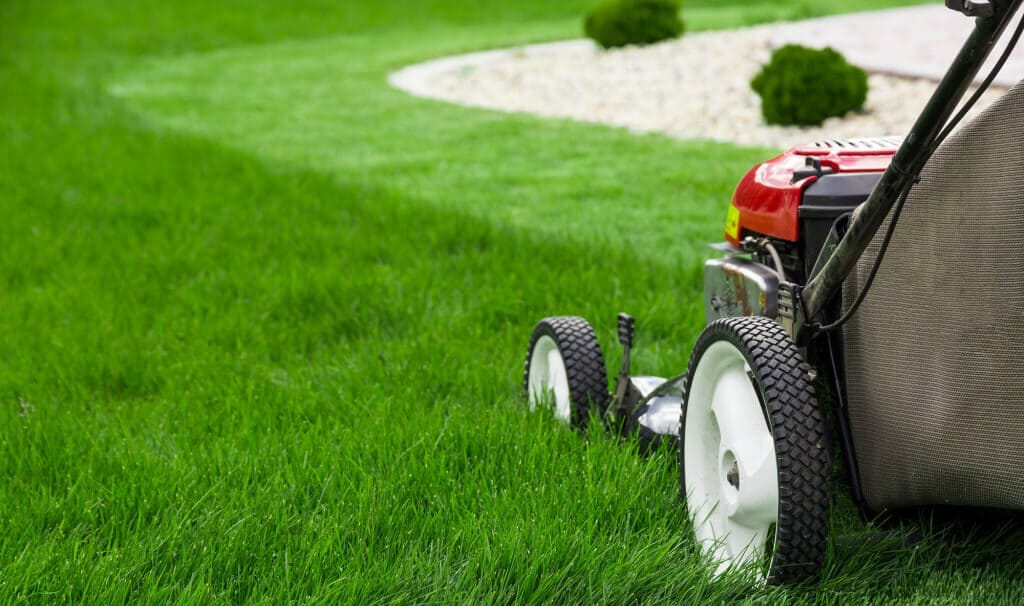
A perfect lawn comes from doing two things right — cut clean and cut at the right height. Everything else is secondary.
1. Use a sharp blade.
A sharp blade cuts clean; a dull blade shreds grass, leaves brown tips, invites disease, and makes the whole lawn look dingy.
2. Mow at the proper height.
Every turfgrass has a correct height. Stay within it and never remove more than 1/3 at a time. Cutting too low exposes soil to sunlight, triggers weed germination, weakens turf, and causes insect/disease stress.
Easiest path: automate it. Robot mowers mow frequently with razor‑sharp blades, follow the 1/3 rule automatically, and keep the lawn dense, green, and healthy with zero effort.
How Do I Mow My Lawn Properly?
Mowing looks simple. You push or ride something with spinning blades over grass and the grass gets shorter. How complicated could it be?
As it turns out — complicated enough that the majority of professional lawn companies get it wrong. Consistently. Visibly. And somehow without noticing.
There are exactly two rules for mowing a lawn correctly. Follow both and your lawn will look noticeably better than most of what you see in your neighborhood. Ignore either one and you’ll have a lawn that looks stressed, dingy, and thin regardless of how much you water or fertilize it.
Rule #1: Use a sharp blade. Rule #2: Mow at the proper height.
That’s it. Two rules. The gap between an average lawn and a genuinely healthy, professional-looking lawn comes down almost entirely to those two things.
Rule #1 — The Sharp Blade
What a Dull Blade Actually Does
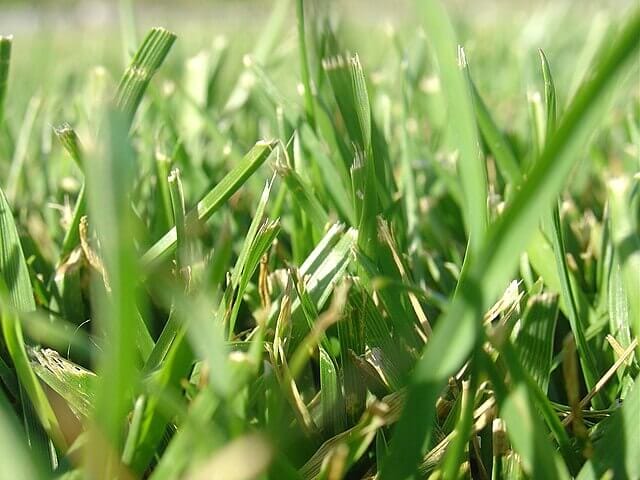
A sharp mower blade cuts grass. A dull blade tears it.
That distinction matters more than most people realize. When a blade cuts cleanly, it severs the grass tip with minimal wound area. The cut is precise, the exposed surface is small, and the plant seals it quickly. When a dull blade contacts grass, it rips and shreds the tissue rather than cutting it. The wound area is dramatically larger. The torn tips dry out and turn brown within a day or two, giving the lawn a dull, dingy appearance even if the underlying grass is completely healthy.
A lawn mowed with a dull blade never quite looks right. It has an overall brownish cast that people often mistake for drought stress, disease, or nutrient deficiency. The actual cause is sitting in the garage.
The other problem with torn grass tissue is disease risk. A clean cut heals. A ragged tear is an open wound — and fungal pathogens have no particular interest in being fair about this.
The Blade That Came on Your Mower
Here’s something that surprises most homeowners: the blade that came installed on your mower from the store is almost certainly not sharp.
Consumer mower blades are not sharpened at the factory. They are manufactured and shipped. Whether you bought it at a big box store, a hardware store, or off a shelf, assume the blade needs sharpening before it will cut properly.
A properly sharpened mower blade should have a knife edge — not a wire thick edge, not a rough bevel, a genuine cutting edge. If you hold the blade at an angle and it doesn’t catch light the way a knife would, it isn’t sharp enough.
How to Sharpen Your Blade
The easiest DIY option is a drill-mounted blade sharpener. These attach to any standard drill and sharpen a mower blade in under two minutes. They’re inexpensive, widely available, and produce a consistently good edge without removing the blade from the mower in most cases. If you’re not comfortable sharpening blades yourself, any small engine shop will do it for less than 20 dollars.
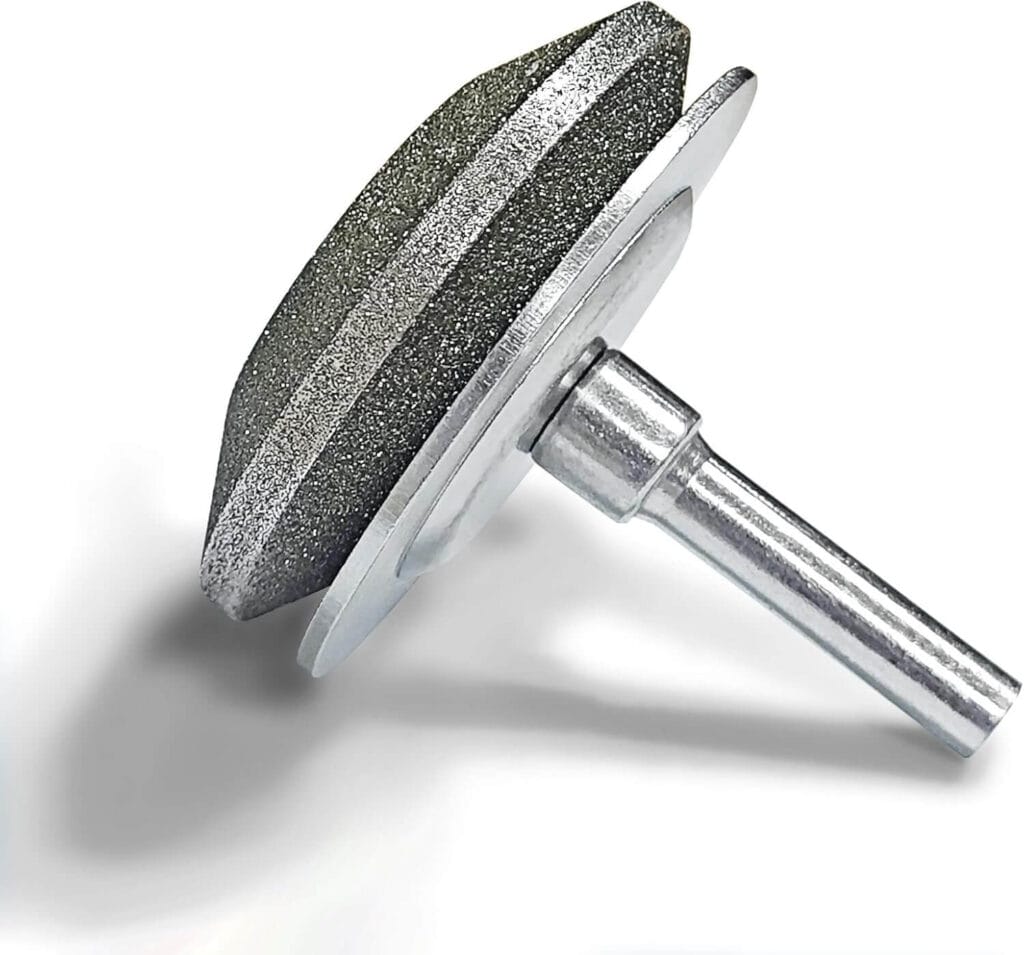
Lawn Mower Blade Sharpening Bit For Drill
A diamond‑grit sharpener gives your mower blade a true cutting edge again — no more shredded tips, brown lawns, or stress signals that attract pests.
- Diamond‑Coated Grinding Wheel — cuts fast, stays sharp, and restores a clean edge instead of the ragged tear you get from dull metal.
- All‑Metal Construction — durable, heat‑resistant, and built to last longer than plastic sharpeners.
- Fits Any Power Drill — 5mm shank attaches to any standard drill for quick, consistent sharpening.
- Extends Blade Life — keeps your existing mower blade performing like new and reduces the need for replacements.
- Sharper Blade = Healthier Lawn — clean cuts prevent brown tips, reduce disease entry points, and lower pest attraction.
- Multi‑Tool Use — works on mower blades, lawn tractors, rototillers, garden tools, and more.

Available on Amazon!
How Often to Sharpen
This depends almost entirely on what you’re mowing. St. Augustinegrass is relatively soft — at the correct mowing height you can get six months or more from a blade under normal conditions. One pass over something hard, however — a rock, a root, a concrete edge — and the blade is done.
Bahiagrass is another story. Bahia is one of the tougher-stemmed turf species and will dull a mower blade noticeably with every mowing. If you’re mowing Bahia, check your blade frequently and sharpen accordingly.
The general rule: inspect the blade every 10 hours of use and sharpen or replace when the edge is no longer sharp. When in doubt, sharpen it.
What Most Lawn Companies Get Wrong
After more than 20 years in this industry, one of the most consistently stunning observations is how few professional lawn care operators understand blade sharpness – or seem to care. This is not a minor oversight. A dull blade is visually apparent in the finished lawn. The dingy, brownish cast it creates is unmistakable.
The lawn mowing industry is large, and access to it is low. Starting a lawn care company requires no formal training. Anyone can decide tomorrow that they’re going to mow lawns and be on your property by Thursday. Operators know how to make grass shorter. Few understand that the quality of the cut matters as much as the height. It is genuinely confounding that this is so widespread – these are people who see the results of their work every single day and apparently haven’t connected what they’re seeing to what they’re doing.
If your lawn looks dull and brownish after being mowed and it wasn’t mowed wet, check the blade. Then consider whether the person mowing it has checked their blade recently. Or ever.
Rule #2 — Mow at the Proper Height
Why Height Matters
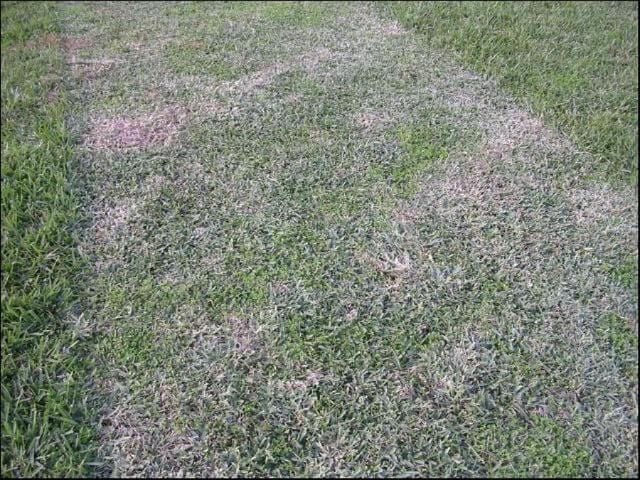
Mowing height is not aesthetic preference. It is a biological requirement.
Every turfgrass species has a correct mowing height range. That range exists because:
- Photosynthesis depends on leaf area. Cutting too low removes the solar panels. Less leaf surface means less energy production, which means weaker growth, thinner stands, and reduced stress tolerance.
- Stressed Turf Attracts Pests. Cutting too low injures the entire lawn at once. That stress makes the turf a magnet for pests.
- Minimum height exists to shade the soil. This is the most important point and the most misunderstood one. When sunlight reaches the soil surface, weed seeds germinate. Proper mowing height keeps the canopy dense enough that light cannot reach the soil. The turf shades itself. Correct mowing height is weed suppression. Cutting too low is an open invitation.
The Florida Situation
Floratam St. Augustine — the turf almost everyone in Florida has — is supposed to be maintained at 4.25 inches. That’s tall for turfgrass, but that’s what the species requires to stay dense, shade the soil, and avoid constant stress.
Mow for the grass you have, not the grass you want
The problem is that most Florida lawns are being cut to under 2 inches, sometimes closer to 1.5. At that height, Floratam can’t photosynthesize properly, can’t shade the soil, and can’t defend itself. It’s physically impossible for these lawns to ever look good, no matter how much water or fertilizer people throw at them.
And because the turf is constantly scalped and stressed, it becomes a magnet for pests — then the lawn service mowers spread insects and fungus from one poorly maintained property to the next. Combine chronic scalping with cross‑contamination, and you get exactly what you see across the state: a whole lot of junky‑looking lawns that never had a chance.
The 1/3 Rule
Never remove more than one-third of the grass blade in a single mowing.
This is not a suggestion. It’s a hard limit that, when exceeded, causes immediate and measurable harm to the turf.
Think of it like this: if you trimmed one-third of a tree’s canopy in an afternoon, the tree would be significantly stressed. Remove two-thirds of the canopy and you’ve created a recovery situation. Grass responds the same way. The leaf blade is where photosynthesis happens. Removing too much at once shocks the plant, forces it to pull stored energy from the roots to produce new growth, depletes reserves, and temporarily stops root growth entirely while the plant focuses everything on leaf recovery.
What happens when you violate the 1/3 rule:
- Turf is weakened significantly
- Soil is suddenly exposed to direct sunlight
- Weed seeds germinate in the newly exposed soil
- Photosynthesis drops sharply
- Drought stress vulnerability increases
- Disease and insect pressure increases
- The lawn looks terrible for weeks
The 1/3 rule is also why mowing frequency matters. If your turf is supposed to be maintained at 4 inches and you let it grow to 6 inches before mowing, you can only legally take it to 4 inches — which is right at the limit. If you let it reach 10 inches and cut it to 2.4 inches, you’ve scalped it severely regardless of what the target height is.
What to Do If Your Lawn Is Already Too Tall
If you’ve fallen behind and the lawn is taller than it should be, bring it down gradually. Mow to remove one-third, wait a few days, mow again to remove another one-third. Work it down to the target height over multiple sessions rather than trying to reach it in one pass. It takes more time. It produces a dramatically better result.
The University of Florida Floratam Research
Research at the University of Florida demonstrated that Floratam St. Augustinegrass could be maintained at 2.4 inches year-round with no negative effects.
That’s lower than the standard recommended height for Floratam — and it worked.
The mechanism was a robot mower that cut every three days during the growing season. Because the robot mowed so frequently, the grass never grew tall enough for a 2.4-inch cut to violate the 1/3 rule. The turf was always being trimmed by small amounts, the canopy remained dense, the soil stayed shaded, and the lawn stayed healthy and attractive at a height that would scalp it catastrophically under normal mowing practices.
The lesson: if you want to mow shorter than the recommended height, you must follow the 1/3 rule with absolute consistency. The only practical way most homeowners can achieve this is with a robot mower that cuts on its own schedule. If you’re mowing weekly or bi-weekly with a standard mower and cutting below the recommended height, you are scalping the lawn every time.
The research is linked below for reference. It’s worth reading if you manage St. Augustine at any height.
Mowing Heights by Turfgrass Species
See Recommended Mowing Heights by Turfgrass Species
| Turfgrass | Common Cultivars | Minimum | Ideal | Maximum | Notes |
|---|---|---|---|---|---|
| St. Augustinegrass | Floratam | 2.5″ | 3.5–4.25″ | 4.5″ | Most common Florida turf; tender; scalps easily |
| Palmetto | 2.5″ | 3–3.5″ | 4″ | Better shade tolerance; slightly finer texture | |
| Raleigh | 2.5″ | 3.5–4″ | 4.5″ | Cold-tolerant; widely used in Carolinas | |
| Bitterblue | 2.5″ | 3–3.5″ | 4″ | Shade-tolerant; finer texture | |
| Seville | 2″ | 2.5–3″ | 3.5″ | Dwarf type; denser; more shade-tolerant | |
| Sapphire | 2″ | 2.5–3″ | 3.5″ | Shade-tolerant; semi-dwarf | |
| Bermudagrass | Common Bermuda | 1″ | 1.5–2″ | 2.5″ | Highly drought tolerant; aggressive spreader |
| Celebration | 0.5″ | 1–1.5″ | 2″ | Good drought tolerance; dark color | |
| Tifway 419 | 0.5″ | 0.75–1.5″ | 2″ | Sports field standard; very dense | |
| TifTuf | 0.5″ | 1–1.5″ | 2″ | Superior drought tolerance; fine texture | |
| Latitude 36 | 0.5″ | 1–1.5″ | 2″ | Cold-tolerant; good for transition zone | |
| Zoysiagrass | Empire | 1.5″ | 2–2.5″ | 3″ | Shade-tolerant; low input; good for FL |
| Palisades | 1.5″ | 2–2.5″ | 3″ | Coarser texture; good shade tolerance | |
| Zeon | 0.75″ | 1–2″ | 2.5″ | Fine texture; excellent shade performance | |
| Emerald | 0.5″ | 0.75–1.5″ | 2″ | Very fine texture; high-input; golf-level possible | |
| Centipedegrass | Common Centipede | 1.5″ | 1.5–2″ | 2.5″ | Low input; very sensitive to overfertilization |
| TifBlair | 1.5″ | 1.5–2″ | 2.5″ | Improved cold tolerance; same management | |
| Bahiagrass | Pensacola | 3″ | 3.5–4″ | 4.5″ | Dulls blades rapidly; utility turf; very tough |
| Argentine | 3″ | 3.5–4″ | 4.5″ | Denser than Pensacola; same blade warning | |
| Buffalograss | Various | 2″ | 2.5–3.5″ | 4″ | Native; very low input; drought-adapted |
| Seashore Paspalum | SeaDwarf | 0.5″ | 1–1.5″ | 2″ | Salt-tolerant; specialty turf; golf use common |
| Kentucky Bluegrass | Various | 2.5″ | 3–3.5″ | 4″ | Spreads by rhizomes; cool-season standard |
| Tall Fescue | Various | 3″ | 3.5–4″ | 4.5″ | Clump-forming; overseed annually; do not scalp |
| Fine Fescues | Creeping Red, Chewings, Hard | 2.5″ | 3–3.5″ | 4″ | Shade-tolerant; low input; cool-season |
| Perennial Ryegrass | Various | 1.5″ | 2–3″ | 3.5″ | Fast establishment; overseeding use in South |
| Bentgrass | Creeping Bentgrass | 0.125″ | 0.25–0.5″ | 0.75″ | Golf courses only at low heights; home use 1–2″ |
Why Minimum Heights Exist — And What Happens When You Ignore Them
The minimum mowing height for any turf species is not an arbitrary number. It exists to ensure the canopy remains dense enough to shade the soil surface.
When sunlight reaches the soil between grass plants, weed seeds germinate. The turf’s own canopy — maintained at the correct height — is one of the most effective weed suppression mechanisms available. It costs nothing and requires no product. It simply requires mowing at the right height.
Cut below the minimum and you’ve opened the canopy. Light hits the soil. Weed seeds — which are present in virtually every lawn soil — respond to that light and germinate. The weed problem you’re fighting is often a direct consequence of the mowing height, not something that arrived independently.
This is why the minimum exists. It’s not about aesthetics. It’s about keeping the canopy intact.
Spring Scalping — A Word on This Practice
Scalping warm-season turf in early spring is sometimes recommended as a lawn care practice. Here’s a more accurate characterization: it is usually a response to excessive thatch accumulation. Excessive thatch is itself almost always caused by chronic overwatering and shallow root systems. Water correctly — deeply and infrequently — and you won’t accumulate excessive thatch in the first place.
If a lawn company tells you they need to scalp your lawn in spring so it “looks good” or “greens up faster,” you should push back on this explanation. What they’re describing is not a best practice — it’s damage control for a management problem, and it stresses turf that is already transitioning out of dormancy.
If there is a genuine thatch issue that needs mechanical intervention, the appropriate tool is a vertical mower (verti-cut), not a scalp. A verti-cut removes thatch without destroying mowing height. A scalp removes the entire leaf blade. These are not equivalent.
Line Trimming — The Same Rules Apply
Everything above about mowing height applies equally to line trimming. The trimmer operates on the same principles as the mower — it cuts grass — but it creates more tissue damage per pass because the trimmer line beats the grass rather than cutting it cleanly.
This means a few things:
- Scalping with a trimmer is more damaging than scalping with a mower. The wound area from a trimmer is larger and more ragged. The recovery time is longer.
- Grass around trees should be trimmed slightly higher than the surrounding lawn — not lower. Tree roots compete with grass for water and nutrients, and shaded grass under tree canopies needs every leaf blade it can keep. Trimming too aggressively around tree bases is one of the fastest ways to thin and kill turf in those areas. The temptation to “clean up” the edges around tree bases by trimming short is understandable. The result is consistently a bare ring around the tree base where turf cannot recover.
Trim at the lawn’s target height. Not lower.
The Case for Robot Mowers
Robot mowers solve the two biggest mowing problems simultaneously and without requiring you to think about them.
Blade sharpness: Robot mowers use razor-style blades that are inexpensive to replace and dramatically sharper than standard rotary blades. Replacing them takes minutes and costs almost nothing. The cut quality is consistently excellent.
The 1/3 rule: Robot mowers cut frequently — typically every one to three days during the growing season. Because the grass never gets tall before being cut again, the 1/3 rule is automatically followed on every pass. The turf never gets the chance to grow tall enough for any single mowing to remove too much.
The University of Florida research on Floratam at 2.4 inches worked specifically because of this principle — frequent small cuts rather than infrequent large ones. A robot mower reproduces this automatically for any turf species it manages.
Most lawn service companies do not sharpen blades frequently enough to maintain cut quality. Most homeowners mow on a calendar schedule rather than a turf-response schedule. Robot mowers eliminate both problems without requiring either party to change their habits.
They are not for everyone and every yard. But for lawns where they’re practical, they produce consistently better results than any other mowing approach available to residential homeowners.
Why There Are Only 5 Real Robot‑Mower Brands (Even Though Amazon Shows Dozens)
Robot mowers look like a crowded category on Amazon — but once you strip away the rebrands, the one‑off imports, and the companies with no engineering or support behind them, you’re left with five actual manufacturers.
Everything else is:
- a generic Chinese OEM with a different sticker on it,
- a single‑model brand that disappears in a year,
- or a low‑end copy with no parts, no updates, and no customer support.
Robot mowers are complex machines. They need:
- reliable navigation
- stable firmware
- real obstacle detection
- safe boundary control
- replacement parts
- long‑term app support
- warranty service
Most of the “brands” on Amazon don’t have any of that. They’re not real companies — they’re listings.
That’s why this table focuses on the five manufacturers that actually matter:
These five cover 95% of the real market, have real engineering behind them, and are the only ones worth comparing.
Robot Lawn Mower Comparison Table
Navigation & Boundary
| Feature | Husqvarna | Segway | Mammotion Luba | Eufy | Worx |
|---|---|---|---|---|---|
| Navigation Type/ wired or wireless | ⚠️-Perimeter Wire + Basic Sensors | ✅-RTK‑GPS (Wire‑Free) | ✅-RTK‑GPS + LiDAR (Wire‑Free) | ⚠️-Camera Navigation; struggles with shadows. | ⚠️-Perimeter Wire + Basic Sensors |
| Boundary Setup | ⚠️-Perimeter Wire Required | ✅-No perimeter wire | ✅-No perimeter wire | ⚠️-No perimeter wire Virtual zones only; limited accuracy. | ⚠️-Perimeter Wire Required |
| Mapping Accuracy | ✅ | ✅ | ✅ | ⚠️-Struggles with complex yards. | ⚠️Adequate but not advanced. |
| Obstacle Detection | ⚠️-Basic bump sensors only. | ⚠️-Good but not as advanced as Luba | ✅ | ⚠️-Camera‑only; limited depth perception. | ❌-Minimal sensors. |
| Rain Handling | Mows in Light Rain, Avoids Heavy Rain | Generally Good, But RTK Can Drop in Heavy Rain | Handles Rain Well, But LiDAR Can Be Affected | Poor Rain Handling | Weak Rain Handling, Often Must Be Paused |
| unscreened pool safety | Not recommended near an unscreened pool —-requires a perimeter wire, which must be installed carefully to prevent the mower from entering the water. | Use caution around an unscreened pool – virtual boundaries are accurate, but RTK signal loss can cause drift near water. | Generally safe with an unscreened pool – RTK + LiDAR boundaries are precise, but still avoid mapping too close to the water’s edge. | Not recommended near an unscreened pool – camera‑only navigation can misread edges and may not reliably avoid water. | Not recommended near an unscreened pool – relies on perimeter wire, and any break or misplacement can allow the mower to enter the water. |
| Mapping Quality – (real world accuracy) | Basic Random pattern unless you buy rare EPOS models. No real mapping visualization. | Excellent RTK‑GPS mapping with clean zone control. One of the best mapping systems available. | Outstanding (Best in class) RTK + LiDAR = centimeter‑level mapping + obstacle memory. Most advanced mapping of all five. | Weak Camera‑only mapping is inconsistent and easily confused. | None / Very Basic Wire‑based; no real mapping capability. |
Security
| Feature | Husqvarna | Segway | Mammotion | Eufy | Worx |
|---|---|---|---|---|---|
| GPS Anti-Theft Tracking | ⚠️-Only available on select models. | ✅ | ✅ | ❌-Not available. | ❌-Not available. |
| App Alerts | Basic but Reliable Alerts | Best Alerts of the Group | Strong Alerts, Still Improving | Basic Alerts Only | Basic Alerts Only |
Cutting Performance
| Feature | Husqvarna | Segway | Mammotion | Eufy | Worx |
|---|---|---|---|---|---|
| Min/Max Cut Height | –0.8″ – 2.8″ | –1.0″ – 3.0″ | –0.8″ – 2.4″ | –1.0″ – 2.4″ | 1.0″ – 3.0″ |
| Blade Type | Pivoting Razor Blades(3) | Pivoting Razor Blades(3) | Pivoting Razor Blades(4) | Pivoting Razor Blades(3) | Pivoting Razor Blades(3) |
| Cutting Width | 8.7″ – 9.45″ | 8.3″ – 10.6″ | 13.8″-16″ | 10.2″ | 7″ – 8.5″ |
| Slope Handling | 25% – 45% grade | 45% grade | 65% grade | 17% – 20% grade | 20% – 35% grade |
| EDGE‑CUTTING ABILITY | Good Gets close but still leaves a small trim line. Wire placement affects results. | Good RTK accuracy helps it hug edges better than Husqvarna. | Excellent (Best in class) RTK + LiDAR + wide deck = closest edge cut of all five. | Weak Camera navigation struggles with edges; leaves a wide trim line. | Weak–Moderate Small deck + wire system = noticeable trim line. |
Durability & Maintenance
| Feature | Husqvarna | Segway | Mammotion | Eufy | Worx |
|---|---|---|---|---|---|
| Battery Runtime | 45-100 minutes per charge. | 120-180 minutes per charge | 120–240 minutes per charge | 60–90 minutes per charge | 45–90 minutes per charge |
| Weatherproof Rating | Good Weatherproofing, No Full IP Rating | Good Weatherproofing, IPX6 Rated | Strongest Weatherproofing, IPX6 Rated | Weak Weatherproofing, No IP Rating | Weak Weatherproofing, No IP Rating |
| Replacement Blade Cost | Approx per‑blade cost: $0.60 – $1.00 each | Approx per‑blade cost: $0.60 – $1.00 each | Approx per‑blade cost: $1.00 – $1.50 each (thickest blades) | Approx per‑blade cost: $0.80 – $1.20 each | Approx per‑blade cost: $0.60 – $1.00 each |
| Country of Origin | Country of Origin: Sweden Manufacturing: Sweden + U.S. + U.K. (varies by model) | Country of Origin: China Manufacturing: China | Country of Origin: China Manufacturing: China | Country of Origin: China Manufacturing: China | Country of Origin: China Manufacturing: China |
Smart Features
| Feature | Husqvarna | Segway | Mammotion | Eufy | Worx |
|---|---|---|---|---|---|
| App Quality | ⚠️-Good but not as advanced as Segway. | ✅ | ⚠️-Powerful but still maturing. | ⚠️ | ⚠️-Basic but functional. |
| Smart Home Integration | Alexa (basic commands only) Google Assistant (basic commands only) IFTTT (via Automower Connect API) Automower Connect API (developer‑level, not homeowner‑friendly) | Early API hooks (not public) Cloud architecture designed for future integrations Beta‑level smart‑home features in some regions | No integrations. | No integrations. | No integrations. |
Ownership Experience
| Feature | Husqvarna | Segway | Mammotion | Eufy | Worx |
|---|---|---|---|---|---|
| Warranty | 2‑year consumer warranty (standard) 3‑year warranty on some premium X‑line models Battery warranty: typically 2 years Commercial use: drops to 90 days | 2‑year standard warranty Battery warranty: 1 year RTK base station: included in the 2‑year coverage | 2‑year standard warranty Battery warranty: 1 year RTK base station: covered under the 2‑year warranty | 1‑year standard warranty Battery warranty: 1 year No extended warranty options | 3‑year warranty IF the product is registered within 30 days Otherwise: 2‑year standard warranty Battery warranty: 1 year |
| Docking Station Type | Open dock. (Optional Garage) | Open dock. (Optional Garage) | Open dock. (Optional Garage; made by 3rd party) | Open dock. | Open dock. (Optional Garage) |
| Noise Level (dB) | 58–62 dB | 54–60 dB | 60–65 dB | 60–62 dB | 60–65 dB |
| Price Range | $1,299 – $3,999 | $1,299 – $2,299 | $1,899 – $3,699 | $1,299 – $2,599 | $999 – $1,899 |
Mowing Wet Grass
Don’t.
Wet grass clumps. Clumped clippings block sunlight from the turf below, create mat conditions that promote fungal development, and distribute any fungal pathogens already present in the lawn across every surface the mower contacts. The cut quality is also significantly worse — wet grass deflects under the blade rather than standing up to be cut cleanly.
Wait for dry conditions. If you’re in a climate where it rains constantly and timing mowing around rain is genuinely difficult, aim for the driest window available and accept that the result won’t be as clean as a dry-condition mowing.
Summary — Two Rules, Consistent Results
Lawn care is often made more complicated than it needs to be. Products, programs, and treatments all have their place. But the foundation of a healthy lawn — before any of those things — is how it’s being cut.
Sharp blade. Correct height. Never more than one-third removed at one pass.
These are not difficult principles. They don’t require expensive equipment or professional training. They require knowing what the correct height for your grass is, knowing that your blade needs to be sharp to deliver a clean cut, and mowing at an interval that keeps the turf within the 1/3 rule.
Get those three things right and your lawn will visibly outperform most of what you see around it — not because of what you’ve applied to it, but because of what you’ve done for its basic biology.
Frequently Asked Questions — How to Mow Your Lawn Properly
✂️ MOWER BLADES — SHARPNESS AND MAINTENANCE
Does the blade that came on my new mower need to be sharpened?
Almost certainly yes. Consumer mower blades are manufactured and shipped — they are not sharpened at the factory. Whether you bought your mower at a big box store, a hardware store, or online, assume the blade needs sharpening before it will deliver a clean cut. A properly sharpened blade should have a genuine knife edge. If it doesn’t catch light at an angle the way a kitchen knife would, it isn’t sharp enough to cut grass cleanly — it’s tearing it.
How can I tell if my mower blade is dull?
Look at the grass tips 24 to 48 hours after mowing. Clean tips from a sharp blade look uniform and green. Ragged, frayed, or brownish tips from a dull blade are visible and give the lawn a dingy overall appearance. Other signs include having to make a second pass over the same area, visible clumping of clippings, and patches of uneven height where the blade deflected grass rather than cutting it.
How often should I sharpen my mower blade?
It depends primarily on what you’re mowing. A general rule is every 20-25 hours of mowing time. For most residential homeowners that translates to once or twice per season. However, grass species matter significantly. St. Augustinegrass is relatively soft — at the correct mowing height you can go six months or more between sharpenings under normal conditions. Bahiagrass is tough and fibrous enough to dull a blade noticeably with every mowing. Hitting any hard object — a rock, a root, a concrete edge — requires immediate inspection and likely resharpening regardless of recent maintenance.
What is the easiest way to sharpen a mower blade?
A drill-mounted blade sharpener is the most practical DIY option for most homeowners. These attach to a standard drill, require no blade removal in most cases, and produce a consistent edge in under two minutes. They’re inexpensive and widely available. If you prefer professional sharpening, any small engine shop will sharpen a blade for a few dollars. Keep a spare blade on hand so you always have a sharp one ready and can send the dull one out for sharpening without skipping a mowing cycle.
Why does a dull blade make my lawn look brown?
A dull blade tears and shreds grass rather than cutting it cleanly. The torn tips dry out and turn brown within a day or two of mowing, giving the lawn a dingy, brownish cast that many homeowners mistake for drought stress, disease, or nutrient deficiency. The actual cause is mechanical. A sharp blade leaves a clean cut with minimal wound area that the plant seals quickly. A dull blade leaves a ragged wound that desiccates, discolors, and increases disease risk. The lawn can be perfectly healthy and still look bad if the blade is dull.
Can a dull mower blade cause lawn disease?
Yes — indirectly but meaningfully. A ragged cut creates a larger open wound on each grass plant. Fungal pathogens exploit damaged tissue, and a lawn full of torn tips from a dull blade is a lawn full of entry points. This doesn’t mean a dull blade alone will cause an outbreak, but it creates conditions that make disease establishment easier than it would be on a lawn with clean cuts.
Do professional lawn companies keep their blades sharp?
Many do not — and this is one of the most widespread problems in the residential lawn care industry. After more than 20 years in this business, it is genuinely surprising how few operators understand the impact of blade sharpness on cut quality and turf health. The dingy, brownish appearance that a dull blade produces is visible in the finished lawn. That this is so widespread — in an industry where people see their work’s results every day — is difficult to explain. If your lawn consistently looks dull after being mowed by a service, blade sharpness is the first thing worth asking about.
📏 MOWING HEIGHT — THE MOST IMPORTANT DECISION
What is the correct mowing height for St. Augustinegrass?
The ideal range for most St. Augustinegrass varieties is 3.5 to 4 inches, with a minimum of 2.5 inches and a maximum around 4.5 inches. Floratam, the most common variety in Florida, performs best at 3.5 to 4 inches. Dwarf varieties like Seville and Sapphire can be maintained at 2.5 to 3 inches. Mowing St. Augustine below the minimum is one of the most common lawn management mistakes in Florida — it weakens the turf, exposes soil to sunlight, and invites weed germination.
What is the correct mowing height for Bermudagrass?
Common Bermudagrass should be maintained between 1 and 2.5 inches. Hybrid varieties like Celebration, Tifway 419, TifTuf, and Latitude 36 can be maintained at 0.5 to 2 inches depending on the program. Bermudagrass tolerates lower mowing heights than most warm-season grasses but still requires correct height management — cutting too low removes photosynthetic tissue and stresses the plant regardless of species.
What is the correct mowing height for Zoysiagrass?
Coarser varieties like Empire and Palisades perform best at 2 to 2.5 inches with a minimum of 1.5 inches. Fine-textured varieties like Zeon can be maintained at 1 to 2 inches. Emerald Zoysia, which has the finest texture of common zoysia varieties, can go as low as 0.75 inches in high-input programs. All zoysia varieties are more sensitive to scalping during spring transition than during stable summer growth.
What is the correct mowing height for Tall Fescue?
Tall Fescue should be maintained between 3.5 and 4 inches with a minimum of 3 inches. It is one of the few cool-season grasses that genuinely should not be cut short — its deeper root system relative to other cool-season grasses is maintained by keeping the blade tall. Scalping Tall Fescue is particularly damaging because it doesn’t spread by rhizomes and cannot fill in bare areas on its own — every scalped area requires overseeding to recover.
What is the correct mowing height for Kentucky Bluegrass?
The ideal range is 3 to 3.5 inches with a minimum of 2.5 inches and a maximum of 4 inches. Kentucky Bluegrass can handle semi-dormancy in summer heat — which is normal and appropriate — and recovers well in fall. Cutting it short in summer heat in an attempt to maintain appearance makes stress worse, not better. The correct response to summer stress is allowing the grass to go semi-dormant at its correct height, not cutting it lower.
What is the correct mowing height for Centipedegrass?
Centipedegrass should be maintained between 1.5 and 2.5 inches, with 1.5 to 2 inches as the ideal range. It is more sensitive to scalping than Bermudagrass and more forgiving than St. Augustinegrass. The most important management principle with centipede is restraint — it performs best with minimal inputs including minimal mowing disruption. Over-management in any form tends to hurt centipede more than neglect does.
What is the correct mowing height for Bahiagrass?
Bahiagrass should be maintained between 3.5 and 4 inches with a minimum of 3 inches. It is a utility grass with very tough stems that dull mower blades significantly with every mowing — inspect and sharpen blades frequently if you’re maintaining Bahia. The tall seed heads it produces between mowings are a normal growth characteristic, not a sign of poor management.
Does mowing height affect weed growth?
Directly and significantly. Every turfgrass species has a minimum mowing height that exists to keep the canopy dense enough to shade the soil surface. When sunlight reaches the soil, weed seeds germinate. Correct mowing height is one of the most effective weed suppression mechanisms available — it costs nothing and requires no product. Cutting below the minimum opens the canopy, exposes the soil, and invites exactly the weed pressure that homeowners then spend money trying to control.
Why does my lawn get weedy when I mow it short?
Because cutting too low exposes the soil surface to sunlight. Weed seeds are present in virtually every lawn’s soil, dormant and waiting for a germination trigger. That trigger is light. When the turf canopy is maintained at the correct height it shades the soil, and most weed seeds never receive the light signal they need to germinate. When the canopy is opened by low mowing, the signal arrives and germination begins. The weedy lawn is a direct consequence of the mowing height — not an independent problem.
Does mowing height affect root depth?
Yes — directly. Grass roots grow approximately proportionally to the height of the leaf blade above ground. Taller blades support deeper roots. Deeper roots mean better drought tolerance, better nutrient access, and better overall stress resilience. Chronic low mowing produces chronically shallow roots, which produce turf that struggles through drought, disease pressure, and competitive weed establishment. Raising mowing height is often the single highest-impact change a homeowner can make to overall turf health.
📐 THE 1/3 RULE
What is the 1/3 rule for mowing?
The 1/3 rule states that you should never remove more than one-third of the grass blade’s height in a single mowing. If your turf is supposed to be maintained at 4 inches and it has grown to 6 inches, you can take it to 4 inches in one pass — that’s exactly one-third. If it has grown to 8 inches, you can only take it to 5.3 inches legally in one pass and need to wait a few days before mowing again. Removing more than one-third at once shocks the plant, depletes root energy reserves, reduces photosynthesis, and creates the conditions for weed germination, disease pressure, and drought stress.
What happens if I remove more than 1/3 of the grass blade at once?
The turf experiences immediate stress. When too much leaf blade is removed at once the plant stops root growth entirely and redirects all available energy to producing new leaf tissue. During this recovery period the turf is more vulnerable to drought, disease, and insect damage. The soil is also suddenly more exposed to sunlight, which triggers weed seed germination. Severe violations of the 1/3 rule — like mowing infrequently and cutting dramatically — can set a lawn back weeks in terms of recovery.
My lawn got too tall. How do I bring it back down without damaging it?
Gradually. Mow to remove one-third of the current height, wait three to four days for the turf to begin recovering, then mow again to remove another one-third of the new height. Continue working it down in increments until you reach the target height. It takes more time than a single dramatic mow but produces a dramatically better result. The lawn will look better throughout the process and recover fully rather than spending weeks in a stressed state.
How does the 1/3 rule explain why mowing frequency matters?
Because the 1/3 rule limits how much you can remove per mowing, it also determines how often you need to mow. If your target height is 4 inches and the grass is growing at 1 inch per week, you should mow before it reaches 6 inches — that’s the maximum height at which a single pass to 4 inches stays within the rule. If you wait two weeks and the grass reaches 8 inches, you can no longer bring it to 4 inches in one pass without scalping it. Mowing frequency is not aesthetic preference — it’s determined by the growth rate and the 1/3 rule applied together.
🤖 ROBOT MOWERS
Why do robot mowers produce better results than traditional mowing?
Robot mowers solve the two biggest problems in residential lawn care simultaneously: blade sharpness and mowing frequency. They use razor-style blades that are significantly sharper than standard rotary blades and inexpensive to replace. They cut every one to three days during the growing season, which means the grass never grows tall enough for any single pass to violate the 1/3 rule. The result is a consistently dense, healthy canopy maintained at the correct height with consistently sharp blades — exactly the conditions that produce the healthiest turf.
How do robot mowers follow the 1/3 rule automatically?
By mowing so frequently that the grass never gets tall enough to require removing more than a small fraction of the blade in a single pass. When a robot mower cuts every two days, the grass has grown perhaps a quarter inch since the last cut. Removing a quarter inch from a lawn maintained at 4 inches is nowhere near one-third. The robot mower never has the opportunity to scalp the lawn because it never allows the lawn to grow far enough from target height for a damaging cut to occur.
What kind of blades do robot mowers use?
Most robot mowers use small, razor-style blades mounted on a rotating disc — three blades per disc is common. These blades are significantly sharper than standard rotary mower blades and are designed to be replaced rather than resharpened. Replacement sets are inexpensive and replacing them takes minutes. Because robot mowers cut such small amounts of grass per pass the blades stay sharper longer than they would under heavy cutting conditions, but regular inspection and replacement according to the manufacturer’s schedule is still important.
Can a robot mower maintain St. Augustinegrass at a lower height than recommended?
University of Florida research demonstrated that Floratam St. Augustinegrass could be maintained at 2.4 inches year-round with no negative effects — lower than the standard recommended range — when managed by a robot mower that cut every three days. This worked because the frequent cutting schedule kept the grass close to target height at all times, meaning the 1/3 rule was always observed regardless of the lower absolute height. Attempting the same height with a weekly or bi-weekly traditional mowing schedule would result in scalping.
Do robot mowers bag grass clippings?
No — robot mowers mulch clippings back into the lawn. Because they cut such small amounts per pass the clippings are fine enough to fall between the grass blades and decompose rapidly, returning nutrients to the soil. There are no bags to empty and no clippings to dispose of. The mulching effect of frequent fine cuts contributes to soil health over time.
🌱 GRASS CLIPPINGS
Should I bag grass clippings or leave them on the lawn?
Leave them — with one exception. Grass clippings from a correctly mowed lawn are fine, dry, and decompose quickly, returning nitrogen and other nutrients to the soil. There’s no practical benefit to bagging them under normal conditions. The exception is mowing wet grass, which produces clumped, matted clippings that block sunlight and can harbor and spread fungal pathogens. If you mow when the grass is wet, bagging the clippings reduces the damage that the matted clumps would otherwise cause.
Do grass clippings cause thatch?
No — this is a persistent myth. Thatch is composed primarily of roots, crowns, and stem tissue, not leaf blades. Properly sized clippings from correctly mowed grass decompose before contributing to thatch. The real causes of excessive thatch are overwatering and shallow root systems — both of which are corrected by changing irrigation practices, not by bagging clippings.
💧 WET GRASS AND MOWING CONDITIONS
Why shouldn’t I mow wet grass?
Two primary reasons. First, wet grass clippings clump and mat together rather than dispersing. These clumps block sunlight from the turf below and create conditions that promote fungal development. Second, a mower distributes whatever is on the blade across every surface it contacts. If fungal pathogens are present in any part of the lawn, mowing wet conditions spreads them efficiently across the entire lawn. The cut quality is also significantly worse — wet grass deflects under the blade rather than standing upright to be cut cleanly.
What is the best time of day to mow?
Mid-morning after the morning dew has dried is generally ideal — the grass is dry, temperatures are not yet at their peak, and the lawn has time to recover before nightfall. Late afternoon is also acceptable. Avoid mowing during the hottest part of the day when heat stress on freshly cut turf is highest, and avoid mowing in the evening — the combination of fresh cuts and overnight moisture creates favorable conditions for fungal colonization.
🌿 LINE TRIMMING
Do the same mowing height rules apply to line trimming?
Yes — and line trimming is actually more damaging per pass than mowing because the trimmer line beats rather than cuts grass, creating more wound area per blade of grass contacted. Everything that applies to mowing height applies to trimming height. Scalping with a trimmer is more damaging than scalping with a mower and recovery takes longer.
How should I trim grass around trees?
Slightly higher than the surrounding lawn, not lower. Grass growing in tree root zones is competing for water and nutrients with the tree and is often in reduced light — it needs every leaf blade it can maintain. The instinct to “clean up” the base of a tree by trimming aggressively short produces a thin, stressed ring of turf that eventually fails to recover. Trim at or slightly above the lawn’s target height around tree bases and avoid the scalped ring entirely.
Why does grass around my tree keep dying?
Aggressive trimming is the most common cause. The ring of bare or sparse turf around a tree base that many homeowners attribute to shade or root competition is more often the result of chronic scalping with a line trimmer. The trimmer removes too much leaf blade too close to the tree on every visit, the turf never recovers fully between mowings, and over time it thins to the point of failure. Raise the trimmer height and the turf typically recovers.
🔧 GENERAL MOWING QUESTIONS
How often should I mow my lawn?
As often as the turf’s growth rate requires to stay within the 1/3 rule — not on a fixed calendar schedule. During peak growing season for warm-season grasses this often means every 7 to 10 days. During slower growth periods it may stretch to every 14 days or longer. Cool-season grasses grow most actively in spring and fall and may require weekly mowing during those periods, with reduced frequency in summer. The correct answer is always determined by how fast the grass is growing relative to its target height, not by what day of the week it is.
Does mowing direction matter?
For home lawns, no. Alternating mowing direction is a golf course practice used to prevent grain and directional wear on high-traffic turf maintained at very low heights. For residential lawns at normal mowing heights it makes no meaningful difference. Mow in whatever pattern is efficient for your yard layout.
Should I mow before or after watering?
Always mow on dry grass. Water after mowing if needed, not before. Mowing wet grass produces clumped clippings, uneven cuts, and the potential to spread fungal pathogens. If your irrigation cycle runs overnight, the morning dew period means mowing is best delayed until mid-morning when the grass has dried.
What is scalping and why is it damaging?
Scalping is cutting turf below its minimum recommended height — removing so much leaf blade that the plant’s photosynthetic capacity is severely reduced and the soil surface is exposed to direct sunlight. A scalped lawn looks yellowish to brownish, thin, and stressed. It is immediately more vulnerable to weed germination, insect damage, disease pressure, and drought stress because it lacks both the canopy to shade the soil and the root depth to buffer environmental stress. A single severe scalping can set a lawn back by weeks. Chronic scalping produces permanent degradation of turf quality over time.
Can mowing at the correct height reduce my need for weed control products?
Significantly yes. A dense turf canopy maintained at the correct height shades the soil surface and prevents most weed seeds from receiving the light they need to germinate. This is passive, ongoing weed suppression that costs nothing and requires no product. Many homeowners who struggle with persistent weed problems despite herbicide applications are running an irrigation or mowing program that keeps the canopy thin and the soil exposed. Fix the mowing height and the irrigation and the weed pressure often drops substantially without changing the herbicide program.
What is the difference between a mulching blade and a standard blade?
A mulching blade has additional cutting surfaces and a curved design that re-cuts clippings multiple times before releasing them, producing finer particles that decompose more quickly when returned to the lawn. Standard blades cut once and discharge or bag the clippings. Mulching blades produce better results when used correctly — on grass that is not too tall and not wet. On overly tall or wet grass, mulching blades produce clumped, matted material that defeats the purpose.
How does mowing properly reduce lawn disease?
In several ways simultaneously. A sharp blade produces clean cuts that seal faster and reduce entry points for fungal pathogens. A correct mowing height maintains a dense canopy that improves air circulation at the soil level — reducing the surface moisture that fungal diseases need. Correct mowing frequency prevents the accumulation of excess leaf tissue that can trap moisture against the turf crown. And correct height supports deep root systems with stronger stress response. None of these eliminate disease risk entirely, but they remove the conditions that make disease establishment easy.
🌞 FLORIDA AND WARM CLIMATE SPECIFIC
Why are most Florida lawns cut too short?
Because there is no formal training required to start a lawn care company in Florida, and the practice of scalping lawns has become normalized through repetition. When every lawn on a street is cut to the same incorrect height, it looks normal — nobody has a reference point for what correctly mowed St. Augustine actually looks like. The minimum mowing height concept is widely unknown among residential lawn operators in Florida specifically. A scalped St. Augustine lawn is not a healthy St. Augustine lawn, regardless of how common the practice is in a given neighborhood.
How do I know if my lawn service is mowing at the correct height?
Check your grass height after mowing. St. Augustinegrass should be at least 3 to 3.5 inches tall when freshly mowed. If you can see significant soil or the lawn looks thin and pale immediately after cutting, it’s being mowed too short. You can also set your mower to the correct height for your grass species, mow a small section yourself, and compare it to what your lawn service produces. The visual difference between correct and incorrect height is usually immediately apparent.
What is spring scalping and should I do it?
Spring scalping — cutting warm-season turf very low at the start of the growing season — is sometimes promoted as a lawn care practice. It is almost always a response to excessive thatch accumulation, which is itself caused by chronic overwatering and shallow root systems. Water correctly — deeply and infrequently — and excessive thatch doesn’t develop in the first place. If there is a genuine thatch problem that needs mechanical intervention, a vertical mower (verti-cut) is the correct tool. It removes thatch without destroying mowing height. Scalping removes the leaf blade. These are not equivalent practices and should not be treated as such.
Bookmark this page — correct mowing is the foundation every other lawn input is built on. Come back when you change grass species, when you hire a new lawn service, or when your lawn starts looking worse instead of better despite your other efforts.