TL;DR: How To Treat And Control Pharaoh Ants
Step 1 — Use Advion Ant Bait Gel indoors.
Place rice-grain to pea-sized dots of Advion Ant Bait Gel (or use Advion Gel Stations) directly on active trails, entry points, cracks, and warm hotspots near appliances and electronics.
Step 2 — Use more bait placements than you would for other ant species.
Pharaoh ants have multiple queens and spread-out colonies. Use at least 4 bait placements per 1,000 square feet. Place bait along baseboards, behind appliances, inside cabinets, near plumbing lines, around electronics, and anywhere you see activity.
Step 3 — Be patient.
Colony collapse takes time. Two weeks is normal. Large infestations may take longer.
Pharaoh ants are one of the hardest household ants to eliminate — not because they’re large or aggressive, but because of how they live.
They are indoor specialists. They prefer heated buildings, wall voids, kitchens, bathrooms, and any space with steady warmth and moisture. Their colonies contain multiple queens, they spread quickly, and they react badly to sprays.
If you remember one thing, remember this:
Never spray Pharaoh ants. Always bait them.
Spraying almost always makes the problem worse.
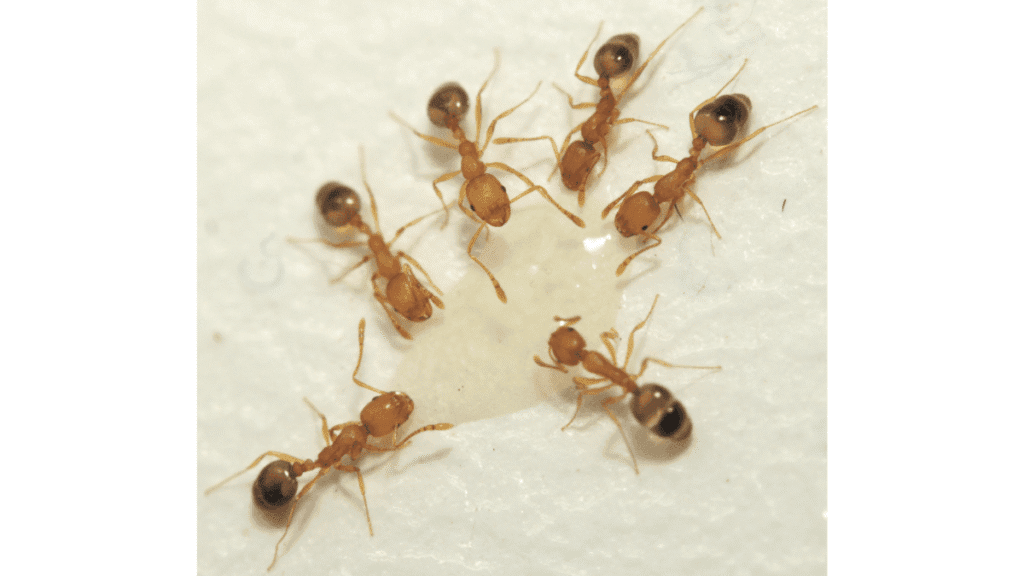
Why Spraying Pharaoh Ants Makes the Infestation Worse
Pharaoh ants “bud” when stressed.
Budding means the colony splits into multiple new colonies. When you spray them, you don’t kill the problem — you scatter it. The ants move deeper into wall voids, ceilings, insulation, and hidden spaces.
You may see fewer ants for a few days. Then suddenly you’ll see them in new rooms.
That’s budding.
Sprays kill visible workers.
Bait eliminates the entire colony.
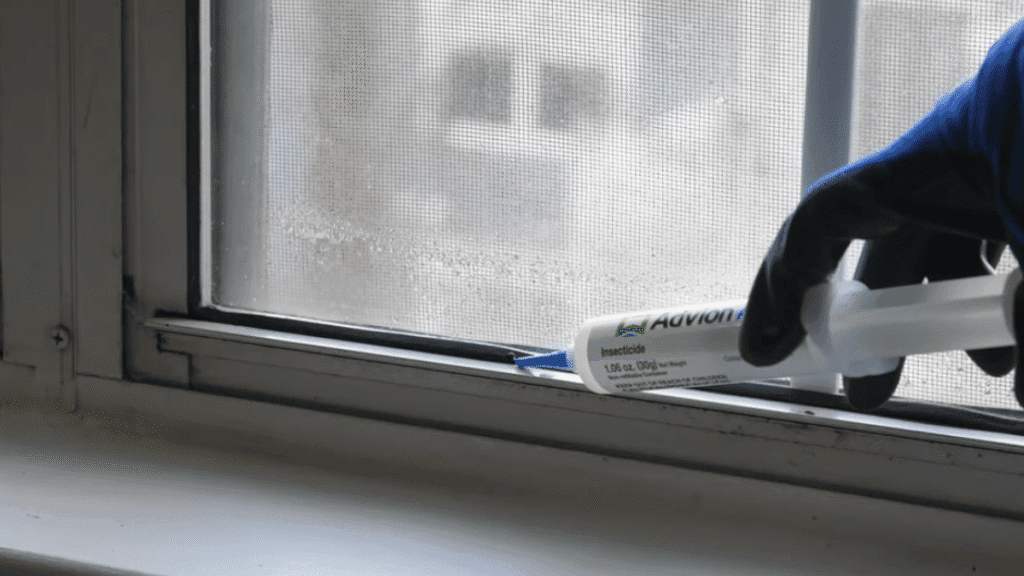
Step 1: Use Advion Ant Bait Gel Indoors
Pharaoh ants respond extremely well to slow-acting, sweet-based bait.
Your best options:
- Advion Ant Bait Gel
- Advion Ant Bait Gel Stations (cleaner and easier for homeowners)
Because these colonies contain multiple queens, the bait must be carried deep into the nest and shared. A slow-acting gel allows workers to feed, return to the colony, and distribute the bait to queens and developing ants.
How to Apply the Bait Correctly
- Use rice-grain to pea-sized placements
- Apply bait directly on active trails
- Place near entry points, cracks, and gaps
- Target warm areas like appliances, electronics, dishwashers, refrigerators, and water heaters
- Check bait every 3–4 days and replenish as needed
- Do not disturb or clean the trails
Warm areas are major hotspots. Pharaoh ants prefer heat and often nest near wiring, electronics, and appliances.
The more precisely you place bait where they are actively foraging, the better the results.
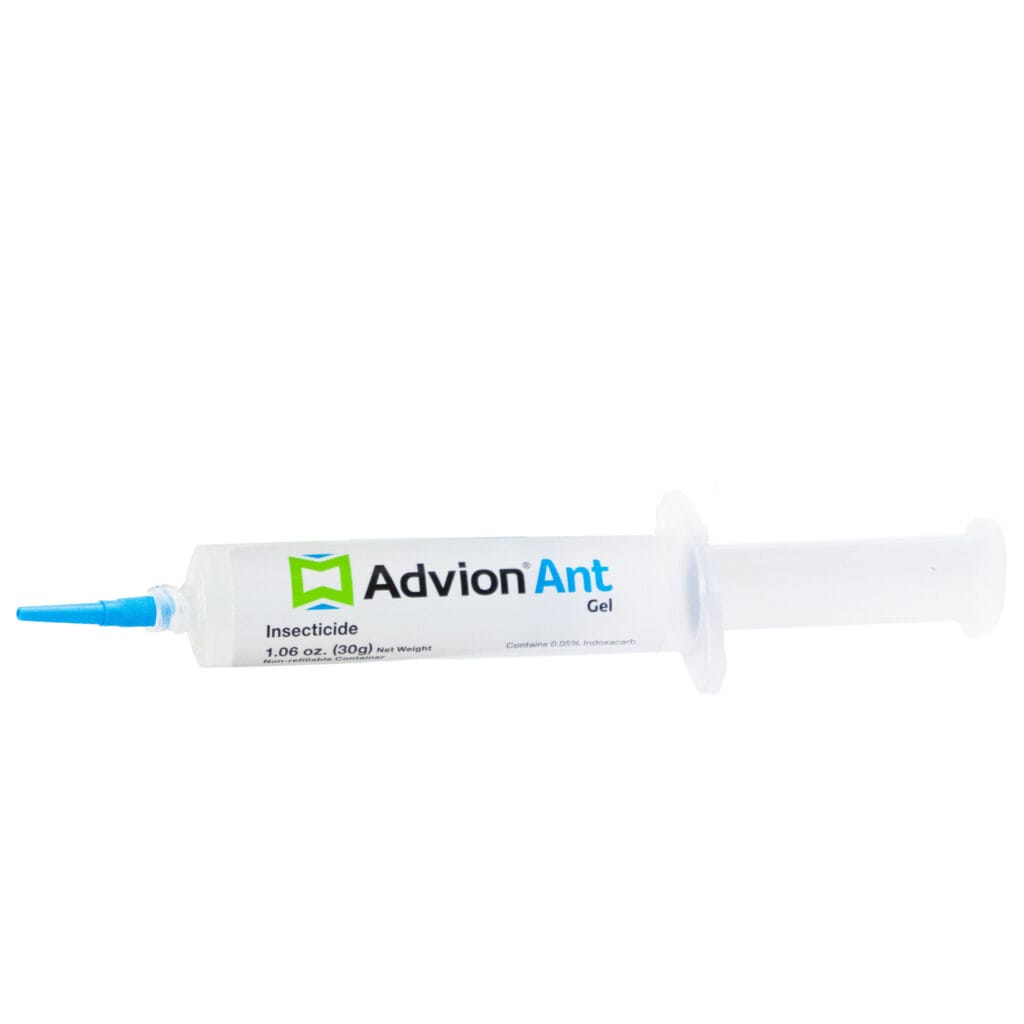
Advion Ant Bait Gel
Advion Ant Bait Gel is highly attractive to sweet‑feeding ants and uses indoxacarb, a powerful non‑repellent active ingredient. Its delayed‑kill action lets ants feed, return to the nest, and share the bait, leading to full colony elimination. Expect noticeable reduction within just a few days of application.
- Designed to be irresistible to sweet‑feeding ants
- The translucent, no odor, non-staining formulation maintains its integrity for extended periods
- Ants consume Advion Ant gel bait over an extended period, resulting in thorough control
- Works indoors and outdoors
- Doesn’t run or drip

Available on Amazon!
Advion Ant Bait Gel Label – Advion Ant Bait Gel MSDS
Advion Ant Bait Gel Station Label – Advion Ant Bait Gel Station MSDS
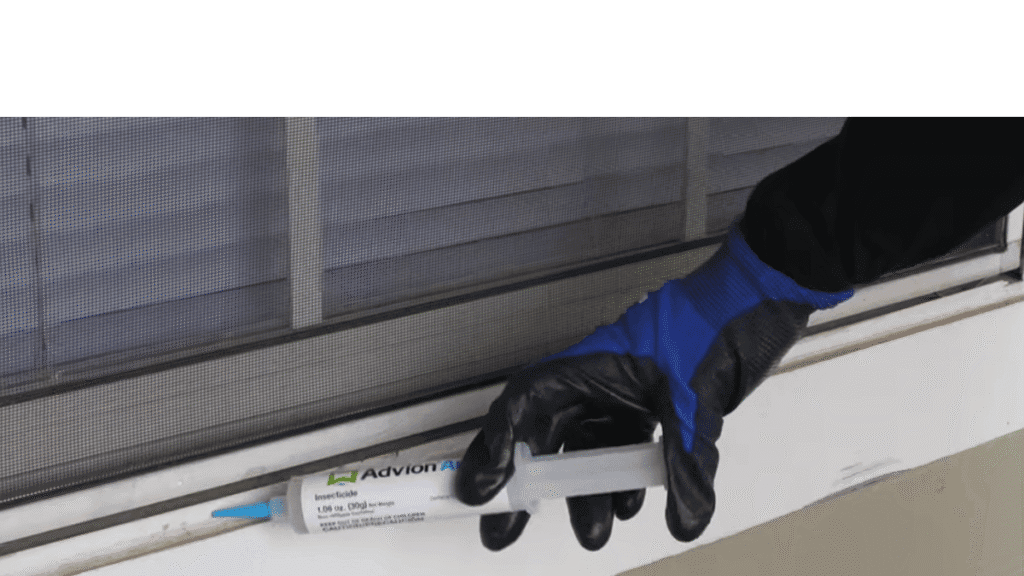
Step 2: Use More Bait Placements Than Other Ant Species
Pharaoh ant colonies are spread out and contain many queens. That means you must bait more thoroughly than you would for most ants.
A good rule of thumb:
Use at least 4 bait placements per 1,000 square feet of your home.
This ensures foraging workers encounter bait no matter where sub-colonies are located.
Where to Place Bait
- Along baseboards
- Behind appliances
- Inside cabinets
- Near plumbing penetrations
- Around electronics
- Along window sills
- Inside utility rooms
- Near visible entry points
The more thorough you are at the beginning, the faster the collapse.
Cut corners early, and the problem lingers.
Step 3: Be Patient — Pharaoh Ant Colonies Collapse Slowly
Pharaoh ants do not disappear overnight.
Two weeks of baiting is completely normal. Large infestations may take longer.
During this time, do not:
- Spray cleaners
- Wipe trails
- Block their access to bait
- Move appliances
- Disturb their pathways
Let the ants feed.
If you interrupt the process with sprays or heavy cleaning, you risk triggering budding and extending the infestation by weeks or even months.
Why This Treatment Plan Works
Pharaoh ants:
- Specialize in living indoors
- Have multiple queens
- Form massive, spread-out colonies
- Bud aggressively when sprayed
- Prefer warm, hidden nesting sites
- Respond extremely well to slow-acting bait
This plan works because it:
- Avoids triggering budding
- Targets the entire colony
- Uses bait that spreads between workers and queens
- Relies on the ants’ natural foraging behavior
- Eliminates the colony without driving it deeper into the structure
It works with their biology — not against it.
Summary: The Right Way to Get Rid of Pharaoh Ants
Pharaoh ants are indoor-living ants with multiple queens. Spraying them causes budding, which creates even more colonies inside your walls.
The only reliable treatment is slow-acting bait.
Use Advion Ant Bait Gel or Advion Gel Stations. Apply small amounts directly on active trails, near entry points, and around warm areas like appliances and electronics. Use at least four placements per 1,000 square feet, and check every few days to replenish.
Expect the process to take two or more weeks.
Do not spray.
Do not disturb.
Let the bait do the work.
Pharaoh Ant FAQ
IDENTIFICATION & BEHAVIOR
What are Pharaoh ants?
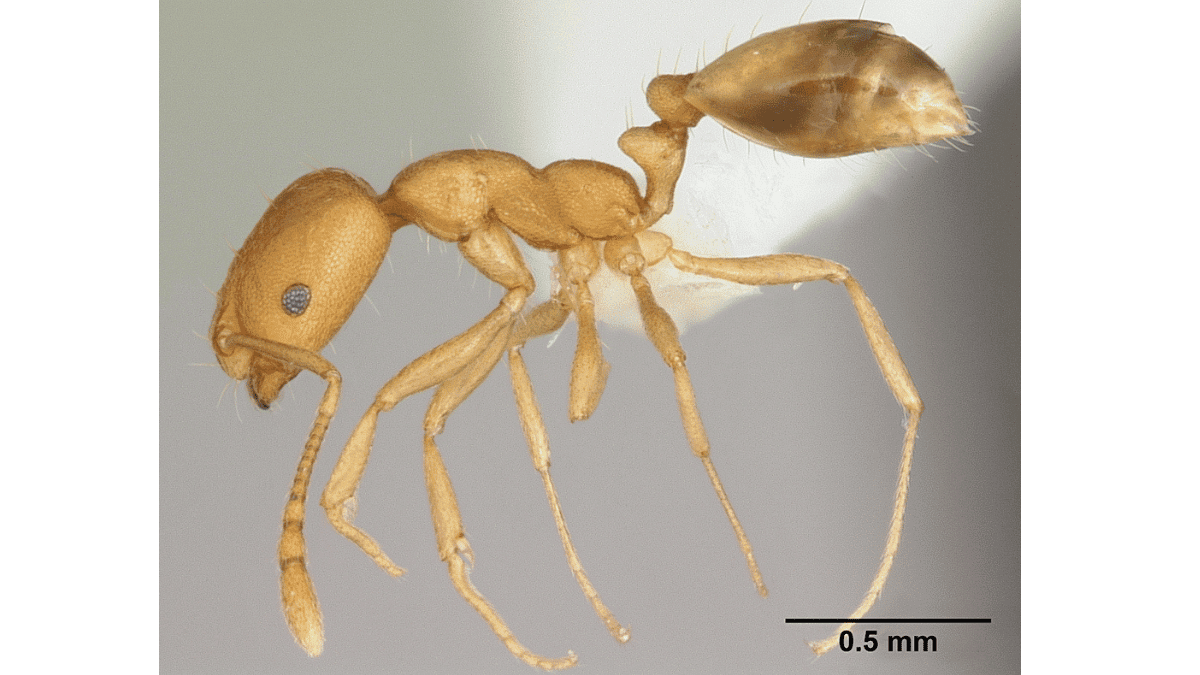
Pharaoh ants (Monomorium pharaonis) are tiny, yellowish ants that specialize in living with humans. They thrive in heated buildings, wall voids, kitchens, bathrooms, and anywhere warm or moist. Their colonies have multiple queens, making them extremely difficult to eliminate without proper baiting.
Why are Pharaoh ants so hard to get rid of?
Pharaoh ants form large, spread‑out colonies with many queens. When disturbed or sprayed, they bud, meaning the colony splits into multiple new colonies that spread deeper into walls and hidden areas. This makes spraying one of the worst things you can do.
Where do Pharaoh ants nest?
Common nesting sites include:
- inside wall voids
- behind baseboards
- inside cabinets
- around plumbing penetrations
- behind refrigerators and dishwashers
- inside electronics and appliances
- near warm wiring or outlets
They prefer warmth, moisture, and hidden spaces.
BAITING & TREATMENT
How do I get rid of Pharaoh ants?
You must bait only. Never spray.
Use Advion Ant Bait Gel or Advion Ant Gel Stations, placing small amounts directly on active trails and near entry points. Baiting is the only method that reaches all queens and prevents budding.
Why can’t I spray Pharaoh ants?
Spraying causes budding, where the colony splits into many new colonies. This pushes ants deeper into your home and makes the infestation far worse. Bait only. Never spray.
What’s the best bait for Pharaoh ants?
Advion Ant Bait Gel is the top choice. It’s slow‑acting, highly attractive, and spreads through the colony without alarming the queens.
How much bait should I use?
Use rice‑grain to pea‑sized bait placements. Pharaoh ants require more bait than other species.
A good rule is:
At least 4 bait placements per 1,000 square feet of your home.
Where should I place the bait?
Place bait:
- directly on active trails
- near entry points
- behind appliances
- around electronics
- inside cabinets
- near plumbing lines
- along baseboards
- in warm areas (major hotspots for Pharaoh ants)
Do not disturb or clean the trails.
MONITORING & EXPECTATIONS
How long does it take for Pharaoh ant bait to work?
Pharaoh ant colonies collapse slowly. Two weeks of baiting is normal, and large infestations may take longer. Patience is essential.
How often should I check the bait?
Check every 3–4 days and replenish as needed. These ants feed heavily, and keeping bait available is critical.
Why do Pharaoh ants keep coming back?
Common reasons include:
- not enough bait placements
- bait not placed directly on trails
- cleaning or disturbing trails
- spraying too early
- not replenishing bait
- missing warm hotspots like appliances or electronics
Thorough baiting from the start prevents most reinfestations.
GENERAL QUESTIONS
Are Pharaoh ants dangerous?
They don’t sting, but they can contaminate food and surfaces. They’re considered a major indoor pest because they live entirely inside human structures.
What’s the simplest way to remember how to treat Pharaoh ants?
Bait only. Never spray. Place lots of small bait placements and let the ants do the work.