TL;DR: How To Treat And Control Ghost Ants
Step 1 — Bait the active trails.
Place tiny rice-grain-sized dots of Advion Ant Bait Gel (or use Advion Gel Stations) directly on ghost ant trails indoors or outdoors — especially near sinks, faucets, windowsills, and entry points.
Step 2 — Treat the plants feeding them.
Inspect nearby landscaping and houseplants for sticky leaves, shiny residue, scale, aphids, mealybugs, or black sooty mold. Treat infested plants.
Ghost ants are tiny “sugar ants” that follow scent trails from outdoor colonies into kitchens and bathrooms, especially during dry weather when they search for moisture.
Fix the honeydew source, and the ants stop coming back.
What Are Ghost Ants?
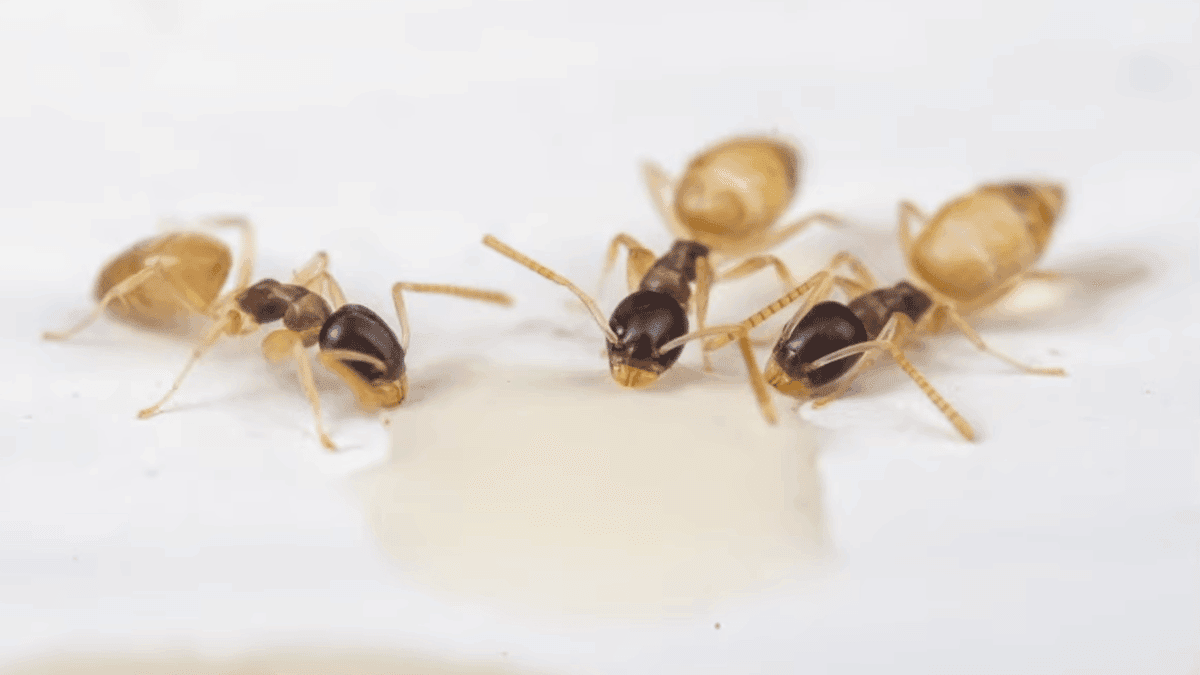
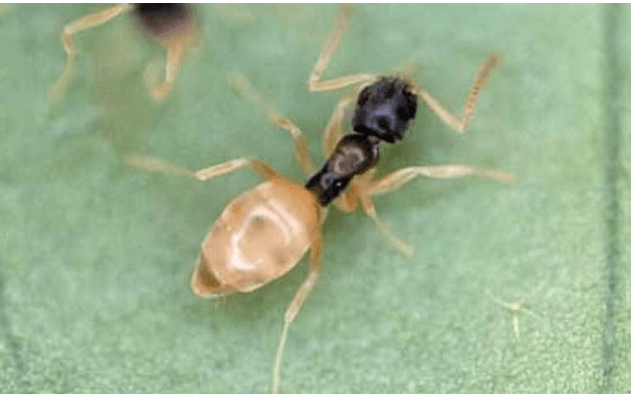
Ghost ants are tiny, pale-colored ants often called “sugar ants.” Not all sugar ants are ghost ants — which is why correct identification matters.
They’re small, fast, and typically show up in:
- Kitchens
- Bathrooms
- Around sinks and faucets
- Near pet bowls
- Along windowsills and baseboards
They’re not there because your home is dirty. They’re following scent trails from outdoor colonies to sugar or moisture.
The real reason they keep returning is almost always outside.
Why Ghost Ants Show Up Inside Your Home
Ghost ants don’t wander randomly. There’s always a reason.
Most indoor infestations start because of one of these conditions:
1. Dry Weather Pushes Them Inside
When outdoor conditions dry out, ghost ants expand their foraging range looking for moisture.
That’s why you suddenly see them around:
- Sinks
- Showers
- Dishwashers
- Pet water bowls
They’re following scent trails to reliable moisture.
2. Sugary Food Sources Indoors
Ghost ants are strongly attracted to sweets.
Even tiny amounts can start a trail:
- Juice or soda residue
- Honey or syrup drips
- Cereal dust
- Fruit residue
- Pet food crumbs
They forage within 30–50 feet of their nest and can move satellite colonies closer once they find consistent food.
3. Honeydew From Plant Pests (The Real Root Cause)
This is what most homeowners miss.
Scale insects, aphids, and mealybugs produce a sugary substance called honeydew. Ghost ants harvest it constantly.
If your trees, shrubs, or houseplants have these pests, they are feeding the ants.
You can bait the ants temporarily — but if you don’t treat the plant pests, the ants will return.
How Ghost Ant Colonies Work
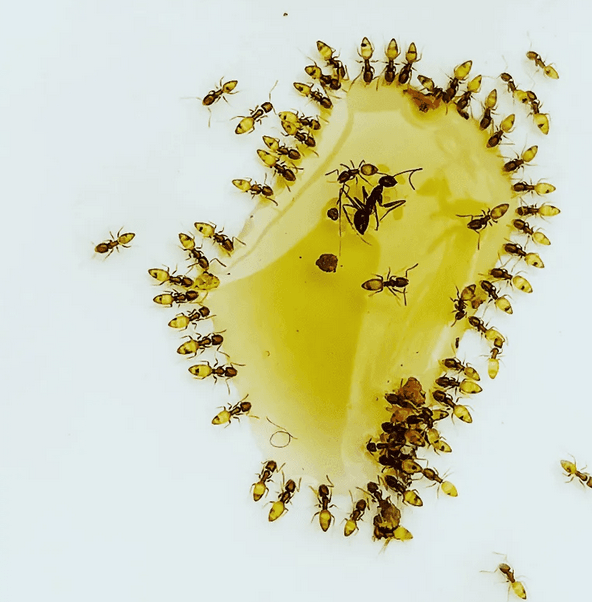
Ghost ants don’t have one central nest.
They split into multiple satellite colonies that can be found in:
- Tree crotches
- Palm crowns
- Rotted wood pockets
- Mulch beds
- Wall voids
- Potted plants
They use irrigation lines, pipes, conduits, and even power lines as highways.
That’s why they may appear on opposite sides of the house.
Finding the main nest is hit-or-miss.
Baiting works because it reaches the colonies you can’t see.
Step 1 — Use Advion Ant Bait Gel on Active Trails
This is the most reliable way to eliminate ghost ants.
Advion works because it’s:
- Highly attractive
- Slow-acting
- Compatible with multiple-queen colonies
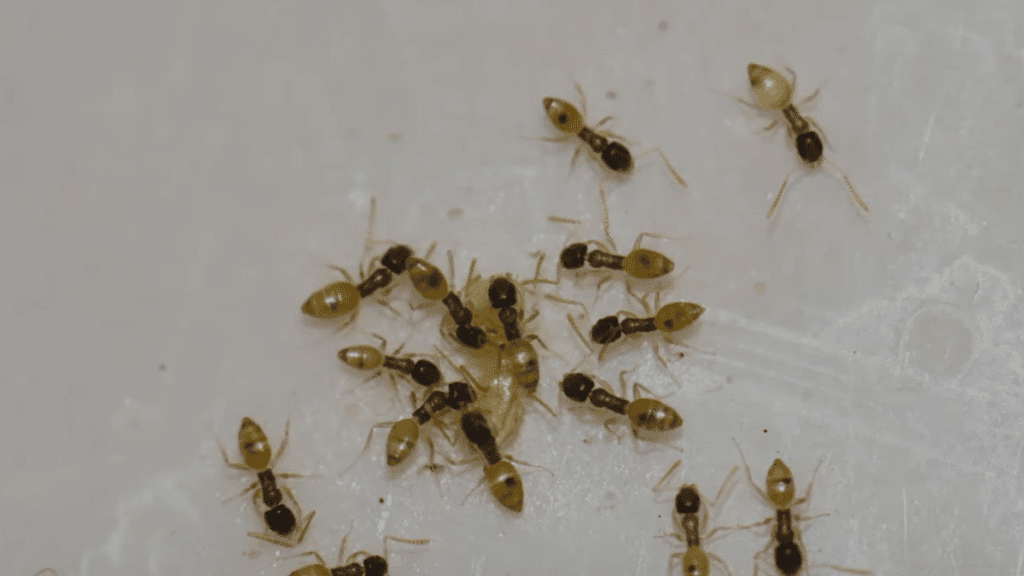
Your goal is simple: get the ants feeding.
How to Apply the Bait
- Place tiny rice-grain-sized dots directly on active trails
- Put the bait as close as possible to entry points
- Do not spray near the bait
- Let the ants feed — don’t kill them
- Reapply small amounts if they finish it quickly
Common Indoor Placement Areas
- Kitchens
- Bathrooms
- Around sinks and faucets
- Near pet bowls
- Along baseboards
- Windowsills
Ghost ants will pick up the bait and carry it through the entire colony network.
That’s why you don’t need to find the nest.
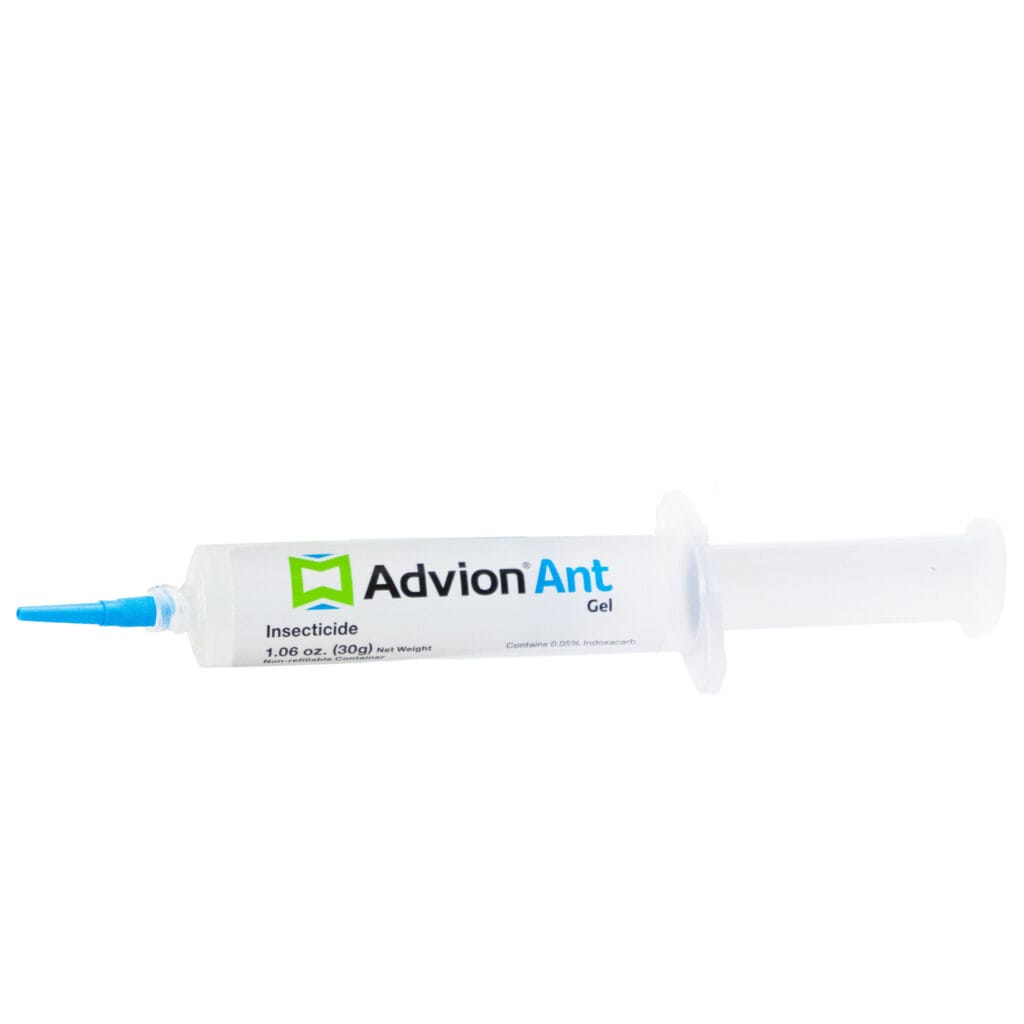
Advion Ant Bait Gel
Advion Ant Bait Gel is highly attractive to sweet‑feeding ants and uses indoxacarb, a powerful non‑repellent active ingredient. Its delayed‑kill action lets ants feed, return to the nest, and share the bait, leading to full colony elimination. Expect noticeable reduction within just a few days of application.
- Designed to be irresistible to sweet‑feeding ants
- The translucent, no odor, non-staining formulation maintains its integrity for extended periods
- Ants consume Advion Ant gel bait over an extended period, resulting in thorough control
- Works indoors and outdoors
- Doesn’t run or drip

Available on Amazon!
Advion Ant Gel Label – Advion Ant Gel MSDS
Advion Ant Bait Gel Station Label – Advion Ant Bait Gel Station MSDS
Step 2 — Treat the Plants Feeding the Ants
If ghost ants keep returning, the problem is almost always honeydew.
Inspect nearby plants for:
- Sticky leaves
- Shiny residue
- Black sooty mold
- Clusters of scale
- Aphids or mealybugs
If you see these, the ants are being fed.
Option A — BioAdvanced Shrub Care Granules (Beginner Friendly)
This is the simplest method.
Sprinkle granules around the plant and water them in.
Application Rates
Houseplants:
2 teaspoons per gallon of pot size
Shrubs:
¾ cup per foot of shrub height
Apply in a ring starting about 1 foot away from the base and work inward
Trees:
¼ cup per inch of trunk diameter
Apply around the dripline and work inward
Avoid placing granules directly against the trunk
This kills scale, aphids, and mealybugs from the inside out and lasts for months.
Option B — Dominion 2L + Surfactant (Professional Option)
Use this when:
- Plants are large
- Infestation is heavy
- You already have a sprayer
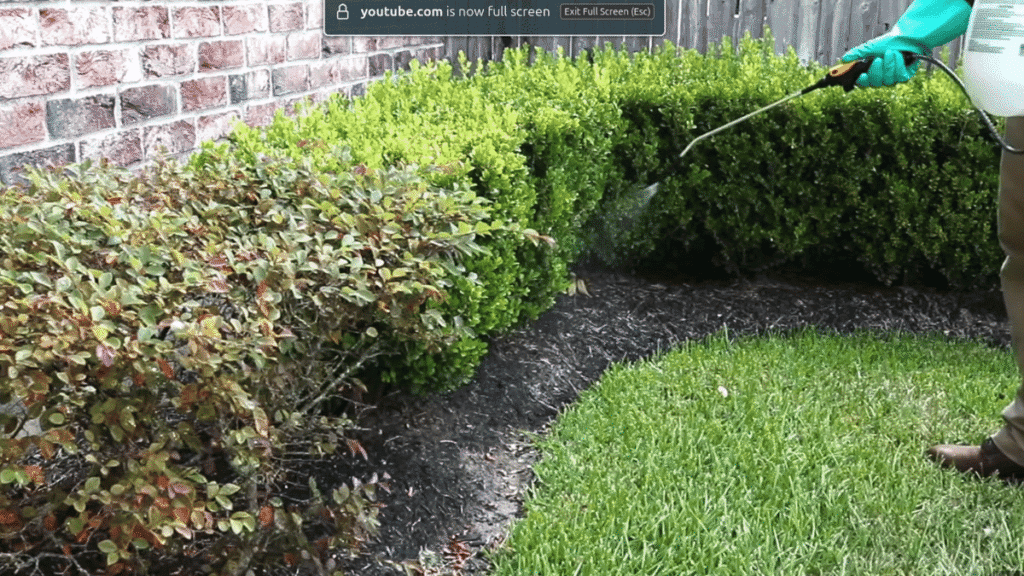
Mix Dominion 2L with a surfactant and spray:
- Leaves
- Stems
- Trunks
- Palms
- Shrubs
- Ornamentals
Coat thoroughly.
Dominion moves through the plant and eliminates the pests producing honeydew.
Once the honeydew is gone, the ghost ants lose interest.
Dominion 2L Label – Dominion 2L MSDS
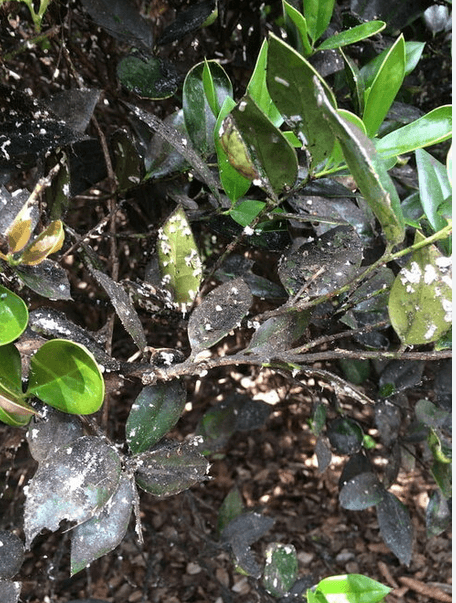
What to look for
Check your plants for:
- sticky leaves
- shiny residue
- black sooty mold
- clusters of tiny bumps (scale)
- little green or white bugs (aphids/mealybugs)
If you see any of these, the ants are being fed by the plant pests.
Why Ghost Ants Come Back
If you’re still seeing ants, check these areas:
1. Hidden Sugar Sources
Even small residue can restart a trail.
Clean surfaces with soapy water to remove both food and scent trails.
2. Untreated Plant Pests
If scale, aphids, or mealybugs remain, the ants will return.
Treat the plants. That’s the long-term fix.
3. Bait Isn’t Reaching the Colony
Ghost ant nests may be far away or split into multiple satellite colonies.
Use Advion Ant Bait Gel or Gel Stations so workers can safely transfer it.
4. A New Satellite Colony Appeared
Ghost ants constantly split and move.
A new trail doesn’t mean failure. It means another pocket surfaced.
Bait each new trail as it appears.
5. Dry Conditions Increase Foraging
During dry weather, ghost ants expand their range looking for moisture.
Keep sinks, counters, and pet areas clean so they follow bait instead of water or residue.
Once the outdoor honeydew source is handled, indoor activity fades.
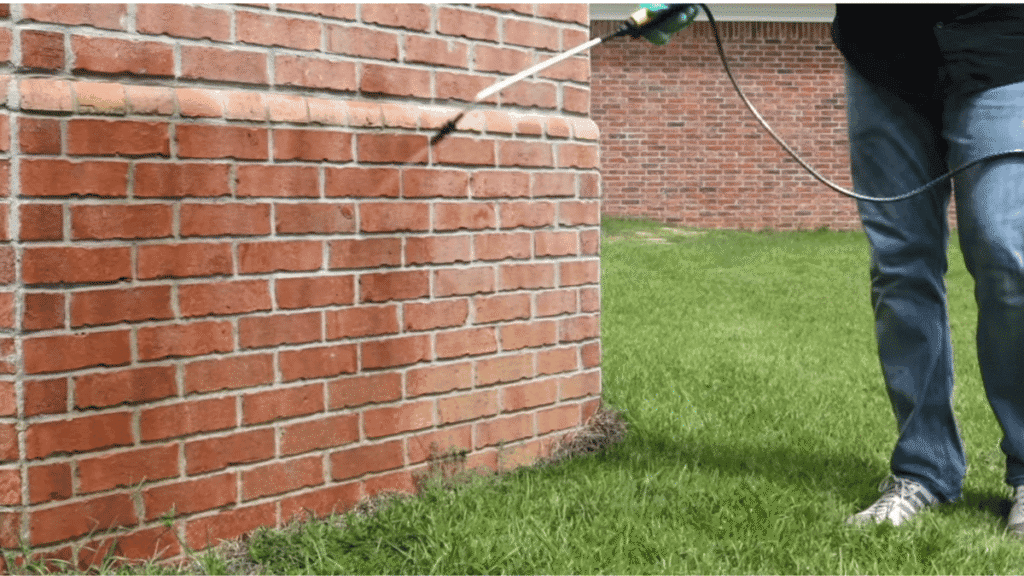
Why Ghost Ants Keep Coming Back
Ghost ants can be persistent, but there’s always a reason. If you’re still seeing activity, here’s what to check.
1. There’s still a sugary food source somewhere
Look for:
- sticky residue
- spilled drinks
- pet food crumbs
- honey or syrup drips
A quick wipe‑down with soapy water removes both the food and the scent trails.
2. 2. The colony is still being fed by plants
If your trees, shrubs, or houseplants have scale, aphids, or mealybugs, the ants will keep returning to harvest honeydew.
Fix: Treat the plants with BioAdvanced Shrub Care Granules or Dominion 2L + surfactant. Once the honeydew stops, the ants lose interest and trails fade out.
3. The bait isn’t reaching the colony
Ghost ant nests can be far away or split into multiple satellite colonies. If the bait doesn’t make it back to the queens, the colony won’t collapse.
Fix: Use Advion Ant Bait Gel or Advion Gel Stations. They’re highly attractive and slow‑acting, so workers can safely carry the bait back through the entire colony network.
4. You’re seeing a new trail from a different satellite colony
Ghost ants don’t have one big nest — they have many small ones, and they move constantly. A new trail doesn’t mean the bait failed; it often means a different satellite colony just showed up.
Fix: Bait each new trail as it appears. Once the outdoor food source (honeydew) is handled, these new trails stop forming.
5. Dry weather pushes them indoors
Ghost ants need moisture to survive, which is why they often nest in high‑moisture spots like:
- the crown of palm trees
- rotten pockets in tree crotches
- damp mulch
- potted plants
When the weather turns dry, they expand their foraging range and may end up inside your home. That’s why you often see them around:
- sinks
- faucets
- dishwashers
- pet bowls
- bathroom counters
They’re not coming because your sink is wet — every home has water sources. They’re following trails that lead them to the nearest reliable moisture.
Fix: Wipe down these areas regularly so the ants follow the bait instead of wandering toward water or residue. Once the outdoor honeydew source is handled, these indoor trails stop forming.
How to Monitor for Ghost Ants
Ghost ants are tiny, fast, and often hard to see — especially on light countertops, tile, or granite. Using glueboards is one of the easiest ways to confirm activity, track new trails, and make sure your baiting is working.
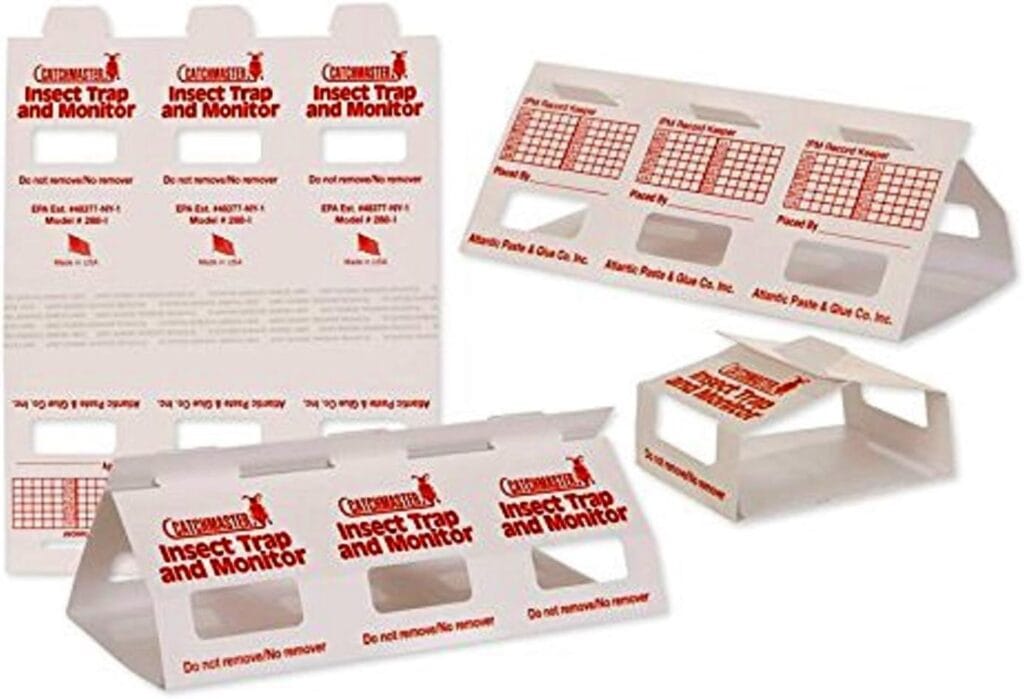
Glue Traps – 12 Glue Boards
Catchmaster 288i Insect Trap & Monitors are non‑toxic, chemical‑free glue traps that fold into clean tunnel monitors and come perforated so each board becomes three sticky traps.
- 3‑in‑1 Design: Each board is perforated into three traps.
- Non‑Toxic: Chemical‑free monitoring for roaches, spiders, and silverfish.
- Super Sticky: Very effective on insects & spiders.
- Clean Handling: Pick up easily — glue and insects stay inside the tunnel.
- Easy to Use: Fold and place along walls, under appliances, or in closets.
- Great Value: 5 boards = 15 monitors for wide coverage.
Available on Amazon!
Where to Place Glueboards
Place small glue monitors in the areas ghost ants naturally travel:
- Along the wall at the head of your kitchen counters — their main highway.
- Behind faucets or soap bottles where moisture attracts them.
- Under the lip of the countertop (ghost ants love tight edges).
- Inside cabinets near hinges where they slip in and out.
- Behind small appliances like coffee makers, toasters, and microwaves.
- Along baseboards where trails often start before they move upward.
Why Glueboards Help
- Ghost ants are so small that you often don’t notice them until the trail is big.
- Glueboards make it easy to spot early activity on any surface.
- They help you confirm whether bait is working and whether new colonies are showing up.
- They’re great for post‑treatment peace of mind, especially in kitchens and bathrooms.
How Long to Monitor
Keep glueboards in place for 2–4 weeks while baiting. Replace them if they fill up with dust, debris, or ants.
Summary — Eliminating Ghost Ants
Ghost ants are one of the easiest ants to eliminate — if you handle both parts of the problem.
- Place Advion Ant Bait Gel directly on active trails and let them feed.
- Inspect and treat plants for honeydew-producing pests.
- Keep counters and pet areas clean so ants use the bait.
- If you find the nest in mulch, palm crowns, or tree crotches, you can spray it directly.
Fix the honeydew source, and ghost ants stop coming back — even if they’ve been a recurring issue for years.
FAQ’s Ghost Ants
IDENTIFICATION & BEHAVIOR
What are ghost ants?
Ghost ants are tiny, fast‑moving sugar‑feeding ants with dark heads and pale, almost translucent bodies. They form multiple satellite colonies and move frequently, which is why they seem to “appear out of nowhere.”
How do I know if I have ghost ants?
Look for tiny ants forming quick, scattered trails along countertops, baseboards, sinks, and plant areas. Their pale bodies make them look like moving specks. Indoors, they often show up in kitchens and bathrooms.
Why do ghost ants show up around sinks and pet bowls?
They’re following scent trails to food residue and moisture, not because the sink itself attracts them. Wet sponges, soap residue, pet food drips, and sugary spills are common triggers.
Do ghost ants bite or sting?
No. Ghost ants don’t bite, sting, or damage structures. They’re strictly a nuisance pest.
Why do ghost ants move their trails so often?
Ghost ants have multiple satellite colonies. When one trail dries up or becomes less productive, they quickly switch to another route.
NESTING & ROOT CAUSES
Where do ghost ants nest?
They usually nest outside, in places like mulch, potted plants, tree crotches, rotting wood, and leaf litter. Indoors, they may nest temporarily in wall voids, behind baseboards, or inside appliances.
Why do ghost ants keep coming back?
There’s almost always a food source outside, usually plants with scale or aphids producing honeydew. Even if you eliminate the ants indoors, they’ll return until the plant pests are treated.
How do I know if my plants are part of the problem?
Check for:
- sticky leaves
- black sooty mold
- tiny bumps on stems (scale)
- clusters of soft‑bodied insects (aphids)
These signs mean honeydew is present — a major ghost ant food source.
Why do ghost ants show up more during dry weather?
Dry conditions push them to forage farther for moisture and sugar. Indoors, sinks, counters, and pet bowls become easy targets.
TREATMENT & BAITING
Why aren’t the ants taking the bait?
Common reasons:
- The bait is old or crystallized
- The bait is too strong (ants die before returning)
- There’s a competing food source (honeydew, spills, pet food)
- You may be seeing small fire ants instead of ghost ants
Fresh bait should be clear.
How long does ghost ant bait take to work?
Most colonies respond within 1–3 days. Larger or more distant colonies may take up to a week, especially if the nest is in mulch, potted plants, or tree pockets.
Can I spray ghost ants instead of baiting?
You can spray a colony directly if you find it, but spraying trails won’t eliminate the nest. Baiting is the most reliable way to wipe out the entire colony.
What should I do if new ant trails keep appearing?
Each new trail may be a different satellite colony. Bait each trail as it appears and make sure outdoor plant pests are handled.
Why do ghost ants ignore bait sometimes?
If they have access to honeydew, sugary spills, or pet food, they’ll choose that over bait. Clean surfaces and treat plant pests to make the bait more attractive.
INDOOR ACTIVITY
Why do ghost ants come inside?
They’re following scent trails to food or moisture. They don’t live indoors long‑term unless conditions are perfect.
How do I stop ghost ants from coming inside?
- Bait outdoors first
- Clean counters and sinks
- Rinse sponges and pet bowls
- Seal small gaps around windows and plumbing
Once the colony is eliminated, indoor activity stops.
Do ghost ants nest inside walls?
They can temporarily, especially in warm, humid areas like wall voids near kitchens or bathrooms. But the main colony is usually outdoors.
PREVENTION & LONG‑TERM CONTROL
How do I keep ghost ants from returning?
- Re‑baiTreat plants for scale and aphids
- Reduce excess moisture
- Keep counters and sinks clean
- Seal entry points
- Re‑bait if new trails appeart if new trails appear
Do ghost ants come back every year?
They can if the outdoor food source (usually honeydew) isn’t addressed. Once plant pests are controlled, ghost ant activity drops dramatically.
Does overwatering make ghost ants worse?
Overwatering encourages plant pests like scale and aphids, which produce honeydew — a major ghost ant food source.
What’s the best bait for ghost ants?
Ghost ants respond well to sweet liquid baits like Advion Ant Bait Gel. If ants die before returning to the nest, dilute the bait with sugar water.
Why do ghost ants suddenly appear in large numbers?
Ghost ants expand rapidly when they find a strong food source. A single trail can represent multiple satellite colonies feeding at once.
Can ghost ants damage my home?
No. They don’t chew wood, damage wiring, or harm structures. They’re strictly a nuisance.