
This page contains affiliate links. I may earn a commission at no extra cost to you.
The best way to get rid of Smokybrown cockroaches is to spray Fipronil C Plus mixed with Gentrol IGR along every indoor baseboard, then apply a heavy outdoor perimeter treatment that includes palm crowns, tree bases, soffits, and clean gutters. These roaches live high in trees and roof lines, not in mulch, and they fly strongly to porch lights at night. Most homes see major reduction within 2 days of spraying.
TL;DR: How To Treat And Control Smokybrown Cockroaches
- Spray Fipronil C Plus with Gentrol IGR added along every interior baseboard, behind appliances, around plumbing penetrations, in the garage, and around any window or door that’s been left open at night.
- Spray the same mix outside as a perimeter band, 3 feet out from the foundation and 1 foot up the wall. Spray UP. Hit tree trunks as high as your sprayer reaches, palm crowns, soffits, fascia boards, and around attic vents. Smokybrowns live high.
- Clean the gutters. Leaf-filled gutters with standing water are prime smokybrown harborage at the roofline.
- Place Advion Roach Bait Stations only in storage areas you can’t spray. These roaches don’t bait well, so the stations are a backup, not the main plan.
- Seal gaps around doors, windows, garage door bottoms, attic vents, and utility penetrations. Smokybrowns wander indoors through gaps you can see daylight through.
- Switch exterior bulbs to yellow or motion-activated and turn off porch and garage lights when not in use.
- Open garages and windows at night pull these roaches indoors.
- Keep indoor humidity at 45 to 50 percent. Run a dehumidifier in humid climates and block-construction homes.
Keep reading for the full breakdown. ↓
What You Need
For smokybrown cockroaches, the hero product is the spray. These are not bait-responsive roaches. They wander, they fly to lights, and they live outdoors in places the bait stations can’t reach. The fipronil spray is what actually solves the problem.
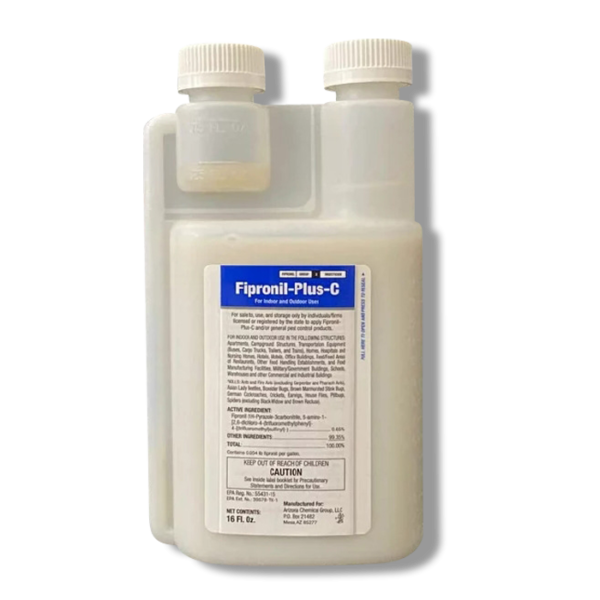
Fipronil‑Plus‑C Pest Control Concentrate (16 oz)
Fipronil‑Plus‑C is a commercial‑strength 0.65% fipronil concentrate that homeowners use for roaches, ants, and perimeter pests. One 16‑oz bottle makes up to 21 gallons of solution for long‑lasting indoor crack‑and‑crevice and outdoor structural treatments.
- Use: 1.0 fl oz per gallon of water This is the standard labeled dilution for structural crack‑and‑crevice applications.
- Commercial‑Strength Formula — 0.65% fipronil delivers professional‑grade control of roaches, ants, and other structural pests.
- Makes 21 Gallons — One 16‑oz bottle stretches far for large infestations or multi‑room treatments.
- Long‑Lasting Residual — Cellulose entrapment technology slows UV breakdown for extended control.
- Indoor + Outdoor Use — Ideal for kitchens, bathrooms, garages, baseboards, and exterior foundation cracks.
- Easy Mixing — Precision‑designed bottle reduces drift and makes dilution simple for DIY homeowners.
- Broad‑Spectrum Control — Effective against roaches, ants, and other common household invaders.


Available on Amazon!
Competitive pricing + Fast Free shipping on all orders!
Fipronil C Plus is the non-repellent perimeter spray professionals use against outdoor-driven roaches. The active ingredient (fipronil) is non-repellent, which means the roaches don’t detect it. They walk through the treated zone, pick up the active ingredient, and carry it back to harborage areas where it transfers to other roaches through contact and grooming. This is the spray that creates the actual long-term barrier against wandering smokybrown invaders.
Signs You Have Smokybrown Cockroaches
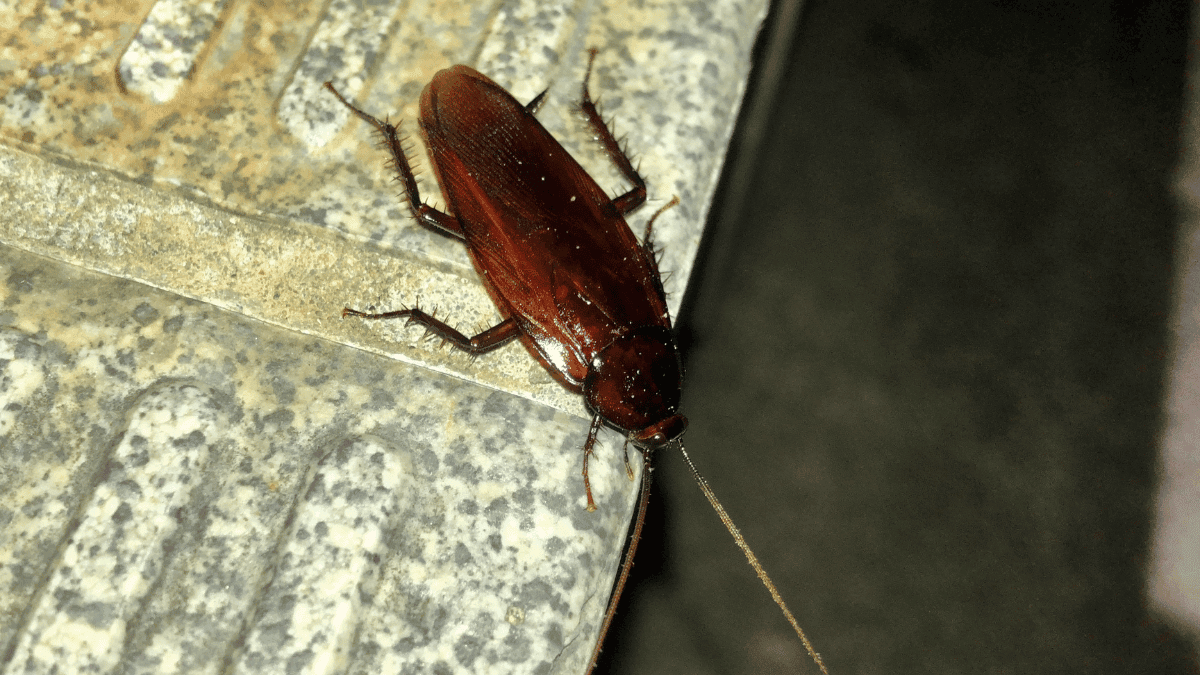
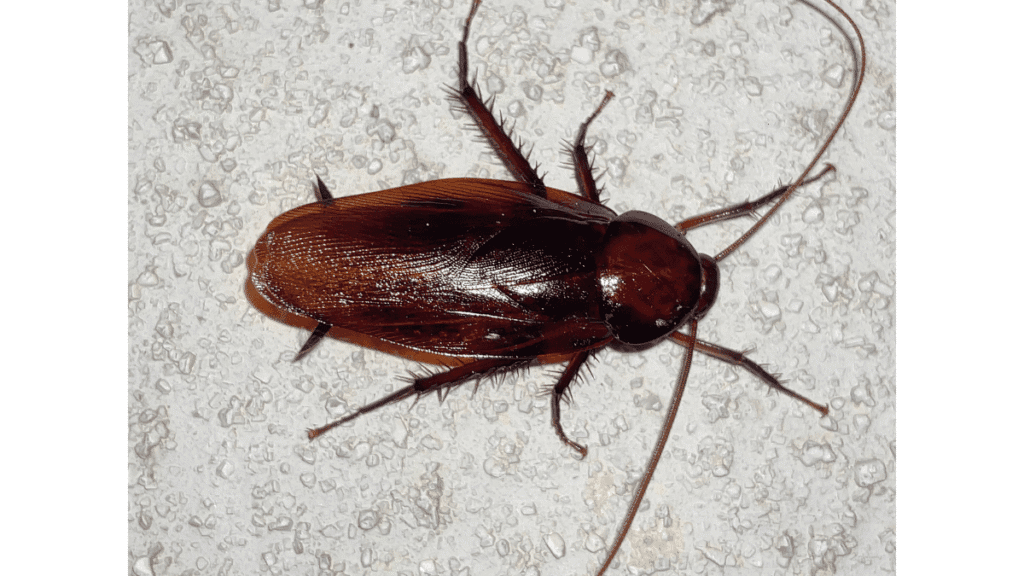
- Large, 1¼ to 1½ inches long, with a uniform dark mahogany color. No markings, no stripes, no patterns. Just solid dark brown to almost black, glossy.
- Both sexes have full-length wings and both fly strongly. Unlike Oriental roaches (which can’t fly) and American roaches (which mostly glide), smokybrown roaches are real fliers. You’ll see them flying around porch lights, into open garages, and through open windows on warm nights.
- Activity at the roof line, in attic spaces, and around the upper part of the house. Smokybrowns live UP. Soffits, fascia boards, attic vents, gutters, the eaves above the porch.
- Strong attraction to lights. This is the single biggest behavioral marker. Smokybrowns will fly toward a porch light from 100 feet away.
- Found in trees, especially palm crowns and live oaks. The fibrous material at the base of palm fronds and the bark crevices of mature trees are favorite harborage.
- Sudden indoor sightings after warm humid nights. Open garages, screened porches with gaps, and bedroom windows left open are all entry points after dusk.
- Activity that spikes in late spring and summer. This species is heat- and humidity-driven.
Smokybrown vs Other Big Roaches
The four big outdoor roach species in the southern and eastern US get confused constantly. They all get called “water bugs” or “palmetto bugs” depending on where you live. The treatment is similar across species, but the ID matters for where you focus the outdoor work.
| Feature | Smokybrown | American | Oriental | Australian |
|---|---|---|---|---|
| Size | 1¼ to 1½ inches | 1½ to 2 inches | 1 to 1¼ inches | 1¼ to 1⅜ inches |
| Color | Uniform dark mahogany, no markings | Reddish-brown with yellow figure-eight | Dark brown to black, glossy | Reddish-brown with yellow wing stripes and pronotum band |
| Markings | None | Yellow pattern on pronotum | None | Yellow stripes on wings and pronotum |
| Can fly? | Yes, strong flier | Glides more than flies | No (females wingless) | Yes, strong flier |
| Drawn to lights? | Yes, very heavily | Slightly | No | Yes, heavily |
| Where they live | Trees, palm crowns, gutters, attics, soffits (high) | Sewers, drains, mulch (low) | Basements, sewers, drains (low and wet) | Mulch, palms, potted plants |
| Cold tolerance | Low | Low | Higher | Low |
The fastest field test: look at the markings. Smokybrown roaches have none. Solid dark mahogany from head to wingtip. If you can see any yellow stripe, band, or figure-eight, it’s not a smokybrown.
Smokybrown cockroaches are most common in the southeastern US, Gulf Coast, Florida, and Hawaii. They’ve spread into coastal California and parts of the southwest as well. They are heavily climate-dependent and don’t survive cold winters outdoors.
Why They’re In Your House
Smokybrown cockroaches don’t establish breeding populations inside the way German or brown-banded roaches do. They’re wanderers. The ones inside your house came in from somewhere outside, recently, and that’s important to understand because it changes the treatment focus.
- Trees, especially palms and live oaks. Palm crowns are textbook smokybrown habitat. The burlap material at the base of palm fronds, combined with the moisture and organic debris that accumulates there, creates a perfect protected harborage. Mature live oaks with deep bark crevices and dense canopy are the other major outdoor nesting site. After 25 years of treating smokybrowns in Florida and the Gulf Coast, I can tell you that on properties with palms and oaks, the trees ARE the colony. Your house is just the place the wanderers end up.
- Clogged gutters. Leaf-filled gutters with standing water and decomposing organic matter sit right at the roofline of your house. Smokybrown roaches thrive in that environment, and from the gutters they crawl into soffits, behind fascia boards, through attic vents, and into the attic itself. A house with chronically dirty gutters in a smokybrown climate has a permanent colony at the roofline whether you can see it or not.
- Attics, soffits, and roof voids. This is the indoor habitat smokybrown roaches actually use. Unlike Oriental roaches (basements) or German roaches (kitchens), smokybrowns prefer the upper voids of the house. Hot, occasionally damp, with the kind of dust and organic debris attic spaces tend to accumulate. Smokybrowns will breed up there if conditions stay favorable.
- Porch lights, garage lights, and any white outdoor lighting. This is the #1 reason smokybrowns end up inside houses. They fly toward white and blue-white exterior bulbs from a long distance, especially on warm humid nights. A porch light burning sunset to sunrise is an open invitation to every smokybrown within several blocks. From the porch light, they slip in through gaps under doors, around door frames, through damaged screens, or into open garages.
- Open garages and open windows at night. This is the other major entry route. Garages left open for 10 minutes at dusk with a light on will pull in multiple smokybrowns. Open bedroom windows in the summer with the interior light on do the same thing. Once inside, they wander until they find harborage or until you find them.
- Heavy rain. Saturated outdoor harborage in mulch, leaf piles, and tree litter displaces smokybrown roaches upward and inward looking for drier spots.
- Indoor moisture sources. A leaky bathroom, a damp attic, condensation around AC equipment, or high indoor humidity can let wandering smokybrowns establish a small indoor breeding population. This is uncommon, but when it happens it shows up in the attic, the laundry room, or around bathroom plumbing.
How to Get Rid of Smokybrown Cockroaches, Step by Step
Step 1: Indoor Baseboard Spray With Fipronil and Gentrol IGR
This is the foundation of the treatment. Mix Fipronil C Plus at the label rate (usually 0.8 fl oz per gallon, but read your label) with Gentrol IGR Concentrate added at the IGR’s label rate (typically 1 oz per gallon).
Fipronil‑Plus‑C Pest Control Concentrate (16 oz)
Fipronil‑Plus‑C is a commercial‑strength 0.65% fipronil concentrate that homeowners use for roaches, ants, and perimeter pests. One 16‑oz bottle makes up to 21 gallons of solution for long‑lasting indoor crack‑and‑crevice and outdoor structural treatments.
- Use: 1.0 fl oz per gallon of water This is the standard labeled dilution for structural crack‑and‑crevice applications.
- Commercial‑Strength Formula — 0.65% fipronil delivers professional‑grade control of roaches, ants, and other structural pests.
- Makes 21 Gallons — One 16‑oz bottle stretches far for large infestations or multi‑room treatments.
- Long‑Lasting Residual — Cellulose entrapment technology slows UV breakdown for extended control.
- Indoor + Outdoor Use — Ideal for kitchens, bathrooms, garages, baseboards, and exterior foundation cracks.
- Easy Mixing — Precision‑designed bottle reduces drift and makes dilution simple for DIY homeowners.
- Broad‑Spectrum Control — Effective against roaches, ants, and other common household invaders.
Available on Amazon!
Competitive pricing + Fast Free shipping on all orders!
Fipronil‑Plus‑C Label – Fipronil‑Plus‑C MSDS
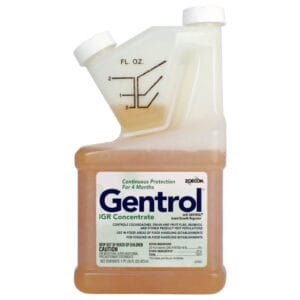
Gentrol IGR Concentrate – 1 Pint
Professional insect growth regulator that stops roach, fly, and stored‑product pest reproduction for up to 4 months.
- What It Does Breaks the life cycle of roaches, drain flies, fruit flies, bed bugs, and pantry pests. Prevents reinfestation by sterilizing adults and stopping nymphs from maturing.
- Where You Can Use It Food and non‑food areas, kitchens, bathrooms, restaurants, warehouses, commercial buildings, and residential spaces.
- Why Pros Use It Hydroprene provides long‑lasting population control and pairs perfectly with fipronil sprays for complete roach treatment.
- Shelf Life Up to 3 years when stored in a cool, dry place.
- Active Ingredient Hydroprene 9% (IGR)
- Mix Rate 1 fl oz per gallon (Gentrol EC)
- Best Pairing Use with a fipronil concentrate for crack‑and‑crevice kill + IGR reproduction control.
Available on Amazon!
Competitive pricing + Fast Free shipping on all orders!
Gentrol IGR Label – Gentrol IGR SDS
Where to spray indoors:
- Along every baseboard, with extra attention to kitchen, bathrooms, laundry room, garage, and any room with a window or door that’s been left open
- Behind every appliance (refrigerator, washer, dryer, dishwasher, water heater)
- Around every plumbing penetration
- Around the base of toilets
- Under sinks, along the back wall of the cabinet
- Around any attic access hatch or scuttle
- Around utility entry points where wires and pipes come into the house
- Along the garage door bottom seam (interior side)
- Around any door frame where you’ve seen smokybrowns wandering in
Why Gentrol IGR matters. Even though smokybrowns mostly wander in rather than breed indoors, any breeding population that does establish will produce egg cases scattered through soffits, attics, and wall voids. Gentrol contains hydroprene, an insect growth regulator that stops immature roaches from developing into reproducing adults. Egg cases hatch, but the nymphs can’t molt into fertile adults. After 25 years of treating roaches, I will not run a roach job without an IGR in the mix. It’s the difference between a treatment that holds and one that bounces back.
Let the spray dry for 1 to 2 hours before normal traffic resumes.
Step 2: Outdoor Perimeter Spray (Including UP)
This is the step that solves the problem long-term. Smokybrown cockroaches live outside, and the outdoor work is what stops the wandering in.
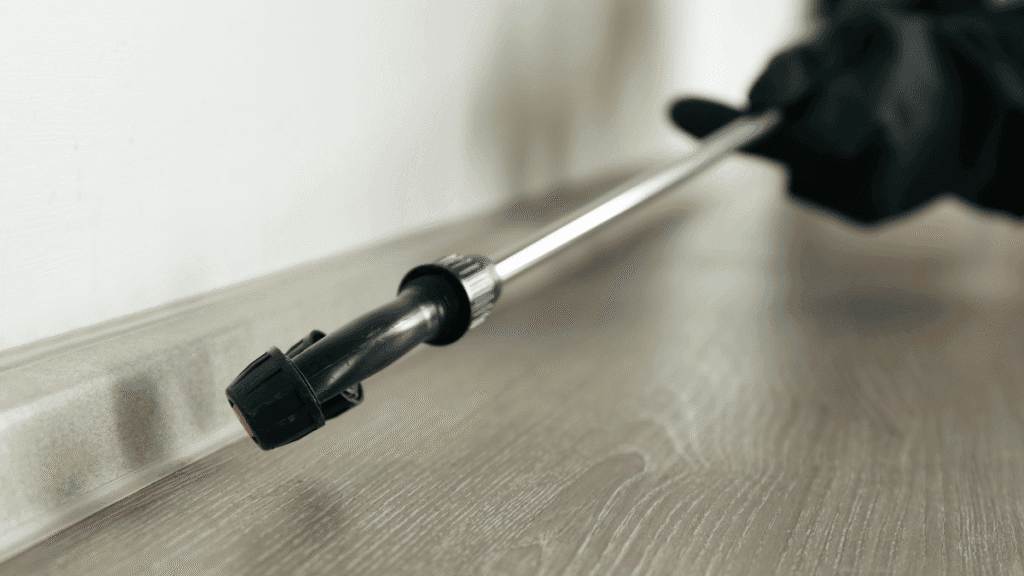
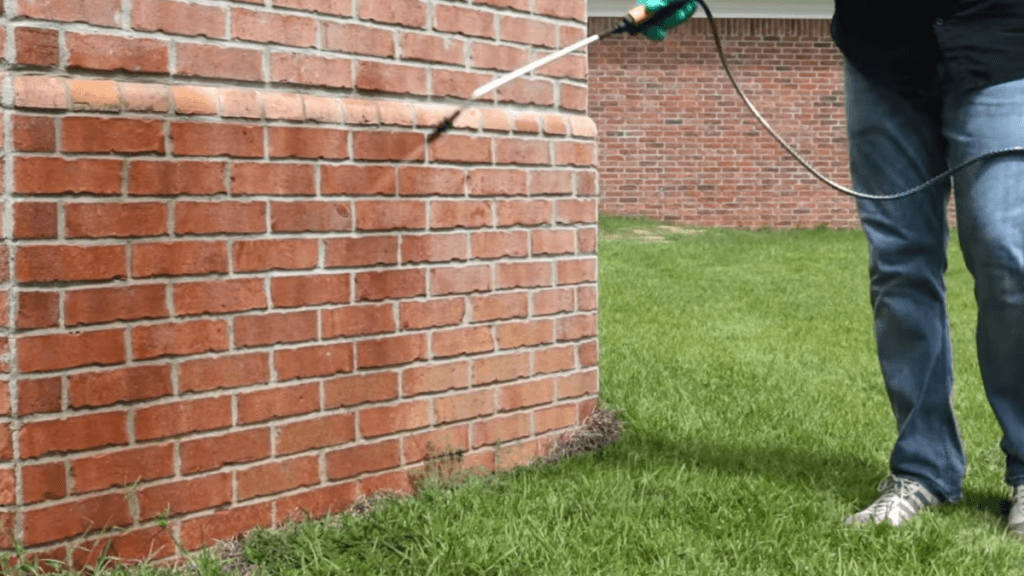
Mix the same Fipronil C Plus and Gentrol IGR at the same rates. Use a pump or battery-powered sprayer that can reach high. A backpack sprayer with an extension wand is ideal for this species because so much of the treatment goes UP.
Where to spray outside, low:
- A 3-foot band along the foundation, 1 foot up the exterior wall
- Around every door and window frame
- Around the garage door track and the bottom seam
- Around AC condenser units and the pad they sit on
- Around every utility penetration (cable, gas line, water line, AC lines, hose bibs)
- Mulch beds touching the foundation
- Around stacked firewood
Where to spray outside, HIGH (this is the smokybrown-specific work):
- Tree trunks as high as your sprayer reaches, with extra attention to any tree within 30 feet of the house
- Palm crowns. Spray the burlap material at the base of fronds and the trunk just below the crown. This is where the colonies live in palm-heavy landscapes.
- Soffits along the entire perimeter of the house
- Fascia boards
- Around attic vents and gable vents
- Eaves above porches and entryways
- The exterior of the chimney where it meets the roofline
- Any branches actually touching the roof or gutters (cut these back too)
Pay extra attention to the trees on the property. Smokybrowns in palm-heavy landscapes can be 80 percent in the trees and 20 percent on the structure. If you only treat the foundation, you’ve missed where the colony lives.
Step 3: Clean the Gutters
Clogged gutters full of leaves, twigs, and standing water are smokybrown harborage right at the roofline of your house. This is one of the most overlooked smokybrown sources, and it’s also one of the easiest to fix.
Pull all the leaf litter out. Make sure water flows freely to the downspouts. Make sure downspouts discharge at least 3 feet away from the foundation. If trees overhang the roof, plan on cleaning gutters at least twice a year (late spring and late fall in most climates, more often if you have heavy leaf drop).
After the gutters are clean, spray inside the gutter trough with the fipronil and IGR mix. This treats any residual harborage and creates a barrier that lasts through the next leaf cycle.
Step 4: Manage Exterior Lights
This is one of the highest-impact prevention moves for smokybrown cockroaches and it costs almost nothing.
- Switch outdoor white and blue-white bulbs to yellow or sodium-vapor. These wavelengths are far less attractive to flying insects, including smokybrown roaches. Yellow LED replacements are widely available at hardware stores and big-box retailers.
- Switch to motion-activated lighting where possible. Lights that only come on when someone walks up shut off the all-night attraction zone.
- Turn off porch and garage lights when not in use. A porch light burning sunset to sunrise pulls smokybrowns from a long distance.
- Don’t leave the garage door open at night with the light on. This is the single most common indoor invasion route for this species. Five minutes is enough for several smokybrowns to fly in.
- Close windows and door screens before dusk in summer. Open windows with interior lights on are flight invitations. If you want fresh air at night, make sure the screens are intact and the interior lights are off.
Step 5: Place Advion Bait Stations Only in Storage Areas You Can’t Spray
Smokybrown cockroaches are not strong bait feeders. They wander rather than recruit, and they don’t have the food-sharing behavior that makes bait work well on German or American roaches. Bait stations have a place on this species, but only as a backup in spots where you can’t safely spray.
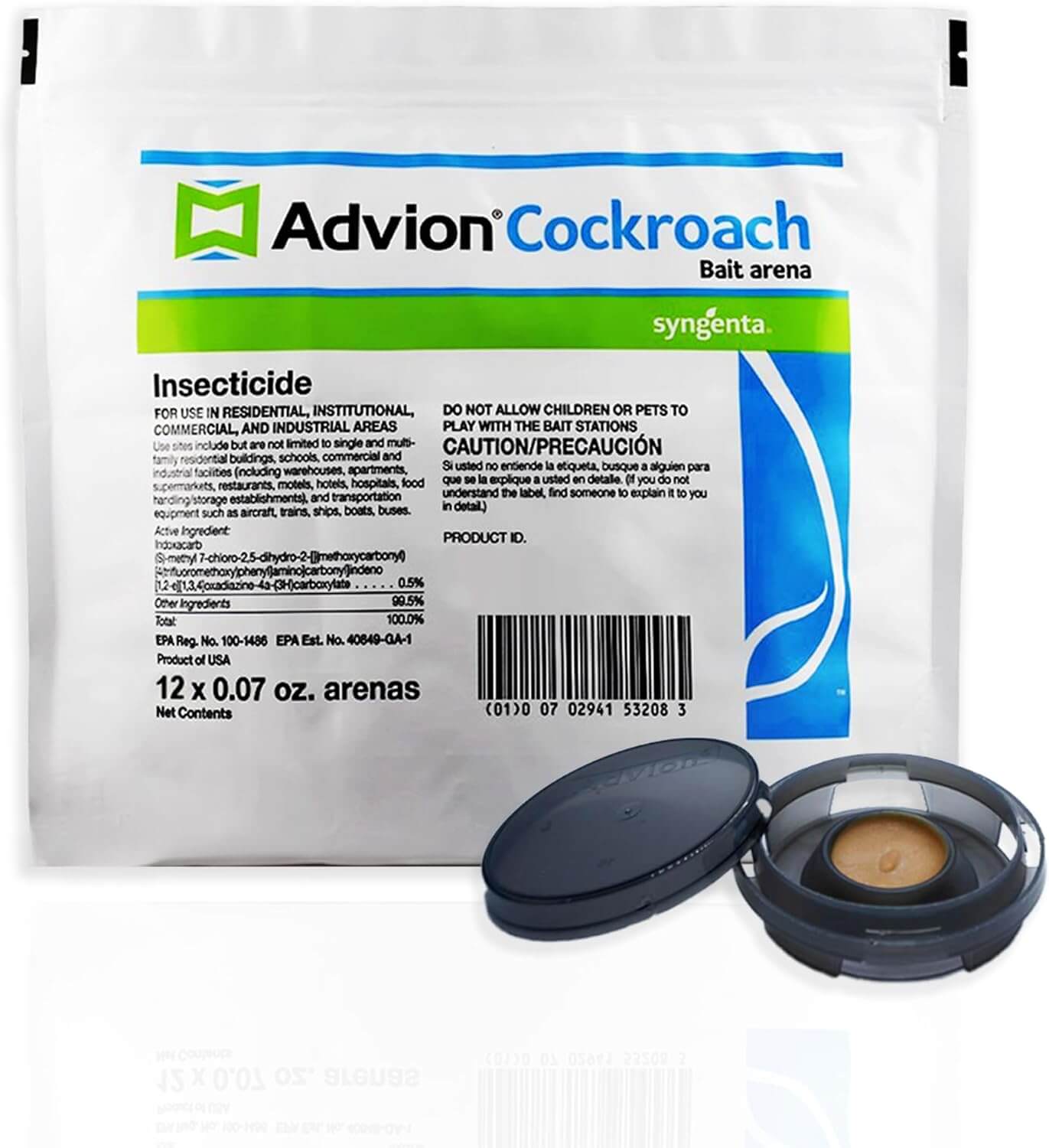
Advion Cockroach Bait Stations
Professional roach bait stations that attract and kill hidden roaches using a powerful indoxacarb formula. Ideal for kitchens, bathrooms, and garages.
- Pro‑Grade Stations — Used by pest control techs for fast colony kill
- Strong Attractant — Peanut‑butter‑scented bait pulls roaches from deep hiding
- Targets Large Roaches — American, Smokybrown, Oriental, German
- Easy Placement — Drop stations in cabinets, garages, and appliance voids
- Pet‑Safety Note — Keep away from dogs; plastic station is a chew hazard
- Active Ingredient — Indoxacarb 0.6%
- Unit Size — 12 bait arenas per pack
Available on Amazon!
Competitive pricing + Fast Free shipping on all orders!
Advion Arena Roach Bait Station Label – Advion Arena Roach Bait Station MSDS
Place stations in:
- Cluttered garage storage corners
- Inside garage cabinets with stored items
- Sheds and detached storage buildings
- Attic spaces (if you have safe access)
- Inside any storage room where boxes prevent thorough spraying
Don’t rely on the stations as the main treatment. The fipronil spray is what kills smokybrowns on this species. The stations are a supplement.
Step 6: Seal the Gaps
Smokybrown cockroaches wander into houses through gaps you can usually see daylight through. Sealing the gaps is what stops new ones from getting in.
Walk the house with a flashlight at night (with the indoor lights off and a partner shining a light from the outside) and look for:
- Light bleeding under exterior doors (replace the door sweep or threshold)
- Light bleeding around door frames (caulk or replace weatherstripping)
- Light around windows (caulk, replace weatherstripping)
- Gaps around utility penetrations (caulk or expanding foam)
- Damaged screens on windows and screen doors
- Gaps around the garage door bottom (replace the seal)
- Gaps around attic vents and gable vents (install proper screening)
- Gaps at the roof line where soffits meet siding
Every gap you close is one less route for a wandering smokybrown to find its way inside.
Step 7: Manage Indoor Humidity
Target indoor humidity is 45 to 50 percent. Above 55 percent, smokybrowns and other moisture-dependent pests can establish breeding populations indoors. Below 40 percent, the air gets uncomfortably dry for the people in the house. The 45 to 50 percent zone is the sweet spot.
Block-construction homes, basement homes, and slab-on-grade homes in humid climates routinely run 60 to 70 percent indoor humidity without a dehumidifier. This is a common reason smokybrown problems linger after thorough treatment in those home types.
A standalone dehumidifier in the main living area or in the basement, set to 45 to 50 percent, is one of the highest-value pest control investments you can make for this species in a humid climate. Run it through the warm months at minimum.
What Doesn’t Work
A few things you’ll see online that waste time or make smokybrown roach problems harder.
- Foggers and bug bombs. Don’t reach where smokybrowns actually hide (trees, palm crowns, soffits, gutters, attic voids). The mist settles on open surfaces indoors and does nothing about the outdoor source. Foggers also leave residue on every interior surface in the house.
- Big box store repellent sprays. Most over-the-counter perimeter sprays are pyrethroid-based and repellent, which means smokybrowns detect them and scatter back into the trees and soffits where you can’t reach. The colony doesn’t die. The wandering doesn’t stop.
- Treating only indoors when the source is the trees and gutters. Smokybrown cockroaches live outside. If you only spray inside and skip the perimeter, the gutters, the palm crowns, and the tree trunks, new roaches keep arriving every warm night. The outdoor work is the actual fix.
- Heavy reliance on bait. Smokybrowns are not strong bait feeders. Setting out a bunch of bait stations and walking away will disappoint you on this species. Spray is the primary treatment. Bait is a supplement for storage areas you can’t spray.
How to Keep Smokybrown Cockroaches From Coming Back
Ranked by impact.
- Reapply the perimeter spray every 60 to 90 days during warm weather. The fipronil and IGR break down faster in heavy rain, sun, and high humidity. In the Gulf Coast and Florida, plan on 4 to 6 perimeter treatments a year. This is the single biggest long-term lever.
- Manage exterior lights permanently. Yellow bulbs, motion sensors, and the habit of turning off porch and garage lights when not in use. Costs almost nothing, reduces fly-ins dramatically.
- Keep gutters clean. Twice a year minimum. Heavier tree cover means more frequent cleaning. Spray the inside of clean gutters with the fipronil and IGR mix after each cleaning.
- Maintain trees. Trim branches off the roof and the house. Keep palm crowns clean of accumulated debris. In high-pressure landscapes, palm crowns benefit from annual fipronil treatment.
- Seal gaps as you find them. Door sweeps, weatherstripping, screen repair, caulk around utility penetrations. Every closed gap is one less route.
- Keep humidity at 45 to 50 percent indoors. Dehumidifier in humid climates and block-construction homes.
- Don’t leave the garage open at night with the light on. This single habit causes more indoor smokybrown sightings than almost any other.
Edge Cases Where DIY Hits a Wall
For smokybrown cockroaches in a single-family home, DIY handles every case I’ve seen in 25 years when the spray + gutter cleanup + light management combination is followed correctly.
Where it genuinely struggles:
- Multi-unit buildings. Apartments, condos, townhouses, and duplexes share wall voids, soffits, attic spaces, and roof lines. Smokybrowns travel between units through these shared spaces, especially through attic and roof void connections. A single unit treated correctly while adjacent units stay untreated will get reinfested continuously. Coordinated treatment across every unit through building management is the fix.
- Properties where open garages and open windows are part of daily life. Some homeowners genuinely leave the garage open every evening or sleep with windows wide open in summer. Both habits accumulate smokybrown roaches no matter how well the perimeter is treated. The fipronil work catches a lot of them at the perimeter, but a few will always make it through if the openings are wide and the lights are on. The honest answer is that you have to choose between the open-air lifestyle and a roach-free interior. Adjust the habit, manage the lights, or accept the occasional wandering smokybrown.
- Heavy tree canopy properties. Florida, Gulf Coast, and coastal California homes under mature canopy generate ongoing smokybrown pressure year-round. The treatment works. The reality is that you’re going to be reapplying it seasonally and managing lights and gutters as a permanent maintenance task, not a one-time fix.
R
FAQ’s: Smokybrown Cockroach Control
General Questions
Are Smokybrown cockroaches dangerous?
Not in the way people fear. They don’t bite and aren’t aggressive. They can spread bacteria across food surfaces and trigger allergies and asthma in sensitive people, especially kids. Worth eliminating, not worth panicking over.
Do Smokybrown cockroaches infest the house or just visit?
Mostly visit. They prefer outdoor harborage and only establish indoor populations in homes with significant moisture issues, like a damp crawlspace, chronic plumbing leak, or untreated attic with roof damage. Fix the moisture and they stop infesting.
Are Smokybrowns the same as palmetto bugs?
“Palmetto bug” is a regional nickname used for several large outdoor roach species, including Smokybrowns, American roaches, and Florida woods roaches. In some parts of the South, “brown-banded palmetto bug” specifically means the Smokybrown. The name on the package doesn’t matter. The treatment does.
Why do I see Smokybrowns in my bathroom or kitchen but nowhere else?
Those are the wettest rooms. Smokybrowns follow moisture gradients. If they’re showing up there, you have either a humidity issue (poor ventilation) or a small plumbing leak you haven’t noticed. Check under the sink and around the toilet base.
Can Smokybrown cockroaches climb walls and ceilings?
Yes. They’re excellent climbers and strong fliers. This is why they end up in light fixtures, ceiling fans, and upper cabinets. American roaches climb less and stay lower.
Can Smokybrown cockroaches get into cars or infest them?
Yes – Smokybrown cockroaches can get into cars, but they almost never “infest” them the way German roaches do. Smokybrowns are outdoor, moisture‑driven roaches, so they usually enter cars by accident: riding in on bags, lawn equipment, garage clutter, or anything stored outside. They hide in door seals, trunk gaps, floorboard moisture, and dashboard voids, but they don’t breed well inside vehicles.
If you’re seeing them repeatedly, it means the exterior environment is the source, not the car. For full steps, see Roaches in Cars.
Why Smokybrown Cockroaches Come Inside
Why do Smokybrown cockroaches enter my home?
Smokybrown cockroaches usually live outdoors, but they come inside when they find moisture, gaps around doors or garage seals, or bright exterior lights that attract them at night. They’re also drawn to leaf litter, mulch, and shaded, damp areas around the home.
What cockroach is commonly found with bat infestations?
The smokybrown cockroach is the species most often associated with bat infestations.
Bats roosting in attics, soffits, or wall voids create warm, humid environments rich in guano and organic debris — ideal conditions for smokybrown cockroaches to thrive.
If you have a bat problem, there’s a good chance smokybrown cockroaches are nearby.
How can I tell a Smokybrown cockroach apart from an American cockroach?
The easiest tell is color. Smokybrown cockroaches are a uniform, solid dark brown or mahogany with no markings or pattern.
American cockroaches have a distinctive yellowish figure-8 pattern behind their head. If the roach you’re looking at is one solid shade of brown with no markings, it’s almost certainly a smokybrown.
Are Smokybrown cockroaches worse at certain times of year?
They’re a year-round problem, but activity increases after rain and peaks during warm, humid weather — especially in the summer months.
Rain drives them out of their harborage areas and pushes them toward your home. Heavy rain followed by hot weather is when you’re most likely to see a surge in activity.
Indoor Treatment Questions
What’s the best treatment for Smokybrown cockroaches inside?
A crack‑and‑crevice spray using Fipronil‑Plus‑C mixed with Gentrol EC3 is the most effective method. Apply it along baseboards, behind appliances, around plumbing lines, and in tight gaps where roaches travel. This is the same proven protocol used for American cockroaches.
Do I need to use roach bait for Smokybrown cockroaches?
If activity is heavy or you have cluttered areas, adding Advion Roach Gel or Advion bait stations helps reach roaches hiding in places you can’t spray. Bait is especially helpful in garages, storage rooms, and areas with lots of hiding spots.
How long until Smokybrowns are gone after treatment?
You’ll see increased activity for 24 to 72 hours as the fipronil flushes them out of hiding. Dead roaches show up day 2 through day 7. By day 10, new sightings should drop to near zero. Egg cases that hatch after treatment are sterilized by the IGR and die before reproducing.
Prevention & Home Environment
How do I keep Smokybrown cockroaches from coming inside?
Start by removing the outdoor conditions that attract them. Clear leaf litter, move firewood away from the house, trim plants touching the structure, and check all door and garage seals for gaps. These roaches are moisture‑loving, so reducing humidity indoors and outdoors makes your home far less appealing.
Does humidity really attract Smokybrown cockroaches?
Yes. High humidity is one of the biggest reasons Smokybrown cockroaches enter homes. They thrive in damp, warm environments. Using a dehumidifier indoors lowers moisture levels and makes your home an environment they don’t want to stay in.
Can exterior lights attract Smokybrown cockroaches to my home?
Yes. Smokybrown cockroaches are strong fliers and are strongly attracted to light sources at night.
If you have lights mounted directly on your home, you’re essentially inviting them to land right at your entry points.
A better approach is to use landscape lighting that throws light onto the house from a distance — this illuminates the area without placing the light source at your door or wall where roaches land and find their way in.
Turning exterior lights off entirely when not needed is even more effective.
Can Smokybrown cockroaches hide in flower pots or potting soil?
Yes. Potting soil and empty flower pots — especially those kept in garages, on porches, or brought indoors — are a commonly overlooked harborage spot.
The moisture retained in potting soil makes it very attractive to them. If you’re seeing roaches and can’t figure out where they’re coming from, check any plants or pots kept near entry points.
Outdoor Treatment
Do I need to spray outside for Smokybrown cockroaches?
Yes — outdoor treatment is critical. Spray around the foundation (at least 3 feet out), around tree and plant bases near the home, and around entry doors, windows, and garage doors. This creates a barrier that stops Smokybrowns before they reach the house.
After‑Treatment Expectations
Why do I see more roaches right after treatment?
It’s normal to see increased activity the first night. The Fipronil flushes roaches out of hiding, so you may see a few more before the population collapses. By the 4th or 5th night, you should stop finding new dead roaches, and activity should drop to zero.
Is one treatment enough or do I need to do it again?
For an active infestation, one full treatment (inside, outside, baits, humidity control) usually does it. For prevention in heavy-pressure areas (wooded lots, humid climates, properties with mature landscaping), re-treat the exterior every 60 to 90 days during warm months.