
This page contains affiliate links. I may earn a commission at no extra cost to you.
The best way to get rid of American cockroaches is to spray Fipronil C Plus mixed with Gentrol IGR along every indoor baseboard and then apply a heavy outdoor perimeter treatment with the same mix; skip bait stations because American roaches don’t feed on them reliably, and most homes see a brief 24‑hour activity spike followed by a sharp drop with full control in about three days.
TL;DR: How To Treat And Control American Cockroaches
- Spray Fipronil C Plus with Gentrol IGR added along every interior baseboard, behind appliances, around plumbing penetrations, and along garage edges
- Spray the same mix outside as a perimeter band, 3 feet out from the foundation and 1 foot up the wall, plus mulch beds, tree bases, palm crowns, and around AC units and garage door bottoms.
- Clean the gutters and remove leaf litter. Damp organic debris at the roof line and ground level is prime American roach harborage.
- Place micro-placements of Advion Roach Bait Gel (small pea-sized dots from the syringe) ONLY in areas you can’t safely spray. Storage corners, cluttered garage cabinets, sheds.
- Fix moisture problems. Plumbing leaks, AC condensate, gutter overflow, overwatered landscaping all keep American roaches comfortable.
Keep reading for the full breakdown. ↓
What You Need
American cockroaches don’t respond to bait stations well, they live mostly outside and wander in, and the colony you’re trying to reach is in mulch, drains, sewers, palm crowns, and damp landscaping. Bait stations placed on a kitchen floor don’t reach any of that. The fipronil spray does.
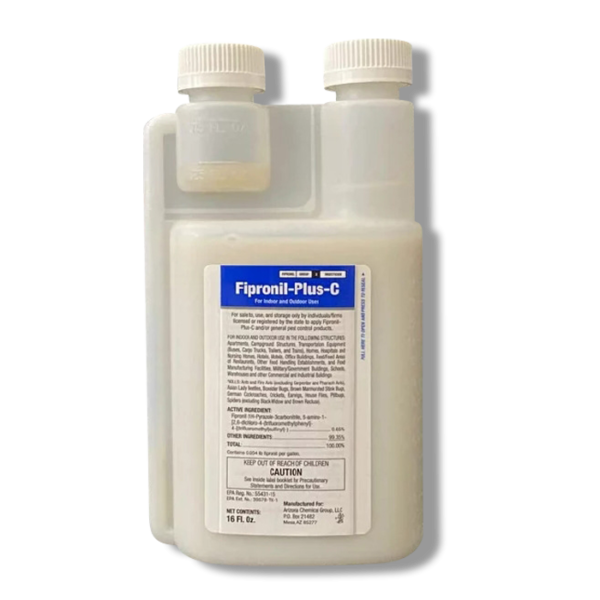
Fipronil‑Plus‑C Pest Control Concentrate (16 oz)
Fipronil‑Plus‑C is a commercial‑strength 0.65% fipronil concentrate that homeowners use for roaches, ants, and perimeter pests. One 16‑oz bottle makes up to 21 gallons of solution for long‑lasting indoor crack‑and‑crevice and outdoor structural treatments.
- Use: 1.0 fl oz per gallon of water This is the standard labeled dilution for structural crack‑and‑crevice applications.
- Commercial‑Strength Formula — 0.65% fipronil delivers professional‑grade control of roaches, ants, and other structural pests.
- Makes 21 Gallons — One 16‑oz bottle stretches far for large infestations or multi‑room treatments.
- Long‑Lasting Residual — Cellulose entrapment technology slows UV breakdown for extended control.
- Indoor + Outdoor Use — Ideal for kitchens, bathrooms, garages, baseboards, and exterior foundation cracks.
- Easy Mixing — Precision‑designed bottle reduces drift and makes dilution simple for DIY homeowners.
- Broad‑Spectrum Control — Effective against roaches, ants, and other common household invaders.


Available on Amazon!
Competitive pricing + Fast Free shipping on all orders!
Fipronil‑Plus‑C Label – Fipronil‑Plus‑C MSDS
Fipronil C Plus is the non-repellent spray professionals use against outdoor-driven roaches. The active ingredient (fipronil) is non-repellent, which means the roaches don’t detect it. They walk through the treated zone, pick up a lethal dose, and carry it back to harborage areas where it transfers to other roaches through contact and the secondary kill chain (roaches eating dead roaches and droppings). This is the spray that creates the actual long-term barrier against wandering American roach invaders.
After 25 years of treating these roaches, this is the only chemistry I trust as the primary treatment for American cockroaches in residential settings. Pyrethroid-based sprays (Bifen, Cypermethrin, Permethrin) get used a lot in the big-box aisle, but those are repellent and roaches sense them and route around. Fipronil’s non-repellent transfer is what actually collapses American roach pressure on a property.
Signs You Have American Cockroaches
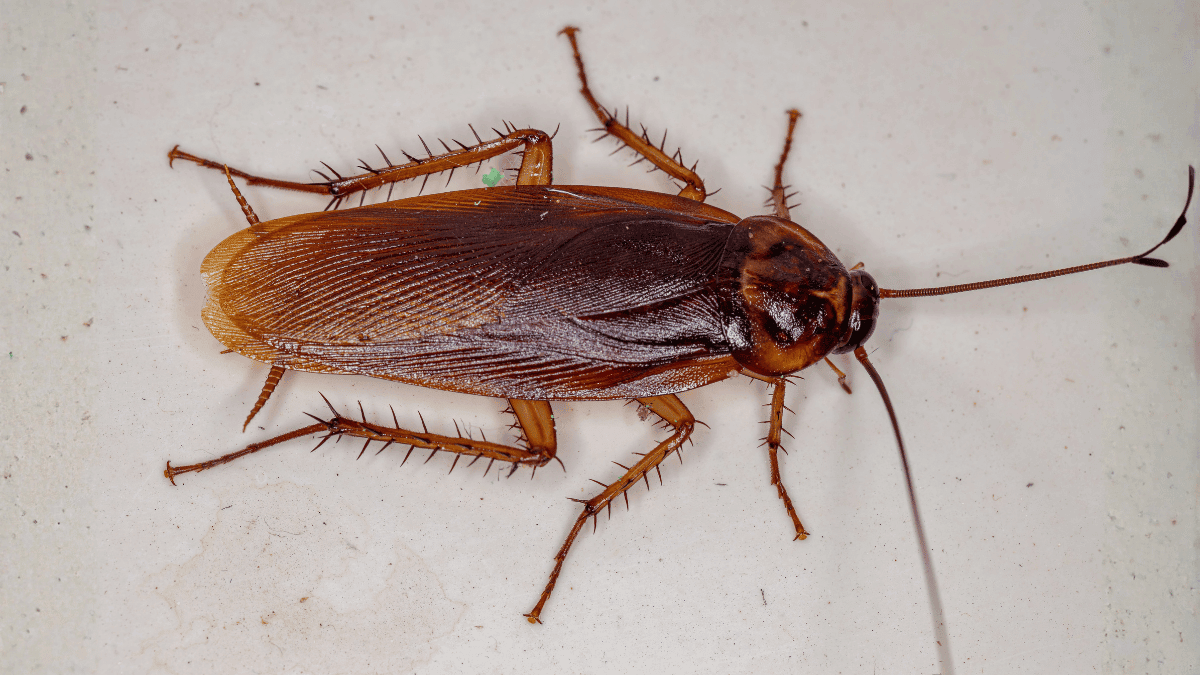
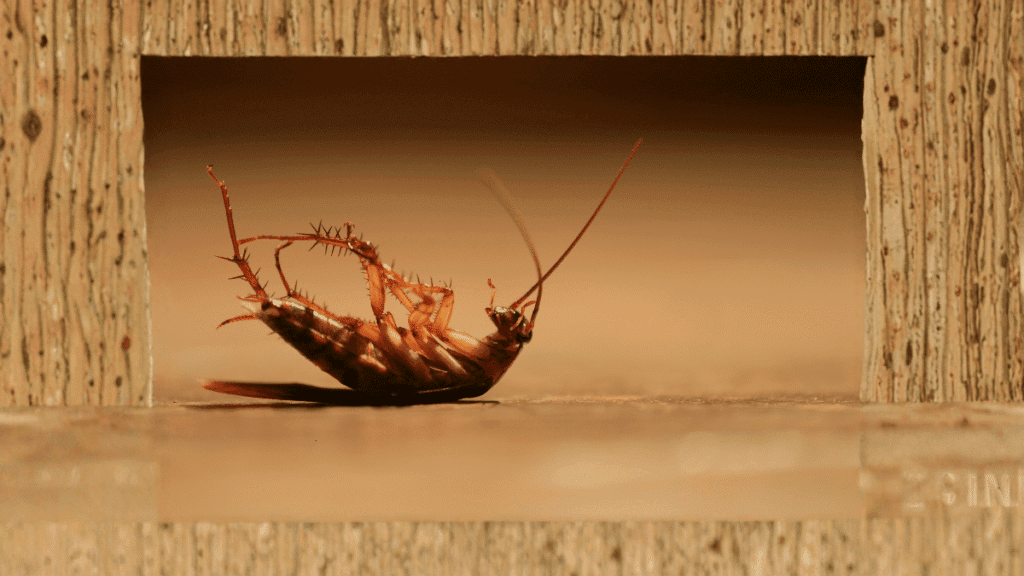
- Large, reddish-brown roaches, 1½ to 2 inches long. The biggest common indoor roach in the US.
- Yellow figure-eight pattern on the pronotum (the shield behind the head). This is the dead giveaway. No other big roach has this. Australian roaches have a yellow band, smokybrown roaches have nothing, and Oriental roaches are uniformly dark.
- Both sexes have full-length wings. Both can fly, though they tend to glide more than fly, especially at 75 to 80°F and warmer.
- Drawn to lights at night, but less aggressively than smokybrown or Australian roaches.
- Activity around drains, floor drains, sewer cleanouts, and toilets. American roaches are commonly called “sewer roaches” because they genuinely live in sewers and travel up through plumbing.
- A musty, oily smell in heavily infested areas. Not subtle once you’ve smelled it.
- Dark brown droppings the size and shape of grains of rice with ridged sides. Larger than German roach droppings (which look like ground pepper).
- Egg cases (oothecae) glued in garage corners, behind appliances, in dark damp spots. Dark brown, about 3/8 inch long, look like tiny purses.
- Activity that spikes after heavy rain. Saturated outdoor harborage pushes them inside.
Are These the “Palmetto Bugs” Everyone Talks About?
Probably yes. American cockroaches are the species most often called “palmetto bug” in Florida and the southern US, especially when found around palm trees, outdoor patios, and the bases of mature landscaping. The name comes from the fact that they shelter in palmetto fronds and palm crowns, where the fibrous material at the base of fronds gives them protected harborage.
In some areas, “palmetto bug” also gets used for smokybrown cockroaches and even Australian cockroaches. They’re all big, they’re all outdoor-driven, and they all look similar at a glance. But if you’re in the southeast and you’ve got a big reddish-brown roach with a yellow figure-eight on its back, you’ve got American cockroaches, regardless of what your neighbors call them.
American vs Other Big Roaches
The four big outdoor roach species in the US get confused constantly. The treatment is similar across species, but the ID matters for where you focus the outdoor work.
| Feature | American | Smokybrown | Oriental | Australian |
|---|---|---|---|---|
| Size | 1½ to 2 inches | 1¼ to 1½ inches | 1 to 1¼ inches | 1¼ to 1⅜ inches |
| Color | Reddish-brown | Uniform dark mahogany | Dark brown to black | Reddish-brown with yellow markings |
| Markings | Yellow figure-eight on pronotum | None | None | Yellow wing stripes and pronotum band |
| Female wings | Full | Full | None or very short | Full |
| Male wings | Full | Full | About ¾ of abdomen | Full |
| Can fly? | Yes, glides more than flies | Yes, strong flier | No | Yes, strong flier |
| Drawn to lights? | Slightly | Yes, heavily | No | Yes, heavily |
| Primary outdoor habitat | Sewers, drains, mulch, palm crowns | Trees, palm crowns, gutters, soffits | Basements, sewers, drains, damp leaf litter | Mulch, palms, potted plants |
| Where you spray outside | Foundation, palms, mulch, around drains | Foundation, palms, tree trunks, soffits, gutters | Foundation, mulch, tree stumps, floor drains | Foundation, palms, mulch, stored pots |
The fastest field test: look at the shield behind the head. American roaches have a clean yellow figure-eight pattern. No other big roach species has this.
Why They’re In Your House
American cockroaches don’t usually breed inside in significant numbers. They breed outside, in mulch, leaf litter, palm crowns, sewer lines, storm drains, damp landscaping, and any consistently moist outdoor harborage. The ones you see indoors are almost always wandering in from somewhere within 30 feet of your foundation.
- Mulch beds against the foundation. Single biggest source on most residential properties. Mulch holds moisture, provides protected harborage, and stays warm year-round in southern climates. Mulch pushed up against the foundation is roach habitat with direct access to your house.
- Palm crowns and palmetto fronds. The fibrous burlap material at the base of palm fronds collects moisture and organic debris. Textbook American roach harborage in palm-heavy landscapes.
- Sewer lines and storm drains. American roaches live in municipal sewer systems and storm drain networks. They travel up through plumbing into homes via floor drains, sewer cleanouts, and toilet plumbing.
- Floor drains with dry P-traps. Every floor drain has a U-shaped trap that holds water and seals out the sewer below. A drain that goes weeks or months without water (guest bathroom shower, basement floor drain, laundry room drain) loses the water seal as it evaporates, and the sewer opens up directly into your house. American roaches walk right up.
- Open garages at dusk. Garage doors left open at sunset with the interior light on pull American roaches in from the surrounding landscaping. Five minutes of open garage time at the right hour is enough.
- Cardboard storage and grocery bags. American roaches harbor in cardboard, and they ride into houses on cardboard from warehouses and grocery stores with loading-dock issues.
- Indoor moisture. Slow plumbing leaks, leaking toilets, sweating pipes, condensation around AC equipment, and damp basements or crawl spaces can let wandering American roaches actually establish a breeding population. This is uncommon, but when it happens it shows up in the laundry room, bathroom, or basement.
Heavy rain. Saturated mulch and underground harborage forces outdoor American roaches upward and inward looking for dry ground.
How to Get Rid of American Cockroaches, Step by Step
Step 1: Indoor Baseboard Spray With Fipronil and Gentrol IGR
This is the foundation of the treatment. Mix Fipronil C Plus at the label rate (usually 0.8 fl oz per gallon, but read your label) with Gentrol IGR Concentrate added at the IGR’s label rate (typically 1 oz per gallon).
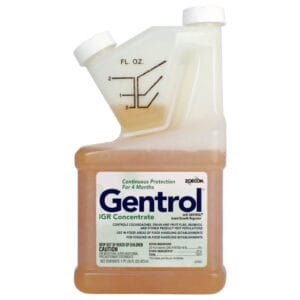
Gentrol IGR Concentrate – 1 Pint
Professional insect growth regulator that stops roach, fly, and stored‑product pest reproduction for up to 4 months.
- What It Does Breaks the life cycle of roaches, drain flies, fruit flies, bed bugs, and pantry pests. Prevents reinfestation by sterilizing adults and stopping nymphs from maturing.
- Where You Can Use It Food and non‑food areas, kitchens, bathrooms, restaurants, warehouses, commercial buildings, and residential spaces.
- Why Pros Use It Hydroprene provides long‑lasting population control and pairs perfectly with fipronil sprays for complete roach treatment.
- Shelf Life Up to 3 years when stored in a cool, dry place.
- Active Ingredient Hydroprene 9% (IGR)
- Mix Rate 1 fl oz per gallon (Gentrol EC)
- Best Pairing Use with a fipronil concentrate for crack‑and‑crevice kill + IGR reproduction control.
Available on Amazon!
Competitive pricing + Fast Free shipping on all orders!
Gentrol IGR Label – Gentrol IGR SDS
Where to spray indoors:
- Along every baseboard, with extra attention to kitchen, bathrooms, laundry room, and garage
- Behind every appliance (refrigerator, stove, dishwasher, washer, dryer)
- Around every plumbing penetration through walls and floors
- Around the base of toilets
- Under sinks, along the back wall of the cabinet
- Around floor drains
- Around the water heater base
- Along the garage door bottom seam (interior side)
- Around utility entry points where wires and pipes come into the house
Why the IGR is mandatory. Gentrol IGR contains hydroprene, an insect growth regulator that stops immature roaches from developing into reproducing adults. Egg cases hatch normally, but the nymphs that emerge can’t molt into fertile adults. The cycle breaks. After 25 years of treating roaches I will not run a roach job without an IGR in the mix. The fipronil kills the roaches you have. The Gentrol stops the next generation. Without it, you treat the visible roaches, the egg cases hatch in the weeks after, and you’re back to square one.
Let the spray dry for 1 to 2 hours before normal traffic resumes.
Step 2: Outdoor Perimeter Spray
This is the step that solves the problem long-term. American cockroaches live outside. If you only spray inside, new roaches keep arriving every warm night.
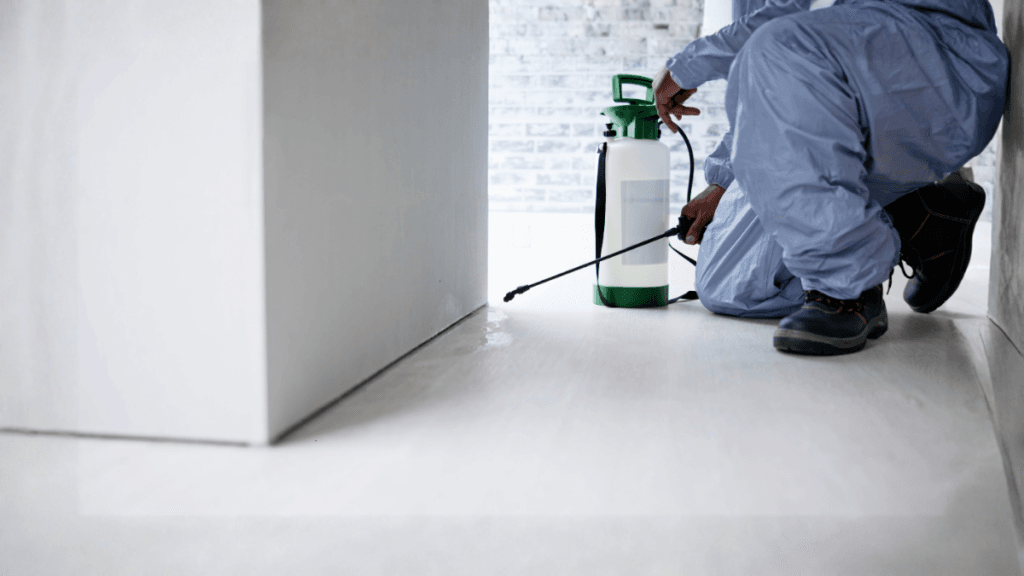
Mix the same Fipronil C Plus and Gentrol IGR at the same rates. Use a pump or battery-powered sprayer.
Where to spray outside:
- A 3-foot band along the foundation, 1 foot up the exterior wall
- Around every door and window frame
- Around the garage door track and the bottom seam
- Around AC condenser units and the pad they sit on
- Around every utility penetration (cable, gas line, water line, AC lines, hose bibs)
- Mulch beds touching the foundation
- The base of every tree, especially trees within 20 feet of the house
- Palm crowns and the trunk just below the crown. Spray the burlap material at the base of fronds if you have palms.
- Around tree stumps and any wood-to-soil contact points
- Around exterior dryer vents
- Around sewer cleanout caps on the property
- Around storm drain grates within 20 feet of the house
- Around stacked firewood
- Edges of leaf litter and yard debris
Pay extra attention to the shaded, damp side of the house. American cockroaches prefer moist outdoor harborage, so the north and east sides of the house with afternoon shade and slower-drying mulch are higher-pressure zones than the sunny sides.
Step 3: Clean the Gutters and Remove Leaf Litter
Clogged gutters with leaves and standing water are American roach harborage right at the roofline. Decomposing leaf litter on the ground around the foundation is harborage at ground level. Both keep the population fed and sheltered.
Pull all the leaf litter out of the gutters. Make sure water flows freely to the downspouts and that downspouts discharge at least 3 feet away from the foundation. If trees overhang the roof, plan on cleaning gutters at least twice a year, more under heavy tree cover.
Rake out leaf accumulations around the foundation, along fence lines, and in shaded corners. The cleaner the property is of decomposing organic material, the less American roach pressure you’ll have.
After the gutters are clean, spray inside the gutter trough with the fipronil and IGR mix.
Step 4: Micro-Placements of Advion Roach Gel in Areas You Can’t Spray
This is the only role for bait on American cockroach work. The bait STATIONS don’t get used aggressively by this species, and they don’t earn their place on most American roach jobs. But the GEL — applied as small pea-sized dots in spots you can’t safely spray — has a niche.
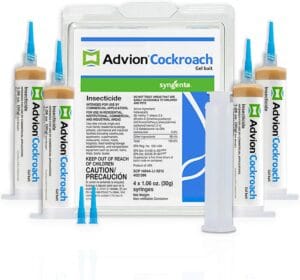
Advion Cockroach Gel Bait
Advion Gel Bait delivers fast, professional roach control using indoxacarb. Place small dots in cabinets, hinges, and cracks to pull roaches out of hiding and wipe out the whole colony. Safe for pet homes when used as directed and perfect for kitchens and bathrooms.
- Professional Gel Bait — Indoxacarb formula used by real pest control techs
- Targets All Roaches — American, German, Smokybrown, Oriental
- High‑Attractant Formula — Strong food‑grade attractants pull roaches out of hiding
- Crack‑and‑Crevice Use — Place pea‑sized dots in cabinets, hinges, voids, and appliance gaps
- Pet‑Safer Option — No plastic station to chew; ideal for homes with dogs
- Active Ingredient — Indoxacarb 0.6%
- Unit Size — 4 × 30g syringes with tips and plunger
- Best Pairing — Use with fipronil spray + Gentrol IGR for full elimination
Available on Amazon!
Competitive pricing + Fast Free shipping on all orders!
Advion Roach Gel Bait Label – Advion Roach Gel Bait SDS
Advion Roach Gel uses indoxacarb in a syringe-applied gel matrix. Small dots placed in tight, protected spots are picked up by wandering roaches and carried back to harborage through the secondary kill chain.
Where micro-placements work for American roaches:
- Inside cluttered storage cabinets in the garage
- Inside the shed (multiple small dots in corners and along seams)
- Behind stored boxes you don’t want to move and can’t easily spray around
- Inside utility closet corners around the water heater
- Inside attic corners (if you have safe access)
- Inside the garage where stored items prevent thorough spraying
Use small dots, about the size of a pea. Several small placements work better than one big blob.
Don’t bait where you sprayed. Keep at least 12 inches between any bait placement and the fipronil residue. Spray contaminates the area and American roaches will avoid bait that smells like fipronil.
Step 5: Find and Remove Egg Cases
While you’re treating, look for American roach egg cases (oothecae). They’re dark brown, about 3/8 inch long, look like tiny brown purses, and are often glued in:
- Garage corners and along the seam where the wall meets the floor
- Behind and under appliances
- Under bathroom and kitchen cabinets
- In utility closets near the water heater
- In dark damp spots along baseboards
- Inside cardboard boxes (one more reason to get rid of cardboard storage)
Scrape egg cases off with a putty knife or stiff card, drop them into a sealable plastic bag, seal it, and put it directly in the outdoor trash. Don’t squish them in the kitchen trash — eggs can survive a careless squish, and a missed case in the trash bag can reintroduce the problem.
The Gentrol IGR in your spray covers any egg cases you miss, but physically removing the ones you find accelerates the cleanup.
Step 6: Pour Water Into Rarely-Used Floor Drains
Every floor drain and rarely-used shower drain has a P-trap underneath that holds water and seals out the sewer. A drain that goes weeks without water (guest bathroom shower, basement floor drain, laundry room drain, utility sink) loses the water seal as it evaporates. The sewer opens up directly into your house, and American roaches walk right up.
Pour a quart of water into every floor drain and rarely-used shower drain in the house once a month. This single habit closes the most overlooked American roach entry route.
Step 7: Fix the Moisture Problem
Walk the property and the inside of the house looking for:
- Dripping outdoor faucets, hose bibs, and irrigation heads
- Slow leaks under sinks, around toilets, and behind appliances
- Sweating cold-water pipes in the basement or crawl space
- AC condensate drip lines dumping water against the foundation
- Gutter downspouts that don’t extend away from the house
- Yard drainage problems that pool water near the foundation
- Mulch beds that stay dark and damp for days after rain
- Standing water in basement floor drains, sump pits, or AC drain pans
Fix the simple stuff today. The bigger jobs (rotted subfloor, hidden plumbing leak under a slab, broken irrigation underground) may need a plumber or handyman. Worth the call. Moisture that gets ignored keeps American roaches comfortable no matter how thoroughly you spray.
Step 8: Manage Indoor Humidity
Target indoor humidity is 45 to 50 percent. Above 55 percent, American roaches and other moisture-dependent pests can establish breeding populations indoors. Below 40 percent, the air gets uncomfortably dry. The 45 to 50 percent zone is the sweet spot.
Block-construction homes, basement homes, and slab-on-grade homes in humid climates routinely run 60 to 70 percent indoor humidity without a dehumidifier. A standalone dehumidifier set to 45 to 50 percent is one of the highest-value pest control investments you can make for this species in a humid climate.
What Doesn’t Work
A few things that come up online that waste time or make American roach problems harder.
- Foggers and bug bombs. The biggest waste of money in pest control. The mist settles on horizontal open surfaces, which is exactly where American roaches don’t live. Roaches live in cracks. The fog doesn’t get into cracks. Worse, foggers scatter populations into wall voids and adjoining rooms.
- Big box store repellent sprays. Most over-the-counter perimeter sprays are pyrethroid-based and repellent, which means American roaches detect them and scatter into harborage you can’t reach. The colony doesn’t die. The roaches just move.
- Bait stations as the primary treatment. American cockroaches are weak bait responders compared to German or brown-banded roaches. Bait stations placed on a kitchen floor for American roaches mostly sit unused. The micro-placement gel in unsprayable spots has a small role. Spray is the main work.
- Treating only indoors when the source is outside. American roaches live outside. If you skip the perimeter, the gutters, the palm crowns, and the moisture fixes, new roaches keep arriving.
- Bay leaves, cucumber peels, essential oil sprays. Don’t repel American roaches in any meaningful way. They might briefly annoy one. They will not stop an infestation.
- Boric acid dust. Works on German roaches in tight wall voids because Germans congregate there. American roaches don’t gather in the same voids the way Germans do, so dusting wall cavities for American roaches is mostly dusting empty space.
How to Keep American Cockroaches From Coming Back
Ranked by impact.
- Reapply the perimeter spray every 60 to 90 days in warm weather. Single biggest long-term lever. In the south, plan on 4 to 6 perimeter treatments a year. One bottle of Fipronil C Plus covers a year of perimeter sprays.
- Fix the moisture. A dripping outdoor spigot, a downspout dumping at the foundation, an AC condensate line draining onto mulch, a sprinkler hitting the wall. American roaches can’t survive long without water. Cut their water and they leave.
- Pull mulch back 12 inches from the foundation. Replace that strip with rock or bare soil. Mulch directly against the foundation is a roach hotel.
- Pour water into rarely-used drains monthly. Keeps P-traps full and seals off sewer access.
- Replace the garage door bottom seal. If yours is more than 5 years old, it’s compressed and cracked. A new one is $20 and takes 15 minutes. This single fix stops more roach entry than any spray.
- Get rid of cardboard storage. Switch to plastic bins in the garage and pantry. Cardboard holds humidity, contains glue (which roaches eat), and provides perfect harborage.
- Keep gutters clean. Twice a year minimum, more under heavy tree cover.
- Manage exterior lights. Yellow bulbs and motion-activated lighting reduce fly-ins. Turn off porch and garage lights when not in use.
- Keep indoor humidity at 45 to 50 percent. Dehumidifier in humid climates and block-construction homes.
Edge Cases Where DIY Hits a Wall
For American cockroaches in a single-family home, DIY handles every case I’ve seen in 25 years when the spray + moisture + perimeter approach is followed correctly. The chemistry works, the method is straightforward, and the species responds reliably.
Where it genuinely struggles:
- Multi-unit buildings. Apartments, condos, townhouses, and duplexes share wall voids and plumbing chases. American roaches travel between units through these spaces. A single unit treated correctly while neighbors stay untreated will get reinfested continuously. Coordinated treatment across every connected unit through building management is the fix.
- Construction or drainage flaws. A foundation crack you can’t see, a slab penetration that was never sealed, a sewer vent that’s broken under the house, or a chronic water leak inside a wall. In these cases the treatment still works (the roaches die), but new ones keep coming because the conducive condition is still there. Fix the structural issue and the problem stays gone. Don’t fix it, and you’ll be re-treating every few months. This is a “call a plumber or a foundation guy” situation, not a pest control problem.
- Heavy tree canopy and palm-heavy landscapes. Florida, Gulf Coast, and coastal southern properties under mature canopy generate ongoing American roach pressure year-round. The treatment works. The reality is that you’re reapplying it seasonally as permanent maintenance.
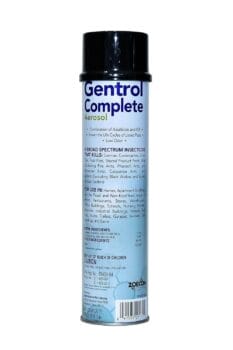
Gentrol Complete Aerosol – Adulticide + IGR (18 oz)
Dual‑action aerosol that kills roaches, flies, ants, and spiders while stopping their life cycle for 4 months.
- Dual‑Action Formula — Adulticide + IGR for kill + reproduction stop
- Targets Multiple Pests — Roaches, drain flies, fruit flies, pantry pests, ants, spiders
- Pro‑Level Use Sites — Kitchens, bathrooms, garages, restaurants, warehouses
- Low‑Odor Aerosol — Easy crack‑and‑crevice treatment with no mixing
- Active Ingredients — Lambda‑cyhalothrin 0.05% + Hydroprene 0.36%
- Best Pairing — Use with Advion gel for full roach elimination
Available on Amazon!
Competitive pricing + Fast Free shipping on all orders!
Gentrol Complete IGR Spray Label – Gentrol Complere IGR SDS
FAQ’s American Cockroaches:
General Questions
Can Potting Soil or flower pots kept inside attract American Roaches?
Yes, potting soil or empty flower pots kept indoors or in the garage can attract these roaches.
What are American cockroaches and why are they in my house?
American cockroaches (also called palmetto bugs) are large outdoor roaches that often wander indoors. They commonly fly into garages, ride in on cars, come in with groceries or cardboard boxes, or enter from nearby flowerbeds and mulch. They’re usually not nesting inside — they’re just passing through from outdoor hiding spots.
Do American cockroaches live inside the home?
Not usually. They prefer damp outdoor areas like mulch, stumps, and landscaping. When you see them indoors, they’ve typically wandered in from outside or hitched a ride on something you brought inside.
What cockroach is commonly found with pigeon infestations?
The American cockroach is the species most frequently found alongside pigeon infestations.
Pigeons nesting in attics, rooftops, or building ledges produce droppings and nesting debris that American cockroaches feed on.
If pigeons are nesting on or in your structure, American cockroaches are likely not far behind.
Can American roaches get into cars?
Yes – American roaches absolutely get into cars, and it happens more often than people think. They ride in on grocery bags, cardboard boxes, lawn equipment, backpacks, and anything stored in the garage. Warm engines, dark dashboards, and moisture around floor mats make cars perfect hiding spots.
For the full step‑by‑step treatment (vents, dashboards, trunk, seats, and what products to use), see my Roaches in Cars Guide.
Identification and Behavior
How big do American cockroaches get?
Adults run about 1.5 to 2 inches long, with full wings that cover the body. Males are slightly slimmer than females. They’re the largest common house-invading roach in North America.
Do American cockroaches fly?
Yes, especially when temperatures are above 80 degrees. They’re not great at it, more of a controlled glide than true flight, but it’s enough to startle anyone in a garage or on a porch. Males fly more readily than females.
Can American cockroaches come up through drains?
Yes. They live in sewer lines and storm drains, and they’ll come up through any drain whose P-trap has dried out. Floor drains in basements and unused guest bathrooms are the most common entry points. Run water in those drains monthly.
Do American cockroaches hide in cardboard boxes?
Yes, cardboard is one of their favorite harborage spots. Stacked boxes — especially ones that have been sitting in a garage or storage area for a while — are ideal hiding spots.
Stacks of plastic flower pots, particularly the dark ones with bits of soil still in them, are another common harborage that people overlook.
If you’re storing boxes or pots, try not to let them pile up and inspect them before bringing them inside.
Treatment Questions
What is the best treatment for American cockroaches?
A mixture of Fipronil‑Plus‑C (1 oz per gallon) and Gentrol Complete EC3 (3 oz per gallon) is one of the most effective DIY treatments.
It kills active roaches quickly and prevents new ones from developing.
Do I need to empty my cabinets?
Only if you’ve seen more than 2–3 roaches inside your kitchen. In that case, empty cabinets and pantry, clean them out, spray cracks and crevices, let everything dry, and then put items back. If you’ve only seen one or two, a simple crack‑and‑crevice spray along baseboards, plumbing lines, the garage, and the laundry room is usually enough.
Where should I spray inside the house?
Focus on:
- baseboards
- plumbing lines
- wall gaps and utility penetrations
- corners and dark areas
- garage and laundry room
These are the most common entry and travel points.
Do I need to spray outside too?
Yes — this is the most important step. American cockroaches almost always come from outdoors. Spray:
- 3 feet out from the foundation
- 1 foot up the exterior walls
- around windows and door frames
- around stumps, mulch beds, and flowerbeds
- under weed‑prevention mats
This cuts off the source and stops new roaches from entering.
Baiting Questions
Should I use bait for American cockroaches?
Yes, if you have:
- lots of boxes
- a shared wall with a neighbor
- a storage unit
- areas you cannot spray
Use Advion gel or Advion Arena bait stations. Bait helps roaches carry poison back to hidden areas you can’t reach.
Can I spray over Advion bait stations?
Don’t spray directly on or right next to bait stations. Roaches need to find the bait and feed on it, and a fresh insecticide residue around the station can deter that. Keep at least 12 inches between sprayed surfaces and bait placements.
Activity & Results
Is it normal to see more roaches the night after spraying?
Completely normal. Fipronil makes them disoriented before it kills them, so they leave their hiding spots and end up out in the open. It looks alarming but it means the product is working as designed.
How long until they’re all gone after treatment?
Expect 5 to 7 days for full resolution. You’ll see a spike in visible activity for the first 48 hours, then a sharp drop. If you still see fresh live roaches at the 7-day mark, your outdoor treatment probably needs another pass.
Prevention
How do I keep American cockroaches from coming back?
- Keep the garage door closed when possible
- Store groceries and cardboard boxes off the floor
- Reduce mulch depth and avoid overwatering
- Seal gaps around doors and windows
- Maintain a regular outdoor perimeter spray
These steps stop new roaches from wandering inside.
How do door seals help keep American cockroaches out?
Damaged or loose door seals give outdoor roaches an easy entry point. Check the weatherstripping around your exterior doors and make sure your garage door seal sits flush against the ground. Even a small gap is enough for a large roach to squeeze through. Replacing worn seals is one of the fastest ways to stop new roaches from getting inside.
Do garage door seals really matter for roach prevention?
Yes. American cockroaches often enter through the garage, especially when the door is open. A cracked or flattened bottom seal lets them crawl right under. Inspect the entire length of the seal and replace it if you see gaps, tears, or daylight coming through.
Should I turn off outdoor lights to prevent roaches?
Yes. Outdoor lights attract flying American cockroaches, especially at night. When they gather around porch lights, garage lights, or driveway lights, they’re more likely to slip inside when a door opens. Turn exterior lights off when not needed, or switch to yellow “bug‑reduction” bulbs to reduce attraction.
Do I need to do this every year?
Not if your treatment was thorough and you fixed the conducive conditions. If you didn’t fix the moisture issue, the mulch issue, or the door seal issue, then yes, you’ll be re-treating. The chemistry isn’t the variable. The house is.