
This page contains affiliate links. I may earn a commission at no extra cost to you.
The best product to get rid of bedbugs is MGK CrossFire Aerosol, applied to the bed, box spring, frame, baseboards, and nearby furniture, with a second treatment at day 14 to catch nymphs after the eggs hatch.
TL;DR: How To Treat And Control Bed Bugs
- Wash and dry all bedding, pajamas, and any clothing near the bed on HIGH heat (120°F or higher) for at least 30 minutes. Heat kills all life stages including eggs.
- Vacuum the mattress seams, box spring, bed frame, baseboards, and carpet edges around the bed. Seal the vacuum bag or canister contents in a plastic bag and put it in outdoor trash immediately.
- Apply CrossFire Aerosol to mattress seams, box spring, bed frame joints, headboard back, baseboards, nightstands, and carpet edges around the bed. Encase the box spring (and ideally the mattress) with a bedbug-rated zippered encasement.
- Place sticky monitoring traps at the head of the bed and around nightstands.
- Treat any other bed or upholstered chair in the house, especially the chair you sit in most in the living room.
- Return for a second CrossFire treatment at day 14.
- Continue monitoring with sticky traps for 6 weeks after the second treatment.
Keep reading for the full breakdown. ↓
What You Need
MGK CrossFire is the spray professional pest control companies use on resistant bedbug populations. It combines two modes of action in one formula, which is why it works on the pyrethroid-resistant bedbugs that most consumer-grade sprays can’t touch. Two treatments spaced 14 days apart will clear most bedroom-level infestations completely.
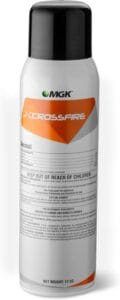
MGK CROSSFIRE Aerosol
CrossFire® Aerosol delivers fast knockdown and long‑lasting control of bed bugs, including resistant strains, with a non‑staining formula designed for indoor use.
- Kills all life stages, including eggs and pyrethroid‑resistant bed bugs
- Three active ingredients for fast knockdown and strong residual
- Non‑staining on water‑safe fabrics and surfaces
- Indoor‑safe applications for homes, apartments, schools, and facilities
- Trusted MGK formulation backed by over a century of pest control expertise

Available on Amazon!
Competitive pricing + Fast Free shipping on all orders!
Don’t Relocate the Mattress
This is the single most common panic-spreading mistake, and it’s the one homeowners want to do the moment they confirm bedbugs. Don’t.
Don’t carry an infested mattress to a different bedroom, a different floor, or out to the garage to “deal with it later.” It feels logical. It is not. Moving an infested mattress doesn’t escape the bedbugs. It spreads them.
The original harborage in the bed frame, headboard, baseboards, and carpet edge stays active. Now the bugs from the mattress have a new room to colonize. Now you have two infested rooms instead of one. Now your spouse, your kids, or your pet (depending on where the bed went) become the new feeding source.
Treat the bed where it sits. You can pull it away from the wall to spray behind it. You can stand the mattress on its side to treat both surfaces. That’s not the same as relocating it. Keep the bed in its room throughout treatment.
If you absolutely must dispose of the mattress at the end of treatment (most people don’t need to), seal it in a heavy-duty mattress disposal bag, label it as “infested bedbugs – do not reuse,” and take it directly to the curb on trash day. Don’t store it in the garage or basement.
Signs You Have Bedbugs
- Small dark ink-dot fecal spots on mattress seams, box spring corners, and the wall behind the headboard. These are the most reliable sign. They look exactly like a fine-tip marker tapped the surface.
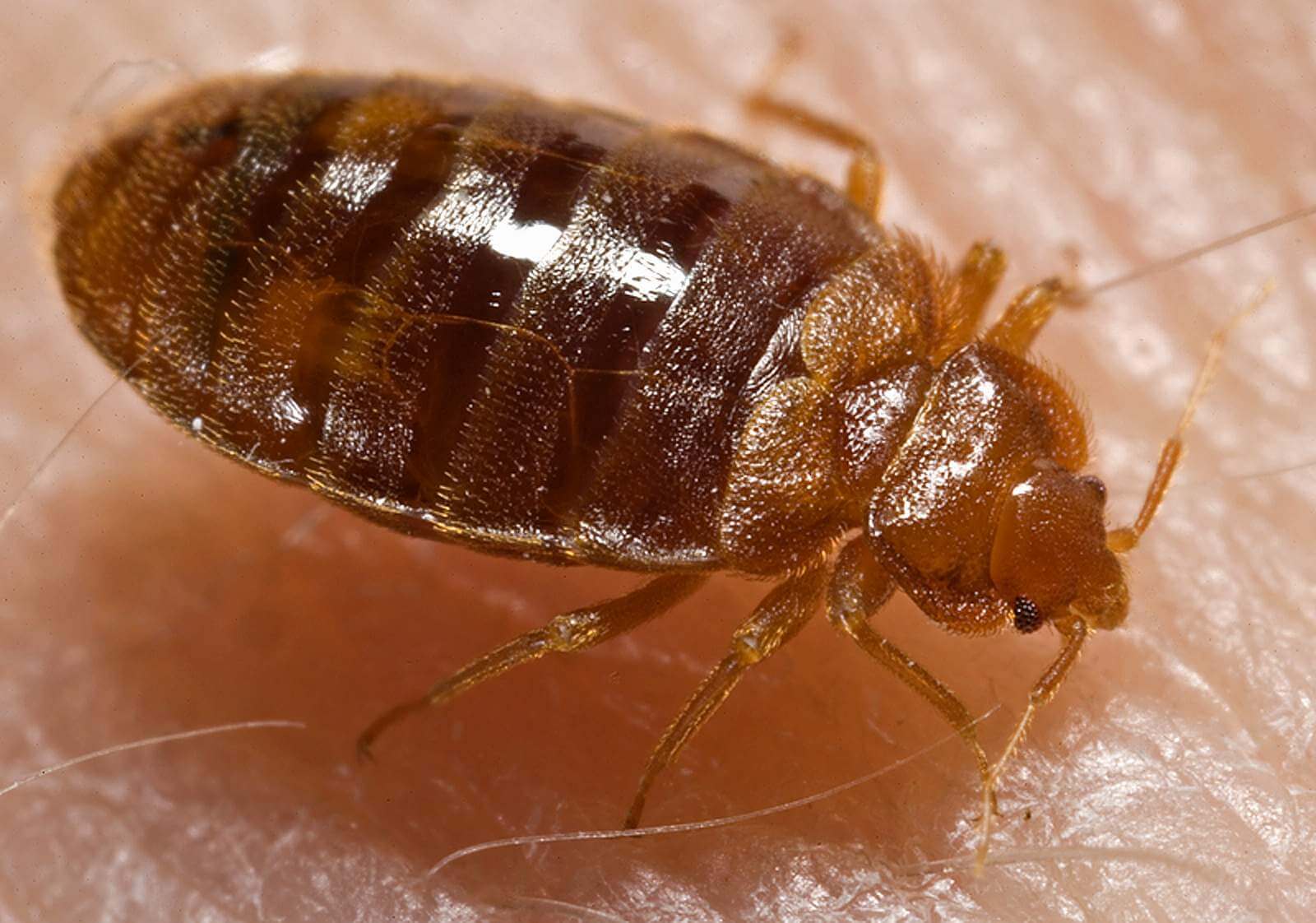
- Live or dead bedbugs along seams, in mattress tufts, behind the headboard, or in the bed frame joints. Adults are reddish-brown, flat, oval, about the size of an apple seed. Fed bedbugs are darker and balloon-shaped.
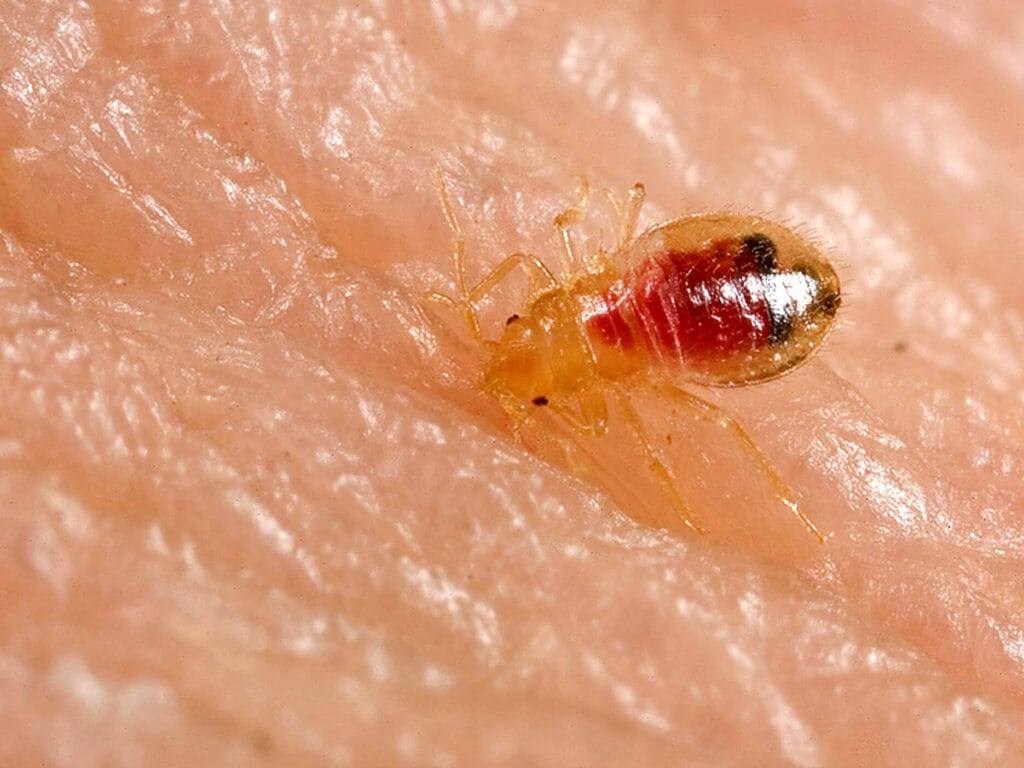
- Tiny, pale, almost translucent nymphs. These are the newly hatched bedbugs. Easy to miss.
- Tiny cream-colored eggs glued in clusters in mattress seams and bed frame joints. About 1mm long, easy to miss without a flashlight.
- A musty, sweet smell in established infestations, sometimes described as overripe raspberries or coriander.
- Itchy red welts on your skin, often in a line of three or in a small cluster, appearing on parts of your body that were exposed while you slept (arms, neck, ankles, shoulders).
What Bedbugs Get Mistaken For
Before you commit to treatment, double-check it’s actually bedbugs. Treating the wrong insect with the wrong product wastes money and time.
- Engorged ticks. A fully-fed tick is round, swollen, and similar in size to a fed bedbug. The difference is leg count and head shape. Ticks have eight legs and a visible head structure. Bedbugs have six legs and a flatter, more uniform oval body. If you found it attached to a person or pet, it’s a tick.
- Large psocids (booklice). Tiny pale soft-bodied insects found in humid environments, especially around old books, stored paper, and damp cardboard. They get confused with bedbug nymphs because of their small pale appearance. The location is the giveaway. Psocids are on paper and damp stored items, not in the mattress seams.
- Aphids that fell off your Christmas tree. This one is sneaky. People bring in a live tree in December, knock the trunk on the porch to dislodge the obvious bugs, and then find small reddish-brown insects on the floor or couch a week later. They panic and assume bedbugs. The aphids are harmless, don’t feed on blood, and die within days indoors. If your bedbug panic started right after Christmas tree decorating, check this first.
- Fleas. Fleas jump. Bedbugs don’t. If the insect leaps off the surface when disturbed, it’s a flea. Fleas are also found on pets and in carpeting throughout the house, not concentrated near the bed.
- Carpet beetles and pantry beetles. Small, oval, reddish-brown like bedbugs but found near food storage, pantries, or in carpet, not near sleeping areas.
The confirmation test: look for the dark ink-dot fecal spotting on mattress seams, box spring corners, and the wall behind the headboard. Bedbugs leave these marks. Nothing else does. If you find the spotting, you have bedbugs.
You Did Not Get Bedbugs Because You’re Dirty
Before we get into treatment, the most important reassurance I can give you in 25 years of doing this work: bedbugs are not a sign of an unclean home. They are not a moral failure. They are not something to be ashamed of. They are hitchhikers, and they’re everywhere now.
Here’s how people get bedbugs in 2026:
- Hotels. Any hotel, any rating, any price point. Bedbugs hitchhike in luggage from the previous guest’s house.
- Hospitals. Hospital stays, emergency room visits, and procedures that involve being on a gurney or bed in a high-turnover facility are documented bedbug exposure points.
- Nursing homes and rehabilitation facilities. High resident turnover plus limited mobility means bedbugs spread easily in these environments. Visiting a parent in a nursing home is enough.
- Home health aides and visiting nurses. This is one of the most overlooked cycles. The aide or nurse who comes to your house may have just come from a patient in a nursing home, a hospital, or a private home with bedbugs. The aide didn’t do anything wrong. They visit multiple patients a day, and the bugs hitchhike on their clothing or bag. It’s a real cycle that affects elderly homeowners disproportionately.
- Rideshare cars and taxis. Upholstered seats in high-turnover vehicles are documented transmission points. The previous passenger doesn’t know they brought a bedbug into the back seat.
- Movie theaters and live performance venues. Upholstered seats, high turnover, dim lighting that helps bedbugs travel unnoticed.
- Schools and daycares. Schools themselves are rarely infested, but they’re transfer points where bedbugs hitchhike on backpacks, jackets, and stuffed animals between homes. Preschool and elementary-age children are extremely common vectors simply because they have so much physical contact with each other’s belongings, and you can’t control other parents’ household risk factors. It’s just life.
- Airports and public transit. Buses, trains, planes. All upholstered, all high-traffic.
- Thrift stores and used furniture. Especially upholstered items and bed frames from unknown origins.
- Storage units. Items can go into storage clean and come out infested if the facility has any active infestations.
- Visiting friends and family who don’t know they have bedbugs. A single hitchhiking bug in your jacket pocket after dinner at a friend’s house is enough.
The point: you cannot control other people’s exposure history. You can have a spotless house, never travel, and still end up with bedbugs because your grandchild visited from out of state, or your home aide came from a nursing home shift, or you sat in the wrong rideshare. It’s not your fault. Now let’s fix it.
Why They’re In Your Bed
Bedbugs evolved to live in close proximity to a sleeping human and feed on blood every 3 to 7 days. They don’t wander your house looking for food. They wait in harborage close to where you sleep, come out at night, feed, and go back to hiding.
This means bedbug infestations always concentrate near the bed in the early stages. The mattress seams, the box spring frame, the headboard back, and the bed frame joints are where 90% of an early-stage infestation lives. As the population grows, they expand outward in predictable zones (more on this below). But early on, it’s all about the bed.
Bedbugs cluster deliberately. They produce aggregation pheromones that pull them together into the same harborage spots. This is why you find dozens of bugs in one mattress seam and nothing in the seam an inch away. Treatment has to be thorough on the harborage spots because that’s where the population is actually concentrated.
After 25 years of bedbug calls, I can tell you the homes that get cleared in two treatments versus the ones that drag on for months come down to one factor: how thoroughly the homeowner treats the bed and immediate surroundings on day one. Half-measures on the mattress seams produce treatment failures every time. Aggressive, complete treatment of every seam, every joint, every crevice within 6 feet of the bed produces results.
The Bedbug Pressure Zones (Where to Treat in What Order)
Bedbugs don’t spread randomly. They expand outward from the sleeping host in predictable pressure zones. Treating in this order gets you the highest-density harborage first.
Zone 1: Mattress, box spring, and headboard. This is where almost every infestation starts and where the highest concentration of bugs will be found. The mattress seams, tufts, folds, labels, and box spring framing are primary harborage. The headboard (especially the back side and any joints) is part of Zone 1 because of its direct proximity to the sleeper.
Zone 2: Bed frame, nightstands, and carpet edges around the bed. As the population grows, bugs expand to bed frame joints, screw holes, and slats. Nightstand drawer tracks and undersides become secondary harborage. The carpet edge where carpet meets baseboard around the bed starts showing activity.
Zone 3: Baseboards throughout the room, wall hangings, electrical outlets. Moderate to heavy infestations spread along baseboards through the entire room, behind pictures and wall art near the bed, and around the edges of electrical outlet covers.
Zone 4: Closet floors, laundry piles, backpacks, and other rooms. Established infestations spread throughout the room and start seeding other areas through infested clothing, stored items, and travel bags. This is also the zone where the chair you sit in most in the living room, or another bedroom where someone else sleeps, can become a secondary infestation point.
If your infestation is Zone 1 and 2, a thorough two-treatment CrossFire approach has an excellent chance of resolving it completely. If activity has spread to Zone 3 and 4, treatment needs to be more extensive across multiple rooms.
How to Get Rid of Bedbugs, Step by Step
Step 1: Wash and Dry Bedding and Nearby Clothing
Before any spray goes down, all bedding, pillowcases, blankets, and any clothing stored on the floor or in the bed area needs to go through the laundry.
Wash on hot, dry on HIGH heat for at least 30 minutes at 120°F or higher. High heat kills all life stages including eggs. Lower temperatures (113 to 115°F) also work but require 90+ minutes to reliably kill eggs.
Seal everything in plastic bags before carrying it through the house to the laundry room. Loose infested bedding carried down the hall distributes bedbugs along the route. Bag it in the bedroom, carry the sealed bag to the dryer, and unload directly into the machine. Discard the bag immediately.
For clothing that can’t be washed (dry-clean-only items, leather, etc.), put it in the dryer on high heat for 30 minutes anyway. The heat does the work, not the water.
Step 2: Vacuum the Bedroom Thoroughly
Vacuuming removes a significant number of live bugs and eggs and exposes the hiding spots you need to spray.
Use the crevice attachment on:
- Every mattress seam, tuft, button, and label
- Every box spring corner and along the framing
- All bed frame joints, screw holes, and slats
- The back of the headboard
- Inside drawer tracks of nightstands
- Along all baseboards in the room
- The carpet edge where it meets the baseboard, all the way around the room
- Behind picture frames and wall art near the bed
When you’re done, seal the vacuum bag or empty the canister directly into a plastic bag. Tie the bag tightly and put it in your outdoor trash immediately. Don’t leave a vacuum full of bedbugs sitting in the closet.
Step 3: Apply CrossFire Aerosol in Priority Order
Now the spray goes down. Work outward from the highest-density harborage zones.
MGK CROSSFIRE Aerosol
CrossFire® Aerosol delivers fast knockdown and long‑lasting control of bed bugs, including resistant strains, with a non‑staining formula designed for indoor use.
- Kills all life stages, including eggs and pyrethroid‑resistant bed bugs
- Three active ingredients for fast knockdown and strong residual
- Non‑staining on water‑safe fabrics and surfaces
- Indoor‑safe applications for homes, apartments, schools, and facilities
- Trusted MGK formulation backed by over a century of pest control expertise

Available on Amazon!
Fast Free shipping on all orders!
Application technique: hold the can 12 to 18 inches from the surface. Apply in short bursts targeting seams, crevices, and joints. The surface should look slightly damp, not soaked. CrossFire is water-based and dries cleanly. If the surface looks wet and shiny, you used too much.
Priority 1 — Mattress and box spring. Spray all seams, folds, tufts, edges, labels, and stitching on the mattress. Treat the box spring fabric covering and the exposed framing along the edges. The interior of most box springs cannot be effectively reached by spray from the outside, which is why encasing the box spring is the companion step (next).
Priority 2 — Bed frame and headboard. Spray all joints, screw holes, and crevices in the bed frame. Treat the back of the headboard (not just the front). Focus on every spot where two surfaces meet. Junction points are preferred harborage.
Priority 3 — Baseboards and carpet edges around the bed. Treat baseboards within 6 feet of the bed first, then expand to the rest of the room perimeter. Apply along the carpet edge and tack strip where carpet meets baseboard.
Priority 4 — Nightstands and nearby furniture. Treat undersides, drawer tracks, and joints of any nightstand. Treat the back of any picture or wall art within 6 feet of the bed.
Priority 5 — Outlet covers and switch plates within 6 feet of the bed. Lightly spray around (not inside) the outside edges of outlet and switch plate covers if you suspect activity in the wall void. Never spray inside electrical boxes.
Step 4: Encase the Box Spring
For the mattress, a thorough CrossFire treatment of all seams covers it well. The encasement on the mattress is optional if you spray thoroughly, though many people choose to encase both.
For the box spring, encasement is strongly recommended because it is nearly impossible to spray the interior of a box spring effectively from the outside. The fabric covering blocks penetration and the internal wood framing has extensive hidden harborage. Encasing the box spring after treatment traps anything inside until it starves and prevents new bugs from establishing inside.
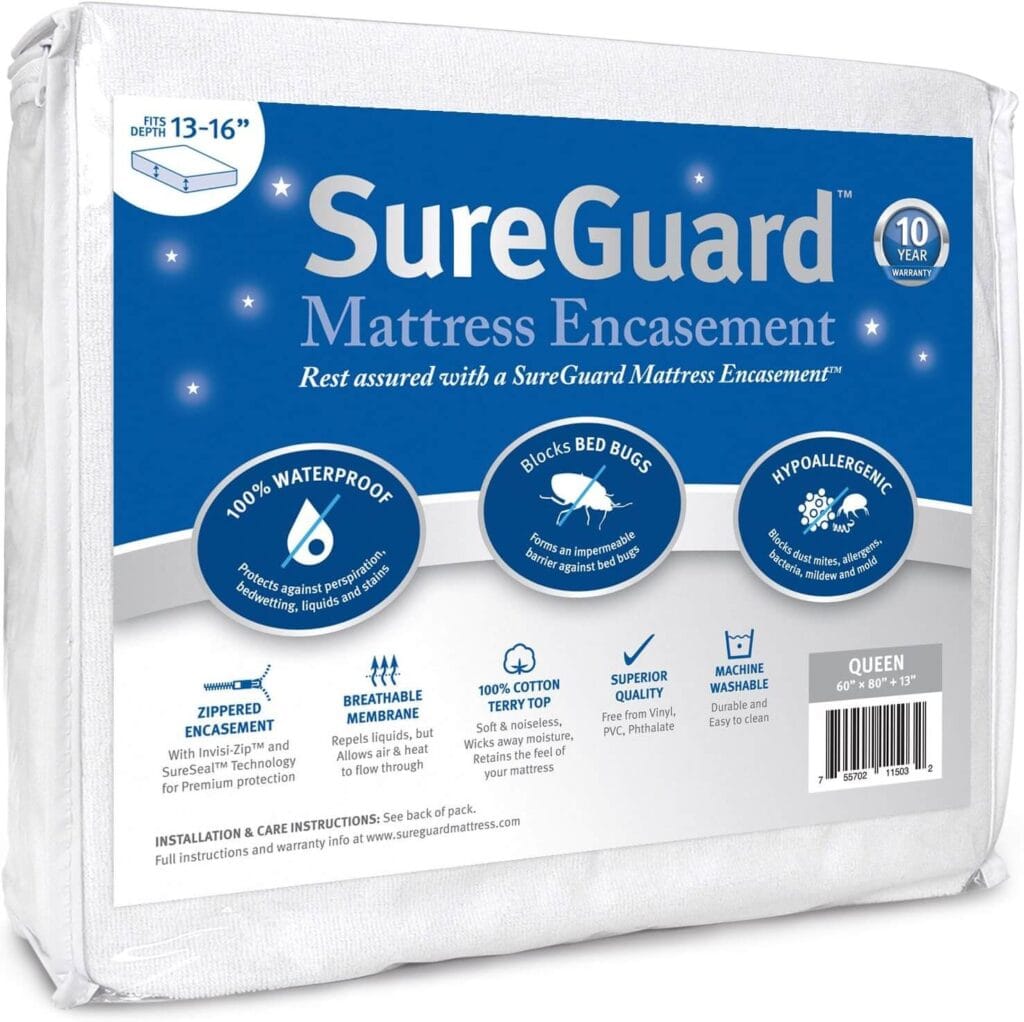
SureGuard Premium Mattress Encasement — Best Comfort Bed Bug Protector
The SureGuard Mattress Encasement is the top choice for comfort‑focused bed bug protection, using a soft, breathable cotton terry surface that feels like a real mattress and never makes that crunchy plastic sound when you move.
- Best for Comfort — Cotton terry top feels like a normal mattress, soft and breathable for better sleep.
- No Crunchy Noise — Quiet, flexible fabric that doesn’t crinkle or sound plasticky when you roll over.
- 100% Waterproof — Six‑sided protection blocks spills, sweat, bedwetting, and stains.
- Bed Bug Proof — Invisi‑Zip™ + SureSeal™ zipper system fully seals the mattress.
- Hypoallergenic — Blocks dust mites, allergens, bacteria, mold, and mildew.
- Deep Pocket Fit — Queen size fits 13–16″ mattresses securely.
- Safe Materials — No vinyl, PVC, phthalates, or harsh chemicals.
- Machine Washable — Durable, easy‑care encasement for long‑term use.

Available on Amazon!
What to look for in an encasement:
- Full encasement (covers the entire mattress or box spring), not just a topper
- Lab-tested escape-proof zipper (this is the critical component)
- Heavy-duty fabric, not thin polyester
- Rated specifically for bedbugs, not just “waterproof” or “allergen-proof”
Cheap mattress protectors from a department store are not bedbug encasements. The zipper on a real bedbug encasement is specifically designed to prevent escape. A regular zipper has gaps that bedbugs can and will use to escape from inside the encasement. Don’t try to cheap out on this product.
Step 5: Place Sticky Monitoring Traps
Monitoring traps tell you whether treatment is working. They’re cheap insurance.
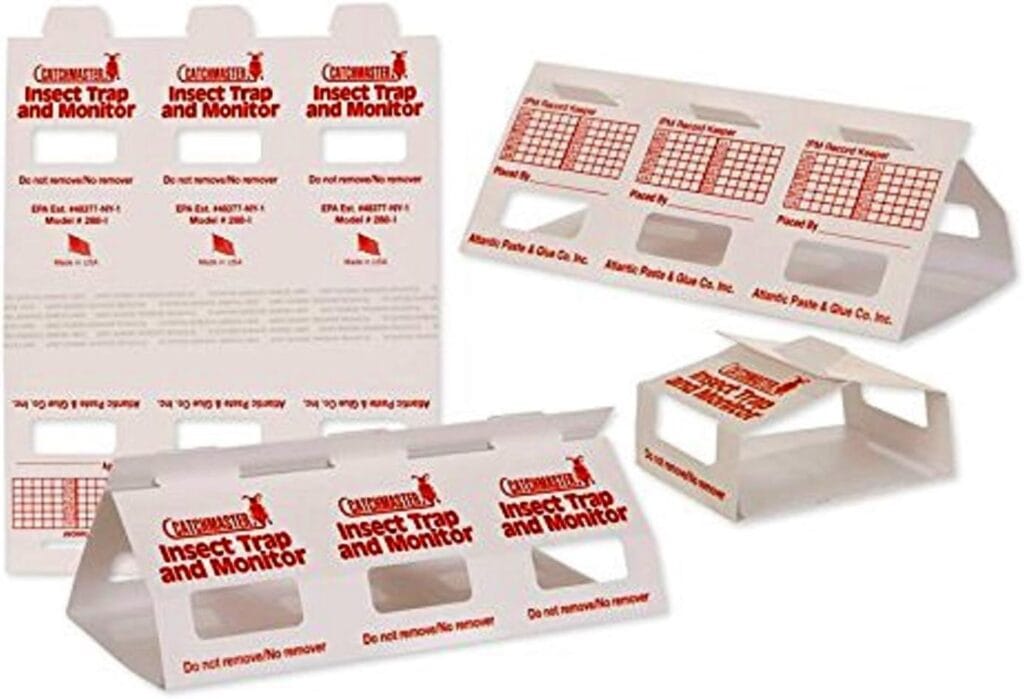
Glue Traps – 12 Glue Boards
Catchmaster 288i Insect Trap & Monitors are non‑toxic, chemical‑free glue traps that fold into clean tunnel monitors and come perforated so each board becomes three sticky traps.
- 3‑in‑1 Design: Each board is perforated into three traps.
- Non‑Toxic: Chemical‑free monitoring for roaches, spiders, and silverfish.
- Super Sticky: Very effective on insects & spiders.
- Clean Handling: Pick up easily — glue and insects stay inside the tunnel.
- Easy to Use: Fold and place along walls, under appliances, or in closets.
- Great Value: 5 boards = 15 monitors for wide coverage.
Available on Amazon!
Where to place traps:
- Along the wall directly behind the head of the bed (primary travel corridor)
- Under bed frame legs if your frame has legs (interceptor cups designed for bed legs are ideal)
- Beside and behind every nightstand
- Under any nearby upholstered furniture
- Inside hollow sections or folds of the bed frame
Check traps every few days during active treatment. Empty traps after 21 days is a good sign. Continue monitoring with traps in place for at least 6 weeks after the second treatment.
Step 6: Don’t Forget the Other Furniture
This is the step homeowners miss most often, and it’s the single biggest reason DIY bedbug treatments fail. Bedbugs do not stay loyal to the bed. They go where the warm body is.
Treat any other place a human spends extended time:
- The chair you sit in most in the living room. If you watch TV in the same recliner every night, bedbugs from your bedroom can establish in that chair. Treat the seat cushion, the seams, the back, and underneath.
- Any other bed in the house. A guest bedroom, a child’s room, a couch someone sleeps on. Especially treat any room where someone else has been sleeping because they could be the source of the bedbugs and not know it. The grandparent staying for a month, the college kid home for summer, the spouse who sleeps in the spare room some nights. Any of those scenarios can be the actual origin point of your infestation, and ignoring those rooms means the bedbugs keep cycling back into your bed forever.
- Couches and loveseats where family members nap or spend evenings.
- Office chairs and home-office areas if you work from home for hours at a time.
Treat each of these spots with the same Priority 1-3 approach: spray all seams, joints, crevices, and the perimeter of the floor around the furniture. Set monitoring traps at the base of any chair or couch where you find activity.
Step 7: The Second Treatment at Day 14
This is the step that closes the loop, and it’s not optional.
CrossFire kills adults and nymphs on contact and leaves a residual that keeps killing for weeks. What it doesn’t do is kill the eggs. Bedbug eggs are protected by a casing that resists insecticide penetration. The eggs that were present at the time of your first treatment will hatch over the next 5 to 14 days. The new nymphs walk across the still-active residual and die, but only if the residual is still strong.
The day-14 retreatment refreshes the residual and directly hits any nymphs that emerged in the past two weeks. It’s the difference between full elimination and a population that bounces back from the egg cohort you couldn’t kill.
Repeat the priority-order application from step 3, exactly the same way. Two treatments, 14 days apart, with thorough application both times, clears the vast majority of household bedbug infestations.
What Doesn’t Work
A few things that come up online over and over and waste time or actively make bedbug problems worse.
- Bug bombs and foggers. Don’t reach where bedbugs hide (mattress seams, bed frame joints, wall voids). The mist settles on horizontal open surfaces while the bedbugs stay tucked in their crevices. Foggers can also cause bedbugs to scatter from the harborage they’re hiding in, spreading them to new areas. Worst tool for this job.
- Spraying alcohol or vinegar on trails. Alcohol kills bedbugs on direct contact, but it has zero residual. Once the alcohol dries, the chemical effect is over. Worse, applying alcohol or any other contact irritant to an active harborage causes bedbugs to scatter, retreating deeper into walls, under carpet, and to areas farther from the original site. You’ve now turned a contained infestation into a spread-out one.
- Moving the bed to another room (covered above). The single most common mistake. Spreads the colony.
- Throwing out the mattress. Mostly unnecessary if you treat thoroughly. And throwing out the mattress doesn’t solve the bedbug problem because the bedbugs are also in the box spring, the frame, the headboard, the baseboards, and the carpet edge. A new mattress on an untreated bed frame in an untreated room gets infested within a week.
- DIY heat boxes from online tutorials. Some people build homemade heat treatment boxes for personal items. These can work for individual items if they reach and maintain 120°F+ for a full hour. The problem is that most homemade heat boxes don’t reach uniform lethal temperatures in seams and folds, and they can cause property damage or fire risks. The clothes dryer on high heat is the safer, more reliable home heat treatment for individual items.
- Sleeping in another room of the house to escape the bites. This is the worst possible response. Bedbugs follow the warm body. If you move to the couch to sleep, they will travel to the couch. Now you have bedbugs in two rooms instead of one. Stay in the bed throughout treatment. The treatment works faster when you’re there feeding the residual-exposed bugs.
- Only treating the bed and ignoring the chair, the other bedroom, or the couch. Covered above and worth saying again. Treat every place a person spends extended time. Bedbugs go where the body is.
- Single-treatment approaches. Skipping the day-14 retreatment because “the bugs are gone” usually leads to a flare-up at day 21 to 30 when the egg cohort hatches. Always do the second treatment.
How to Keep Bedbugs From Coming Back
Ranked by impact.
- Continue monitoring for 6 weeks after the second treatment. Sticky traps at the head of the bed and around nightstands give you continuous feedback. If traps stay empty for 6 weeks, you’re clear.
- Inspect any used furniture before bringing it inside. Especially upholstered items, bed frames, and mattresses. Take a flashlight, look in every seam, joint, and crevice. If you see ink-dot fecal staining, walk away.
- Treat travel as a known risk. Inspect hotel beds before unpacking. Lift the sheets, check the mattress seams and the top of the box spring with a flashlight. When you get home, put all travel clothing directly into the dryer on high heat before it goes into your dresser or laundry hamper.
- Be aware of your visitor cycle. If you have home health aides, visiting nurses, frequent overnight guests, or family members who come from healthcare or nursing home environments, you’re at higher ongoing risk. Keep a couple of sticky monitoring traps at the head of the bed permanently as early-detection insurance.
- Vacuum the bedroom weekly with the crevice attachment on mattress seams and baseboards for the first 6 months after treatment. Even if the population is gone, this gives you early detection of any new introductions.
- Keep clutter under control. Laundry piles on the floor, stacks of books on nightstands, and stored items under the bed all give bedbugs more harborage if a new introduction happens. Less clutter = fewer hiding spots = faster detection.
Edge Cases Where DIY Hits a Wall
For bedbug infestations contained to one bedroom or one apartment unit, DIY handles every case I’ve seen in 25 years when the two-treatment CrossFire method is followed correctly. Most homeowner-scale bedbug problems are absolutely fixable without hiring a pest control company.
Where DIY genuinely struggles:
- Multi-unit buildings where neighbors aren’t treating. This is the #1 ongoing real-world failure with bedbugs. Bedbugs travel through shared walls, electrical conduits, and plumbing chases between apartments and condos. A unit that treats successfully while the unit next door, above, or below stays untreated will get reinfested within weeks. The bugs migrate from the untreated neighbor’s unit back into the chemically-treated unit once the residual drops. This cycle of treatment-and-reinfestation is one of the main reasons modern bedbug populations have developed resistance. The fix has to come from building management: coordinated treatment of every connected unit at the same time. You cannot solve this from inside your unit alone.
- Severe established infestations (Zone 3-4). If bedbugs have spread through multiple rooms, are showing up in the living room furniture, the kids’ rooms, and the closets, and the daily catch in monitoring traps is in the dozens, you may genuinely benefit from professional heat treatment. Whole-room or whole-house heat treatment raises temperatures to 120°F+ for several hours, which kills all life stages including eggs in a single session. The downside is heat treatment leaves no residual, so most professionals pair it with a chemical perimeter spray afterward for ongoing protection. Heat treatment costs more than DIY but is genuinely the right call for severe established infestations.
- Hoarder situations or homes with extreme clutter. Bedbugs need harborage to be reached and treated. If a room is so full of stored items, paper, clothing, and boxes that you physically cannot access mattress seams, baseboards, and the floor around the bed, no DIY treatment can succeed. The clutter has to be reduced (and itself treated or heat-laundered) before chemical treatment will work. This may require help from family, professional organizers, or professional pest companies that specialize in clutter-related infestations.
- If you physically can’t lift and treat the mattress yourself, get help. Bedbug treatment requires lifting the mattress, treating the box spring underneath, pulling the bed away from the wall, and reaching crevices that are physically demanding to access. If you have limited mobility, back problems, or just can’t safely lift a mattress alone, ask a family member, neighbor, or friend to help with the physical part of the work. The product application itself isn’t strenuous, but the room prep can be. Don’t injure yourself trying to do this solo.
Bedbug FAQs: What Homeowners Should Know
Bedbugs raise a lot of questions, especially the first time someone encounters them. The sections below answer the most common questions homeowners ask about where bedbugs come from, how treatments work, and what to expect during the process.
Identification and Behavior
What do bed bugs look like?
Adults are flat, oval, reddish-brown, and approximately the size of an apple seed — about 5 to 7 mm. Nymphs are smaller and nearly translucent until they feed. After feeding, both adults and nymphs are visibly swollen and darker. They leave small dark ink-dot-like fecal spots on mattress seams and nearby surfaces.
What are the earliest signs of a bed bug infestation?
Before you see live bugs, look for small bite marks or skin reactions on exposed areas like arms, neck, and shoulders — often appearing in lines or clusters. Small spots of blood on sheets where a bug was crushed during the night are another early sign. Dark fecal spotting on mattress seams or bed frame joints typically appears alongside these signs.
Do bed bugs live on pets?
No. Bed bugs do not reside on pets or in their fur the way fleas and ticks do. They are not adapted to living on a moving, active host. Bed bugs strongly prefer humans and will feed on pets only when they cannot access a human host. Bites on pets typically appear on areas with less fur like the belly and inner limbs. Finding bed bugs on a pet is rare and almost always indicates that the human sleeping areas in the home are already heavily infested.
Why don’t bed bugs feed every night?
Bed bugs feed approximately every 3 to 7 days under normal conditions. Between feedings they return to their harborage — mattress seams, bed frame joints, headboard crevices — and stay there. This clustering behavior is driven by aggregation pheromones. They are not wandering around looking for opportunities. They are waiting in their harborage for the next feeding cycle.
Can bed bugs travel through walls from a neighbor’s apartment?
Yes. Bed bugs can sense human hosts through heat, CO2, and scent and will move toward that source through small cracks in shared walls, around pipes, and through electrical conduit spaces. In multi-unit buildings, a successfully treated unit adjacent to an untreated infested unit will typically experience reinfestation over time. Effective apartment building management requires coordination between units.
Sources and Spread
How do people usually get bedbugs?
Bed bugs hitchhike on people and their belongings. Common exposure points include hotels of any rating, rideshare vehicles, airports, public transit, nursing homes, rehabilitation facilities, schools, thrift stores, secondhand furniture, storage units, and visiting or hosting guests who unknowingly have them. Frequent travelers, apartment dwellers, and people whose belongings have been in storage are at elevated risk.
As a pest control professional, one of the most common situations I’ve seen is children bringing them home from school or a friend’s house. A single hitchhiking bug in a backpack or jacket is all it takes to start a problem.
Can a clean house still get bedbugs?
Yes. Bedbugs do not care if a home is clean or dirty.
They are only interested in finding a person to feed on and a place nearby to hide.
While homes with excessive clutter may experience larger infestations because there are more hiding places, very clean homes can absolutely get bedbugs.
Many of the cleanest homes I’ve seen as a pest control technician have had bedbug problems. Getting bedbugs does not mean your house is dirty.
Can I get bedbugs in my car?
Yes, bedbugs in cars is a common occurrence.
How fast do bed bugs spread through a home?
A small infestation in Zone 1 — the mattress, box spring, and headboard — can remain contained there for weeks to months. The risk of rapid spread comes from human behavior: carrying infested bedding to another room, using a shared blanket on the couch, or moving the mattress to a different location. As the population grows naturally, bugs expand outward from Zone 1 to Zone 2 and eventually Zone 3 and 4 over a period of months.
Detecting & Monitoring
How can I tell if bedbugs have spread to another room in my house?
One of the most practical tricks is the lint trap method. Take the dirty clothes from the room you’re unsure about and run them through the dryer on high heat for at least 30 minutes. Then check the lint trap.
Bedbugs are strongly attracted to worn clothing because of the body heat, carbon dioxide, and body odor absorbed into the fabric — the same cues they use to find a sleeping person. If bedbugs or eggs were hiding in those clothes, the heat will kill them and you’ll see them in the lint trap.
It’s a simple, reliable way to confirm whether a room is infested before committing to a full treatment.
Why are bedbugs attracted to dirty clothes?
Bedbugs locate their hosts using body heat, carbon dioxide, and human scent.
Worn clothing absorbs all three — it carries your body odor, residual warmth, and the biological cues bedbugs use to find a sleeping person.
That’s why dirty laundry left on the floor near or around the bed can become a harborage spot, and why clothes can pick up bedbugs in infested environments like hotel rooms, airplanes, subways, movie theaters, or schools.
A single bedbug hitchhiking home in a jacket or a bag from a hotel is all it takes to start an infestation.
Should I use bedbug monitoring traps?
Yes — monitoring traps are an excellent tool both for catching a problem early and for tracking an existing situation.
Interceptor-style cup traps that fit under bed legs and sticky glue traps both work well. If you’re on high alert — just moved into a new place, recently traveled, or think you may have been exposed — check them daily. For general peace of mind monitoring, checking weekly or monthly is sufficient.
Keep in mind that bedbugs don’t typically start moving under the bed until the population is well established. Early on they’ll feed on you and retreat directly to the headboard or nearby hiding spots, so don’t rely on under-bed traps alone as your only check.
When do bedbugs start spreading away from the bed?
In the early stages of an infestation bedbugs stay very close to where they feed — typically in the mattress seams, headboard, bed frame, and nightstand. It’s not until the population grows more established that they start moving further away from the sleeping area.
At that point they may begin spreading to nearby furniture, baseboards, and eventually other rooms.
This is why catching them early is so important — a small contained infestation is much easier to treat than one that has spread throughout the home.
How fast can bedbugs spread through a home?
Not overnight, but faster than most people expect once conditions are right.
The biggest risk factors are shared sleeping spaces, adjacent rooms with cracks in shared walls, and infected bedding or blankets being moved to other areas of the home. If someone takes an infested blanket from their bedroom to the living room couch, they can seed a new population there.
Bedbugs can also travel through walls, which is a particular concern in apartments and multi-unit buildings where they can detect the presence of a new host nearby and move toward them through small cracks.
Can bedbugs travel through walls from a neighbor’s apartment?
Yes, and they’re very good at it. Bedbugs can sense the presence of a human host — body heat, carbon dioxide, and scent — and will actively move toward that source even through walls.
If a neighbor moves out of an infested unit, the bedbugs left behind will begin seeking a new host and can work their way through even small cracks in shared walls. Many apartment buildings use firewall construction with fire-resistant drywall, but bedbugs are capable of getting through small gaps regardless.
If you move into a new apartment, using sticky monitoring traps from day one is a smart precaution even if you see no signs of activity.
What are the earliest signs of a bedbug infestation?
Before you ever see a bedbug, look for two things.
First, small marks or bite marks on your skin — often in a line or cluster, typically on exposed areas like arms, neck, and shoulders.
Second, tiny spots of blood on your sheets where a bedbug was crushed or fed.
These are usually the first signs people notice. By the time you’re seeing live bugs, the infestation is already established. The lint trap trick and monitoring traps are both good ways to confirm suspicions early before the problem gets bigger.
Treatment
Why does the treatment focus on the bed and nearby furniture?
Bedbugs prefer to hide very close to where people sleep.
That’s why they are most often found in:
- mattresses
- bed frames
- headboards
- nightstands
- furniture near the bed
- wall décor or pictures near the bed
Treating the bed area and furniture within about six feet of the bed targets the areas where bedbugs spend most of their time.
Why is cleaning and vacuuming important before spraying?
Cleaning removes a large number of bedbugs and helps the spray reach the places where they hide.
Vacuuming also pulls bedbugs out of seams, cracks, and small hiding spots around the bed and furniture.
If you use a vacuum with a bag, remove the bag and throw it away immediately so the bedbugs are not left inside the house.
Why should I check behind pictures near the bed?
Bedbugs look for tight, protected hiding places close to where people sleep.
The space behind pictures, mirrors, and wall décor near the bed is a common hiding spot. That’s why it’s important to check and treat these areas during the treatment process.
Does running clothes through the dryer kill bedbugs?
Yes. High heat is one of the most effective ways to kill bedbugs and their eggs.
Run clothes on high heat for at least 30 minutes at 120 to 125 degrees to reliably kill both.
If your dryer doesn’t reach high heat, a lower temperature of around 113 to 115 degrees will still work but requires at least 90 minutes to kill the eggs.
The eggs are harder to kill than the adults, so time and temperature both matter. This is why washing and drying bedding on high heat is one of the first steps in any bedbug treatment.
Why is CrossFire better than regular bed bug sprays?
Most bed bug populations today carry significant pyrethroid resistance. The majority of consumer-grade bed bug sprays use pyrethroids as their primary active ingredient and have reduced effectiveness on resistant populations. CrossFire combines two different modes of action, which is why it works on resistant bugs that other products miss. It also leaves a strong residual on treated surfaces and is specifically formulated for bed bugs rather than repurposed from general insecticide chemistry.
Should I use a bug bomb for bed bugs?
No. Foggers disperse insecticide into open air where it settles on exposed surfaces. Bed bugs spend most of their time in seams, cracks, and voids — exactly where fogger particles do not reach. The minimal contact killing that occurs is far outweighed by the scattering effect, which moves bugs to new areas of the home. Bug bombs are not an effective or appropriate tool for bed bugs.
Does heat treatment work for bed bugs?
Professional heat treatment is effective when every infested area reaches and holds lethal temperatures. The limitation is that bed bugs move away from rising heat and can migrate toward cooler spaces — exterior walls, under doors, adjacent rooms — during treatment if those areas are not also heated. Heat leaves no residual at all. Most professionals recommend a spray application alongside heat treatment to address survivors and provide residual protection going forward.
Do I need a second treatment?
Yes, in most established infestations. CrossFire does not penetrate bed bug eggs. Eggs present at the time of the first treatment will hatch within 7 to 14 days. The second treatment at day 14 targets this emerging nymph cohort while the initial residual is still working on surviving adults. Skipping the second treatment is the most common reason home treatments appear to work initially and then fail.
Should I use a mattress encasement?
For the mattress, a thorough CrossFire treatment of all seams and surfaces is effective enough that encasement is not strictly necessary. For the box spring, encasement is strongly recommended because it is nearly impossible to treat the interior of a box spring effectively with a spray. Encase the box spring after treatment to trap anything inside until it starves. Use a full encasement with a lab-tested escape-proof zipper — not a standard mattress protector with a regular zipper.
Can I throw away my mattress?
You can, but it rarely solves the problem. Most of the infestation is typically in the bed frame, headboard, and nearby furniture — not exclusively in the mattress. Disposing of the mattress removes one harborage zone but leaves all the others intact. The cost of a new mattress plus the ongoing infestation from untreated zones makes this a poor strategy in most cases. A properly treated mattress with a quality encasement is a better outcome.
Safety Questions During Treatment
Should I avoid breathing the aerosol spray?
Yes. When using any aerosol insecticide, you should avoid breathing the vapors while spraying.
A good practice is to:
- open a window while applying the product
- spray in short bursts instead of long sprays
- leave the room briefly while the spray settles
Good airflow helps the treatment area clear quickly.
Should I wear gloves while treating the room?
Wearing gloves is a good idea, especially while moving furniture or handling treated surfaces.
Gloves help prevent skin contact with the spray and also make cleanup easier if you’re moving bed frames or furniture during the treatment.
Is there a chemical smell after spraying?
There may be a mild chemical smell immediately after spraying.
This is normal and temporary. The odor fades as the spray dries.
Opening a window during and after treatment can help air out the room more quickly.
Once the spray has dried, the smell should be gone.
Monitoring and Prevention
When can I put clean sheets back on the bed?
Once the spray has completely dried, you can safely:
- put clean sheets back on the bed
- remake the bed
- return the room to normal use
Allowing the spray to dry ensures the treatment has settled properly.
How do I know if bed bugs have spread to another room?
Use the lint trap method. Collect the worn clothing from the room in question and run it through the dryer on high heat for 30 minutes. Check the lint trap afterward. Bed bugs are strongly attracted to worn clothing because it carries body heat, CO2, and human scent — the same cues they use to find a sleeping host. If bugs or eggs were present, the heat kills them and they appear in the lint trap.
How long should I use monitoring traps after treatment?
Keep sticky monitoring traps in place for at least 6 weeks after the final treatment. If no activity appears in the traps during that period, the infestation is resolved. If bugs appear in traps after week 3, a third treatment may be warranted.
Why do I keep getting bed bugs back in my apartment?
In multi-unit buildings, reinfestation most commonly comes from an adjacent untreated unit. Bed bugs can move through shared walls, around pipes, and through electrical conduit spaces to reach a new host. If your unit is treated and adjacent units are not, bugs from untreated units will re-enter your space over time. Effective resolution requires building management coordination and treatment of all affected units simultaneously.
The Most Important Thing to Remember About Bedbugs
Bedbugs are extremely common and can happen to anyone.
They spread by hitchhiking on personal belongings, not because a home is dirty.
Even very clean homes can experience bedbug problems. The key is simply to identify the issue early and treat the sleeping area thoroughly so the bugs can no longer hide and feed.