
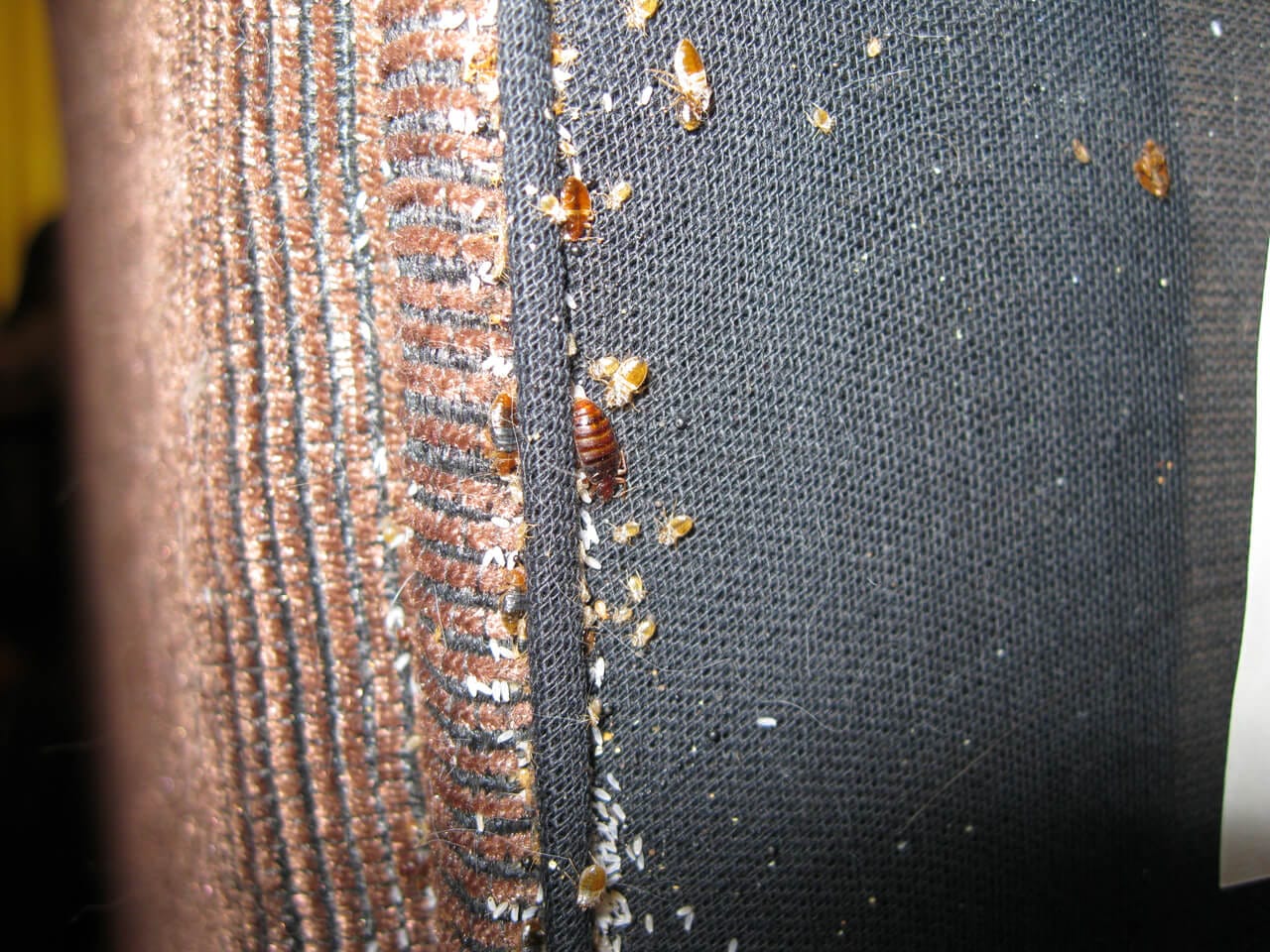
TL;DR — How To Treat and Control Bedbugs in Your Vehicle
Step 1 — Strip the Car Remove all clutter, seat covers, floor mats, and any fabric items. Bag them and run them through the dryer on high heat for 30 minutes.
Step 2 — Vacuum Every Seam and Crevice Use the crevice tool and vacuum all stitching, folds, seat rails, carpet edges, console gaps, and seatbelt anchors. Empty the vacuum outdoors immediately.
Step 3 — Dust (Only for Severe Infestations) If you see live bugs crawling in the open, apply a light puff of D‑Fense Dust into deep cracks, console gaps, door panel drain holes, and under‑seat cavities.
Step 4 — Spray With MGK CrossFire Aerosol Apply CrossFire to all seams, stitching, folds, carpet edges, and tight cracks. It’s water‑based, safe for vehicle interiors, and provides long‑lasting residual control.
How Do I Get Rid of Bedbugs in My Car? That question comes up more than you think.
Bedbugs were nearly eradicated in the United States by the 1950s. Then international travel came back, pesticide resistance developed, and nobody had the courtesy to inform the bedbugs that they were supposed to be gone. They returned with a vengeance — and they’ve been making up for lost time ever since.
Today bedbugs are found in hotels, hospitals, movie theaters, schools, public transit, and increasingly in vehicles. Your car, truck, or SUV is not immune. It’s warm, full of fabric seams and hidden crevices, and you bring things in and out of it constantly — which is exactly the kind of environment bedbugs have been exploiting since before anyone reading this was born.
The good news: bedbugs in a vehicle are very treatable. The bad news: parking in the sun and hoping for the best is not the treatment.
This page walks you through exactly how to confirm a bedbug problem in your vehicle, how to treat it correctly, and how to make sure it doesn’t come back.
How Bedbugs Got Into Your Car
Bedbugs don’t infest — they hitchhike. They move with people and belongings, not on their own terms. Understanding how they travel helps you understand why vehicles are increasingly involved.
Common Bedbug Entry Routes:
- Luggage — the most common vector. Luggage sits on hotel room floors, in hotel closets, and on airport carousels. Any of those surfaces can introduce bedbugs to your bags, which then ride home in your car.
- Backpacks and jackets — schools and workplaces are active bedbug transmission environments. Kids pass them around with impressive efficiency.
- Hotels — every hotel, regardless of rating, is a potential exposure point. Bedbugs do not discriminate by thread count.
- Rideshare vehicles — airports, hotels, and rideshare form a perfect transmission loop. A passenger picks up bedbugs at a hotel, rides to the airport, and leaves a few behind in the rideshare vehicle. The next passenger takes them home. Rideshare drivers are at genuinely elevated risk through no fault of their own.
- Movie theaters and public seating — upholstered seating in any high-traffic public venue is a potential pickup point.
- Visitors — guests who unknowingly have a home infestation can leave bedbugs in your vehicle when you pick them up or drop them off.
- Borrowed items — clothing, bags, or fabric items borrowed from someone with an infestation.
- Used car seats and furniture — secondhand baby car seats are a specific risk. Used upholstered items of any kind should be inspected before they enter your vehicle or home.
Why vehicles are vulnerable to Bedbugs?
Bedbugs can survive for several months without feeding – they are extraordinarily patient.
They hide in seams, stitching, folds, cracks, and anywhere two surfaces meet. A vehicle has dozens of these locations. And unlike a hotel room that gets cleaned between guests, your car accumulates occupants and belongings continuously without systematic inspection.
An important warning: bedbugs found in the home are sometimes traced back to a vehicle that was the original introduction point. If bedbugs are showing up in your home and you can’t figure out where they came from, check the car. The car is often patient zero.
Not Sure If You Have Bedbugs in Your Car?
Before committing to a full treatment, confirm what you’re dealing with. Bedbug bites are not diagnostic — plenty of things bite you. What you need is evidence from the car itself.
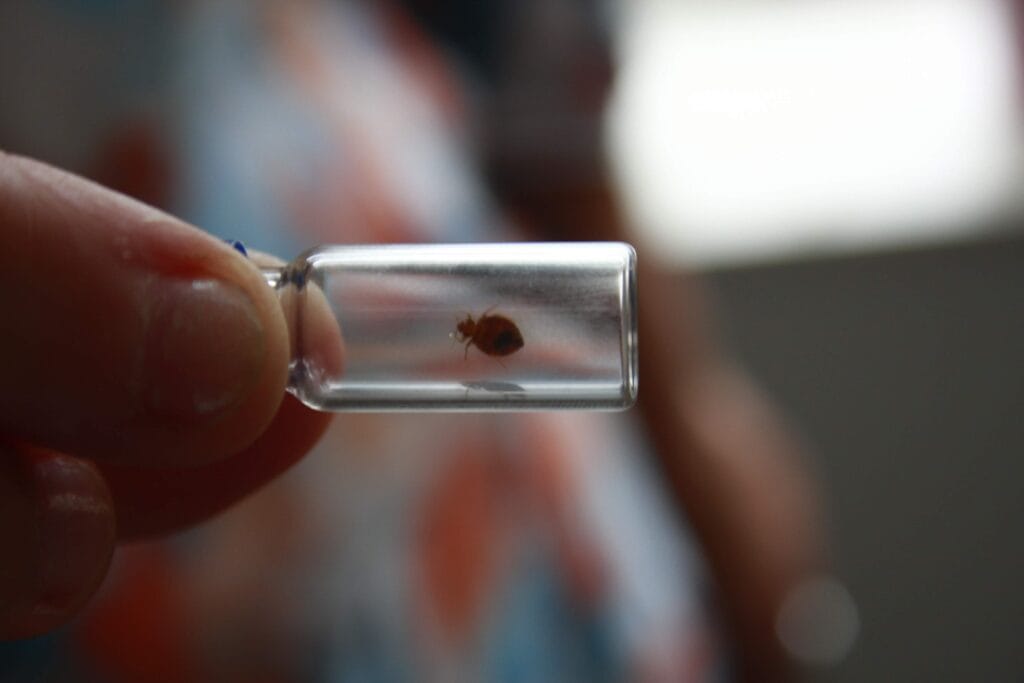
Use insect monitoring sticky traps
Place them:
- Under the front and rear seats
- Along seat rails
- Along carpet edges near the door sills
Pro tip: Tape the trap down with a small piece of tape on one edge. Wind from open doors will flip an untaped trap immediately, which makes it useless and also slightly embarrassing. A taped trap stays flat against the surface where contact with insects is most likely to occur.
Check traps after 24-48 hours. If you catch bedbugs — flat, oval, reddish-brown insects ranging from the size of an apple seed to a watermelon seed depending on whether they’ve fed recently — you have your answer.
If you’re seeing what might be bedbugs crawling across the dash or seat surfaces during the day, you likely have a more established infestation and the treatment approach shifts accordingly.
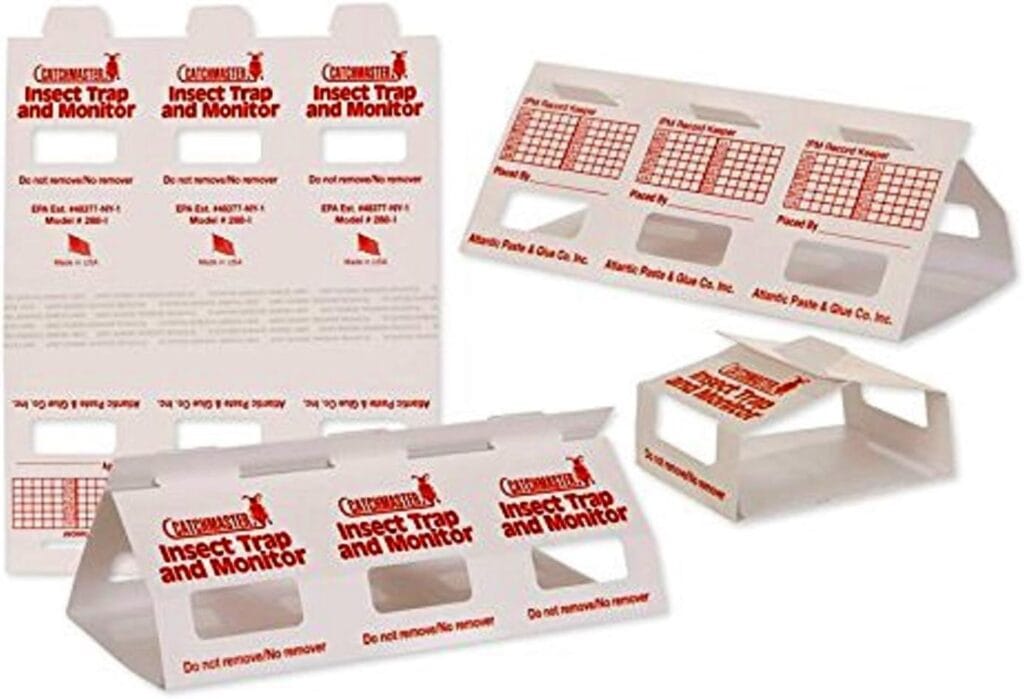
Glue Traps – 12 Glue Boards
Catchmaster 288i Insect Trap & Monitors are non‑toxic, chemical‑free glue traps that fold into clean tunnel monitors and come perforated so each board becomes three sticky traps.
- 3‑in‑1 Design: Each board is perforated into three traps.
- Non‑Toxic: Chemical‑free monitoring for roaches, spiders, and silverfish.
- Super Sticky: Very effective on insects & spiders.
- Clean Handling: Pick up easily — glue and insects stay inside the tunnel.
- Easy to Use: Fold and place along walls, under appliances, or in closets.
- Great Value: 5 boards = 15 monitors for wide coverage.

Available on Amazon!
How to Get Rid of Bedbugs in Your Car — Step by Step
Step 1 — Strip the Car
Before anything else, remove everything that can be removed.
- All trash and clutter
- Seat covers
- Floor mats
- Any fabric items — blankets, clothing, bags, anything stored in the vehicle
Anything fabric that leaves the car should go directly into a sealed bag and then into the dryer on high heat for at least 30 minutes before being handled or brought inside. Do not carry potentially infested items through your home to the laundry room loose.
This step serves two purposes
- Removes potential harborage material
- Exposes the surfaces you need to treat
Step 2 — Vacuum Thoroughly
This is the most important step and the one most people underdo.
Use the crevice tool.
Work methodically through every seam, stitch line, fold, and crack in every fabric surface. Focus heavily on:
- All seat seams and stitching — top, sides, back, bottom
- Where the seat bottom meets the seat back
- Under the seats — carpet edges, seat rails, where carpet meets the seat frame
- Along all carpet edges throughout the cabin
- The area where plastic trim panels meet carpet
- Seatbelt anchors and retractors
- The center console edges and any fabric-lined storage areas
Vacuuming removes live bugs, shed skins, eggs, and fecal spotting. It also physically disrupts the population and makes the subsequent treatment significantly more effective.
Dispose of the vacuum bag immediately in a sealed outdoor trash container. If your vacuum is bagless, empty the canister directly into an outdoor trash can. You do not want anything you just vacuumed living out the next chapter of its life inside your vacuum cleaner.
Step 3 — Dust (For Severe Infestations Only)
This step is not for everyone. Skip it if you have not seen live bedbugs moving around in the open — on seat surfaces, on the dash, crawling across visible areas.
If you are at the level where bedbugs are visible and active in the open, you have an established infestation that warrants dusting before spraying.
Product: D-Fence Dust
Why dust before spray: You don’t want to be applying dust to wet spray — it sticks to the wet surface and creates a mess rather than distributing correctly. Dust first, let it settle, then spray.
How to apply dust correctly:
Give the duster a small shake before each puff to keep the dust evenly distributed inside the chamber. Apply in a light cloud — you want a fine, even haze, not visible piles or globs. If you can see piles of dust, you’ve applied too much.
Avoid breathing the dust. Work with your face turned away from the application area or wear a simple dust mask.
Where to apply dust:
- Nooks and crannies throughout the center console
- Electronic cavities under the front seats — around power seat motors and track mechanisms
- Up into the dash edges wherever there are gaps
- Seatbelt retractor housings
- Inside the doors — each door has drain holes at the bottom, typically two per door. Push the duster tip into each drain hole and give it a light puff. This treats the interior of the door panel in a place you cannot reach any other way.
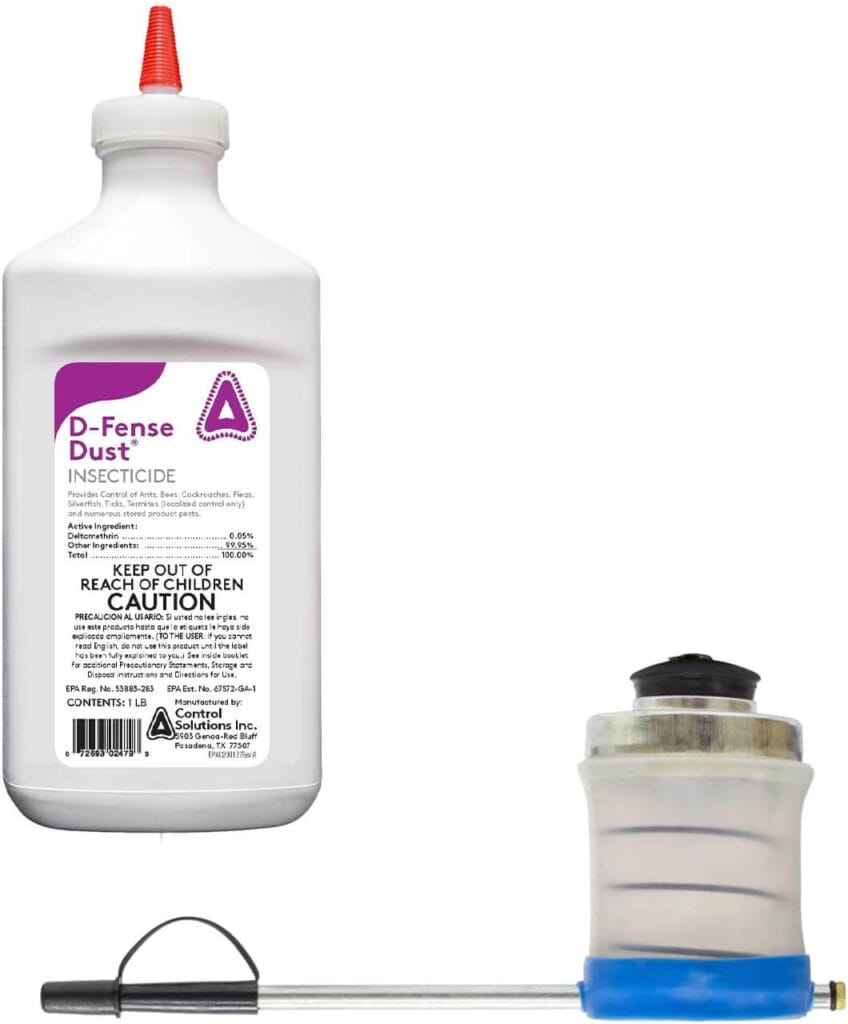
D‑Fense Dust 1 lb + 5″ Clear Puffer Duster Kit
A ready‑to‑use dusting kit that reaches deep cracks, seams, and dry areas where sprays can’t go. Long‑lasting, waterproof dust with a precision puffer for easy application.
- Reaches Where Sprays Can’t: Dust easily gets into deep cracks, voids, and dry areas that shouldn’t get wet.
- Ready to Use: No mixing or prep — just fill the puffer and apply.
- Long‑Lasting Control: Kills crawling insects for up to 8 months when left undisturbed.
- Waterproof Formula: Dust won’t clump or break down in moisture.
- Precision Application: Includes a 5‑inch clear puffer duster for controlled, even dusting.
Available on Amazon!
Step 4 — Spray With MGK CrossFire Aerosol
This is the correct product for bedbug treatment in a vehicle and the reason is straightforward: CrossFire is water-based. It won’t leave a greasy residue, it won’t damage vehicle plastics when used correctly, and it leaves a dry, almost dust-like finish that continues working for up to four weeks after application. It was formulated specifically for bedbugs and is what professional pest control operators reach for in exactly this type of situation.
For large-scale applications — commercial jets, buses, trains — there is a CrossFire concentrate formulation. For a personal vehicle, the aerosol is the correct choice.
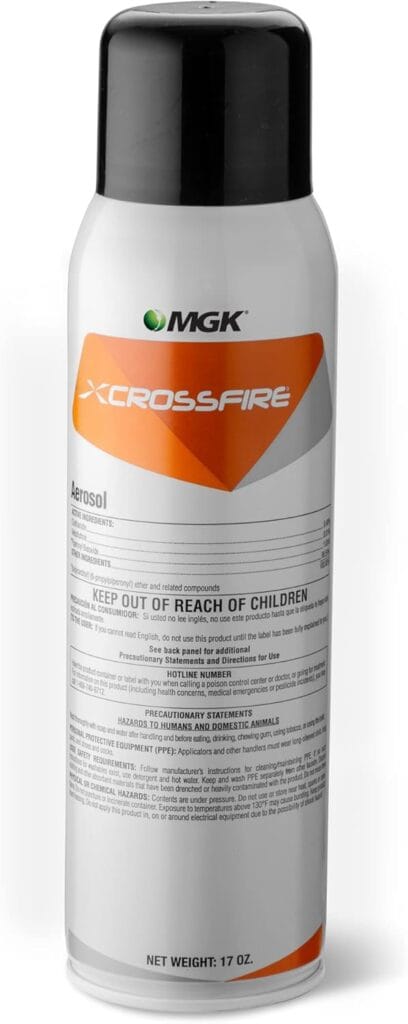
MGK CROSSFIRE Aerosol
CrossFire® Aerosol delivers fast knockdown and long‑lasting control of bed bugs, including resistant strains, with a non‑staining formula designed for indoor use.
- Kills all life stages, including eggs and pyrethroid‑resistant bed bugs
- Three active ingredients for fast knockdown and strong residual
- Non‑staining on water‑safe fabrics and surfaces
- Indoor‑safe applications for homes, apartments, schools, and facilities
- Trusted MGK formulation backed by over a century of pest control expertise
Available on Amazon!
Before You Start — Do This Outside
Park in an open, well-ventilated area. Open all doors. Do not treat inside a garage. The combination of aerosol application and adequate ventilation requires actual fresh air, not garage air.
What You Are Trying to Do
This is important to understand before you start spraying.
You are not spraying the whole car. You are spraying cracks, seams, stitching, hidden edges, and anywhere two surfaces meet. Flat, open surfaces — seat cushion faces, dashboard, headliner — are not targets. Bedbugs are not sitting in the open on flat surfaces. They’re hiding in the edges, folds, and gaps. That’s where the product needs to go.
Spraying flat surfaces wastes product and does nothing useful. Spraying the hiding spots is the entire point.
How to Hold and Use the Can
- Hold the can 6 to 8 inches from the surface
- Attach and use the straw applicator — this is critical for precision application in tight spaces
- Spray in short bursts of 1 to 2 seconds
- The surface should look slightly damp, not wet or shiny
- If the surface is shiny or soaked, you’ve applied too much
Exactly Where to Spray
Seats — your primary focus:
- All stitching lines on every seat
- All seams — sides, back, bottom edges
- Where the seat bottom meets the seat back
- Any buttons, folds, or tufted areas
- Pleats and creases in the seat fabric
Under the seats:
- Metal seat rails along the floor
- Carpet edges where they meet the seat frame
- Gaps between the seat frame and carpet
Floor and carpet edges:
- Along every carpet edge throughout the cabin
- Under floor mat edges after the mats have been removed
- Seatbelt anchors where the belt enters the anchor point
- Cracks between plastic trim panels
- Edges of the center console where it meets seat fabric or carpet
What NOT to Spray
- Dashboard and instrument cluster
- Screens and displays of any kind
- Electronics or control modules
- Steering wheel
- Flat seat surfaces — cushion faces, back panels
- Headliner
If You Accidentally Overspray
It happens. Here’s how to handle it without damaging anything.
On plastic or dashboard surfaces: Wipe immediately with a damp microfiber towel, then wipe dry. If you catch it within a minute or two, no damage occurs.
On fabric or leather seats: Lightly blot with a damp cloth. Do not scrub — blot. The water-based formula means it wipes off cleanly if addressed quickly.
After Treatment
Allow the car to air out with doors open for approximately one hour before regular use. CrossFire continues killing bedbugs for up to four weeks after application. If activity continues or you want additional assurance, you can reapply every 7 days.
One can of CrossFire aerosol provides four or more complete vehicle treatments. At a fraction of what a pest control company would charge for a vehicle treatment — assuming you can even find one willing to do it — this is a significant cost advantage.
What About Baby Car Seats?
This one comes up often and the answer is practical. Most infant and toddler car seats have a removable fabric cover. Take the cover off, launder it, and dry it on high heat for at least 30 minutes — that kills both bedbugs and eggs at any life stage. Remove the car seat from the vehicle, clean the plastic and foam components, and spray the hard surfaces and foam edges with CrossFire. Allow it to dry completely before reinstalling the clean cover. Once everything is dry, reassemble.
Does Parking in the Sun Kill Bedbugs?
This comes up constantly and the answer requires some nuance. Bedbugs are not unintelligent about heat — when temperatures rise in one part of the car, they move to cooler areas. Lower in the vehicle, under seats, in the floor cavity. Parking in direct sun will disrupt them and may kill some, but it won’t produce a complete kill because the bugs simply relocate within the vehicle to escape lethal temperatures. The result is a persistent, disrupted population rather than an eliminated one. Heat disruption is not heat treatment. Treat the car correctly rather than relying on the sun to do a job it can’t fully complete.
Frequently Asked Questions
Can bedbugs really live in a car?
Yes. Vehicles provide everything bedbugs need — fabric seams for hiding, darkness during the day, and regular access to warm-blooded hosts. Cars are increasingly recognized as both a transmission vector and a harborage location for established infestations.
How long can bedbugs survive in a vehicle without a host?
Several months under typical conditions. Bedbugs are extraordinary survivors. Lower temperatures slow their metabolism and extend survival time further. An unoccupied vehicle stored over winter is not a safe assumption — bedbugs can and do survive extended periods without feeding.
Can heat kill bedbugs in my car?
Not reliably through sun exposure alone. Bedbugs respond to rising heat by moving to cooler areas within the vehicle. Parking in the sun disrupts them but does not produce complete elimination. Professional heat treatment — which raises the entire vehicle’s interior to sustained lethal temperatures uniformly — is effective, but sun exposure alone is not a reliable treatment strategy.
Can I use a bug bomb or fogger in my car for bedbugs?
No. Foggers are ineffective for bedbugs for the same reason they’re ineffective for cockroaches — the insecticide disperses into open air and settles on exposed surfaces, never penetrating the seams, cracks, and voids where bedbugs actually hide. Foggers have no effect on bedbug eggs. They scatter populations rather than eliminating them and can leave chemical residue on interior surfaces. Don’t use them.
Do bedbugs hide in leather seats?
Yes — but differently than in fabric. In leather seats bedbugs concentrate along seams, stitching lines, piping edges, and any crack or fold in the leather rather than in the material itself. They also hide under and around leather seats in seat rails and carpet edges. Treatment approach is the same — target seams and hidden edges, not flat surfaces.
Can bedbugs come from kids or schools?
Yes, and this is more common than most parents realize. Bedbugs spread through schools in backpacks, jackets, and personal items with surprising efficiency — similar to how lice spread, but with less visible evidence and a longer timeline before detection. A child can unknowingly transport bedbugs from a classmate’s home to your vehicle and your home without anyone knowing where the exposure occurred.
Can bedbugs spread through rideshare vehicles?
Yes. Airports, hotels, and rideshare form one of the most effective bedbug transmission loops that currently exists. A passenger picks up bedbugs at a hotel, rides to the airport in a rideshare, and leaves bedbugs behind. The next passenger — or the driver themselves — picks them up. Rideshare drivers are at meaningful occupational risk. Using insect monitoring traps periodically in your rideshare vehicle is a reasonable precaution.
How do I know if I have bedbugs in my car?
Place insect monitoring sticky traps under your seats, along seat rails, and along carpet edges. Tape one edge down so wind doesn’t flip the trap. Check after 24-48 hours. If you catch flat, oval, reddish-brown insects ranging from apple seed to small watermelon seed size, you have bedbugs. Additional signs include small dark fecal spots on seat seams and stitching, and shed skins in upholstery folds. Seeing live bugs moving in the open during daylight suggests an established infestation.
What’s the fastest way to get rid of bedbugs in a car?
Vacuum thoroughly with a crevice tool focusing on all seams and hidden edges, then treat with MGK CrossFire Aerosol targeted to cracks, stitching, seams, and anywhere two surfaces meet. For severe infestations add D-Fence Dust before the spray step. Allow the car to air out for an hour. CrossFire works for four weeks after application and can be reapplied every 7 days if needed. This is the fastest and most cost-effective DIY approach available.
Will CrossFire damage my car interior?
Not when used correctly. CrossFire is water-based and specifically formulated to be safe on fabric and plastic surfaces when applied as directed. It leaves a dry finish without greasy residue. Avoid spraying directly on screens, electronics, and dashboard displays. If overspray occurs on plastic or leather, wipe immediately with a damp microfiber cloth and dry — the water-based formula cleans up without leaving damage if addressed quickly.
How many times should I treat my car?
One thorough treatment handles most situations. If activity continues after the first application, reapply every 7 days for up to three applications. CrossFire’s four-week residual activity continues working between applications. One can provides four or more complete vehicle treatments.
Can bedbugs come back after treatment?
They can — if the source of the infestation is not addressed. If bedbugs are coming from a home infestation, an infested piece of luggage, or repeated exposure through rideshare passengers, the car will continue to be re-exposed after treatment. Eliminating the car infestation and the source infestation simultaneously is the only complete solution. If bedbugs appear in your home and you can’t identify the source, check the vehicle — the car is often the original introduction point that seeded the home infestation.
Can a bedbug infestation in my car spread to my home?
Absolutely — and this is one of the most important things to understand about vehicle infestations. Bedbugs move from the car to the home on clothing, bags, and personal items every time you exit the vehicle. In many cases, bedbugs appearing in the home are first noticed before the vehicle infestation is identified. If you find bedbugs in your home and can’t determine the source, inspect the car thoroughly. Treat both simultaneously or the problem will cycle between them indefinitely.