
This page contains affiliate links. I may earn a commission at no extra cost to you.
The best way to get rid of roaches in a restaurant is to deep-clean the kitchen, apply Fipronil Plus C with Gentrol IGR Concentrate as a crack-and-crevice treatment along baseboards and behind equipment, place Advion Roach Gel Bait micro-placements throughout the kitchen and prep areas, and use bait stations in dining rooms and customer-facing areas.
TL;DR How to Get Rid of Roaches in a Commercial Kitchen
- Inspect the kitchen at night with a flashlight. Look behind every piece of equipment, inside every gap, around every plumbing penetration, and around every electrical box.
- Deep-clean the kitchen before treatment. Grease, food residue, and standing water all compete with bait and reduce treatment effectiveness.
- Apply Fipronil Plus C with Gentrol IGR Concentrate as a crack-and-crevice spray along all baseboards, behind cooking equipment, around plumbing, and in floor drains.
- Place Advion Roach Gel Bait as micro-placements inside cooking equipment, electrical voids, behind appliances, in cabinet seams, and inside hollow steel table legs.
- Set Advion or Maxforce bait stations in dining rooms, customer bathrooms, host stations, and any customer-facing area where spray treatment isn’t appropriate.
- Dust wall voids and electrical boxes lightly with a desiccant or boric acid dust where you suspect harborage.
- Treat floor drains with a foaming or enzyme-based drain cleaner to break up the organic biofilm where roaches breed.
- Set sticky monitoring traps along baseboards and behind equipment to track activity.
- Retreat at day 14 to catch the nymph cohort that emerges from eggs after the first treatment.
Keep reading for the full breakdown. ↓
What You Need
For commercial kitchen roach control, four products handle the entire job. This is the same lineup professional commercial pest control operators carry on their service routes.
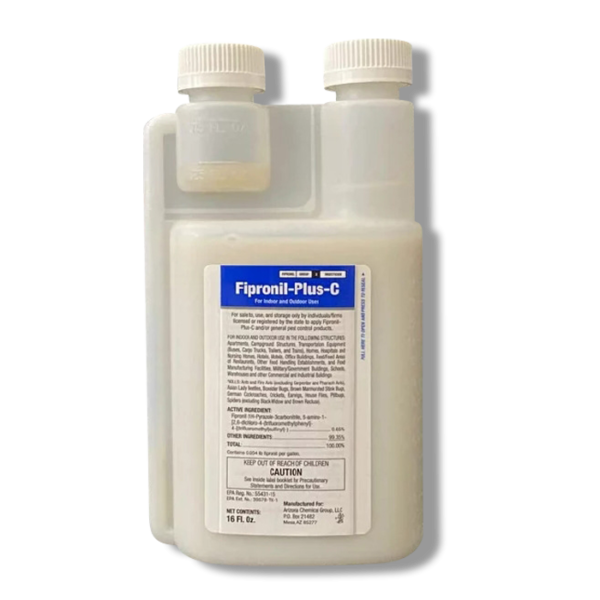
Fipronil‑Plus‑C Pest Control Concentrate (16 oz)
Fipronil‑Plus‑C is a commercial‑strength 0.65% fipronil concentrate that homeowners use for roaches, ants, and perimeter pests. One 16‑oz bottle makes up to 21 gallons of solution for long‑lasting indoor crack‑and‑crevice and outdoor structural treatments.
- Use: 1.0 fl oz per gallon of water This is the standard labeled dilution for structural crack‑and‑crevice applications.
- Commercial‑Strength Formula — 0.65% fipronil delivers professional‑grade control of roaches, ants, and other structural pests.
- Makes 21 Gallons — One 16‑oz bottle stretches far for large infestations or multi‑room treatments.
- Long‑Lasting Residual — Cellulose entrapment technology slows UV breakdown for extended control.
- Indoor + Outdoor Use — Ideal for kitchens, bathrooms, garages, baseboards, and exterior foundation cracks.
- Easy Mixing — Precision‑designed bottle reduces drift and makes dilution simple for DIY homeowners.
- Broad‑Spectrum Control — Effective against roaches, ants, and other common household invaders.


Available on Amazon!
Competitive pricing + Fast Free shipping on all orders!
Fipronil Plus C uses fipronil, a non-repellent insecticide that roaches don’t detect as a threat. They walk through the treated zone, pick up a lethal dose, and carry it back to harborage where it transfers to other roaches through contact, feces, and the dead roaches themselves. This domino effect is what makes fipronil the right chemistry for commercial kitchens. A typical commercial kitchen has dozens of hidden harborage spots you can’t physically reach with spray. Fipronil reaches them through the roaches themselves.
Gentrol IGR Concentrate – 1 Pint
Professional insect growth regulator that stops roach, fly, and stored‑product pest reproduction for up to 4 months.
- What It Does Breaks the life cycle of roaches, drain flies, fruit flies, bed bugs, and pantry pests. Prevents reinfestation by sterilizing adults and stopping nymphs from maturing.
- Where You Can Use It Food and non‑food areas, kitchens, bathrooms, restaurants, warehouses, commercial buildings, and residential spaces.
- Why Pros Use It Hydroprene provides long‑lasting population control and pairs perfectly with fipronil sprays for complete roach treatment.
- Shelf Life Up to 3 years when stored in a cool, dry place.
- Active Ingredient Hydroprene 9% (IGR)
- Mix Rate 1 fl oz per gallon (Gentrol EC)
- Best Pairing Use with a fipronil concentrate for crack‑and‑crevice kill + IGR reproduction control.
Available on Amazon!
Competitive pricing + Fast Free shipping on all orders!
Gentrol IGR contains hydroprene, an insect growth regulator that disrupts roach reproduction. It stops nymphs from molting into reproducing adults and causes females to produce egg cases that don’t hatch. Without an IGR, you kill 95% of the population with the fipronil and the surviving 5% rebuild. With the IGR, the survivors are reproductive dead ends. This is the single biggest difference between a treatment that holds for 90 days and one that bounces back in 30. After 25 years in pest control, I will not run a commercial roach job without an IGR in the mix.
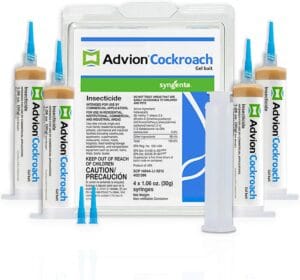
Advion Cockroach Gel Bait
Advion Gel Bait delivers fast, professional roach control using indoxacarb. Place small dots in cabinets, hinges, and cracks to pull roaches out of hiding and wipe out the whole colony. Safe for pet homes when used as directed and perfect for kitchens and bathrooms.
- Professional Gel Bait — Indoxacarb formula used by real pest control techs
- Targets All Roaches — American, German, Smokybrown, Oriental
- High‑Attractant Formula — Strong food‑grade attractants pull roaches out of hiding
- Crack‑and‑Crevice Use — Place pea‑sized dots in cabinets, hinges, voids, and appliance gaps
- Pet‑Safer Option — No plastic station to chew; ideal for homes with dogs
- Active Ingredient — Indoxacarb 0.6%
- Unit Size — 4 × 30g syringes with tips and plunger
- Best Pairing — Use with fipronil spray + Gentrol IGR for full elimination
Available on Amazon!
Competitive pricing + Fast Free shipping on all orders!
Advion Roach Gel Bait uses indoxacarb in a sweet protein-rich gel. Indoxacarb is slow-acting by design, so roaches survive long enough to carry the active ingredient back to harborage and pass it through the colony via the secondary kill chain (other roaches eating the carcasses and feces). The gel reaches into voids and equipment cavities where you can’t spray, especially the inside of hollow stainless steel table legs, the motor housings of refrigeration units, and the gap behind every piece of cooking equipment.
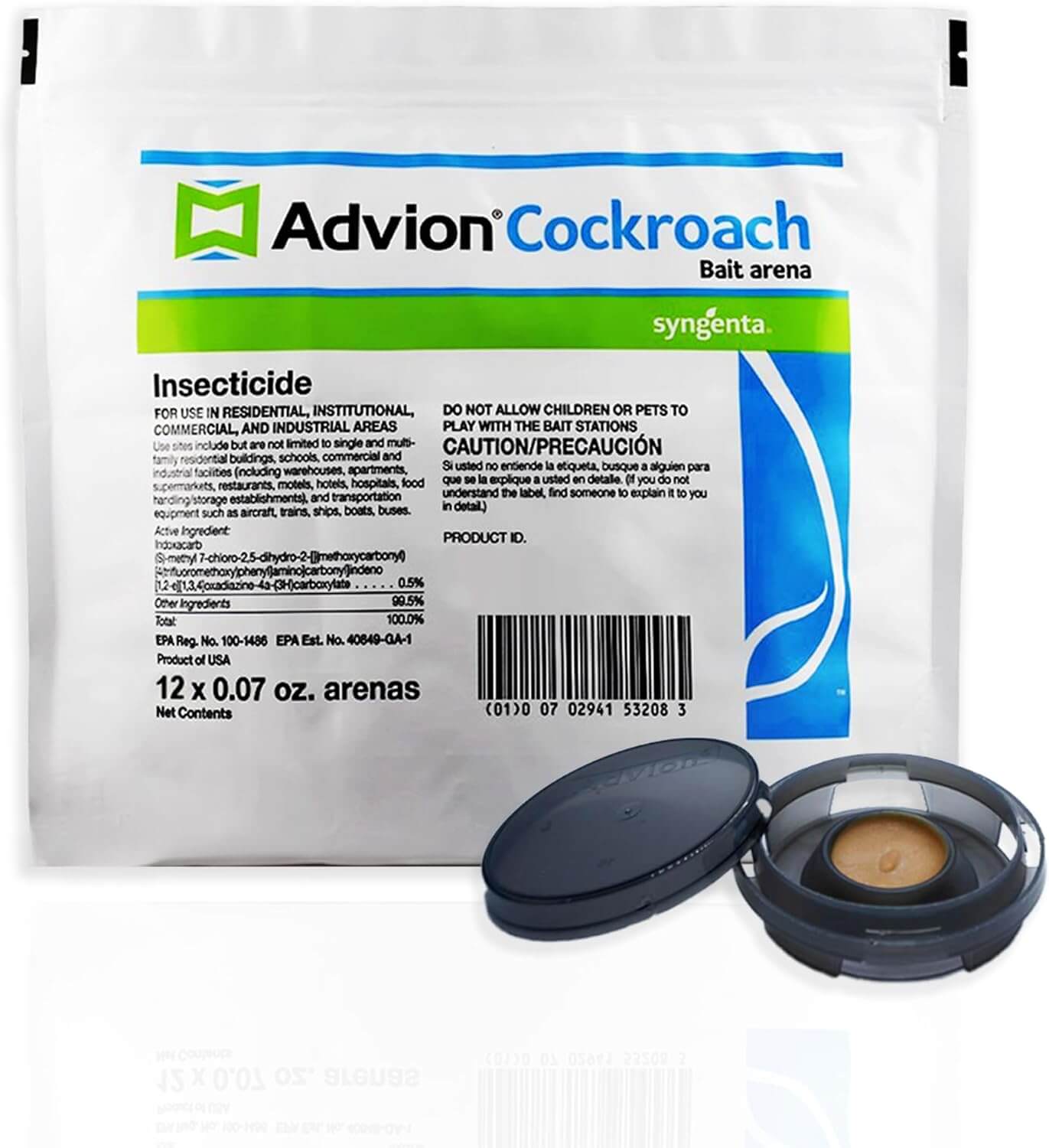
Advion Cockroach Bait Stations
Professional roach bait stations that attract and kill hidden roaches using a powerful indoxacarb formula. Ideal for kitchens, bathrooms, and garages.
- Pro‑Grade Stations — Used by pest control techs for fast colony kill
- Strong Attractant — Peanut‑butter‑scented bait pulls roaches from deep hiding
- Targets Large Roaches — American, Smokybrown, Oriental, German
- Easy Placement — Drop stations in cabinets, garages, and appliance voids
- Pet‑Safety Note — Keep away from dogs; plastic station is a chew hazard
- Active Ingredient — Indoxacarb 0.6%
- Unit Size — 12 bait arenas per pack
Available on Amazon!
Competitive pricing + Fast Free shipping on all orders!
Pre-loaded bait stations are essential for dining rooms, bars, customer bathrooms, host stations, and any customer-facing area where applying liquid spray or open gel isn’t appropriate. They’re discreet, tamper-resistant, and they work passively for weeks. PestLenz carries both Advion and Maxforce stations because both are excellent and the choice often comes down to price and what’s in stock.
Why Commercial Kitchens Are Different From Homes
A commercial kitchen presents three challenges that home kitchens don’t.
- Constant food, grease, and moisture. Roaches in a restaurant have abundant competing food at all times. Standard home roach treatments lose effectiveness when bait has to compete with grease behind a fryer or food spills under a reach-in cooler. Sanitation has to be aggressive before treatment, and the IGR has to be working in the background to suppress reproduction even when surface kill is incomplete.
- Hundreds of harborage spots. A typical commercial kitchen has hollow stainless steel table legs, motor housings on every piece of refrigeration, gaps behind fryers and ranges, electrical conduit runs through walls, ceiling tiles with edge gaps, dish machine motor cavities, floor drains, and dozens of other hidden voids. No spray reaches all of them. The fipronil + IGR + gel combination is designed to reach this kind of complex harborage profile.
- Operational restrictions. You can’t shut a restaurant down for a week to fumigate. Treatment has to happen between services, during off-hours, or during closed days, with everything safe for kitchen operation by the next morning. Fipronil Plus C, Gentrol, and Advion are all labeled for use in food-service environments when applied per the label (crack-and-crevice only, no broadcast spraying near food prep surfaces). Read the label and follow it.
Signs You Have Roaches in Your Restaurant
- Daytime sightings. Roaches are nocturnal. If you’re seeing them during business hours, the population is large enough that some are being displaced from harborage by competition.
- Live or dead roaches in the dining room or at the host stand. This is the worst-case visibility scenario and means the colony is already established.
- Roach droppings that look like coarse ground pepper along the tops of cabinets, behind equipment, in dish racks, or on shelving where food sits.
- Egg cases (oothecae) glued to undersides of equipment, in the gaps between appliances, and inside cabinet seams.
- A musty, oily smell in heavy infestations, especially around the dish pit and behind cooking equipment.
- Customer complaints. By the time a customer reports seeing one, you have a real problem.
- Health inspector citations. A roach citation on inspection day means visible activity at the time of inspection, which almost certainly means a much larger hidden population.
The Species You’re Dealing With
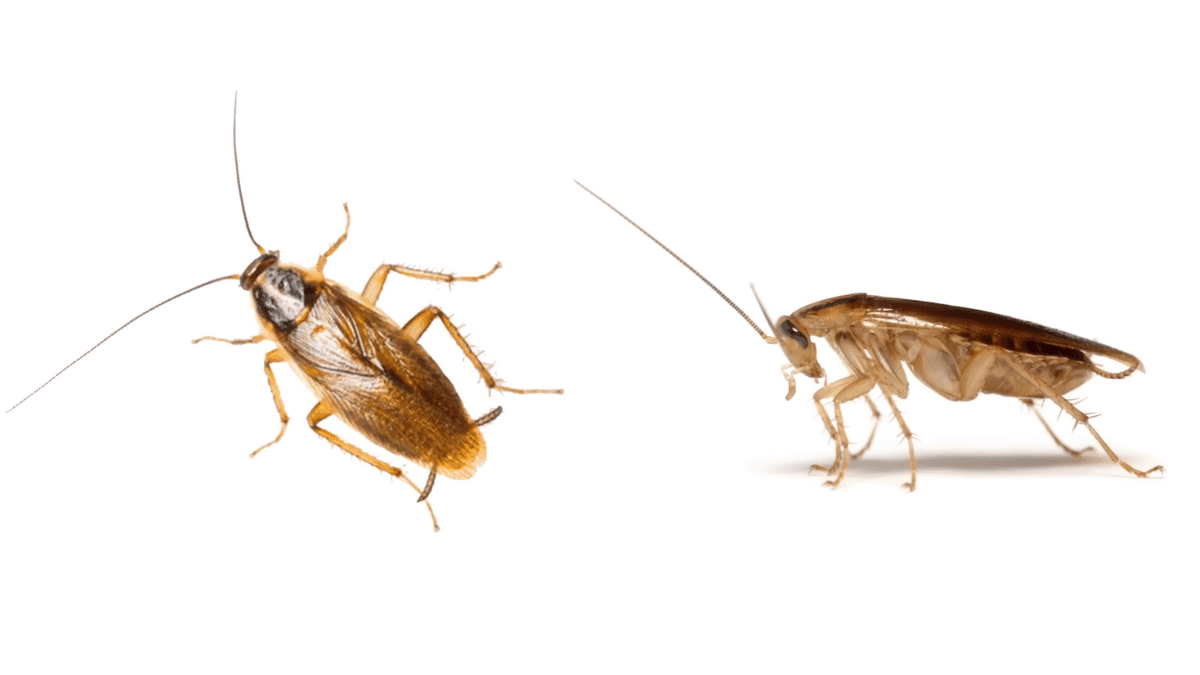
The vast majority of commercial kitchen roach problems are German cockroaches (small, light brown, two dark parallel stripes behind the head). German roaches are the species evolved to live indoors in commercial food-service environments. They breed fast, hide in tight protected voids, and don’t leave the building voluntarily.
A few commercial kitchens (especially in older buildings or restaurants near outdoor seating, mulch beds, or sewers) also see American cockroaches (large, reddish-brown, with a yellow figure-eight on the back of the head). American roaches wander in from outside through drains, sewer lines, and gaps under doors. The treatment is the same as the German roach protocol below, with extra attention to drain treatment and the perimeter of the building.
If you’re seeing both species, run the protocol below for both. The chemistry handles both species. The placements just need to extend to outdoor entry points for American roaches.
How to Get Rid of Roaches in a Restaurant, Step by Step
Step 1: Night Inspection With a Flashlight
Before any product goes down, walk the kitchen at night with a strong flashlight when the lights are off and the kitchen is closed. Roaches that hide during the day come out during this window.
Inspect:
- Behind and underneath every piece of cooking equipment (range, fryer, grill, oven, salamander)
- Behind and underneath every piece of refrigeration (reach-in coolers, freezers, undercounter units)
- Inside the dish pit area, especially around the dish machine
- Inside hollow stainless steel table legs and shelving uprights
- Behind every floor drain cover
- Inside the gap between adjacent equipment
- Around every plumbing penetration
- Inside electrical panel enclosures and wire chases
- Above the ceiling tiles (lift a few tiles and shine the light up)
- Inside dry storage shelving units
- Under the lip of the bar and host stand
Note where you find live activity, droppings, egg cases, or shed skins. These are your priority treatment spots in the following steps.
Step 2: Sanitation Before Treatment
This step decides whether everything else works. Roaches will not eat your bait if grease, food residue, and standing water are sitting around as competing food sources.
Before any product goes down:
- Pull out every piece of equipment that can be moved (ranges, fryers, refrigeration on casters). Clean the floor underneath, the sides of the equipment, and the wall behind. The grease accumulation behind a commercial fryer is roach paradise.
- Degrease the hood and the wall behind the cookline thoroughly
- Empty and clean the gap between every piece of equipment that can’t be moved
- Empty and clean every dry storage shelf
- Clear every food-prep surface
- Take out the trash. Don’t leave trash in the kitchen overnight.
- Fix any dripping pipes or leaking equipment. Moisture matters as much as food.
- Run the dish machine on a degrease cycle if it has one
- Clean every floor drain (more on this in step 7)
The cleaner the surfaces and the drier the floor, the more aggressively roaches will go after your bait and the better the fipronil residual will perform.
Step 3: Crack-and-Crevice Spray With Fipronil Plus C and Gentrol IGR
This is the foundation of the commercial treatment. Mix Fipronil Plus C at the label rate (typically 0.8 fl oz per gallon) with Gentrol IGR Concentrate added at the IGR’s label rate (typically 1 oz per gallon).
Where to spray (crack-and-crevice only, never as a broadcast on food contact surfaces):
- Along every baseboard in the kitchen, prep areas, and dish pit
- Behind every appliance you pulled out (the wall and floor behind, not the appliance itself)
- Around every plumbing penetration through walls and floors
- Around the base of every floor drain
- Inside the seam where wall meets floor under equipment
- Inside hollow stainless steel table legs (inject the spray through any access opening)
- Around electrical conduit entries
- Behind and around the dish machine
- Inside the gap between adjacent walk-in coolers
- Around the perimeter of walk-in floors
- Along baseboards in dry storage rooms
- Around the base of the mop sink
Apply with a precision injection sprayer or a pin-stream tip. Coarse, focused application into cracks and seams. No broadcast spraying on open surfaces in food-prep areas.
Let the spray dry fully before equipment goes back into place, typically 2 hours.
Step 4: Place Advion Roach Gel Bait
Gel bait reaches the voids that spray can’t. This is the most important step for hitting the German roach population living deep inside equipment.
Use small placements, about the size of a grain of rice. Several small placements work much better than a few large dabs.
Advion Cockroach Gel Bait
Advion Gel Bait delivers fast, professional roach control using indoxacarb. Place small dots in cabinets, hinges, and cracks to pull roaches out of hiding and wipe out the whole colony. Safe for pet homes when used as directed and perfect for kitchens and bathrooms.
- Professional Gel Bait — Indoxacarb formula used by real pest control techs
- Targets All Roaches — American, German, Smokybrown, Oriental
- High‑Attractant Formula — Strong food‑grade attractants pull roaches out of hiding
- Crack‑and‑Crevice Use — Place pea‑sized dots in cabinets, hinges, voids, and appliance gaps
- Pet‑Safer Option — No plastic station to chew; ideal for homes with dogs
- Active Ingredient — Indoxacarb 0.6%
- Unit Size — 4 × 30g syringes with tips and plunger
- Best Pairing — Use with fipronil spray + Gentrol IGR for full elimination
Available on Amazon!
Competitive pricing + Fast Free shipping on all orders!
Where to place gel:
- Inside hollow stainless steel table legs (inject through any access opening)
- Inside refrigeration motor housings (after unplugging the unit)
- Behind and inside the gap between every reach-in cooler and the wall
- Inside the motor cavity of every piece of cooking equipment that has one
- Inside cabinet hinges and along cabinet seams in prep areas
- Inside the back of the dish machine cabinet
- Behind kick plates of equipment
- Inside the gap where the wall meets the underside of countertops
- Along the back of dry storage shelving (gel placed near the wall, not on the food shelves themselves)
- Inside electrical box housings (around, not inside, the electrical components)
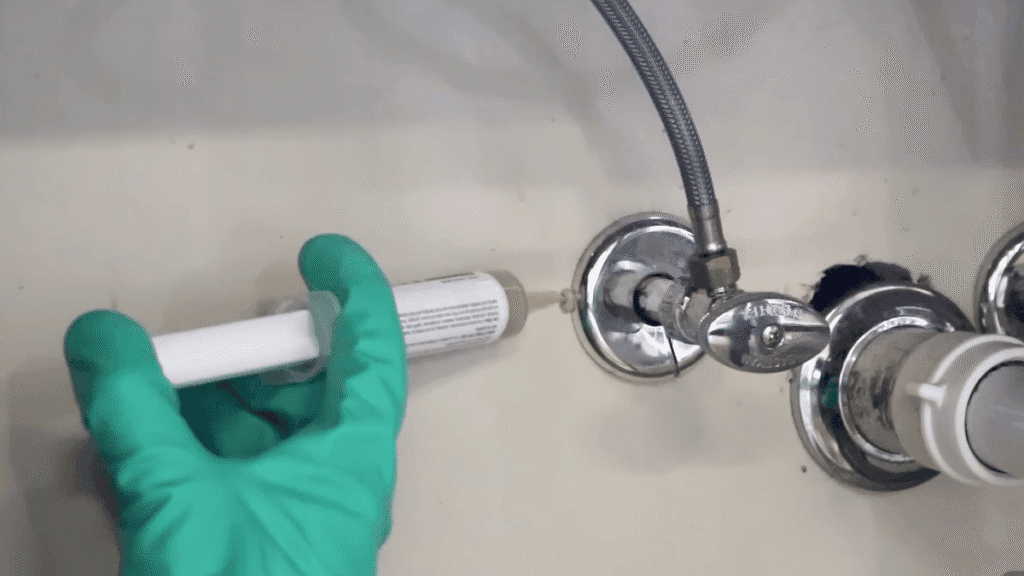
Pro tip for hollow table legs: if your stainless steel prep tables have hollow legs without sealed caps, German roaches will live inside them by the hundreds. Inject Advion gel into each leg through any access opening. This single placement on a heavily infested set of prep tables can dramatically drop the kitchen’s population.
Keep gel placements at least 12 inches away from any fipronil spray. Spray residue contaminates the area around gel and roaches will avoid bait that smells like fipronil. The two products work together when they don’t touch.
Step 5: Optional Add-On for Deep Voids – Gentrol Complete IGR Aerosol
For deep voids and hard-to-reach spaces where mixing concentrate isn’t practical, a pressurized aerosol with a crack-and-crevice straw applicator is a fast and effective add-on.
Gentrol IGR Concentrate – 1 Pint
Professional insect growth regulator that stops roach, fly, and stored‑product pest reproduction for up to 4 months.
- What It Does Breaks the life cycle of roaches, drain flies, fruit flies, bed bugs, and pantry pests. Prevents reinfestation by sterilizing adults and stopping nymphs from maturing.
- Where You Can Use It Food and non‑food areas, kitchens, bathrooms, restaurants, warehouses, commercial buildings, and residential spaces.
- Why Pros Use It Hydroprene provides long‑lasting population control and pairs perfectly with fipronil sprays for complete roach treatment.
- Shelf Life Up to 3 years when stored in a cool, dry place.
- Active Ingredient Hydroprene 9% (IGR)
- Mix Rate 1 fl oz per gallon (Gentrol EC)
- Best Pairing Use with a fipronil concentrate for crack‑and‑crevice kill + IGR reproduction control.
Available on Amazon!
Competitive pricing + Fast Free shipping on all orders!
Gentrol Complete combines a fast-acting insecticide with Gentrol IGR in a pre-mixed pressurized can with a straw applicator. The straw reaches deep into cracks, equipment voids, motor housings, and electrical conduit chases where a pump sprayer can’t go.
When the aerosol is the right tool:
- Deep equipment voids the pump sprayer can’t reach
- Motor housings on refrigeration and cooking equipment
- The gap between two walk-in coolers
- Inside the dish machine cabinet
- Wall voids where you’ve removed a switch plate or outlet cover
- Quick spot treatment of an active trail spotted during a shift change
Use the straw applicator for precision. A 1 to 2 second burst into each crack is enough. Keep aerosol away from open flame on the cookline.
Step 6: Place Bait Stations in Dining Rooms and Customer Areas
For dining rooms, bars, customer bathrooms, the host stand, and any other customer-facing area, gel and spray are not appropriate. Bait stations are.
Where to place stations:
- Under each booth seat (tucked against the wall, not visible to guests)
- Inside the host stand
- Inside the bar back service area
- Under and behind the soda fountain
- In each customer bathroom (under the sink, behind the toilet, in the corner behind the trash receptacle)
- Inside dining room service stations
- Inside the manager’s office
- In any storage area accessible from the dining room
Stations are pre-loaded, tamper-resistant, and discreet. They work passively for weeks. Replace every 60 to 90 days as ongoing protection.
Step 7: Treat the Floor Drains
Floor drains in commercial kitchens are one of the most overlooked roach harborage spots in the entire building. The combination of organic biofilm (the grease, food particles, and bacteria that build up in drain plumbing), constant moisture, and warmth makes drains an ideal breeding environment for both American and German roaches.
Drain treatment:
- Use an enzyme-based or foaming drain cleaner specifically designed to break down organic biofilm. Standard drain cleaners (lye, acid) don’t address the organic buildup that feeds the roaches.
- Pour or foam the product into every floor drain in the kitchen, dish pit, and walk-in floor drains
- Treat every 2 weeks for the first 60 days, then monthly as ongoing maintenance
- Pour a cup of water into every rarely-used floor drain monthly to keep P-traps full and block sewer access
This step alone has resolved persistent commercial roach problems in restaurants that were treating everything else correctly and still couldn’t get the population down. The drains were the missing piece.
Step 8: Light Dusting in Wall Voids
For wall voids, electrical boxes, and other enclosed spaces where you suspect roach harborage and can’t reach with spray or gel, a light application of insecticidal dust (diatomaceous earth or boric acid dust) provides long-lasting residual control.
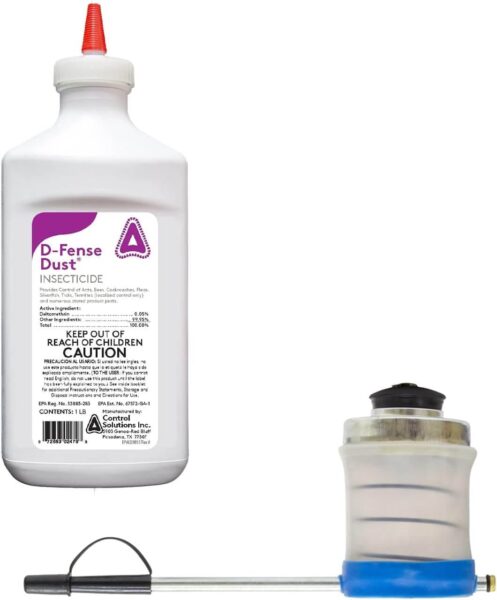
D‑Fense Dust 1 lb + 5″ Clear Puffer Duster Kit
A ready‑to‑use dusting kit that reaches deep cracks, seams, and dry areas where sprays can’t go. Long‑lasting, waterproof dust with a precision puffer for easy application.
- Reaches Where Sprays Can’t: Dust easily gets into deep cracks, voids, and dry areas that shouldn’t get wet.
- Ready to Use: No mixing or prep — just fill the puffer and apply.
- Long‑Lasting Control: Kills crawling insects for up to 8 months when left undisturbed.
- Waterproof Formula: Dust won’t clump or break down in moisture.
- Precision Application: Includes a 5‑inch clear puffer duster for controlled, even dusting.
Available on Amazon!
Fast Free shipping on all orders!
Where to dust:
- Inside wall voids accessed by removed outlet or switch plate covers (very light application, never inside electrical components)
- Above ceiling tiles in suspected harborage areas
- Inside the wall void above and below the cookline
- In any hollow wall cavity exposed during inspection
Use a hand duster for precision. A light coating works far better than a heavy application. Roaches avoid thick piles of dust.
Step 9: Sticky Monitoring Traps
Monitoring traps are how you know whether treatment is working and where activity is still concentrated.
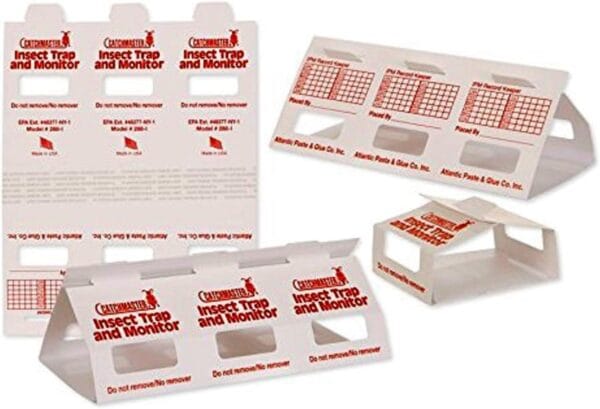
Glue Monitoring Traps
Catchmaster 288i Insect Trap & Monitors are non‑toxic, chemical‑free glue traps that fold into clean tunnel monitors and come perforated so each board becomes three sticky traps.
- 3‑in‑1 Design: Each board is perforated into three traps.
- Non‑Toxic: Chemical‑free monitoring for roaches, spiders, and silverfish.
- Super Sticky: Very effective on insects & spiders.
- Clean Handling: Pick up easily — glue and insects stay inside the tunnel.
- Easy to Use: Fold and place along walls, under appliances, or in closets.
Available on Amazon!
Competitive pricing + Fast Free shipping on all orders!
Where to place traps:
- Along the wall behind every piece of refrigeration
- Under the dish machine
- Along the floor in the dry storage room
- Behind the host stand and bar
- Along the wall in the manager’s office
- Inside the walk-in cooler and freezer (at the floor level)
Check traps every 2 to 3 days during active treatment. Empty traps after 14 days is a good sign. Continue monitoring with traps in place for 6 weeks after the second treatment.
Step 10: Retreat at Day 14
Roach egg cases are protected by a casing that resists insecticide penetration. The eggs present at the time of your first treatment will hatch over the next 5 to 14 days, producing a new generation of nymphs. The Gentrol IGR you applied in step 3 stops these nymphs from molting into reproducing adults, but a second application of fipronil at day 14 catches the nymph cohort directly and refreshes the residual.
Repeat steps 3 through 5 at the 14-day mark. Same product, same placements, same protocol. Two treatments spaced 14 days apart is the standard professional approach for commercial kitchen German roach elimination.
Why This Protocol Works
This is the protocol that licensed commercial pest control operators use because each product addresses a specific gap in the others.
- Fipronil Plus C kills active roaches in the cracks and crevices where they live and travel. Non-repellent transfer reaches harborage spots you can’t physically access.
- Gentrol IGR Concentrate stops the next generation. The reproductive cycle of the colony breaks down, so even surviving roaches don’t produce viable offspring.
- Advion Roach Gel reaches the deep equipment voids that spray can’t. The slow-kill indoxacarb and the secondary kill chain (roaches eating dead roaches) clear out the population living inside table legs, motor housings, and equipment cavities.
- Bait stations handle customer-facing areas where spray and gel aren’t appropriate. They work passively for weeks and stay invisible to customers.
- Drain treatment addresses the harborage spot most commercial kitchens miss entirely.
- The day-14 retreatment catches the nymph cohort that emerges from eggs after the first round.
Each product alone produces a 60 to 70 percent result. All five together produce a 95 to 99 percent result that holds.
How to Keep Roaches Out of Your Restaurant Long-Term
Ranked by impact.
- Stay on a 60-day perimeter and crack-and-crevice schedule. This is the maintenance rhythm professional commercial pest control runs. Fipronil Plus C + Gentrol IGR every 60 days, gel placements refreshed every 60 days, bait stations replaced every 60 to 90 days, drain treatment every 30 days.
- Maintain aggressive sanitation. Daily degrease of the cookline. Trash out at end of shift. No standing water on floors overnight. Clean behind equipment weekly. The roaches you don’t have to kill are the ones who can’t find food.
- Run nightly walkthroughs with a flashlight. Five minutes after closing, scan the kitchen for live roaches. Early detection of a new introduction means catching the problem at 10 roaches instead of 500.
- Inspect every incoming delivery. Produce boxes, dry goods, beverage shipments, and especially cardboard packaging are documented commercial roach introduction routes. Break down cardboard outside, inspect produce in receiving, and don’t store cardboard inside.
- Maintain door sweeps and seal entry points. Worn door sweeps at the back door, gaps around the dock door, and unsealed plumbing penetrations all let outdoor roaches walk into the kitchen.
- Train your team to recognize and report sightings immediately. A line cook who sees one roach at 11 PM and reports it lets you act before it becomes a problem. A line cook who ignores it gives you a citation in 6 weeks.
Edge Cases Where DIY Hits a Wall
For commercial kitchen roach problems caught early or contained to one operation, this protocol handles every situation I’ve seen in 25 years of pest control work. The chemistry is the same chemistry licensed commercial operators use. The application takes a couple of hours per round, plus the day-14 retreat.
Where it gets harder:
- Severe established infestations with daily live-roach sightings during business hours. When the population is large enough to be visible to customers and inspectors, you have a 6+ month infestation. The protocol still works, but it takes 3 to 4 treatment rounds spaced 14 days apart instead of 2, plus a heavy commitment to sanitation and drain treatment. Consider whether the volume justifies bringing in a licensed commercial operator for the initial knock-down and switching to DIY maintenance afterward.
- Multi-unit buildings and food courts. Shared walls, shared electrical chases, and shared plumbing between food-service operations mean roaches travel between operations regardless of how well one operation treats. Coordinated treatment across every connected operation is the only way to break this cycle. This usually requires building management involvement.
- Older buildings with structural issues. Buildings with gaps under walls, cracked foundations, broken drain lines, or untreatable harborage zones (like the hollow space inside very old built-in cabinetry) may need structural repair before chemical treatment can succeed. The pest part is straightforward. The construction part may not be.
- Health department restrictions on certain products in specific facility types. Most jurisdictions allow the products in this protocol in commercial kitchens when applied per the label. A few specialized facility types (healthcare food service, school food service, some childcare food service) may have stricter restrictions. Read the label and check local regulations before applying.
Frequently Asked Questions
TREATMENT
What’s the best treatment for roaches in a commercial kitchen?
The best treatment for roaches in a commercial kitchen is a crack-and-crevice spray with Fipronil Plus C mixed with Gentrol IGR Concentrate, paired with Advion Roach Gel Bait placed inside equipment voids, hollow table legs, and behind refrigeration units. Bait stations handle dining rooms and customer-facing areas. Floor drains get treated with an enzyme-based foaming cleaner. The protocol gets repeated at day 14 to catch the nymph cohort that emerges from eggs after the first round. Most commercial kitchens see major reduction within 2 to 3 days and visible roaches gone in about a week.
Can I treat my restaurant for roaches myself, or do I need a licensed pest control company?
Yes, you can treat your own restaurant for roaches without hiring a licensed pest control company in most jurisdictions. The products in this protocol (Fipronil Plus C, Gentrol IGR Concentrate, Advion Roach Gel Bait, and Advion or Maxforce bait stations) are sold directly to restaurant operators and labeled for use in food-service environments when applied per the label. Running the protocol yourself saves the monthly pest service fees, gives you faster response when you see new activity, and lets you stay ahead of health inspections without waiting for a scheduled service visit. The only requirement is reading and following the product labels.
What’s the difference between commercial roach treatment and home roach treatment?
Commercial roach treatment differs from home roach treatment in three ways: commercial kitchens have constant food and grease available that competes with bait, dozens of specialized harborage spots (hollow stainless steel table legs, refrigeration motor housings, floor drains, dish machine cavities), and strict food-safety restrictions on where and how products can be applied. The products used are similar (fipronil, hydroprene IGR, indoxacarb gel) but the placements, sanitation requirements, and drain treatment are much more aggressive than residential. Crack-and-crevice application is required in food-service environments, not broadcast spraying.
How long does it take to get rid of roaches in a restaurant?
It takes about 7 to 14 days to get rid of roaches in a restaurant when the full protocol is run correctly. Major reduction in visible activity happens within 2 to 3 days. Most live roaches are gone by day 7. The second treatment at day 14 catches the nymph cohort that emerges from eggs after the first round. Complete elimination, including any eggs that hatch after the second treatment, takes 21 to 30 days total. Heavily infested kitchens with 6+ months of untreated activity may take 3 to 4 treatment rounds and 60 to 90 days for full elimination.
How often should I treat my restaurant kitchen for roaches?
You should treat your restaurant kitchen for roaches every 60 days as ongoing preventative maintenance. Fipronil Plus C and Gentrol IGR Concentrate residuals last 60 to 90 days in indoor commercial environments. Advion gel placements should be refreshed every 60 days. Bait stations get replaced every 60 to 90 days. Floor drains get treated every 30 days. Run a nightly flashlight walkthrough after closing for early detection between treatments. This schedule matches what licensed commercial pest control operators run on monthly or bi-monthly service routes.
Can I apply Fipronil Plus C in a food-service environment?
Yes, Fipronil Plus C is labeled for use in food-service environments including commercial kitchens, restaurants, food preparation areas, and food storage areas. It must be applied as a crack-and-crevice treatment only, not as a broadcast spray on food-contact surfaces. Apply along baseboards, behind equipment, around plumbing penetrations, and into cracks and crevices. Cover or remove food before application, and let treated areas dry completely before food preparation resumes. Always read and follow the product label, which is the legal document for application.
Why do I need an IGR for commercial roach control?
You need an IGR (insect growth regulator) for commercial roach control because it stops the next generation of roaches from reproducing, which is the only way to achieve long-term elimination in a high-pressure environment. Gentrol IGR Concentrate contains hydroprene, which disrupts roach development so nymphs cannot molt into reproducing adults and females produce egg cases that do not hatch. Without an IGR, you kill 95 percent of the population with insecticide and the surviving 5 percent rebuilds within weeks. With an IGR, the survivors are reproductive dead ends and the population collapses for good.
PRODUCTS
What’s the best roach gel for restaurants?
The best roach gel for restaurants is Advion Roach Gel Bait. It uses indoxacarb in a sweet protein-rich gel formulation that German cockroaches and American cockroaches aggressively accept. Indoxacarb is slow-acting by design, so roaches survive long enough to carry the active ingredient back to harborage and pass it through the population via the secondary kill chain (other roaches eating the carcasses and feces). Advion gel reaches into equipment voids, hollow table legs, motor housings, and cabinet seams where spray cannot go.
What’s the best roach spray for commercial kitchens?
The best roach spray for commercial kitchens is Fipronil Plus C mixed with Gentrol IGR Concentrate. Fipronil is non-repellent, meaning roaches do not detect it as a threat and walk through treated zones picking up a lethal dose. The non-repellent transfer reaches roaches in harborage spots you cannot physically reach with spray. Gentrol IGR added to the mix stops surviving roaches from reproducing. Apply as a crack-and-crevice treatment along baseboards, behind equipment, around plumbing, and at electrical entries.
Should I use bait stations in a restaurant dining room?
Yes, bait stations are the right product for dining rooms, bars, customer bathrooms, host stations, and any customer-facing area where applying liquid spray or open gel is not appropriate. Advion and Maxforce bait stations are pre-loaded, tamper-resistant, discreet, and work passively for weeks. Place them under booth seats tucked against the wall, inside the host stand, behind soda fountains, in bar back service areas, and inside each customer bathroom. Replace every 60 to 90 days as ongoing protection.
When should I use the Gentrol Complete Aerosol instead of the concentrate?
Use the Gentrol Complete IGR Aerosol instead of the concentrate when you need to reach deep equipment voids, motor housings, and hard-to-access cracks where a pump sprayer cannot reach. The aerosol comes pre-mixed in a pressurized can with a crack-and-crevice straw applicator that injects product into voids, wall cavities, and tight spaces. It also works for quick spot treatment of active trails between scheduled treatments. The concentrate is more cost-effective for full-kitchen treatments. The aerosol is faster and more precise for void work and on-the-spot kills.
SANITATION AND DRAINS
Why does sanitation matter for restaurant roach control?
Sanitation matters for restaurant roach control because roaches will not eat your bait or contact your spray surfaces if grease, food residue, and standing water are available as competing food sources. In a commercial kitchen, baseline food availability is high, which means bait acceptance depends on aggressively cleaning the cookline, pulling equipment to clean behind it, fixing leaks, and removing trash before treatment. Untreated grease behind a fryer or food spills under a reach-in cooler will reduce treatment effectiveness by 30 to 50 percent regardless of which products you use.
How do I treat floor drains for roaches?
Treat floor drains for roaches with an enzyme-based foaming drain cleaner specifically designed to break down the organic biofilm (grease, food particles, and bacteria) where roaches breed. Standard drain cleaners (lye, acid) do not address the organic buildup that feeds the roaches. Pour or foam the product into every floor drain in the kitchen, dish pit, and walk-in floor drains. Treat every 2 weeks for the first 60 days, then monthly as ongoing maintenance. Pour a cup of water into rarely-used floor drains monthly to keep P-traps full and block sewer access from below.
Can roaches really live in floor drains?
Yes, roaches absolutely live in commercial kitchen floor drains, and drains are one of the most overlooked roach harborage spots in restaurants. The combination of organic biofilm coating the drain plumbing, constant moisture, warmth, and protection from light makes drains an ideal breeding environment for both American cockroaches and German cockroaches. Untreated drains continuously reseed the kitchen with new roaches no matter how thoroughly you treat the rest of the space. Drain treatment with an enzyme-based foaming product breaks up the biofilm and removes the breeding habitat.
INSPECTIONS AND COMPLIANCE
How do I prepare for a health inspection if I’ve had roaches?
To prepare for a health inspection after a roach problem, run the full treatment protocol (Fipronil Plus C with Gentrol IGR, Advion gel, bait stations, drain treatment) 14 to 21 days before the inspection, with a second treatment at the 7-day mark. Aggressively clean and degrease the entire kitchen, including behind and under every piece of equipment. Document your treatment dates and products used in a written pest log. Remove visible egg cases and droppings. Set sticky monitoring traps to confirm no live activity. A 21-day treatment window before inspection typically clears visible activity completely.
What do health inspectors look for regarding roaches?
Health inspectors look for live roaches, dead roaches, roach droppings (which look like coarse ground pepper), egg cases glued to surfaces, shed skins in harborage areas, and evidence of treatment program (written pest log, bait station placement records, treatment dates). Inspectors will check behind equipment, inside the dish pit, around floor drains, in dry storage shelving, and inside customer bathrooms. A clean visible kitchen plus a documented treatment program is what passes inspection. Visible roaches or droppings during the inspection itself can result in citations, closures, or required immediate corrective action.
Are the products in this protocol legal for use in commercial kitchens?
Yes, the products in this protocol (Fipronil Plus C, Gentrol IGR Concentrate, Advion Roach Gel Bait, Advion and Maxforce Bait Stations, and Gentrol Complete IGR Aerosol) are all EPA-registered and labeled for use in commercial kitchens and food-service environments when applied per the product label. The label is the legal document for application. Read it before using and follow it exactly. Most jurisdictions allow restaurant operators to apply these products in their own facility without a pest control license. A few specialized facility types (healthcare food service, school food service) may have stricter restrictions, so check local regulations.
LONG-TERM CONTROL
How do I keep roaches from coming back to my restaurant after treatment?
To keep roaches from coming back to your restaurant after treatment, stay on a 60-day treatment schedule (Fipronil Plus C with Gentrol IGR every 60 days, gel refresh every 60 days, bait stations replaced every 60 to 90 days), treat floor drains every 30 days with an enzyme foaming cleaner, maintain aggressive daily sanitation (degrease cookline, take trash out at end of shift, no standing water overnight), inspect every incoming delivery for roaches in cardboard packaging, maintain door sweeps and seal entry points, and run a nightly flashlight walkthrough after closing for early detection.
Can I cancel my monthly pest control service if I run this protocol myself?
Yes, many restaurant operators successfully cancel their monthly pest control service after taking over the protocol themselves. The products and methods used by licensed commercial pest control operators are the same products you can purchase and apply yourself. The savings on a typical commercial pest control contract range from $150 to $500 per month depending on facility size, which is significantly more than the cost of the products and your time. Before canceling, confirm your jurisdiction does not require a licensed pest control program for your specific facility type, document your in-house treatment program in writing for health inspections, and make sure at least one trained staff member is responsible for running the protocol consistently.
How do I train my staff to prevent roach problems in my restaurant?
Train your staff to prevent roach problems by teaching them to recognize and immediately report any live roach sighting, daytime sighting, or signs of droppings to management. Train cooks to degrease the cookline daily, pull equipment for cleaning weekly, take trash out at end of shift, and not leave standing water on floors overnight. Train receivers to inspect incoming cardboard packaging before bringing it into the kitchen and break boxes down outside. Train closers to run a 5-minute flashlight walkthrough after closing to spot early activity. Document all sightings, treatments, and sanitation actions in a written pest log.