
This page contains affiliate links. I may earn a commission at no extra cost to you.
The best product to get rid of spiders is Atticus Devito CS, applied at 0.8 oz per gallon as a perimeter spray indoors and outdoors, paired with attention to the insects that are bringing spiders into your house in the first place. Seal the gaps spiders walk through. Most homes go from a recurring spider problem to nearly nothing in one treatment cycle.
TL;DR: How Do I Treat And Control Spiders
- Knock down all webs, egg sacs, and debris with a broom or vacuum first. Spray works better on clean surfaces, and the spiders have to rebuild on treated areas.
- Mix Devito CS at 0.8 oz per gallon in a pump sprayer. Spray indoors along baseboards, corners, window frames, door frames, light fixtures, and the garage perimeter.
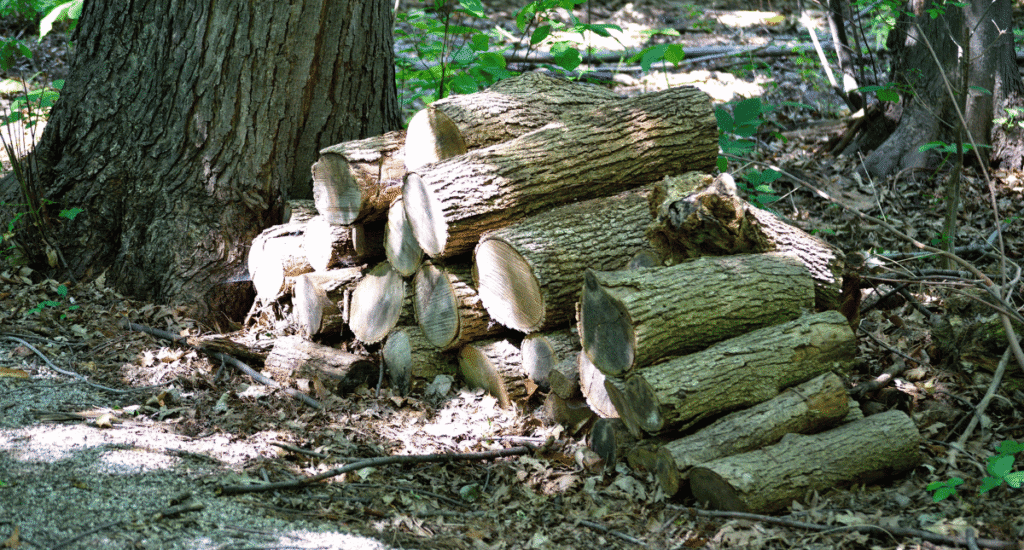
- Spray outdoors as a 3-foot perimeter band, plus eaves, soffits, exterior light fixtures, woodpiles, sheds, and any outdoor spot where spiders build webs.
- Replace worn door sweeps and garage door seals.
- Seal the slab-to-wall gap with caulking cord.
- Cut off the food. Treat the insects that brought the spiders. Lights left on at night, standing water in plant trays, ants, flies, fungus gnats, all of it.
- Reapply the outdoor perimeter every 60 days during warm weather.
Keep reading for the full breakdown. ↓
What You Need
For spiders, two products handle the entire job. One for the planned treatment. One for the on-the-spot kill.
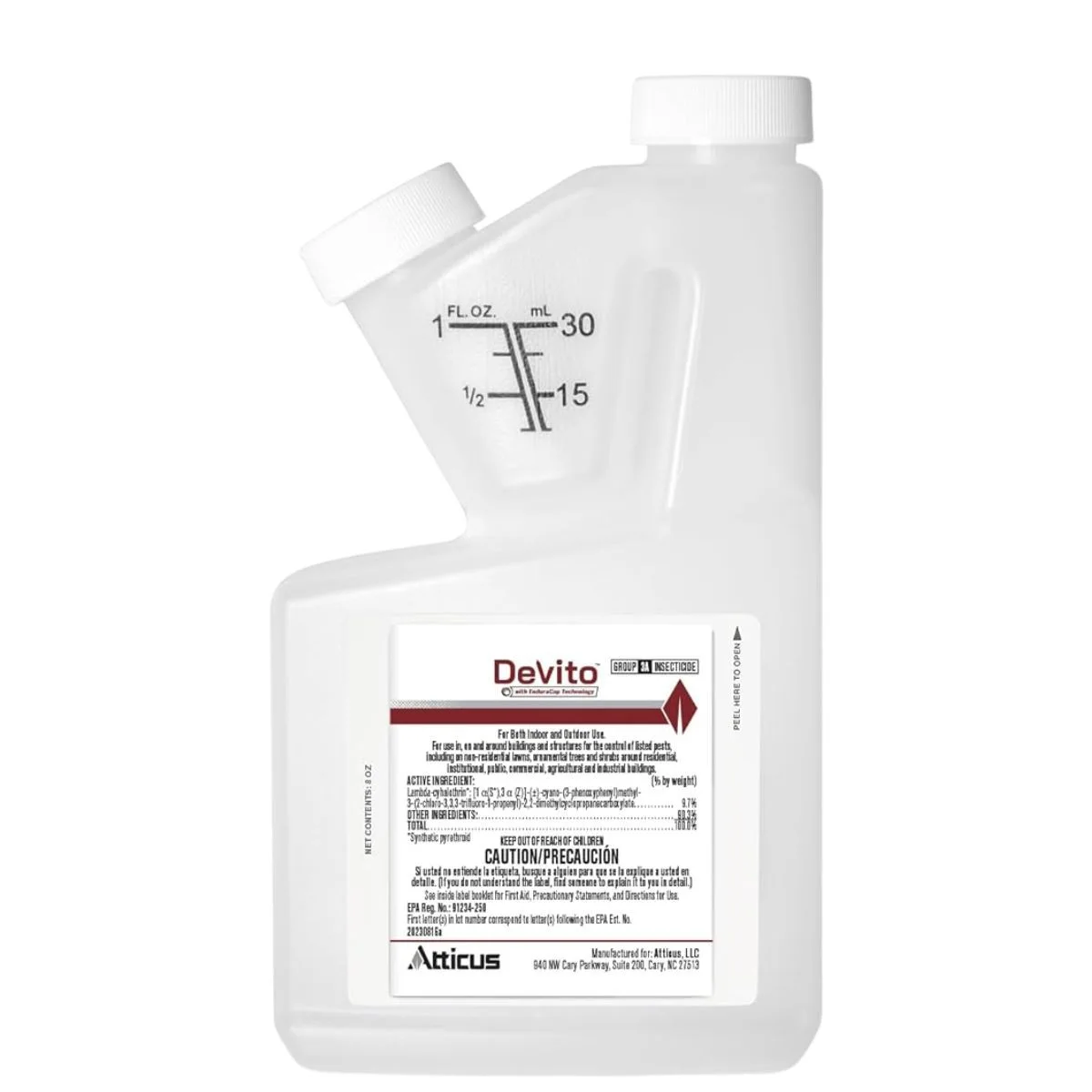
Atticus Devito CS Insecticide
Devito™ CS uses advanced EnduraCap Technology, which wraps the insecticide in tiny protective capsules so it sticks to insects better and lasts longer on surfaces. It works with lambda‑cyhalothrin, a trusted ingredient that stops insects by targeting their nervous system. The result is dependable, long‑lasting, broad‑spectrum control for many common indoor and outdoor pests.
- Formulated for fast + lasting insect control
- Long-lasting residual control
- EnduraCap Technology is a professional microencapsulated insecticide
- Ideal for perimeter defense
- Rapid-release for effective knockdown


Available on Amazon!
Competitive pricing + Fast Free shipping on all orders!
Devito CS uses lambda-cyhalothrin in a micro-encapsulated formulation called EnduraCap. The micro-encapsulation matters for spiders specifically. Spiders behave differently from most insects when it comes to picking up insecticide:
- They don’t groom themselves the way ants or roaches do, so they don’t lick the product off their legs and ingest it
- They don’t eat the bait the way other pests do
- They pick up insecticide almost entirely through contact, by walking across treated surfaces
Micro-encapsulated formulas leave tiny capsules of insecticide on the surface. As a spider walks across, the capsules stick to the legs and body, releasing the active ingredient onto the spider over time. It’s the difference between a brief contact dose from a standard spray and a sustained dose that actually kills the spider. After 25 years of treating spiders, micro-encapsulated lambda-cyhalothrin is the only chemistry I’ll use on this pest as a primary treatment.
Residual on Devito CS is 90 days inside and 60 days outside for spider control. That’s long enough that staying on a 60-day outdoor reapplication schedule during warm weather covers you all season.
Why You’re Seeing Spiders (And Why It’s Not About Cleanliness)
Spiders are predators. They don’t seek out houses. They seek out food. If you’re seeing spiders, something else is in your house first, and the spiders are following it. Once you handle the spiders directly with the spray, the next question is what brought them in. Otherwise they keep coming back.
The food sources that draw spiders into homes:
- Lights left on at night near screens, windows, porches, and pool cages. Lights attract flying insects (moths, mosquitoes, gnats, beetles). Insects attract spiders. A porch light or screen-enclosure light burning all night is the single biggest spider magnet on most properties.
- Standing water in plant trays and saucers. Especially on screened porches and pool cages. Standing water in pot saucers grows fungus gnats. Fungus gnats grow spider populations.
- Ants, flies, and other small insects already in the house. Spiders move in because the hunting is good.
- Cluttered garages, basements, and storage areas. Lots of insects already living there, lots of hiding spots, lots of corners for webs.
- Woodpiles, leaf litter, and dense landscaping near the house. Outdoor spider populations build up in this kind of cover and migrate toward the house as conditions change.
- Mulch and shrubs touching the house. Direct access route from outdoor harborage to indoor space.
After 25 years of treating spider problems, the homes that get cleared in one treatment versus the ones that keep getting them back come down to one factor: whether the homeowner addressed the food source. Spray alone kills the spiders that are there. Without dealing with the insects that brought them, you’ll be spraying again in 60 days. That’s fine if you’ve committed to the maintenance schedule. It’s also avoidable if you handle the food source.
This page is about getting rid of the spiders you have. But the food angle has to come through because that’s what determines whether the problem stays gone.
Signs You Have a Spider Problem
- Webs in corners, around door frames, window frames, light fixtures, eaves, and ceiling corners. New webs reappearing within a day or two of being cleared usually mean active spiders.
- Spider egg sacs glued to surfaces. Small, cottony or silky balls in corners and under furniture. Each one can contain hundreds of spiderlings.
- Sightings of spiders moving across walls, floors, or ceilings, especially at night.
- A spider in the bathtub or sink in the morning. Spiders fall in and can’t climb the smooth sides back out.
- Webs around exterior light fixtures. Almost always indicates active outdoor spider populations feeding on light-attracted insects.
Quick Field Guide: Spiders Worth Identifying
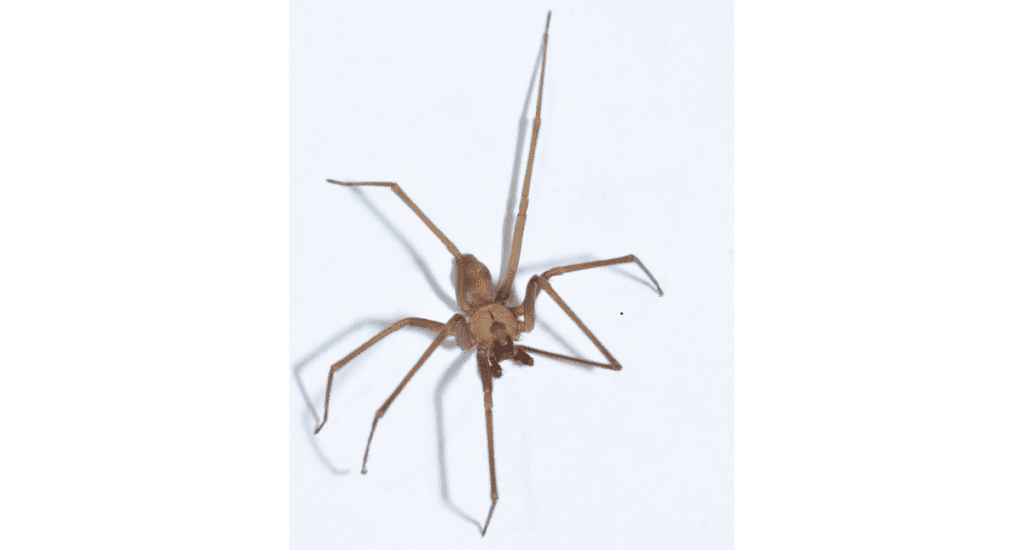
Most spiders inside houses are harmless nuisance pests that bite only when squeezed against skin. Two species worldwide produce bites that need medical attention, and a few regional species are more serious. Don’t get stuck on perfect identification. The treatment approach below works for all of them.
| Species | Where | What They Look Like | Bite Risk |
|---|---|---|---|
| Brown recluse | Central and southern US only (NOT California, NOT the East Coast, NOT outside the US) | Light brown with darker violin shape on the back, six eyes in three pairs | Can cause skin necrosis. Get medical help if bitten. |
| Black widow | Worldwide (multiple species) | Shiny black with red hourglass on the belly | Painful bite with systemic symptoms (cramping, sweating). Get medical help. |
| Hobo spider | Pacific Northwest US, parts of Europe | Brown, fast-running, similar in size to wolf spider | Bites painful, much less serious than once believed |
| Australian funnel-web | Eastern Australia | Glossy black, large, aggressive when disturbed | Medically serious. Immediate medical attention required. |
| Redback spider | Australia, parts of Southeast Asia | Similar to black widow, red stripe on back | Painful with systemic symptoms. Antivenom available. |
| Brazilian wandering spider | South America (Brazil, Colombia, Peru) | Large, brown, aggressive | Medically serious. Immediate medical attention required. |
| Wolf spider | Worldwide | Brown, hairy, fast, often carries egg sac or babies on back | Bite is painful but not medically serious |
| Cellar spider (daddy long-legs) | Worldwide | Pale, thin legs, hangs in corner webs | Cannot bite humans meaningfully. Harmless. |
| Jumping spider | Worldwide | Small, often colorful, watches you with big front eyes | Curious, not aggressive. Harmless. |
| House spider | Worldwide | Tan to brown, builds tangled webs in corners | Harmless. |
Most spiders in your house are nuisance spiders. They look scary because all spiders look scary, but they’re not going to hurt you. The treatment is the same regardless of species, so don’t get stuck trying to identify the exact one. Spray the perimeter, knock down the webs, address the food source, and move on.
When to seek medical attention for a spider bite:
- Known or suspected black widow, brown recluse, hobo, funnel-web, redback, or wandering spider bite
- Spreading darkness, blistering, or tissue dying at the bite site (necrosis)
- Severe muscle cramps, abdominal pain, sweating, or difficulty breathing
- High fever after a bite
- Bite from any spider on a child, elderly person, or someone with compromised immune system
For ordinary spider bites, wash with soap and water, apply ice for swelling, take an over-the-counter pain reliever, and watch the site over 24 hours. Most resolve without medical care.
How to Get Rid of Spiders, Step by Step
Step 1: Knock Down Webs and Egg Sacs First
Before any spray goes down, walk through the house and the exterior with a broom or a vacuum with an extension wand. Remove every web, egg sac, and debris pile you can see.
This step matters more than most people realize. Pesticides work on clean surfaces. Webs and debris block spray from reaching the wall, baseboard, or corner underneath. Worse, spiders that don’t have to rebuild don’t have to cross your treated surface as much.
By clearing the webs first, you force the spiders to come out of hiding and walk across treated areas when they rebuild. That contact is what kills them.
Where to clear webs:
- Every interior corner (ceiling corners, wall corners, behind furniture)
- Around all window and door frames inside and out
- Around every interior and exterior light fixture
- Under eaves and soffits
- Around porch ceilings and pool cage frames
- Around exterior outlets and hose bibs
- Inside the garage, especially corners and along the wall-ceiling line
- Around woodpiles, sheds, and outdoor storage
- Under outdoor furniture
For egg sacs specifically, vacuum them up (don’t just knock them to the floor). A vacuum hose with a sealed bag or canister means hundreds of spiderlings get disposed of cleanly. Empty the vacuum into a sealed plastic bag and put it in the outdoor trash immediately.
Step 2: Spray Devito CS at 0.8 oz Per Gallon
Mix Devito CS at 0.8 oz per gallon of water in a pump or battery-powered sprayer.
Atticus Devito CS Insecticide
Devito™ CS uses advanced EnduraCap Technology, which wraps the insecticide in tiny protective capsules so it sticks to insects better and lasts longer on surfaces. It works with lambda‑cyhalothrin, a trusted ingredient that stops insects by targeting their nervous system. The result is dependable, long‑lasting, broad‑spectrum control for many common indoor and outdoor pests.
- Formulated for fast + lasting insect control
- Long-lasting residual control
- EnduraCap Technology is a professional microencapsulated insecticide
- Ideal for perimeter defense
- Rapid-release for effective knockdown
Available on Amazon!
Competitive pricing + Fast Free shipping on all orders!
Use a coarse spray, not a fine mist. This matters for spiders. A coarse spray drops more product onto the surface where the spiders walk, and it keeps the micro-encapsulated formula intact. A fine mist breaks up too many of the capsules in the air.
Where to spray indoors:
- Along every baseboard, especially in rooms with exterior walls
- Every ceiling corner and wall corner
- Around every window frame
- Around every door frame
- Around every interior light fixture
- Inside the garage along baseboards, corners, and the floor-wall seam
- Around plumbing penetrations under sinks
- Around utility entry points where wires and pipes come through walls
- Behind washing machines, dryers, and refrigerators
- Around water heaters and HVAC equipment
- Closet corners
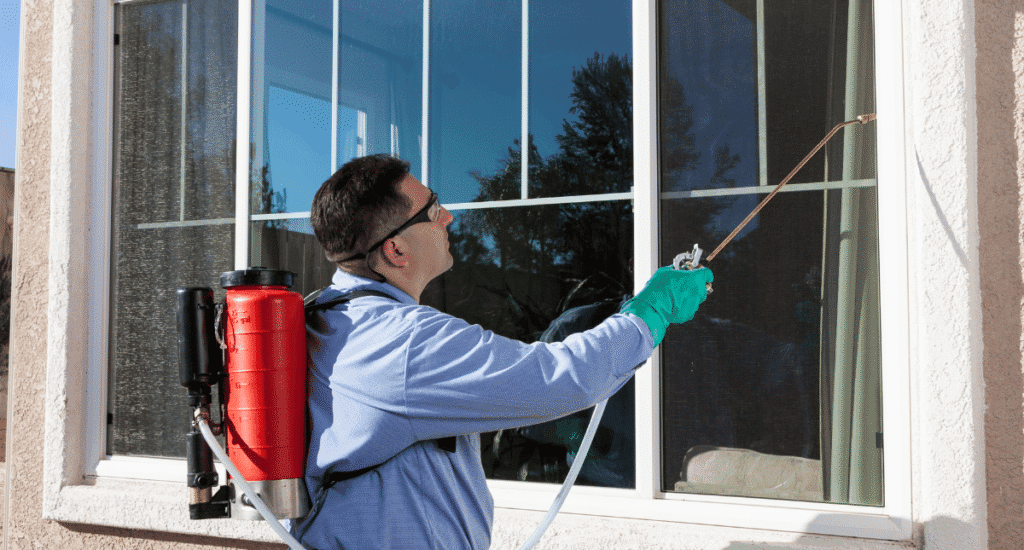
Where to spray outdoors:
- A 3-foot perimeter band along the foundation
- Around every door and window frame on the exterior
- Around the garage door track and the bottom seam
- Eaves, soffits, and the underside of overhangs
- Around every exterior light fixture
- Porch ceilings and patio overheads
- Pool cage frames and screen enclosure structural beams
- Around AC condenser units
- Around all utility penetrations and hose bibs
- The base of firewood piles
- Around sheds, outbuildings, and detached garages
- Around the bases of any shrubs touching the house
Let everything dry for 1 to 2 hours before normal traffic. Outdoor surfaces dry faster in sun and warm weather.
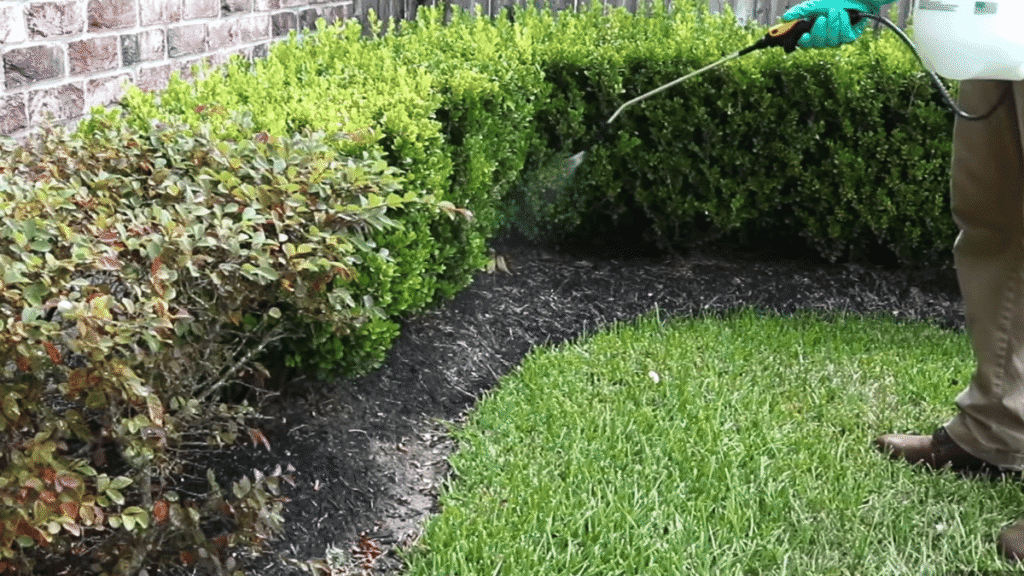
Step 3: Address the Food Source
This is the step that decides whether your spider problem stays gone for 60 days or 6 months. Spiders followed the food in. Cut the food, and the next generation of spiders won’t have anywhere to settle.
- Manage exterior lights at night. White and blue-white outdoor bulbs pull in massive numbers of flying insects. Switching to yellow LED bulbs or motion-activated lighting cuts the insect population at the house by 70 to 90 percent in most cases. Turn off porch, garage, and pool cage lights when not in use.
- Handle standing water on screened porches and pool cages. Plant saucers full of water grow fungus gnats. Fungus gnats grow spider populations. Empty plant saucers. Don’t let water sit in pot drainage trays. Make sure pool cage drainage works and pools don’t form in corners.
- Treat any active ant, fly, or roach problem. Spiders are following the insects. If you have an active pest problem in the kitchen, the garage, or the yard, the spiders will come back as long as their food does. The Pestlenz ant pages, roach pages, and other household pest pages have the treatment for each.
- Pull mulch back from the foundation. Mulch touching the foundation is an insect freeway and a spider harborage all in one. Pull it back 12 inches and replace that strip with rock or bare soil.
- Trim shrubs and tree branches off the house. Anything touching the siding or roof is an access ramp for spiders and the insects they’re eating.
Step 4: Seal the Entry Points
Spiders walk in through gaps. Sealing those gaps is permanent prevention that pays off every year going forward.
Replace worn door sweeps and garage door seals. If you can see daylight under your doors, spiders walk under them. Most door sweeps wear out every 5 to 8 years. A new garage door bottom seal is about $20 to $30 at any hardware store and takes 15 minutes to install.
Seal the slab-to-wall gap with caulking cord. The gap between the concrete foundation slab and the wall framing is one of the most reliable entry points for spiders and other ground-level pests. It’s hard to seal with a standard caulk gun because the gap is long, narrow, and partially hidden by siding. Caulking cord (rope-style sealant you press into place with your fingers) seals this kind of gap fast and clean.
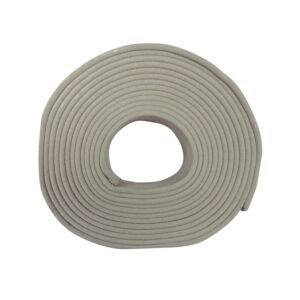
Rope‑style caulking cord
Flexible, press‑in rope caulk for sealing gaps around foundations, and slab‑to‑wall joints where scorpions, roaches, ants, and other insects squeeze through.
- Sealing the slab‑to‑wall joint (the hardest place to caulk)
- Filling weep holes in brick homes (use with copper mesh)
- Closing foundation gaps and siding seams
- Blocking roach, scorpion, and ant entry points
- Press‑in sealing around pipes, wires, and utility lines
- Temporary or long‑term exclusion where rigid caulk won’t work
Available on Amazon!
Roll the cord along the slab-to-wall seam and press it into place with your fingers. It seals well, doesn’t run, doesn’t drip, and you can pull it back out if needed. The same product works for sealing long gaps around window frames, the inside of garage door tracks, and any other long narrow seam.
Check screens on windows and screened porches. A spider can walk through a tear smaller than a dime. Patch or replace damaged screens.
Caulk gaps around utility penetrations. Wherever wires, pipes, AC lines, or other utilities enter the house, there’s usually a gap. Caulk or expanding foam closes them.
Step 5: The Aerosol for Spot Treatment
There’s one product worth keeping under the kitchen cabinet for the spider you find at 10 PM when you don’t feel like mixing up the sprayer.
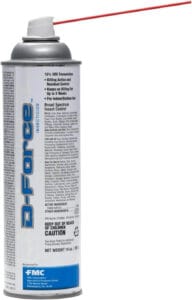
FMC D‑Force Aerosol – 14 oz
A long‑lasting residual aerosol for spiders, roaches, ants, and general pests – indoors or outdoors.
- Up to 8‑week residual for long‑term protection
- Indoor/outdoor use on baseboards, cracks, corners, and exterior entry points
- Broad‑spectrum control for spiders, roaches, ants, and more
- Great for spider prevention in garages, sheds, and home perimeter areas
Available on Amazon!
Competitive pricing + Fast Free shipping on all orders!
D-Force HPX is a pre-mixed pressurized aerosol with deltamethrin (a fast-acting pyrethroid) and works well for direct spider kill. It’s not as long-lasting as Devito CS, but for spot situations it’s the right tool.
When the aerosol earns its place:
- The spider on the wall in the living room right now (faster than getting out the pump sprayer)
- A wolf spider carrying her egg sac or babies on her back across the garage floor (you want her dead in one shot, not running away to release 200 spiderlings somewhere)
- Spiders in cars (the pump sprayer is a mess in a car, the aerosol is cleaner)
- Spiders on lawn furniture, patio cushions, and outdoor seating
- Quick treatment of screened porches without setting up the full sprayer
- Anywhere you find a single spider and want it dead in the next 30 seconds
Keep a can under the kitchen cabinet or in the laundry room. The aerosol is the everyday tool. The Devito CS pump-sprayer treatment is the planned schedule.
What Doesn’t Work
A few things you’ll see online that waste time or make spider problems harder.
- Spraying directly at the spider with most over-the-counter sprays. Many big-box brands are repellent pyrethroids that the spider walks away from rather than dies from. The fast-knockdown aerosols like D-Force are different. Make sure whatever you’re spraying directly at a spider is a fast-kill product, not a slow-residual perimeter spray.
- Vinegar, peppermint oil, lavender oil, and other “natural spider repellents.” Internet folklore. The smell might briefly disrupt a spider in a small space. It doesn’t reduce populations or stop new spiders from coming in. Skip the essential oils for actual spider problems.
- Spraying without knocking down webs first. The webs block spray from reaching the surface underneath, and spiders that don’t have to rebuild don’t have to cross your treated area. Always clear the webs first.
- Ignoring the food source. The treatment kills the spiders that are there. If you have ants in the kitchen, flies on the porch, gnats around the plants, and lights blazing on the patio every night, new spiders come right back as soon as the residual fades. Treat the food.
- Brown recluse panic outside their actual range. If you’re in California, New England, the Pacific Northwest, the UK, Australia, or most of Canada, you don’t have brown recluse. Misidentified brown recluse sightings outside their actual range are extremely common. The treatment works regardless of species, but the panic doesn’t help.
- Single-treatment thinking. Spider control is a maintenance situation in most climates. One treatment kills what’s there. New ones return as outdoor populations build up. Stay on the 60-day outdoor reapplication schedule during warm weather or accept that you’ll be re-treating reactively.
How to Keep Spiders From Coming Back
Ranked by impact.
- Reapply the outdoor perimeter every 60 days during warm weather. Single most important habit. Set a phone reminder. The Devito CS residual is 60 days outside, and missed cycles in peak summer let the population rebuild fast.
- Manage exterior lights. Yellow bulbs, motion sensors, lights off when not in use. Single biggest factor in cutting the insect food supply.
- Stay on top of plant saucers and standing water. Empty saucers regularly. Don’t let water sit in pot drainage trays anywhere. Especially important on screened porches and pool cages.
- Treat any active ant, fly, fungus gnat, or roach problem on the property. Spiders follow the food. Cut the food, cut the spiders.
- Maintain the exclusion work. Replace door sweeps every 5 years. Recheck caulking cord and weatherstripping every year. Patch damaged screens.
- Pull mulch back from the foundation and keep shrubs trimmed off the house.
- Clear webs proactively in spring. A 30-minute spring sweep of all eaves, light fixtures, and door frames forces new spiders to rebuild on the freshly treated perimeter.

Edge Cases Where DIY Hits a Wall
For spiders, there really aren’t any. DIY handles every spider problem I’ve seen in 25 years when the spray + exclusion + food source approach is followed correctly. The chemistry is the same chemistry professional companies use, the application is straightforward, and the species doesn’t matter for treatment purposes.
What does matter is maintenance frequency in heavy-pressure areas. If you live somewhere with year-round warm weather (Florida, the Gulf Coast, the Southwest, Australia, Southeast Asia, parts of Africa and South America), or somewhere with dense vegetation right against the house, or somewhere with chronic insect pressure, the 60-day outdoor reapplication is genuinely the difference between control and recurrence.
Miss two cycles and the spiders come back wide open. Stay on the schedule and you stay ahead of the problem.
The other thing worth noting: the slab-to-wall gap and door seal exclusion work is permanent if you maintain it. A spider that can’t walk into the house through a gap is a spider that never had the chance to colonize a corner. Get the exclusion right once, maintain the spray schedule, and even heavy-pressure areas stay manageable.
FAQ – How to Get Rid of Spiders
Identification & Behavior
Why do I have spiders in my house?
Spiders show up because there’s food. If you have flies, ants, roaches, or fungus gnats, spiders follow the food source. Fixing the insect problem reduces spider activity long‑term.
Do spiders mean my house is dirty?
No. Spiders are usually a sign of insects, not cleanliness. Even clean homes get spiders if there’s a food source or easy entry points.
Where do spiders usually hide indoors?
Corners, baseboards, behind furniture, around windows and doors, near light fixtures, and in garages. They prefer quiet edges where insects travel.
Treatment & Products
What’s the best spray for getting rid of spiders?
Use Decito CS Insecticide at 0.8 oz per gallon. It’s labeled for indoor and outdoor use and works extremely well because it’s microencapsulated.
Why does micro-encapsulation matter for spiders?
Spiders don’t groom themselves, so they don’t ingest pesticides.
Microcapsules stick to their legs and bodies better, giving you stronger and longer‑lasting control.
How should I apply the spray for spiders?
Use a coarse spray to avoid breaking the microcapsules. Spray corners, baseboards, window frames, door frames, light fixtures, and any areas where spiders build webs.
Do I need to knock down spider webs before spraying?
Yes. Knock down webs and egg sacs with a broom or brush. The spray works best on a clean surface, and removing webs forces spiders to cross treated areas.
Indoor Spider Control
Where should I spray indoors for spiders?
Spray baseboards, corners, window and door frames, light fixtures, garage edges, and plumbing lines. Treat any place you’ve seen spiders or want to prevent them.
Can houseplants cause spider problems?
Yes. Houseplants often develop fungus gnats, which attract spiders. You can spray the soil surface and the outside of the pot with LambdaStar UltraCap.
Will spraying inside get rid of spiders permanently?
It removes the spiders you have, but long‑term control depends on reducing insects, sealing entry points, and treating the exterior.
Outdoor Spider Control
Where should I spray outside for spiders?
Spray around windows, doors, soffits, porch ceilings, exterior lights, and siding edges. Also treat woodpiles, sheds, and landscaping where spiders build.
Why are woodpiles a spider hotspot?
Woodpiles create warm, protected gaps that attract insects — which attract spiders. Spray the woodpile and keep it away from the home if possible.
Do outdoor lights attract spiders?
Indirectly. Lights attract insects, and insects attract spiders. Reducing nighttime lighting helps reduce spider activity.
Prevention & Long‑Term Control
How do I keep spiders from coming back?
Reduce insects (their food), seal gaps around doors and windows, knock down webs regularly, and treat both inside and outside with a long‑lasting spray.
Do spiders come inside more during certain seasons?
Yes. You’ll see more spiders during warm, humid months and when insect activity increases.
Is it normal to still see a few spiders after spraying?
Yes. Spiders must walk across treated surfaces to pick up the microcapsules. You’ll see activity drop as they contact the spray.