
This page contains affiliate links. I may earn a commission at no extra cost to you.
The best product to treat millipedes is Talstar Granules, broadcast across the lawn and landscape beds at 2.3 to 4.6 pounds per 1,000 square feet, watered in to activate, and paired with fixing whatever moisture problem brought the millipedes to your yard in the first place. Knockdown takes about 2 days and you’ll get up to 3 months of residual control from one application.
TL;DR: How To Treat And Control Millipedes
- Pick up a bag of Bifen LP Granules and load a hand-crank or small drop spreader.
- Broadcast the granules at 2.3 to 4.6 pounds per 1,000 square feet across the lawn and landscape beds. Pay extra attention to mulch beds, shaded areas, low spots where water collects, and the 10-foot zone around your foundation.
- Water the granules in lightly to activate them. Fix the moisture.
- Replace worn door sweeps and garage door seals to stop indoor wandering.
- Expect millipedes to start dying within 2 days. Residual control lasts up to 3 months.
Keep reading for the full breakdown. ↓
What You Need
For millipedes, one product handles the job.
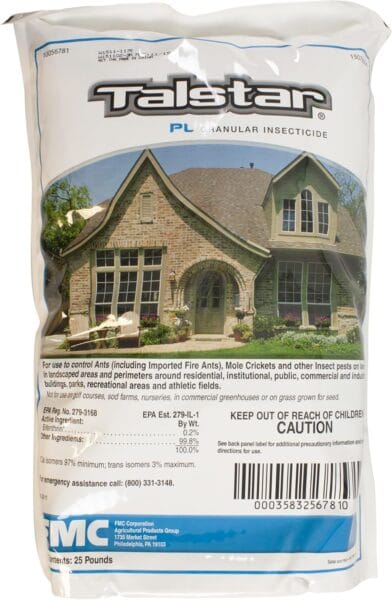
Talstar PL Granular Insecticide
Talstar PL Granular Insecticide with its unique sand core granular structure, provides long-term protection against insects in lawn, gardens and landscaped areas for two to four months.
- Ants, Fleas, Ticks, Crickets, Millipedes and others
- Pet Safe
- Easy outdoor application around foundations, trails, trees, and stumps.
- Apply it by placing tiny amounts along active ant trails so workers pick it up and carry it home.
- Commercial & Residential

Available on Amazon!
Competitive pricing + Fast Free shipping on all orders!
Talstar Granules use bifenthrin (a long-residual pyrethroid) on a fine granular carrier. Millipedes crawl across the treated soil, pick up a lethal dose through their underside and many legs, and die over the next 1 to 3 days. The granules sit in the top layer of soil after watering in and keep working for about 3 months on a single application.
Bifenthrin is the right active ingredient for millipedes specifically because it’s long-lasting in the soil and broadly effective against the soil-dwelling pests that live in the same wet zones (sowbugs, pillbugs, earwigs, centipedes). After 25 years of treating residential pest problems, this is what I reach for on any moisture-driven outdoor pest call. It’s the same chemistry professional pest control companies use, available to homeowners at the same potency.
You’ll also need a hand-crank or small drop spreader to apply the granules evenly. Hand-spreading doesn’t work. The granules are too fine and you’ll get uneven coverage with hot spots and cold spots all over the yard.
Are They Actually Millipedes?
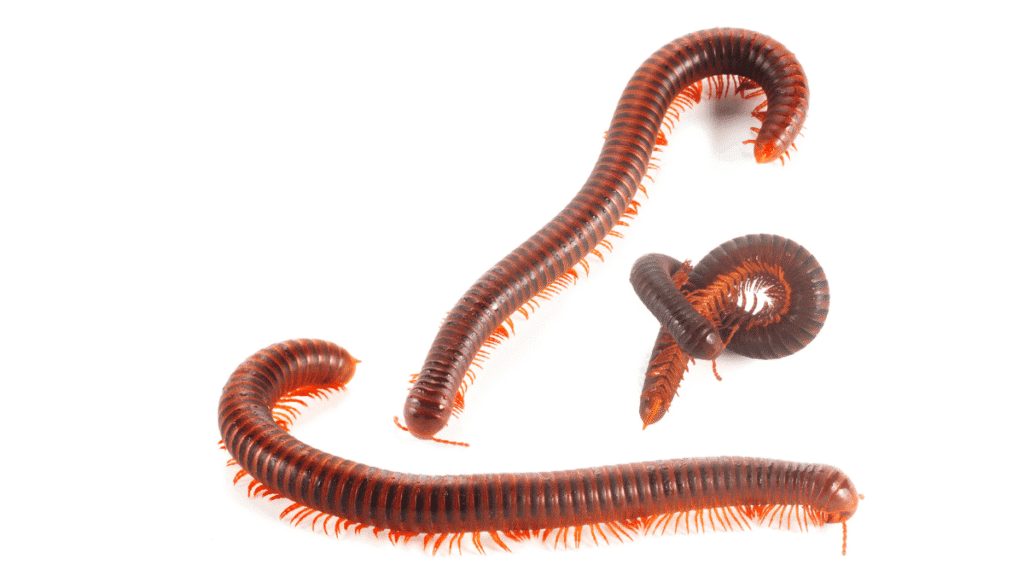
People mix up millipedes and centipedes all the time. The treatment for millipedes is straightforward and the products are cheap. Centipedes are a different conversation. Here’s the field test:
| Feature | Millipede | Centipede |
|---|---|---|
| Legs per body segment | Two pairs | One pair |
| Movement speed | Slow, deliberate | Fast, darting |
| When disturbed | Curls into a tight spiral | Runs for cover |
| Bites? | No | Yes, can be painful |
| Color | Dark brown, black, sometimes reddish | Tan, brown, sometimes yellow-green |
| Where you find them | Damp soil, mulch, leaf litter | Damp basements, bathrooms, under rocks |
| Diet | Decaying plant material | Other insects (predator) |
If it’s slow, curls up when you touch it, and looks like a long worm with tiny legs everywhere, you’ve got millipedes. The treatment on this page works.
Signs You Have a Millipede Problem
- Dozens or hundreds of them crawling on driveways, walkways, and the foundation after rain. This is the most common reason people land on a millipede page. It looks alarming, but they’re not dangerous.
- Curled-up bodies (dead or playing dead) along the garage door track, on the porch, or inside the garage. Millipedes die quickly once they get inside because indoor humidity is too low for them.
- Live millipedes wandering across the kitchen or bathroom floor. They came in through a gap, they’re disoriented, and they’re already dying.
- A faint, slightly almond or cherry-like smell when you crush one. That’s a defensive chemical (cyanide compound). Harmless in the small amounts they produce, but distinctive.
- Heavy activity in spring and fall, especially during what locals in some parts of the country call millipede “marches” where thousands move across a property at once after warm rainy weather.
They’re Not Going to Hurt You or Your House
Before we get into treatment, a quick reality check that I give every homeowner who calls about millipedes in a panic. Millipedes don’t damage your house. They don’t bite. They don’t sting. They don’t carry disease. They don’t eat wood, fabric, food, or anything else inside your home. They eat decaying plant material outside.
The ones that get inside die within a day or two because they need consistent humidity to survive and your house is too dry. The treatment isn’t about killing them once they’re inside (they’re killing themselves). It’s about cutting down the outdoor population so fewer of them wander toward your house in the first place.
Why They’re In Your Yard
Millipedes show up when conditions stay damp for too long. They breed in moist soil and feed on decaying organic material, so any spot that holds water and rotting plant matter becomes millipede real estate.
Common moisture triggers I see on residential properties:
- Sprinkler systems running every day or every other day
- Thick mulch beds (more than 3 inches deep) that stay damp for weeks
- Leaf litter piled against the foundation
- Shaded landscaping that never gets enough sun to dry out
- Low spots in the yard where water collects after every rain
- Downspouts dumping water at the foundation instead of away from it
After 25 years of treating residential pest problems, I can tell you that millipede calls always come in waves after a stretch of wet weather, and they always concentrate on the same handful of properties on a given street. It’s the houses with the most aggressive sprinkler schedules and the deepest mulch beds, every time. The lawn looks lush. The mulch looks fresh. And the millipedes love it.
Cut the moisture and the population collapses on its own. Add the granules and you finish the job fast.
Seasonal “Marches”
In some regions (Florida, the southeastern US, the Pacific Northwest, parts of the Midwest), millipede populations build through spring and early summer and then suddenly migrate across yards, driveways, garages, and walls in massive numbers. Locals call these millipede marches.
This usually happens after a heavy rain following a dry stretch. The dry soil drove them deeper, the rain pushed them back to the surface, and they all move at once looking for somewhere to settle.
The treatment is the same as for a normal millipede problem. The granules and the moisture work matter even more during march season because you’re getting outdoor pressure from a much larger population than usual.
How to Get Rid of Millipedes Step by Step
Step 1: Get a Spreader
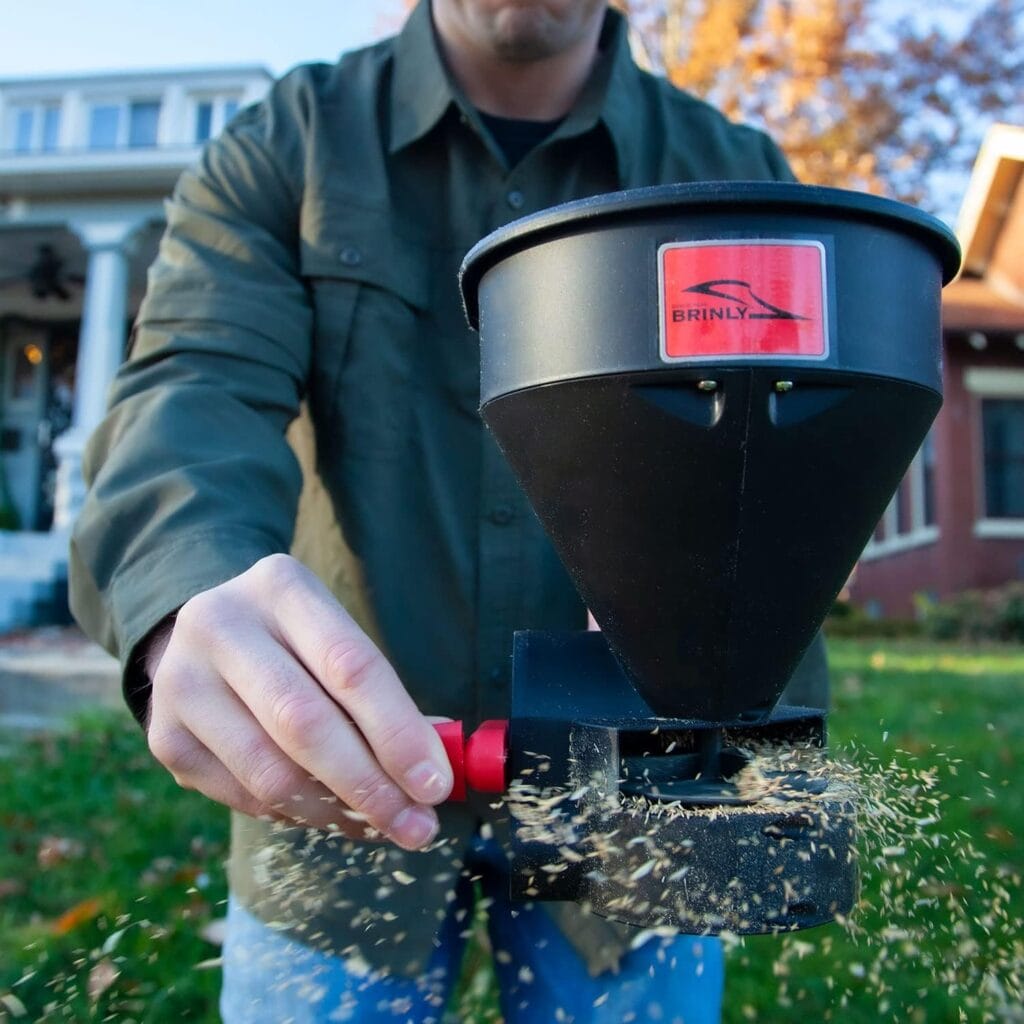
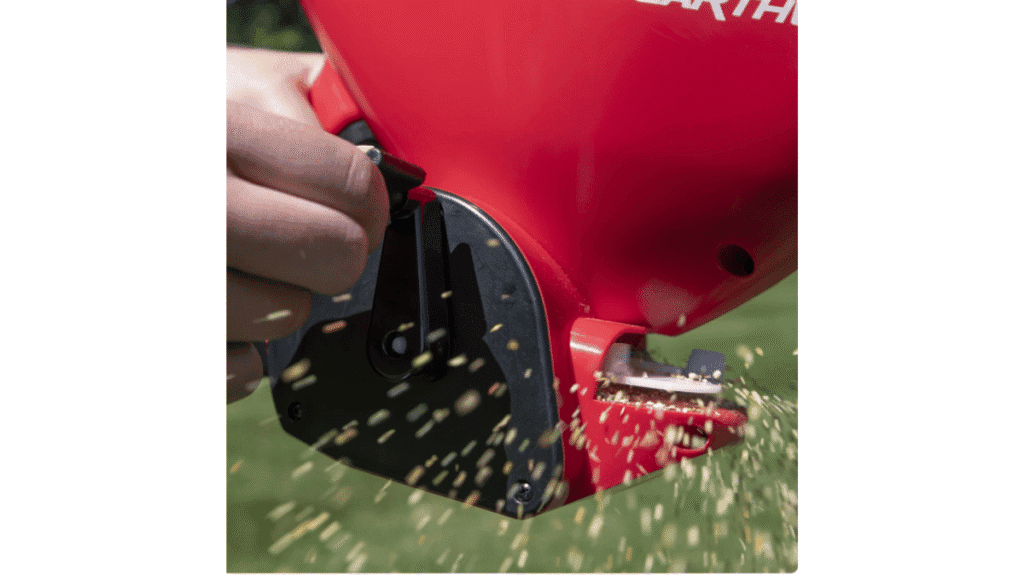
Brinly 5lb. All-Season Handheld Spreader
The Brinly 5 lb. All‑Season Handheld Spreader is a durable, easy‑fill crank spreader built for quick, even application of seed, fertilizer, ice melt, and granular pest control products in small or hard‑to‑reach areas.
- 5 lb Capacity: Holds 0.5 gal / 2 L for small, tight areas.
- Easy Scoop-and-Spread: Contoured lip fills easily; spreads up to 5 ft.
- Adjustable Flow Gate: Simple knob controls output precisely.
- Smooth Crank Action: Long crank and ergonomic handle for easy spreading.
- Professional‑Quality Spread: Throws granules in a clean, controlled pattern.
- Built Tough: Heavy‑duty poly hopper with enclosed gears and steel hardware.

Available on Amazon!
Talstar Granules are very fine, almost the texture of play sand. Trying to spread them by hand gets you uneven coverage with hot spots and cold spots all over the yard. The hot spots overshoot the label rate (waste). The cold spots underdose (failure). You’ll need a spreader.
A small hand-crank spreader works fine for most residential yards. A small drop spreader works for larger lawns. Set it to a low setting because the granules flow easily and a high setting will dump too much product too fast.
Step 2: Broadcast the Granules
Talstar Granules at 2.3 to 4.6 pounds per 1,000 square feet. Lighter rate for prevention and lighter activity. Heavier rate for heavy active infestations.
Talstar PL Granular Insecticide
Talstar PL Granular Insecticide with its unique sand core granular structure, provides long-term protection against insects in lawn, gardens and landscaped areas for two to four months.
- Ants, Fleas, Ticks, Crickets, Millipedes and others
- Pet Safe
- Easy outdoor application around foundations, trails, trees, and stumps.
- Apply it by placing tiny amounts along active ant trails so workers pick it up and carry it home.
- Commercial & Residential
Available on Amazon!
Competitive pricing + Fast Free shipping on all orders!
Bifen LP Granules Label – Bifen LP Granules MSDS
Talstar on a fine granular carrier. Millipedes crawl across the treated soil, pick up a lethal dose through their many legs and underside, and die over the next 1 to 3 days. The granules sit in the top layer of soil and keep working for about 3 months.
Spread evenly across:
- The full lawn area, with extra attention to shaded sections
- Every landscape bed, especially mulched beds
- A 10-foot wide band around the foundation of the house
- Low spots where water pools after rain
- Around the base of any tree, shrub, or large planter
- The shaded side of fences and outbuildings
- Along the edges of driveways and walkways where you’ve seen activity
Don’t skip the lawn just because the millipedes are showing up on the driveway. The driveway is where you see them. The lawn and mulch is where they live.
Step 3: Water the Granules In
Bifen LP needs water to activate. Without watering in, the granules sit on the surface and don’t release the active ingredient into the soil where the millipedes are.
Lightly irrigate the treated areas after spreading. About a quarter inch of water is enough. You can run your sprinklers for 10 to 15 minutes, or hand-water with a hose. If rain is forecast in the next 12 hours, you can skip the manual watering and let the rain do it.
Keep kids and pets off the treated lawn until everything is fully dry, usually about 2 hours after watering. Once dry, the granules are safe to walk on.
Step 4: Fix the Moisture Problem
This is the step homeowners want to skip and it’s the reason most DIY millipede treatments seem to “wear off” after 6 weeks. The granules killed the visible millipedes. The wet soil produced a new batch. Without addressing the moisture, you’re treating the symptom forever.
Walk the property and look for:
- Sprinkler systems running too often. Most residential lawns only need 1 inch of water per week including rain. Cut back if you’re running sprinklers daily or every other day.
- Mulch deeper than 3 inches. Thin it out. Deep mulch holds moisture for weeks.
- Leaf litter against the foundation. Rake it back at least 12 inches from the house, or remove it entirely.
- Downspouts dumping at the foundation. Add splash blocks or extensions to move the water 3 feet away.
- Low spots in the yard that pool water for days after rain. Fill them in with topsoil or improve drainage with a French drain if the spot is chronic.
- Shaded beds that never dry out. Trim back overhanging branches if possible to let more sun in.
You don’t have to fix everything in a single afternoon. Fix what’s easy this week, plan the bigger items for next month. Every wet spot you dry out is one less spot producing millipedes.
Step 5: Seal the Entry Points
The millipedes that wander inside die fast, but it’s still unpleasant to keep finding them in the laundry room or near the back door. Sealing entry points cuts indoor sightings dramatically.
Replace these as needed:
- Door sweeps on every exterior door, especially the garage entry door
- Garage door bottom seal (the rubber strip along the bottom of the garage door itself)
- Weatherstripping around exterior door frames
- Threshold seals where they’ve worn down
A new garage door seal costs about $20 at any hardware store and takes 15 minutes to install. It’s one of the highest-impact $20 home improvements you can make for keeping all kinds of ground-level pests outside where they belong.
What Doesn’t Work
A few things you’ll see online that waste time or money.
- Treating without fixing the moisture. The single most common mistake. The granules will kill millipedes for about 3 months, then you’ll see them again, and you’ll think the product failed. It didn’t. Your soil is still wet, your mulch is still 4 inches deep, and your sprinklers still run daily. Granules plus moisture work, every time. Granules alone work for 3 months at a stretch and feel like a losing battle.
- Indoor sprays for millipedes. Pointless. Millipedes that get inside die within a day or two from low indoor humidity. Spraying baseboards with bug killer doesn’t speed that up by much and it doesn’t address the outdoor source. Sweep up the ones inside, treat outside, and that’s the job.
- Diatomaceous earth as a perimeter barrier for millipedes. DE works by drying out insects that walk across it. The problem with using it for millipedes is that millipedes are coming from damp areas, and DE stops working the moment it gets wet. The first sprinkler cycle or morning dew turns your DE barrier into useless paste. Bifen LP granules don’t have that problem.
- Hand-spreading granules without a spreader. Looks easy, fails reliably. You’ll over-apply in some spots and under-apply in others, and the millipedes will keep showing up in the under-treated zones. A $25 hand-crank spreader pays for itself the first time you use it.
How to Keep Millipedes From Coming Back
Ranked by impact.
- Fix the moisture and keep it fixed. Single biggest factor. A yard that drains well and dries out between waterings doesn’t produce millipede outbreaks no matter what your neighbors do.
- Reapply Bifen LP every 3 months during warm wet weather. In southern climates and the Pacific Northwest, plan on 2 to 4 applications a year. In drier climates, one application in spring may be all you need.
- Keep mulch at 2 to 3 inches maximum. Thin out anything deeper. Pull mulch back 12 inches from the foundation.
- Rake out leaf litter regularly. Especially in shaded corners and against the foundation. Millipedes feed on decaying leaves, so leaf accumulation is direct food and habitat.
- Cut back overhanging branches that keep landscape beds in permanent shade. Beds that get a few hours of direct sun a day dry out and become much less attractive to millipedes.
- Replace door sweeps and garage seals every 5 years. Cheap maintenance that keeps a lot of ground-level pests outside.
Edge Cases Where DIY Hits a Wall
For millipedes, DIY handles every case I’ve seen in 25 years when the granules + moisture approach is followed correctly. The chemistry is the same chemistry professional companies use, the application is straightforward, and the product is cheap.
The two situations where it gets harder:
- Heavy seasonal “marches” in southeastern US, Florida, and the Pacific Northwest. When millipedes migrate by the thousands across a property, even a well-treated yard will see surface activity for a few days. The granules drop the population fast, but during the peak of a march you’ll still see live millipedes on driveways and walls. This isn’t a treatment failure. It’s just the volume of the outdoor population in those regions during peak season. Stay on a 60-day reapplication schedule during march season instead of 90 days.
- Chronic drainage problems that can’t be fully fixed. If your yard has a low spot that floods every rain because of grading issues from when the house was built, no amount of mulch-thinning will fix it. The granules still work in those spots, but you’ll need to reapply more often (every 60 days) until you can address the drainage with regrading or a French drain.
FAQs About Getting Rid of Millipedes
Treatment
How do I treat my yard for millipedes?
Millipedes are best controlled by applying Bifin L/P granules at 2.3–4.6 lbs per 1,000 sq ft using a hand‑crank spreader or small drop spreader.
Apply the granules in landscape beds and lawn areas at least 10 feet away from the house, then water them in to activate the product. This creates a long‑lasting soil barrier that millipedes crawl across.
How long does it take for Bifin L/P granules to work?
Bifin L/P is not an instant‑kill product. Expect up to 3 days for full knockdown.
Once activated, the granules provide up to 3 months of residual protection, which is why they’re commonly used for long‑term millipede control and general pest prevention.
Do I need to water in Bifin L/P granules?
Yes — watering in is required. The granules must be lightly irrigated so they dissolve into the top layer of soil. Without water, the product won’t activate and won’t control millipedes effectively.
Safety
Are Bifin L/P granules safe for kids and pets?
Yes — after the product has been watered in and the treated area has fully dried.
Children and pets should stay off the lawn and beds until the granules are watered in and the surface is completely dry.
Once dry, the product is locked into the soil and safe to re‑enter.
Can I spread the granules by hand?
No. Hand‑spreading won’t give you an even layer, and you’ll either under‑apply or over‑apply. Use a hand‑crank spreader for small beds or a small drop spreader for lawns and larger areas. This ensures the correct 2.3–4.6 lb rate.
Moisture & Environment
Why do I keep getting millipedes around my house?
Millipedes thrive in moist, shaded, or over‑watered areas. Common causes include heavy mulch, leaf litter, excessive irrigation, and poor drainage. If the environment stays wet, millipedes will continue showing up even after treatment.
Should I remove mulch or leaf litter before treating?
Yes — if you have thick mulch or heavy leaf litter, clean it up before applying the granules. Removing excess organic material exposes the soil surface and helps the product work more effectively.
Prevention
How do I stop millipedes from getting inside my home?
Check and replace worn door sweeps, garage door seals, and weatherstripping. Millipedes often slip in through small gaps under doors, especially during wet weather. Sealing these entry points dramatically reduces indoor sightings.
Can I use Bifin L/P granules as a general pest prevention treatment?
Yes — Bifin L/P is commonly used as a preventative perimeter treatment. Many homeowners apply it every 2–3 months around the yard to prevent millipedes, ants, earwigs, and other crawling pests from building up near the home. It’s one of the most effective long‑term soil treatments for outdoor pest prevention.