
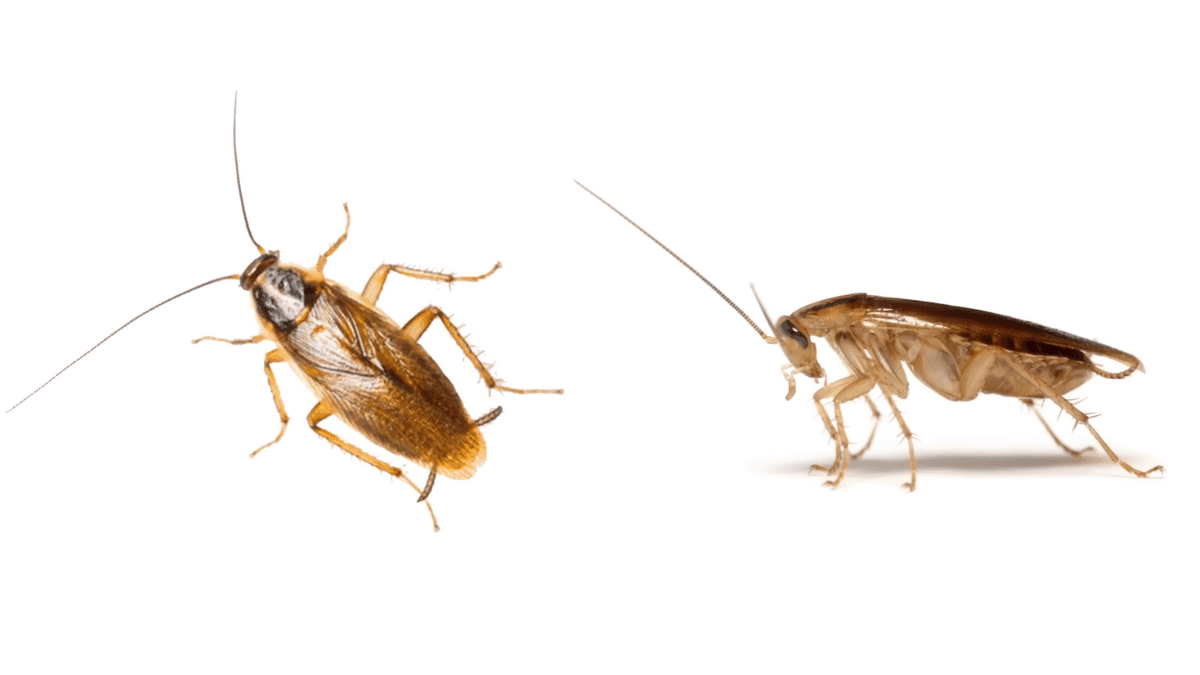
TL;DR: How To Treat And Control German Roaches
- Clean the kitchen thoroughly before treating — nothing eats poison when there’s real food available
- Spray cracks and crevices with Fipronil-Plus-C mixed with Tekko Pro IGR at 2 oz per gallon
- Dust Wall Voids with D-Fense Dust, under cabinets, behind outlets and switch plates
- Use Advion Cockroach Bait Stations as your primary bait — they’re clean, easy, and effective Use Advion Cockroach
Let me be straight with you about something before we get into the treatment: German cockroaches are the most difficult household pest to eliminate. Not the most dangerous, not the biggest — but hands down the hardest to get rid of. After more than 20 years in pest control, I’ve seen every roach species there is, and nothing comes close to how relentless these things can be when they get established.
The good news? They respond very well to the right treatment when it’s done correctly and completely. The key word is completely. Half measures don’t work with German roaches. You have to bring everything to the fight from the start.
Why German Cockroaches Are Different From Every Other Roach
German roaches are one of the hardest pests to eliminate, but the treatment is straightforward when you follow the right order: clean first, dust second, bait thiMost roaches you deal with — American cockroaches, smokybrowns, Australian roaches — they live outside and wander in. You treat the perimeter and the problem fades.
German cockroaches are completely different. They live inside your home. They don’t have an outdoor population you can cut off. They breed inside your walls, inside your appliances, inside the void under your cabinets, and they never stop.
A single mated female can produce hundreds of offspring in her lifetime. The nymphs mature fast. Multiple generations can be alive at the same time, all reproducing simultaneously. A single pair of German cockroaches can theoretically produce hundreds of thousands of descendants in a single year under ideal conditions. That number sounds impossible until you’ve walked into a kitchen that’s been left untreated for six months — and then it makes perfect sense.
They also don’t need much. Crumbs under the stove. Grease on the back of a burner. A dripping pipe under the sink. That’s enough to sustain a colony.
And they will never leave on their own.
How German Cockroaches Get Into a Clean Home
German roaches survive on crumbs, grease, and moisture. Cleaning first exposes their hiding spots and forces them to contact your treatment.This is the question I get more than any other, because people assume if their house is clean they can’t get German roaches. That’s not how it works.
German cockroaches hitchhike. They travel on people’s belongings the same way bedbugs do — on used appliances, secondhand furniture, grocery bags, cardboard boxes, and deliveries. A used refrigerator, a piece of furniture from an estate sale, a box from a warehouse that had a problem — any of those can introduce German cockroaches into a spotless home without any warning.
This is especially common in apartments. The person before you may have had a roach problem. Maintenance may have done a quick spray that scattered them into the walls rather than eliminating them. You move in, settle in, and a few weeks later you turn the kitchen light on at night and see something small dart under the stove. That’s how it starts.
It is not a reflection of your cleanliness. It’s a reflection of how these insects travel.
The First Sign You Have German Cockroaches
German cockroaches are nocturnal. They hide during the day in cracks, voids, and dark protected spaces. The first time most people see them is when they turn on the kitchen light late at night and catch a few small brown insects scurrying toward cover. Or they open a drawer near the stove and something moves.
That’s the moment you act. Because if you’re seeing them, there are far more you’re not seeing.
Step 1 — Clean Everything Before You Treat
This is not optional. Nothing will eat bait or pick up poison if there is real food available. Before any product goes down, the kitchen needs to be as clean as you can get it.
- Wipe down all surfaces including the inside of cabinets and drawers
- Clean behind and under the stove
- Pull the refrigerator out and clean behind and underneath it
- Clean up all grease, crumbs, and spills
- Empty and clean the area under the sink
- Make sure there are no dishes sitting in the sink overnight
- Fix any dripping faucets or leaking pipes — moisture is as important to them as food
The more thorough the cleaning, the more effective everything that follows will be.
Once the voids are treated, bait can be placed in areas where roaches travel or feed. Bait works best when the kitchen is clean and dry, and when it’s kept separate from any spray products. This step helps eliminate roaches that are actively foraging.
Step 2 — Crack and Crevice Spray With IGR
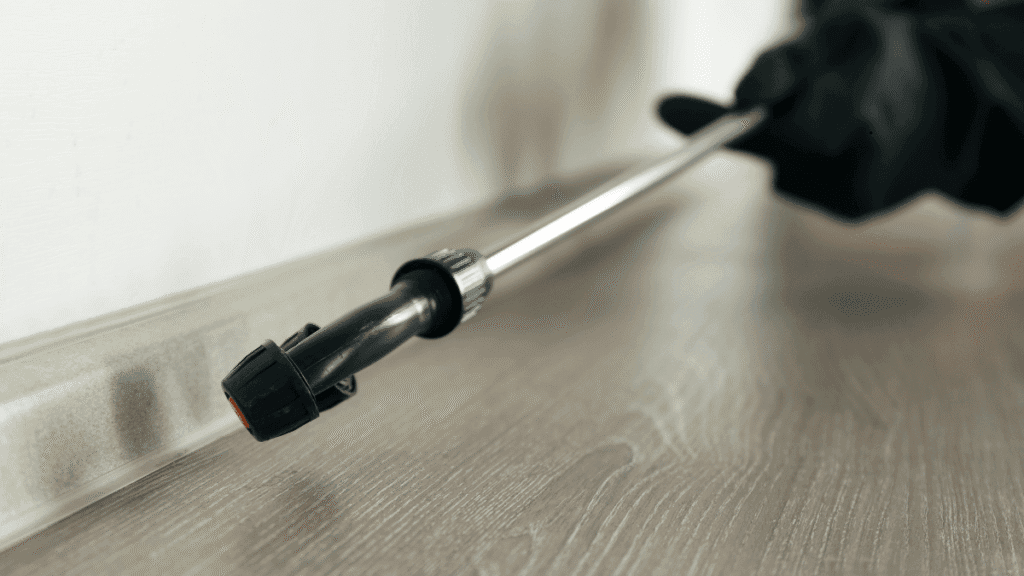
The foundation of a proper German roach treatment is a crack and crevice spray using a non-repellent insecticide combined with an insect growth regulator.
What to use:
- Fipronil-Plus-C — the primary insecticide
- Tekko Pro IGR — mixed in at 2 oz per gallon
Mix these together and apply as a crack and crevice treatment only. This is not a broadcast spray — you’re targeting the gaps and voids where roaches travel and hide, not spraying open surfaces.
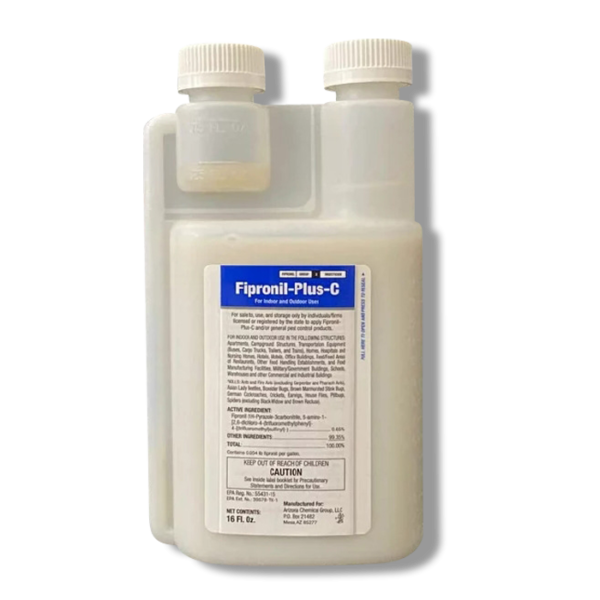
Fipronil Plus C Pest Control Concentrate
Fipronil Plus-C Pest Control Concentrate Spray – your powerful defense against pests. From spiders and ants to rodents, our concentrated solution offers year-round protection for indoor and outdoor spaces. Bid farewell to unwanted guests and embrace a pest-free environment.
- Tackle roaches, ants, and more with this broad-spectrum commercial grade spray
- Long-lasting protection
- Works indoors and outdoors
- Non-Repellent, pests can’t detect it and don’t avoid it

Available on Amazon!
Where to spray:
- Baseboards throughout the kitchen
- Under and behind appliances
- Around plumbing lines under the sink
- Inside cabinet hinges and along cabinet edges
- Along the backs of drawers
- Around the dishwasher
- Bathroom baseboards and under sink areas
- Any room adjacent to the kitchen
Why the IGR is critical — and what it actually does
Tekko Pro contains two active ingredients that attack the roach life cycle from completely different angles, and understanding how they work explains why this product is so valuable.
The first is Pyriproxyfen — think of it as hormone sabotage. Roaches rely on a juvenile hormone to know when to grow up and develop into adults. Pyriproxyfen mimics that hormone and completely disrupts the timing. Nymphs try to molt and fail, or become deformed. Some that do reach adulthood are sterile. Females produce egg cases that don’t hatch. The reproductive cycle doesn’t just slow down — it collapses.
The second is Novaluron — and it works in a completely different way. It blocks chitin production. Chitin is the material that makes up a roach’s exoskeleton. When a roach goes to molt, it can’t form a new shell. It gets stuck mid-molt and dies. Eggs and early stage nymphs fail to develop properly. You often won’t see this working — populations just quietly stop growing because nymphs never make it to adulthood.
Together these two compounds dismantle the German roach life cycle from two completely independent directions simultaneously, and Tekko Pro remains active for up to seven months. A single treatment keeps working long after the spray dried.
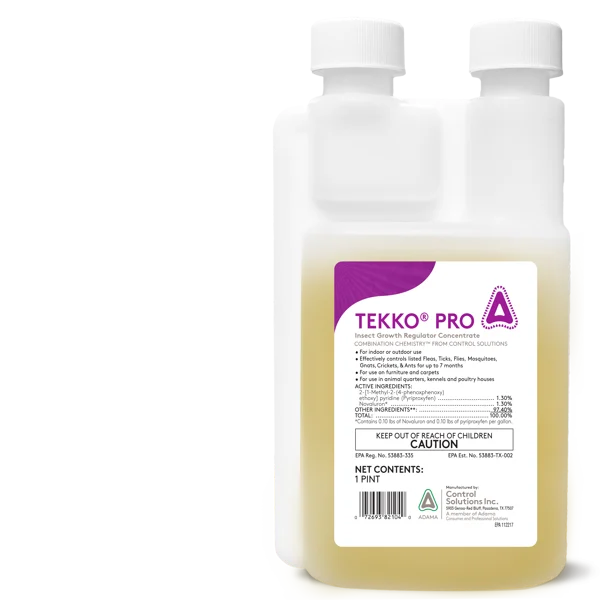
TEKKO PRO Insect Growth Regulator Concentrate
Tekko PRO IGR is the ultimate solution for long-lasting pest managtement. It disrupts pests life cycles and provides protection from re-infestation.
- Extended Re-Infestation Prevention: TEKKO PRO Inhibits re-infestation by listed cockroaches for up to 6 months and fleas for up to 7 months
- Effective Lifecycle Disruption: TEKKO PRO Reduces egg production in houseflies and prevents larvae from developing into adults, breaking the pest reproduction cycle.
- Tekko Pro works by disrupting insect development — things like molting, shedding, and growth hormones. Humans and pets don’t have those systems, so the product can’t affect us in the same way.
- Ideal for perimeter defense
- Eliminates the need for re-treatments
Available on Amazon!
Step 3 — Apply Delta Dust Into Wall Voids and Hidden Areas
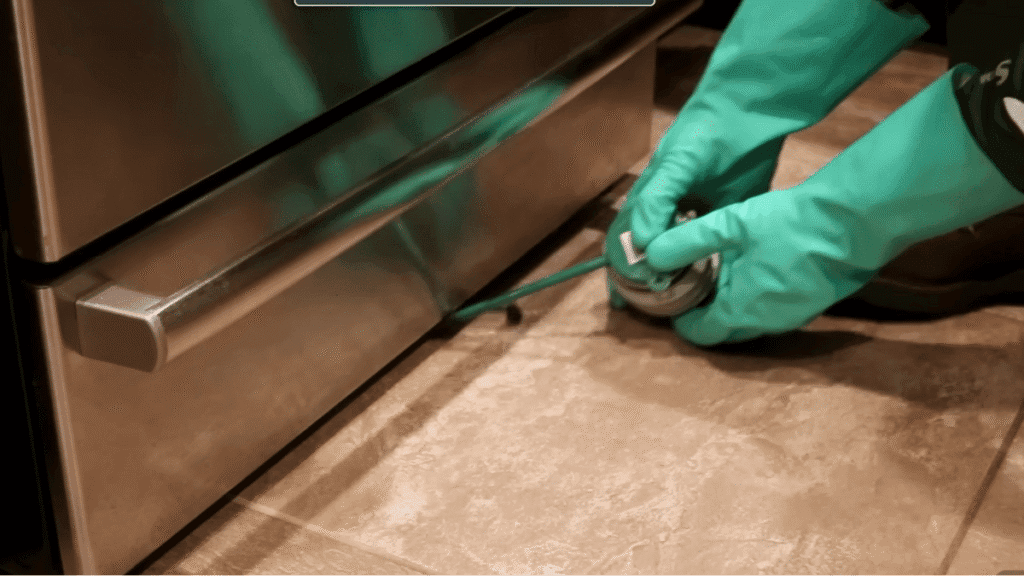
Dust reaches places liquid spray simply cannot get to, and for German cockroaches that matters enormously. They nest deep inside wall voids, between cabinet sections, and behind the electrical infrastructure of your kitchen. To reach those populations you need dust.
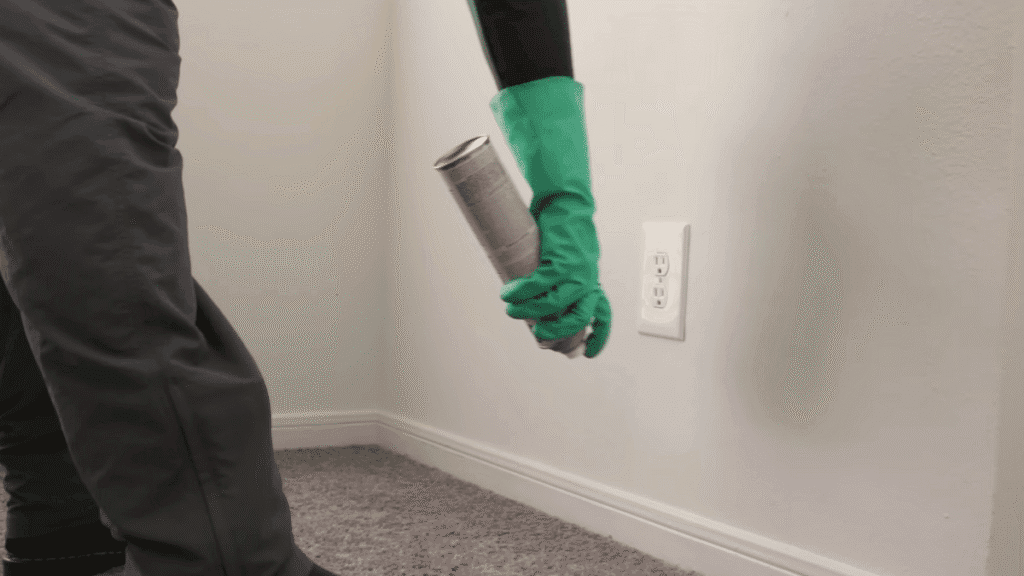
You’ll need an inexpensive hand duster — available online for just a few dollars. Don’t skip this tool. Without it you can’t apply dust correctly.
Where to apply Delta Dust:
Under and between the cabinets — Get on your hands and knees and puff a light amount of dust under the toe kick at the base of your cabinets, and into any gaps between cabinet sections. German roaches live in these voids in large numbers. A light, even puff is all you need — you’re not trying to pack the space, just coat the surfaces they walk on.
Behind electrical outlets and switch plates in the kitchen — This is one of the most important and most overlooked areas. Unscrew the cover plate, puff a small amount of dust into the wall void behind the outlet, and replace the cover. Do this for every outlet and light switch in the kitchen and any rooms immediately adjacent to it. Roaches travel through these electrical chases between rooms and even between apartments.
Inside appliances — If you suspect roaches are living inside an appliance — the motor area of a refrigerator, behind the back panel of a stove, the underside of a microwave — puff a small amount of dust in through any accessible opening. Be careful around electrical components and always unplug appliances before treating them.
Under the dishwasher and stove — Anywhere you can access the underside of an appliance is worth a light application.
A light, even coating is all that’s needed. Heavy applications are counterproductive — roaches avoid thick piles of dust. The goal is an invisible residue they walk through without detecting.
Step 4 — Bait With Advion Cockroach Bait Stations (Start Here)
For baiting, Advion Cockroach Bait Arena Stations are the best place to start for most homeowners. They’re clean, easy to use, discreet, and last longer than gel bait applied directly. No mess, no sticky residue on your cabinets, and you can place them and forget them until it’s time to replace them.
Place stations:
- Inside cabinets in the corners
- Under the sink
- Behind the refrigerator
- Behind the stove
- In bathroom cabinets
- Any area where you’ve seen activity
The stations protect the bait from drying out and keep it inaccessible to children and pets while remaining fully accessible to roaches.
What Not to Do
This is just as important as what to do.
Don’t use bug bombs or foggers. This is one of the worst things you can do with German roaches. Foggers don’t penetrate cracks and voids where roaches actually live. The repellent chemicals scatter the population deeper into wall voids and into adjacent rooms — or adjacent apartments — and make the problem significantly harder to treat afterward.
Don’t rely on store bought sprays or roach tablets. The products in the roach aisle at the hardware store are not formulated to handle a German roach infestation. Most are repellent-based, which means roaches detect them and avoid them rather than picking up the active ingredient. They’ll knock down a few visible roaches and do nothing to the colony.
Don’t try bait alone without the full treatment. Bait is an important part of the protocol but it’s not the whole protocol. Going bait-only is one of the most common mistakes homeowners make. German roaches are not to be trifled with — bring everything to the fight from the beginning and do it right the first time.
Apartments — Special Considerations
If you live in an apartment, German roaches present a unique challenge because the building itself is part of the problem.
Roaches travel through wall voids between units. They move through electrical chases. They squeeze through gaps around plumbing penetrations. Even firewalls — which are supposed to stop fire from spreading between units — are usually not fully caulked around electrical penetrations, and roaches move right through those gaps.
If you move into an apartment and find German roaches shortly after, there’s a real possibility the previous tenant had an infestation and the maintenance treatment either didn’t work or scattered them into the walls. This situation is frustrating because you can do everything right on your side of the wall and still see activity coming from next door.
For apartments specifically:
- Pay extra attention to the electrical outlets and switch plates on walls shared with neighboring units — dust these thoroughly
- Treat the bathroom as carefully as the kitchen
- Communicate with building management — they have a legal responsibility to address pest issues in most jurisdictions
- If neighbors have active infestations, your treatment will be ongoing management rather than a single elimination
What to Expect After Treatment
German roaches don’t disappear overnight. Here’s a realistic timeline:
Days 1 to 3: You may see increased activity as roaches are flushed from hiding spots or are picking up bait and encountering treated surfaces. This is normal and expected.
Days 4 to 7: Activity should begin noticeably dropping. Bait consumption will be visible.
Weeks 2 to 3: Significant reduction in visible activity. The IGR is silently doing its work on the population you can’t see.
Month 2 onward: The Tekko Pro IGR continues working for up to seven months, preventing any surviving nymphs from reproducing successfully.
If activity continues beyond three weeks without significant improvement, reassess your sanitation, check for areas that may have been missed, and refresh bait placements.
Gentrol Complete Label – Gentrol Complete MSDS
Advion Arena Bait Station Label – Advion Arena Bait MSDS
FAQ: Getting Rid of German Roaches
IDENTIFICATION & BEHAVIOR
How do I identify German cockroaches?
German cockroaches are small — about half an inch long — and light brown to tan colored with two distinct dark parallel stripes running lengthwise behind their head.
Nymphs are darker with a lighter tan stripe down the center of their back.
The double stripe behind the head is the definitive identification feature.
If you see a small brown roach in your kitchen that has those two lines, you’re dealing with German roaches and you need to treat accordingly.
Can German cockroaches fly?
They have wings but they very rarely fly. They rely almost entirely on running to move around, which they do very quickly. Don’t count on them staying grounded though — they’re capable of flight under certain conditions.
Do German cockroaches come from outside?
No. German cockroaches are exclusively indoor roaches. They don’t live outside and they don’t wander in from your yard the way American or smokybrown cockroaches do. If you have them, they were introduced — on a used appliance, a piece of furniture, a box, groceries, or through a shared wall in a multi-unit building.
Cleaning & Preparation FAQs
Do I need to clean before treating German roaches?
Yes. Cleaning is the most important first step. German roaches survive on crumbs, grease, and moisture. A clean kitchen removes their food sources and forces them to eat your bait instead of scavenging.
Do I have to empty my cabinets to treat German roaches?
Yes. Emptying cabinets, pantries, and closets exposes the cracks and gaps where German roaches hide. This allows Gentrol Complete to reach the areas they live and breed.
Should I clean after spraying?
No. Do not wipe or wash treated surfaces. Let the product dry and stay in place so it continues working.
Product & Treatment
Why won’t store bought sprays get rid of German roaches?
Two reasons.
First, most store products are repellent-based, meaning roaches can detect them and simply avoid the treated areas rather than picking up a lethal dose.
Second, German roaches have developed significant resistance to many common pesticides over generations of exposure.
The professional products used in this protocol — non-repellent fipronil combined with a dual-action IGR — work on mechanisms roaches haven’t developed resistance to.
Why is sanitation so important before treating?
Bait won’t compete with real food. If your kitchen has crumbs, grease, spills, or any other accessible food source, roaches will eat that instead of the bait.
Sanitation is what makes the bait irresistible. It’s also what makes the spray treatment more effective — a clean surface gives the product better contact and residual activity.
Can I spray Novacide on dishes or food?
No. Never spray clean dishes, utensils, or food. Remove items before treating and let surfaces dry before putting anything back.
Can I spray over bait?
No. Spray repels roaches, while bait attracts them. Keep sprays and baits separate so both products work correctly.
Why shouldn’t I use a bug bomb for German roaches?
Bug bombs are one of the worst things you can do for a German roach infestation. The insecticide disperses into open air and settles on surfaces, but it doesn’t penetrate the cracks and wall voids where roaches actually live.
The repellent effect causes roaches to scatter — deeper into walls, into other cabinets, into neighboring rooms or units. You’ll see fewer roaches for a few days and then the population rebounds, often in new areas, making the infestation harder to treat.
Baiting
Do I need bait if I already sprayed?
If the infestation is heavy, yes. Spray kills active roaches, but bait wipes out the ones hiding deep in cracks and cabinets. Using both together speeds up the entire process.
What’s the best bait for German Roaches?
Apex Cockroach Gel Bait
Where should I put roach bait?
Place bait in cabinet hinges, drawer corners, behind appliances, under the sink, and anywhere you’ve seen roaches before. Avoid areas pets or children can reach.
Results & Expectations FAQs
Why are roaches more active after treatment?
This is normal. Gentrol and other sprays flush roaches out of hiding. Increased activity means the treatment is working.
How long does it take to get rid of German roaches?
Most homes see a major reduction in 3–7 days. Full elimination usually takes 3–4 weeks because egg cycles must break.
How often should I refresh bait?
Every 2–3 weeks, or sooner if the bait is eaten or dried out.
Re‑Treatment & Long‑Term Control
Do I need to re‑spray Novacide?
Usually not. Novacide keeps working for up to 6 months. You can re‑treat problem areas if needed, but most homes don’t require frequent spraying.
What if roaches come back after treatment?
If activity returns, it usually means:
- new roaches entered from neighbors
- food sources reappeared
- bait dried out
- a hiding area was missed
Touch up with Novacide and refresh bait.
How do I prevent German roaches from coming back?
Keep the kitchen clean, store food in sealed containers, fix moisture issues, and avoid clutter. Refresh bait every few weeks in high‑risk areas.
APARTMENTS & SPREAD
Can German cockroaches spread from my neighbor’s apartment into mine?
Yes. German cockroaches travel through wall voids, electrical chases, and gaps around plumbing penetrations. Even fire-rated walls between units are usually not fully sealed around electrical penetrations, and roaches move through those gaps readily.
If a neighbor has an active infestation, pressure on your unit will continue regardless of how well you treat your own space. Dusting the electrical outlets on shared walls is one of the most important steps you can take in this situation.
What if my apartment had roaches before I moved in?
This is more common than most people realize. Previous tenants with infestations, maintenance treatments that scattered rather than eliminated the population, and roaches that survived in wall voids between tenancies — all of these contribute to the problem.
Document everything and communicate with building management. In most jurisdictions landlords are legally required to address pest infestations. Your treatment will help significantly, but building-wide treatment is the only real long-term solution.
PREVENTION
How do German cockroaches get into a clean home?
They hitchhike. A used appliance, secondhand furniture, grocery boxes, Amazon deliveries, moving boxes — any of these can carry German roaches or their egg cases into a completely clean home.
Always inspect used appliances and furniture carefully before bringing them inside. Break down cardboard boxes and remove them from your home promptly rather than storing them.
Will German cockroaches go away on their own?
Never. German cockroaches are domesticated — they’ve evolved to live exclusively with humans and have no viable outdoor habitat to return to. Without treatment they don’t leave. They reproduce. The population grows until conditions force them to expand into new areas of the home. There is no waiting them out.