TL;DR: How To Treat And Control Palmetto Bugs
Step 1 — Indoor crack-and-crevice spray
Mix Tekko PRO IGR (1 oz per gallon) with Fipronil-Plus-C (1 oz per gallon) and apply as a crack-and-crevice treatment indoors.
Use bait only in areas where you cannot spray.
Step 2 — Outdoor perimeter spray
Use Fipronil-Plus-C at 1 oz per gallon and treat 3 feet out from the foundation, 1 foot up exterior walls, and around mulch beds, stumps, trees, and landscaping.
Indoor control handles the stragglers.
Outdoor treatment eliminates the source.
Understanding Florida Woods Cockroaches (Palmetto Bugs)
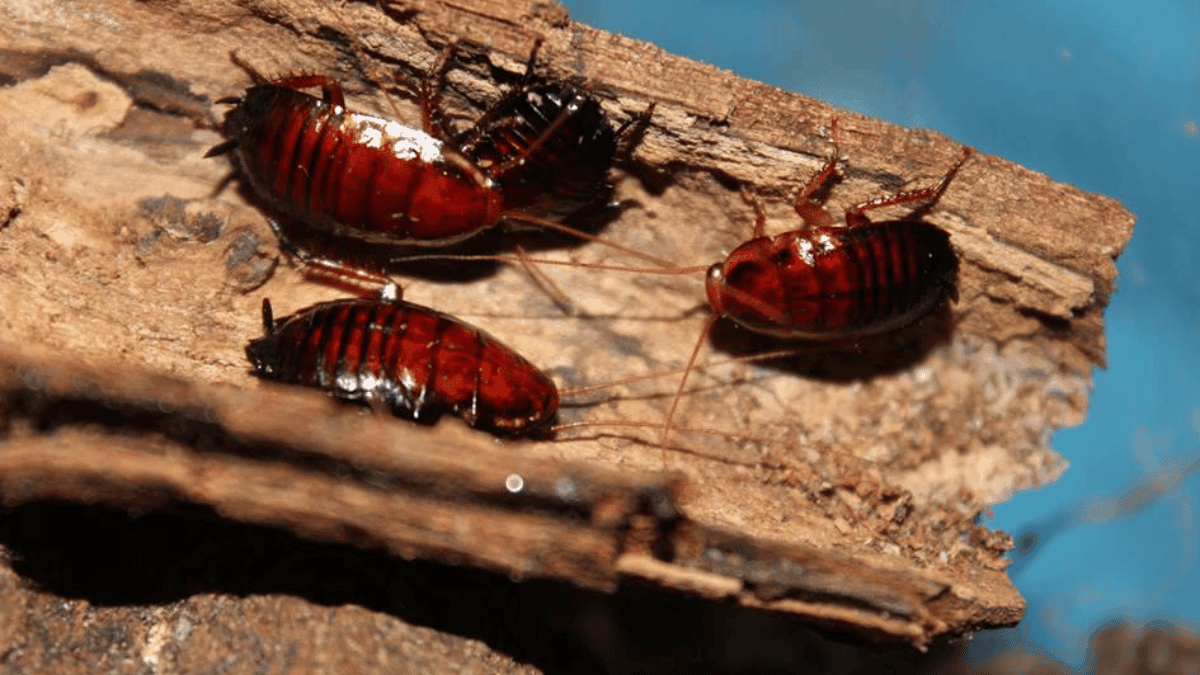
Florida woods cockroaches are often called palmetto bugs — a nickname also used for American cockroaches. That’s where a lot of confusion starts.
This species prefers to live outdoors in decaying organic material. They thrive in:
- Mulch beds
- Leaf litter
- Old stumps
- Damp landscaping
- Wood debris
They are not indoor breeders under normal conditions.
When you see them inside, it’s usually because something outside pushed them in.
Why Florida Woods Roaches Come Indoors
These roaches don’t seek kitchens or bathrooms the way German cockroaches do.
They wander inside when:
- Heavy rain floods their habitat
- Garages are left open at night
- Exterior lights attract them
- Potted plants are brought indoors
- They hitchhike in on cars
After a storm, your home is often the driest structure around. That makes it temporarily attractive.
The solution isn’t just killing the one you see. It’s addressing the outdoor population.
Step 1 — Indoor Crack-and-Crevice Treatment
Baiting does not work on this species — spraying is the only effective method.Baiting does not work well on Florida woods cockroaches.
Spraying is the effective method.
Mix:
- Gentrol EC3 — 1.3 oz per gallon
- Fipronil-Plus-C — 1 oz per gallon
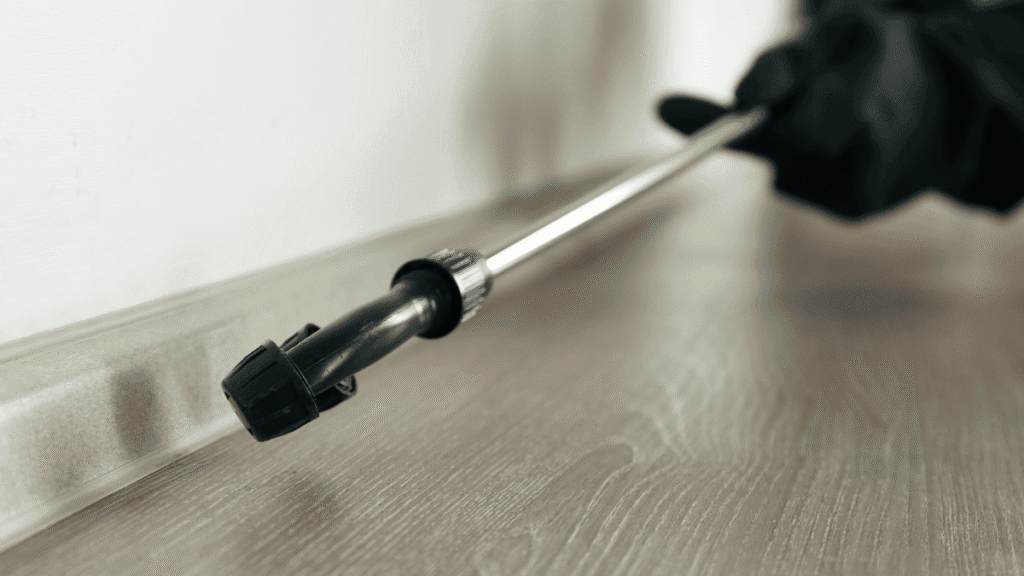
Apply as a crack-and-crevice spray only — not a broadcast treatment.
Focus on:
- Baseboards
- Wall cracks
- Utility penetrations
- Plumbing lines in kitchens and bathrooms
- Garage edges
- Entry gaps
This treatment handles any roaches that wander inside.
Use bait only in areas where liquid spray cannot be applied.
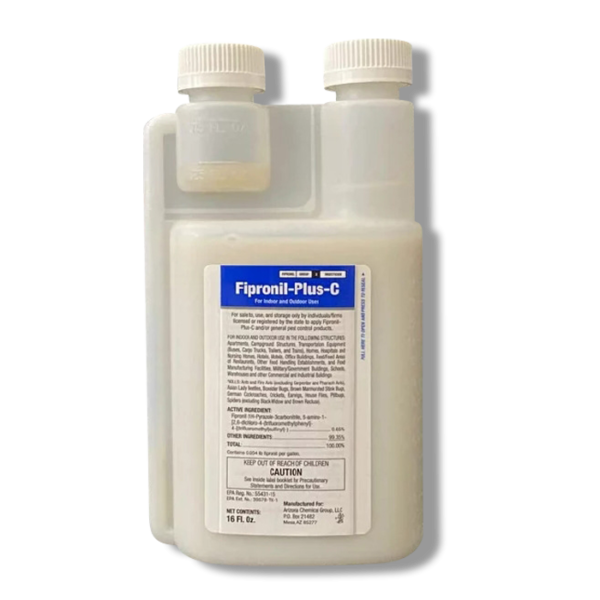
Fipronil Plus C Pest Control Concentrate
Fipronil Plus-C Pest Control Concentrate Spray – your powerful defense against pests. From spiders and ants to rodents, our concentrated solution offers year-round protection for indoor and outdoor spaces. Bid farewell to unwanted guests and embrace a pest-free environment.
- Tackle roaches, ants, and more with this broad-spectrum commercial grade spray
- Long-lasting protection
- Works indoors and outdoors
- Non-Repellent, pests can’t detect it and don’t avoid it

Available on Amazon!
Fipronil‑Plus‑C Label – Fipronil‑Plus‑C MSDS
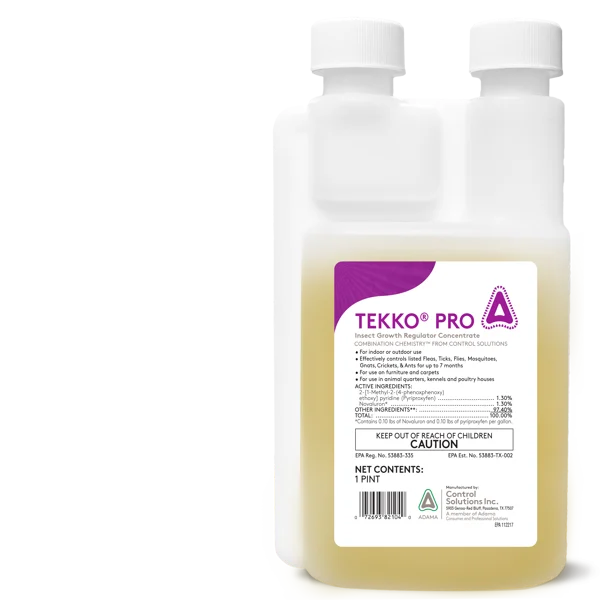
TEKKO PRO Insect Growth Regulator Concentrate
Tekko PRO IGR is the ultimate solution for long-lasting pest managtement. It disrupts pests life cycles and provides protection from re-infestation.
- Extended Re-Infestation Prevention: TEKKO PRO Inhibits re-infestation by listed cockroaches for up to 6 months and fleas for up to 7 months
- Effective Lifecycle Disruption: TEKKO PRO Reduces egg production in houseflies and prevents larvae from developing into adults, breaking the pest reproduction cycle.
- Tekko Pro works by disrupting insect development — things like molting, shedding, and growth hormones. Humans and pets don’t have those systems, so the product can’t affect us in the same way.
- Ideal for perimeter defense
- Eliminates the need for re-treatments
Available on Amazon!
Tekko PRO IGR Label – Tekko PRO IGR MSDS
Step 2 — Outdoor Perimeter Treatment (The Most Important Step)
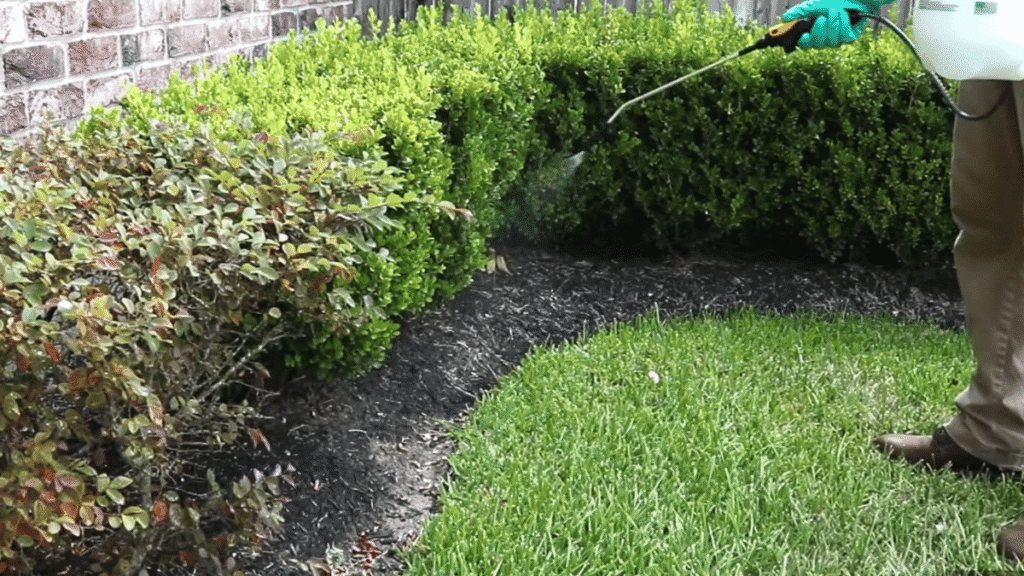
Most of the population lives outside, so this is the key step.The majority of the population lives outside.
If you skip this step, they’ll keep coming back.
Use Fipronil-Plus-C at 1 oz per gallon and apply a structured perimeter treatment.
Treat:
- 3 feet out from the foundation
- 1 foot up exterior walls
- Around doors and window frames
- Around trees and shrubs near the home
- Around old stumps
- Under weed barrier fabric
- Mulch beds (they love the warmth and moisture)
This creates a treated zone that reduces migration into the structure.
When done correctly, it dramatically lowers indoor sightings.
Prevention Tips
Chemical treatment works best when paired with simple environmental changes.
Improve conditions around the home:
- Replace worn door and garage seals
- Avoid stacking firewood against the structure
- Keep mulch thin near the foundation
- Remove heavy leaf litter
- Avoid compost piles next to the house
Be careful with plants and soil:
- Inspect potted plants before bringing them indoors
- Avoid storing potting soil or empty flower pots inside the garage
- Expect increased activity after heavy rainfall
Florida woods cockroaches are moisture-driven. Reduce moisture and shelter, and pressure drops.
What to Expect After Treatment
You may still see occasional roaches after heavy rain. That doesn’t mean the treatment failed.
Outdoor pressure fluctuates with weather.
If the perimeter is treated properly, indoor activity should decline quickly and stay low.
Summary — Florida Woods Cockroach Control
Florida woods cockroaches (palmetto bugs) primarily live outdoors in mulch, leaf litter, and decaying wood. They wander indoors during storms or when conditions push them.
The correct treatment is simple:
- Indoor crack-and-crevice spray using Gentrol EC3 + Fipronil-Plus-C.
- Outdoor perimeter treatment with Fipronil-Plus-C applied 3 feet out and 1 foot up.
Control the outside, and the inside problem fades.
Done correctly, this approach keeps Florida woods cockroaches manageable without overcomplicating the process.
FAQ’s Florida Woods Cockroaches (Palmetto Bugs)
Identification & Behavior
What is a Florida woods cockroach or palmetto bug?
A Florida woods cockroach is a large, slow‑moving roach that prefers to live outdoors in decaying organic matter. They’re often called “palmetto bugs” in Florida.
Do Florida woods cockroaches infest homes?
Not usually. They prefer mulch, leaf litter, stumps, and damp landscaping. They only come inside by accident or during heavy rain when they’re looking for a dry place.
Why do palmetto bugs fly into garages or cars?
They’re attracted to light and open spaces. They often fly into garages or ride in on vehicles, especially at night.
Can Florida woods cockroaches come in through potted plants?
Yes. They love the moist organic soil in potted plants and often hitchhike indoors this way. Treat plant soil if you bring plants inside.
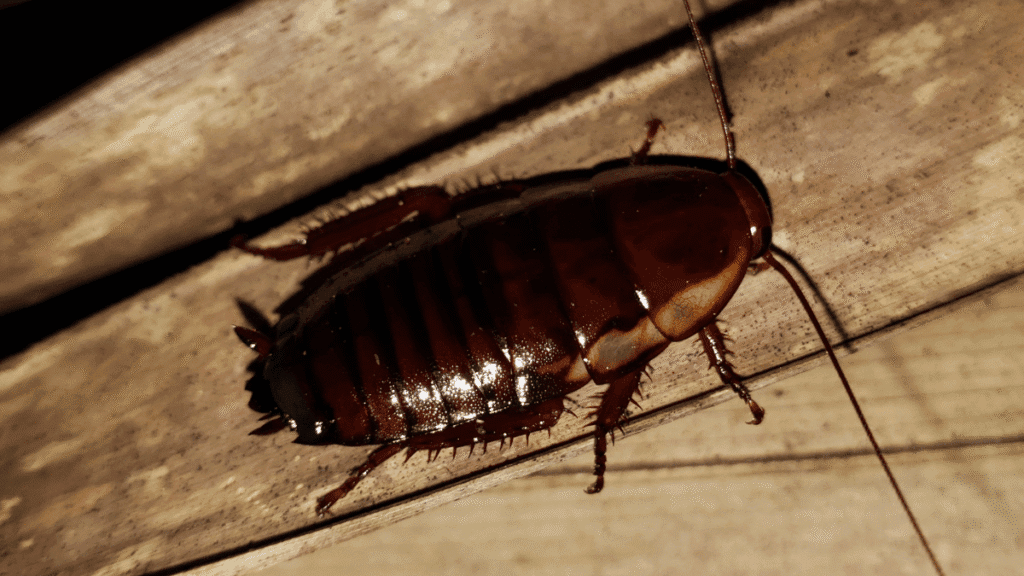
What does a Florida woods cockroach actually look like?
More than any other common cockroach, Florida woods cockroaches look like a beetle or a prehistoric insect.
They’re large, dark, and have a heavy, rounded body that looks different from the sleeker profile of American or smokybrown cockroaches.
Their wings are very short and underdeveloped, which gives them that beetle-like appearance.
If you see what looks like a large dark beetle lumbering across your floor, there’s a good chance it’s a Florida woods cockroach.
What’s the difference between a palmetto bug and a Florida woods cockroach?
This is one of the most confusing naming situations in pest control.
In the South, “palmetto bug” and “water bug” are casual nicknames that people use for several different large roach species — most commonly American cockroaches.
The Florida woods cockroach is a distinct species that also gets called a palmetto bug, partly because it actually does live in palmettos and palm trees.
If someone tells you they have a palmetto bug, you really can’t tell which species they mean without seeing it.
Do Florida woods cockroaches fly?
Not well.
Unlike American cockroaches and smokybrown cockroaches, Florida woods cockroaches are poor fliers.
You’ll see them near lights but they don’t take to the air the way other large roaches do.
That said, the same lighting advice applies — if you cast light onto your house from a distance rather than having fixtures mounted directly on the structure, you’ll attract fewer roaches to your entry points overall.
Do Florida woods cockroaches have a smell?
Yes, and it’s distinctive.
When crushed they give off a strong musty, oily odor — a combination of stale damp wood and a sharp chemical smell.
It’s one of the more noticeable odors of any common cockroach species. Some people find it quite unpleasant.
If you’ve ever crushed a large dark roach and noticed a strong chemical smell, you were probably dealing with a Florida woods cockroach.
Are Florida woods cockroaches actually associated with palm trees?
Yes — genuinely, not just in name. They’re commonly found living in the burlap-like material around cabbage palm trunks and in the crowns of palms where organic debris collects.
They also live in actual palmetto plants, which is where the nickname comes from.
Beyond palms though, they’ll live in just about any organic debris in wooded areas — leaf litter, rotting wood, mulch, and forest floor material.
Why do Florida woods cockroaches suddenly appear after heavy rain?
When the ground becomes heavily saturated after significant rainfall, they head for higher and drier ground — and your home is often the closest dry structure.
This is a very predictable pattern. After a major storm or extended heavy rain, calls for Florida woods cockroach sightings go up noticeably. It’s not an infestation — it’s displacement.
Once conditions dry out outdoors, pressure usually subsides. A good outdoor perimeter treatment before storm season helps significantly.
How do Florida woods cockroaches move compared to other roaches?
They lumber.
American cockroaches are fast and will bolt across a room. Florida woods cockroaches tend to move slowly and heavily, which matches their beetle-like appearance.
That slow movement is actually one of the easier ways to tell them apart from other large roaches at a glance — if it’s big, dark, and moving slowly, it’s almost certainly a Florida woods cockroach.
Where are Florida woods cockroaches found?
They’re most common in peninsular Florida but are also well established in Georgia, Alabama, and Mississippi, with some presence in Louisiana and eastern Texas.
They’re a Southeastern species that thrives in warm, humid climates with abundant organic material.
If you’re outside that range and find a large dark beetle-like roach, it’s likely a different species.
Treatment & Control
How do you get rid of Florida woods cockroaches inside?
Use a crack‑and‑crevice spray:
- Fipronil‑Plus‑C at 1 oz/gal Apply along baseboards, plumbing lines, and kitchen/bathroom gaps.
- Gentrol EC3 at 1.3 oz/gal
What’s the best outdoor treatment for palmetto bugs?
Spray Fipronil‑Plus‑C at 1 oz/gal around the foundation (3 feet out, 1 foot up), around trees, bushes, stumps, mulch beds, and under weed mat.
Does bait work on Florida woods cockroaches?
No. This species does not respond well to bait.
Spraying is the correct method for both indoor and outdoor control.
Why is the outdoor treatment the most important step?
Because the colony lives outside. Treating the perimeter, mulch, stumps, and landscaping removes the source so fewer roaches wander indoors.
Prevention & Long‑Term Control
How do I keep palmetto bugs from coming inside?
Seal door sweeps, garage seals, and gaps around plumbing. Reduce moisture and remove organic debris near the home.
Why do palmetto bugs come inside after heavy rain?
They’re seeking dry shelter. When the ground floods, your home becomes the driest nearby structure.
Should I remove mulch, compost, or wood piles near my home?
Yes. These materials attract Florida woods cockroaches. Keep them several feet away from the foundation.
Do I need to treat potted plants?
If you bring them indoors, yes. These roaches hide in the moist soil and can enter the home unnoticed.