TL;DR: How To Treat And Control Bigheaded Ants
If you want to eliminate bigheaded ants, don’t waste time spot-treating mounds.
Step 1: Apply a granular bait on dry ground.
Use Invict Blitz Granular ant bait.
Step 2: Wait 2–3 days, then apply imidacloprid granules to the soil.
This creates a long-lasting barrier that prevents reinvasion.
Bait first. Barrier second.
That order matters.
What Are Bigheaded Ants?
Bigheaded ants (Pheidole megacephala) are one of the most aggressive lawn-invading ants in warm climates. If you’ve got them, you already know they don’t stay in one place.
They form massive, interconnected colonies — often called supercolonies — that can stretch across:
- Entire lawns
- Mulch beds
- Sidewalk cracks
- Driveways
- Utility boxes
- Even across property lines
That’s why spraying a mound never works.
You’re not dealing with one nest.
You’re dealing with a network.
The good news? They respond extremely well to the right bait, applied correctly.
How to Identify Bigheaded Ants
Correct identification matters because treatment differs from other ants.
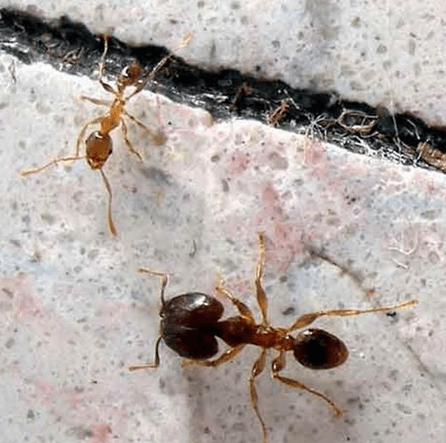
Bigheaded ants have two distinct worker types:
Minor workers:
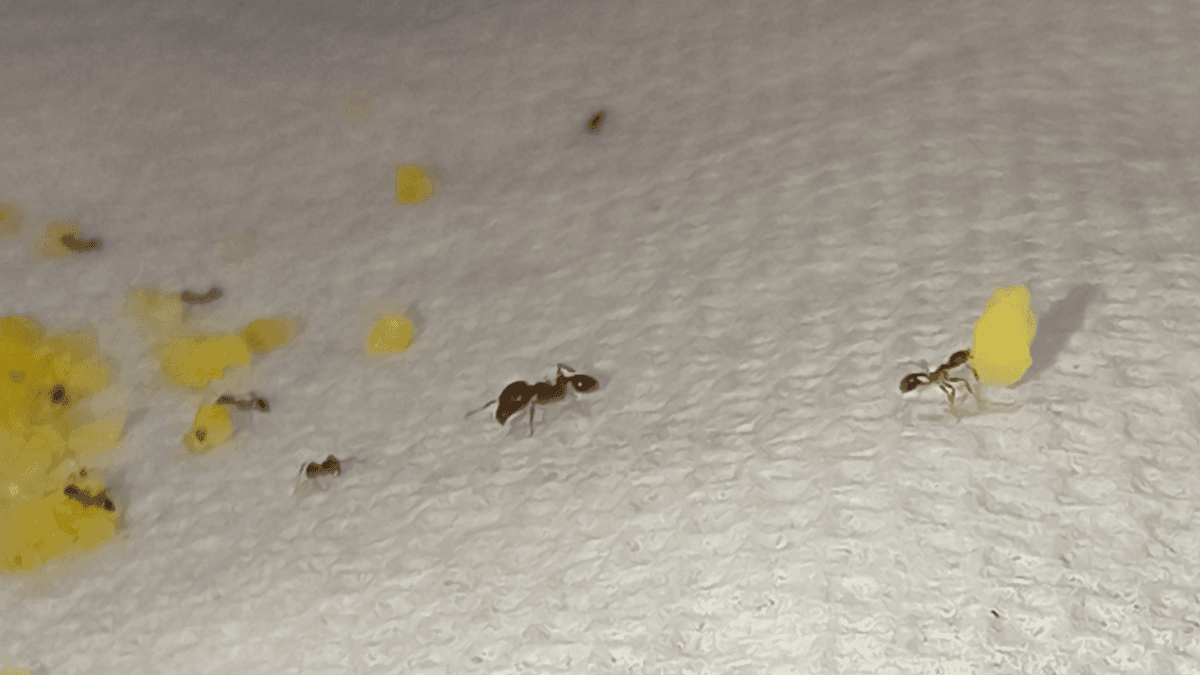
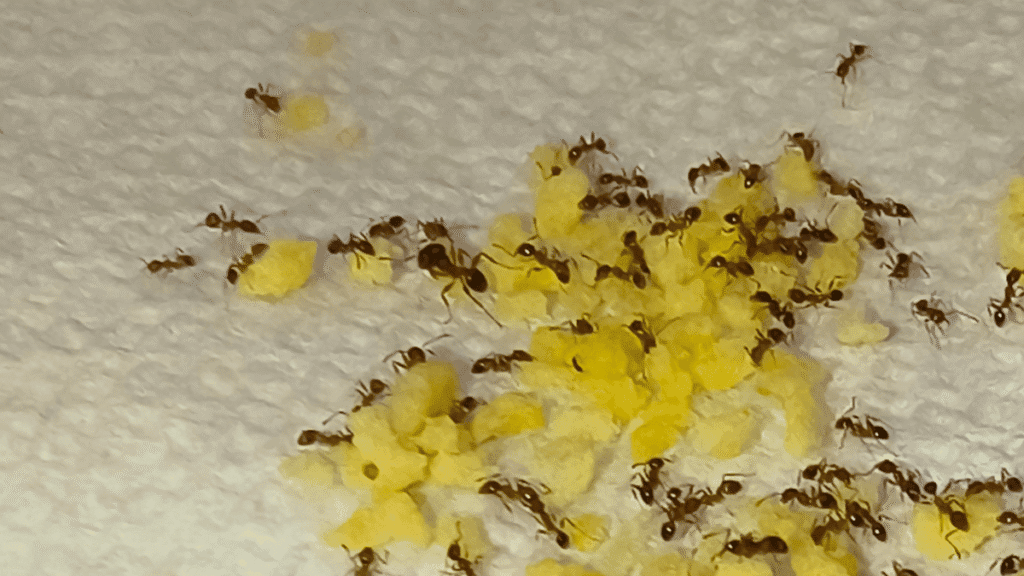
Tiny (about 2 mm), reddish-brown ants forming long, busy trails.
Major workers (“soldiers”):
Larger ants (3–4 mm) with oversized, blocky, almost heart-shaped heads.
Common signs you’re dealing with bigheaded ants:
- Long, winding trails across pavement or turf
- Small sandy soil piles along cracks and edges
- Mud-like covered tunnels climbing structures
- Trails entering homes near sinks or bathrooms
- Heavy lawn activity that seems to spread outward
They’re often confused with fire ants — but bigheaded ants don’t sting.
Why Spot Treatments Fail
Bigheaded ants don’t operate as isolated mounds.
They have:
- Multiple queens
- Multiple satellite nests
- Shared food systems
- Constant movement between nests
If you treat one area with a contact insecticide, new ants simply move in from the colony network.
That’s why baiting is the foundation of control.
Step 1: Apply Granular Bait (The Most Important Step)
Use Invict Blitz Ant Granules.
Advion is often the better choice for serious problems because:
- It’s highly attractive
- It covers large areas efficiently (about 1.5 lbs per acre)
- It performs well against multi-queen colonies
How to Apply Bait Correctly
- Apply to dry ground only
- Do not apply before rain
- Avoid heavy morning dew
- Apply in early morning or late afternoon when ants are actively foraging
- Spread lightly across the lawn and along visible trails
If the bait gets wet, it fails.
This is where most homeowners go wrong.
When applied properly, workers pick up the granules and carry them back into the colony network, spreading it throughout the supercolony.
Give it 2–3 days to circulate.
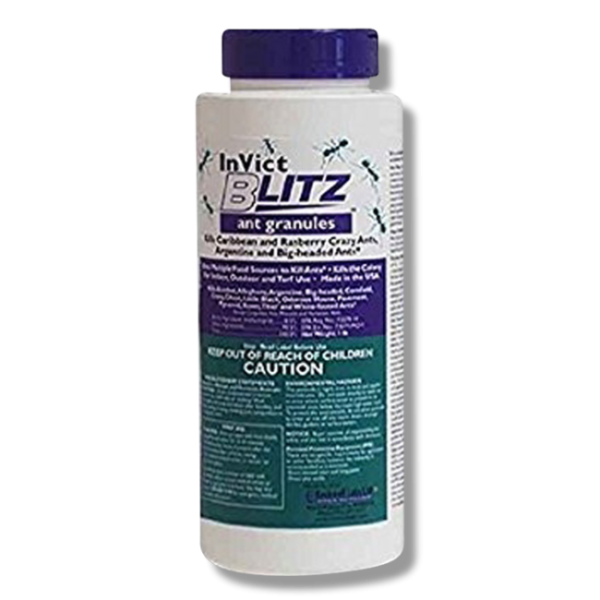
InVict Blitz Ant Granules
Bait Matrix Specifically Designed and Proven Highly Attractive to Persistent Ant Species such as Tawny/Caribbean/ Raspberry Crazy, Argentine and Big-Headed Ants
- Broadcast or mound treatment
- Extremely attractive bait
- Kills the entire colony
- Delayed kill formula
- Low odor
- Trusted by pest control professionals

Available on Amazon!
InVict Blitz Ant Bait Label – InVict Ant Bait MSDS
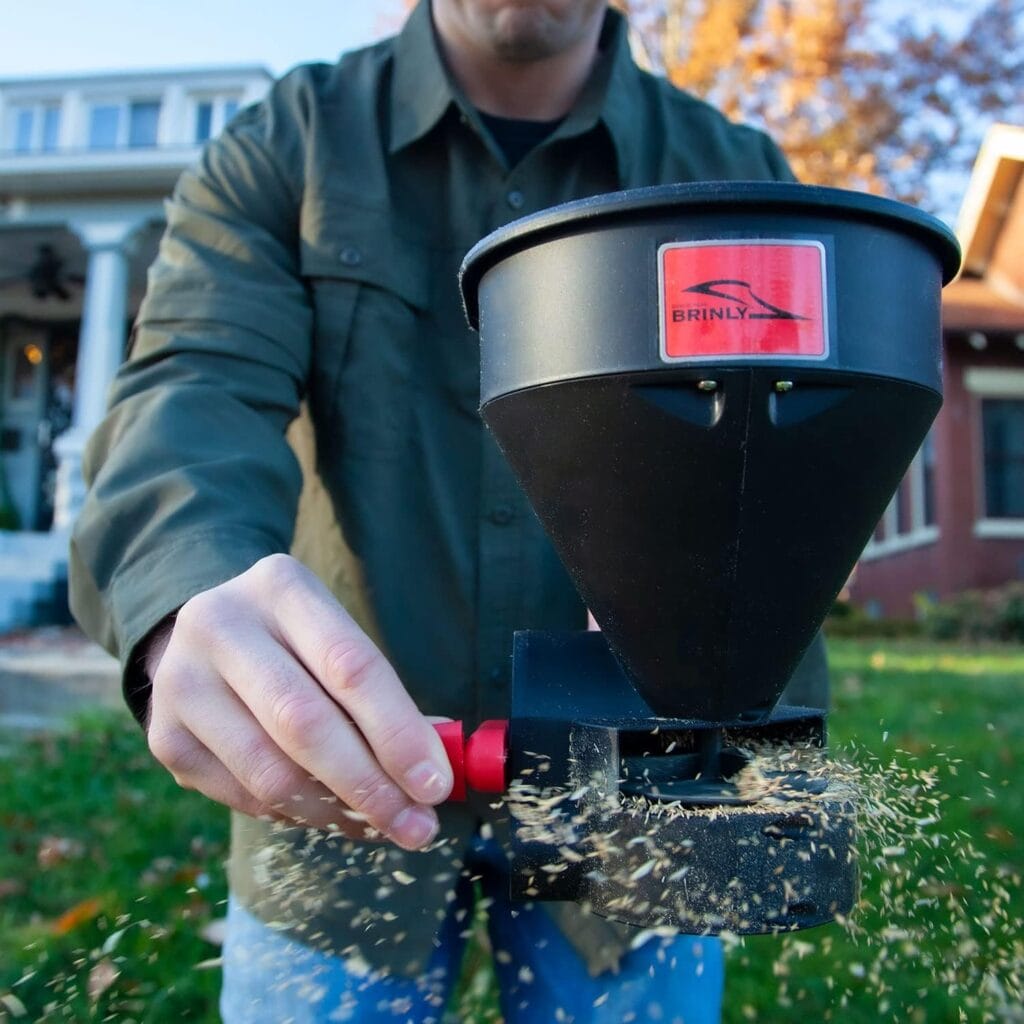
Brinly 5lb. All-Season Handheld Spreader
The Brinly 5 lb. All‑Season Handheld Spreader is a durable, easy‑fill crank spreader built for quick, even application of seed, fertilizer, ice melt, and granular pest control products in small or hard‑to‑reach areas.
- 5 lb Capacity: Holds 0.5 gal / 2 L for small, tight areas.
- Easy Scoop-and-Spread: Contoured lip fills easily; spreads up to 5 ft.
- Adjustable Flow Gate: Simple knob controls output precisely.
- Smooth Crank Action: Long crank and ergonomic handle for easy spreading.
- Professional‑Quality Spread: Throws granules in a clean, controlled pattern.
- Built Tough: Heavy‑duty poly hopper with enclosed gears and steel hardware.
Available on Amazon!
2. Follow With Imidacloprid Granules
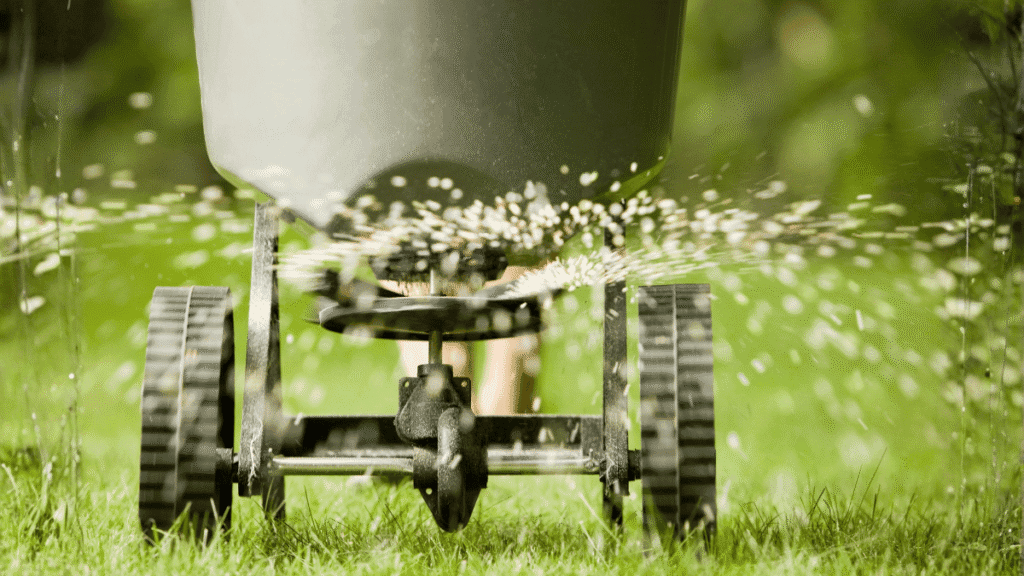
After the bait has had time to work, apply imidacloprid granules.
This step locks in your results.
Why Imidacloprid Works:
- Creates a long-lasting soil barrier
- Reduces reinvasion from neighboring colonies
- Makes treated zones difficult for ants to cross
- Extends control for months
Without this step, surrounding colonies can slowly move back in.
With it, pressure drops dramatically.
Always follow the product label for proper application rates.
Imidacloprid Granules Label – Imidacloprid Granules MSDS
Timing Is Everything
For best results:
- Bait when ants are actively foraging
- Apply on dry soil
- Wait 2–3 days before applying the soil treatment
- Avoid irrigation immediately after baiting
If you rush the process, you reduce effectiveness.
If you follow the sequence, control is much more predictable.
Reduce Conditions That Attract Bigheaded Ants
Chemical control works best when paired with environmental cleanup.
Bigheaded ants thrive in:
- Overwatered lawns
- Moist soil
- Heavy mulch
- Dense groundcover
- Areas with aphids or scale insects
If ants are farming honeydew from aphids or scale, treat those pests as well. Otherwise, you’re leaving their food supply intact.
Simple improvements help:
- Seal cracks along driveways and foundations
- Reduce overwatering
- Improve drainage
- Thin excessive mulch
What to Expect After Treatment
Within a few days of baiting, you should see noticeable reduction in activity.
Trails may look heavier briefly as ants recruit to the bait — that’s normal.
After the imidacloprid barrier is in place, reinvasion slows significantly.
On heavy properties, activity may return months later. When it does, repeat the bait-first approach.
Bigheaded ants are persistent — but they are manageable when treated strategically.
Summary — Bigheaded Ant Control
Bigheaded ants (Pheidole megacephala) form large supercolonies that make mound treatments ineffective.
The correct approach is:
- Apply granular bait on dry ground.
Use Amdro for light activity or Advion Ant Granules for heavy infestations. - Wait 2–3 days.
- Apply imidacloprid granules to create a long-lasting soil barrier.
Bait first. Barrier second.
When done in the right order — and applied under dry conditions — bigheaded ants become controllable, even on properties where they’ve been a recurring problem for years.
Bigheaded Ants – FAQ
IDENTIFICATION & BEHAVIOR
What are bigheaded ants?
Bigheaded ants are aggressive lawn-invading ants that form massive supercolonies that can spread across entire lawns, neighboring yards, and even whole neighborhoods.
They get their name from the soldier workers, which have oversized, blocky heads that are hard to miss once you know what you’re looking for.
How do I know if I have bigheaded ants?
Look for two different sized ants trailing together — small reddish-brown workers and larger soldiers with distinctly oversized heads.
You’ll also notice long winding trails across pavement, small sandy soil piles along cracks and edges, and mud-like tubes climbing your foundation or exterior walls.
Why do bigheaded ants make those little sand piles?
Those “volcano” piles are soil the ants push out while tunneling. They often appear along edges, cracks, pavers, and utility boxes.
Those mud tubes on my foundation — could that be bigheaded ants and not termites?
Yes, and this is one of the most important things to know about bigheaded ants.
They build mud-like covered tunnels that climb exterior walls and foundations, and homeowners regularly mistake these for subterranean termite tubes. That’s a costly misidentification.
The difference is that bigheaded ant tubes will have ants actively moving through them.
If you’re unsure, have it looked at before assuming termites — but don’t assume it’s termites just because you see tubes.
Are bigheaded ants the same as fire ants?
No, and the distinction matters. Both are reddish-brown and can look similar at a glance, but bigheaded ants don’t sting.
The easiest way to tell them apart is to look for the soldiers — the ants with the noticeably large, blocky heads. Fire ants don’t have that.
If you’re not getting stung when you disturb the trail, bigheaded ants are a strong possibility.
TREATMENT & PRODUCTS
What’s the best bait for bigheaded ants?
Advion Ant Granules is the best available.
Why do I need to apply bait when it’s dry?
If the bait gets wet from rain, dew, or irrigation, the ants won’t touch it. Dry conditions are the #1 factor in whether baiting works.
How much area does Advion Ant Granules cover?
Advion is extremely concentrated — the rate is only 1.5 lbs per acre.
Why do pros use imidacloprid granules after baiting?
Imidacloprid creates a long‑lasting soil barrier that bigheaded ants struggle to cross. Applying it a few days after baiting helps prevent reinvasion from neighboring colonies.
Why doesn’t spraying mounds get rid of bigheaded ants?
Because you’re not dealing with one nest — you’re dealing with a network.
Bigheaded ants have multiple queens, multiple satellite nests, and shared food systems spread across a large area.
Spraying a mound kills the ants you can see, but the colony simply reorganizes around the treated area. Granular bait is the correct starting point because workers carry it back into the entire colony network.
Does it matter what order I apply the bait and barrier treatment?
Yes, the order is critical. Bait first, barrier second — always.
If you apply the imidacloprid granules first, it can interfere with the ants picking up and carrying the bait back to the colony.
Give the bait 2-3 days to circulate through the colony network before applying the soil barrier treatment.
Why does granular bait fail sometimes?
Almost always because it got wet. Wet bait fails.
Apply only to dry ground, avoid application before rain, and watch out for heavy morning dew.
Early morning or late afternoon on a dry day is the ideal window.
This is the most common mistake homeowners make with granular bait.
TIMING & CONDITIONS
When is the best time of day to bait?
Early morning or late afternoon, when ants are actively foraging and the ground is dry.
What if it rains after I put the bait down?
If the bait gets wet before the ants pick it up, you’ll need to reapply once everything dries out.
Why do bigheaded ants come inside?
They’re usually following food or moisture trails. Dry weather outdoors can also push them inside temporarily.
ROOT CAUSES & PREVENTION
Why do bigheaded ants keep coming back?
Because you’re likely only treating part of the problem.
Bigheaded ants form supercolonies with multiple queens and multiple satellite nests that can stretch across several properties. Treating one mound or one area doesn’t touch the rest of the network.
Neighbors with untreated infestations will continue to feed pressure back onto your property.
Long-lasting soil treatments like imidacloprid help create a barrier that slows reinvasion, but on heavily infested blocks it’s an ongoing management situation.
Do bigheaded ants farm other insects?
Yes. They protect and “farm” scale insects and aphids for their sugary honeydew. If these pests are active on your plants, ants will keep returning.
Does overwatering make bigheaded ants worse?
Constantly damp soil creates ideal conditions for their colonies. Water only when the lawn shows stress.
Do I need to treat my trees or shrubs?
If you see ant trails or soil tubes climbing them, yes. Bigheaded ants often use trees and shrubs as protected travel routes.
Can bigheaded ants spread across my whole neighborhood?
Yes, and it happens more than people realize.
Their supercolonies have no real boundary — they expand outward continuously.
A property that looks clear can be reinfested from a neighboring yard within months if the surrounding area isn’t treated. It’s one of the reasons bigheaded ants can be so frustrating to deal with long term.
What attracts bigheaded ants to my lawn?
A big one that most homeowners miss — lawn pests.
Bigheaded ants feed on insects like chinch bugs, so if your lawn has a chinch bug problem, you’re essentially running a buffet for bigheaded ants.
They’ll move into any lawn that has food available.
Keeping your lawn healthy and free of pest insects removes one of their primary food sources.
They also thrive in overwatered lawns, heavy mulch, and areas with aphids or scale insects producing honeydew.
How do I keep bigheaded ants from coming back after treatment?
The imidacloprid barrier helps significantly and can keep pressure down for months.
Beyond that, keeping your lawn healthy and free of chinch bugs and other lawn pests removes their food source. Reduce overwatering, thin out heavy mulch, and treat any aphids or scale insects in your landscaping.
On properties where neighbors have active infestations, repeat treatments will likely be needed — but staying ahead of lawn pest problems makes a real difference.
INDOOR ACTIVITY
Are bigheaded ants dangerous inside the home?
They’re a nuisance and can contaminate food.
How do I stop them from coming inside?
Bait outdoors first, then seal entry points and keep counters, sinks, and pet bowls clean so they follow the bait instead of food residue.
Will indoor sprays help?
They can knock down visible trails, but they won’t solve the colony. Outdoor baiting is the real fix.
Why are bigheaded ants coming into my kitchen?
They’re foraging for food and moisture. Kitchens and pet water bowls are common indoor targets.
They’re not nesting inside in most cases — they’re trailing in from an outdoor colony.
Treating the exterior with the bait and barrier approach is what stops indoor activity long term.
Wiping down trails and keeping food sealed helps, but it won’t solve the problem on its own.