
This page contains affiliate links. I may earn a commission at no extra cost to you.
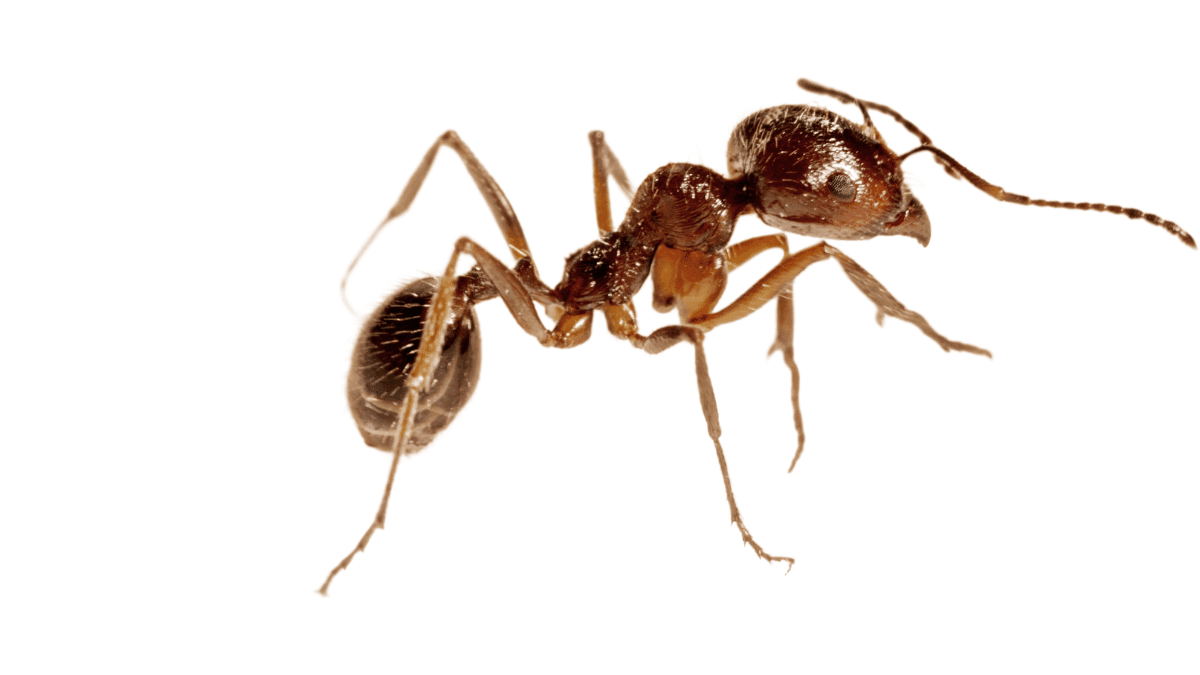
The best way to get rid of fire ants is to bait them from outside your yard with Advion Fire Ant Bait, wait 1 to 2 weeks for the bait to circulate through the colony and kill the queen, then broadcast imidacloprid granules across the lawn to prevent reinfestation for 4 months or more. Most yards are under control inside 7 days when the bait and barrier method is followed correctly.
TL;DR: How To Treat And Control Fire Ants
- Don’t pull fire ants into the house. Bait them from outside.
- If they’re already swarming inside, kill the visible ants with whatever ant spray you have on hand to stop the emergency.
- Check the soil. The ground must be bone dry, with no rain or irrigation for at least 24 hours before and after.
- Apply Advion Fire Ant Bait around mounds (imported) or along soil runways and tree bases (native), early morning or late afternoon when the dew is fully gone. Don’t pile bait on the mound. Don’t water the lawn for 24 hours after.
- Wait 1 to 2 weeks for the colony to collapse.
- Broadcast imidacloprid granules across the full lawn and water them in to prevent new colonies for 4+ months.
Keep reading for the full breakdown. ↓
What You Need
One product handles 95% of fire ant problems in a residential yard.
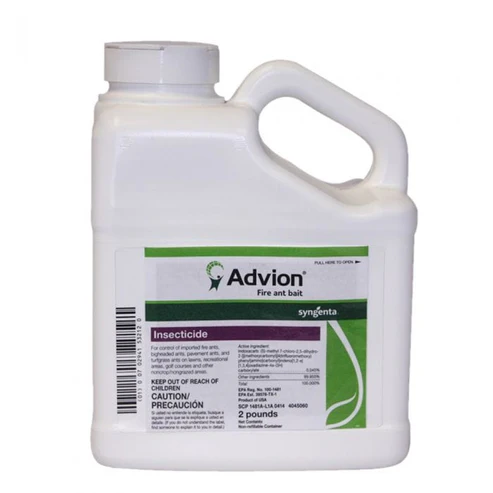
Advion Fire Ant Bait – Syngenta
Advion fire ant bait effective and fast acting. Combined with an alluring formulation, Advion ensures control of ants in 24-72 hours for fast colony control.
- Broadcast or mound treatment
- Extremely attractive bait
- Kills the entire colony
- Delayed kill formula
- Low odor
- Trusted by pest control professionals

Available on Amazon!
Competitive pricing + Fast Free shipping on all orders!
Advion Fire Ant Bait Label – Advion Fire Ant Bait MSDS
Advion uses indoxacarb in a high-grade soybean oil bait matrix. Indoxacarb is a slow-kill active that fire ant workers carry back into the colony and share through trophallaxis (ant-to-ant mouth feeding) before they realize anything is wrong. The queen gets fed. The queen dies. The colony collapses.
This is the opposite of how a contact spray works. Contact sprays kill the foragers you can see and leave the queen 18 inches underground laying 800 eggs a day. A week later the colony has rebuilt and you’re back to square one. Bait is the only approach that reliably kills the whole colony.
After 25 years of treating fire ants, Advion is the bait I reach for first on residential lawns. The soybean oil matrix holds up better than the cheap corn-grit carriers in store-bought baits, and when timing and conditions are right, fire ants will pick up Advion granules so aggressively that the whole bait load is carried back to the colony in under 25 minutes.
And honestly; watching them grab those granules and run them straight into the mound never gets old. There’s something about seeing a treatment work in real time that just sparks joy.
Signs You Have Fire Ants
- Fluffy dome mounds, 6 to 12 inches tall, with no central entry hole. This is the classic imported red fire ant signature. After rain the mounds get taller and more aerated. There’s no visible opening because fire ants enter through underground tunnels at the perimeter.
- Open soil runways across bare dirt. Thin tracks carved into the soil that look like tiny dirt highways. This is the native fire ant signature. Imported reds don’t build these.
- An explosive stinging response when you disturb a mound. Touch an imported red fire ant mound and hundreds of workers pour out within seconds and sting everything within reach. Native fire ants scatter more than they swarm.
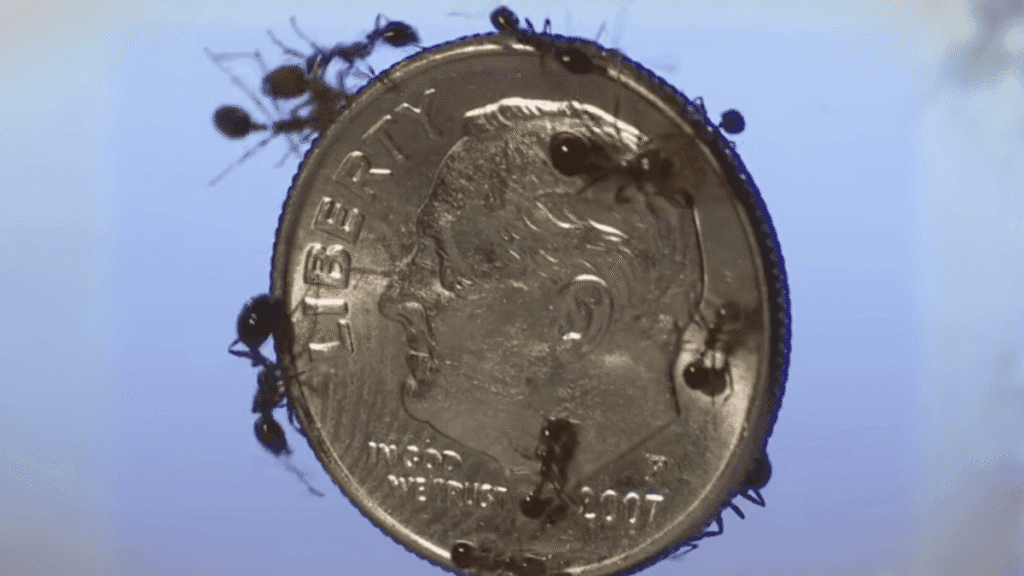
- Reddish-brown ants 1/8 to 1/4 inch long with size variation in the same group. Workers come in different sizes within a single colony. If every ant you see is the same size, it’s probably not a fire ant.
- Pustules that form 24 hours after a sting. Fire ant venom causes a sterile pustule (a small white bubble) at the sting site. No other common stinging ant in the US produces this pattern.
Native Fire Ants vs Imported Red Fire Ants
Both species sting. Both respond to the same bait. But they nest differently, and where you put the bait depends on which one you have.
- Imported red fire ants build the tall fluffy dome mounds and stay underground when foraging. To bait them, sprinkle Advion around the perimeter of the mound, not on top of it. Workers leaving the mound through underground tunnels find the bait in the surrounding area and carry it back.
- Native fire ants build low, irregular, kicked-looking mounds and travel in visible open soil runways. They also frequently establish main colony chambers around tree root systems, so the base of every tree on the property is a priority placement spot. Bait the open runways and the tree bases. A hand broadcast spreader covers open foraging zones efficiently.
If you can’t tell which species you have, broadcast Advion lightly across the affected area. Foragers will find it either way.
Why They’re In Your Yard
Fire ants don’t randomly choose a yard. They show up because the conditions are right and the food supply is there.
- Disturbed soil. New construction, recent landscaping, freshly turned beds, and edges of driveways and sidewalks all attract colony establishment. Disturbed soil is easier to tunnel in.
- Recent flooding or heavy rain. This is the one most people don’t connect. Fire ant colonies displaced by flooding can rebuild on dry ground within 24 to 48 hours. If your yard was dry one week and crawling with mounds the next, look at what happened to the neighborhood drainage during the last storm. Flooded colonies are mobile, and they relocate fast.
- Other lawn pests as a food source. Fire ants are predators. If your lawn has chinch bugs, mole crickets, grubs, or armyworms, the fire ants have a steady protein supply that’s better than bait. They’ll walk past your Advion and eat the bugs instead. After 25 years of this work, if a residential bait treatment isn’t getting traction, the first thing I check is whether the lawn has an underlying pest problem feeding the colony. Treat the chinch bugs and the bait suddenly starts disappearing.
- Neighboring properties. Fire ant colonies don’t respect property lines. If the house next door has mounds and isn’t treating, you have ongoing pressure no matter how thoroughly you bait your own yard.
- Ant territory pressure. Ants are territorial, so a yard with no ants creates an “ant vacuum.” Imported fire ants are more aggressive and push native ants out, which means if your property is empty, some ant species will eventually move in to claim the open ground.
How to Get Rid of Fire Ants – Step by Step
Step 1: If They’re Inside the House Already, Stop the Emergency
Fire ants showing up indoors usually means recent flooding pushed a colony out of saturated ground. They come in through slab joints, weep holes, plumbing penetrations, and under thresholds.
If you have an active trail of fire ants in the kitchen, the bathroom, or anywhere a child or pet could get stung, kill the visible ants with whatever ant spray you have on hand. Raid, Hot Shot, any pyrethroid aerosol. The goal here is not colony control. The goal is to stop people from getting stung in their own house in the next 10 minutes.
This is the only situation where a contact spray on fire ants makes sense. Use it for the emergency, then move outside and start the real treatment.
Step 2: Wait for the Right Conditions
This is the step homeowners get wrong most often, and it’s the silent reason most DIY fire ant treatments fail.
Fire ant bait is oil-based. Moisture ruins it. Dew alone is enough to wash the oil off the granule and make the bait unpalatable to fire ants. Ants will walk right past wet bait and find their own food.
Apply only when:
- The soil surface is bone dry to the touch
- No rain is forecast for at least 24 hours
- No irrigation is scheduled for at least 24 hours
- Dew has fully burned off (or you’re applying in the evening before it forms)
Fire ants are most active foraging in the morning and evening, so early morning AFTER the dew is gone or late afternoon before evening dampness sets in are the two windows. If it’s a damp, humid morning with dew still on the grass, wait. Bait applied in wrong conditions isn’t a partial treatment. It’s no treatment, and you’ll waste an expensive bag of Advion.
Step 3: Apply Advion Fire Ant Bait
The application rate is 1.5 lbs per acre for broadcast, or 2 to 5 tablespoons per mound for individual treatment.
For imported red fire ants:
Sprinkle bait in a 2 to 3 foot ring around each mound. Do not pile it on top. The workers foraging out from underground tunnels will encounter the bait in the surrounding area and carry it back to the colony.
For native fire ants:
Bait along the visible soil runways and broadcast around the base of every tree on the property. Native colonies frequently nest in root systems, so trees are central hub locations.
For both:
Inspect and bait around foundation edges, slab joints, electrical equipment pads, AC units, pool pump housings, and any spot where you’ve seen activity. Spread evenly. Don’t create piles.
If you’ve got the timing right (truly dry conditions, active foraging window), the fire ants will pick up your bait and have it carried back to the colony in under 25 minutes. Watch them work. If 30 minutes go by and the bait is still sitting where you put it, your timing was off and the ants don’t find it palatable. Wait for better conditions and try again.
What Doesn’t Work
A few things you’ll see online that are a waste of effort or actively make the problem worse.
- Pouring boiling water on the mound. Kills the workers you can see on top. The queen is 12 to 18 inches down. The colony rebuilds in a week, sometimes in a different spot, and you scalded the grass for nothing.
- Gasoline, ammonia, club soda, grits, and other home remedies. None of these reach the queen. Several are illegal under EPA pesticide law (gasoline is not a pesticide). The grits one specifically is a myth. Adult fire ants can’t eat solid grits — they only consume liquids and pass solids to larvae for processing — and the larvae don’t “explode.”
- Spraying the mound with Raid or another contact spray. Outside the inside-the-house emergency, contact sprays on a mound just kill the foragers on the surface. The queen is fine. The colony rebuilds in days. This is the most common reason homeowners think “nothing works on fire ants.” Bait is what works.
- Single-mound treatment in a yard with many mounds. Most yards with visible mounds have several invisible satellite colonies tunneling underground that you can’t see. If you treat only the mound you can see, the satellites just expand. Broadcast bait across the area, then individual-treat the visible mounds if you want.
Step 4: If You Have a Vegetable or Herb Garden, Use Extinguish Plus Instead
Advion Fire Ant Bait is not labeled for vegetable gardens, herb gardens, or any food-producing area. If your fire ants are anywhere near edible plants, switch products.
Extinguish Plus is the right call there. It uses hydramethylnon plus methoprene (an insect growth regulator) in a stabilized carrier and is labeled for pastures, livestock areas, school grounds, playgrounds, parks, HOA common areas, and yes, vegetable and herb gardens. It works a day or two slower than Advion, but it kills colonies just as completely and it’s legal where Advion isn’t.
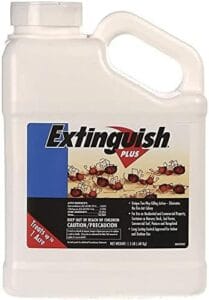
Extinguish Plus Fire Ant Killer Bait
Extinguish Fire Ant Bait delivers powerful, long‑lasting fire ant control by combining fast‑acting hydramethylnon with methoprene to wipe out workers and stop the queen from producing new ants.
- Dual‑action formula with hydramethylnon (kills workers) + methoprene (sterilizes the queen!)
- Ideal for large, widespread infestations across lawns, pastures, rangeland, and commercial turf
- Highly attractive granules that fire ants quickly pick up and carry deep into the mound
- Perfect for broadcast treatments — covers up to 1.5 acres per container
- Also works on harvester ants, big‑headed ants, and Argentine ants
- Easy application: spread lightly around mounds or broadcast across the yard on dry ground
Available on Amazon!
Competitive pricing + Fast Free shipping on all orders!
Extinguish Plus Fire Ant Bait Label – Extinguish Plus Fire Ant Bait SDS
The Extinguish Plus IGR component is particularly useful against multi-queen imported red fire ant colonies because it prevents the next generation of workers from developing properly, which stops the colony from rebounding even if a few workers survive the initial kill.
Step 5: Wait 1 to 2 Weeks
This is the part that takes patience.
- Days 1 to 3: Bait is being collected and carried into the colony. Mound activity may look unchanged. This is normal.
- Days 4 to 7: Mound activity decreases. Aggression drops. Foraging slows.
- Days 7 to 14: Active mounds collapse. The queen is dead. Most yards show major resolution in this window with Advion.
Don’t bait again during this period. Don’t water heavily. Don’t disturb mounds. Let the bait do its work.
Step 6: Apply Imidacloprid Granules for Long-Term Prevention
One to two weeks after the bait has done its work, broadcast imidacloprid granules across the full lawn. This is the “barrier” half of the bait + barrier method, and it’s the step that separates a one-time knockdown from real long-term control.
Imidacloprid is a soil-acting insecticide. When watered in, it moves into the top few inches of soil and creates a treated zone where new fire ant colonies can’t successfully establish. A queen that lands and tries to dig a starter colony hits the treated soil and the colony fails before it gets started.
A single broadcast application gives you 4+ months of prevention under normal rainfall, longer in drier climates.
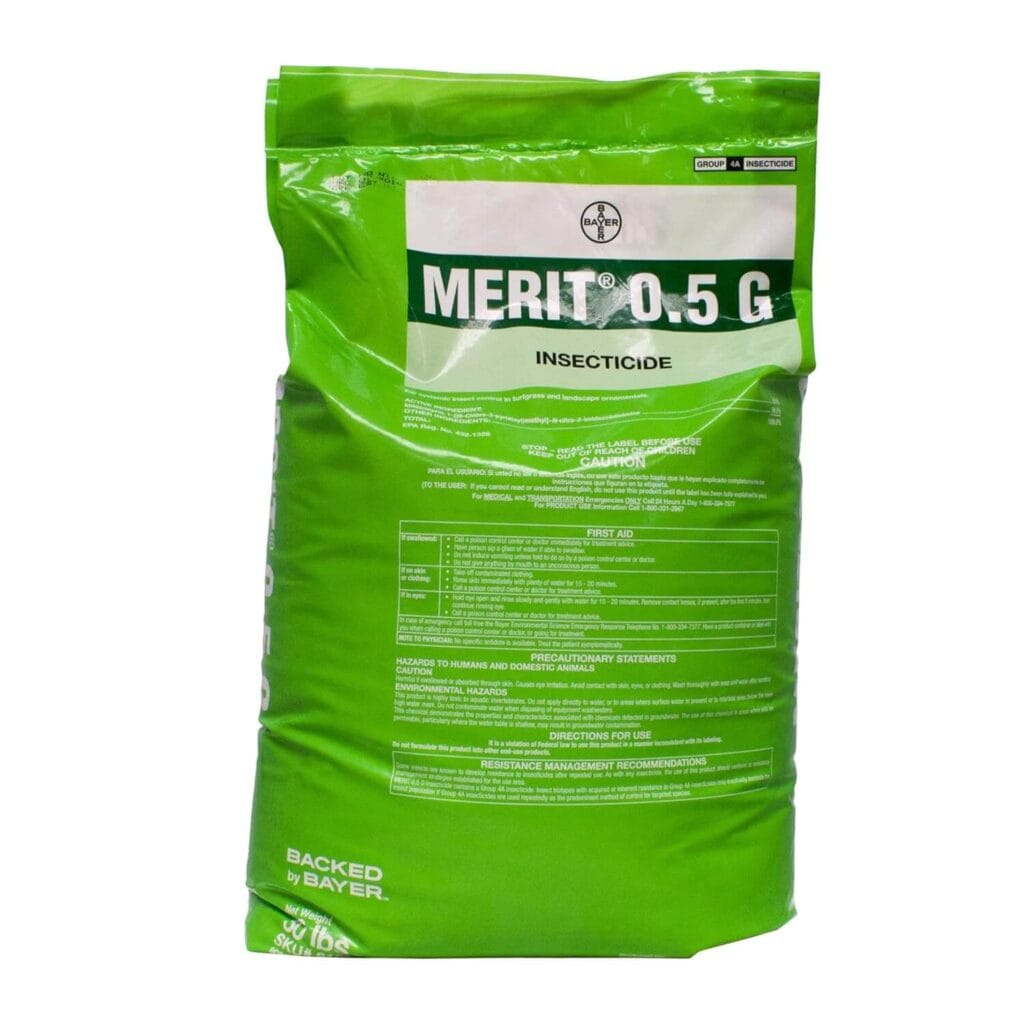
Merit Granules Insecticide 30 LB Bag
Merit 0.5G is a long‑lasting, systemic imidacloprid granular insecticide that delivers industry‑leading grub control in turf and provides broad‑spectrum soil pest suppression across lawns, ornamentals, and landscape areas.
- Systemic turf protection — absorbed through roots and distributed throughout the plant for internal, long‑lasting control.
- Industry‑leading grub control — highly effective against white grubs including Japanese beetles, chafers, masked chafers, May/June beetles, and more.
- Controls multiple soil pests — effective on billbugs, European crane flies, mole crickets, and chinch bugs (suppression).
- Low use rates — up to 96% lower than many other soil insecticides.
- Long residual activity — provides extended protection for turfgrass and ornamental landscapes.
- Ideal for lawns and landscapes — labeled for residential lawns, commercial turf, parks, athletic fields, trees, shrubs, and groundcovers
Available on Amazon!
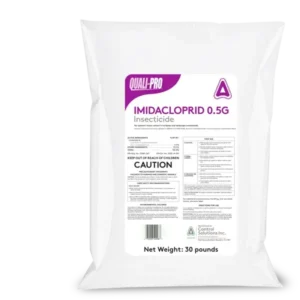
Quali‑Pro Imidacloprid 0.5G
Systemic granular insecticide for turf and ornamentals. Controls grubs, chinch bugs, and other soil pests with long‑lasting residual.
- Systemic protection — moves through the plant to stop feeding damage
- Controls grubs & chinch bugs — targets the most common lawn‑destroying insects
- Granular formulation — easy to spread and activates when watered in
- Long residual — keeps working below the surface for extended control
- For turf & ornamentals — safe for lawns, beds, and landscape plants when used as directed
Competitive pricing + Fast Free shipping on all orders!
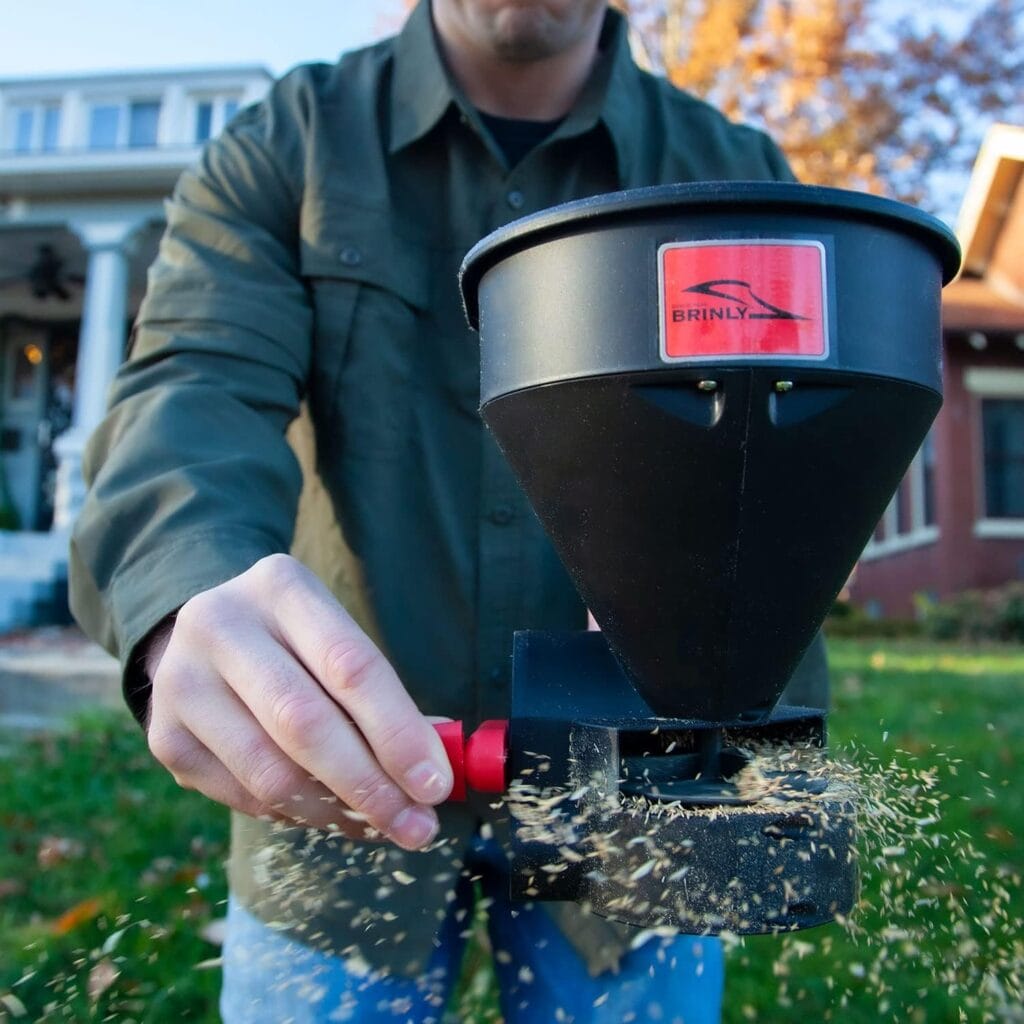
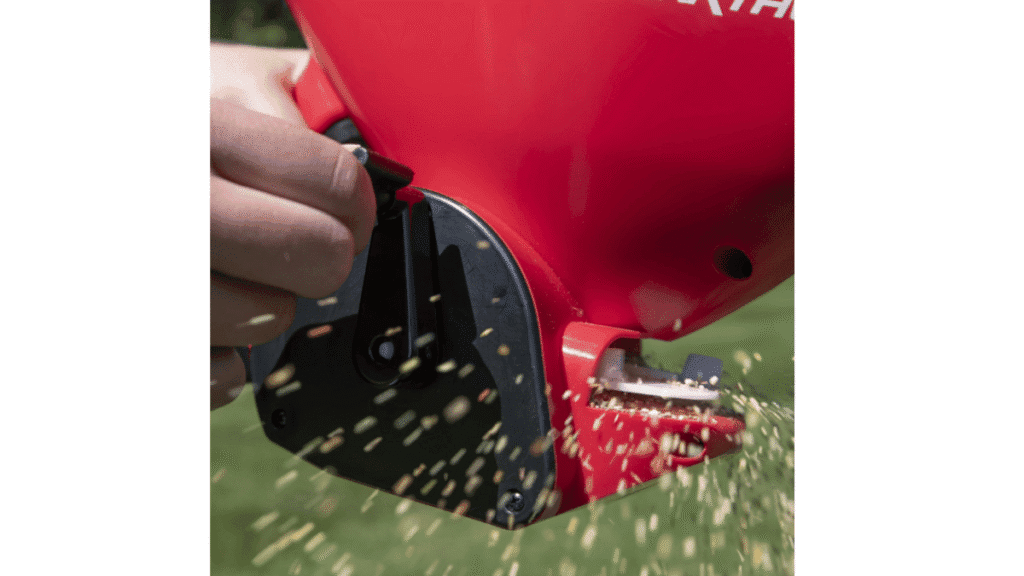
Brinly 5lb. All-Season Handheld Spreader
The Brinly 5 lb. All‑Season Handheld Spreader is a durable, easy‑fill crank spreader built for quick, even application of seed, fertilizer, ice melt, and granular pest control products in small or hard‑to‑reach areas.
- 5 lb Capacity: Holds 0.5 gal / 2 L for small, tight areas.
- Easy Scoop-and-Spread: Contoured lip fills easily; spreads up to 5 ft.
- Adjustable Flow Gate: Simple knob controls output precisely.
- Smooth Crank Action: Long crank and ergonomic handle for easy spreading.
- Professional‑Quality Spread: Throws granules in a clean, controlled pattern.
- Built Tough: Heavy‑duty poly hopper with enclosed gears and steel hardware.

Available on Amazon!
Apply with a broadcast spreader at the label rate. Water in thoroughly — these granules do nothing sitting on top of the grass. They have to dissolve and move into the soil.
In high-pressure areas (rural lots backing up to woods, neighborhoods with active fire ant pressure on neighboring properties), reapply on a 4 to 6 month schedule.
Pet safety note: Both indoxacarb (in Advion) and imidacloprid are low-toxicity to mammals at the rates used here, but until the granules are watered in, keep dogs from rolling in or eating them off the lawn. Once watered in and absorbed into the soil, the treated lawn is safe for normal pet use.
How to Keep Fire Ants From Coming Back
Ranked by impact.
- Stay on top of lawn pests. Fire ants are predators. A lawn with active chinch bug, mole cricket, or grub problems gives them a protein supply that beats your bait. Treat the underlying pest problem and you remove the reason fire ants want to be there in the first place.
- Reapply imidacloprid granules on a 4 to 6 month cycle. This is the single biggest long-term lever. Yards with consistent granule coverage have very low new-colony establishment.
- Inspect after every heavy rain. Flooded colonies relocate. New mounds that appear after a hurricane or major storm aren’t always “your” colony rebuilding — they may be a displaced colony from somewhere down the block that landed on your dry ground. Quick re-bait stops them before they establish.
- Bait around foundation edges, slab joints, AC pads, and electrical equipment seasonally. Even with the granule barrier, perimeter areas where fire ants like to nest are worth a low-rate broadcast every spring.
- Don’t store bait in a hot garage. Advion’s shelf life is good if it’s stored cool and dry. A bag of bait that’s been baking on a metal garage shelf for a Texas summer is less attractive to ants. Buy what you need for the season and store the rest in a climate-controlled area, or seal it tight in a Ziploc and refrigerate it.
- Treat with your neighbors when possible. Fire ants don’t respect property lines. A treated yard next to three untreated ones will have ongoing pressure forever. Even a friendly conversation that gets one neighbor on a bait + barrier schedule cuts your pressure substantially.
Fire Ants Inside the House: Mud Tubes and Electrical Equipment
Most homeowners are surprised that fire ants can be a structural pest. They are.
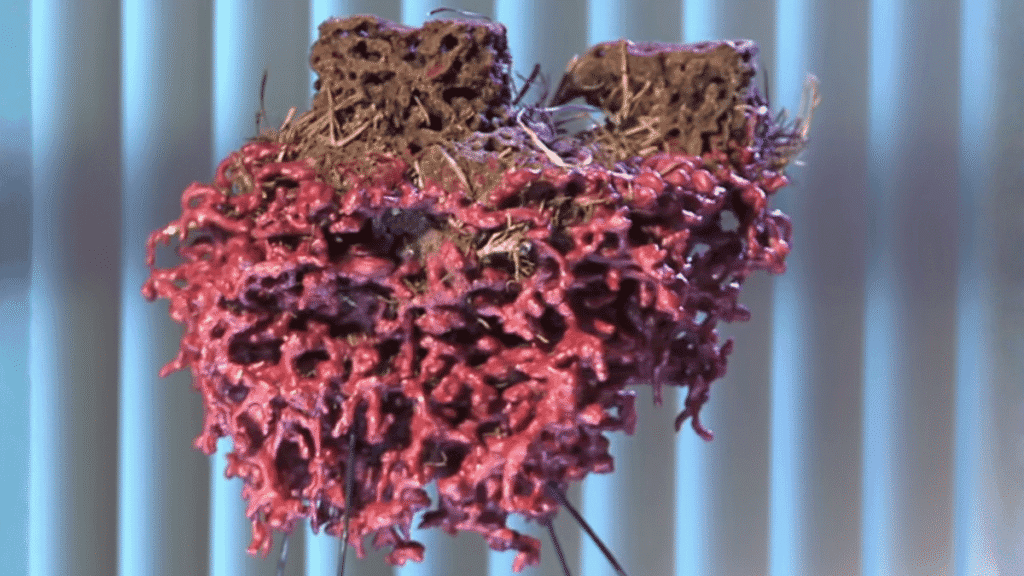
Native fire ant mud tubes
Native fire ants sometimes build thin soil tubes up foundation walls to reach entry points above saturated ground. Homeowners find sand piles at interior baseboards and assume termites. This is a reasonable mistake.
Fire ant tubes are thin, sandy, fragile, and branch in a vein-like pattern. They crumble at a light touch. Termite tubes are thicker, solid, pencil-width or wider, and made of a mud-and-saliva mixture that’s much more durable. The field test: scratch the tube open and watch. If ants run out, it’s fire ants. If you see soft, creamy-white insects and large-headed soldiers respond within 20 seconds, it’s termites and you need a termite inspection.
Electrical equipment
Fire ants will fill outlets, pool pump housings, AC equipment enclosures, and irrigation control boxes with soil. They’re seeking protected insulated voids. Equipment that mysteriously stops working in a fire ant-active area is worth opening and checking before assuming mechanical failure.
Treatment for either situation is the same outdoor bait + barrier approach. Address the colony, not the location it’s invading.
Sting Treatment and Safety
Fire ants sting repeatedly. A single disturbance can produce dozens of stings in seconds.
For standard localized stings: leave the pustules intact. Don’t pop them. Don’t scratch them. Popping or scratching increases infection risk and scarring. Calamine lotion or hydrocortisone cream helps with itching. If scratching becomes irresistible, slap the area — it provides some relief without breaking the skin.
Call 911 immediately if someone is stung many times, or if they show signs of systemic allergic reaction: difficulty breathing, throat tightness, dizziness, hives spreading away from the sting site, swelling of the face or lips. Don’t wait to see if it improves.
Children, elderly family members, and pets are at elevated risk because of body mass and the inability to move away from an erupting mound quickly. Yards where they spend regular time aren’t appropriate places for a relaxed approach to fire ant monitoring.
Edge Cases Where DIY Hits a Wall
For fire ants, there really aren’t any. The bait + barrier method works on residential lots, large rural properties, pastures (with Extinguish Plus), and everything in between. After 25 years of treating fire ants, I can count on one hand the number of homeowner situations that needed something beyond what’s on this page.
Two things to watch for:
- You thought it was a fire ant mound and it’s actually termites. If the field test on a foundation tube produces soft-bodied white insects with large-headed soldiers, stop, leave the tube alone, and call a termite inspector. That’s a different problem with different stakes.
- The bait isn’t getting picked up. If you applied Advion in dry conditions during peak foraging hours and the granules are still sitting there 30 minutes later, two things are usually the cause. Either the bait is old or heat-damaged (replace it with a fresh bag stored cool), or the yard has a competing food source like chinch bugs, mole crickets, or grubs that the fire ants prefer over bait. Treat the lawn pest issue and the bait will start moving.
That’s the whole list. Everything else on a residential fire ant job is handled by the bait + barrier method and a little patience.
Fire Ant Bait Comparison Table
| Feature | Advion Fire Ant Bait | Extinguish Plus | Amdro |
|---|---|---|---|
| Active ingredient | Indoxacarb | Hydramethylnon plus methoprene IGR | Hydramethylnon |
| Bait matrix | High-grade soybean oil | Stabilized professional carrier | Corn grit; moisture-sensitive |
| Colony collapse speed | 3 to 7 days | Moderate; IGR works longer-term | 4 to 6 weeks under good conditions |
| Multi-queen colony performance | Excellent | Very good; IGR prevents rebound | Poor; queens often survive |
| UV and moisture stability | Good | Good | Poor |
| Labeled for residential lawns | Yes | Yes | Yes |
| Labeled for pastures and livestock | No | Yes | No |
| Labeled for playgrounds and parks | No | Yes | No |
| Professional use | Standard | Standard for public and ag sites | Rarely |
| Reliability | High | High | Inconsistent |
Fire Ant Control FAQ’s
IDENTIFICATION & BEHAVIOR
What are fire ants?
Fire ants are aggressive stinging ants that build underground colonies and form visible mounds. Two species are most commonly encountered in the United States: native fire ants (Solenopsis geminata) and imported red fire ants (Solenopsis invicta). Both sting. Both respond to the same bait products. Their behavior, mound shape, and foraging patterns differ in ways that affect where you place bait.
How do I know if I have fire ants?
Look for loose, fluffy soil mounds with no central opening, along with fast‑moving reddish‑brown ants that swarm aggressively when disturbed.
Why do fire ant mounds get tall after rain?
After heavy rain or irrigation, fire ants push their nests above ground to keep the colony dry. This is why mounds suddenly appear overnight.
Do fire ants always build mounds?
Not always. In dry conditions, colonies stay deeper underground and may not form visible mounds. Trails and scattered soil may be the only signs.
Are fire ants a year-round problem?
Yes. In warm climates fire ants are active all year.
In areas that experience cold winters they go deeper underground when temperatures drop, but they don’t die off — they come back as soon as it warms up.
There’s no real off-season with fire ants.
If you live in an area where they’re established, year-round management is the most effective approach.
What’s the difference between native fire ants and imported red fire ants?
Both will sting and both can cause serious reactions, so neither should be taken lightly.
The imported red fire ant originally from Brazil is the more aggressive and problematic of the two.
Native fire ant colonies typically number around 20 to 50 mounds per acre. Imported red fire ant colonies can reach up to 500 mounds per acre — each with its own queen. That density is what makes imported red fire ants such a serious pest problem.
The good news is that both species respond to the same treatment approach.
Why do fire ants have so many mounds?
Imported red fire ants can have multiple queens per colony and hundreds of colonies per acre, which allows them to spread and establish new mounds rapidly.
Each queen can produce new workers continuously, which is why populations rebuild so quickly after treatment.
This is also why a soil barrier like imidacloprid is so important — without it, new colonies from surrounding areas move right back in.
Where do fire ants typically show up first in a yard?
They can appear anywhere, but they often establish first near trees, sidewalks, driveways, or concrete pads where the soil stays warmer and drier. That said, they’ll also pop up right in the middle of an open lawn with no obvious reason.
Making it a routine habit to scan your yard for mounds or foraging activity — especially after rain when mounds become more visible — is the most practical way to catch them early before populations build up.
Are fire ants especially dangerous for children and pets?
Yes. Children are at higher risk because of their smaller body size — a large number of stings relative to body weight increases the severity of a reaction significantly.
Young children also don’t have the instinct to move away quickly when they disturb a mound.
The same applies to elderly people, people with disabilities, and anyone who may not be able to react and move fast.
Pets can also be seriously harmed. In yards where children or pets spend time, regular fire ant monitoring and treatment isn’t optional — it’s a safety issue.
How do I tell native fire ants from imported red fire ants?
Three field cues handle most cases.
- Open soil runways on the surface indicate native fire ants — imported reds stay underground.
- Fluffy dome-shaped mounds indicate imported reds — native mounds are low, flat, and irregular.
- Violent immediate swarming when the mound is disturbed indicates imported reds — native fire ants scatter more than they swarm.
If all three point the same direction, you have your answer.
Why do fire ant mounds suddenly appear after rain?
Fire ants push soil upward when their underground galleries flood or saturate. The mound that appears overnight after rain was already there — you just could not see it because the colony was operating at a comfortable depth underground. Rain forces them up.
What is the difference between native and imported fire ant colony density?
Native fire ant colonies typically produce around 20 to 50 mounds per acre. Imported red fire ant colonies can reach 500 mounds per acre with multiple queens producing workers continuously. This density is why imported reds are the more serious structural and safety pest and why a soil barrier is important for preventing reinvasion after treatment.
Do fire ants really build mud tubes on foundation walls?
Native fire ants do. They build thin, sandy, fragile soil tubes up foundation walls to escape saturated soil and reach cracks and entry points above ground level. These tubes look somewhat like termite mud tubes but are thinner, lighter in color, crumble instantly when touched, and will have ants running from the breach rather than creamy white termites with soldiers appearing to defend the damage.
STINGS
Do fire ants sting?
Yes. Fire ants bite to anchor themselves, then sting multiple times. Their stings can cause burning, itching, and small white pustules.
Are fire ant stings dangerous?
Yes — more than most people realize.
Fire ants don’t sting once, they sting repeatedly, and a single disturbance can result in dozens of stings in seconds.
Reactions vary widely from mild irritation to life-threatening anaphylaxis.
Children are especially vulnerable because of their small body size. The elderly and people with disabilities face elevated risk as well, but even a healthy adult can have a severe allergic reaction.
If someone is stung many times or shows signs of a serious reaction — difficulty breathing, swelling, dizziness — call 911 immediately and don’t wait to see if it gets better.
What should I do after a fire ant sting?
Leave the pustules alone — do not pop them and do not scratch them.
Popping or scratching increases the risk of infection and scarring.
Calamine lotion can help relieve the itching.
If the urge to scratch is overwhelming, try slapping the area instead — it can provide some relief without breaking the skin.
If you experience anything beyond localized irritation, seek medical attention right away.
TREATMENT & PRODUCTS
What is the best fire ant bait?
Advion Fire Ant Bait for residential yards. It uses indoxacarb in a high-grade soybean oil matrix, gets strong recruitment from fire ant workers, and collapses colonies in 3 to 7 days. For playgrounds, parks, pastures, livestock areas, and school grounds, Extinguish Plus is the correct labeled product for those environments.
Do native and imported fire ants need different treatments?
No. Both species respond to the same baits and the same treatment plan.
Why does the ground need to be dry before baiting?
If the bait gets wet from rain, dew, or irrigation, the ants won’t take it. Dry conditions are the #1 factor in whether baiting works.
How much area does Advion Fire Ant Bait cover?
Advion is extremely concentrated — the rate is only 1.5 lbs per acre.
Why do pros use imidacloprid granules after baiting?
Imidacloprid creates a long‑lasting soil barrier that fire ants struggle to cross. After rain or irrigation, the granules dissolve into the soil and form a zone fire ants can’t tunnel through.
Can I just dump bait on the mound?
You can, but it’s less effective. Broadcasting bait across the lawn works better because it hits all the foraging workers, not just the mound you see.
Can I spray fire ants instead of baiting?
Sprays kill the ants you see but don’t reach the colony. Fire ants have deep tunnels and multiple queens, so sprays alone don’t solve the problem.
Is Advion Fire Ant Bait safe around dogs?
Use caution. Advion Fire Ant Bait has a greasy, oily quality that makes it highly attractive to fire ants — but that same quality can attract some dogs too.
Don’t leave your dog unsupervised in a treated area until the ants have had a chance to pick up the bait and carry it back to the nest.
Once the bait is gone you don’t have to worry about it anymore.
As with any pest control product, keep pets away from freshly treated areas and always follow the product label.
Is fire ant bait safe to use if I have dogs?
Yes. All fire ant baits are extremely low‑toxicity to dogs when used correctly. The real safety issue isn’t the active ingredient — it’s dogs eating a pile of bait because it smells like oily corn chips.
Use bait in light, scattered applications and you’re fine.
Two things to avoid:
- Amdro → smells good to dogs, more likely to be eaten
- Any bait dumped in piles → dogs will eat it
If you broadcast lightly around the yard the way the label intends, dogs won’t get enough bait to matter.
Bottom line: Fire ant baits are safe for dogs. Just don’t make piles, and skip Amdro if your dog is a snacker.
Why didn’t Amdro work on my fire ants?
Amdro’s active ingredient hydramethylnon is UV-sensitive, heat-sensitive, and moisture-sensitive. The corn grit carrier absorbs moisture, goes rancid, and loses its attractive odor quickly. Bait that has been stored in a warm garage or exposed to morning dew before pickup is essentially ineffective. Even under ideal conditions, Amdro takes 4 to 6 weeks for full colony collapse and performs poorly on multi-queen colonies because queens often survive. Advion uses a more stable, higher-quality matrix and collapses colonies in a fraction of the time.
Which product should I use if I have pets or livestock?
Extinguish Plus is labeled for pastures and livestock areas. Advion is not. For any environment where animals graze or have access to treated ground, Extinguish Plus is the correct legal and practical choice. For residential yards with pets, Advion can be used with normal precautions — keep pets away from the treatment area until the bait has been picked up by the ants.
Is Advion Fire Ant Bait safe around dogs?
Advion has a greasy, oil-rich quality that some dogs find attractive. Do not leave dogs unsupervised in freshly treated areas until the bait has been collected by the ants. Once the granules are gone, the concern is gone with them. Follow the product label for all applications.
What do imidacloprid granules do that bait does not?
Bait collapses existing active colonies. Imidacloprid granules create a soil barrier that prevents new colonies from establishing in the treated area. Without the granule step, new fire ant colonies from surrounding areas move into the cleared space within weeks. The bait handles the current problem; the granules prevent the next one.
How long do imidacloprid granules last?
Several months under typical conditions; longer in areas with less rainfall. In high-pressure areas, reapplying on a seasonal schedule maintains consistent prevention coverage. This is the closest thing to once-a-year fire ant control that most homeowners can realistically achieve.
Can I treat fire ants coming in through slab joints?
Yes. Bait along the joint first to collapse the colony producing the foragers. Follow with imidacloprid applied to the joint with enough water to push it into the gap. For persistent entry points where two slabs meet at the foundation — patio, pool deck, room addition — doing both gives the best results and the longest-lasting protection.
TIMING & CONDITIONS
When is the best time of day to bait?
Early morning or late afternoon, when ants are actively foraging and the ground is dry.
What if it rains after I put the bait down?
If the bait gets wet before the ants pick it up, you’ll need to reapply once everything dries out.
How long does it take for bait to work?
You’ll see activity drop within a few days, but full colony collapse can take 1–2 weeks depending on colony size.
Why do fire ants come back after I treat them?
Fire ants constantly spread from surrounding areas. Without a soil barrier (like imidacloprid), new colonies can move in.
Why does the ground need to be completely dry for bait to work?
Fire ant bait is oil-based. When moisture contacts the granules before workers pick them up, the oil washes off, the granules degrade, and the ants ignore them. Morning dew, recent rain, recent irrigation, and damp soil are all enough to compromise the bait before it can work. This is the single most common reason bait treatments fail and it has nothing to do with the product.
PREVENTION & LONG‑TERM CONTROL
How do I keep fire ants from coming back?
After baiting, apply imidacloprid granules. Once dissolved by rain or irrigation, they create a soil barrier that fire ants can’t cross.
How often should I treat for fire ants?
Bait every few months if activity returns. The imidacloprid barrier can last much longer, depending on soil and weather.
Does mowing or yard work affect fire ant treatments?
No — mowing doesn’t interfere with baiting or soil treatments. Just avoid watering right after applying bait.
Do fire ants damage lawns?
Yes. Their tunneling can disturb root systems, create uneven soil, and kill patches of grass around active mounds.
INDOOR ACTIVITY
Can fire ants come inside the house?
Yes. They may enter during droughts, heavy rain, or when searching for food and moisture. Outdoor baiting is the best way to stop indoor activity.
Will indoor sprays help?
They can knock down visible ants, but they won’t eliminate the colony. Treating outdoors is what actually solves the problem.
Can fire ants come inside through cracks in my slab?
Yes, and this is a commonly overlooked entry point.
Fire ants frequently nest in the gaps where two concrete slabs meet — where a back door meets the patio slab, where a pool deck meets the foundation, or where a home addition was built against the original structure.
These joints create a protected void right at ground level that fire ants love.
If you’re finding fire ants inside your home near a door, along a baseboard, or near a pool area, check where any slabs meet the foundation.
How do I treat fire ants coming in through slab joints?
You have two good options.
First, you can apply Advion Fire Ant Bait along the joint and let workers carry it back to the colony.
Second, you can spray imidacloprid along the joint and make sure it soaks in thoroughly — you want good penetration into the gap, not just surface coverage.
For persistent entry points like where a pool deck, addition, or patio slab meets the home, doing both gives you the best results.
Bait first to knock down the colony, then soak the joint with imidacloprid to create a long lasting barrier.
SAFETY
Are fire ant stings dangerous?
More than most people realize. Imported red fire ants sting repeatedly — a single mound disturbance produces dozens of stings in seconds. Reactions range from localized burning to anaphylaxis. Children, elderly individuals, and people with mobility limitations face elevated risk. If someone shows any signs of a systemic reaction — difficulty breathing, throat tightening, dizziness — call 911 immediately and do not wait to see if it improves.
What should I do after a fire ant sting?
Leave the pustules intact; do not pop or scratch them. Scratching breaks the skin and increases infection risk. Calamine lotion relieves itching. Slapping the area rather than scratching provides some relief without skin damage. Seek medical attention for anything beyond localized irritation.
Not Sure It’s Fire Ants?
If you’re not sure you’re dealing with fire ants, compare them to: