
This page contains affiliate links. I may earn a commission at no extra cost to you.
The best way to get rid of Australian cockroaches is to place Advion Roach Bait Stations in cabinets, garages, and stored items indoors, then spray a fipronil + Gentrol IGR mix around the exterior foundation, mulch beds, stumps, and potted plants; because Australian roaches come from outside, the perimeter spray is what solves the problem long‑term, and most homes see indoor activity drop within three days.
TL;DR: How To Treat And Control Australian Cockroaches
- Place Advion Roach Bait Stations in kitchen cabinets, bathroom vanities, the garage, and inside any stored items where you can’t spray.
- Spray Fipronil C Plus with Gentrol IGR added along indoor baseboards, behind appliances, around plumbing penetrations, and along garage edges.
- Outside, mix the same Fipronil C Plus and Gentrol IGR and spray a perimeter band 1 foot up the wall and 3 feet out from the foundation. Hit mulch beds, leaf litter edges, old stumps, potted plants, doorways, around AC lines and utility penetrations.
- Treat every stored flower pot and bag of potting soil on the property. Australian roaches love them.
- Fix any moisture problems immediately. Plumbing leaks, AC condensate, gutter overflow, overwatered landscaping.
- Switch exterior lights to yellow or motion-activated. Turn off porch and garage lights when not in use.
- Reapply the perimeter every 60 to 90 days during warm weather.
Keep reading for the full breakdown. ↓
What You Need
Three products handle Australian cockroaches start to finish.
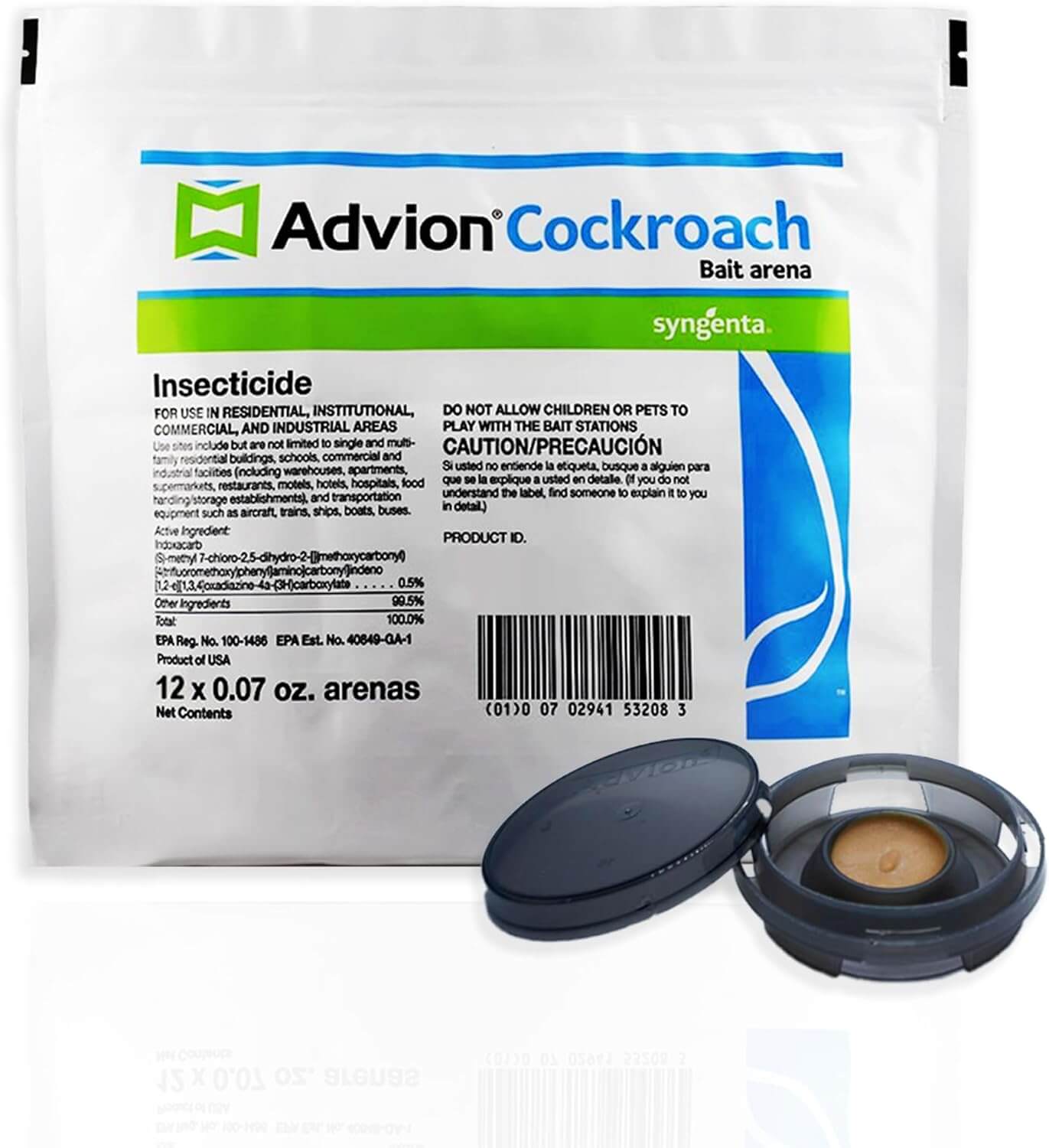
Advion Cockroach Bait Stations
Professional roach bait stations that attract and kill hidden roaches using a powerful indoxacarb formula. Ideal for kitchens, bathrooms, and garages.
- Pro‑Grade Stations — Used by pest control techs for fast colony kill
- Strong Attractant — Peanut‑butter‑scented bait pulls roaches from deep hiding
- Targets Large Roaches — American, Smokybrown, Oriental, German
- Easy Placement — Drop stations in cabinets, garages, and appliance voids
- Pet‑Safety Note — Keep away from dogs; plastic station is a chew hazard
- Active Ingredient — Indoxacarb 0.6%
- Unit Size — 12 bait arenas per pack


Available on Amazon!
Competitive pricing + Fast Free shipping on all orders!
Advion Roach Bait Stations use indoxacarb in a sealed bait housing. Indoxacarb is a slow-kill active that roaches carry back to harborage areas and pass to other roaches through contact, feces, and feeding. The stations are the right format for indoor placement in cabinets, garages, and stored items because the bait stays fresh inside the housing, kids and pets can’t get to it, and you don’t need to chase Australian roaches with a sprayer through your kitchen cabinets.
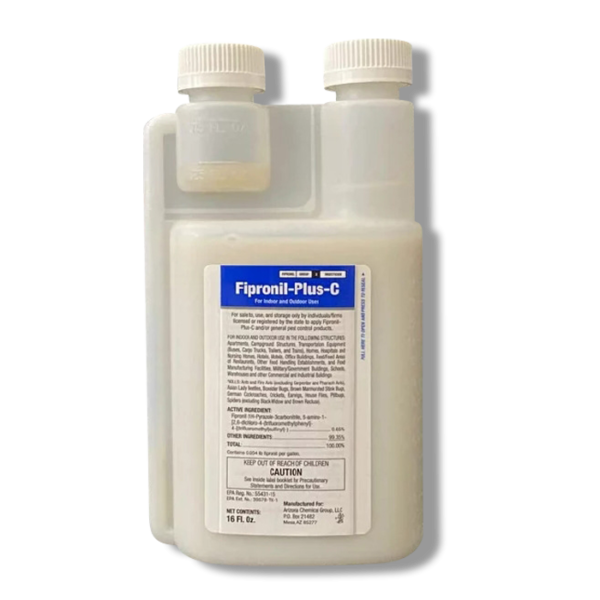
Fipronil‑Plus‑C Pest Control Concentrate (16 oz)
Fipronil‑Plus‑C is a commercial‑strength 0.65% fipronil concentrate that homeowners use for roaches, ants, and perimeter pests. One 16‑oz bottle makes up to 21 gallons of solution for long‑lasting indoor crack‑and‑crevice and outdoor structural treatments.
- Use: 1.0 fl oz per gallon of water This is the standard labeled dilution for structural crack‑and‑crevice applications.
- Commercial‑Strength Formula — 0.65% fipronil delivers professional‑grade control of roaches, ants, and other structural pests.
- Makes 21 Gallons — One 16‑oz bottle stretches far for large infestations or multi‑room treatments.
- Long‑Lasting Residual — Cellulose entrapment technology slows UV breakdown for extended control.
- Indoor + Outdoor Use — Ideal for kitchens, bathrooms, garages, baseboards, and exterior foundation cracks.
- Easy Mixing — Precision‑designed bottle reduces drift and makes dilution simple for DIY homeowners.
- Broad‑Spectrum Control — Effective against roaches, ants, and other common household invaders.
Available on Amazon!
Competitive pricing + Fast Free shipping on all orders!
Fipronil‑Plus‑C Label – Fipronil‑Plus‑C MSDS
Fipronil C Plus is the same non-repellent perimeter spray professionals use against outdoor-driven roaches. The active ingredient (fipronil) is non-repellent, which means the roaches don’t detect it. They walk through the treated zone, pick up the active ingredient, and carry it back to harborage areas where it transfers to other roaches. This is the spray that creates the actual long-term barrier.
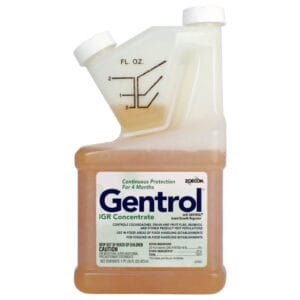
Gentrol IGR Concentrate – 1 Pint
Professional insect growth regulator that stops roach, fly, and stored‑product pest reproduction for up to 4 months.
- What It Does Breaks the life cycle of roaches, drain flies, fruit flies, bed bugs, and pantry pests. Prevents reinfestation by sterilizing adults and stopping nymphs from maturing.
- Where You Can Use It Food and non‑food areas, kitchens, bathrooms, restaurants, warehouses, commercial buildings, and residential spaces.
- Why Pros Use It Hydroprene provides long‑lasting population control and pairs perfectly with fipronil sprays for complete roach treatment.
- Shelf Life Up to 3 years when stored in a cool, dry place.
- Active Ingredient Hydroprene 9% (IGR)
- Mix Rate 1 fl oz per gallon (Gentrol EC)
- Best Pairing Use with a fipronil concentrate for crack‑and‑crevice kill + IGR reproduction control.
Available on Amazon!
Competitive pricing + Fast Free shipping on all orders!
Gentrol IGR is added to the fipronil mix. It contains hydroprene, an insect growth regulator that disrupts the hormonal process that allows immature roaches to develop into reproducing adults. After 25 years of treating roaches, I can tell you that adding an IGR to the spray is what professional pest control companies do on every single roach job, and it’s the difference between a treatment that holds for 6 months and one that bounces back in 6 weeks. The fipronil kills the roaches you have. The Gentrol stops the next generation from ever existing.
Signs You Have Australian Cockroaches
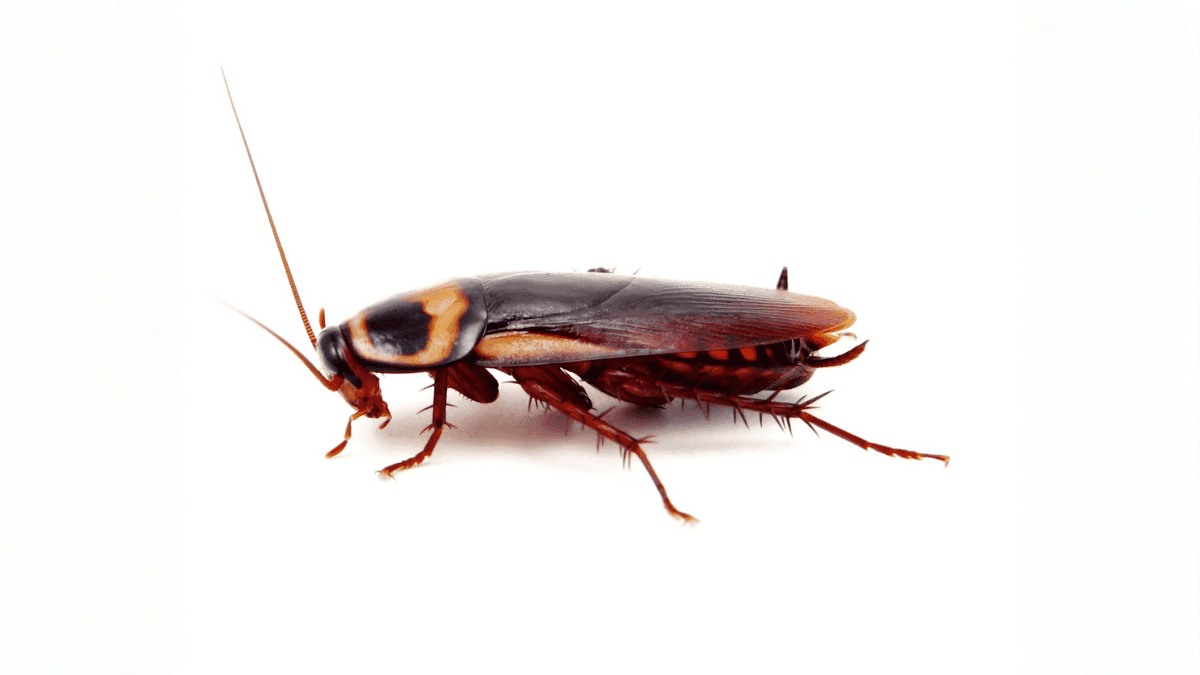
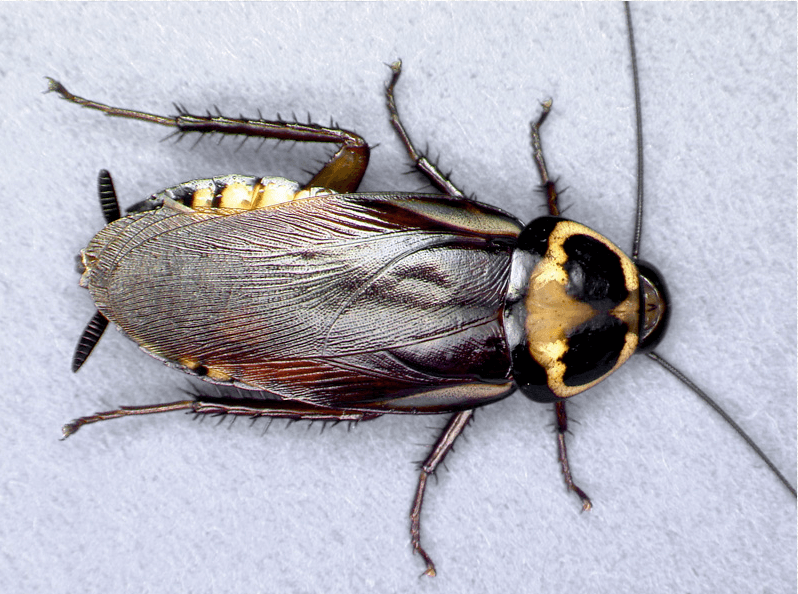
- Large, reddish-brown roaches, 1¼ to 1⅜ inches long. About the same size as American cockroaches.
- Yellow stripe along the leading edge of each wing. This is the dead giveaway. American cockroaches don’t have this.
- Yellow band on the pronotum (the shield behind the head). Combined with the wing stripe, this is the unmistakable Australian roach signature.
- Strong fliers, drawn to porch and garage lights at night. Garages are the #1 entry point for this species.
- Activity that spikes after heavy rain. Saturated mulch and landscaping drives them indoors looking for dry ground.
- Around mulch beds, palm bases, dense foundation plantings, and potted plants. Common outdoor harborage spots.
- Coming out of stored flower pots and bags of potting soil. Australian roaches are particularly fond of these.
Australian vs American vs Smokybrown Cockroaches
These three big outdoor roaches in the southern US get confused constantly. They’re all reddish-brown to dark brown, all about the same size, and all show up around lights and after rain. The treatment is similar, but the ID matters for placement priorities.
| Feature | Australian Cockroach | American Cockroach | Smokybrown Cockroach |
|---|---|---|---|
| Size | 1¼ to 1⅜ inches | 1½ to 2 inches | 1¼ to 1½ inches |
| Color | Reddish-brown with yellow markings | Reddish-brown, uniform | Uniform dark mahogany |
| Yellow wing stripe | Yes, on leading edge of each wing | No | No |
| Pronotum markings | Yellow band | Yellow figure-eight pattern | No markings, solid dark |
| Flies? | Yes, strong flier | Glides more than flies | Yes, strong flier |
| Drawn to lights? | Yes, heavily | Less so | Yes, very heavily |
| Where they nest | Mulch, palms, potted plants, dense plantings | Sewers, drains, leaf litter, mulch | Trees, attics, gutters, palm crowns |
| Common name confusion | Palmetto bug | Palmetto bug | Palmetto bug |
The fastest field test:
look at the shield behind the head. Australian roaches have a clean yellow band. American roaches have a yellow figure-eight pattern. Smokybrown roaches have nothing — solid dark color from head to wingtip.
Australian cockroaches are common in Florida, the Gulf Coast, southern California, Hawaii, and anywhere warm and humid. They’re often mistaken for American cockroaches and lumped under “palmetto bug” in the southeast.
Why They’re In Your House
Australian cockroaches are not breeding inside your house in most cases. They’re coming in from outside. Understanding where they’re coming from is what makes the treatment work.
- Mulch beds, leaf litter, and dense landscaping. This is the #1 outdoor harborage. Mulch holds moisture, provides protected hiding spots, and stays warm year-round in southern climates. The closer the mulch is to the foundation, the more pressure you have.
- Stored flower pots and bags of potting soil. Australian roaches love these. Empty flower pots stacked in the garage, bags of potting soil leaning against the shed, and pots stored outdoors after the growing season are all prime harborage. After 25 years of treating these roaches in southern landscapes, I’ve watched homeowners panic about indoor activity that turned out to be coming from a stack of 6 empty terracotta pots in the corner of the garage. Treat the pots.
- Garages with exterior lights. Australian cockroaches fly hard toward light at night. A garage door left open for 5 minutes at dusk with the interior light on is enough for several to fly in and never leave. Garage door seals that have gaps at the bottom let them walk right under.
- Heavy rain. Saturated soil floods the mulch beds, leaf litter, and underground harborage spots where Australian roaches normally live. They get displaced upward and inward, and the closest dry place is usually your house.
- Moisture inside the structure. Plumbing leaks, AC condensate drips, leaky toilets, soggy bathroom subfloors, and chronic humidity create indoor harborage where Australian roaches can actually establish small breeding populations. This is uncommon, but when it happens, the bathroom and kitchen are where it shows up first. Fix the leaks and the indoor breeding ends.
- Palms and dense foundation plantings. Palm crowns, the fibrous material at the base of fronds, and dense shrubs against the foundation are favorite outdoor nesting spots in tropical and subtropical climates.
How to Get Rid of Australian Cockroaches, Step by Step
Step 1: Place Advion Roach Bait Stations Indoors
Australian roaches that make it inside usually hide in cabinets, garages, and stored items where spraying is impractical. Bait stations handle these spots cleanly.
Where to place stations:
- Inside kitchen cabinets, especially near the sink and under any plumbing penetration
- Inside bathroom vanities
- Inside the cabinet under the laundry sink
- Behind and under the refrigerator (pull it out a few inches)
- In garage corners
- Inside any stored cardboard boxes in the garage or basement
- Inside empty flower pots stored in the garage or shed
- Inside the gap behind the dishwasher
- In utility closets near the water heater
One station per 3 to 5 feet of cabinet, more in high-activity spots. Don’t overthink the placement. Coverage matters more than precision with this species.
Advion Cockroach Bait Stations
Professional roach bait stations that attract and kill hidden roaches using a powerful indoxacarb formula. Ideal for kitchens, bathrooms, and garages.
- Pro‑Grade Stations — Used by pest control techs for fast colony kill
- Strong Attractant — Peanut‑butter‑scented bait pulls roaches from deep hiding
- Targets Large Roaches — American, Smokybrown, Oriental, German
- Easy Placement — Drop stations in cabinets, garages, and appliance voids
- Pet‑Safety Note — Keep away from dogs; plastic station is a chew hazard
- Active Ingredient — Indoxacarb 0.6%
- Unit Size — 12 bait arenas per pack
Available on Amazon!
Competitive pricing + Fast Free shipping on all orders!
Step 2: Indoor Crack-and-Crevice Spray With Fipronil + Gentrol
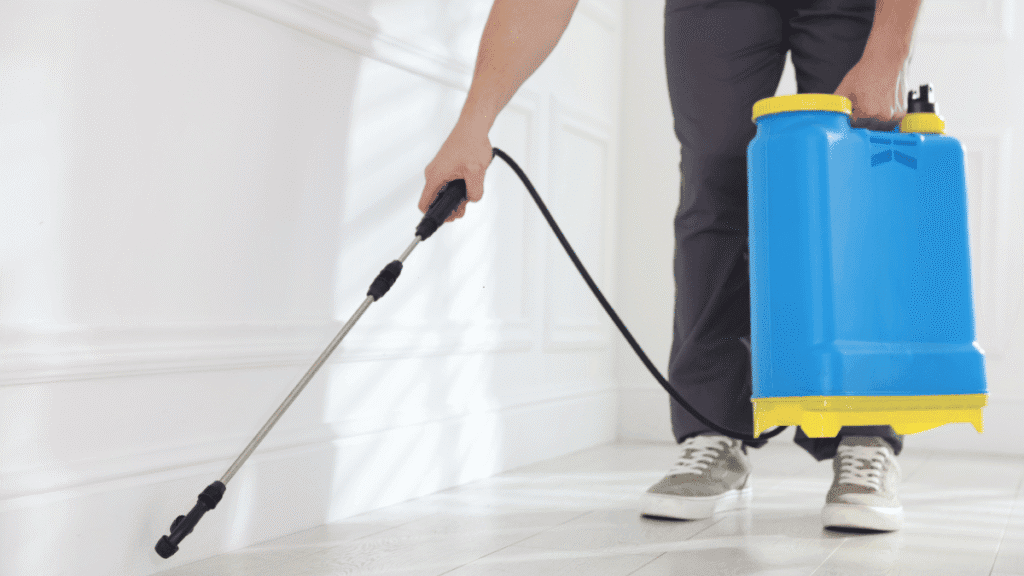
Mix Fipronil C Plus at the label rate (usually 0.8 fl oz per gallon, but read your label) with Gentrol IGR Concentrate added at the IGR’s label rate (typically 1 oz per gallon).
Where to spray indoors:
- Along every baseboard in the kitchen, bathrooms, and laundry room
- Around the perimeter of the garage floor
- Behind every appliance (fridge, stove, dishwasher, washer, dryer)
- Around every plumbing penetration through walls and floors
- Around the base of toilets
- Under sinks, along the back wall of the cabinet
- Around the water heater base
- Along the garage door bottom seam (interior side)
- Around utility entry points where wires and pipes come into the house
Don’t spray where the bait stations are. A 12-inch gap between the spray and the bait keeps the spray residue from contaminating the bait. Australian roaches will avoid bait that smells like fipronil.
Pay extra attention to bathrooms and kitchens. These are the moisture zones where Australian roaches will try to establish indoor harborage if conditions allow. Treat them thoroughly.
Let the spray dry completely before normal traffic resumes. Most fipronil dries in 1 to 2 hours indoors.
Step 3: Outdoor Perimeter Spray (The Real Fix)
This is the step that solves the problem long-term. If you only do one thing on this page, do this.
Mix Fipronil C Plus and Gentrol IGR at the same rates as the indoor mix. Apply with a pump or battery-powered sprayer.
Where to spray outside:
- A 3-foot band along the foundation, 1 foot up the exterior wall
- Around every door and window frame
- Around AC condenser units and the pad they sit on
- Around every utility penetration (cable, gas line, water line, AC lines)
- Along the garage door track and threshold
- Mulch beds touching the foundation
- The base of every palm, large shrub, and ornamental tree on the property
- Old stumps and any wood-to-soil contact points
- Around stacked firewood
- Edges of leaf litter that hasn’t been cleaned up
- Around every flower pot on the property, whether in use or stored
- On and around bags of potting soil
Don’t skip the stored flower pots. This is the single most common Australian roach hiding spot that homeowners forget about. If you have 15 pots stored in the garage from last season, treat each one. Spray inside the pot, around the rim, and underneath. If the pots are stacked against an exterior wall, hit the wall behind them too.
Fipronil‑Plus‑C Pest Control Concentrate (16 oz)
Fipronil‑Plus‑C is a commercial‑strength 0.65% fipronil concentrate that homeowners use for roaches, ants, and perimeter pests. One 16‑oz bottle makes up to 21 gallons of solution for long‑lasting indoor crack‑and‑crevice and outdoor structural treatments.
- Use: 1.0 fl oz per gallon of water This is the standard labeled dilution for structural crack‑and‑crevice applications.
- Commercial‑Strength Formula — 0.65% fipronil delivers professional‑grade control of roaches, ants, and other structural pests.
- Makes 21 Gallons — One 16‑oz bottle stretches far for large infestations or multi‑room treatments.
- Long‑Lasting Residual — Cellulose entrapment technology slows UV breakdown for extended control.
- Indoor + Outdoor Use — Ideal for kitchens, bathrooms, garages, baseboards, and exterior foundation cracks.
- Easy Mixing — Precision‑designed bottle reduces drift and makes dilution simple for DIY homeowners.
- Broad‑Spectrum Control — Effective against roaches, ants, and other common household invaders.
Available on Amazon!
Competitive pricing + Fast Free shipping on all orders!
Gentrol IGR Concentrate – 1 Pint
Professional insect growth regulator that stops roach, fly, and stored‑product pest reproduction for up to 4 months.
- What It Does Breaks the life cycle of roaches, drain flies, fruit flies, bed bugs, and pantry pests. Prevents reinfestation by sterilizing adults and stopping nymphs from maturing.
- Where You Can Use It Food and non‑food areas, kitchens, bathrooms, restaurants, warehouses, commercial buildings, and residential spaces.
- Why Pros Use It Hydroprene provides long‑lasting population control and pairs perfectly with fipronil sprays for complete roach treatment.
- Shelf Life Up to 3 years when stored in a cool, dry place.
- Active Ingredient Hydroprene 9% (IGR)
- Mix Rate 1 fl oz per gallon (Gentrol EC)
- Best Pairing Use with a fipronil concentrate for crack‑and‑crevice kill + IGR reproduction control.
Available on Amazon!
Competitive pricing + Fast Free shipping on all orders!
Step 4: Fix Moisture Problems Right Away
Australian roaches are heavily moisture-driven. Any chronic moisture source on the property is making the problem harder to control.
Walk the house and look for:
- Dripping faucets, hose bibs, and irrigation heads
- AC condensate drip lines dumping water against the foundation
- Gutter downspouts that don’t extend away from the house
- Toilet bases that are soft to the touch (subfloor rot)
- Wet spots under sinks or around water heaters
- Mulch beds that stay dark and damp for days after rain
- Soggy areas in the lawn from overwatering
Fix what you can fix today. Tighten the faucet, extend the downspout, redirect the AC line, cut back irrigation. The bigger jobs (rotted subfloor, hidden plumbing leak, broken irrigation underground) may need a handyman or plumber, and they’re worth the call. Moisture that gets ignored keeps the roaches comfortable no matter how aggressively you spray.
Step 5: Manage Exterior Lights
Australian cockroaches fly toward white and blue-white exterior bulbs from a long way off. Two simple changes drop fly-ins dramatically:
- Switch outdoor bulbs to yellow or sodium-vapor. These wavelengths are much less attractive to flying insects, including Australian roaches. Most hardware stores sell yellow LED replacements for standard outdoor fixtures.
- Switch to motion-activated lighting where you can. Lights that only come on when someone walks up shut off the all-night attraction zone.
- Turn off porch and garage lights when not in use. A porch light burning from sunset to sunrise pulls in Australian roaches from a hundred feet away. If you don’t need the light on, kill the switch.
What Doesn’t Work
A few things you’ll see online that waste time or make Australian roach problems harder.
- Foggers and bug bombs. Don’t reach where Australian roaches actually hide (mulch, stored pots, wall voids, the underside of the garage door seal). The mist settles on open surfaces and contaminates the spots where your bait stations need to go. Foggers also leave residue on every interior surface, including your countertops.
- Big box store repellent sprays. Most over-the-counter perimeter sprays are pyrethroid-based and repellent, which means Australian roaches detect them and scatter deeper into harborage. The colony doesn’t die. The roaches just move to spots you can’t reach.
- Big box store bait stations. The active ingredients in cheap supermarket roach bait stations are older chemistry that Australian roaches walk past. Indoxacarb (in Advion) is what works.
- Treating only indoors. If you only spray inside while leaving the mulch, pots, and landscaping untreated, new Australian roaches keep arriving from outside every night. The outdoor perimeter is the actual fix.
How to Keep Australian Cockroaches From Coming Back
Ranked by impact.
- Reapply the perimeter every 60 to 90 days in warm weather. The fipronil and IGR break down faster in heavy rain and sun. In southern climates, plan on 4 to 6 perimeter treatments a year. This is the single biggest long-term lever.
- Pull mulch back at least 12 inches from the foundation. Mulch right against the house is roach habitat. A dry gravel or bare-soil strip along the foundation breaks the harborage and helps the perimeter spray work better.
- Don’t store flower pots or potting soil against the house. Move them to a shed, the back of the property, or off the ground entirely. If you must store them in the garage, treat them every perimeter cycle.
- Clean up leaf litter and yard debris regularly. Especially around the foundation, against fence lines, and in shady corners. Less debris means less roach harborage.
- Replace worn garage and exterior door seals. Australian roaches walk under doors with gaps you can see daylight through. New weatherstripping is a $20 fix that closes a major entry route.
- Keep exterior lights yellow or motion-activated, and off when not in use. Recurring fly-ins through the garage are a major source of indoor activity for this species.
- Fix moisture problems within a week. A slow leak becomes a roach water source. Fast leaks fix themselves with a wrench. Slow leaks need a real fix.
Edge Cases Where DIY Hits a Wall
For Australian cockroaches in a single-family home, DIY handles every case I’ve seen in 25 years when the bait + perimeter spray approach is followed correctly. The chemistry is the same chemistry professional companies use, and the application isn’t complicated.
Where it genuinely struggles:
- Multi-unit buildings. Apartments, condos, townhouses, and duplexes share wall voids and plumbing chases. Treating one unit while adjacent units stay untreated will get reinfested continuously. Coordinated treatment across every unit through building management is the fix.
- Severe outdoor pressure from neighboring untreated properties. If your neighbor has an unmanaged mulch jungle right against the property line, you’ll have ongoing pressure no matter what you do on your side. The fix is staying on a tight 60-day perimeter schedule rather than the standard 90 days.
- Indoor breeding in moisture-damaged structures. If Australian roaches are actually breeding inside the house, there’s wet wood or a chronic plumbing leak somewhere. Fixing the moisture problem may need a plumber, roofer, or handyman. The pest control part is straightforward. The construction part may not be.
FAQ’s: Australian Cockroaches
General Questions
What are Australian cockroaches and why are they in my house?
Australian cockroaches are outdoor roaches that live in mulch, leaf litter, sewers, flower pots, potting soil, and damp shaded areas. They usually enter homes by flying toward lights, slipping through door gaps, or hitchhiking inside on cars, boxes, or potted plants.
Do Australian cockroaches breed inside homes?
Not usually. They only breed indoors when there’s a water leak, high moisture, or a consistent damp area. Most of the time, they’re just wandering in from outside.
How common are Australian cockroaches?
Very common — probably more than most homeowners realize.
They’re frequently mistaken for American cockroaches because of their similar size and color. If you’re seeing large reddish-brown roaches around your home, there’s a real chance some of them are Australian cockroaches, especially if you have mulch, palms, or heavy landscaping near the structure.
How do I tell an Australian cockroach apart from an American cockroach?
Size-wise they’re similar, but the markings are different once you know what to look for.
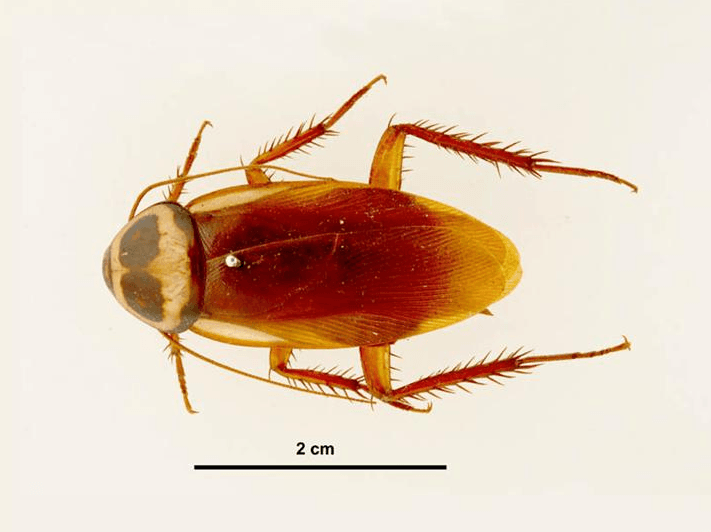
Australian cockroaches have a yellow stripe running down each side of their wings. American cockroaches have a yellowish marking behind their head that looks like a pair of glasses or a figure-8.
If you see the side stripes, it’s Australian. If you see the glasses marking on the back of the head, it’s American. Both are large reddish-brown roaches, so the markings are the quickest way to separate them.
Can Australian cockroaches get out of hand if left untreated?
Yes. They may seem like random stragglers at first, but if the outdoor conditions are favorable — palms, mulch, moisture, leaf litter — populations can build up significantly over time.
What starts as an occasional roach in the garage can turn into a consistent problem throughout the home if the outdoor source isn’t addressed.
The good news is that treating the exterior thoroughly usually knocks them back quickly.
Entry & Behavior
How do Australian cockroaches get inside?
They commonly enter by:
- entering through moisture‑damaged areas
- flying into garages at night
- following bright exterior lights
- riding in on cars or stored items
- coming in with potted plants
- squeezing through worn door seals
Why do I see them mostly in my garage?
Garages attract them because of:
- cars that bring them in
- bright lights
- open doors
- stored boxes
- moisture
- potted plants
Moisture & Environment
Why are Australian cockroaches attracted to moisture?
They are moisture‑loving roaches that thrive in damp soil, mulch, leaf litter, and shaded areas. Any wet or humid spot around your home becomes a prime hiding place.
Can potting soil or empty flower pots attract Australian cockroaches?
Yes. Potting soil and empty flower pots stored indoors or in the garage can attract them, because these roaches hide in moist soil and plant debris.
Does mulch attract Australian cockroaches?
Absolutely. Mulch, leaf litter, and palm debris are some of their favorite hiding spots. Removing or thinning mulch near the home reduces activity dramatically.
Can palm trees attract Australian cockroaches?
Yes. Australian cockroaches are strongly associated with palm trees and can actually live in the tips and crowns of palms where organic debris collects.
If you have palms near or touching your home, they can serve as both a harborage site and a highway directly onto your structure.
This is an easy harborage spot to overlook when you’re trying to figure out where they’re coming from.
Treatment Questions
What’s the best way to treat Australian cockroaches inside?
Use Fipronil Plus C combined with an IGR (insect growth regulator). Apply it as a crack‑and‑crevice spray around baseboards, plumbing lines, behind appliances, and in the garage.
How do I treat Australian cockroaches outside?
Spray Fipronil:
- 1 foot up the house
- 3 feet out from the foundation
- around windows, doors, A/C lines, and plumbing penetrations
- around flower pots and damp areas
This creates a strong barrier that stops them before they enter.
Should I treat flower pots and potting soil?
Yes. Australian cockroaches hide in potted plants, potting soil, and stored pots, so treating these areas helps break the cycle.
Prevention & Home Fixes
How do I stop Australian cockroaches from coming inside?
- Fix moisture issues
- Replace worn door seals
- Remove mulch and leaf litter near the home
- Don’t store potting soil or empty flower pots indoors
- Keep palm fruits cleaned up
- Switch exterior lights to motion‑activated to reduce fly‑ins
Do lights attract Australian cockroaches?
Yes. They fly toward bright lights. Using motion‑activated lighting reduces how many fly inside at night.
Can Australian cockroaches come up through drains?
Possibly. Like American cockroaches, Australian cockroaches are associated with sewers and drains and can potentially come up through floor drains or utility drains where the water trap has dried out.
Running water through infrequently used drains every few weeks keeps the trap full and blocks this entry point.
Should I throw light onto my house instead of having fixtures mounted on the wall?
Yes — and this applies to Australian cockroaches just as much as other roach species.
These roaches fly toward light sources at night, and if your porch or garage lights are mounted directly on the structure, you’re drawing them right to your entry points.
A better approach is to use landscape lighting that throws light onto the house from a distance rather than placing the light source at the wall.
Motion-activated lighting is another good option — less total light exposure means fewer roaches flying in.