
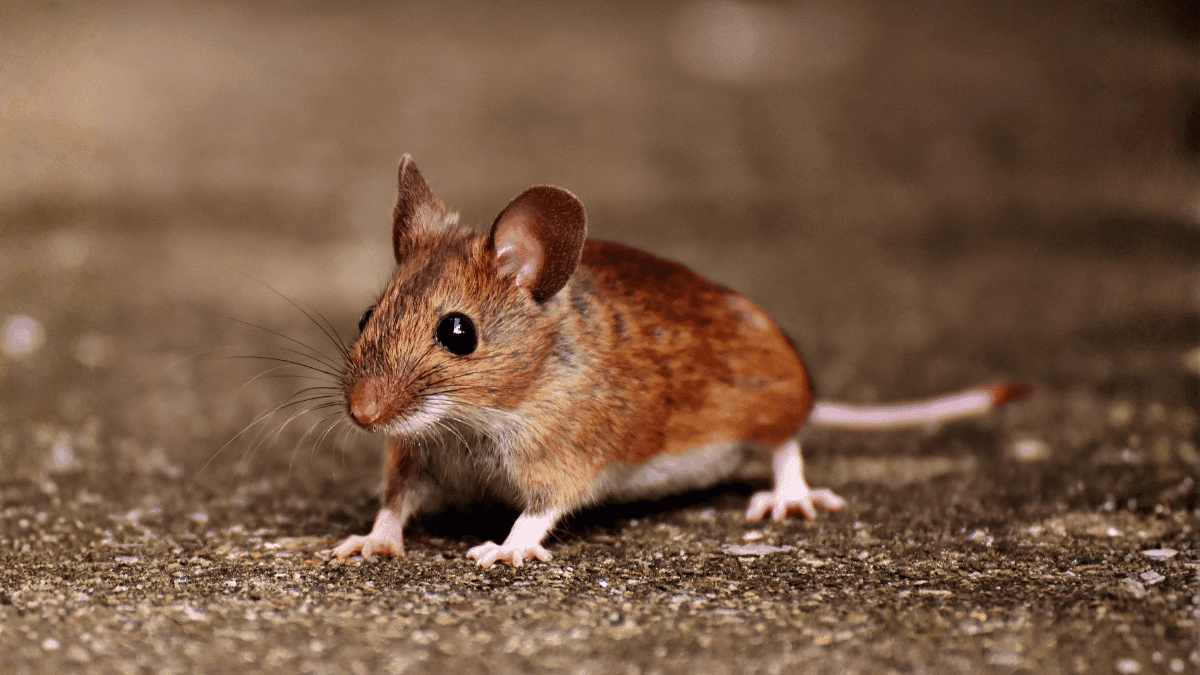
TL;DR: How To Treat And Control House Mice
Step 1 — Seal the house (Exclusion).
Close every gap ¼ inch or larger using copper rodent mesh (never steel wool).
Step 2 — Trap aggressively indoors (No bait inside).
Use snap traps or live traps only. Do not use poison bait indoors.
Step 3 — Long-term population control outdoors.
Use outdoor bait stations along exterior walls.
You don’t kill your way out of a mouse problem.
You exclude your way out.
If mice can still enter, killing a few only gives temporary relief.
Below is the exact protocol that fixes a house mouse problem long-term.
Step 1 — Seal Every Mouse Entry Point (Exclusion Is Everything)
House mice can squeeze through openings as small as ¼ inch — about the width of a pencil.
Your first job is to make sure new mice can’t get in.
Walk the entire exterior of the home and seal every gap larger than ¼ inch using copper rodent mesh.
Do not use steel wool. It rusts quickly and is flammable.
If a gap is too large for mesh alone, use rodent-resistant expanding foam designed to discourage chewing.
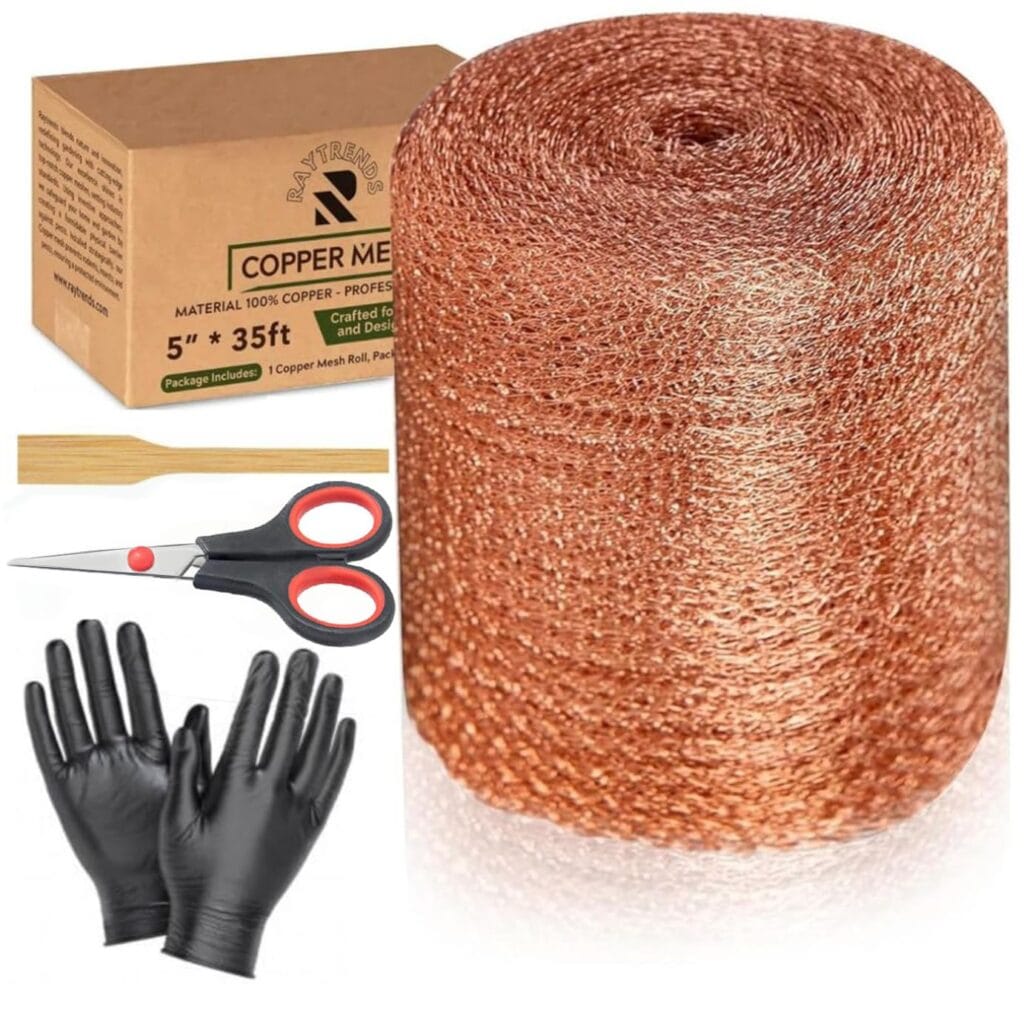
Copper Mesh Rodent Control Kit
Copper Mesh Rodent Control Kit includes 100% pure copper mesh roll plus gloves, scissors, and a handy packing tool for sealing gaps & cracks with a long‑lasting, rust‑proof barrier rodents can’t chew through. Flexible, and easy to pack tightly into wall creases and pipe penetrations, it provides a durable exclusion solution for blocking mice, rats, slugs, and other pests.
- Fire-resistant & rustproof
- Gloves & Scissors included
- Packing tool packs mesh deep into tight siding grooves where mice try to sneak in.
- Multi-pest protection
- Ideal for rodent exclusion around a/c line gaps

Available on Amazon!
Focus on These High-Risk Areas
- Dryer vents
- Siding gaps
- Weep holes
- Where two slabs meet
- Plumbing penetrations
- Electrical penetrations
- A/C line entry points
- Outdoor faucet gaps
- Foundation cracks
- Warped or damaged trim
Then check:
- Door sweeps
- Garage door seals
- Weatherstripping
- Window screens
If any of these are worn or torn, mice can slip inside.
Don’t Forget the Roof
Many mouse problems start above ground.
Inspect for:
- Lifted shingles
- Roof returns
- Soffit gaps
- Attic vents
- Gaps around chimneys
If you’re not comfortable inspecting the roof, hire a roof inspector. It’s worth it.
Exclusion is the foundation.
Skip it, and the problem keeps repeating.
Step 2 — Trap Aggressively Indoors (No Poison Inside)
Once the home is sealed, remove the mice already inside.
- Do not use rodent bait indoors.
- Baited mice often die in walls, vents, or inaccessible voids, leading to odor issues.
Instead, use:
- Snap traps
- Live traps (if preferred)

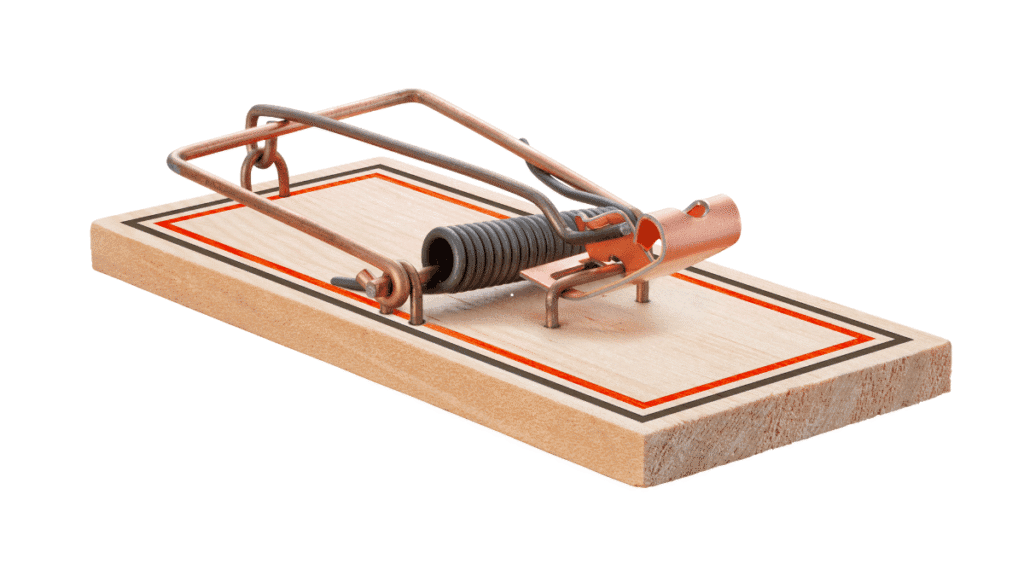
Victor Power-Kill Humane Mouse Traps – 6
Copper Mesh Rodent Control Kit includes 100% pure copper mesh roll plus gloves, scissors, and a handy packing tool for sealing gaps & cracks with a long‑lasting, rust‑proof barrier rodents can’t chew through. Flexible, and easy to pack tightly into wall creases and pipe penetrations, it provides a durable exclusion solution for blocking mice, rats, slugs, and other pests.
- Easy to set with a reassuring *click*
- Reusable
- Quick & humane
- Large trigger & trip peddle
Available on Amazon!
Proper Trap Placement (This Is Where Most People Fail)
Trap placement matters more than the bait.
Mice naturally travel along walls. Their whiskers act like sensors, helping them navigate tight edges.
Place traps:
- Tight against the wall
- Perpendicular to the wall
- With the trigger facing the mouse’s path
- With the snapping end closest to the wall
When traps sit out in the open, mice avoid them. When they’re against a wall, they run directly into them.
Often you don’t even need bait.
If you do use bait, apply only a tiny smear of peanut butter.
Use Enough Traps
Most homeowners don’t use enough.
- Minimum: 6 traps
- Heavy activity: 10–20 traps
The goal is to catch them quickly before reproduction accelerates the problem.
Step 3 — Use Outdoor Bait Stations for Ongoing Pressure
If you live in an area with regular mouse pressure, outdoor bait stations help reduce the population before they reach the house.
Place stations:
- Along exterior walls
- Where they won’t sit in standing water
- Where they won’t be exposed to heavy rain
- Near attractants (hot tubs, sheds, grills, stored firewood)
Most homes need only two bait stations.
Check and replenish bait monthly.
This step reduces incoming pressure so exclusion holds long-term.
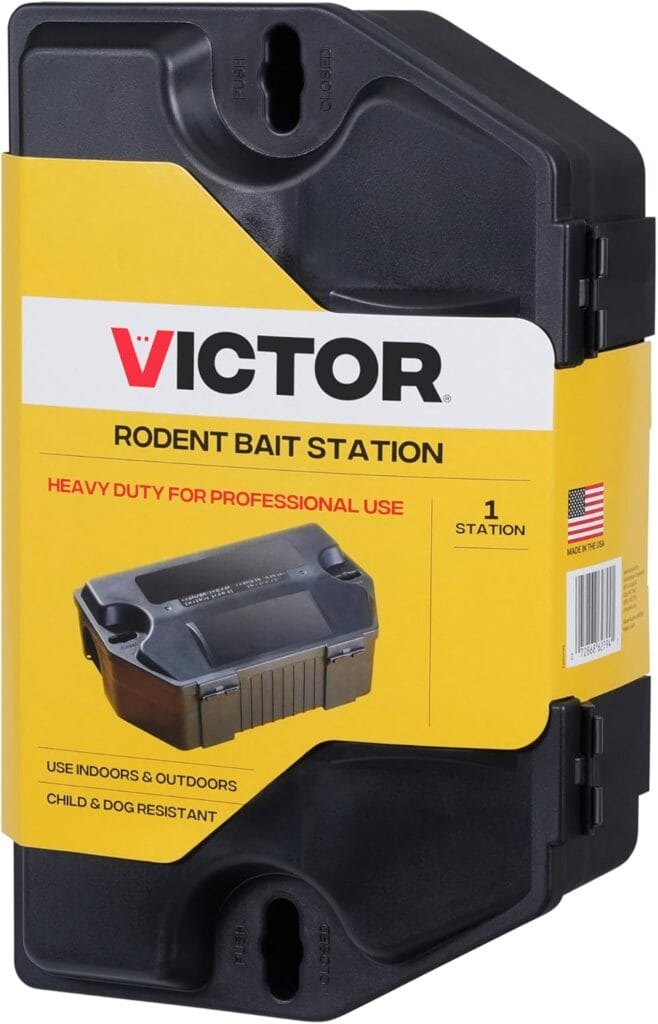
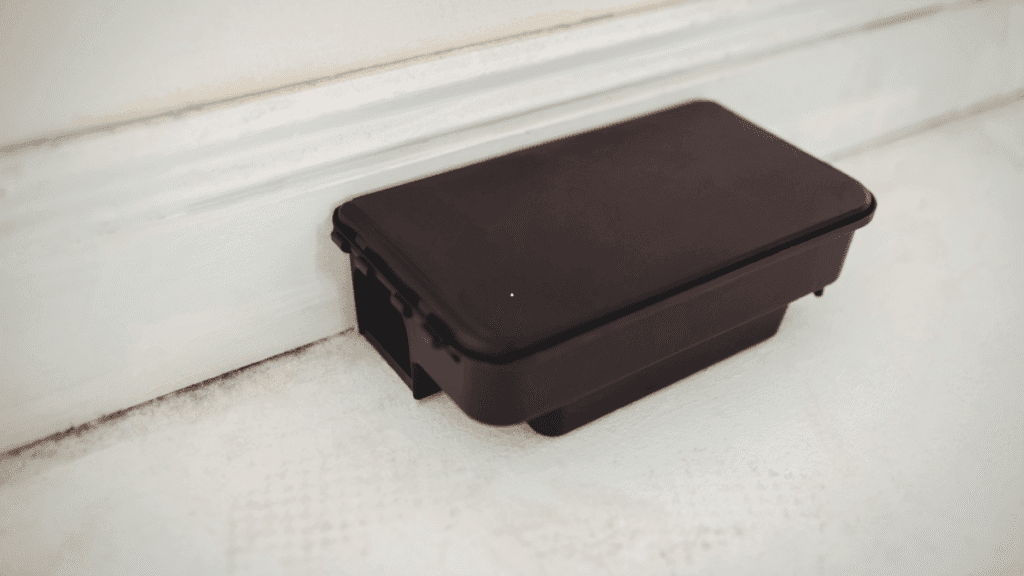
Victor Refillable Rodent Bait Station
This extra‑large Victor Refillable Rodent Bait Station holds multiple bait blocks, giving you a powerful, secure way to control infestations from the outdoors. Its dual‑entry design, locking lid, and heavy‑duty build make it a safe, reliable option for long‑term rodent control around your home.
- XL Capacity holds several bait blocks at once
- Locking, tamper resistant lid
- Heavy-duty construction
- Professional grade design
Available on Amazon!
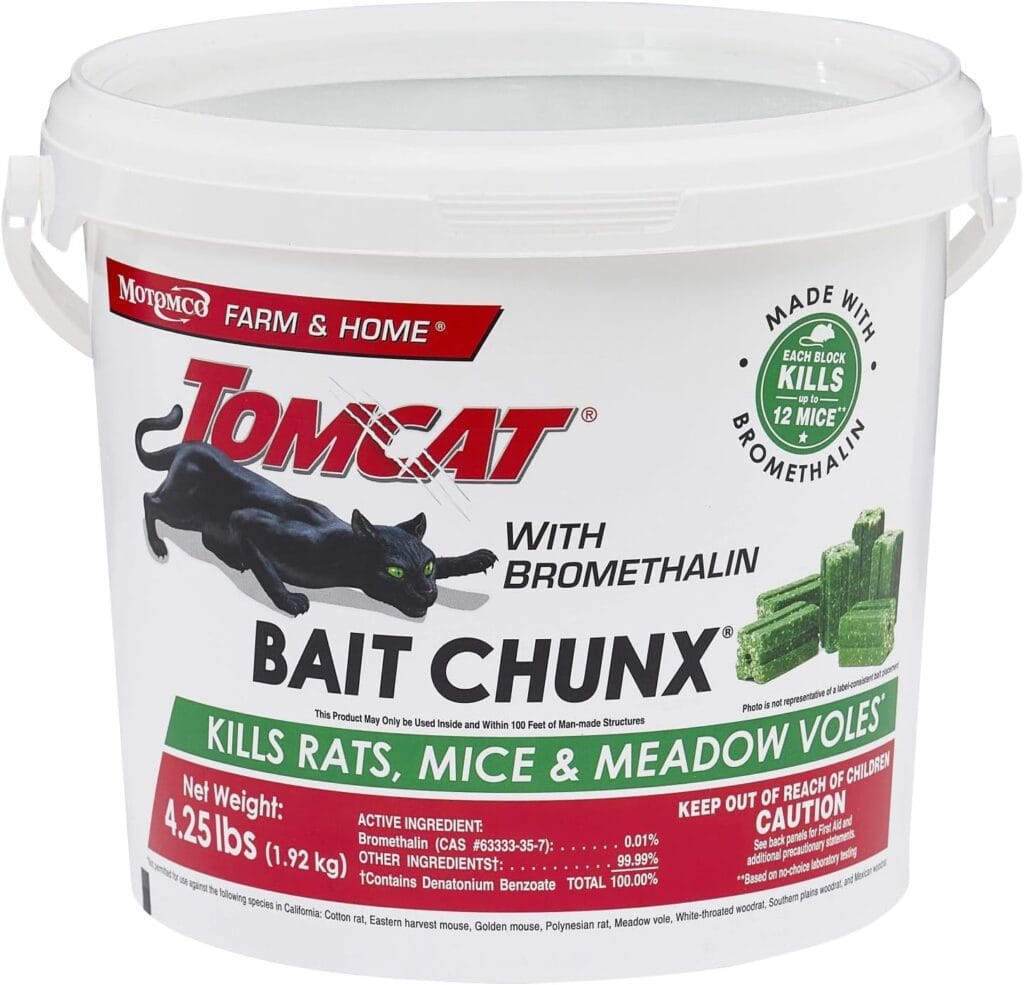
Tomcat Rodent Bait
Long‑lasting rodent bait, delivering dependable control of rats and mice even in damp, wet, or high‑moisture areas. Its weather‑resistant formulation holds up outdoors and begins working within a few days of consistent feeding.
- All-weather formula
- Kills in 4-6 days
- 4 lb pail
Available on Amazon!
Mouse Prevention: Reduce Outdoor Attractants
Once the mice are gone, keep them gone.
Lower outdoor attraction by:
- Keeping bird feeders away from the home
- Storing chicken feed in sealed containers
- Cleaning up spilled seed
- Keeping garbage lids tight
- Reducing clutter around the foundation
- Trimming vegetation touching the structure
Less food and shelter means less pressure on your home.
The Complete House Mouse Strategy (Simple and Effective)
- Seal the house completely.
- Set multiple traps along walls indoors.
- Use outdoor bait stations if pressure continues.
- Reduce attractants and inspect seals regularly.
- Stop them getting in.
- Catch the ones inside.
- Control the population outside.
- Maintain prevention.
That’s how you solve a mouse problem permanently — not temporarily.
FAQ’s House Mouse Control
General House Mouse Questions
How long does it take to get rid of house mice?
Most homes see results within a few days of aggressive trapping, but full control depends on sealing the home. If exclusion is done correctly, you can eliminate an indoor mouse population in 1–2 weeks.
Do house mice carry diseases?
House mice can carry bacteria and pathogens, but the bigger issue is contamination from droppings and urine. Proper cleanup and exclusion reduce the risk significantly.
Why do I hear mice in my walls at night?
Mice are nocturnal, so nighttime scratching is common. They travel through wall voids, attic spaces, and around plumbing lines.
Can mice climb walls or jump?
Yes. Mice can climb rough surfaces, jump up to 12 inches, and squeeze through tiny gaps. This is why exclusion must include the roofline, siding, and utility penetrations.
Will mice leave on their own?
No. Once mice find food, warmth, and shelter, they stay and reproduce. You must seal the home and remove the existing mice to stop the cycle.
Do ultrasonic mouse repellents work?
Ultrasonic devices don’t solve mouse problems. Mice quickly adapt to the sound, and these devices don’t block entry points or reduce the population. Exclusion and trapping are the only reliable methods.
What should I do if I find mouse droppings?
Wear gloves, spray droppings with disinfectant, let it soak, then wipe. Never sweep or vacuum dry droppings — it can aerosolize particles.
How many mice are usually in a house?
If you see one mouse, assume there are more. Mice reproduce quickly, and most infestations involve multiple individuals.
Identification & Behavior
How do I know if I have house mice?
Look for small black droppings (rice‑shaped), scratching in walls, shredded nesting material, gnaw marks, oily rub marks along baseboards, and food packaging that’s been chewed open.
These are the most common signs of a house mouse infestation.
How small of a hole can a mouse fit through?
House mice can squeeze through openings ¼ inch wide — about the size of a pencil.
Any gap larger than that must be sealed during exclusion.
Why do mice keep coming back even after I kill them?
Because killing mice doesn’t stop new mice from entering. Long‑term control only happens when you seal the home first, then trap the mice already inside.
Do house mice go away in the summer?
Mouse activity shifts with weather, but they don’t disappear. In warm months, they may spend more time outdoors, but they return as soon as temperatures drop or food becomes scarce.
What’s the difference between mouse droppings and rat droppings?
Size is the quickest tell. Mouse droppings are tiny — about the size of a grain of rice — with pointed ends.
Rat droppings are significantly larger, roughly the size of a raisin, and more blunt or capsule-shaped.
If you’re finding droppings and aren’t sure which rodent you have, size alone usually answers the question.
Knowing which one you’re dealing with matters because rats and mice behave differently and may require different control approaches.
How fast do mice reproduce?
Very fast — and faster if they have easy access in and out of your home.
A single female mouse can produce multiple litters per year with several pups per litter. If you have a family of mice coming and going freely, the population can grow surprisingly quickly.
This is one of the most important reasons not to delay treatment.
What starts as a small problem can become a significant infestation in a matter of weeks if entry points aren’t sealed and trapping isn’t started aggressively.
Can mice chew through electrical wires?
Yes, and this is a serious concern.
Mice chew constantly to keep their teeth worn down and wires are a common target — in homes, in attics, and even in vehicles.
Chewed wiring is a genuine fire hazard and one of the less obvious but more dangerous consequences of an untreated mouse infestation.
If you’ve had mice in your home for any length of time it’s worth having your wiring inspected, especially in the attic and wall voids where they commonly travel.
House Mouse Exclusion
How do I keep house mice from getting inside?
Seal every gap ¼ inch or larger using copper rodent mesh.
Check dryer vents, siding gaps, weep holes, slab joints, plumbing and electrical penetrations, and where the A/C line enters the home. Repair door sweeps, garage seals, and weatherstripping.
Inspect the roof or hire a roof inspector to check roof, soffits and vents.
Why shouldn’t I use steel wool to block mouse holes?
Steel wool rusts quickly, breaks down, and is flammable.
Copper rodent mesh lasts longer, doesn’t rust, and is specifically designed for rodent exclusion.
What do I use for gaps too big for mesh?
Use rodent‑resistant expanding foam. It’s formulated to discourage chewing and works well for larger voids. You can reinforce it with copper mesh if needed.
Can mice get into my car or garage?
Yes. Garages and vehicles are common nesting spots. Keep garage doors sealed, remove food sources, and use traps or outdoor bait stations if needed.
Trapping Indoors
What’s the best way to trap house mice inside?
Use snap traps or live traps placed along walls where mice naturally travel. Position traps with the trigger end closest to the wall. A tiny smear of peanut butter works well, but placement matters more than bait.
How many traps should I use for house mice?
Use at least 6 traps, and 10–20 traps for heavy mouse activity. More traps = faster results.
Why shouldn’t I use mouse bait inside my home?
Indoor baiting causes mice to die in walls, vents, and inaccessible areas, leading to odor and secondary pest issues. Always trap indoors and bait outdoors only.
Are glue boards good for catching house mice?
Glue boards are not recommended for mouse control. They cause prolonged suffering, and homeowners often end up facing a situation they don’t want to deal with. If a mouse gets stuck, it won’t die quickly, and you may be forced to dispatch it yourself — something most people find extremely distressing.
Snap traps and live traps are far more humane, more effective, and give you a clean, quick outcome. For indoor control, stick with snap traps placed correctly along walls, or use live traps if you prefer a no‑kill option.
Outdoor Bait Stations
Should I use outdoor bait stations for house mice?
Yes, if you live in an area with regular mouse pressure. Outdoor stations help reduce the population before they reach your home.
Where should I place outdoor bait boxes?
Place them along exterior walls, away from standing water and rain exposure. Good locations include near sheds, hot tubs, grills, or stored firewood. Most homes only need two stations.
How often should I replace the bait?
Check and replenish bait monthly, or more often if activity is high.
Prevention & Long‑Term Control
How do I prevent house mice from coming back?
Maintain all seals, repair damaged weatherstripping, keep vegetation trimmed, and remove outdoor attractants. Use outdoor bait stations if needed and recheck exclusion points seasonally.
Do bird feeders attract mice?
Yes. Spilled seed is a major mouse attractant. Keep feeders far from the home or use catch trays to reduce spillage.
Do chickens attract mice?
Yes. Chicken feed and spilled grain draw mice. Store feed in sealed containers and keep the coop area clean.
What’s the long‑term strategy for mouse control?
Exclude → Trap → Bait Outside → Prevent Seal the home, remove the mice inside, control the population outside, and eliminate attractants.
Health & Safety
Can mice make you sick?
Yes. Mice living inside your home are a real health concern. H
antavirus is one of the most serious risks — it can be fatal and is transmitted through contact with rodent droppings, urine, or nesting material, or by breathing in particles when disturbed.
Beyond hantavirus, mice can carry other bacteria and pathogens that contaminate surfaces and food preparation areas.
Can mice cause flea problems in my home?
Yes — and this is something most homeowners never connect.
Mice carry fleas, and if you have a significant mouse presence in or around your home your dogs and cats are going to be dealing with flea problems as a direct result.
Fleas bring their own set of issues including flea allergy dermatitis, tapeworms, and in rare cases more serious diseases.
If your pets have persistent flea problems and you can’t figure out why, a mouse infestation could be the source.
Solving the rodent problem is part of solving the flea problem.
Are cats effective at controlling mice?
It depends on the cat. Some cats are natural hunters and will actively keep mouse pressure down. Others show no interest whatsoever.
A cat can help but shouldn’t be relied on as your primary control method — especially for an established infestation.
There’s also an important warning: Rodents can transmit serious diseases to cats including fatal infections and intestinal parasites. A cat hunting rats or mice is a health risk for the cat.
Can having mice in the house affect my pets beyond fleas?
Yes. Beyond fleas, rodents living in your home create a contaminated environment that affects everyone in it — including pets.
Dogs and cats that come into contact with rodent droppings, urine, or nesting material can be exposed to the same pathogens that affect humans. Pets that hunt or play with mice or rats face additional risks from bites and disease transmission.
Keeping your home rodent-free is as much about pet health as it is about human health.
Safety Warnings & Wildlife Concerns
Can rodent bait stations attract snakes?
Not exactly — but there’s an important connection worth knowing about. Rodent bait stations are placed along walls and in areas with high rodent activity, and those same areas are exactly where ambush snakes hunt. Snakes that prey on rodents — including black snakes, and in some areas rattlesnakes and other venomous species — patrol the same routes that mice and rats travel. The bait station isn’t attracting the snake, but it’s placed right in the middle of prime snake hunting territory.
In most areas this is simply something to be aware of. In some regions — parts of Arizona, California, and Texas for example — snake activity around rodent stations can be a more serious concern. If you live in an area with significant rattlesnake or venomous snake populations, consider placing outdoor bait stations toward the edges of your property or in more open areas away from your front door and main entry points.
Also worth knowing — snakes that eat other snakes, like kingsnakes and coachwhips, can show up in the same areas for the same reason.
The whole food chain follows the rodents.
How should I safely check a rodent bait station?
Always open the lid away from your body. If a snake has taken up residence inside or directly next to the box, opening it toward you gives it a clear path in your direction.
Opening it away from you gives the snake an exit route that isn’t toward you.
This simple habit takes no extra effort and can save you a very unpleasant surprise.
Can birds of prey be harmed by eating poisoned rodents?
Yes — this is a real and serious concern. Raptors and birds of prey including hawks, owls, and eagles are at significant risk from secondary poisoning when they eat rodents that have consumed rodenticide. Unfortunately almost all rodent baits pose some risk to raptors. The worst offenders are second generation anticoagulant rodenticides — known as SGARs — which accumulate in tissue and are highly toxic to birds of prey. First generation anticoagulants like warfarin and coumatetralyl are slightly less toxic but still dangerous.
If you find a dead rodent in your yard, don’t leave it. Pick it up with a shovel, place it in a plastic bag, and dispose of it in the garbage. This simple step removes it from the food chain and protects any raptors or birds of prey in your area. Owls in particular are extremely valuable natural rodent predators — protecting them helps keep rodent pressure down naturally over time.
After Treatment
How do I know when the mice are gone?
The most reliable signs are a complete stop in trap catches, no new droppings appearing in previously active areas, and no more scratching or movement sounds in walls at night.
Give it at least a week of zero trap catches and no new signs before concluding the infestation is resolved.
Keep traps set for a couple of weeks after you think they’re gone just to be sure.
If you sealed the home properly and trapped aggressively, you should reach this point relatively quickly.