
This page contains affiliate links. I may earn a commission at no extra cost to you.
The best way to get rid of brown banded cockroaches is to place Advion Roach Bait Stations throughout the home, especially in high, warm, dry areas like upper cabinets, closets, behind furniture, and near electronics, then apply a fipronil and Gentrol IGR crack and crevice spray in the kitchen. No outdoor treatment is needed because these roaches are strictly indoor pests, and most homes see major reduction within 3 to 5 days.
TL;DR: How To Treat And Control Brown Banded Cockroaches
- Place Advion Roach Bait Stations in the kitchen (under the sink, behind the fridge, behind the stove, inside cabinets) AND throughout the rest of the house. Put bait stations on TOP of upper cabinets, inside closets, behind furniture, near electronics, in dresser drawers, and behind picture frames.
- Spray Fipronil C Plus with Gentrol IGR added along kitchen baseboards, behind appliances, around plumbing penetrations, and in cabinet hinge seams. Don’t spray outside.
- Get rid of cardboard storage. Switch to plastic bins for closets, garages, and storage areas.
- Activity should drop sharply within 3 days.
Keep reading for the full breakdown. ↓
What You Need
Threeo products handle brown-banded roaches start to finish. One goes everywhere. The other locks down the kitchen.
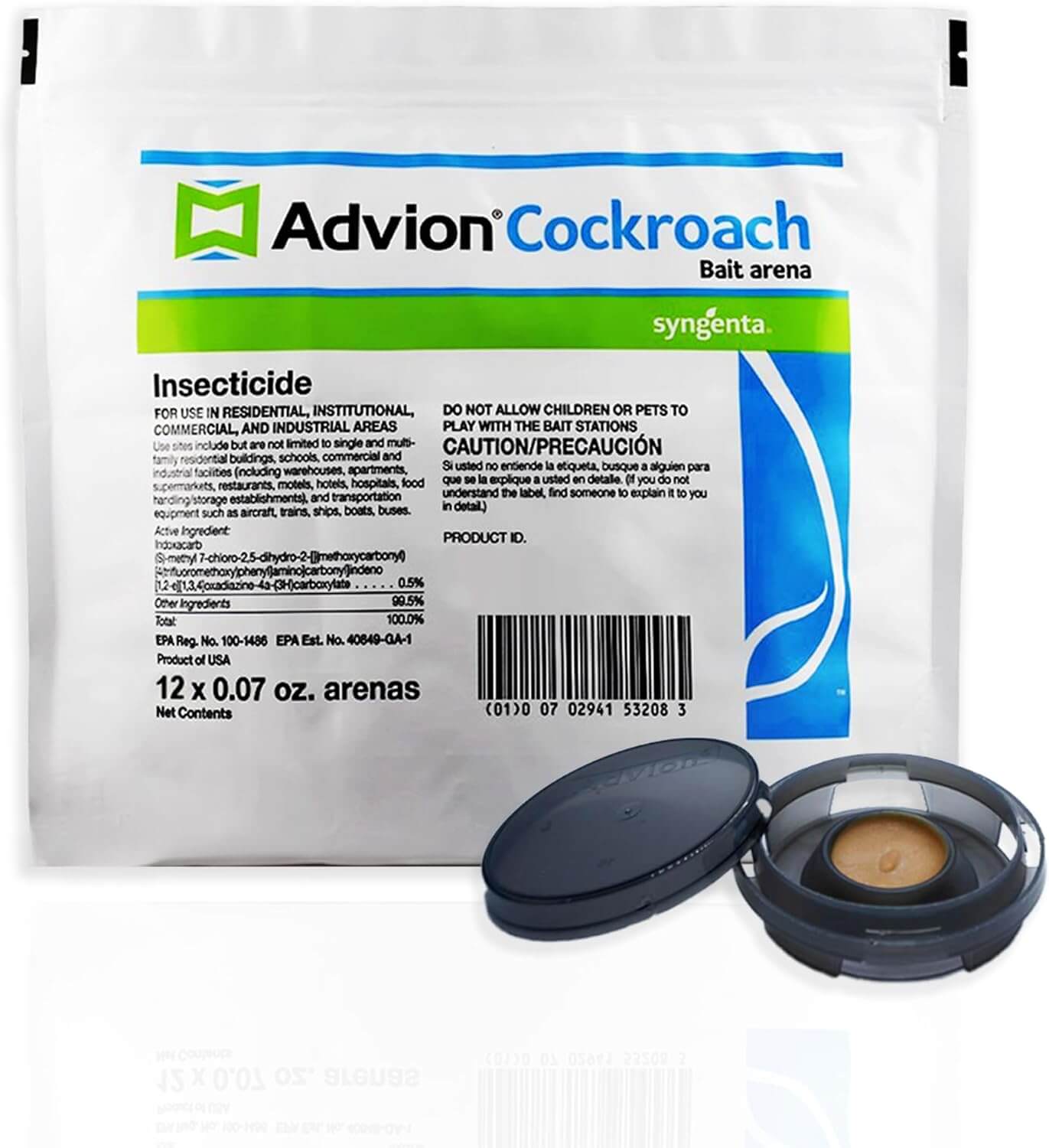
Advion Cockroach Bait Stations
Professional roach bait stations that attract and kill hidden roaches using a powerful indoxacarb formula. Ideal for kitchens, bathrooms, and garages.
- Pro‑Grade Stations — Used by pest control techs for fast colony kill
- Strong Attractant — Peanut‑butter‑scented bait pulls roaches from deep hiding
- Targets Large Roaches — American, Smokybrown, Oriental, German
- Easy Placement — Drop stations in cabinets, garages, and appliance voids
- Pet‑Safety Note — Keep away from dogs; plastic station is a chew hazard
- Active Ingredient — Indoxacarb 0.6%
- Unit Size — 12 bait arenas per pack


Available on Amazon!
Competitive pricing + Fast Free shipping on all orders!
Advion Roach Bait Stations use indoxacarb in a sealed bait housing. Indoxacarb is a slow-kill active that roaches carry back to harborage areas and pass to other roaches through contact, feces, and feeding. The stations are the right format for brown-banded roaches because this species lives in spots a sprayer can’t reach. The stations slide flat under refrigerators, sit on top of upper cabinets where you can’t see them, tuck behind picture frames, and fit inside dresser drawers and closet corners. You’re treating where the roaches actually live, not where it’s convenient for you to spray.
Why They Live Where They Live
Brown-banded cockroaches are not German cockroaches. They look similar, they’re roughly the same size, and they’re both indoor pests, but their behavior is opposite in almost every way that matters for treatment.
German roaches live low and wet. Kitchens, bathrooms, under sinks, behind dishwashers, in damp cabinet voids.
Brown-banded roaches live high and dry. Upper cabinets, behind picture frames, inside crown molding, in dresser backs, behind televisions, inside electronics, on closet shelves, in lamp bases. They genuinely prefer the upper half of a room.
The reason for this comes down to what they eat. Brown-banded roaches feed on more than crumbs. They eat starch, glue, paper, wallpaper paste, book bindings, cardboard, furniture adhesives, and the dust inside electronics. A bookshelf, a stack of cardboard boxes in the closet, a picture frame with paper backing, the inside of a TV stand, the glue holding particle board furniture together. All of it is food. This is why they nest inside furniture and behind framed art instead of in the kitchen.
After 25 years of treating brown-banded cockroaches, I can tell you the single biggest mistake homeowners and even some pest control technicians make with this species is treating only the kitchen. The kitchen is part of the job. It is not most of the job. Most of the colony is somewhere else in the house, and if you don’t go find it, the trail comes right back.
Signs You Have Brown-Banded Cockroaches
- Small, about ½ inch long. Light tan to light brown, smaller and lighter than American or Australian roaches.
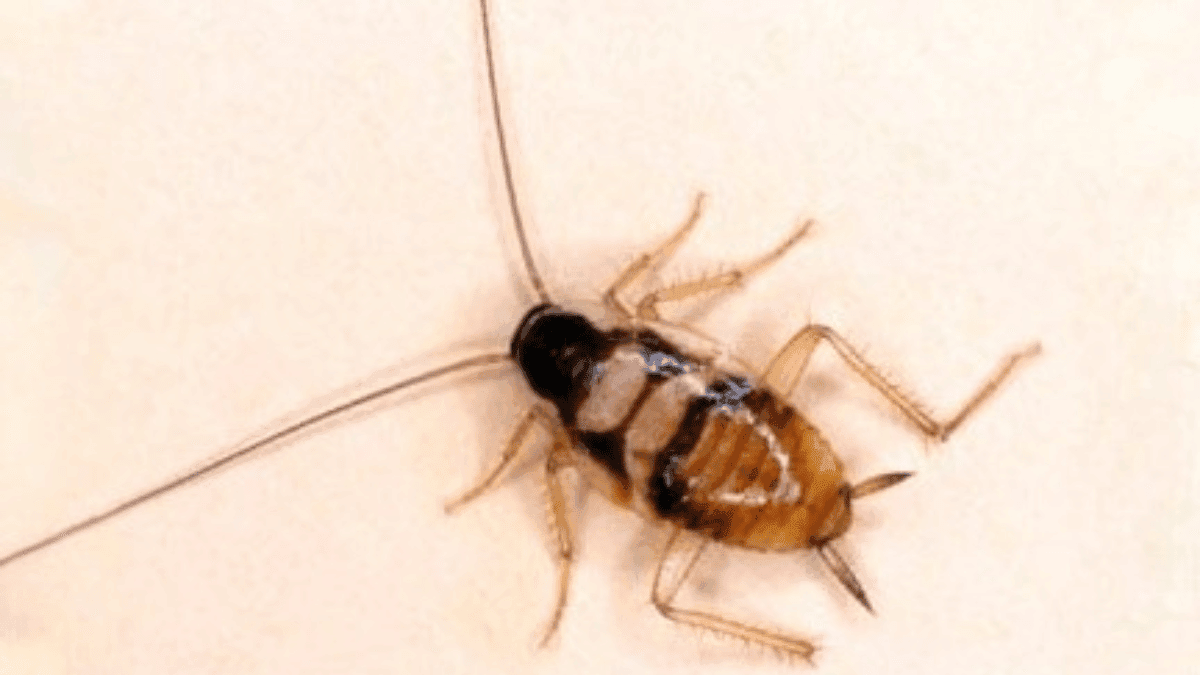
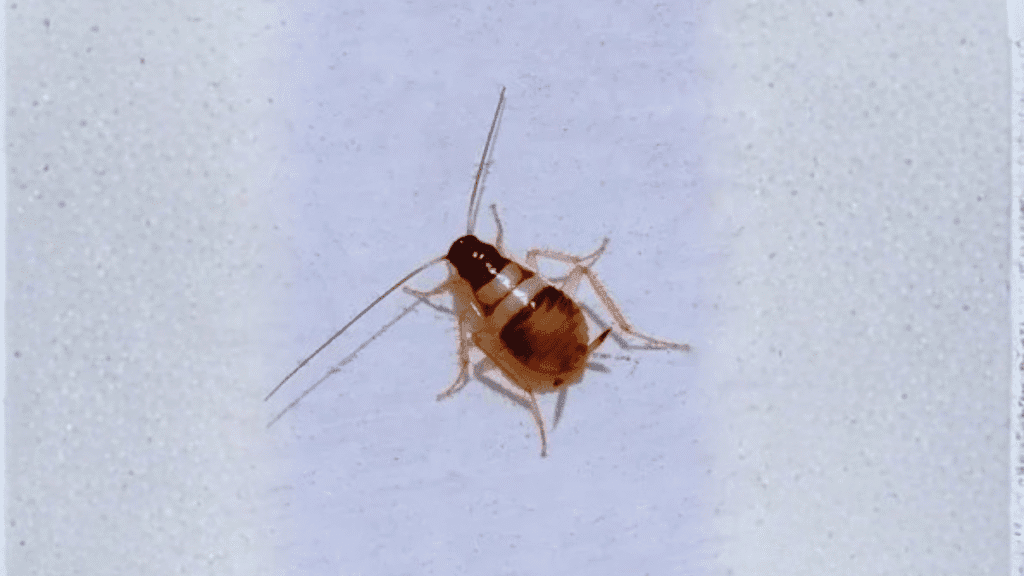
- Two pale, irregular bands across the wings and abdomen. This is the dead giveaway. Hard to see on adults moving fast, easier to spot on nymphs.
- A dark, bell-shaped pronotum (the shield behind the head) with translucent edges.
- Found in upper cabinets, bedrooms, living rooms, closets, and behind furniture. Not in kitchen sinks or bathrooms like German roaches.
- Males fly, females don’t. If you see a small light-brown roach flying around a lamp at night, it’s almost certainly a male brown-banded.
- Egg cases glued to furniture, dresser bottoms, picture frame backs, and inside electronics. Small, reddish-brown, about 1/4 inch long. Often in clusters.
- Activity in rooms with no obvious water or food source. This is the signature. German roaches need a kitchen or bathroom. Brown-banded roaches are happy in a bedroom with a bookshelf and no plumbing nearby.
Brown-Banded vs German Cockroaches
This is the #1 ID question for this species. The treatment for each is different, so getting it right matters.
| Feature | Brown-Banded Cockroach | German Cockroach |
|---|---|---|
| Where they live | Warm, dry, HIGH areas | Warm, wet, LOW areas |
| Primary rooms | Bedrooms, living rooms, closets, dens | Kitchens, bathrooms |
| Moisture requirement | Low | High |
| Color | Light tan with two pale bands | Light brown with two dark stripes behind head |
| Where they nest | Furniture, electronics, picture frames, upper cabinets | Under sinks, behind dishwashers, inside cabinet voids |
| Egg cases | Glued to surfaces all over the house | Carried by the female until hatching |
| Outdoor activity | None | None |
| Spread to other rooms | Yes, throughout the house | Mostly stays near kitchen and bathroom |
| Treatment focus | Whole house, especially upper areas | Kitchen and bathroom only |
| Outdoor treatment needed | No | No |
If you’re seeing roaches in the bedroom and the living room but not the kitchen, you have brown-banded roaches. If you’re seeing them only in the kitchen and bathroom, you probably have German roaches and you’re on the wrong page.
Why They’re In Your House
Brown-banded roaches don’t come from outside. Unlike American, Australian, or smokybrown cockroaches, this species is 100% indoor. They don’t live in mulch, sewers, drains, or landscaping. They got into your house by hitchhiking in something.
- Used furniture. This is the #1 way brown-banded roaches enter a home. A couch from Craigslist, a dresser from a garage sale, a bookshelf from a friend who’s moving, a thrift store coffee table, a hand-me-down nightstand. Brown-banded roaches glue their egg cases to the undersides and backs of furniture, and the next house the furniture goes into gets a fresh colony.
- Used electronics. Stereos, gaming consoles, microwaves, computer towers, TVs, and anything else with a warm interior that’s been sitting in a brown-banded roach environment. The warmth and the dust inside electronics are textbook brown-banded habitat.
- Cardboard shipments from warehouses. Amazon boxes, moving boxes, grocery deliveries, and especially anything shipped from a warehouse with an existing brown-banded population. The cardboard itself is food for them, the corrugation provides hiding spots, and the glue between layers is an additional food source. Brown-banded roaches can ride in a box from a distribution center 1,500 miles away and be in your house within 48 hours of clicking “buy.”
- Grocery store paper bags and cardboard. Less common but documented. If a store has an infestation, the bags and boxes you carry home can carry egg cases.
- Apartment buildings and multi-unit housing. Brown-banded roaches spread through wall voids, shared electrical conduit, and plumbing chases between units. Once they’re in the building, they’re hard to contain to one apartment.
- Air conditioning helped this species become less common. Brown-banded roaches were a much bigger problem in the pre-AC era when houses were warm and dry year-round. Modern air-conditioned homes are less ideal habitat, which is why German roaches outnumber brown-banded roaches in most parts of the US today. They’re still common enough to be a real problem, especially in older homes, apartments, and houses with poor climate control.
How to Get Rid of Brown-Banded Cockroaches, Step by Step
Step 1: Place Advion Roach Bait Stations Throughout the House
This is the core of the treatment. The stations go everywhere a brown-banded roach might be living, which is a lot more of the house than most homeowners expect.
In the kitchen:
- Under the sink near the plumbing penetrations
- Behind the refrigerator (slide one or two stations underneath, all the way to the back)
- Behind and underneath the stove
- Inside lower cabinet corners
- Inside upper cabinet corners
In bedrooms, living rooms, and closets (this is where brown-banded roaches actually live):
- On TOP of upper cabinets and bookshelves. This species lives up high, and the tops of cabinets are one of their favorite spots. Put one or two stations on top of every upper cabinet, behind the trim if possible.
- Inside closet corners, on every shelf
- Behind dresser drawers (open the bottom drawer and stick a station to the back wall of the dresser frame)
- Behind nightstands
- Behind picture frames (tape a station to the back of any large framed art)
- On top of and behind televisions and stereo components
- Behind computer towers and printers
- Inside the lamp base or behind floor lamps
- Behind the headboard of the bed
- On top of crown molding if you have it
- In the back of china cabinets and curio cabinets
- Inside coat closets and pantries
Advion Cockroach Bait Stations
Professional roach bait stations that attract and kill hidden roaches using a powerful indoxacarb formula. Ideal for kitchens, bathrooms, and garages.
- Pro‑Grade Stations — Used by pest control techs for fast colony kill
- Strong Attractant — Peanut‑butter‑scented bait pulls roaches from deep hiding
- Targets Large Roaches — American, Smokybrown, Oriental, German
- Easy Placement — Drop stations in cabinets, garages, and appliance voids
- Pet‑Safety Note — Keep away from dogs; plastic station is a chew hazard
- Active Ingredient — Indoxacarb 0.6%
- Unit Size — 12 bait arenas per pack
Available on Amazon!
Competitive pricing + Fast Free shipping on all orders!
You’ll use more stations than you think. A typical 3-bedroom home might need 30 to 50 stations for thorough coverage. Coverage matters more than precision with this species — the more bait points you create, the faster the colony declines.
Step 2: Kitchen Crack-and-Crevice Spray With Fipronil and Gentrol IGR
Even though most of the colony lives elsewhere, the kitchen is still a major food source and a place where brown-banded roaches travel through. A crack-and-crevice spray in the kitchen locks down that travel zone and adds an IGR that hits the egg cases throughout the house.
Mix Fipronil C Plus at the label rate (usually 0.8 fl oz per gallon, but read your label) with Gentrol IGR Concentrate added at the IGR’s label rate (typically 1 oz per gallon).
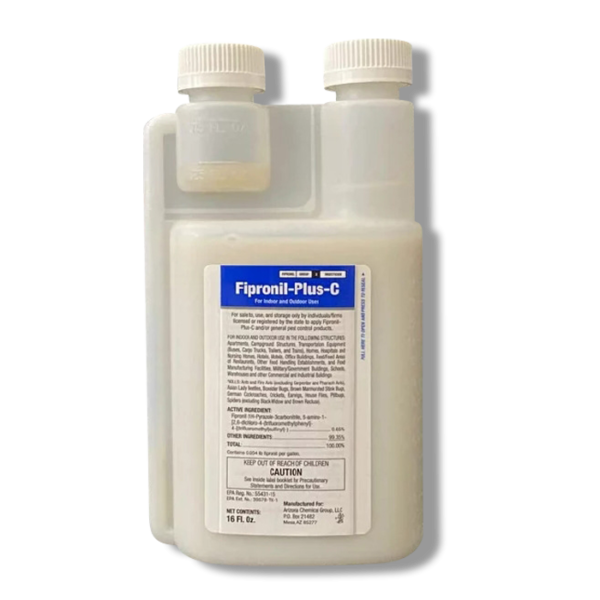
Fipronil‑Plus‑C Pest Control Concentrate (16 oz)
Fipronil‑Plus‑C is a commercial‑strength 0.65% fipronil concentrate that homeowners use for roaches, ants, and perimeter pests. One 16‑oz bottle makes up to 21 gallons of solution for long‑lasting indoor crack‑and‑crevice and outdoor structural treatments.
- Use: 1.0 fl oz per gallon of water This is the standard labeled dilution for structural crack‑and‑crevice applications.
- Commercial‑Strength Formula — 0.65% fipronil delivers professional‑grade control of roaches, ants, and other structural pests.
- Makes 21 Gallons — One 16‑oz bottle stretches far for large infestations or multi‑room treatments.
- Long‑Lasting Residual — Cellulose entrapment technology slows UV breakdown for extended control.
- Indoor + Outdoor Use — Ideal for kitchens, bathrooms, garages, baseboards, and exterior foundation cracks.
- Easy Mixing — Precision‑designed bottle reduces drift and makes dilution simple for DIY homeowners.
- Broad‑Spectrum Control — Effective against roaches, ants, and other common household invaders.
Available on Amazon!
Competitive pricing + Fast Free shipping on all orders!
Fipronil‑Plus‑C Label – Fipronil‑Plus‑C MSDS
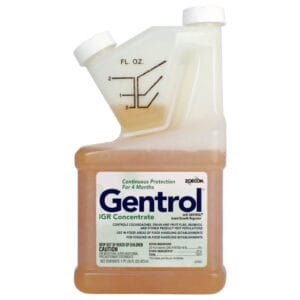
Gentrol IGR Concentrate – 1 Pint
Professional insect growth regulator that stops roach, fly, and stored‑product pest reproduction for up to 4 months.
- What It Does Breaks the life cycle of roaches, drain flies, fruit flies, bed bugs, and pantry pests. Prevents reinfestation by sterilizing adults and stopping nymphs from maturing.
- Where You Can Use It Food and non‑food areas, kitchens, bathrooms, restaurants, warehouses, commercial buildings, and residential spaces.
- Why Pros Use It Hydroprene provides long‑lasting population control and pairs perfectly with fipronil sprays for complete roach treatment.
- Shelf Life Up to 3 years when stored in a cool, dry place.
- Active Ingredient Hydroprene 9% (IGR)
- Mix Rate 1 fl oz per gallon (Gentrol EC)
- Best Pairing Use with a fipronil concentrate for crack‑and‑crevice kill + IGR reproduction control.
Available on Amazon!
Competitive pricing + Fast Free shipping on all orders!
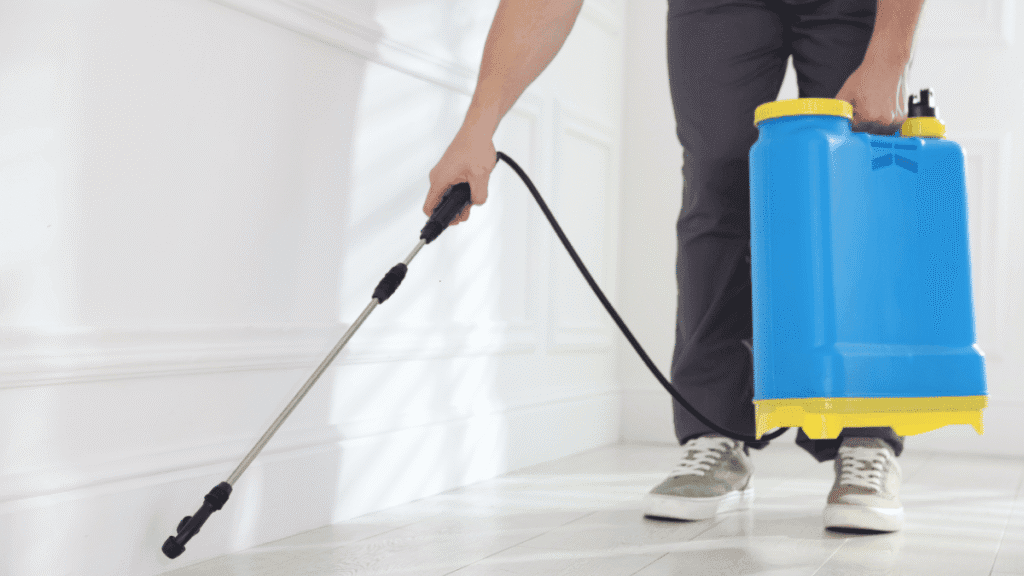
Where to spray in the kitchen:
- Along every baseboard
- Behind the refrigerator (the wall behind it, not the appliance itself)
- Around the dishwasher base
- Around plumbing penetrations under the sink
- Cabinet hinge seams and the seam between the cabinet and the wall
- Around the base of the stove
- Around the garbage disposal switch and electrical outlets near the counter
Keep a 12-inch gap between the spray and any bait stations. Spray residue contaminates the area around the bait, and brown-banded roaches will avoid both.
Why the IGR is mandatory for this species
Female brown-banded roaches glue their egg cases (ootheca) all over the house. Under furniture, behind dresser drawers, in the back of electronics, behind picture frames, on the underside of bookshelves. You can’t find them all. Even after the adults die, the egg cases keep hatching for the next 4 to 8 weeks, and a new generation of nymphs emerges into a now-untreated house.
Gentrol IGR contains hydroprene, which disrupts the hormonal process that allows immature roaches to develop. Egg cases hatch normally, but the nymphs that emerge can’t molt into reproducing adults. The cycle stops. Without an IGR, you treat the visible roaches, the egg cases hatch in the weeks after, and you’re back to square one within a month. With an IGR, the colony actually dies. After 25 years of treating roaches, I will not run a roach job without an IGR in the mix. It’s what separates a 6-month result from a 6-week one.
Step 3: Find and Remove Egg Cases
While you’re placing bait stations, look for egg cases. They’re reddish-brown, about ¼ inch long, capsule-shaped, and often clustered together. Common spots:
- Glued to the underside of dresser drawers
- On the back of picture frames
- Inside electronics (peek through cooling vents with a flashlight)
- Under the lip of cabinet shelves
- On the back of headboards
- Inside the bottom of clothing storage boxes
- Underneath couch and chair frames
- In the corners of closet shelves
How to dispose of them: scrape them off with a putty knife or stiff card, drop them into a sealable plastic bag, seal the bag, and put it directly in your outdoor trash can — not the kitchen trash. Egg cases can survive being squished, and a single missed case in a kitchen trash bag can hatch and reintroduce the colony. Take them to the outdoor bin immediately.
You won’t find all of them. That’s fine. The Gentrol IGR in the kitchen spray covers what you miss.
Step 4: Do Not Spray Outside
Brown-banded roaches are 100% indoor pests. They do not live in mulch, sewers, drains, or landscaping. They don’t enter through the foundation perimeter. They don’t come up from the lawn.
Outdoor spraying for brown-banded roaches is a complete waste of time and product. If a pest control company is telling you they need to spray your perimeter to fix a brown-banded infestation, they’re billing you for work that doesn’t apply to this species.
The only treatment that matters is inside the house, focused on the high-and-dry zones where the colony actually lives.
Step 5: Get Rid of the Cardboard
Cardboard storage is the single biggest ongoing risk factor for brown-banded roaches. The cardboard itself is food. The corrugation provides hiding spots. The glue between layers is additional food. Stacks of moving boxes in a closet, banker boxes in the garage, Amazon shipments piled in the corner — all of it is brown-banded roach real estate.
Switch to plastic storage bins with tight-fitting lids for anything you’re keeping long-term. Plastic doesn’t feed roaches, doesn’t hide them, and doesn’t carry egg cases the way cardboard does. The upfront cost of bins pays for itself the first time you avoid a reinfestation.
For incoming cardboard (Amazon, grocery, mail-order), break boxes down and put them straight in the outdoor recycling bin, not the garage. Don’t let cardboard sit indoors for weeks.
This single change can cut brown-banded roach populations in a home by half over time. It’s that big a deal.
Step 6: Inspect Used Furniture and Electronics Before Bringing Them Inside
The other ongoing risk factor is secondhand items. Before any used couch, dresser, bookshelf, nightstand, TV stand, or electronic comes into the house:
- Inspect the underside, the back, and any drawers or hidden compartments with a flashlight
- Look for egg cases glued to surfaces
- Look for live nymphs or adults in cracks and seams
- Check around screws and joints where roaches like to hide
For electronics, shine a flashlight through the cooling vents and look for roaches inside. Brown-banded roaches genuinely live inside warm electronics — the dust is food and the heat is comfortable.
If you find anything, either reject the item or treat it outside before bringing it in. A used dresser can be sprayed with fipronil on all interior surfaces, left to dry, and then brought in clean.
For warehouse shipments, break the boxes down outside or in the garage if possible. Most brown-banded roaches that ride in on packages are nymphs or egg cases, and they’re slow to spread if you catch them at the door.
What Doesn’t Work
A few things that come up online that waste time or make brown-banded roach problems harder.
- Treating only the kitchen. This is the #1 mistake with this species. Brown-banded roaches don’t live in the kitchen. You can scrub every cabinet and bait every plumbing penetration and still have an infestation in the bedrooms. The kitchen is part of the job, not the whole job.
- Foggers and bug bombs. Don’t reach where brown-banded roaches actually live (inside furniture, behind picture frames, on top of cabinets, inside electronics). The mist settles on open surfaces while the colony stays put. Foggers also contaminate the spots where your bait stations need to go.
- Big box store repellent sprays. Most over-the-counter perimeter sprays are pyrethroid-based and repellent, which scatters brown-banded roaches deeper into the furniture and electronics where they’re already living. The colony doesn’t die. It just moves to spots you can’t reach.
- Skipping the IGR. Egg cases hatch for 4 to 8 weeks after the adults are gone. Without an IGR, a treatment that looks successful at day 14 produces a brand new colony at day 45. Gentrol is not optional with this species.
How to Keep Brown-Banded Cockroaches From Coming Back
Ranked by impact.
- Eliminate cardboard storage permanently. Plastic bins for everything you keep long-term. Break down incoming boxes outside.
- Inspect every used or shipped item before it comes inside. Furniture, electronics, secondhand appliances, mail-order goods. Five minutes with a flashlight is cheaper than a treatment.
- Reduce clutter in bedrooms, closets, and living rooms. Brown-banded roaches need hiding spots. The less stuff you have stacked up, the fewer harborage spots they have.
- Keep 2 or 3 monitoring bait stations in place long-term. A station on top of an upper cabinet and one inside a closet shelf will tell you if anything’s restarting long before you see a live roach.
- Vacuum regularly with attention to crown molding, behind furniture, and inside closets. Picks up any new egg cases before they hatch and removes the dust and book-binding particles brown-banded roaches feed on.
- Replace particle board furniture if it’s heavily infested. Particle board glue is brown-banded food, and a dresser with deep harborage in the joints is sometimes easier to replace than to fully treat.
Edge Cases Where DIY Hits a Wall
For brown-banded cockroaches in a single-family home, DIY handles every case I’ve seen in 25 years when the whole-house bait approach and the IGR are used correctly. The treatment isn’t complicated, the chemistry is right, and the species responds well to baiting.
Where it genuinely struggles:
- Multi-unit buildings. Apartments, condos, townhouses, and duplexes share wall voids, electrical conduit, and plumbing chases. Brown-banded roaches travel between units through these spaces. A single unit treated correctly while adjacent units stay untreated will get reinfested continuously. The fix is coordinated treatment across every connected unit through building management. The pest control approach is exactly what’s on this page. The coordination piece is what you can’t do alone.
- Heavy infestations inside electronics that can’t be opened. Brown-banded roaches genuinely nest inside televisions, gaming consoles, stereo equipment, and computer towers. The dust and warmth are ideal habitat. Sometimes the colony is deep enough inside an electronic that bait placed around the outside isn’t going to fully clear it. In those cases, the device may need to be replaced. Don’t try to take apart a TV to spray it.
- Used furniture that’s already heavily infested. If you bought a couch or dresser that turns out to be loaded with brown-banded roaches and egg cases, treating it is sometimes more trouble than it’s worth. Heavy-infested upholstered furniture in particular is hard to clear completely because the colony can be inside the cushions, the frame, and the springs. Replacement is sometimes the cleaner call.
Advion Roach Bait Gel Label – Advion Roach Bait Gel MSDS
Advion Arena Roach Bait Station Label – Advion Arena Roach Bait Station MSDS
If you think they came from electronics, place bait next to the device so they contact it when exiting.
Brown Banded Cockroach FAQs
General Questions
How rare are brown-banded cockroaches compared to German cockroaches?
Significantly rarer. In practice, German cockroaches are far more commonly encountered in homes and are responsible for the vast majority of small indoor roach infestations.
If you have a small roach problem, German cockroaches are a much more likely culprit. Brown-banded roaches do show up, but they’re the exception rather than the rule.
Why are brown-banded cockroaches sometimes called the furniture cockroach?
Because unlike most roaches that stay near kitchens and moisture, brown-banded roaches spread throughout the entire home and frequently infest furniture — couch frames, recliners, dressers, and nightstands.
If you move a piece of used furniture into your home that’s infested, you can introduce a brown-banded roach problem into rooms where you’d never expect to find roaches.
Should I be worried about used furniture or secondhand electronics?
Yes — this is one of the most common ways brown-banded cockroaches get introduced into a home.
Always inspect secondhand furniture, appliances, and electronics carefully before bringing them inside. Check inside frame joints, crevices, and any dark enclosed spaces.
Brown-banded roaches glue their egg cases to surfaces inside furniture, so even one infested piece can start a new problem.
Why are brown-banded roaches so hard to find?
Because they hide in places people don’t think to check — upper cabinets, ceiling corners, behind picture frames, inside furniture frames, and near electronics.
They’re also nocturnal and avoid light, so you rarely see them during the day. By the time most homeowners notice them, the infestation has already spread to multiple rooms.
Identification
How can I tell a Brown‑Banded roach from a German roach?
Brown‑banded roaches have two pale, irregular bands across their wings and prefer warm, dry, high areas like furniture and ceilings.
German roaches have two dark stripes behind the head and stay near kitchens, moisture, and appliances. Brown‑banded roaches are also slightly smaller and lighter in color.
Do Brown Banded roaches fly?
Only the male Brown Banded roach can fly. Females have shorter wings and cannot fly.
Where do Brown Banded roaches hide?
They hide in furniture, electronics, picture frames, upper cabinets, ceilings, and warm, dry areas throughout the home. They rarely stay in kitchens unless food is available.
Behavior & Habitat
Do Brown Banded roaches live outside?
No. Brown banded roaches are indoor‑only roaches. They do not survive outdoors, and exterior treatments do not help.
Where do Brown Banded roaches come from?
They are brought inside through furniture, electronics, appliances, cardboard boxes, warehouse‑stored items, and grocery store products. They do not come from the yard or perimeter.
Are Brown‑Banded roaches common?
They are less common than German roaches. Air‑conditioning has made indoor environments cooler, which Brown‑Banded roaches do not prefer.
What do Brown‑Banded roaches eat?
They prefer starchy materials such as book bindings, wallpaper glue, cardboard, and furniture glue. This is why they infest furniture, electronics, and stored items.
Did air conditioning make brown-banded cockroaches less common?
Yes. As air conditioning became standard in homes, indoor environments became cooler and less favorable for brown-banded cockroaches, which prefer warm temperatures consistently above 80°F.
Older homes without good climate control tend to have warmer interior conditions that suit them better.
In well air-conditioned homes, German cockroaches have a distinct advantage over brown-banded roaches.
Treatment
Are Brown‑Banded roaches harder to get rid of?
No. They respond extremely well to roach bait. The treatment is the same as German roaches, but you must focus on furniture, electronics, bedrooms, and high areas, not just the kitchen.
Do I need to treat the outside of my home?
No. Brown‑banded roaches are indoor‑only, so exterior treatments provide no benefit.
Where should I put bait for Brown‑Banded roaches?
Place bait in:
- Furniture frames
- Nightstands and dressers
- High cabinets
- Picture frames
- Electronics (bait near them, not inside)
- Shared walls in apartments
- Storage areas and cardboard boxes
You should still treat the kitchen, but the main infestation is usually in living rooms, bedrooms, and furniture.
Can Brown‑Banded roaches come from the grocery store?
Yes. They can hitchhike in cardboard‑packaged goods, especially items stored in warm warehouses.
Prevention
How do I prevent Brown‑Banded roaches from coming back?
- Inspect furniture and electronics before bringing them inside
- Avoid storing items in cardboard
- Use plastic bins for storage
- Keep clutter low in bedrooms and living areas
- Treat shared walls in apartments or condos
Do Brown‑Banded roaches spread through buildings?
Yes. They can move through shared walls, electrical chases, and warm voids between units.