
This page contains affiliate links. I may earn a commission at no extra cost to you.
The best way to get rid of Oriental cockroaches is to place Advion Roach Bait Stations in storage areas you cannot spray, then apply a Fipronil C Plus and Gentrol IGR spray along every indoor baseboard and as a full perimeter band around the exterior of the home. Most homes see major reduction within a week, and long term control depends on fixing moisture problems and keeping indoor humidity at 45 to 50 percent.
TL;DR: How To Treat And Control Oriental Cockroaches
- Place Advion Roach Bait Stations in storage areas, garages, sheds, basements, and cluttered spots you can’t safely spray.
- Spray Fipronil C Plus with Gentrol IGR added along every interior baseboard, behind appliances, around plumbing penetrations, in laundry rooms, bathrooms, and basements.
- Outside, spray a perimeter band 3 feet out from the foundation and 1 foot up the wall, plus mulch beds, tree stumps, flower beds, around doors, windows, and the garage door bottom.
- Fix any plumbing leaks, drain issues, and moisture problems. Oriental roaches are called water bugs for a reason.
- Check gutters and roof drainage.
- Keep indoor humidity at 45 to 50 percent. Block-construction homes especially need a dehumidifier.
- If they keep coming back after good treatment and moisture work, you may have a hidden plumbing problem that needs a plumber.
Keep reading for the full breakdown. ↓
What You Need
For Oriental cockroaches, the lead product is the one you use in the places you can’t safely spray.
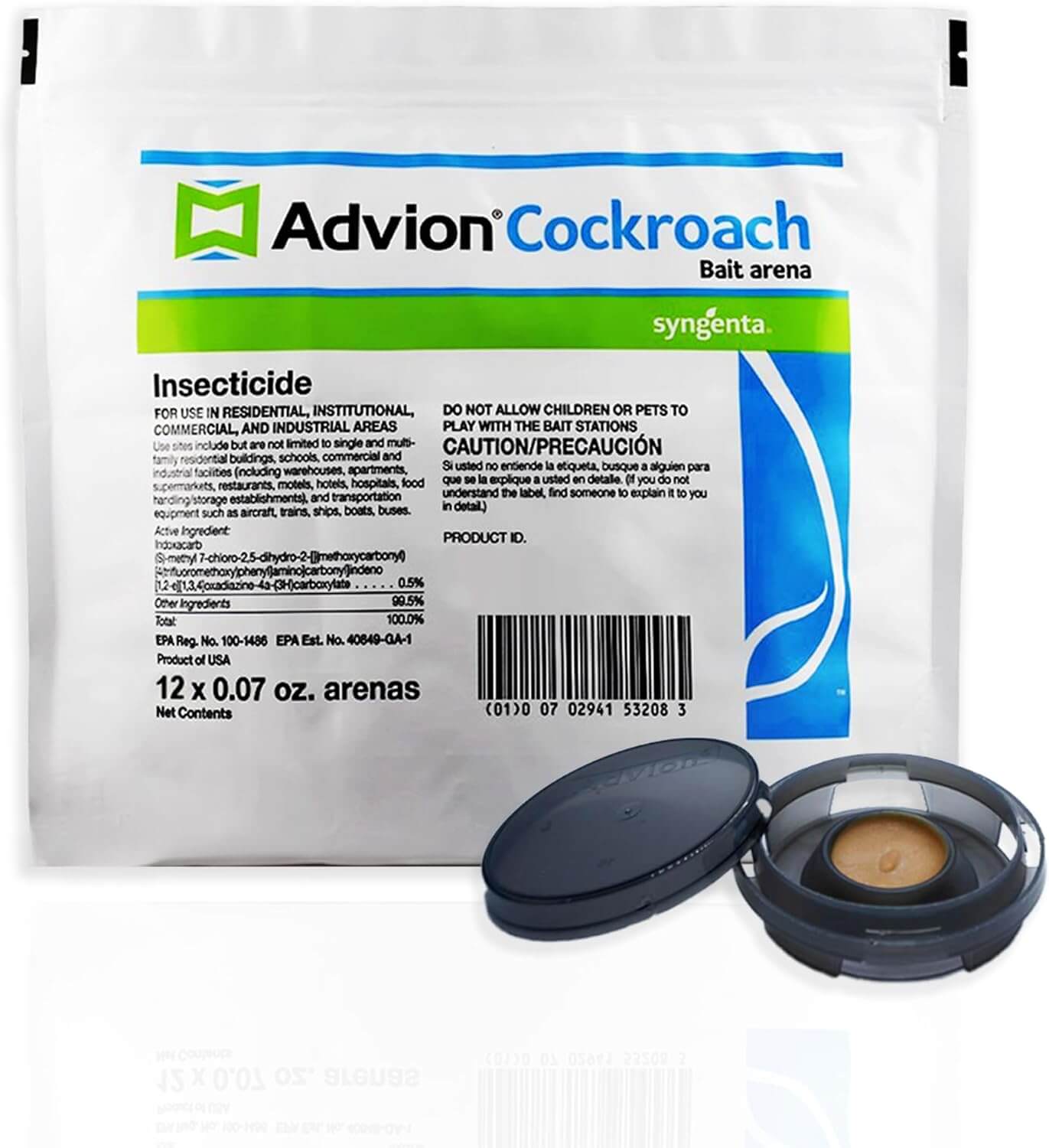
Advion Cockroach Bait Stations
Professional roach bait stations that attract and kill hidden roaches using a powerful indoxacarb formula. Ideal for kitchens, bathrooms, and garages.
- Pro‑Grade Stations — Used by pest control techs for fast colony kill
- Strong Attractant — Peanut‑butter‑scented bait pulls roaches from deep hiding
- Targets Large Roaches — American, Smokybrown, Oriental, German
- Easy Placement — Drop stations in cabinets, garages, and appliance voids
- Pet‑Safety Note — Keep away from dogs; plastic station is a chew hazard
- Active Ingredient — Indoxacarb 0.6%
- Unit Size — 12 bait arenas per pack


Available on Amazon!
Competitive pricing + Fast Free shipping on all orders!
Advion Roach Bait Stations use indoxacarb in a sealed bait housing. Indoxacarb is a slow-kill active that roaches carry back to harborage areas and pass to other roaches through contact, feces, and feeding. Oriental cockroaches don’t respond to bait as aggressively as German or American roaches do, but in cluttered storage areas, sheds, packed garages, and basement corners where you can’t safely apply a liquid spray, the stations are still useful. They give you a way to reach roaches hiding in spots that liquid treatment can’t.
The real heavy lifting on this species is done by the spray, which comes later in this guide. But the stations go first because they cover the spots the spray can’t, and they’re the safest starting point in homes with kids, pets, or storage clutter.
Signs You Have Oriental Cockroaches
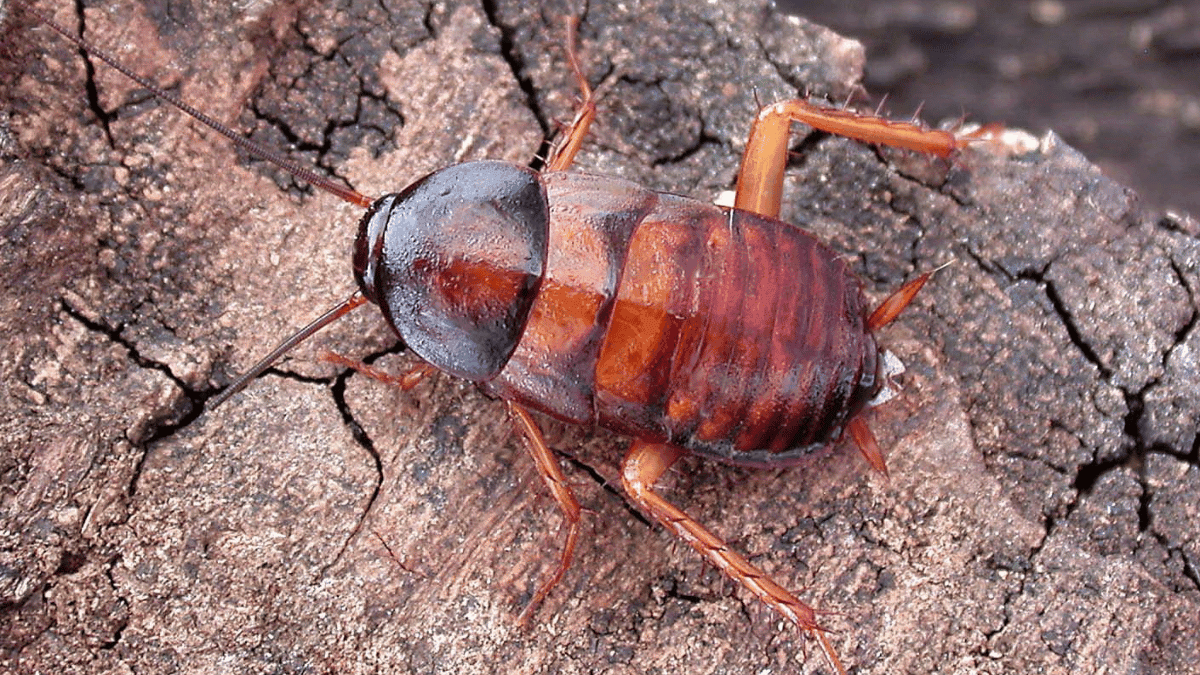
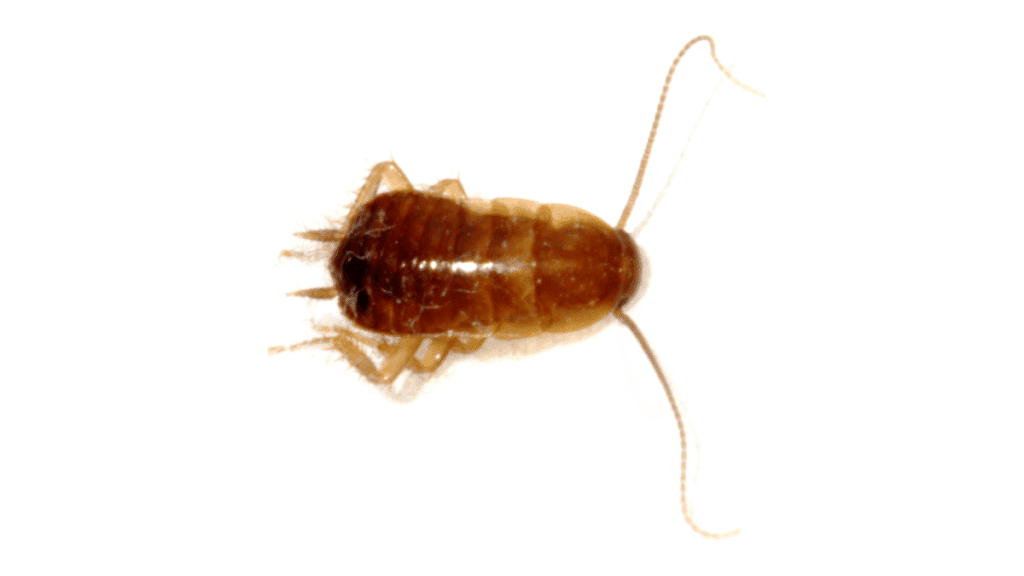
- Large, dark brown to nearly black, glossy roaches, about 1 to 1¼ inches long.
- Females have no functional wings. Males have short wings that cover about three-quarters of the abdomen. Neither sex flies. This is the dead giveaway distinguishing Oriental roaches from the other big roach species, which are all winged and (in most cases) flying species.
- A strong, sour, musty smell. Oriental cockroaches produce a distinct unpleasant odor that’s stronger than other roach species. If you walk into a basement or laundry room and smell something off, and you’ve been seeing big dark roaches, that’s Oriental cockroaches.
- Found in damp, dark, cool places. Basements, crawl spaces, under sinks, around floor drains, in laundry rooms, behind washing machines, near sump pumps, under porches.
- Activity that increases after heavy rain. Saturated soil pushes outdoor populations indoors looking for dry ground.
- Slow, deliberate movement compared to other roaches. They don’t dart and scatter the way German or American roaches do. They walk.
- Indoor activity concentrated near plumbing. Around floor drains, under sinks, behind toilets, near sump pumps, around water heaters.
Why They’re Called Water Bugs
Oriental cockroaches are the species most homeowners are actually talking about when they say “water bug.” The name fits because Oriental roaches genuinely live in wet environments. Their outdoor habitat is leaf litter, mulch, soil, and any consistently damp shaded spot. Their indoor habitat is wherever there’s standing or pooling moisture: basement floor drains, under-sink leaks, around toilets with wax ring failure, behind washing machines, in damp crawl spaces, and inside sewer systems.
After 25 years of treating these roaches, I can tell you the “water bug” name isn’t just folklore. Oriental cockroaches will not establish indoors without a moisture source. If you have more than an occasional one wandering in, you have a moisture problem, and finding it is half the job.
Oriental Cockroaches vs Other Big Roaches
The four big outdoor roach species in the southern and eastern US get confused constantly. They all get called “water bugs” or “palmetto bugs” depending on where you live. The treatment is similar across species, but the ID matters for prevention priorities.
| Feature | Oriental | American | Smokybrown | Australian |
|---|---|---|---|---|
| Size | 1 to 1¼ inches | 1½ to 2 inches | 1¼ to 1½ inches | 1¼ to 1⅜ inches |
| Color | Dark brown to black, glossy | Reddish-brown | Uniform dark mahogany | Reddish-brown with yellow markings |
| Female wings | None or very short | Full wings | Full wings | Full wings |
| Male wings | About ¾ of abdomen | Full wings | Full wings | Full wings |
| Can fly? | No | Glides | Yes, strong flier | Yes, strong flier |
| Smell | Strong sour/musty | Mild | Mild | Mild |
| Primary habitat | Basements, sewers, drains, damp leaf litter | Sewers, drains, mulch | Trees, attics, palm crowns | Mulch, palms, potted plants |
| Drawn to lights? | No | Slightly | Yes, heavily | Yes, heavily |
| Activity in cold weather | More tolerant | Less tolerant | Less tolerant | Less tolerant |
The fastest field test: if the roach is large, dark, and doesn’t fly when you approach it, it’s almost certainly an Oriental cockroach. Every other big roach species in residential settings either flies or glides.
Why They’re In Your House
Oriental cockroaches don’t randomly end up in your basement. They show up because the conditions match what they need.
- Outdoor moisture. Leaf litter, mulch, soil along the foundation, drainage problems, low-lying wet spots in the yard, and clogged gutters all provide outdoor harborage. Heavy rain saturates these spots and displaces the roaches into the house.
- Indoor moisture. This is the big one. Slow plumbing leaks, leaky toilets, sweating pipes, condensation around AC equipment, high indoor humidity, damp basements, wet crawl spaces, and unused floor drains that have lost their water seal (dry P-traps) all let Oriental roaches survive indoors. Without one of these moisture sources, the species can’t establish a breeding population inside.
- Sewer and plumbing access. Oriental cockroaches live in sewers and septic systems. They can travel into homes through cracks in sewer pipes, dry floor drains, broken cleanout caps, gaps around plumbing penetrations through slabs, and septic system openings. If you have recurring Oriental cockroach problems with no obvious moisture source, a hidden plumbing problem is the most likely cause. Water bugs in sewers is not just a saying. It’s their literal habitat.
- Cool basements and crawl spaces. Oriental roaches handle cooler temperatures better than other big roach species. They’re the roach you’re most likely to see in a northern basement, a cool damp crawl space, or under a porch. They actively prefer cooler, damper conditions over the warm dry spots that German or brown-banded roaches like.
- Clogged gutters and roof drainage problems. This is a sneaky one. Leaf-filled gutters with standing water and decomposing organic matter are textbook Oriental cockroach habitat, sitting right at the roof line of your house. From there they crawl down into soffits, around fascia, and through attic vents.
- Block-construction and basement homes. Concrete block construction holds and releases moisture into the indoor air more than wood-framed homes. Basement homes and slab-on-grade homes in humid climates regularly run 60 to 70 percent indoor humidity, which is well above the 45 to 50 percent target where Oriental roaches and other big moisture-dependent species can’t thrive. After 25 years of this work, I’ll tell you that the most common single fix on a recurring Oriental cockroach problem in a block home or basement home is a dehumidifier running consistently.
How to Get Rid of Oriental Cockroaches, Step by Step
Step 1: Place Advion Bait Stations in Areas You Can’t Spray
Walk through the house and identify spots where you don’t want to spray. Common ones:
- Cluttered storage corners in the basement
- Inside garage cabinets and shelving with stored items
- Inside the shed if you have one
- Around stored boxes and totes in storage rooms
- Under the workbench or behind the toolbox
- In tight crawl space corners you can reach but don’t want to mist
- Behind washing machine motor housing
- In utility closets near the water heater
Place an Advion Roach Bait Station in each of these spots. The bait works passively for weeks and doesn’t require the area to be cleared or cleaned.
In the rest of the house — where you CAN spray — skip the bait stations and go to step 2.
Advion Cockroach Bait Stations
Professional roach bait stations that attract and kill hidden roaches using a powerful indoxacarb formula. Ideal for kitchens, bathrooms, and garages.
- Pro‑Grade Stations — Used by pest control techs for fast colony kill
- Strong Attractant — Peanut‑butter‑scented bait pulls roaches from deep hiding
- Targets Large Roaches — American, Smokybrown, Oriental, German
- Easy Placement — Drop stations in cabinets, garages, and appliance voids
- Pet‑Safety Note — Keep away from dogs; plastic station is a chew hazard
- Active Ingredient — Indoxacarb 0.6%
- Unit Size — 12 bait arenas per pack
Available on Amazon!
Competitive pricing + Fast Free shipping on all orders!
Step 2: Indoor Baseboard Spray With Fipronil and Gentrol IGR
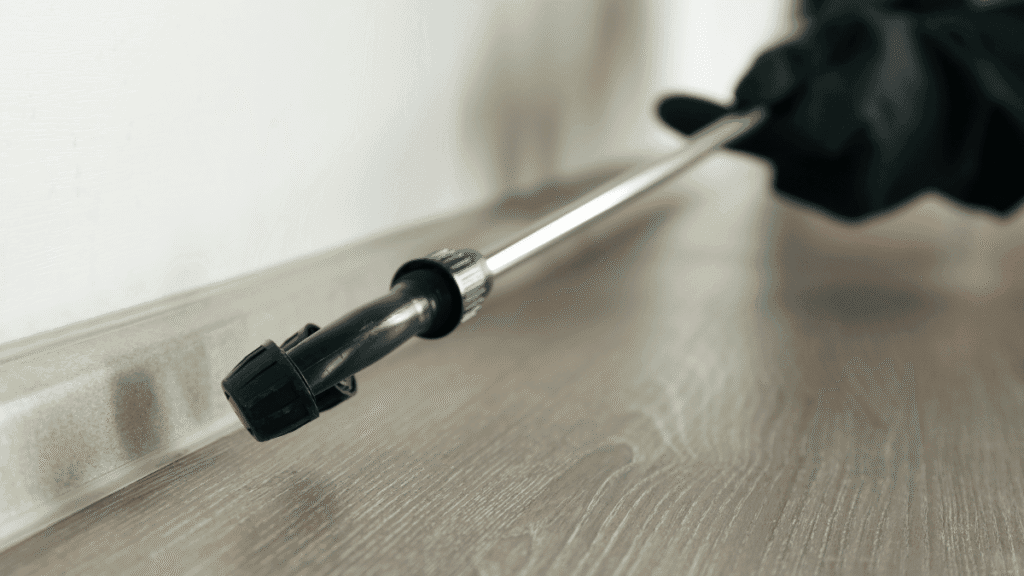
This is the main treatment. Mix Fipronil C Plus at the label rate (usually 0.8 fl oz per gallon, but read your label) with Gentrol IGR Concentrate added at the IGR’s label rate (typically 1 oz per gallon).
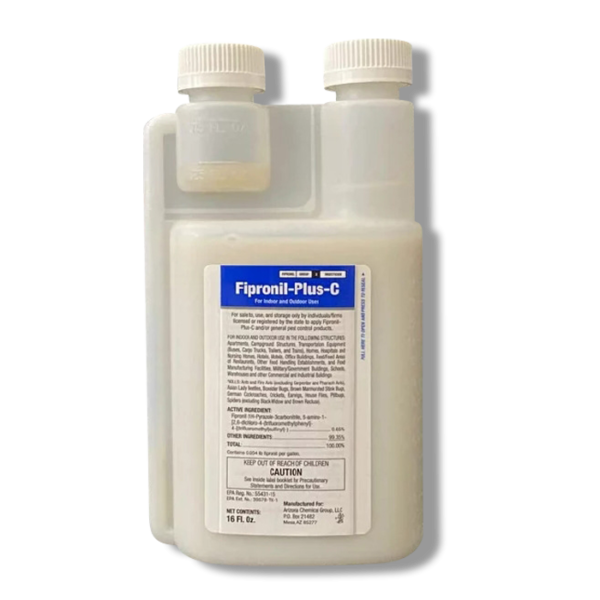
Fipronil‑Plus‑C Pest Control Concentrate (16 oz)
Fipronil‑Plus‑C is a commercial‑strength 0.65% fipronil concentrate that homeowners use for roaches, ants, and perimeter pests. One 16‑oz bottle makes up to 21 gallons of solution for long‑lasting indoor crack‑and‑crevice and outdoor structural treatments.
- Use: 1.0 fl oz per gallon of water This is the standard labeled dilution for structural crack‑and‑crevice applications.
- Commercial‑Strength Formula — 0.65% fipronil delivers professional‑grade control of roaches, ants, and other structural pests.
- Makes 21 Gallons — One 16‑oz bottle stretches far for large infestations or multi‑room treatments.
- Long‑Lasting Residual — Cellulose entrapment technology slows UV breakdown for extended control.
- Indoor + Outdoor Use — Ideal for kitchens, bathrooms, garages, baseboards, and exterior foundation cracks.
- Easy Mixing — Precision‑designed bottle reduces drift and makes dilution simple for DIY homeowners.
- Broad‑Spectrum Control — Effective against roaches, ants, and other common household invaders.
Available on Amazon!
Competitive pricing + Fast Free shipping on all orders!
Fipronil‑Plus‑C Label – Fipronil‑Plus‑C MSDS
Gentrol IGR Concentrate – 1 Pint
Professional insect growth regulator that stops roach, fly, and stored‑product pest reproduction for up to 4 months.
- What It Does Breaks the life cycle of roaches, drain flies, fruit flies, bed bugs, and pantry pests. Prevents reinfestation by sterilizing adults and stopping nymphs from maturing.
- Where You Can Use It Food and non‑food areas, kitchens, bathrooms, restaurants, warehouses, commercial buildings, and residential spaces.
- Why Pros Use It Hydroprene provides long‑lasting population control and pairs perfectly with fipronil sprays for complete roach treatment.
- Shelf Life Up to 3 years when stored in a cool, dry place.
- Active Ingredient Hydroprene 9% (IGR)
- Mix Rate 1 fl oz per gallon (Gentrol EC)
- Best Pairing Use with a fipronil concentrate for crack‑and‑crevice kill + IGR reproduction control.
Available on Amazon!
Competitive pricing + Fast Free shipping on all orders!
Where to spray indoors:
- Along every baseboard in basements, laundry rooms, bathrooms, kitchens, garages, and any room with plumbing
- Behind every appliance (refrigerator, washer, dryer, dishwasher, water heater)
- Around every plumbing penetration through walls and floors
- Around the base of toilets
- Under sinks, along the back wall of the cabinet
- Around floor drains in basements, laundry rooms, and garages
- Around sump pump pits
- Along the perimeter of crawl space access doors
- Around water heater bases and AC condensate lines
Why the IGR matters here
Gentrol IGR contains hydroprene, an insect growth regulator that stops immature roaches from developing into reproducing adults. Egg cases hatch normally, but the nymphs that emerge can’t molt into fertile adults. The cycle breaks. After 25 years of this work I will not run a roach job without an IGR in the mix. The fipronil kills the roaches you have. The Gentrol stops the next generation. Without it, you’ll see new activity within 6 to 8 weeks as egg cases hatch.
Keep a 12-inch gap between the spray and the bait stations. Spray residue contaminates the area around the bait, and Oriental roaches will avoid bait that smells like fipronil. The bait and spray work together when they don’t touch.
Let the spray dry for 1 to 2 hours before normal traffic resumes.
Step 3: Outdoor Perimeter Spray
This is the step that solves the problem long-term. Oriental cockroaches live outside and come inside. If you only spray indoors, new roaches keep arriving every time it rains.
Mix the same Fipronil C Plus and Gentrol IGR at the same rates. Use a pump or battery-powered sprayer.
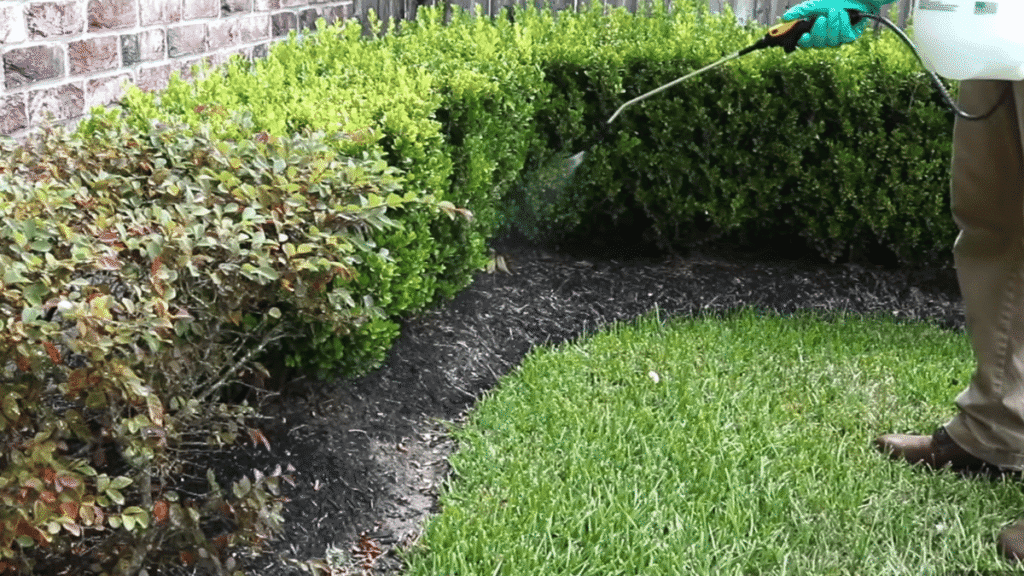
Where to spray outside:
- A 3-foot band along the foundation, 1 foot up the exterior wall
- Around every door and window frame
- Around the garage door track and the bottom seam of the garage door
- Around AC condenser units and the pad they sit on
- Around every utility penetration (cable, gas line, water line, AC lines, hose bibs)
- Mulch beds touching the foundation
- The base of every tree, especially trees within 20 feet of the house
- Around tree stumps and any wood-to-soil contact points
- Flower beds, especially shaded ones along the north and east sides of the house
- Around stacked firewood
- Edges of leaf litter and yard debris
Focus heavily on the shaded, damp side of the house. Oriental cockroaches prefer cool, moist outdoor harborage, so the north and east sides of the house with afternoon shade and slower-drying mulch are higher-pressure zones than the sunny sides.
Step 4: Fix the Moisture Problem
This is the step that determines whether the result lasts 6 months or 6 years. Oriental cockroaches are called water bugs for a reason. Without a moisture source, they cannot establish indoors.
Walk the property and the inside of the house looking for:
- Dripping faucets, hose bibs, and irrigation heads
- Slow leaks under sinks, around toilets, and behind washing machines
- Sweating cold-water pipes in the basement or crawl space
- Standing water in basement floor drains, sump pits, or AC drain pans
- Soft, soggy spots in subfloors or drywall
- Wet spots on basement walls (efflorescence, peeling paint, mineral staining)
- AC condensate drip lines dumping water against the foundation
- Gutter downspouts that don’t extend away from the house
- Yard drainage problems that pool water near the foundation
- Mulch beds that stay dark and damp for days after rain
Fix the simple stuff today. Tighten faucets, extend downspouts, redirect AC drain lines, cut back over-aggressive irrigation. The bigger jobs — rotted subfloor, hidden plumbing leak, broken sewer pipe under the slab, septic issue — may need a plumber or handyman. Those are worth the call. Moisture that gets ignored keeps the water bugs comfortable no matter how thoroughly you spray.
Step 5: Check the Gutters
Clogged gutters full of leaves, twigs, and standing water are one of the most overlooked Oriental cockroach harborage spots. Leaf debris in a gutter is decomposing organic matter sitting in water — textbook habitat for this species. From the gutter, they crawl into soffits, behind fascia boards, around roof flashing, through attic vents, and end up in attics, upper rooms, and (eventually) the rest of the house.
Clean the gutters. Pull all the leaf litter out. Make sure water flows freely to the downspouts and that downspouts discharge at least 3 feet away from the foundation. If trees overhang the roof, plan on cleaning gutters at least twice a year (late spring and late fall in most climates, more often if you have heavy leaf drop).
Step 6: Manage Indoor Humidity
Target indoor humidity is 45 to 50 percent. Above 55 percent, Oriental cockroaches and other moisture-dependent pests can establish. Below 40 percent, the air gets uncomfortably dry for the people in the house. The 45 to 50 percent zone is the sweet spot.
Block-construction homes, basement homes, and slab-on-grade homes in humid climates routinely run 60 to 70 percent indoor humidity without a dehumidifier. This is the single most common reason Oriental cockroaches keep coming back after thorough treatment in these home types. The chemistry kills the roaches that are there. The humidity keeps inviting new ones in.
A standalone dehumidifier in the basement or main living area, set to maintain 45 to 50 percent, is one of the highest-impact pest control investments you can make for this species. Run it year-round in humid climates. It pays for itself in avoided treatments and in general comfort.
Other humidity-reducing moves:
- Run the bathroom exhaust fan during and for 20 minutes after showers
- Run the kitchen exhaust fan during cooking
- Check that the clothes dryer is venting properly to the outside and not into the laundry room
- Cover sump pumps and any open standing water in the basement
- Make sure the crawl space has a vapor barrier installed
Step 7: If Problems Recur, Check for a Plumbing Issue
If you’ve done all of the above and Oriental cockroaches keep coming back, you may have a hidden plumbing problem. Common culprits I’ve found over 25 years:
- A cracked sewer line under the slab letting roaches travel from the sewer directly into the house
- A dry P-trap on a rarely-used floor drain (laundry room floor drain, basement drain, guest bathroom shower drain) letting sewer access stay open
- A broken cleanout cap in a basement
- A failing wax ring on a toilet, letting sewer gases and roaches up around the base
- A septic system access cover that doesn’t seal properly
- A neighborhood-level sewer line break or septic seepage producing ongoing pressure across multiple properties
Pour a quart of water into every floor drain in the house once a month to keep the P-traps full. If that doesn’t help, get a plumber out to camera the sewer line. The pest part of this work is the easy part. The plumbing part isn’t, but it’s sometimes the actual fix.
What Doesn’t Work
A few things that come up online that waste time or make Oriental cockroach problems harder.
- Foggers and bug bombs. Don’t reach where Oriental roaches actually hide (floor drain plumbing, wall voids, crawl spaces, sewer lines, deep mulch). The mist settles on open surfaces and contaminates the spots where your bait stations need to go. Foggers also leave residue on everything in the room.
- Big box store repellent sprays. Most over-the-counter perimeter sprays are pyrethroid-based and repellent, which means Oriental roaches detect them and scatter deeper into harborage, plumbing voids, and crawl spaces. The colony doesn’t die. The roaches just move where you can’t reach them.
- Treating only indoors when the source is outside or in the plumbing. Oriental cockroaches live outside or in the sewer. If you only spray inside and skip the perimeter, the moisture fixes, and the gutter cleanup, new roaches keep arriving.
- Heavy reliance on bait. Oriental cockroaches respond to bait less aggressively than German, American, or brown-banded roaches. Bait has its place in storage areas you can’t spray, but if your whole plan is “set out a bunch of stations and walk away,” you’ll be disappointed with the results for this species. Spray is the primary treatment. Bait is the supplement.
- Mothballs in the basement. A common old-school myth that does nothing useful against Oriental roaches. Naphthalene fumes at the concentration mothballs produce in an open basement don’t kill or repel roaches at any meaningful level. They do, however, irritate people and pets and create a serious indoor air quality problem. Skip the mothballs.
How to Keep Oriental Cockroaches From Coming Back
Ranked by impact.
- Run a dehumidifier and keep indoor humidity at 45 to 50 percent. Single biggest long-term lever, especially in block construction, basement homes, and humid climates.
- Reapply the perimeter spray every 60 to 90 days in warm weather. The fipronil and IGR break down faster in heavy rain and sun. Plan on 4 to 6 perimeter treatments a year in the south, 2 to 3 in the north.
- Keep gutters clean. Twice a year minimum, more under heavy tree cover. Make sure downspouts extend at least 3 feet from the foundation.
- Pour water into rarely-used floor drains monthly. Keeps the P-traps full and seals off the sewer access route.
- Pull mulch back at least 12 inches from the foundation. Mulch right against the house is roach habitat. A dry gravel or bare-soil strip breaks the harborage.
- Fix moisture problems promptly. A slow leak becomes a roach water source within days. Fast leaks fix themselves with a wrench. Slow leaks need a real fix.
- Replace worn door seals. Especially garage door bottoms and exterior door sweeps. Oriental roaches walk under doors with gaps you can see daylight through.
- Trim trees and shrubs off the house. No branches touching the roof, no shrubs touching the siding. Cut everything back at least a foot.
Edge Cases Where DIY Hits a Wall
For Oriental cockroaches in a single-family home, DIY handles every case I’ve seen in 25 years when the bait + spray + moisture work approach is followed correctly.
Where it genuinely struggles:
- Multi-unit buildings. Apartments, condos, townhouses, and basement-shared duplexes have shared plumbing chases, shared crawl spaces, and shared wall voids. Oriental cockroaches travel between units through these spaces. A single unit treated correctly while neighbors stay untreated will get reinfested continuously. Coordinated treatment across every connected unit through building management is the fix.
- Hidden plumbing problems. A cracked sewer line under the slab, a broken cleanout cap, a failed wax ring, or a septic system seepage problem. These are plumbing repairs, not pest control work. If your treatment keeps failing and you’ve ruled out other moisture sources, get a plumber to camera the sewer line.
- Neighborhood-wide sewer issues. In older neighborhoods with aging municipal sewer lines, neighborhood-level sewer cracks can produce ongoing Oriental cockroach pressure across multiple properties at once. If every house on the block has water bugs, the problem is bigger than any one property. Reporting the issue to your municipal sewer authority is the right move, alongside maintaining your own treatment program.
- Old homes with field stone foundations or unsealed basements. Pre-WWII homes with stone foundations, dirt-floor basements, or unsealed cinder block walls let moisture in continuously. The pest treatment works. The moisture control may need a basement waterproofing contractor to get a real long-term result.
FAQ: Oriental Cockroach Control
Understanding Oriental Cockroaches
Why do Oriental cockroaches come into my house?
Oriental cockroaches usually enter from outside, especially from damp soil, leaf litter, mulch beds, and even sewer systems. They only survive indoors when there’s excess moisture, so leaks, wet crawlspaces, or high humidity make your home more inviting to them.
Where do Oriental cockroaches live outside?
They thrive in moist soil, leaf litter, mulch, rotting wood, under weed‑mat landscaping fabric, and around sewer drains. These areas stay damp, shaded, and protected — perfect conditions for Oriental roaches.
Indoor Treatment & Moisture Issues
What’s the best treatment for Oriental cockroaches inside?
A crack‑and‑crevice spray using Fipronil‑Plus‑C mixed with Gentrol EC3 is the most effective method. Apply it along baseboards, behind appliances, around plumbing lines, and in tight gaps where roaches travel.
Do Oriental cockroaches mean I have a leak?
Possibly. If you’re seeing a lot of them indoors, you may have:
- a plumbing leak,
- a roof leak,
- wet drywall,
- or high indoor humidity.
Fixing moisture issues is just as important as spraying.
Does lowering humidity help get rid of Oriental cockroaches?
Yes — Oriental cockroaches love moisture. Running a dehumidifier makes your home far less appealing and helps prevent future infestations, especially in basements, laundry rooms, and bathrooms.
Baiting & When to Use It
Do roach baits work on Oriental cockroaches?
Baits do not work as well on Oriental cockroaches compared to other species. Only use bait in last‑resort situations, such as:
- cluttered rooms
- sheds packed with boxes
- storage areas you can’t spray
- garages with inaccessible corners
Use Advion Arena bait stations in these cases.
Outdoor Prevention & Perimeter Treatment
How do I keep Oriental cockroaches from coming inside?
Reduce the outdoor conditions that attract them:
- remove leaf litter
- pull back or replace old weed mat
- trim plants touching the home
- move firewood away from the structure
- check door seals and garage door seals
- reduce moisture around the home
These steps dramatically cut down on new roaches entering.
Do I need to spray outside for Oriental cockroaches?
Yes — exterior treatment is essential. Spray:
- around the foundation (3 feet out)
- 1 foot up exterior walls
- around stumps and tree bases
- around doors, windows, and garage doors
- mulch beds and weed‑mat edges
This is where Oriental roaches live and breed.
After‑Treatment Expectations
Why are the roaches acting crazy after I spray?
Fipronil causes a flush effect, pushing roaches out of hiding. You may see:
- daytime sightings
- roaches moving erratically
- more dead roaches than usual
This is normal and lasts 24–48 hours.
How long until Oriental cockroaches are gone?
Most homeowners stop seeing new dead roaches by day 7. After that, activity usually drops to zero as long as moisture issues are addressed.