
This page contains affiliate links. I may earn a commission at no extra cost to you.
The best way to get rid of German cockroaches is to place micro placements of Advion Roach Bait Gel throughout the kitchen and any room with activity, then apply a fipronil and Gentrol IGR crack and crevice spray along baseboards and behind appliances. Clean first because German roaches will not eat bait if crumbs or grease are available. Most homes see major reduction within 2 days and visible activity gone in about a week.
TL;DR: How To Treat And Control German Roaches
- Deep clean the kitchen first. Pull out the stove and fridge, wipe down grease, vacuum crumbs, empty the under-sink cabinet. Fix any dripping pipes.
- Cut a drinking straw into 1-inch pieces. Squeeze a rice-grain-sized dot of Advion Roach Bait Gel inside each piece.
- Place the bait-loaded straws throughout the kitchen: inside every cabinet corner, in drawers (especially the stove drawer), behind the fridge, behind the stove, under the sink, on top of the microwave, next to computers and electronics if you’ve seen roaches there.
- Spray Fipronil C Plus with Gentrol IGR added along every baseboard in the kitchen, bathrooms, and any adjacent rooms. Behind appliances, around plumbing, around outlets. Keep at least 12 inches between any bait placement and any spray.
- Wait. Activity will drop sharply within 2 days. Visible roaches gone within a week.
- If you have a small, localized German roach problem in just one room and don’t want to mix concentrate, the Gentrol Complete Aerosol option at the bottom of this page is a simpler all-in-one alternative.
Keep reading for the full breakdown. ↓
What You Need
German roaches respond fast to gel bait, and the bait is what reaches the colony living in the wall voids, behind the appliances, and inside the cabinet kicks where sprays can’t penetrate.
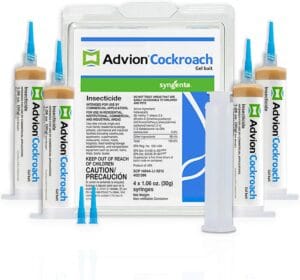
Advion Cockroach Gel Bait
Advion Gel Bait delivers fast, professional roach control using indoxacarb. Place small dots in cabinets, hinges, and cracks to pull roaches out of hiding and wipe out the whole colony. Safe for pet homes when used as directed and perfect for kitchens and bathrooms.
- Professional Gel Bait — Indoxacarb formula used by real pest control techs
- Targets All Roaches — American, German, Smokybrown, Oriental
- High‑Attractant Formula — Strong food‑grade attractants pull roaches out of hiding
- Crack‑and‑Crevice Use — Place pea‑sized dots in cabinets, hinges, voids, and appliance gaps
- Pet‑Safer Option — No plastic station to chew; ideal for homes with dogs
- Active Ingredient — Indoxacarb 0.6%
- Unit Size — 4 × 30g syringes with tips and plunger
- Best Pairing — Use with fipronil spray + Gentrol IGR for full elimination


Available on Amazon!
Competitive pricing + Fast Free shipping on all orders!
Advion Roach Bait Gel uses indoxacarb in a sweet protein-rich gel. Indoxacarb is a slow-kill active that roaches carry back to harborage areas and pass to the rest of the colony through contact, feces, and the dead roach themselves (other roaches eat the carcasses and get a secondary kill). This domino effect is exactly what makes baiting so effective on German roaches specifically — they live in tight protected voids where contact spray can’t reach, but the foragers carry the active ingredient back to where the rest of the colony is hiding.
After 25 years of treating German cockroaches in homes, apartments, and restaurants, this is the bait I trust on this species. Workers find the placements within hours, recruitment kicks in by the end of day 1, and the population crashes fast when the dry-cabinet rule and the cleaning rules are followed.
Why German Cockroaches Are Different From Every Other Roach
Most roaches you’ll deal with — American, smokybrown, Australian, Oriental — live outside and wander in. You treat the perimeter and the problem fades.
German cockroaches are completely different. They live inside your home. They don’t have an outdoor population you can cut off. They breed inside your walls, inside your appliances, inside the void under your cabinets, and they never stop on their own.
A single mated female can produce hundreds of offspring in her lifetime. The nymphs mature in about 60 days. Multiple generations are alive at the same time, all reproducing simultaneously. A single pair of German roaches can theoretically produce hundreds of thousands of descendants in a year under ideal conditions. That number sounds impossible until you’ve walked into a kitchen that was left untreated for six months. Then it makes complete sense.
They also don’t need much. Crumbs under the stove. Grease on the back of a burner. A dripping pipe under the sink. That’s enough to sustain a colony.
And they will never leave on their own. You have to treat them out.
Signs You Have German Cockroaches
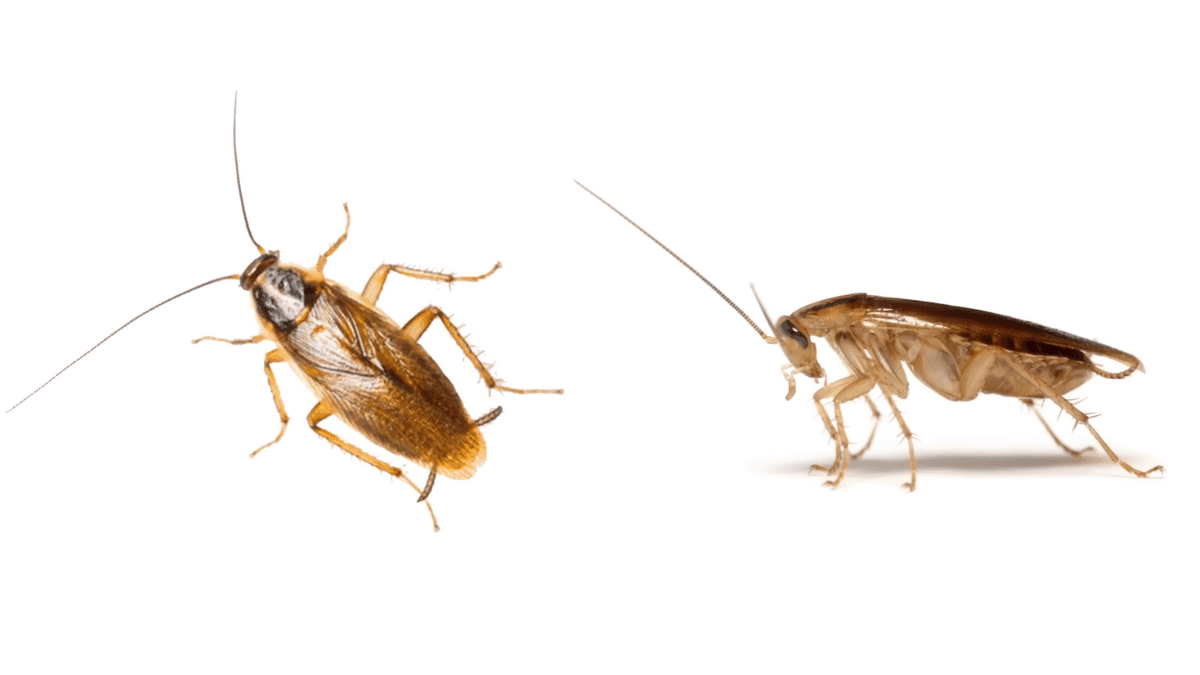
- Small, about ½ inch long. Much smaller than American or Oriental roaches.
- Light brown to tan color.
- Two distinct dark parallel stripes running from behind the head down the pronotum. This is the signature ID feature.
- Nocturnal. They hide during the day. The first sighting is usually when you flip on the kitchen light at 2 AM and catch a few small brown roaches darting under the stove or into a cabinet crack.
- Activity centered in the kitchen and bathroom. Behind the fridge, around the dishwasher, under the sink, behind the toilet, around the bathtub.
- Droppings that look like ground pepper or coffee grounds. Tiny black specks on shelves, in cabinet corners, behind appliances.
- Egg cases (oothecae) about ¼ inch long, light to medium brown, often still attached to a female or recently dropped near harborage. German roach females carry the egg case until just before it hatches, which is different from most other roach species.
- A musty, oily smell in heavy infestations. Not subtle once you’ve smelled it.
German vs Asian Cockroaches
This is the most important ID distinction for this species. Asian cockroaches (Blattella asahinai) look almost identical to German cockroaches — same size, same light brown color, same two dark parallel stripes behind the head. They get confused constantly, especially in the southern US where Asian cockroaches have become more common.
The stripes are NOT reversed between the two species (that’s a common misconception). The stripes look the same. Here’s what actually tells them apart:
| Feature | German Cockroach | Asian Cockroach |
|---|---|---|
| Size | ½ to ⅝ inch | ½ to ⅝ inch |
| Color | Light brown to tan | Light brown to tan |
| Parallel dark stripes behind head | Yes | Yes (look the same) |
| Wing length | Wings end at the tip of the abdomen | Wings extend past the abdomen |
| Body shape | Stockier, broader | Narrower, more elongated |
| Can fly? | Barely, mostly scuttle | Strong fliers |
| Attracted to lights at night? | No, avoid light | Yes, heavily |
| Where they live | Indoors, kitchens, bathrooms | Outdoors, lawns, leaf litter |
| Scurry away from bright light? | Yes | No |
| Indoor breeding? | Yes, established colonies | Rare, occasional wanderers |
The fastest field test: if the roach is flying toward your porch light at night, or sitting on the outside of a window screen, it’s an Asian cockroach. German cockroaches don’t do that. They avoid light and stay indoors. Asian cockroaches in the house are almost always wanderers that came in through an open door at dusk, not an established population.
This matters because German roaches need this whole protocol. Asian roaches in the house can usually be handled by killing the visible one with a swat or a quick spray, since they don’t establish breeding populations indoors and they came from outside in the first place.
German vs Brown-Banded Cockroaches
The other species German cockroaches get confused with is brown-banded cockroaches. Both are indoor-only, both are small, both have similar coloring. The difference is where they live in the house.
| Feature | German | Brown-Banded |
|---|---|---|
| Where they live | Warm, wet, LOW areas | Warm, dry, HIGH areas |
| Primary rooms | Kitchen, bathroom | Bedroom, living room, closets |
| Moisture needs | High | Low |
| Markings | Two parallel dark stripes behind head | Two pale bands across the wings/abdomen |
| Egg cases | Carried by female until hatching | Glued to surfaces all over the house |
If you’re seeing small light-brown roaches in the kitchen and bathroom, they’re German. If you’re seeing them in the bedroom or behind picture frames, they’re brown-banded.
How They Got Into Your Clean Home
This is the question I get more than any other on this species. The honest answer: it doesn’t reflect on your housekeeping.
German roaches hitchhike. They travel on people’s belongings the same way bedbugs do — on used appliances, secondhand furniture, grocery bags, cardboard boxes, and deliveries. A used refrigerator from Facebook Marketplace, a piece of furniture from an estate sale, a box from a warehouse that had a problem — any of those can introduce German cockroaches into a spotless home overnight.
In apartments, the previous tenant may have had a roach problem. Maintenance may have done a quick spray that scattered them into the walls rather than killing them. You move in, settle in, and a few weeks later you turn the kitchen light on at night and see something small dart under the stove. That’s how it starts.
It’s not your fault. It’s how the species travels. Now let’s get rid of them.
How to Get Rid of German Cockroaches, Step by Step
Step 1: Deep Clean First
This is the step that determines whether everything else works.
German cockroaches will not eat your bait if there are crumbs, grease, and spilled food sitting around as alternative food. They’ll eat the real food and walk past the bait. The whole treatment fails before it starts.
Before any product goes down, the kitchen needs to be as clean as you can get it.
- Pull out the stove. Clean the floor underneath, the sides of the stove, and the wall behind it. The grease accumulation behind a stove is German roach gold.
- Pull the fridge out. Clean the floor, the back of the fridge, and the wall behind. Don’t forget the bottom of the fridge where the drip pan sits.
- Wipe down every interior cabinet surface, top to bottom.
- Empty the cabinet under the sink completely. Wipe it down. Look for moisture.
- Clean inside the stove drawer and underneath it.
- Wipe down the inside of the dishwasher gasket and the area around it.
- Take out the trash. Don’t let dishes sit in the sink overnight.
- Fix any dripping faucets and any leaking pipes under sinks. Moisture is as important to German roaches as food.
For the rest of the house, focus on bathrooms (especially under sinks and behind toilets) and any other room where you’ve seen activity. The kitchen and bathrooms are where the work concentrates.
The cleaner the surfaces and the drier the pipes, the more aggressively the roaches will go after the bait.
Step 2: Place Advion Roach Bait Gel in Straw Micro-Placements
Now the bait goes down. The trick I’ve used for 25 years on German cockroaches: cut a drinking straw into 1-inch pieces. Squeeze a small dot of Advion gel – about the size of a grain of rice – inside each piece. Place the bait-loaded straws throughout the kitchen and any other room with activity.
The straw trick is a game-changer for three reasons:
- The gel stays moist inside the straw for weeks. A gel dot on an open cabinet shelf dries out in days and the roaches lose interest. Inside a straw, it stays attractive for a month or more.
- You don’t have to scrape old bait off your cabinets. When the bait is used up, you pick up the straw and throw it away. No sticky residue on your cabinet wood.
- Kids and pets can’t easily get to it. The straw protects the gel from being touched, eaten, or contaminated.
Advion Cockroach Gel Bait
Advion Gel Bait delivers fast, professional roach control using indoxacarb. Place small dots in cabinets, hinges, and cracks to pull roaches out of hiding and wipe out the whole colony. Safe for pet homes when used as directed and perfect for kitchens and bathrooms.
- Professional Gel Bait — Indoxacarb formula used by real pest control techs
- Targets All Roaches — American, German, Smokybrown, Oriental
- High‑Attractant Formula — Strong food‑grade attractants pull roaches out of hiding
- Crack‑and‑Crevice Use — Place pea‑sized dots in cabinets, hinges, voids, and appliance gaps
- Pet‑Safer Option — No plastic station to chew; ideal for homes with dogs
- Active Ingredient — Indoxacarb 0.6%
- Unit Size — 4 × 30g syringes with tips and plunger
- Best Pairing — Use with fipronil spray + Gentrol IGR for full elimination
Available on Amazon!
Competitive pricing + Fast Free shipping on all orders!
Where to place bait straws:
- Inside every kitchen cabinet, in the back corners
- Inside drawer corners, especially the stove drawer (which is a German roach hotspot)
- Behind the refrigerator (push one or two straws toward the back wall)
- Behind the stove
- Under the sink, against the back wall of the cabinet
- Around the dishwasher
- Behind the microwave
- On top of the microwave
- On top of the refrigerator
- Inside the cabinet kick plates (the toe-kick area under your lower cabinets)
- In bathroom vanity corners
- Behind toilets where you’ve seen activity
- Anywhere else you’ve seen a roach
For electronics and home offices
German roaches will move into computers, gaming consoles, cable boxes, and other warm electronics. If you’ve seen roaches near your computer, gaming setup, or TV stand, place bait straws next to those devices (not inside them). The roaches will leave the warm electronics to feed on the bait, carry the active ingredient back, and the indoor electronics colony dies along with the kitchen one. This is the only safe way to treat roach problems in electronics short of throwing the device out.
Don’t pile up the bait. Several small placements work much better than a few big dabs. A typical kitchen with an active infestation might use 10 to 15 straws spread across the room. More is better with this species.
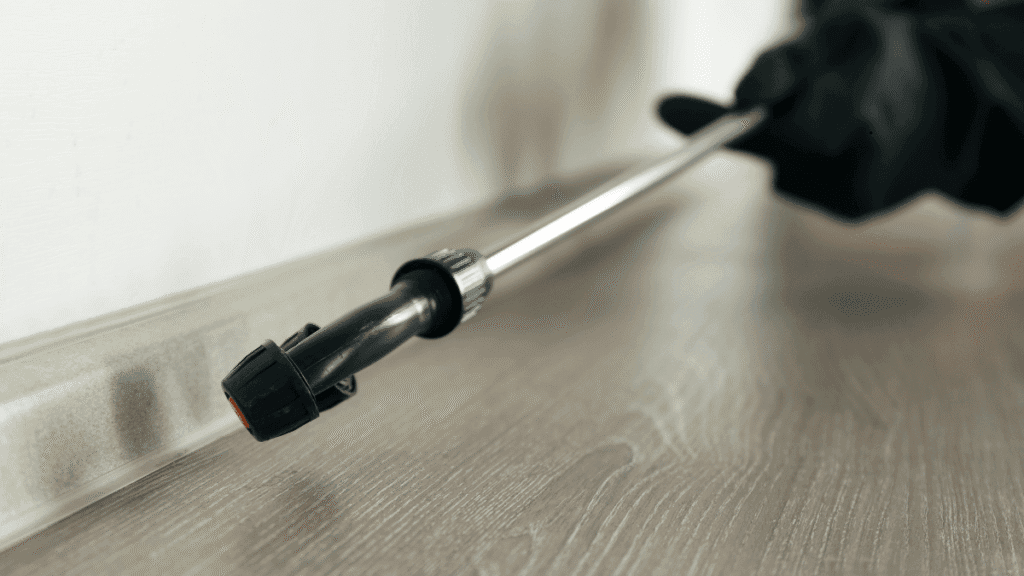
Step 3: Crack-and-Crevice Spray With Fipronil and Gentrol IGR
The bait does most of the killing. The spray closes the loop on the surviving roaches and stops the next generation from ever maturing.
Mix Fipronil C Plus at the label rate (usually 0.8 fl oz per gallon) with Gentrol IGR Concentrate added at the IGR’s label rate (typically 1 oz per gallon).
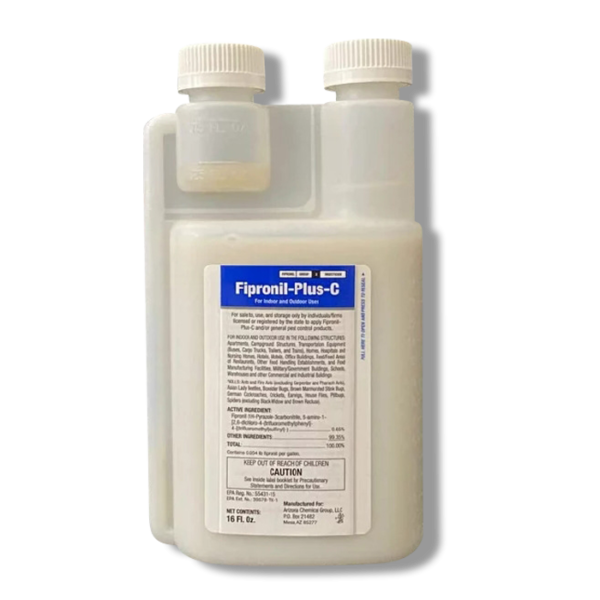
Fipronil‑Plus‑C Pest Control Concentrate (16 oz)
Fipronil‑Plus‑C is a commercial‑strength 0.65% fipronil concentrate that homeowners use for roaches, ants, and perimeter pests. One 16‑oz bottle makes up to 21 gallons of solution for long‑lasting indoor crack‑and‑crevice and outdoor structural treatments.
- Use: 1.0 fl oz per gallon of water This is the standard labeled dilution for structural crack‑and‑crevice applications.
- Commercial‑Strength Formula — 0.65% fipronil delivers professional‑grade control of roaches, ants, and other structural pests.
- Makes 21 Gallons — One 16‑oz bottle stretches far for large infestations or multi‑room treatments.
- Long‑Lasting Residual — Cellulose entrapment technology slows UV breakdown for extended control.
- Indoor + Outdoor Use — Ideal for kitchens, bathrooms, garages, baseboards, and exterior foundation cracks.
- Easy Mixing — Precision‑designed bottle reduces drift and makes dilution simple for DIY homeowners.
- Broad‑Spectrum Control — Effective against roaches, ants, and other common household invaders.
Available on Amazon!
Competitive pricing + Fast Free shipping on all orders!
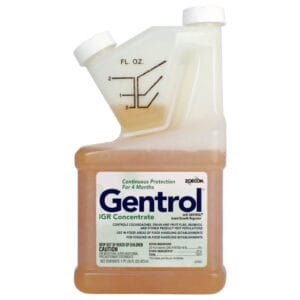
Gentrol IGR Concentrate – 1 Pint
Professional insect growth regulator that stops roach, fly, and stored‑product pest reproduction for up to 4 months.
- What It Does Breaks the life cycle of roaches, drain flies, fruit flies, bed bugs, and pantry pests. Prevents reinfestation by sterilizing adults and stopping nymphs from maturing.
- Where You Can Use It Food and non‑food areas, kitchens, bathrooms, restaurants, warehouses, commercial buildings, and residential spaces.
- Why Pros Use It Hydroprene provides long‑lasting population control and pairs perfectly with fipronil sprays for complete roach treatment.
- Shelf Life Up to 3 years when stored in a cool, dry place.
- Active Ingredient Hydroprene 9% (IGR)
- Mix Rate 1 fl oz per gallon (Gentrol EC)
- Best Pairing Use with a fipronil concentrate for crack‑and‑crevice kill + IGR reproduction control.
Available on Amazon!
Competitive pricing + Fast Free shipping on all orders!
Gentrol Complete Label – Gentrol Complete MSDS
Where to spray:
- Along every baseboard in the kitchen, bathrooms, laundry room, and any adjacent room
- Behind appliances after you pulled them out (the walls and floor, not the appliance itself)
- Around plumbing penetrations under sinks
- Around the base of toilets
- Around the dishwasher edges
- Around the water heater base
- Around any electrical outlet near the kitchen and bathroom
- Along cabinet hinge seams and where cabinets meet the wall
Keep the spray AT LEAST 12 inches away from any bait placement. Spray residue contaminates the area and German roaches will avoid bait that smells like fipronil. The bait and spray work together when they don’t touch. Spray the open areas. Place the bait inside the cabinets, drawers, and tight spaces. Keep a buffer between them.
Why Gentrol IGR is mandatory for this species. Gentrol contains hydroprene, an insect growth regulator that stops immature roaches from developing into reproducing adults. Egg cases hatch normally, but the nymphs that emerge can’t molt into fertile adults. The cycle breaks. German roach colonies have egg cases in places you can’t physically reach (inside wall voids, behind appliances, deep in cabinet kicks). Without the IGR, those eggs hatch in the weeks after your visible roaches are gone and the problem comes back. With the IGR, the new nymphs are reproductive dead ends. After 25 years of this work I will not run a German roach job without an IGR. It’s the difference between treatment that holds and treatment that bounces back.
Let the spray dry for 1 to 2 hours before normal use.
Step 4: Wait a few days
The next few days will look weird. Some homeowners panic at this stage. Don’t.
- Days 1 to 2: You may see MORE roaches out during the day. They’re being flushed from harborage as they encounter treated surfaces, and they’re recruiting to the bait. This is the treatment working at full force.
- Day 2: Major and steady reduction in visible activity. Most homes see significant change here.
- Day 7: Visible activity should be gone. If you’re still seeing live healthy roaches at day 7, refresh the bait placements and check that the cleaning was thorough enough.
- Day 14 and beyond: You should not be seeing live roaches at all. The Gentrol IGR continues working in the background, stopping any late-hatching nymphs from maturing into reproducing adults.
Don’t spray over your bait placements. Don’t wipe down the cabinets where you placed straws. Don’t move the appliances back into position so aggressively that you crush the bait. Leave the placements alone until the bait is visibly consumed or the timeline above is complete.
Apartment Living and the Re-infestation Reality
If you live in an apartment, German cockroaches are a different kind of problem because the building itself is part of it.
Roaches travel through wall voids between units. They move through shared electrical chases and shared plumbing chases. Even firewalls (which are supposed to stop fire from spreading between units) usually aren’t fully caulked around electrical penetrations, and roaches walk right through those gaps. Your neighbors’ habits matter as much as yours.
For apartment dwellers specifically:
- Pay extra attention to electrical outlets and switch plates on walls shared with neighboring units. A pest control professional could apply Delta Dust behind those outlets for an extra layer of treatment in shared wall voids, though for most apartment treatments the bait-and-spray approach handles it without dust.
- Treat the bathroom as carefully as the kitchen.
- Communicate with building management. They have a legal responsibility to address pest issues in most jurisdictions, and a building-wide treatment is much more effective than single-unit treatments.
- Plan on keeping bait placements out indefinitely. You can’t choose your neighbors. If the unit next door has an active infestation that isn’t being treated, you’ll have ongoing pressure regardless of what you do on your side of the wall. Replace bait straws every 30 to 60 days as ongoing protection rather than as a one-time treatment. This isn’t failure — it’s the honest reality of multi-unit living with this species.
The Easy Option for Small Localized Problems – Gentrol Complete Aerosol
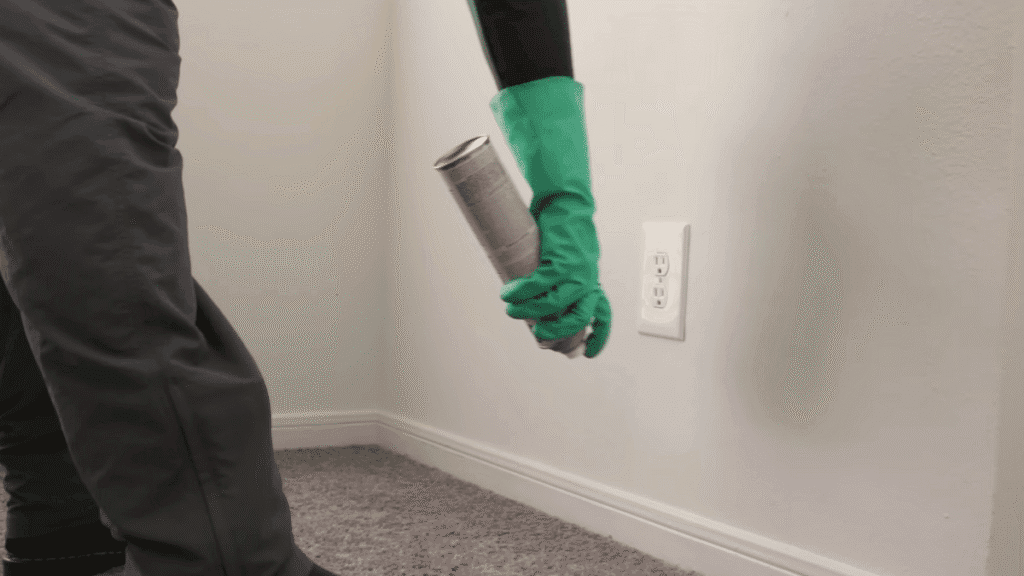
If you have a small, localized German roach problem – maybe an apartment kitchen where you’ve seen some roaches, or a single room where you suspect a fresh introduction from a grocery bag or used appliance – you can skip the mixing-concentrate route entirely and use an aerosol option.
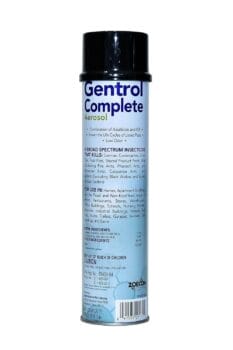
Gentrol Complete Aerosol – Adulticide + IGR (18 oz)
Dual‑action aerosol that kills roaches, flies, ants, and spiders while stopping their life cycle for 4 months.
- Dual‑Action Formula — Adulticide + IGR for kill + reproduction stop
- Targets Multiple Pests — Roaches, drain flies, fruit flies, pantry pests, ants, spiders
- Pro‑Level Use Sites — Kitchens, bathrooms, garages, restaurants, warehouses
- Low‑Odor Aerosol — Easy crack‑and‑crevice treatment with no mixing
- Active Ingredients — Lambda‑cyhalothrin 0.05% + Hydroprene 0.36%
- Best Pairing — Use with Advion gel for full roach elimination
Available on Amazon!
Competitive pricing + Fast Free shipping on all orders!
Gentrol Complete Aerosol combines a non-repellent insecticide (lambda-cyhalothrin) with Gentrol IGR (hydroprene) in a pre-mixed pressurized can with a crack-and-crevice straw applicator. Same general approach as the spray-mix protocol above, just in a more convenient format.
When the aerosol is enough on its own:
- A small, localized German roach problem confined to one room
- An apartment dweller dealing with occasional sightings rather than a heavy infestation
- A new house where you’ve spotted 2 or 3 roaches and want to act fast before they establish
- Anyone who doesn’t want to mix concentrate in a pump sprayer
When the aerosol is NOT enough:
- A heavy infestation with daily sightings or visible roaches during the day
- Activity that’s spread to multiple rooms
- A multi-unit building with active pressure from neighbors
- Restaurant or commercial settings
For the aerosol approach, still do the cleaning step first, still place Advion gel straws in the cabinets and behind appliances, and use the aerosol for the crack-and-crevice work along baseboards, around plumbing, behind outlets, and in cabinet seams. The aerosol replaces the pump-sprayer mix, not the bait.
For a large-scale German roach problem, the concentrate-and-pump-sprayer approach above is the better answer. The aerosol is the easier option, not the more powerful one.
What Doesn’t Work
A few things that come up over and over and waste time or actively make German roach problems worse.
- Foggers and bug bombs. Single worst thing you can do for German roaches. The mist doesn’t penetrate the cracks and voids where they actually live. The repellent chemicals scatter the population deeper into wall voids and into adjacent rooms or adjacent apartments. You’ll see fewer roaches in the kitchen for a few days, then a much worse problem next month as the scattered population breeds in spots you can no longer reach. I’ve cleaned up after fogger jobs more times than I can count, and it’s always harder than if the homeowner had done nothing.
- Big box store sprays and roach tablets. Most over-the-counter perimeter sprays are pyrethroid-based and repellent. German roaches detect them and route around them rather than picking up a lethal dose. They knock down a few visible roaches and do nothing to the colony.
- Bait alone, without spray, on a heavy infestation. Bait is the primary tool for German roaches, but on a heavy infestation the spray closes the loop on roaches that don’t reach the bait, and the IGR stops the egg cases that are already in the walls. Bait-only works on small problems. Heavy problems need both.
- Spray alone, without bait. The opposite mistake. Spray kills foragers in the open. Bait reaches the colony in tight harborage where spray can’t go. Without both, German roach populations bounce back.
- Treating without cleaning first. Roaches eat crumbs and grease before they eat your bait. Cleaning isn’t optional — it’s the step that makes everything else work.
- Boric acid dust. Slow, requires perfect placement in dry voids, creates a hazard around kids and pets if dust gets airborne, and the bait-and-spray approach above is faster and more reliable. Skip the boric acid for this species.
How to Keep German Cockroaches From Coming Back
Ranked by impact.
- Inspect anything used before bringing it inside. Used refrigerators, used microwaves, used furniture, secondhand appliances from Facebook Marketplace or estate sales. Five minutes with a flashlight before the item comes in the door saves a full treatment. Pull out drawer fronts, look behind motors, shine a light into the back of the unit.
- Switch to plastic bins for pantry and storage. Cardboard holds humidity, contains glue (which roaches eat), and provides perfect harborage. Plastic doesn’t.
- Stay on a 30-to-60-day bait refresh schedule in apartments and high-risk homes. German roaches are constant pressure in some living situations. Keeping fresh straws in place is cheap insurance.
- Fix moisture immediately. A dripping faucet, a leaking pipe under the sink, condensation around an AC vent. Moisture is half of what sustains a German roach colony. Fix the leak in week one, not month three.
- Take out the trash every night. Not optional with this species. A trash bag with food residue in it overnight is an open buffet.
- Run the dishwasher daily or wash dishes the same night. No food residue left out at night. No water in the sink overnight.
- Wipe down counters and the area behind the stove weekly. Grease and crumbs accumulate fast and feed the colony.
- Inspect any incoming cardboard. Amazon boxes, grocery boxes, anything shipped from a warehouse. Break it down outside or in the garage and put it in recycling immediately.
Edge Cases Where DIY Hits a Wall
For German cockroaches in a single-family home where the source is contained, DIY handles every case I’ve seen in 25 years when the bait + spray + IGR + cleaning approach is followed correctly. The chemistry works, the method is straightforward, and German roaches respond very well to baiting when it’s done right.
Where it genuinely struggles:
- Multi-unit buildings where neighbors aren’t treating. This is the #1 ongoing real-world problem. Even a perfectly treated apartment will get reinfested if the unit next door, above, or below has active roaches that aren’t being addressed. The pest control side stays the same — bait, spray, IGR. But the timeline shifts from “eliminate in two weeks” to “manage indefinitely.” Keep bait out, refresh it monthly, communicate with building management, and accept that the building is bigger than your unit. Things really are beyond your control sometimes. You can only keep your unit treated.
- Used appliances brought into the home. If you bought a used refrigerator, freezer, microwave, or stove and German roaches are coming out of it, treating around the appliance won’t fix the inside. The appliance itself needs to be treated (which means at minimum unplugging it, pulling it outside, and placing bait inside the motor housing) or in heavy cases, replaced.
- Commercial-grade infestations. Restaurant, food service, or commercial property infestations may need licensed pest control simply because of the volume of harborage spaces, the regulatory requirements for food-prep environments, and the scale of treatment needed. DIY scales to a single home or apartment. It doesn’t scale to a restaurant.
- Pesticide resistance in some regions. German cockroach populations in some parts of the country have developed reduced sensitivity to certain active ingredients. If a thorough, correctly applied treatment isn’t working after 3 weeks, switching to a different bait active ingredient (or having a licensed pro use a different chemistry class) may be necessary.
FAQ: Getting Rid of German Roaches
IDENTIFICATION & BEHAVIOR
How do I identify German cockroaches?
German cockroaches are small — about half an inch long — and light brown to tan colored with two distinct dark parallel stripes running lengthwise behind their head.
Nymphs are darker with a lighter tan stripe down the center of their back.
The double stripe behind the head is the definitive identification feature.
If you see a small brown roach in your kitchen that has those two lines, you’re dealing with German roaches and you need to treat accordingly.
Can German cockroaches fly?
They have wings but they very rarely fly. They rely almost entirely on running to move around, which they do very quickly. Don’t count on them staying grounded though — they’re capable of flight under certain conditions.
Do German cockroaches come from outside?
No. German cockroaches are exclusively indoor roaches. They don’t live outside and they don’t wander in from your yard the way American or smokybrown cockroaches do. If you have them, they were introduced — on a used appliance, a piece of furniture, a box, groceries, or through a shared wall in a multi-unit building.
Cleaning & Preparation FAQs
Do I need to clean before treating German roaches?
Yes. Cleaning is the most important first step. German roaches survive on crumbs, grease, and moisture. A clean kitchen removes their food sources and forces them to eat your bait instead of scavenging.
Do I have to empty my cabinets to treat German roaches?
Yes. Emptying cabinets, pantries, and closets exposes the cracks and gaps where German roaches hide. This allows Gentrol Complete to reach the areas they live and breed.
Should I clean after spraying?
No. Do not wipe or wash treated surfaces. Let the product dry and stay in place so it continues working.
Product & Treatment
Why won’t store bought sprays get rid of German roaches?
Two reasons.
First, most store products are repellent-based, meaning roaches can detect them and simply avoid the treated areas rather than picking up a lethal dose.
Second, German roaches have developed significant resistance to many common pesticides over generations of exposure.
The professional products used in this protocol — non-repellent fipronil combined with a dual-action IGR — work on mechanisms roaches haven’t developed resistance to.
Why is sanitation so important before treating?
Bait won’t compete with real food. If your kitchen has crumbs, grease, spills, or any other accessible food source, roaches will eat that instead of the bait.
Sanitation is what makes the bait irresistible. It’s also what makes the spray treatment more effective — a clean surface gives the product better contact and residual activity.
Can I spray Novacide on dishes or food?
No. Never spray clean dishes, utensils, or food. Remove items before treating and let surfaces dry before putting anything back.
Can I spray over bait?
No. Spray repels roaches, while bait attracts them. Keep sprays and baits separate so both products work correctly.
Why shouldn’t I use a bug bomb for German roaches?
Bug bombs are one of the worst things you can do for a German roach infestation. The insecticide disperses into open air and settles on surfaces, but it doesn’t penetrate the cracks and wall voids where roaches actually live.
The repellent effect causes roaches to scatter — deeper into walls, into other cabinets, into neighboring rooms or units. You’ll see fewer roaches for a few days and then the population rebounds, often in new areas, making the infestation harder to treat.
Baiting
Do I need bait if I already sprayed?
If the infestation is heavy, yes. Spray kills active roaches, but bait wipes out the ones hiding deep in cracks and cabinets. Using both together speeds up the entire process.
What’s the best bait for German Roaches?
Apex Cockroach Gel Bait
Where should I put roach bait?
Place bait in cabinet hinges, drawer corners, behind appliances, under the sink, and anywhere you’ve seen roaches before. Avoid areas pets or children can reach.
Results & Expectations FAQs
Why are roaches more active after treatment?
This is normal. Gentrol and other sprays flush roaches out of hiding. Increased activity means the treatment is working.
How long does it take to get rid of German roaches?
Most homes see a major reduction in 3–7 days. Full elimination usually takes 3–4 weeks because egg cycles must break.
How often should I refresh bait?
Every 2–3 weeks, or sooner if the bait is eaten or dried out.
Re‑Treatment & Long‑Term Control
Do I need to re‑spray Novacide?
Usually not. Novacide keeps working for up to 6 months. You can re‑treat problem areas if needed, but most homes don’t require frequent spraying.
What if roaches come back after treatment?
If activity returns, it usually means:
- new roaches entered from neighbors
- food sources reappeared
- bait dried out
- a hiding area was missed
Touch up with Novacide and refresh bait.
How do I prevent German roaches from coming back?
Keep the kitchen clean, store food in sealed containers, fix moisture issues, and avoid clutter. Refresh bait every few weeks in high‑risk areas.
APARTMENTS & SPREAD
Can German cockroaches spread from my neighbor’s apartment into mine?
Yes. German cockroaches travel through wall voids, electrical chases, and gaps around plumbing penetrations. Even fire-rated walls between units are usually not fully sealed around electrical penetrations, and roaches move through those gaps readily.
If a neighbor has an active infestation, pressure on your unit will continue regardless of how well you treat your own space. Dusting the electrical outlets on shared walls is one of the most important steps you can take in this situation.
What if my apartment had roaches before I moved in?
This is more common than most people realize. Previous tenants with infestations, maintenance treatments that scattered rather than eliminated the population, and roaches that survived in wall voids between tenancies — all of these contribute to the problem.
Document everything and communicate with building management. In most jurisdictions landlords are legally required to address pest infestations. Your treatment will help significantly, but building-wide treatment is the only real long-term solution.
PREVENTION
How do German cockroaches get into a clean home?
They hitchhike. A used appliance, secondhand furniture, grocery boxes, Amazon deliveries, moving boxes — any of these can carry German roaches or their egg cases into a completely clean home.
Always inspect used appliances and furniture carefully before bringing them inside. Break down cardboard boxes and remove them from your home promptly rather than storing them.
Will German cockroaches go away on their own?
Never. German cockroaches are domesticated — they’ve evolved to live exclusively with humans and have no viable outdoor habitat to return to. Without treatment they don’t leave. They reproduce. The population grows until conditions force them to expand into new areas of the home. There is no waiting them out.