
How Do I Get Rid of Rats in My Car?
A rat inside your vehicle is a high‑stakes situation. They don’t nibble; they chew straight through wiring. They don’t tuck themselves into small corners; they build full nests across open engine spaces.
And once they start, the damage compounds quickly — electrical issues, warning lights, no‑start conditions, and expensive repairs can follow in a matter of days.
TL;DR — How To Eliminate and Prevent Rats in Your Vehicle
- Check the engine compartment, engine & cabin air filter 1st – these are primary nesting zones
- Use a UV light to map urine trails and document damage for insurance
- Decide about using insurance before starting repairs
- Pre‑bait traps for one night unset — rats are cautious and commit more readily after a safe first feeding.
- Bait using Slim Jims for Norway rats, peanut butter for roof rats and packrats
- Zip-tie every trap to a fixed component in the engine bay
- Seal entry points with copper mesh — any gap the size of a quarter or larger is a potential entry point
- Apply rodent-deterrent automotive tape to wiring harnesses proactively
- Never bait inside the vehicle – bait stations belong outside
- Address odor after elimination – rat scent attracts new rats
Why Rats in Cars Are Serious
Modern vehicles run on soy-based wire coatings that rodents find attractive — and rats, with their larger and more powerful jaws, do significantly more damage per chewing session than mice. Where a mouse leaves teeth marks on insulation, a rat severs the wire. Where a mouse builds a small nest in the cabin filter housing, a rat builds a substantial nest in the open engine compartment, packing in leaves, insulation, debris, and whatever food items were available nearby.
Which species gets into a vehicle varies by location and happenstance. Norway rats tend to follow structures, sewer lines, and urban pressure, while roof rats (tree rats) are more common in places with dense vegetation. In areas with packrats, the situation can move even quicker — a packrat can take over a vehicle the very day you park it.
Rats go into vehicles for shelter, and once inside, their nonstop chewing often ends up on wiring — sometimes with a little of it eaten along the way.
Step 1 – Check the Engine Compartment and Engine & Cabin Air Filters 1st
The entire engine compartment is a potential nesting site.
Before anything else, open the hood and do a thorough inspection. Rats prefer protected, enclosed spaces within the engine bay — behind shields, under battery trays, tucked against the firewall, nestled in warm areas, and inside any cavity that offers darkness and protection.
What to look for:
- Obvious nesting material — leaves, insulation foam, shredded fabric, paper, food debris
- Droppings roughly the size of a raisin, blunt on both ends
- Chewed wiring with exposed copper
- Grease marks along travel routes — rats leave dark smear marks from their fur along paths they use regularly
- Food items cached in the nest — rats sometimes store food in nest sites
- Whatever they find nearby, including straws, bottle caps, packing peanuts, and other small trash items.
Also Check the Cabin Air Filter
The cabin air filter housing is a separate but equally important inspection point. It sits in the path of the HVAC system airflow and is accessed by rats through the fresh air intake in the cowl area at the base of the windshield. Rats nest directly above or around the filter, and their droppings contaminate the filter and the evaporator below it.
Real World Example — The Cabin Filter and Cowl
I discovered that rats had also been accessing the cowl area of my Tacoma. I noticed the A/C wasn’t performing the way it should and went to change the cabin filter. What I found instead was evidence of nesting above the filter housing, with droppings that had been raining down onto the cabin filter and accumulating in the evaporator drain — partially blocking it.
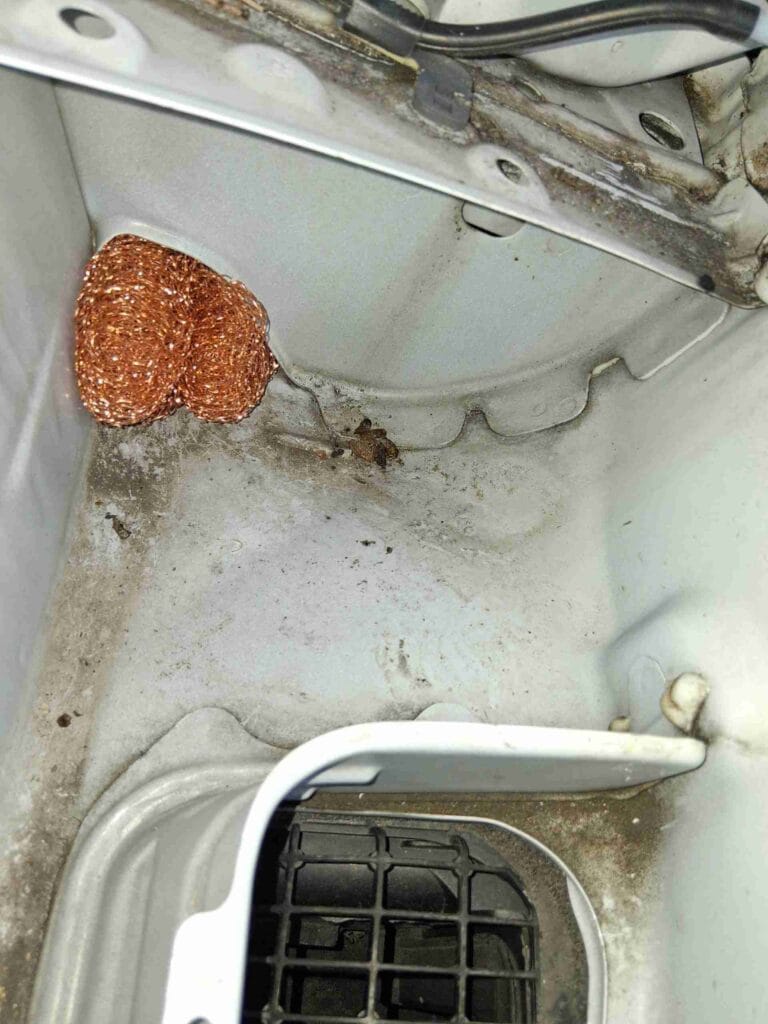
To clean it I used a vacuum with an extension to remove the bulk of the debris, then treated the evaporator with Nu-Calgon Evap Power — a professional evaporator coil cleaner that dissolved the remaining contamination and cleared the drain.
After cleaning, I removed the plastic cowl cover, identified the entry holes where the fresh air intake drain holes on either side below the wiper area , and stuffed copper scrubbies — two of them — into each opening. I packed them firmly enough that nothing could push them out. Rodent control copper mesh works equally well and may be easier to work with depending on the opening size.
Why Copper and Not Steel Wool
Steel wool rusts within weeks, breaks down structurally, and is flammable in an engine bay. Copper mesh does not rust, does not degrade, and is not a fire hazard. For any automotive exclusion work, copper is the only correct material.
The Engine Air Filter Box
Check the engine air filter housing. Rats often nesting in the intake and air box — the opening is accessible and the interior is dry and protected. If you find nesting material or droppings in the air filter box, clean it completely, inspect for damage, and screen the opening.
A mechanic can fabricate a simple barrier for engine air intake openings using stainless steel mesh or quarter-inch hardware cloth, cut and fitted so it blocks rodent entry without restricting airflow. This is a short job for any competent shop and worth asking about if you’re in a high-pressure rat area.
If either your cabin filter or engine filter is packed with nesting material or heavily contaminated with droppings, this is not a random rat passing through. This is an established colonization and needs to be treated as such.
Step 2 – Assess the Full Extent of the Damage
Before touching anything, map the damage properly. This step directly affects your insurance options.
Use a UV Light to Document Urine Trails
Rat urine fluoresces under ultraviolet light and is invisible under normal lighting. A UV flashlight reveals exactly where rats have been traveling — through the engine bay, into the cabin, along the dash, under seats.
This documentation matters for two reasons. First, it gives you a complete picture of the infestation extent so you can seal every entry point. Second, if you are considering an insurance claim, UV-documented urine contamination is objective visual evidence that adjusters can work with. Insurance companies routinely dismiss odor complaints as unverifiable. Photographs of glowing urine trails are not dismissible.
Rat urine contamination can be extensive enough to turn a repairable vehicle into a total loss when properly documented. That determination belongs to the insurance company — not your mechanic.
Choose Now: Insurance Claim or Pay Out‑of‑Pocket
If you have found rat damage — chewed wiring, contaminated insulation, damaged components, nesting material packed against electronics — make your insurance decision before authorizing a single repair.
Insurance companies determine whether a vehicle is repairable or totaled. Many policies have time windows for reporting damage. Starting repairs before filing a claim, or undertaking work before a proper inspection, can reduce or void a claim entirely. Many insurers will not miss an opportunity to deny a claim and any reason to do so — including repairs being made before they are involved — may be used against you.
Document everything with photographs. Use the UV light. Photograph all damage, nesting material, droppings, and chewed components. Then contact your insurance company and ask about comprehensive coverage for rodent damage before a mechanic opens anything.
Step 3 – Identify the Species (It Changes What Bait You Use)
Species identification changes which bait you should use — the right bait is half the battle, the other half is convincing a rat it’s not a setup.
Norway rats are the most common vehicle invader, particularly in urban and suburban areas. They are large, ground-dwelling rats that use sewers, burrow in soil, and are strongly food-motivated. For Norway rats, use Slim Jims. Cut them into small pieces for trap placement. The protein and fat content is highly attractive and the scent carries well in an engine environment.
Roof Rats – also called tree rats – are slimmer, better climbers, and more common in areas with heavy vegetation and tree canopy. For roof rats, use peanut butter.
Packrats – also called woodrats – are a different situation entirely. Packrats are primarily shelter-motivated, not food-motivated. They collect objects and nesting material compulsively and will establish nesting sites in vehicles regardless of food availability nearby. For packrats, bait attractiveness is lower and the focus should be on physical exclusion and habitat modification rather than relying heavily on food-based trapping. If you do trap, use peanut butter.
(For detailed identification of Norway rats versus roof rats, see the Norway Rat and Roof Rat species pages. Knowing which one you have makes every subsequent step more effective.)
The Scent Problem — Why Rats Return to the Same Vehicle
Rats are attracted to the scent of previous rats. Once a vehicle has been used as a nest site or a regular foraging destination, it carries a chemical signal that communicates safety and habitability to other rats. This is why people who have had rats in a vehicle once are significantly more likely to have them again unless the scent is actively removed.
Eliminating the rats solves the immediate infestation. Eliminating the odor prevents the next one.
Odor removal after a rat infestation:
- Remove all nesting material completely — even small fragments carry scent
- Clean all contaminated surfaces with an enzyme-based cleaner that breaks down organic material rather than masking odor
- For HVAC contamination, use a professional evaporator coil treatment — Nu-Calgon Evap Power is what I use — to address contamination inside the ducting that surface cleaning cannot reach
- Allow the vehicle to air out with all doors open before sealing entry points
- Pay particular attention to the firewall and any areas where rats were traveling regularly — grease trails carry persistent scent that standard cleaning doesn’t fully address
Seal Entry Points With Copper Mesh
Rats require a larger opening than mice — any gap the size of a quarter or larger is accessible to a rat. This means the exclusion inspection needs to cover more surface area and look for larger openings than you would for a mouse situation.
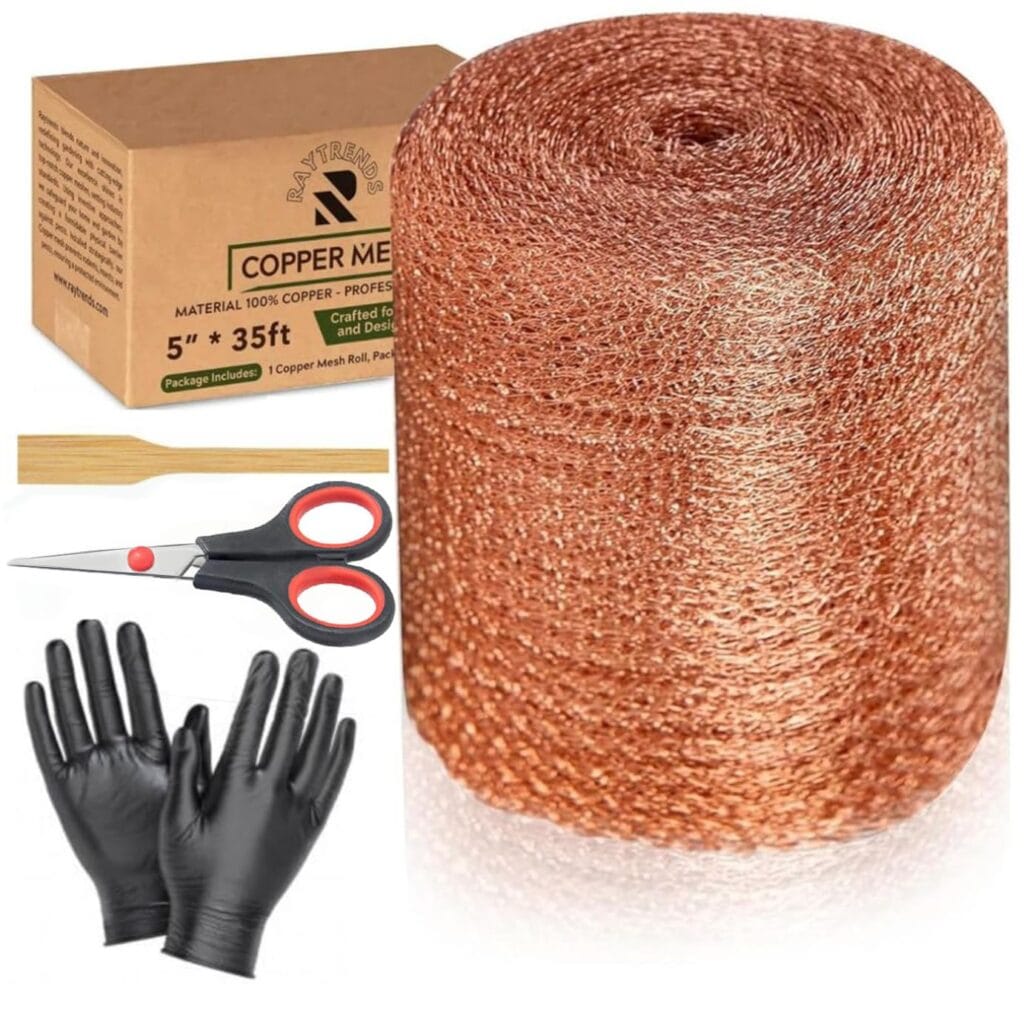
Copper Mesh Rodent Control Kit
Copper Mesh Rodent Control Kit includes 100% pure copper mesh roll plus gloves, scissors, and a handy packing tool for sealing gaps & cracks with a long‑lasting, rust‑proof barrier rodents can’t chew through. Flexible, and easy to pack tightly into wall creases and pipe penetrations, it provides a durable exclusion solution for blocking mice, rats, slugs, and other pests.
- Fire-resistant & rustproof
- Gloves & Scissors included
- Packing tool packs mesh deep into tight siding grooves where mice try to sneak in.
- Multi-pest protection
- Ideal for rodent exclusion around a/c line gaps

Available on Amazon!
Work through the vehicle systematically:
- The cowl area at the base of the windshield — the primary entry point for the cabin filter housing and HVAC system
- Gaps where wiring harnesses pass through the firewall
- Openings around coolant lines, A/C lines, and other plumbing at the firewall
- Any gap in the underbody or lower body panels larger than a nickel
- The engine air filter intake if not already screened
Use copper mesh packed firmly into each opening — enough that a rat cannot push it out from the other side. Rats are stronger than mice and will test exclusion materials more aggressively. Make sure the mesh is packed tightly and secured properly.
Trapping Inside the Engine Bay
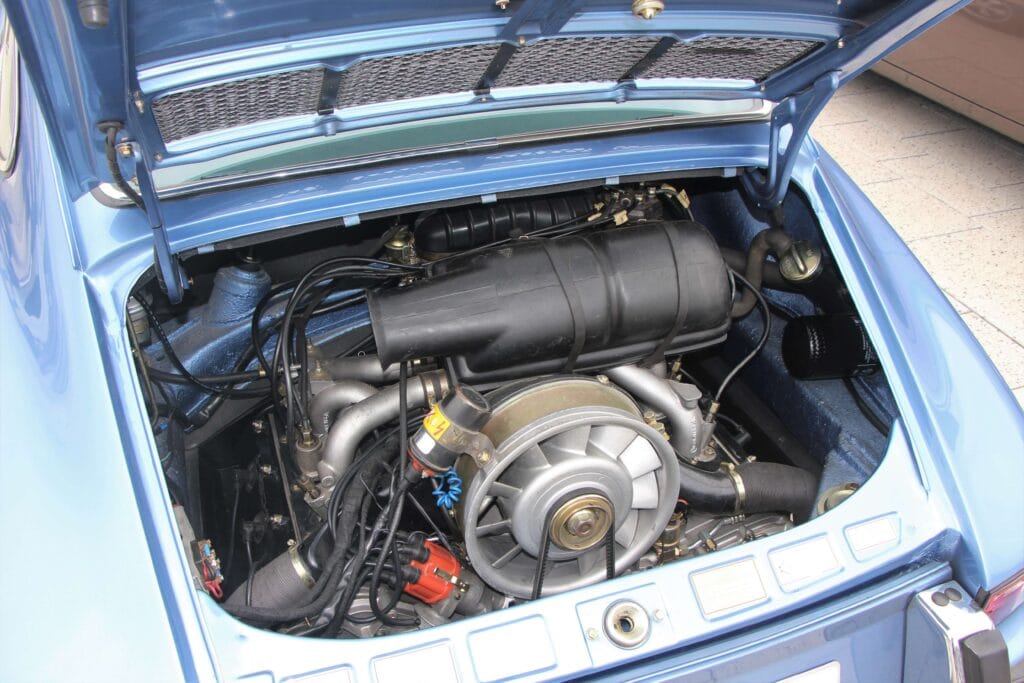
If your car’s in a garage and rats are sneaking in through a gap, trapping around the vehicle is totally fine. But if the car’s outside, don’t put snap traps on the ground unless you’re trying to start a fight with the neighborhood cats. Outdoors, keep traps inside the engine bay only.
Pre‑baiting helps a lot – give the traps a night with bait but no tension so the rat gets comfortable, then set them. Group traps right next to each other; when one rat gets caught, another usually shows up to investigate like it’s checking on a friend, and you get that one too.
T‑Rex‑style traps make this way easier. You can reset them with one hand in tight spaces without risking the classic “snap your fingers in the engine compartment” moment.
Since you can’t really pre‑bait a T‑Rex trap while it’s open, just smear a little peanut butter or Slim Jim juice on the outside to get the rat interested. You’re basically training it to think “this plastic thing = snacks.” One night of that is usually enough — once a rat has fed from a spot, it’ll come back like it’s checking its usual table.
Pre-Baiting – The Step That Determines Whether You Catch Anything
Place snap traps in the engine bay baited with your species-appropriate bait — Slim Jims cut into small pieces for Norway rats, peanut butter for roof rats — but do not set the traps. Leave them unset for a full night.
A rat that is wary of a new object in its environment will often approach the unset trap, take the bait, and leave. This feeding without consequence reduces the rat’s wariness of the trap significantly. On the following night, set the traps with fresh bait. The rat approaches with established confidence and the catch rate increases substantially.
One night of pre-baiting is sufficient for most situations. Rats are smart but once a rat has successfully fed from a location it will return.
Baiting – Getting Rats to Commit to the Trap
For packrats and roof rats, smear peanut butter directly into the bait cup of the T‑Rex trap. They’ll work at it, and that foot pressure is what fires the trap.
For Norway rats, cut Slim Jims into roughly ¾‑inch pieces and wedge them in sideways. Don’t just drop them in — you want the rat pulling against the bait so it has to plant its feet on the trigger.
Always wear gloves when baiting or removing rats. They can smell your hands on the traps, and also, they’re rats — there’s no prize for doing this bare‑handed.
| Norway Rats (big ground rats) | Slim Jims or equivilant |
| Roof Rats / Tree Rats | Peanut butter |
| Packrats | Peanut Butter |
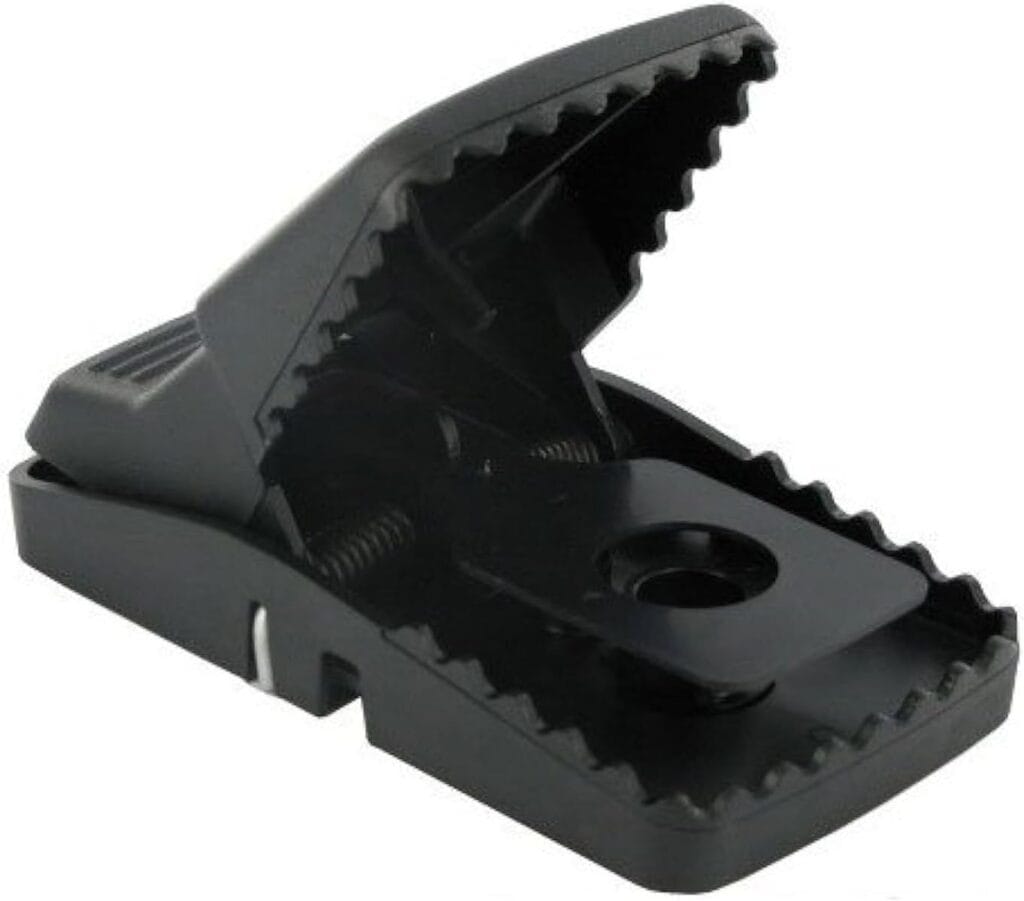
Bell Labs Trapper T-Rex Rat Trap (4 Traps)
The Bell Labs T‑Rex Rat Trap delivers professional‑grade snapping power with an easy, one‑handed squeeze‑to‑set design and a deep bait cup that holds Slim Jims or peanut butter securely while you place the trap. Its strong spring, serrated jaws, and reliable trigger make it one of the most effective and user‑friendly rat traps on the market.
- Easy One‑Handed Setup — Just squeeze until it clicks; no struggling, no pinched fingers.
- Deep Bait Cup — Holds Slim Jim pieces, peanut butter, or other baits without rolling or smearing.
- Powerful Snap Action — Strong spring and serrated jaws deliver fast, humane kills.
- Professional‑Grade Build — Durable enough for repeated use indoors or outdoors.
- Safe to Position — Set the trap first, then place it without your fingers near the jaws.
Available on Amazon!
Securing Traps in the Engine Bay
Zip-tie every snap trap to a fixed component before setting it. This is non-negotiable for rat traps, where the trap is larger and the snap mechanism is more powerful than a mouse trap.
A rat trap that fires unsecured can fall, wedge itself into an inaccessible area of the engine bay, or end up with a large dead rat attached to a trap stuck somewhere you genuinely do not want to reach. Secure every trap with zip ties before the pre-baiting night begins.
Use caution if outdoor cats are present. A rat snap trap is large enough to seriously injure a cat. Position traps thoughtfully and check them at first light.
What Not to Use
Glue boards: Never use glue boards for rats. A rat on a glue board is alive, stressed, and significantly larger and stronger than a mouse. Most people are completely unprepared for what that situation requires. Snap traps are faster, cleaner, and more humane.
Ground-level traps: Avoid placing traps directly on the ground around the vehicle. Ground-level traps are a hazard to non-target wildlife, neighborhood cats, and anything else that investigates at night.
Exterior Bait Stations in the Surrounding Area
Bait belongs outside the vehicle. A rat that consumes rodenticide inside the car can die in a wall cavity, behind the dashboard, or under the carpet — creating an odor problem that is extremely difficult to resolve and that can make the vehicle unusable for weeks.
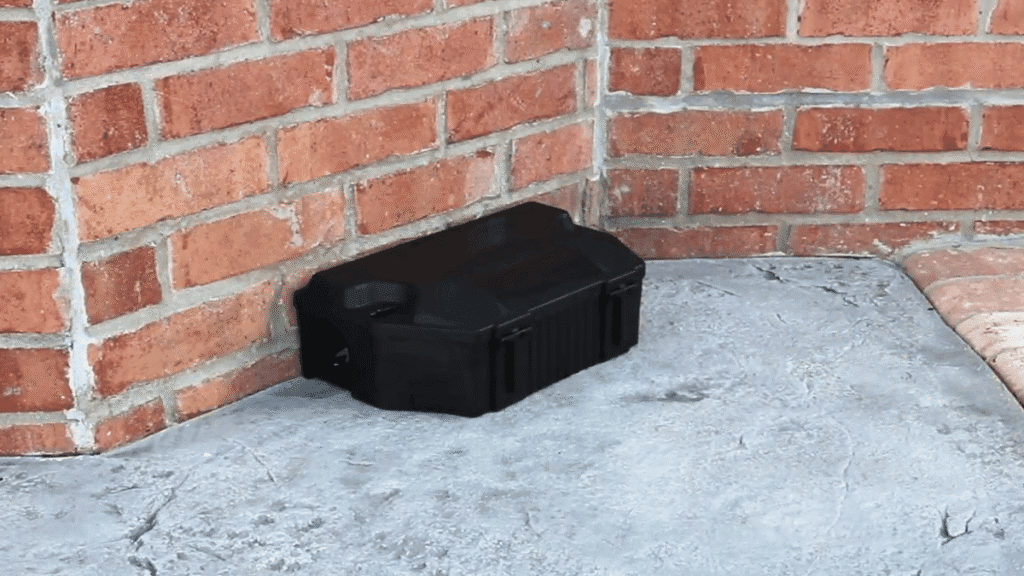
Place outdoor bait stations:
- Along the exterior wall of the garage or structure nearest to where you park
- Near any known harborage areas — woodpiles, debris, dense vegetation
- Along fence lines and perimeter structures where rats travel
- Near the specific attractant driving rat pressure in the area
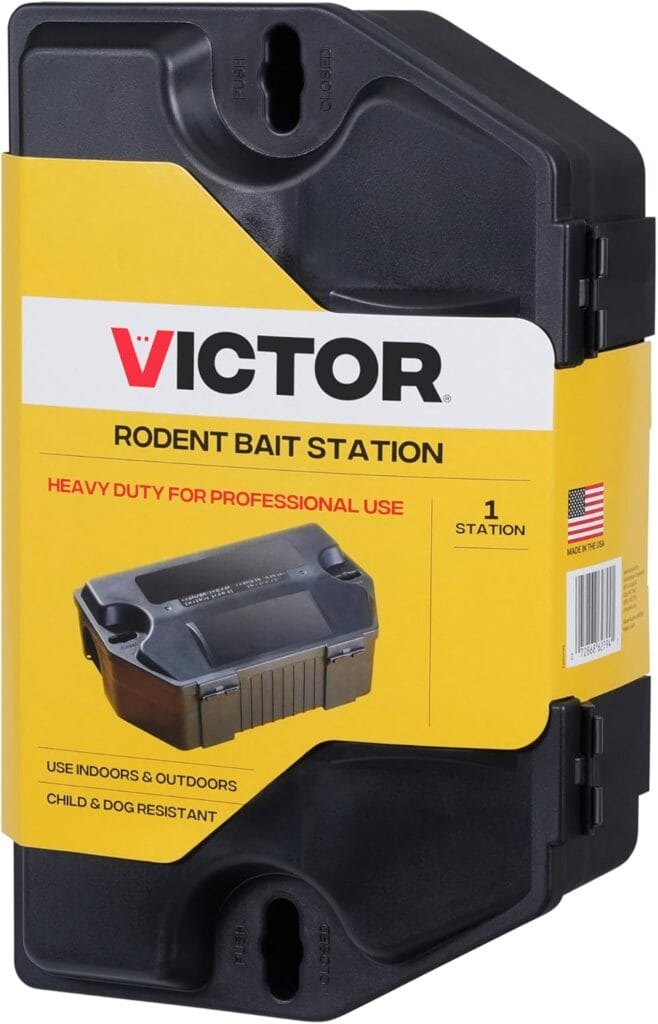
Victor Refillable Rodent Bait Station
This extra‑large Victor Refillable Rodent Bait Station holds multiple bait blocks, giving you a powerful, secure way to control infestations from the outdoors. Its dual‑entry design, locking lid, and heavy‑duty build make it a safe, reliable option for long‑term rodent control around your home.
- XL Capacity holds several bait blocks at once
- Locking, tamper resistant lid
- Heavy-duty construction
- Professional grade design
Available on Amazon!
Check and refill monthly. Consistent outdoor bait pressure reduces the population before it reaches the vehicle.
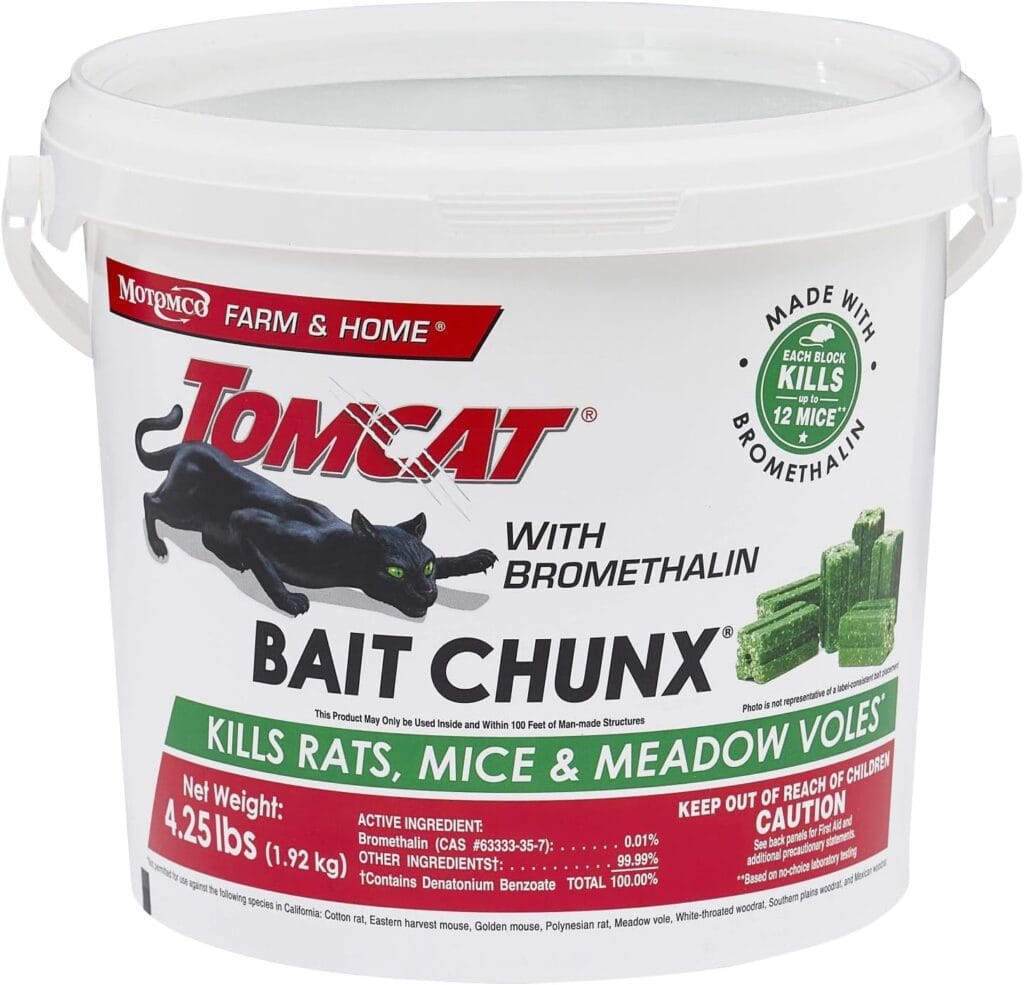
Tomcat Rodent Bait
Long‑lasting rodent bait, delivering dependable control of rats and mice even in damp, wet, or high‑moisture areas. Its weather‑resistant formulation holds up outdoors and begins working within a few days of consistent feeding.
- All-weather formula
- Kills in 4-6 days
- 4 lb pail
Available on Amazon!
Address the root attractant. In my situation it was chicken feed stored too close to the parking area. In many urban situations it’s a dumpster, a neighbor’s compost, or a bird feeder. Identifying and addressing the food source driving rat pressure is as important as any trapping or exclusion work on the vehicle itself.
Rodent-Proofing Automotive Tape – Physical Protection
Modern vehicles use soy-based wire insulation that rats find attractive. This is a documented widespread problem — several major automakers have faced legal action over it and Honda developed a specialized solution in response.
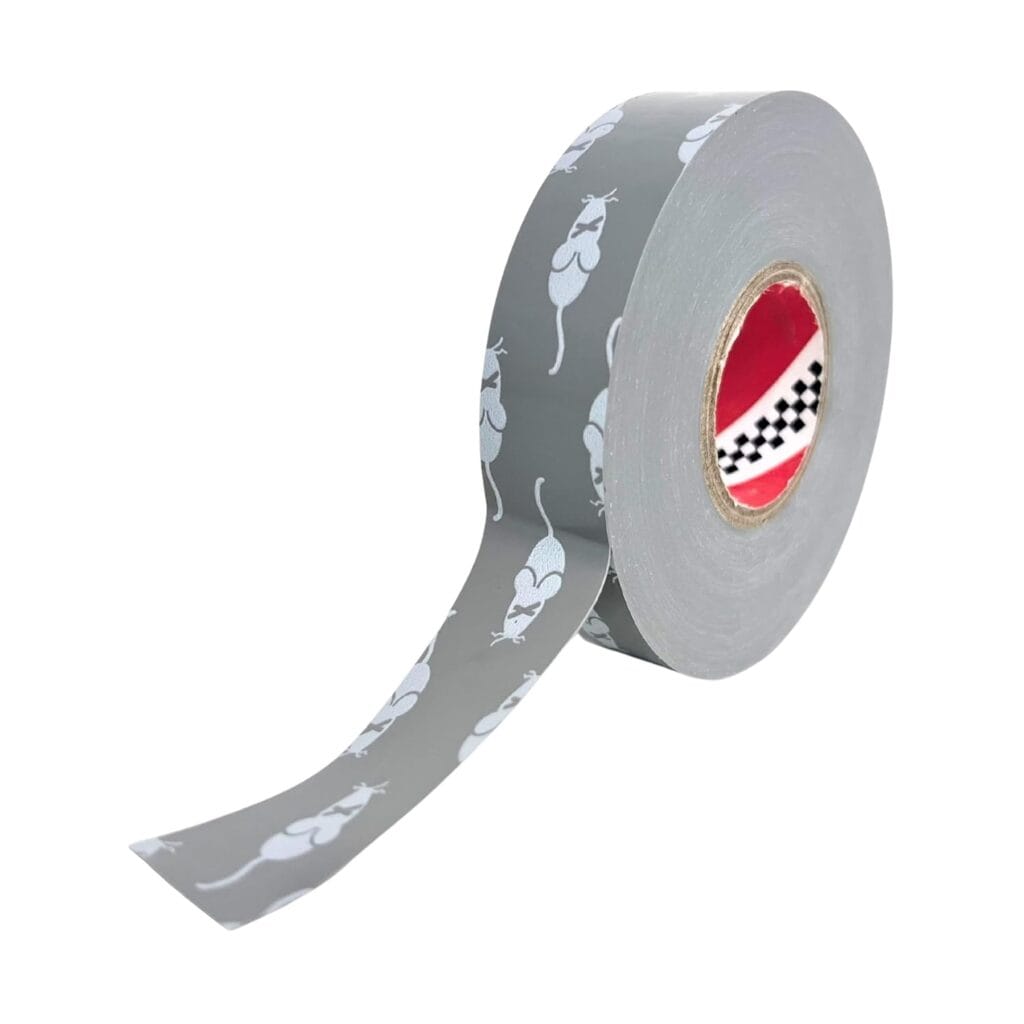
Capsaicin Rodent‑Deterrent Tape for Automotive Wiring Protection
A Japanese‑engineered, capsaicin‑infused anti‑chew tape designed as a replacement for Honda’s OEM rodent tape — and fully compatible with any car, truck, RV, boat, or generator wiring.
- Honda‑compatible formula — engineered as a replacement for OEM 4019‑2317, but safe and effective on all vehicle brands
- Active anti‑chew protection — capsaicin discourages biting instantly, stopping damage before it starts
- Japanese‑made quality — durable vinyl adhesive built to withstand heat, moisture, oil, and vibration
- Wraps easily around wire harnesses for clean, professional‑grade protection in minutes
- Multi‑platform use — ideal for cars, trucks, RVs, generators, marine wiring, EV chargers, and industrial equipment
- Long‑lasting, all‑weather barrier that keeps rodents from turning your wiring into a chew target
Available on Amazon!
There are two types of rodent-proofing automotive tape and they work differently:
Capsaicin-infused tape is the recommended option. The adhesive contains capsaicin — the compound that makes hot peppers burn — and when a rat bites into treated wiring it gets an immediate aversive response and stops. Honda’s version of this tape is the benchmark product. It actively deters chewing rather than just physically resisting it.
Mesh-reinforced tape creates a physical barrier but does not deter the chewing behavior. A determined rat can still damage the outer insulation and potentially reach the wire beneath. It’s better than nothing but it’s not a true repellent.
For extra peace of mind, you can apply wire mesh tape and then add Capsaicin tape over it. Not essential, but a nice bonus layer if you’re already working in there.
Motion‑Sensor Strobe Deterrents for High‑Pressure Parking Spots
Strobe light deterrent devices are worth considering in specific situations — extreme rat pressure, unavoidable outdoor parking near known rat harborage, or packrat activity in areas where they are common. They are not a standalone solution, but as part of a larger system they provide meaningful value.
How they work: Most units combine ultrasonic sound with a motion-activated strobe light. The ultrasonic component is the less important element — rats habituate to ultrasonic frequencies relatively quickly when they have an established motivation like a nest or nearby food. The strobe light is what actually matters. Motion-activated light flashes at night are genuinely aversive to rats approaching a vehicle.
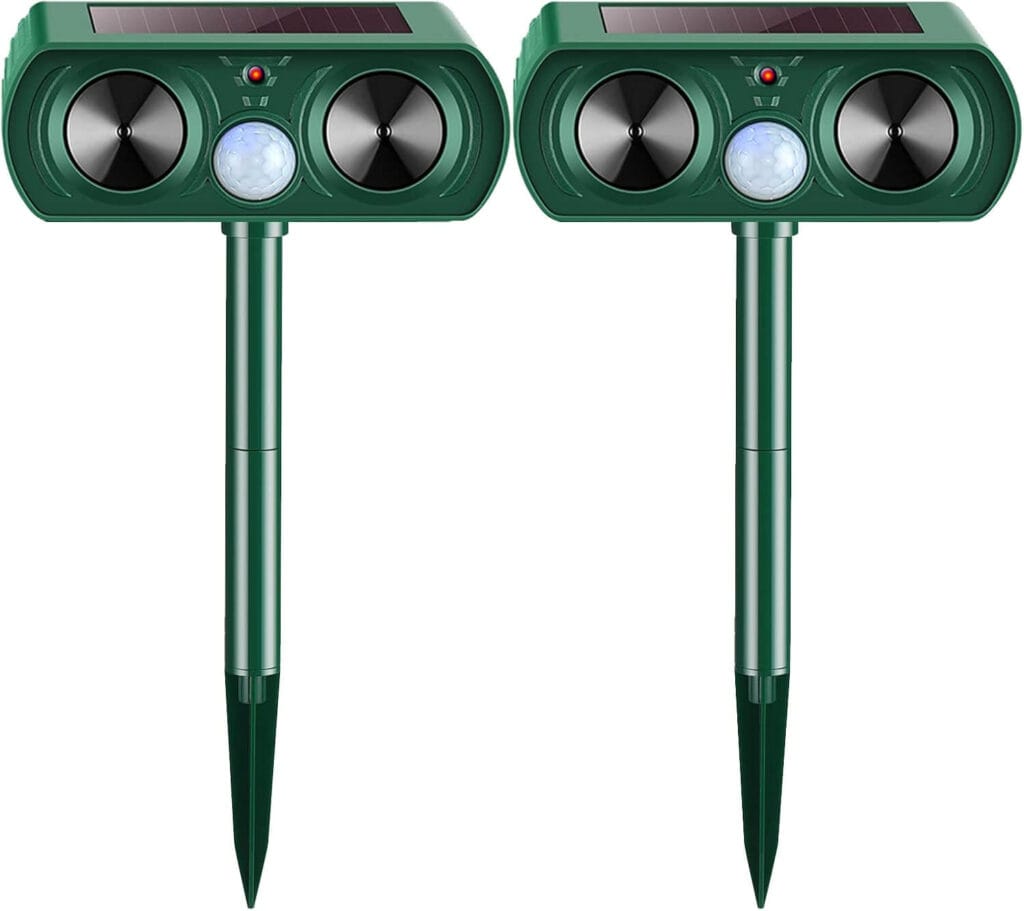
Solar Strobe Rodent Deterrent (Motion‑Activated, Set‑It‑and‑Forget‑It)
A zero‑maintenance, solar‑powered deterrent that flashes and fires automatically — making your vehicle the harder target every single night.
- Motion‑activated dual defense — PIR sensor triggers ultrasonic bursts + flashing red strobe
- Solar‑powered, no upkeep — charges itself and keeps working where you park
- Tool‑free installation — push the stake into the ground or mount on fences/trees
- Covers approach paths — ideal for protecting tires, undercarriage access points, and garden perimeters
- Weather‑resistant design — built for year‑round outdoor use in rain, sun, and humidity
- Use two for full coverage — place one on each side of the driveway for maximum effectiveness
Available on Amazon!
How effective are they: Moderately effective as a deterrent. Very effective against a rat that is new to the vehicle and hasn’t established a pattern. Less effective once a rat has been regularly visiting the same location.
Here is the honest assessment: if you keep parking in the same spot and it’s near them, they get habituated and will soon move right into your fancy discotek with the weird humming noise.
This means the strobe deterrent needs to be part of a system, not a replacement for one:
- Change where you park whenever possible to break established scent trails
- Modify the habitat around the parking area — remove attractants, clear vegetation, eliminate harborage
- Combine with trapping and sanitation — the strobe buys you time and disrupts new arrivals; trapping and exclusion solve the actual problem
Placement: Position one unit on each side of the approach to your vehicle, aimed at the engine bay and undercarriage. Solar-powered units are the practical choice — they require no wiring, recharge automatically, and can be left in place indefinitely.
Special note on packrats: Packrats are shelter-motivated more than food-motivated. A strobe deterrent may be more effective against a packrat than against a Norway rat because it disrupts their assessment of whether a location is safe to nest in. For packrat situations, combining a strobe deterrent with physical exclusion and habitat modification is a reasonable approach.
Under‑Hood Strobe Deterrents – Anti‑Rat Discotek Technology
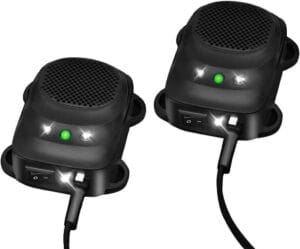
Loraffe Under‑Hood Rodent Repellent with LED Strobe (2‑Pack)
A wired under‑hood deterrent that fires bright LED strobe flashes the moment your engine shuts off — sending rats scattering before they can settle in.
- LED strobe is the real deterrent — sudden flashes in a dark engine bay disrupt rats far better than ultrasonic alone
- Activates automatically when parked — turns on when the engine shuts off, goes into standby when you start the car
- Simple two‑wire install — connects directly to the battery; zip ties included
- Low‑voltage protection — shuts itself off if battery drops below 10.7V to prevent drain
- Use two for full coverage — one on each side of the engine bay for complete light exposure
- Great for high‑pressure areas — ideal if you live where rats are relentless and keep returning
Available on Amazon!
Under‑hood strobe deterrents are a solid add‑on if you live in an area with heavy rodent pressure. These units wire directly to your vehicle’s 12V system and automatically activate when you turn the car off. When the engine shuts down, the device wakes up and starts cycling its deterrent pattern.
There are a few versions out there, but you want the kind that includes a strobe light. The ultrasonic component doesn’t do much — rats get used to sound quickly — but a sudden flash of light in a dark engine bay will send them scattering.
These work really well the first few times, and then eventually the rats decide the engine bay is just a fancy new apartment with a weird hum and disco lights.
Still, in high‑pressure areas, they’re absolutely worth it.
How to Use Them Effectively
- Install at least two units — one on each side of the engine bay — so the strobe covers all approach paths
- Choose a model with LED strobe lights, not just ultrasonic
- Don’t rely on ultrasonic alone — the light is the real deterrent
- Use them as preventative protection, in conjunction with other rodent prevention measures
Why These Devices Are Useful
- They activate automatically when the car is parked
- Auto‑standby kicks in when you start the car, so no rolling down the road with a light show
- They include low‑voltage protection so they won’t drain your battery
- They’re simple to install — two wires and a couple zip ties
- They work in cars, trucks, RVs, barns, and any 12–24V space
- They’re great for people who park near vegetation, structures, or known rat activity
A wired strobe deterrent isn’t a magic shield, but it’s better than nothing — especially if you live or travel somewhere with heavy rodent activity. Think of it as a “keep them out for as long as possible” tool, not a permanent fix.
Pair them with good sanitation and physical barriers, and it becomes a very effective part of your overall defense.
The Physical Rodent Skirt (A Physical Barrier for Protection While Parked)
For vehicles parked outdoors for extended periods — seasonal storage, second vehicles, trucks for weekends — a weather-resistant car rodent skirt is the most reliable protection available outside of a sealed garage.
The skirt creates a physical barrier at ground level around the entire vehicle perimeter, blocking the undercarriage access that rats rely on to reach the engine bay. It eliminates the variable rather than managing it.
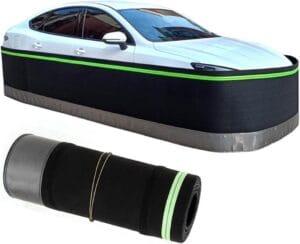
Weather‑Resistant Rodent Skirt (Full Vehicle Barrier)
The closest thing to a guaranteed mouse‑proof car outside of a sealed garage — a physical barrier that forces rodents to choose an easier target.
- Creates a full 360° barrier that blocks mice from reaching the undercarriage or engine bay
- Forces rodents to make a choice: go somewhere else or work much harder to get in
- Reflective strips increase visibility and help deter nighttime rodent activity
- Weather‑resistant, reusable, and easy to install — wraps around the vehicle in minutes
- Ideal for long‑term parking: seasonal storage, RVs, campers, second vehicles, and work trucks
- Consistent use = maximum effectiveness — use it every time you park in a high‑pressure area
Available on Amazon!
For people who have tried exclusion, trapping, bait stations, and deterrents and still have rats returning — particularly in areas with very high Norway rat pressure from nearby sewers or structures — the physical barrier is the answer that stops the cycle.
Use it every time you park in a high-pressure area. Consistency is what makes it effective.
Parking Strategy and Environmental Factors
Where you park determines much of your rat risk. Rats follow established scent trails from their harborage areas to food sources. Your vehicle parked near those trails becomes a regular stop.
High-risk parking environments:
- Near dumpsters or commercial trash storage
- Adjacent to dense vegetation, ivy, ground cover, or thick mulch
- Near woodpiles, lumber storage, or debris piles
- Under or near trees with voids or hollows
- Near chicken coops, bird feeders, or spilled grain
- Near compost bins or vegetable gardens
- Adjacent to storm drains, culverts, or utility trenches
- Near abandoned vehicles or equipment
- Near outdoor cooking areas or grills
- Retaining walls and stacked stone landscaping
- Old sheds, detached garages, or storage buildings
- Your neighbor’s attractants — their chickens, bird feeders, compost, and trash habits affect your rat pressure whether you like it or not
Change where you park
Changing where you park – even alternating between front‑in and back‑in – can break an active rat cycle faster than most people expect.
Rats follow established scent trails; move the vehicle off that trail and they have to relocate it from scratch. It won’t solve the overall population pressure, but it will interrupt the specific behavior pattern targeting your car while your other defenses take effect.
Prevention Checklist
Once rats are eliminated and entry points are sealed:
- Check the engine compartment visually every month — lift the hood and look for early signs
- Check the cabin filter at every oil change interval as a standard inspection item
- Recheck copper mesh exclusion seasonally — particularly in fall when rats seek shelter
- Maintain outdoor bait station pressure year-round in high-pressure areas
- Apply capsaicin rodent tape to wiring harnesses before damage occurs
- Address attractants near the parking area — food storage, compost, bird feeders, chicken feed
- Change parking locations periodically to break scent trail patterns
- Use a UV light annually to check for any new urine activity
- Address odor immediately after any rat activity — the scent invites the next rat
Frequently Asked Questions
IDENTIFICATION
How do I know if I have rats and not mice in my car?
Size is the clearest indicator. Rat droppings are roughly the size of a raisin — capsule-shaped and blunt on both ends. Mouse droppings are much smaller, rice-sized, and tapered. Rat nests in engine compartments are substantially larger and messier than mouse nests. Chewing damage from rats tends to be more severe — severed wires rather than gnawed insulation. If you see large droppings, extensive chewing damage, and a substantial nest with debris, you’re dealing with rats.
How do I tell Norway rats from roof rats in my vehicle?
Norway rats are larger, heavier, and leave a stronger ammonia odor with noticeable grease smearing along travel routes. Their tails are shorter than their body length. Roof rats are slimmer, leave a lighter musty odor, and have tails longer than their body length. For full identification details see the Norway Rat and Roof Rat species pages — knowing which you have determines your bait selection and helps you understand where the population is coming from.
What do rat droppings in a car look like?
Rat droppings are dark, capsule-shaped, and approximately the size of a raisin — significantly larger than mouse droppings. Fresh droppings are darker and slightly soft. Older droppings are lighter and dry. They have a directional taper that helps map travel routes through the vehicle.
ENTRY POINTS
How are rats getting into my car?
The most common route is up the tires from the ground — rats are capable climbers. Any gap the size of a nickel or larger anywhere on the vehicle is accessible. Primary entry points include the cowl area at the windshield base, gaps around firewall penetrations for wiring and plumbing, and unsealed openings in the underbody and undertray areas. Rats are stronger than mice and will enlarge small gaps if motivated.
How do I seal rat entry points in my car?
Use copper mesh packed firmly into every gap larger than a nickel. The cowl area is the priority — remove the plastic cover to expose the fresh air intake openings and pack them with copper mesh or copper scrubbies. Check all firewall penetrations and undertray gaps. Copper does not rust, does not degrade, and is not flammable — it is the only correct material for engine bay exclusion work.
DAMAGE
How much damage can rats cause?
Rats chew through wires completely rather than just nibbling insulation. A severed oil level sensor wire, a chewed oxygen sensor harness, a damaged wiring loom — all of these are real repair scenarios that can run into hundreds or thousands of dollars. In severe cases involving the main wiring harness, repair costs can approach or exceed the vehicle’s value. The soy-based wire coating used in modern vehicles is a documented attractant and rats with their stronger jaws cause far more damage per chewing session than mice.
Can rats chew through hoses?
It’s possible but wiring is the primary target — almost certainly because modern soy-based wire coatings are more attractive than rubber hose. In a severe infestation where wire access is limited, hose damage could occur, but wiring damage is the overwhelming concern with rats in vehicles.
RATS IN ELECTRIC VEHICLES (EVs)
Why Are Rats Such a Big Problem in Electric Vehicles?
Rats are a growing problem in EVs because electric vehicles stay warm far longer than gas cars. EV battery packs generate heat during charging, discharging, and preconditioning, and that heat lingers for hours. The entire underbody becomes a warm, protected micro‑climate — exactly what rats look for when nesting.
Gas engines cool down quickly. EVs stay cozy.
This makes EVs one of the most attractive nesting spots for rodents, especially overnight or in garages.
Do EV Batteries Really Make the Car Warmer for Rats?
Yes. EV batteries produce heat during:
- Charging
- Driving / discharging
- Preconditioning (warming the battery before driving)
That heat radiates upward into:
- the undercarriage
- wiring channels
- insulation pockets
- firewall cavities
Because EVs don’t have a hot exhaust system to vent heat away, the warmth stays trapped longer, creating a “heated nest zone” that rats prefer over gas vehicles.
Why Do Rats Chew EV Wiring More Than Gas‑Car Wiring?
Electric vehicles have:
- more wiring density
- more sensors
- more control modules
- more harnesses
- higher‑voltage cables
- thicker insulation
And much of that insulation is soy‑based or plant‑based, which is softer and more chewable than older petroleum‑based insulation.
More wires + thicker insulation + more sensors = more chew points and more damage.
This is why EV rodent‑damage claims are rising every year.
Is Soy‑Based Wiring Really a Problem in Electric Vehicles?
Yes. Many EV manufacturers use:
- soy‑based wire insulation
- corn‑based plastics
- plant‑derived polymers
These materials are:
- softer
- more flexible
- more chewable
- more attractive to rodents
Rats don’t eat the insulation for nutrition — they chew it because it’s soft, pliable, and perfect for keeping their teeth worn down. EVs simply have more of it.
Do EVs Have More Wires for Rats to Chew?
Absolutely. EVs contain significantly more wiring than gas cars because they rely on:
- battery management systems
- thermal control systems
- regenerative braking sensors
- inverter modules
- charging modules
- high‑voltage distribution harnesses
- dozens of additional sensors
More wiring = more places for rats to chew. More sensors = more expensive repairs when they do.
Why Is Rodent Damage More Expensive in EVs?
Because EV wiring is:
- more complex
- more integrated
- routed through battery compartments
- connected to high‑voltage systems
- tied into expensive modules
A single chewed harness can require:
- battery removal
- module replacement
- specialized labor
This is why EV rodent‑damage repairs often cost $2,000–$15,000, compared to $300–$1,200 in gas cars.
Are Rats in Teslas and Other EVs Becoming More Common?
Yes — and fast.
Insurance companies, EV forums, and repair shops all report:
- rising rodent‑damage claims
- higher average repair costs
- more EV‑specific wiring damage
- more nests found in EV underbodies
As EV adoption grows, so does the rodent‑damage problem.
Are EVs More Attractive to Rats Than Gas Cars?
Yes. For three reasons:
- Warmth — EV batteries stay warm for hours
- Silence — no engine noise or vibration
- Wiring — more soy‑based insulation and more sensors
This combination makes EVs prime nesting territory.
Can Rats Damage High‑Voltage EV Cables?
They can — and they do.
High‑voltage cables are:
- thick
- insulated
- warm
- routed through protected channels
Rats don’t care about voltage. They chew the insulation, not the copper.
But once exposed, the repair becomes extremely expensive and sometimes requires full harness replacement.
How Do I Keep Rats Out of My EV?
Keep rats out of your EV by being intentional about where you park it — any electric vehicle left outside overnight, especially near dumpsters, overgrown vegetation, or cluttered areas, becomes prime real estate for rodents because the battery stays warm for hours after charging, driving, and preconditioning.
If you can, vary your parking spot and avoid leaving the EV in the same warm, cozy outdoor location every night; reducing warmth + reducing nearby shelter is the single most effective prevention method for electric vehicles.
INSURANCE
Does insurance cover rat damage to a car?
Rat damage typically falls under comprehensive coverage. Contact your insurance company before authorizing any repairs — starting repairs before filing a claim, or failing to report within the required timeframe, can result in a reduced or denied claim. Document all damage with photographs and UV light documentation of urine contamination before anything is cleaned or repaired.
Why is UV documentation important for an insurance claim?
Insurance adjusters can dismiss odor complaints as unverifiable. UV-photographed urine trails are objective visual evidence. Extensive urine contamination documented under UV light — particularly in the HVAC system or cabin insulation — can change a claim outcome significantly, sometimes turning a perceived repair situation into a documented total loss scenario.
TREATMENT
What is the best bait for rats in a car?
It depends on the species. For Norway rats — the most common vehicle invader — Slim Jims are highly effective. Cut them into small pieces and place on the trap trigger. For roof rats and packrats, peanut butter is the better choice. Pre-bait with your chosen bait on an unset trap for one full night before setting the trap — rats are significantly more cautious than mice and pre-baiting substantially increases catch rates.
Why don’t standard rat traps work immediately?
Rats are neophobic — wary of new objects in a familiar environment. A snap trap placed cold in an engine bay a rat has been using regularly is a new and suspicious object. Pre-baiting allows the rat to interact with the trap without consequence, reducing wariness before the trap is set. One night of pre-baiting is typically sufficient.
Should I put rat bait inside my car?
Never. A rat that consumes rodenticide inside the vehicle can die in a door panel, under the carpet, or behind the dashboard. The resulting odor is extremely difficult to remediate and can make the vehicle unpleasant or unusable for an extended period. Bait belongs outside the vehicle in enclosed stations near the car.
PREVENTION
Why do rats keep coming back to my car?
Scent is the primary driver. Rats return to locations where previous rats have been — the residual odor signals a safe, suitable habitat. If the scent from a previous infestation is not fully removed, each new rat that encounters the vehicle is drawn to it. Complete odor remediation after an infestation is as important as the elimination itself. Also evaluate and address whatever environmental factor is driving rat pressure near the parking area — in my case it was chicken feed, and identifying that root cause was what actually solved the problem long term.
Does parking in a garage prevent rats?
A sealed, well-maintained garage with no entry points significantly reduces rat risk. A garage with gaps under the door, cracks in the foundation, or open entry points is nearly as accessible to rats as outdoor parking. If you park in a garage and still have rats in the vehicle, treat the garage itself with bait stations and snap traps and seal the garage entry points.
SAFETY
Are rats in my car a health risk?
Yes. Rats carry hantavirus, leptospirosis, rat bite fever, and other pathogens transmitted through droppings, urine, and nesting material. When cleaning a contaminated engine bay or vehicle interior, wear nitrile gloves and an N95 or better respirator. Never disturb dry droppings without respiratory protection — aerosolized particles are the primary hantavirus transmission risk. Dampen contaminated material with disinfectant before removal.
Is it safe to drive a car after a rat infestation?
Not until you have confirmed the extent of the damage. Chewed wiring can cause electrical failures, system malfunctions, and in serious cases fire. Have the vehicle inspected by a mechanic before driving if you have any confirmed wiring damage. If HVAC contamination is present, have the system cleaned before running the heat or A/C.
PRODUCT QUESTIONS
What is the best material for sealing rat entry points in a car?
Copper mesh is the correct material. It doesn’t rust, doesn’t degrade, and is not flammable — all critical for engine bay use. Pack it firmly enough that a rat cannot push it out. Rats are stronger than mice and will test exclusion materials more aggressively, so err toward more material rather than less.
Does the capsaicin automotive tape actually work on rats?
Yes, when applied proactively. The capsaicin causes an immediate aversive response when rats bite treated wiring. It does not prevent rats from accessing the engine bay or nesting — it specifically protects the wiring from chewing. Apply it before damage occurs. It is significantly more effective than mesh-only tape because it changes the rat’s behavior rather than just physically resisting it.
Do strobe deterrents work on rats?
Moderately, for rats that haven’t established a pattern. The strobe light component is the effective element — not the ultrasonic sound, which rats habituate to quickly. A rat that is new to your vehicle and encounters a motion-activated strobe may be deterred from investigating further. A rat that has been visiting the same location regularly will eventually habituate to the strobe as well. Use deterrents as part of a system that includes changing parking locations, habitat modification, and active trapping — not as a standalone solution.