
This page contains affiliate links. I may earn a commission at no extra cost to you.
The best way to get rid of roaches in the kitchen is to deep clean first, place Advion Roach Bait Gel in cut up drinking straws throughout cabinets and behind appliances, then apply a Gentrol Complete Aerosol crack and crevice spray along baseboards and around plumbing. Most kitchens see major reduction within 2 days and visible roaches gone within a week.
TL;DR — How To Get Rid of Roaches in Your Kitchen
- Deep clean the kitchen first. Pull out the stove and fridge, wipe down grease, vacuum crumbs, empty the under-sink cabinet.
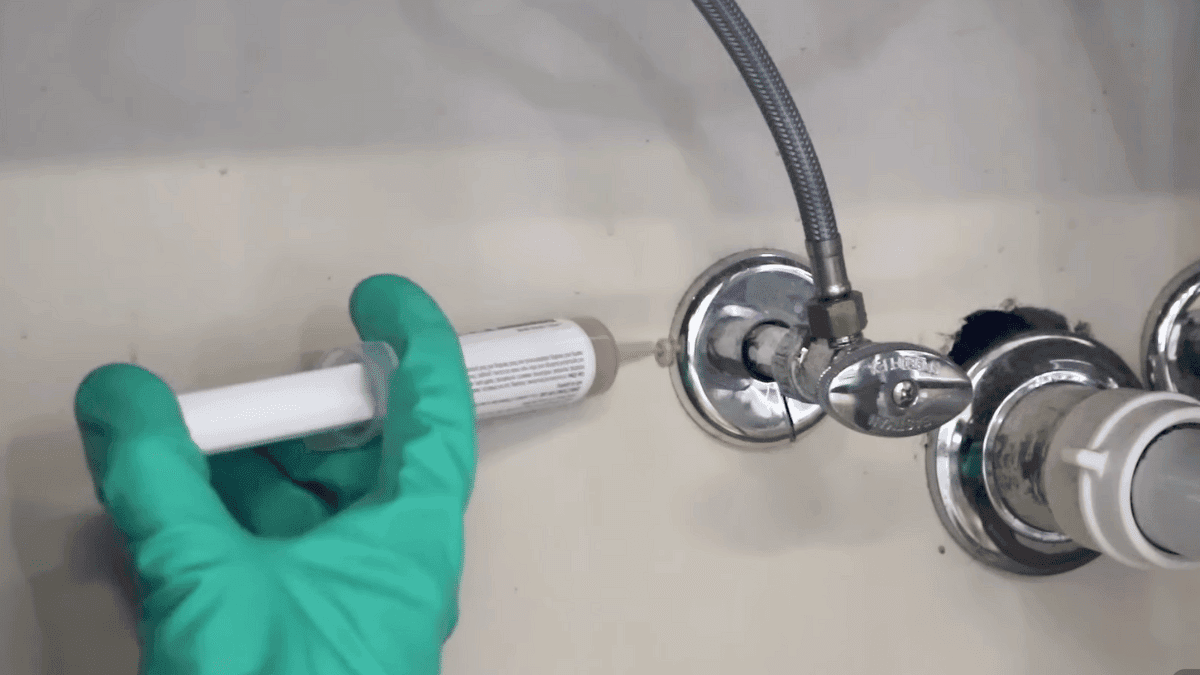
- Cut a drinking straw into 1-inch pieces. Squeeze a rice-grain-sized dot of Advion Roach Bait Gel inside each piece.
- Place the bait-loaded straws throughout the kitchen: inside every cabinet corner, in drawers (especially the stove drawer), behind the fridge, behind the stove, under the sink, on top of the microwave.
- Spray Gentrol Complete Aerosol along the kitchen baseboards, behind appliances, around plumbing penetrations, and in cabinet seams.Keep at least 12 inches between any bait straw and the sprayed areas.
- Do a quick preventative spray and a few bait straws in the bathroom too. Roaches follow moisture and the bathroom is their next stop.
Keep reading for the full breakdown. ↓
What You Need
Two products handle a kitchen roach problem start to finish. One kills the colony. One cleans up the survivors.
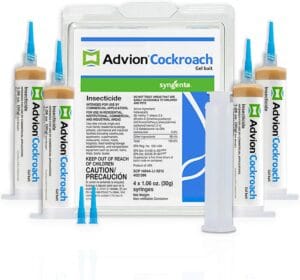
Advion Cockroach Gel Bait
Advion Gel Bait delivers fast, professional roach control using indoxacarb. Place small dots in cabinets, hinges, and cracks to pull roaches out of hiding and wipe out the whole colony. Safe for pet homes when used as directed and perfect for kitchens and bathrooms.
- Professional Gel Bait — Indoxacarb formula used by real pest control techs
- Targets All Roaches — American, German, Smokybrown, Oriental
- High‑Attractant Formula — Strong food‑grade attractants pull roaches out of hiding
- Crack‑and‑Crevice Use — Place pea‑sized dots in cabinets, hinges, voids, and appliance gaps
- Pet‑Safer Option — No plastic station to chew; ideal for homes with dogs
- Active Ingredient — Indoxacarb 0.6%
- Unit Size — 4 × 30g syringes with tips and plunger
- Best Pairing — Use with fipronil spray + Gentrol IGR for full elimination

Available on Amazon!
Competitive pricing + Fast Free shipping on all orders!
Advion Roach Bait Gel uses indoxacarb in a sweet protein-rich gel. Roaches find it, eat it, and carry the active ingredient back to the colony where it transfers through contact, feces, and the dead roaches themselves. This domino effect is what makes baiting so effective. It reaches the colony living in the wall voids, behind the appliances, and inside the cabinet kick plates where a spray can never go.
After 25 years of treating kitchen roach problems, this is the bait I trust. Workers find the placements within hours, and once recruitment kicks in, the population crashes fast.
What Are These Kitchen Roaches?
The treatment on this page works for the roach species that infest kitchens. Before you start, take a quick look at what you’re dealing with so you don’t use the wrong protocol.
| What You’re Seeing | Species | What to Do |
|---|---|---|
| Small, about ½ inch long, light brown to tan, with two dark parallel stripes behind the head | German cockroach | This is the most common kitchen roach by far. This page is built for them. Keep reading. |
| Small, light tan, with two pale bands across the wings instead of behind the head | Brown-banded cockroach | They prefer warm dry areas like bedrooms and electronics more than kitchens, but they do show up in upper kitchen cabinets sometimes. The treatment is similar, but if you’re seeing them outside the kitchen too, check the brown-banded cockroach page for the full approach. |
| Large, 1½ to 2 inches long, reddish-brown with a yellow figure-eight pattern behind the head | American cockroach | These usually wander in from outside (sewer drains, mulch beds, palm crowns) and don’t typically establish in the kitchen long-term. The American cockroach page focuses on the outdoor perimeter and will give you better results. |
| One or two large dark roaches that look like they came in through a drain | American or Oriental cockroach | Check the American or Oriental cockroach pages. The fix is mostly outdoors and around plumbing, not in the kitchen. |
| Multiple small light-brown roaches with parallel stripes appearing in the kitchen at night | German cockroach | This page is exactly what you need. Keep reading. |
The treatment on this page works for the roach species that infest kitchens. Before you start, take a quick look at what you’re dealing with so you don’t use the wrong protocol.
- Small, about ½ inch long, light brown to tan, with two dark parallel stripes behind the head: German cockroaches. This is the most common kitchen roach by far, and this page is built for them.
- Small, light tan, with two pale bands across the wings instead of behind the head: brown-banded cockroaches. These prefer warm dry areas like bedrooms and electronics more than kitchens, but they do show up in upper kitchen cabinets sometimes. The treatment is similar to what’s on this page, but if you’re mostly seeing them outside the kitchen too, check the brown-banded cockroach page for the full approach.
- Large, 1½ to 2 inches long, reddish-brown with a yellow figure-eight pattern behind the head: American cockroach. These usually wander in from outside (sewer drains, mulch beds, palm crowns) and don’t typically establish in the kitchen long-term. If you have these, you’ll get better results with the American cockroach page protocol, which focuses on the outdoor perimeter rather than just the kitchen.
If you’re only seeing one or two large dark roaches that look like they came in through a drain, you probably have American or Oriental cockroaches, and you should check those pages. If you have multiple small light-brown roaches with parallel stripes appearing in the kitchen at night, you have German roaches, and this page is exactly what you need.
Why You Caught This Early
If roaches are showing up in your kitchen and you haven’t seen them anywhere else in the house, you caught the problem early. That’s good news.
German roach populations expand outward from wherever they started, and the kitchen is usually where they start because that’s where the food and moisture are. A kitchen-only infestation means the colony is still small and contained. The treatment in this guide will reach them before they have time to spread into the bathrooms, bedrooms, and wall voids deeper in the house.
If you let this go for a few more months without treating, the colony will spread, multiply, and become a much harder job. Acting now means you can handle this in about a week with the two products on this page. Waiting means you might be looking at a full whole-house German roach protocol with concentrate, pump sprayers, and weeks of follow-up.
How They Got Into Your Clean Home
This is the question I get more than any other. The honest answer is: it doesn’t reflect on your housekeeping.
German roaches hitchhike. They travel on people’s belongings the same way bedbugs do. On used appliances, secondhand furniture, grocery bags, cardboard delivery boxes, and even your own bag coming home from a store that had a problem. A used refrigerator, a piece of furniture from an estate sale, a box from a warehouse with an existing issue. Any of those can introduce German cockroaches into a spotless home overnight.
In apartments, the previous tenant may have had a roach problem. Maintenance may have done a quick spray that scattered them into the walls rather than killing them. You move in, settle in, and a few weeks later you turn on the kitchen light at 2 AM and see a few small brown roaches dart for cover. That’s how it starts.
How to Get Rid of Roaches in the Kitchen, Step by Step
Step 1: Deep Clean the Kitchen First
German cockroaches will not eat your bait if there are crumbs, grease, and spilled food sitting around as alternative food. They will eat the real food and walk right past the bait. The whole treatment fails before it even starts.
Before any product goes down, the kitchen needs to be as clean as you can get it. This is not optional.
- Pull out the stove. Clean the floor underneath, the sides of the stove, and the wall behind it. The grease that builds up behind a stove is German roach gold. Wipe it all down with a degreasing cleaner.
- Pull the refrigerator out. Clean the floor, the back of the fridge, and the wall behind. Don’t forget the bottom of the fridge where the drip pan sits. That drip pan is often a hidden water source for roaches.
- Wipe down every interior cabinet surface, top to bottom. Empty the cabinet under the sink completely. Wipe it down. Look for any moisture or dripping pipes.
- Clean inside the stove drawer and the area underneath it. Wipe down the inside of the dishwasher gasket. Take out the trash and don’t let dishes sit in the sink overnight.
- Fix any dripping faucets and leaking pipes. Moisture matters as much as food to this species. A slow drip under the sink is a permanent water source that keeps the colony comfortable no matter how good your bait is.
The cleaner the surfaces and the drier the pipes, the more aggressively the roaches will go after your bait.
Step 2: Place Advion Roach Bait Gel in Cut Straws
Now the bait goes down. The trick I’ve used for 25 years on kitchen roaches: cut a drinking straw into pieces about 1 inch long. Squeeze a small dot of Advion gel, about the size of a grain of rice, inside each piece. Then place the bait-loaded straws throughout the kitchen.
The straw trick works better than squeezing gel directly onto cabinet surfaces for three good reasons:
- The gel stays moist inside the straw for weeks. A gel dot on an open cabinet shelf dries out in a few days and the roaches lose interest. Inside a straw, it stays attractive for a month or more.
- You don’t have to scrape old bait off your cabinets later. When the bait is used up, you pick up the straw and throw it away. No sticky residue.
- Kids and pets can’t easily get to it. The straw protects the gel from being touched, eaten, or contaminated.
Place the bait straws in these spots:
- Inside every kitchen cabinet, in the back corners. The deeper into the corner, the better. Roaches travel along edges and stop at corners.
- Inside drawer corners, especially the stove drawer. The stove drawer is a German roach hotspot because it’s warm and protected.
- Behind the refrigerator. Push one or two straws toward the back wall, in the gap between the fridge and the wall.
- Behind the stove, in the same gap behind the appliance.
- Under the sink, against the back wall of the cabinet near the plumbing.
- Around the dishwasher, on the floor next to it on both sides.
- Behind the microwave if it’s against a wall, and on top of the microwave too.
- On top of the refrigerator, in a corner where dust collects (roaches travel up there at night).
- Inside the cabinet kick plates, which is the toe-kick area under your lower cabinets where the wood meets the floor.
Don’t pile up the bait. Several small straw placements work much better than a few big dabs. A typical kitchen with an active infestation might use 10 to 15 straws spread across the room. More is better with this species.
Step 3: Spray With Gentrol Complete Aerosol
The bait does most of the killing. The spray closes the loop on the surviving roaches and stops the next generation from ever maturing.
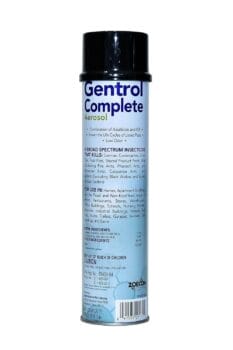
Gentrol Complete Aerosol – Adulticide + IGR (18 oz)
Dual‑action aerosol that kills roaches, flies, ants, and spiders while stopping their life cycle for 4 months.
- Dual‑Action Formula — Adulticide + IGR for kill + reproduction stop
- Targets Multiple Pests — Roaches, drain flies, fruit flies, pantry pests, ants, spiders
- Pro‑Level Use Sites — Kitchens, bathrooms, garages, restaurants, warehouses
- Low‑Odor Aerosol — Easy crack‑and‑crevice treatment with no mixing
- Active Ingredients — Lambda‑cyhalothrin 0.05% + Hydroprene 0.36%
- Best Pairing — Use with Advion gel for full roach elimination
Available on Amazon!
Competitive pricing + Fast Free shipping on all orders!
Gentrol Complete Aerosol combines a non-repellent insecticide (lambda-cyhalothrin) with Gentrol IGR (hydroprene) in a pre-mixed pressurized can with a crack-and-crevice straw applicator. No mixing, no pump sprayer, no measuring. Point the straw into the crack and give a 1 to 2 second burst.
Spray these spots in the kitchen:
- Along every baseboard in the kitchen, all the way around the room.
- Behind the appliances you pulled out (the walls and floor behind them, not the appliance itself).
- Around plumbing penetrations under the sink, where pipes come through the cabinet floor or back wall.
- Around the base of the dishwasher.
- Cabinet hinge seams and the seam where cabinets meet the wall.
- Around the water heater base if it’s in the kitchen.
Important rule: keep the spray at least 12 inches away from any of your bait straws. The aerosol residue can contaminate the area around the bait, and German roaches will avoid bait that smells like insecticide. The bait and spray work together when they don’t touch. Spray the open baseboards and behind the appliances. Place the bait straws inside cabinets, drawers, and the protected spots. Keep a buffer between them.
Let the spray dry for about an hour before you start using the kitchen normally again.
Why the IGR in this product matters: Gentrol contains hydroprene, an insect growth regulator that stops immature roaches from developing into reproducing adults. Egg cases hatch, but the nymphs that emerge can’t molt into fertile adults. The cycle breaks. German roach colonies have egg cases in places you can’t physically reach. Without the IGR, those eggs hatch in the weeks after your visible roaches are gone, and the problem comes back. With the IGR, the new nymphs are reproductive dead ends. This is the single biggest reason this aerosol is the right choice for a kitchen job. After 25 years of this work, I will not treat roaches without an IGR in the mix.
Step 4: Don’t Forget the Bathroom
While you have everything out, treat the bathroom too. Even if you haven’t seen roaches in there yet.
German cockroaches are strongly attracted to moisture, and bathrooms provide exactly that. If they’re established in your kitchen, the bathroom is their next stop, or they may already be there without you noticing.
A quick preventative treatment in the bathroom takes about 5 minutes:
- Place 2 or 3 bait straws in the bathroom vanity corners and behind the toilet.
- Spray Gentrol Complete Aerosol along the bathroom baseboards, around the base of the toilet, under the sink, and inside cabinet hinges.
- Five minutes of prevention here can save you from a second infestation starting up next door to the one you just eliminated.
Step 5: Set Sticky Monitoring Traps
Sticky monitoring traps are cheap, widely available at hardware stores or online, and they serve two purposes. During treatment they tell you where activity is concentrated. After treatment they confirm the problem is gone.
Place a few traps in these spots:
- Along the wall behind the refrigerator.
- Under the kitchen sink in the back corner.
- Along the baseboard where you first noticed the roaches.
- Inside one or two lower cabinets.
Check them every few days. Heavy catch in a particular spot tells you to add more bait placements there. Once the traps stay empty for two weeks, you can be confident the treatment worked.
Step 6: Wait
The next few days will look weird. Some homeowners panic at this stage. Don’t.
- Days 1 and 2: You may see MORE roaches than usual, out during the day, walking in places they normally wouldn’t. They’re being flushed from harborage and recruited to the bait. This is the treatment working at full force. Don’t spray over the bait, don’t wipe down the cabinets, don’t move the appliances back into position aggressively. Leave it alone.
- Day 2 onward: Activity drops sharply. You should see significantly fewer roaches.
- Day 7: Visible roaches should be gone. If you’re still seeing live healthy roaches at day 7, refresh the bait straws and check that the cleaning was thorough enough.
- Weeks 2 to 4: The Gentrol IGR continues working in the background, stopping any late-hatching nymphs from maturing. Even after you stop seeing roaches, the IGR is still preventing the next generation.
What Doesn’t Work
A few things that come up over and over online that waste time or make kitchen roach problems worse.
- Foggers and bug bombs. The single worst thing you can do. The mist doesn’t penetrate the cracks and voids where roaches actually live. The repellent chemicals scatter the population deeper into wall voids and into other rooms or other apartments. You’ll see fewer roaches in the kitchen for a few days, then a much worse problem next month. I’ve cleaned up after fogger jobs more times than I can count and it’s always harder than if the homeowner had done nothing.
- Big box store sprays. Most over-the-counter perimeter sprays from the hardware store roach aisle are pyrethroid-based and repellent. German roaches detect them and route around rather than picking up a lethal dose. They knock down a few visible roaches and do nothing to the colony.
- Bait alone with no spray. The bait is the primary tool, but the spray closes the loop on roaches that don’t reach the bait, and the IGR stops the egg cases that are already in the walls. Bait-only works on tiny problems. Most active kitchen infestations need both.
- Spray alone with no bait. The opposite mistake. Spray kills foragers in the open. Bait reaches the colony in tight harborage where spray can’t go. Without both, the colony bounces back.
- Treating without cleaning first. Roaches eat crumbs and grease before they eat your bait. Cleaning isn’t optional. It’s the step that makes everything else work.
What If They Are All Over My House?
This page is built for kitchen-only infestations that you caught early. If you’re seeing roaches in the bathroom, bedroom, living room, or throughout the house, you have a more established infestation that needs the full German roach protocol, which uses Fipronil C Plus concentrate and Gentrol IGR Concentrate in a pump sprayer for whole-house treatment.
For the full whole-house approach, check the How to Get Rid of German Roaches page on this site. Same general approach as what’s on this page, just scaled up to handle a heavier infestation across multiple rooms.
How to Keep Kitchen Roaches From Coming Back
Ranked by impact.
- Inspect anything used before bringing it inside. Used refrigerators, used microwaves, used furniture, secondhand appliances from online marketplaces or estate sales. Five minutes with a flashlight before the item comes through the door saves a full treatment. Pull out drawer fronts, shine a light behind motors, look in the back of the unit.
- Switch to plastic bins for pantry storage. Cardboard holds humidity, contains glue that roaches eat, and provides perfect harborage. Plastic doesn’t.
- Take out the trash every night, not in the morning. A trash bag with food residue sitting in the kitchen overnight is an open buffet.
- Run the dishwasher daily or wash dishes the same night. No food residue left out overnight. No standing water in the sink.
- Wipe down counters and the area behind the stove weekly. Grease builds up fast and feeds any roaches that get in.
- Fix any new moisture problems within the week. A dripping faucet or leaky pipe becomes a roach water source quickly.
- Inspect incoming cardboard. Amazon boxes, grocery boxes, anything shipped from a warehouse. Break them down outside or in the garage and put them in the recycling immediately. Don’t let cardboard sit in the kitchen or pantry.
- Keep a few fresh bait straws in cabinet corners as monthly insurance, especially if you live in an apartment building where neighbors might bring in new problems.
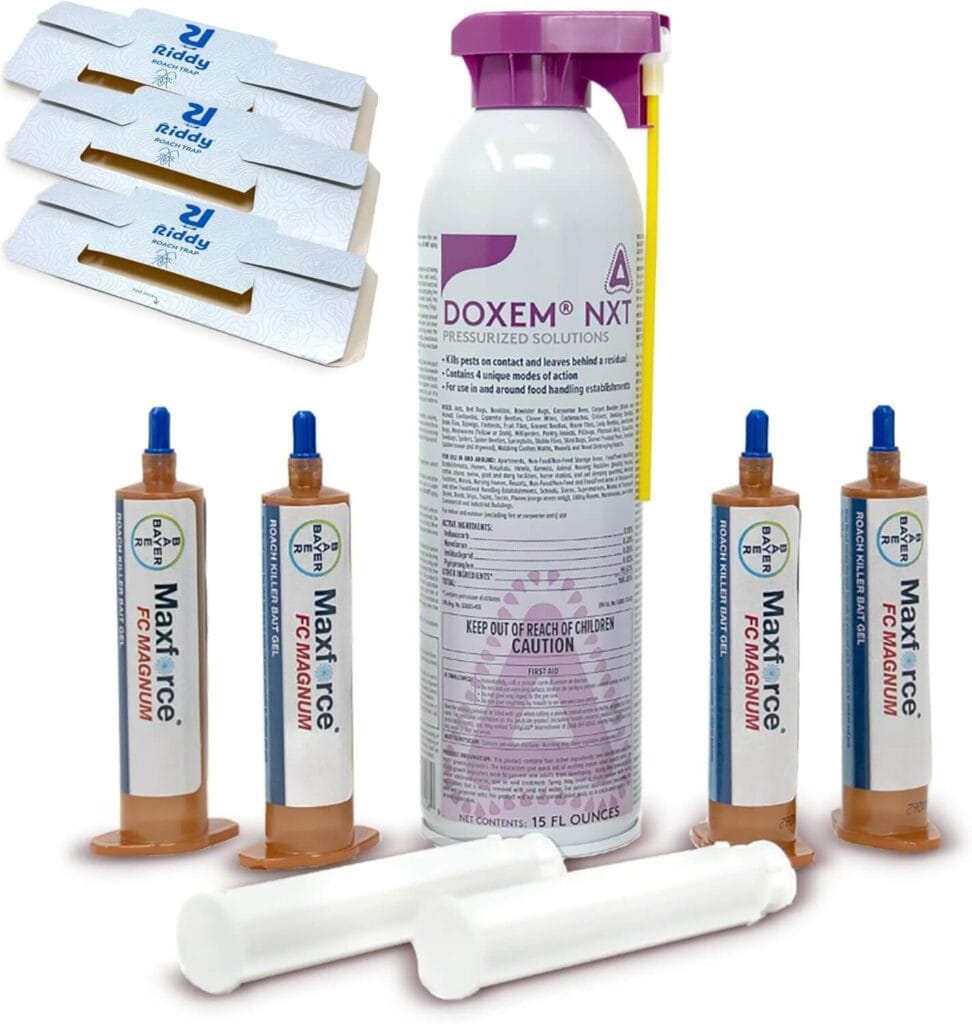
Riddy German Roach Combo Kit — Maxforce FC Magnum + Doxem NXT
The Riddy German Roach Combo Kit delivers fast, professional‑grade roach elimination using Maxforce FC Magnum gel bait and Doxem NXT aerosol for deep, long‑lasting crack‑and‑crevice control.
- Dual‑Action Formula — Gel bait plus Doxem NXT hits roaches at every stage.
- Long‑Lasting Control — Dual IGRs stop eggs and nymphs from developing.
- Reaches Hidden Areas — Targets cracks, voids, and appliance gaps easily.
- Pet‑Safe When Used Correctly — Strong results with safe, directed use.

Available on Amazon!
Frequently Asked Questions
IDENTIFICATION & BEHAVIOR
How do I know if I have German cockroaches in my kitchen?
The first sign is usually spotting a small, fast-moving light brown insect when you turn on the kitchen light at night or open a drawer or cabinet. German cockroaches are about half an inch long with two dark parallel stripes behind their head. Beyond actually seeing them, look for small dark pepper-like droppings in cabinet corners and drawer edges, yellowish egg cases tucked into crevices, and a faint musty odor in heavily infested areas. If you’re seeing any of these signs in your kitchen, treatment should start immediately.
Can I have roaches in my kitchen even if my home is clean?
Absolutely. German cockroaches hitchhike into homes on used appliances, secondhand furniture, grocery bags, cardboard boxes, and deliveries. A completely spotless kitchen can get German roaches from a single infested box or appliance brought inside. Finding roaches does not mean your home is dirty — it means something introduced them, which happens to people in every kind of living situation.
Why are roaches showing up in my kitchen specifically?
The kitchen provides the three things roaches need most — food, water, and warmth. Appliance motors generate heat. Plumbing provides moisture. Crumbs, grease, and food debris provide sustenance. Even a very clean kitchen has enough residual food and moisture to sustain a roach population in the hidden spaces behind and under appliances.
If I only see roaches in the kitchen, does that mean they’re only in the kitchen?
Not necessarily. German cockroaches are nocturnal and spend most of their time hidden. If you’re seeing them in the kitchen, that’s almost certainly where the main population is — but they may already be traveling to the bathroom for water without you knowing it. Treating the bathroom preventatively at the same time as the kitchen is always a smart move.
ABOUT THE KIT
Is this kit difficult to use?
Not at all. This is specifically designed for people who don’t have a sprayer, aren’t comfortable mixing pesticides, or simply want a straightforward solution without the complexity of a full professional treatment setup. The aerosol has everything built in — you just attach the straw and apply. The bait goes in small placements using the straw method described above. The monitoring traps peel and stick. The whole treatment takes less than an hour including the cleaning.
Is this kit safe to use around children and pets?
When used as directed, yes. The insect growth regulators in the Doxem aerosol target biological pathways that only exist in insects — they have no effect on mammals. The bait should be placed in concealed areas out of reach of children and pets, which is exactly what the straw method accomplishes. Always follow label directions and allow treated areas to dry before allowing children or pets back into the space.
Can I use this kit in an apartment?
Yes — and it’s actually ideal for apartment use. Renters who can’t store a large sprayer, don’t want to mix concentrated pesticides, or need a discreet and effective solution will find this kit fits the situation perfectly. The aerosol can is no different to store than a can of cooking spray.
How long will the kit last?
The kit provides enough product for a thorough initial treatment of a kitchen and bathroom with product left over for follow-up treatments or future use. Properly stored between 60 and 80 degrees in a cool dry cabinet, the aerosol and bait tubes remain effective for a significant period after opening.
TREATMENT QUESTIONS
Why do I need to clean before treating?
Roaches will not take bait when real food is available. Cleaning removes the competing food sources and makes your bait placements irresistible. Skipping the cleaning is the single most common reason DIY roach treatments fail. It’s also what makes the spray treatment more effective — a clean surface gives the product better adhesion and residual activity.
Why am I seeing more roaches after I treated?
Increased activity for up to three days after treatment is completely normal and is actually a sign the treatment is working. The adulticides in the Doxem are flushing roaches out of hiding and the bait is attracting them. By day three activity should begin dropping. If you’re still seeing significant activity after seven days, retreat with the Doxem aerosol and refresh your bait placements.
Can I use the aerosol more than once?
Yes — after the initial treatment you can retreat after seven days if activity continues. The can stores well between uses and can be used for future treatments or other pest situations around the home.
Why should I treat the bathroom too?
German cockroaches follow moisture. Bathrooms provide consistent water sources — dripping faucets, condensation, wet surfaces around the toilet and sink — and connected plumbing gives roaches an easy route between rooms. If roaches are in your kitchen, the bathroom is either already affected or about to be. A quick preventative treatment while you have everything out takes minutes and can prevent a second infestation from starting before you’ve finished dealing with the first one.
Why is this better than store bought roach spray?
Store bought roach sprays are almost universally repellent-based, meaning roaches detect them and avoid the treated area rather than picking up a lethal dose. They scatter the population rather than eliminating it, and they do nothing about eggs and developing nymphs. The Doxem NXT uses non-repellent chemistry combined with two insect growth regulators — a fundamentally different and far more effective approach that targets not just the roaches you can see but the entire population cycle.
STORAGE & SAFETY
Where should I store leftover product?
Store remaining aerosol and bait tubes in a cool, dry cabinet that stays between 60 and 80 degrees. Avoid garages, sheds, or anywhere that experiences temperature extremes. A kitchen cabinet or interior closet shelf works perfectly and keeps everything accessible for future use.
Can the IGR hurt my pets?
No. Insect growth regulators work by targeting juvenile hormone systems and chitin production — biological processes that only exist in insects. Mammals, including cats and dogs, do not have these systems. The IGR component of this kit is biologically inert to your pets and family members. It is highly specific to the insects it targets, which is one of the primary reasons pest control professionals rely on IGRs as a core component of any serious roach treatment.
Can I use this on other pests?
The Doxem NXT aerosol is versatile and labeled for use on a range of common household insects beyond cockroaches. It’s worth keeping the can stored and ready for other pest situations that come up.
Just please — and we cannot stress this enough — do not use it on a wasp nest. This is a slow kill formula designed to spread through a colony over time. Wasps are going to be extremely unhappy with you for quite a while before it works. This is a roach product. Use it on roaches.