
This page contains affiliate links. I may earn a commission at no extra cost to you.
The best product to get rid of silverfish is Dekko Silverfish Paks, placed in closets, drawers, attics, and storage areas, paired with dropping indoor humidity below 45% to make your home unlivable for them. Below 45% humidity, silverfish can’t reproduce and the population collapses on its own.
TL;DR How To Treat and Control Silverfish
- Get a dehumidifier sized to your space and drop indoor humidity below 45%.
- Fix any leaks, run bathroom exhaust fans during and after showers, and close the bathroom door if it opens into a walk-in closet.
- Vacuum every closet, drawer, baseboard, and storage area to remove eggs, shed skins, and adults. Empty the vacuum into a sealed bag outside.
- Replace cardboard storage with sealed plastic bins. Cardboard is food AND shelter for silverfish.
- Place 2 to 3 Dekko Silverfish Paks in every affected area – closets, drawers, filing cabinets, bookcases, attics, basements, under sinks, behind appliances.
- Set sticky monitoring traps along baseboards and in closets to track activity.
Keep reading for the full breakdown. ↓
What You Need
For silverfish, one product handles the kill.
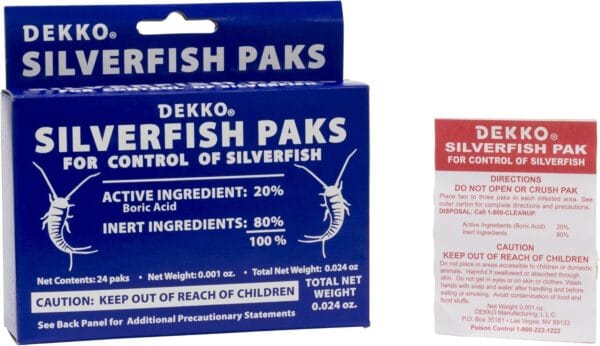
Dekko Silverfish Packs
Dekko Silverfish Paks use a 20 percent boric acid paper bait that silverfish actually eat. Place 2 to 3 paks in closets, drawers, attics, basements, and storage areas for up to 4 weeks of odorless silverfish control. A 24 pack treats the whole home and covers up to 100 sq ft with 3 paks.
- 20 Percent Boric Acid Formula Silverfish eat the paper bait for reliable control
- Indoor Use Areas Works in closets, drawers, attics, basements, bookcases, rugs, and storage
- Simple Placement Use 2 to 3 paks in each problem area for up to 4 weeks
- Whole Home Coverage 24 pack treats large homes and storage spaces
- Odorless and Low Mess Safe for kitchens and pantries when used as directed


Available on Amazon!
Competitive pricing + Fast Free shipping on all orders!
Dekko Silverfish Paks use 20% boric acid on a wavy paper substrate. Here’s why this product works on silverfish when sprays mostly don’t: silverfish eat paper. The Pak isn’t a poisoned trap they have to be lured into. It’s literally their preferred food. They find it, eat it, and ingest the boric acid as a side effect of feeding. No spray, no chemical smell, no mess.
After 25 years of treating silverfish, this is the single most reliable product for this pest, and it works in spots a spray treatment can never reach (inside cardboard boxes, deep inside book stacks, in the back of a filing cabinet you haven’t opened in 5 years).
The Paks alone won’t fix the problem long-term, though. Silverfish are a moisture-driven pest, and you’ll also need a dehumidifier and sticky monitoring traps to handle the humidity and confirm the treatment is working. Both come up at the steps where they’re needed below.
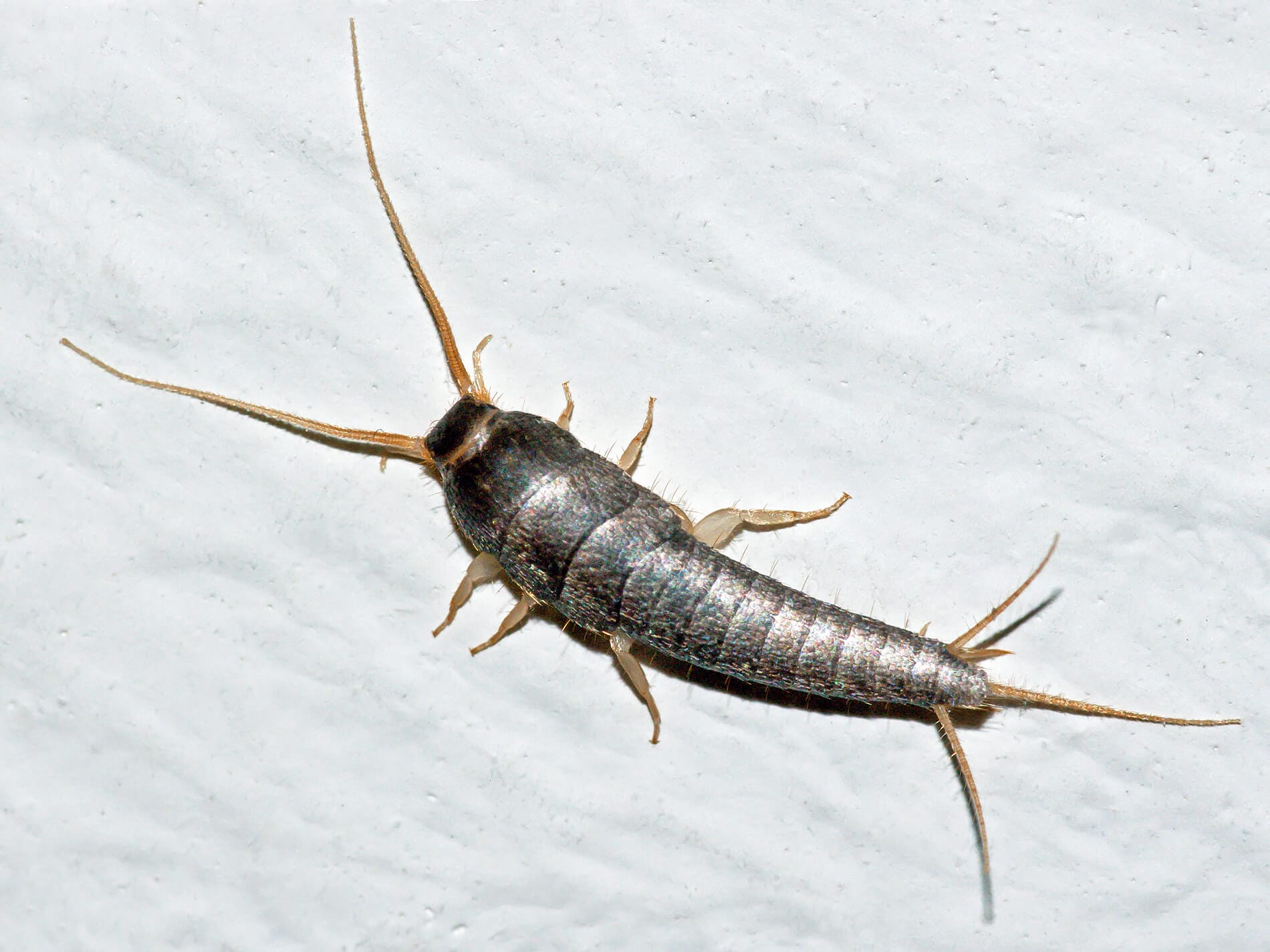
What Silverfish Look Like
Once you’ve seen a silverfish, you’ll never confuse it with anything else.
- Small, about ½ to ¾ inch long, wingless
- Teardrop-shaped body that tapers toward the back
- Three tail-like appendages at the rear (the center one slightly longer than the two on the sides)
- Antennae about as long as the body
- Metallic silver or grey sheen on the body
- Wiggling, side-to-side fish-like movement when they run — not a normal insect crawl. This is exactly where the name “silverfish” comes from.
- Strictly nocturnal. Hide in dark, humid spots during the day, come out at night.
If it looks like a tiny silver fish swimming across your bathroom floor at 11 PM, that’s a silverfish.
Silverfish vs Firebrats
There’s one species worth knowing about because it gets confused with silverfish. Firebrats look almost identical but are mottled brown and tan instead of silver. The big difference is what they want:
- Silverfish want humid environments. Bathrooms, basements, closets near showers, damp attics. They die when humidity drops below 45%.
- Firebrats want HOT, DRY environments. Around water heaters, furnaces, attics in summer, behind appliances that produce heat. They thrive where silverfish die.
If you’re finding silver-fish-shaped insects right around the furnace or in a hot dry attic and your house humidity is already low, you probably have firebrats. The Dekko Paks work on both. The humidity rule only helps with silverfish.
Are Silverfish Dangerous?
No. Silverfish don’t bite humans, don’t carry disease, don’t damage your home’s structure, and don’t sting. They’re a property-damage pest, not a health-threat pest. The damage they cause is to paper and fabric items.
What Silverfish Actually Damage
Silverfish eat starches, sugars, and cellulose. What that means in your house:

- Books and book bindings (the glue is even more attractive to them than the paper)
- Wallpaper (they eat the paste behind it)
- Cardboard boxes (the cardboard itself plus the glue)
- Stored documents, envelopes, file folders, photographs
- Cotton, linen, and silk clothing, especially anything starched or stored long-term
- Cereals, flour, pasta, dried grain products
- Paper money. Yes, really. US currency is 75% cotton and 25% linen, both of which are silverfish food. They don’t go after cash for its value. They eat it because it’s cotton-linen paper with cellulose, like any other paper they consume. Loose bills stored in a drawer in a humid bedroom is silverfish dinner.
The damage shows up as small irregular holes, scraped edges, yellow staining, and pepper-grain droppings. You usually find the damage before you find the silverfish themselves.
Why You Have Silverfish
One word: humidity.
Silverfish need humidity above 50% to survive and reproduce. They’re not in your house because it’s dirty. They’re there because somewhere in the house, humidity is staying high enough for them to thrive.
After 25 years of doing this work, the silverfish call almost always comes back to one of these moisture sources:
- Roof leaks, especially slow ones that haven’t been noticed yet
- Plumbing leaks, especially slow drips under sinks or around toilets
- Bathroom exhaust fans that don’t work or aren’t vented to the outside. A bathroom fan that just blows humid air into the attic is making the problem worse, not better.
- Walk-in closets attached to bathrooms. This is one of the most overlooked silverfish sources. Most people leave the bathroom door open during showers. The humid air flows directly into the closet. The closet is warm, dark, full of cotton clothes, and now humid. That’s a silverfish breeding paradise.
- Concrete block construction that holds and releases moisture into the indoor air
- Basements with chronic dampness, especially older basements with stone foundations or unsealed concrete
- Older homes with inadequate waterproofing. Foundation waterproofing standards have changed a lot over the decades, and older homes were sometimes built with minimal or no waterproofing membrane. Moisture wicks up through the foundation continuously, and indoor humidity stays elevated no matter how much you ventilate. This is one of the more frustrating situations because the fix involves the foundation itself, which is expensive. The dehumidifier is the practical workaround.
- Attics with blocked baffles or poor ventilation, which trap humid air and grow silverfish populations in stored boxes
- Modern construction that’s tightly sealed without adequate ventilation to remove the humidity people generate by living
How to Get Rid of Silverfish, Step by Step
Step 1: Buy a Hygrometer and Check Your Humidity
You can’t fix what you can’t measure. Get a hygrometer (also called a humidity meter). They cost $10 to $15 at any hardware store or on Amazon.
Place it in the room where you’re seeing silverfish and let it sit for an hour. Check the reading. Then check it in the bathroom, the closet, the basement, the attic, and any other suspect area.
The targets:
- Above 50% humidity: silverfish can thrive
- 45 to 50%: getting better, silverfish struggle
- Below 45%: silverfish can’t reproduce and the population collapses on its own
- Below 40%: too dry, the air gets uncomfortable for people
The sweet spot is 40 to 45%. That kills the silverfish problem AND makes your home hostile to German roaches, American roaches, Oriental roaches, dust mites, and most mold growth. Setting your house up for that humidity range is one of the highest-impact pest prevention moves you can make.
Step 2: Drop the Humidity
If your hygrometer reads above 45%, get a dehumidifier and run it.
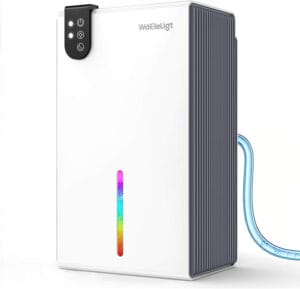
Small Dehumidifier
Compact dual core dehumidifier for small rooms up to 1000 sq ft with sleep mode, turbo mode, auto shut off, and optional continuous drain.
- Dual Core Moisture Removal Fast drying for rooms up to 1000 sq ft
- Sleep Mode and Turbo Mode Whisper quiet nights or fast drying on demand
- Auto Shut Off and Drain Hose Full tank protection or continuous 24/7 draining
- 7 Color Ambient Light Lock a color, cycle colors, or turn off
- Compact and Portable Only 5.3 lbs with handle for easy room to room use
Available on Amazon!
Choose a unit sized to your space. A 35 to 50 pint capacity model handles most basements and main living areas. Larger homes or extremely humid climates may need 70+ pints. Look for a unit with a built-in humidistat that lets you set a target humidity (something like 45%) and have it cycle on and off automatically. A built-in pump for continuous drain is convenient if you don’t want to empty a bucket every day.
Set the target to 40 to 45% and let the dehumidifier do the work. In a basement or damp first floor, you may need to run it 24/7 during humid months. In drier seasons, it’ll cycle on briefly and shut off.
Beyond the dehumidifier:
- Fix any plumbing leaks immediately
- Repair any roof leaks
- Make sure the bathroom exhaust fan actually works and vents to the OUTSIDE, not into the attic
- Run the bathroom fan during and for 20 minutes after every shower
- Close the bathroom door during showers if your bathroom opens into a walk-in closet. This single habit fixes more silverfish-in-the-closet problems than any spray ever will.
- Check the dryer vent to make sure it’s actually venting outside
- Check attic ventilation and make sure baffles are clear
Step 3: Vacuum Aggressively
Before the Paks go down, vacuum every area where you’ve seen silverfish or suspect activity. Vacuuming removes eggs, shed skins, food debris, and live silverfish. It gives the Paks a clean slate to work in.
Vacuum:
- All baseboards in affected rooms
- Inside every closet (corners, shelves, floor)
- Inside drawers and dressers
- Around bookcases and behind books
- Behind and under furniture
- Behind appliances (fridge, washer, dryer, dishwasher)
- Carpet edges where they meet the wall
- The corners and shelving of any attic, basement, or storage area
If your vacuum uses a bag, remove the bag immediately afterward and put it in a sealed plastic bag in the outdoor trash. If it’s bagless, empty the canister directly into a sealed plastic bag outside.
Step 4: Get Rid of the Cardboard
Cardboard is food AND shelter for silverfish in one. The corrugation gives them hiding spots. The cardboard itself plus the glue between layers gives them dinner. A storage room full of old cardboard boxes is a silverfish factory.
Switch to sealed plastic storage bins for anything you’re keeping long-term. Plastic doesn’t feed silverfish, doesn’t hold humidity the way cardboard does, and seals out new infestations.
For incoming cardboard (Amazon boxes, grocery boxes), break it down outside or in the garage and put it in the recycling immediately. Don’t let cardboard accumulate inside the house.
Step 5: Place Dekko Silverfish Paks
Now the Paks go down. The general rule is 2 to 3 Paks per affected area, covering up to 100 square feet per 3 Paks.
Dekko Silverfish Packs
Dekko Silverfish Paks use a 20 percent boric acid paper bait that silverfish actually eat. Place 2 to 3 paks in closets, drawers, attics, basements, and storage areas for up to 4 weeks of odorless silverfish control. A 24 pack treats the whole home and covers up to 100 sq ft with 3 paks.
- 20 Percent Boric Acid Formula Silverfish eat the paper bait for reliable control
- Indoor Use Areas Works in closets, drawers, attics, basements, bookcases, rugs, and storage
- Simple Placement Use 2 to 3 paks in each problem area for up to 4 weeks
- Whole Home Coverage 24 pack treats large homes and storage spaces
- Odorless and Low Mess Safe for kitchens and pantries when used as directed
Available on Amazon!
Competitive pricing + Fast Free shipping on all orders!
Where to place Paks:
- Inside every closet (place in back corners and on shelves)
- Inside dresser drawers, especially drawers with stored fabric
- Inside filing cabinets, especially ones with old paper records
- Behind and around bookcases
- In the back of china cabinets and hutches
- Inside attic corners, especially around stored boxes
- In basement corners and along basement baseboards
- Under sinks (kitchen and bathroom)
- Behind the refrigerator, washer, dryer, and dishwasher
- Inside storage bins (yes, place a Pak inside the bin with your holiday decorations or stored keepsakes)
- Inside garage storage cabinets
- In utility closets near water heaters and HVAC equipment
You don’t have to hide them. The Paks look like small paper packets and silverfish find them through scent. Tucking them out of sight in back corners works fine.
Replace Paks every 4 weeks for active treatment. Once you’ve gone 8 weeks with no new silverfish or droppings, you can drop down to replacing them every 8 to 12 weeks as ongoing prevention.
Step 6: Set Sticky Monitoring Traps
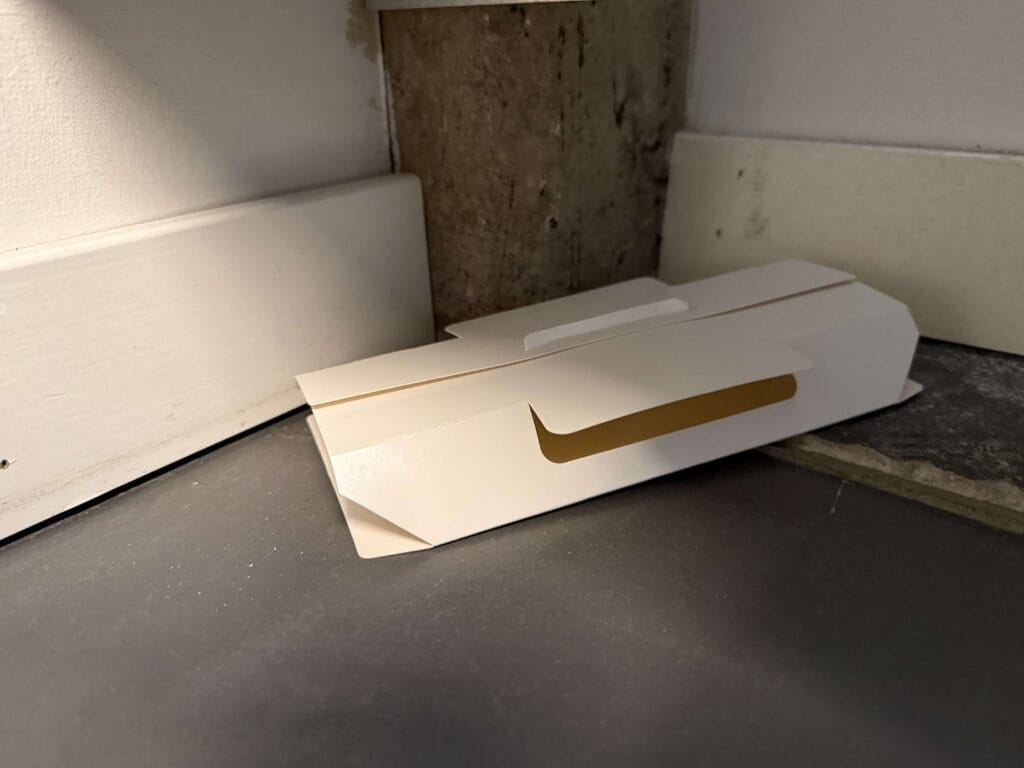
Sticky monitoring traps tell you whether the treatment is working and where activity is still concentrated.
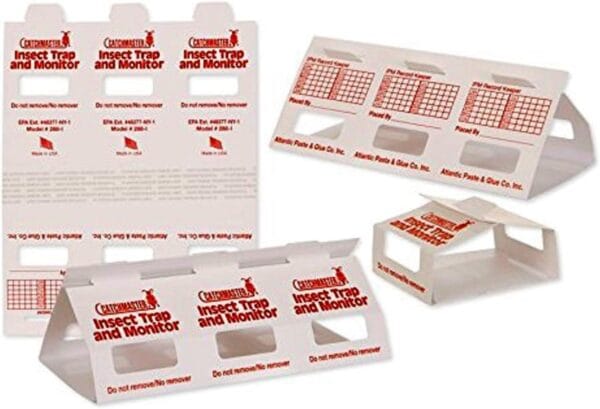
Glue Monitoring Traps
Catchmaster 288i Insect Trap & Monitors are non‑toxic, chemical‑free glue traps that fold into clean tunnel monitors and come perforated so each board becomes three sticky traps.
- 3‑in‑1 Design: Each board is perforated into three traps.
- Non‑Toxic: Chemical‑free monitoring for roaches, spiders, and silverfish.
- Super Sticky: Very effective on insects & spiders.
- Clean Handling: Pick up easily — glue and insects stay inside the tunnel.
- Easy to Use: Fold and place along walls, under appliances, or in closets.
Available on Amazon!
Competitive pricing + Fast Free shipping on all orders!
Where to place traps:
- Along baseboards in bathrooms, closets, and storage areas
- Inside closet corners
- Along baseboards in attics
- Along baseboards in basements
- Behind nightstands and dressers in bedrooms
Silverfish follow edges and walls. Traps placed flush against the wall catch the most. Open-floor placements catch very little.
Check traps weekly during active treatment. When traps stay empty for 4 weeks, the population is gone.
What Doesn’t Work
A few things that come up online that waste time or don’t address the real problem.
- Spraying without addressing humidity. The single biggest mistake on this pest. You can kill silverfish all day with contact spray, but as long as humidity stays above 50%, new silverfish hatch from eggs hidden deep in cracks and the population rebuilds. Humidity control is 80% of silverfish treatment. The Paks finish the job.
- Boric acid powder sprinkled in corners. Boric acid is the right active ingredient, but loose powder gets ignored. Silverfish don’t seek out powder. They DO seek out paper. Dekko Paks deliver the same active ingredient in a form silverfish will actually eat.
- Diatomaceous earth. Works on dry insects in dry environments. Silverfish live in HUMID environments, which is exactly where DE stops working. Moisture turns DE into useless paste. Skip the DE for this pest.
- Essential oils, cedar, lavender, cinnamon sticks. Internet folklore. The smell may briefly annoy a silverfish. It doesn’t reduce populations, doesn’t repel them long-term, and doesn’t address the humidity problem. Save the lavender for the laundry.
- Contact sprays as the main treatment. Sprays kill what they touch and have minimal residual on silverfish (which don’t groom themselves like ants and roaches). The Paks reach silverfish in spots you can’t spray and deliver a lethal dose that the silverfish actually want to eat.
How to Keep Silverfish From Coming Back
Ranked by impact.
- Keep indoor humidity below 45% permanently. Single biggest factor. Run the dehumidifier year-round in humid climates and basements. Bonus: this humidity range is hostile to most other moisture-driven pests too.
- Replace cardboard storage with sealed plastic bins. Once you’ve made the switch, future incoming cardboard goes straight to recycling, and silverfish lose the combination food + shelter.
- Close bathroom doors during showers if a walk-in closet is attached.
- Run bathroom exhaust fans during and 20 minutes after every shower. If your fan isn’t vented to the outside, get it fixed.
- Maintain Dekko Paks at 8 to 12 week intervals in any room that’s prone to high humidity. A few Paks in the basement and the bathroom-adjacent closet are cheap year-round insurance.
- Check door sweeps and the slab-to-wall gap. Silverfish can wander in from damp mulch and leaf litter outside if there are easy entry points.
- Fix any new plumbing leaks within the week. A slow drip under a sink becomes a silverfish water source quickly.
Edge Cases Where DIY Hits a Wall
For silverfish, DIY handles every case I’ve seen in 25 years when the humidity + Paks approach is followed correctly. The science is straightforward: deny them moisture, give them poisoned paper, and they’re done.
Where it genuinely struggles:
- Older homes with inadequate foundation waterproofing. Some older homes were built with minimal or no foundation waterproofing membrane, which means moisture wicks up through the concrete continuously and indoor humidity stays elevated no matter how much you ventilate. The pest treatment still works, but you may need a heavy-duty dehumidifier running constantly to keep humidity below 45% in a basement that’s actively wicking moisture from the ground. The real fix (interior or exterior foundation waterproofing) is a major home improvement project that costs thousands of dollars. The dehumidifier is the practical workaround.
- Concrete block construction in humid climates. Concrete block holds moisture and releases it slowly into the indoor air. Homes built on slab in Florida, the Gulf Coast, and other humid regions often run higher baseline humidity than wood-frame construction. The dehumidifier still works, it just has to run more.
- Persistently damp basements that need active waterproofing. Some basements have ongoing water intrusion through walls or the slab. Until the water intrusion is stopped (interior drain tile, sump pump, exterior waterproofing), the basement humidity will fight any dehumidifier. The basement waterproofing fix isn’t DIY for most homeowners, but the pest treatment can still run alongside the structural work.
- Hot dry environments with firebrats instead of silverfish. If you’ve followed the humidity rule and there’s no silverfish moisture problem to fix, but you still have what looks like silverfish in the hot dry attic or around the water heater, you have firebrats. The Dekko Paks work on them too, but the humidity strategy doesn’t apply. Firebrats want heat and dry conditions, which means the fix is improving ventilation and managing heat in those areas instead.
Frequently Asked Silverfish Questions
IDENTIFICATION
What does a silverfish look like?
Silverfish are small, wingless insects about a half inch to three quarters of an inch long with a metallic silver or grey color and a distinctive teardrop-shaped body. They have three tail-like appendages at the rear — the center one slightly longer — and antennae roughly as long as their body. The easiest way to identify them is by how they move. They wiggle side to side in a fluid swimming motion rather than crawling like most insects. Once you’ve seen one move you won’t confuse it with anything else.
Where are silverfish most commonly found in the home?
Bathrooms are where most people first notice them, usually late at night. Beyond the bathroom they’re commonly found in closets, attics, basements, laundry rooms, and anywhere cardboard boxes or old paper products are stored. One frequently overlooked location is walk-in closets that share a wall with a master bathroom — humid air from showers flows directly into those closets, creating ideal conditions for silverfish to establish.
Do silverfish bite?
Technically they can, but their mouthparts are so small that if it happened at all it would feel like nothing more than a tickle. It has never been a real concern in practice. Silverfish are not medically significant and pose no health risk to people or pets.
How long do silverfish live?
Much longer than most people would guess. Silverfish typically live two to eight years under favorable conditions, making them one of the longest-lived household insects. They also continue to molt throughout their entire lives — something very few insects do. This long lifespan combined with year-round reproduction indoors is why silverfish populations can quietly build up over time without being noticed until the infestation is well established.
Where Do Silverfish Lay Their Eggs?
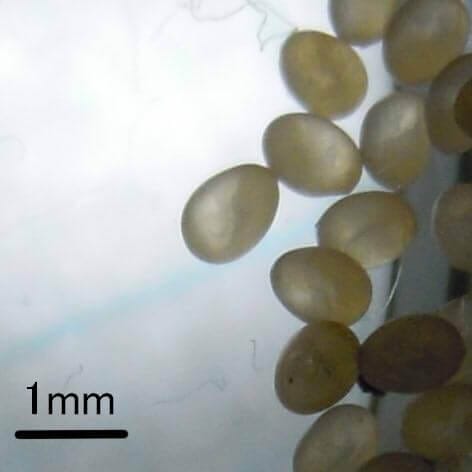
Silverfish don’t just drop eggs anywhere — they hide them in tight, protected, humid spots where you’d never think to look. This is why vacuuming thoroughly and reducing moisture makes such a big difference.
Here are the most common egg‑laying locations inside homes:
- cracks and crevices
- behind baseboards and trim
- wall voids near plumbing or electrical outlets
- under sinks and around pipe entry points
- closets and storage areas
- attics and insulation
- behind appliances
- inside cardboard boxes and paper storage
- under flooring edges
- along garage perimeter walls
Silverfish choose these areas because they’re dark, undisturbed, and hold moisture — the perfect conditions for eggs to stay hidden until they hatch.
BEHAVIOR & DAMAGE
What damage do silverfish actually cause?
Silverfish feed on starchy and cellulose-rich materials, so their damage tends to show up in specific places. Look for irregular holes chewed through book pages, paper, or cardboard. Yellowish staining on fabric, paper, or wallpaper is another sign. They’ll damage book bindings, wallpaper edges, stored clothing, and even photographs over time. The damage itself is usually what people notice first — finding a silverfish directly is less common since they avoid light and stay hidden during the day.
Can silverfish damage my clothes?
Yes, particularly natural fabrics with starch — cotton, linen, silk, and rayon are all targets. Stored clothing that sits undisturbed for long periods in humid closets is especially vulnerable. Switching to sealed plastic storage bins and keeping humidity below 50% protects stored clothing better than anything else.
Why do I only see silverfish in my bathroom?
Bathrooms are often the most humid room in the house, which is why silverfish show up there most visibly. They come out at night seeking moisture and sometimes get trapped in sinks or bathtubs because they can’t climb smooth surfaces. Seeing them in the bathroom doesn’t mean the infestation is limited to the bathroom — it usually means they’re nesting nearby in a hidden humid area and coming out at night to find water.
TREATMENT
Why does humidity matter so much for silverfish control?
Silverfish cannot survive long at humidity levels below 50%. They depend on high moisture to reproduce, molt, and stay hydrated. At lower humidity levels they dry out and the population collapses naturally. This is why fixing the moisture source is more important than any spray or bait. Treatment without humidity control is a temporary fix — the population rebuilds as long as conditions remain favorable.
Why are Dekko Silverfish Paks so effective?
Because silverfish naturally eat paper, and Dekko paks are made of paper-based material impregnated with boric acid. The silverfish aren’t avoiding a foreign product — they’re feeding on what appears to be food. The boric acid is ingested in the process and kills them. There’s no spray, no odor, and they’re safe for use in kitchens, pantries, and anywhere people or pets are present when used as directed.
Do I need to spray for silverfish?
Not usually. The Dekko pak approach combined with humidity control and vacuuming handles most silverfish situations without any spraying. Sprays can be used in cracks and crevices if activity is heavy, but for most homeowners the pak and environmental approach is sufficient.
Can silverfish come back after treatment?
They can if the humidity problem isn’t fully resolved. Silverfish eggs are laid deep in cracks and crevices and can survive even after adults are eliminated. If humidity stays elevated the eggs hatch and the cycle restarts. Solving the moisture issue permanently is what keeps them from returning.
PREVENTION
Why do I keep finding silverfish in my closet?
Closets are common silverfish harborage spots for a few reasons. They’re dark, often poorly ventilated, and frequently contain cardboard boxes, old paper, and stored fabric — all silverfish food sources. If your closet is adjacent to a bathroom, humid air from showers may be raising the moisture level in there significantly. Keeping the bathroom door closed during showers, improving closet ventilation, and switching to plastic bins can make a significant difference.
Can silverfish come in from outside?
Yes. Moist leaf litter, mulch, and organic debris around the foundation are outdoor harborage spots for silverfish. They can enter through gaps under exterior doors, through foundation cracks, and through openings around pipes and utility lines. Clearing organic debris away from the home and making sure door sweeps are in good condition helps reduce this entry point.
Does having silverfish mean my house is dirty?
No — and this is one of the most common misconceptions about silverfish. Humidity is what attracts silverfish, not filth. Very clean, well maintained homes get silverfish all the time if the humidity conditions are right. Finding silverfish is a signal to check your moisture levels, not your housekeeping.